
REVIEW · JAPANESE COOKING CLASSES
Ramen Gyoza Onigiri Japanese Cooking Class in Kyoto
Kyoto’s Manryo cooking class packs two ramen broths, gyoza, and onigiri into about 90 minutes, then puts the whole meal in front of you. I like the focus on broth, the part of ramen that is hardest to recreate at home, and I like that Chef Nori and his team keep the class moving with clear, friendly instruction. The small maximum of eight people also gives you useful access to the cooking table.
The main catch is the menu policy. This is not a noodle-making class, and the only alternative is a vegetarian menu in which pork is replaced with tofu. Vegan, pescatarian, gluten-free, halal, kosher, and other special diets cannot be accommodated, and children under 13 are not accepted.
In This Review
- Key points to know before booking
- What the 90-minute Kyoto class actually covers
- Chef Nori and the English-speaking teaching style
- The meal at the end is part of the value
- Why the broth lesson is more useful than noodle making
- Gyoza folding and onigiri shaping
- Finding the class in Kyoto
- Menu limits you should take seriously
- Who will get the most from this class
- Price, timing, and cancellation
- Should you book the Manryo ramen class?
- FAQ
- How long does the cooking class last?
- What dishes will I make?
- Does the class include handmade noodles?
- Is a vegetarian menu available?
- Can the class accommodate vegan, pescatarian, or gluten-free diets?
- What is the maximum group size?
- Where does the class begin and end?
Key points to know before booking
- Two ramen broths in one short class: You focus on soup preparation rather than making noodles.
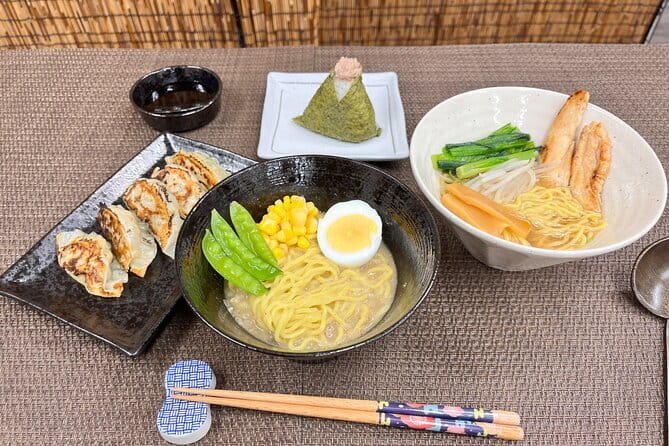
- A full meal is included: You eat the ramen, gyoza, and onigiri you prepare.
- Chef Nori leads an English-speaking team: Instructions are designed for home cooks and include practical tips.
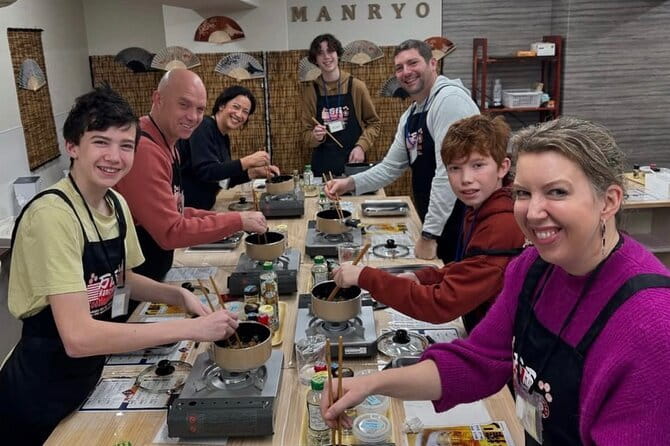
- Maximum eight people: The small group keeps the hands-on work manageable.
- Vegetarian means tofu replaces pork: Other ingredients remain the same, so check the menu carefully.
- Central Kyoto meeting point: The class begins and ends at Manryo Japanese Cooking Class near public transportation.
What the 90-minute Kyoto class actually covers
This is a fast, hands-on lesson rather than a long culinary workshop. In roughly an hour and a half, you work through several familiar Japanese dishes, with the finished food becoming your lunch.
The class begins with ramen broth. That choice makes good sense. You can often buy ramen noodles in a supermarket or specialty shop, but the soup base is where much of the flavor comes from. The instructors show you how to build broth with ingredients and seasonings that are easy to find and prepare at home.
You do not make the noodles from scratch. If you want a class centered on kneading, rolling, and cutting noodles, this is not the right booking. Here, the useful lesson is how to create a satisfying soup and assemble it with ready-made noodles.
The class includes two kinds of ramen, according to the cooking sessions described by participants. That gives you a chance to compare different broth styles rather than learning one recipe and moving on. The exact ingredients and recipes should be confirmed in the message sent after booking, especially if you have food restrictions.
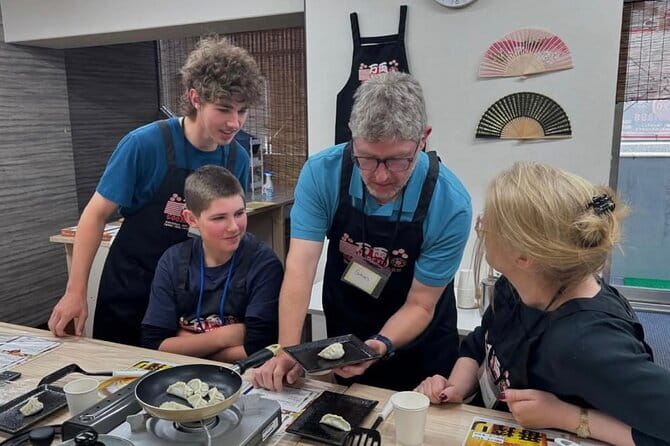
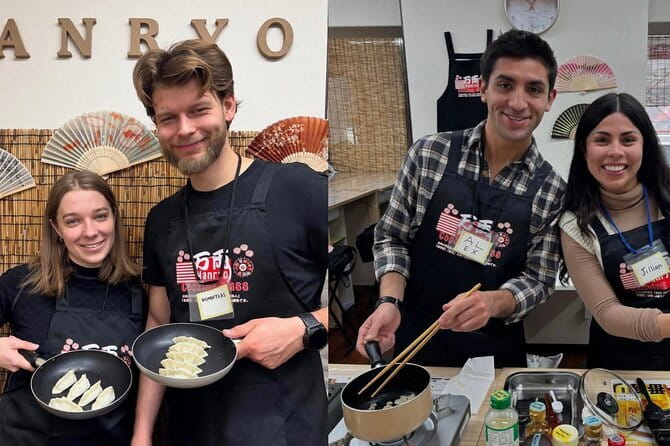
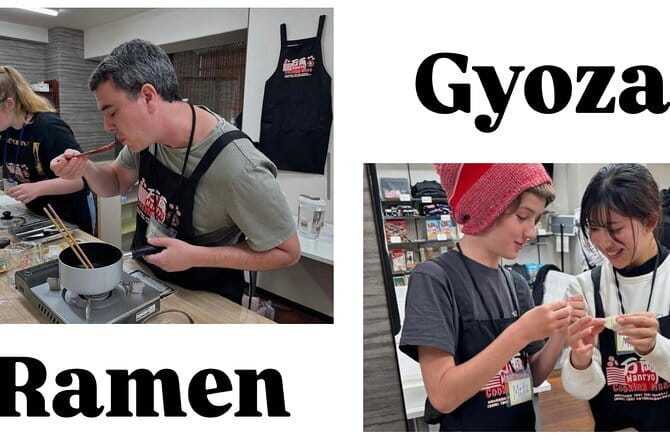
After the broth work, you move to gyoza. The key skill here is folding. You learn how to fill and wrap the dumplings, a small technique that can feel awkward the first time but becomes much easier once an instructor shows you the hand position.
This is one of the most useful parts of the lesson for home cooking. Gyoza are easy to buy frozen, but making them yourself lets you control the filling and gives you a practical skill you can repeat with family or friends. The class uses pork in the regular menu, or tofu in the vegetarian menu.
The final dish is onigiri, the simple Japanese rice ball. You practice shaping the rice and handling the filling or seasoning. Like gyoza, onigiri looks easy until you try to form one that holds together neatly. A short demonstration can save you a fair amount of trial and error later.
The pace is brisk. The instructors appear to have the class arranged carefully, so you are not left waiting while one person handles every step. That matters because three dishes in 90 minutes could otherwise feel rushed or disjointed. You should arrive ready to take part, listen closely, and move on when the group is asked to do so.
More Japanese Cooking Classes in Kyoto
- Ramen Cooking Class at Ramen Factory in Kyoto
★ 5.0 · 1,937 reviews - Sushi Making in Kyoto! Same-day bookings welcome!
★ 5.0 · 713 reviews - Kyoto: Ramen Cooking Class at a Ramen Factory with Souvenir
★ 4.9 · 532 reviews
Chef Nori and the English-speaking teaching style
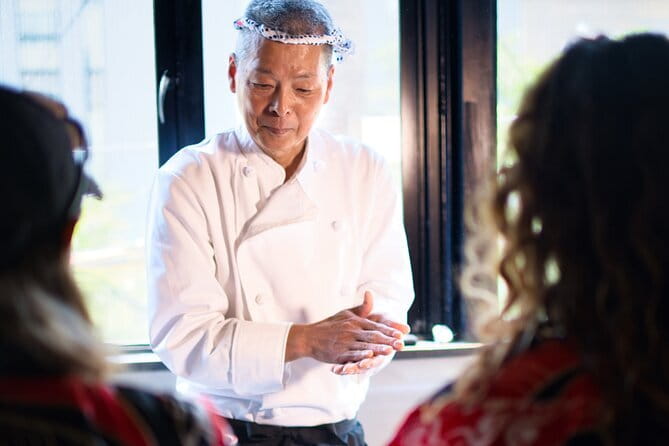
Chef Nori leads the class with help from a small team. The instruction is in English, and the teaching style combines demonstrations, explanations, and hands-on practice.
You can expect a short introduction to ramen before cooking begins. Chef Nori also explains ingredients and gives background on the dishes without turning the session into a lecture. That balance suits a short class. You learn enough context to understand what you are doing, then get back to the food.
The team’s humor is part of the atmosphere. Several class accounts describe the instructors as funny, welcoming, and easy to follow. That does not mean the session is loose or confusing. The cooking is carefully timed, and the staff explain the steps clearly.
The small group cap of eight is a real advantage. In a larger class, you might spend more time watching someone else fold dumplings or shape rice balls. With fewer people at the table, you have a better chance to see the demonstration and receive help when a wrap or broth step goes wrong.
English ability is especially important in a cooking class, since tiny details matter. The available information describes the instructors as English-speaking, and the class material is intended to help you repeat the dishes at home. You should still read the post-booking email carefully, as the provider specifically asks you to do so.
The meal at the end is part of the value
You do not simply cook a sample portion and leave. Lunch is included, and you eat what you make at the end of the activity.
That makes the $92.47 price easier to assess. You are paying for instruction, ingredients, a small-group format, and a complete meal rather than just a demonstration. In an expensive city like Kyoto, a meal plus a guided activity can make this a reasonable half-day addition, particularly if you value skills you can take home.
The food quantity may be substantial. Several descriptions advise arriving hungry, and the meal includes ramen, gyoza, and onigiri. If you normally eat a light lunch, you may find the spread more than enough. Plan your morning accordingly.
There is also a nice sense of reward in eating the dishes immediately. You can see how the broth tastes, how the dumpling folds held up, and whether your rice balls stayed together. That instant result helps turn a recipe into something memorable.
The meal is not a substitute for choosing dishes from a Kyoto restaurant. It is a different kind of food experience. You are eating familiar Japanese comfort food that you helped prepare, rather than being served a highly polished restaurant course.
Why the broth lesson is more useful than noodle making
Ramen is often treated as a noodle dish, but the soup does much of the work. The class’s decision to skip handmade noodles may disappoint some people, yet it also keeps the lesson practical.
Making noodles properly requires time, equipment, and a separate set of techniques. The class instead concentrates on the part you can use quickly in your own kitchen. Buy noodles, make a broth, add the toppings or ingredients shown in class, and you have a repeatable meal.
That approach is particularly helpful if you enjoy Japanese food but do not want to stock a specialist kitchen. The description emphasizes ingredients and seasonings that are accessible for home preparation. You leave with recipes and the memory of how the steps should look, which is more useful than a recipe sheet alone.
The tradeoff is clear. If your dream is to learn every stage of ramen from flour to finished bowl, you will need another class. If you want to improve your broth and learn several dishes in one sitting, the focus works well.
Same city, a completely different kind of day:
- PERFECT KYOTO 1-Day Bus Tour
★ 5.0 · 13,518 reviews - Kyoto: Fushimi Inari, Kinkakuji, Bamboo Grove 1 Day Bus Tour
★ 4.8 · 4,316 reviews - Kyoto: Tea Ceremony in a Traditional Tea House in Kiyomizu
★ 4.9 · 3,519 reviews - Kyoto Geisha Walking Tour: Gion District & Hidden Gems
★ 4.7 · 3,273 reviews
Gyoza folding and onigiri shaping
Gyoza and onigiri add variety to the session. You are not spending the whole class on broth, and the hand skills are different enough to keep the lesson lively.
Gyoza folding is the more technical of the two. You need to place the filling neatly, avoid overstuffing, and seal the wrapper. The class gives you a chance to learn the basic motion under supervision. Do not worry if your first dumpling looks uneven. The point is to gain a technique you can practice at home.
Onigiri is simpler but still benefits from instruction. Rice temperature, moisture, and pressure affect the final shape. A short guided session helps you understand how firmly to press without turning the rice into a dense lump.
Together, these dishes make the class suitable for families with older children and for friends who want to cook side by side. However, the age limit is firm: nobody under 13 can join. The class is not designed as a children’s activity for younger kids.
Finding the class in Kyoto
The meeting point is Manryo Japanese Cooking Class at:
Life Building B1
841 Choshoji Monzencho
Sakyo Ward, Kyoto 606-8366, Japan
The activity starts and ends at the same location. It is near public transportation, but private transportation is not included. You should allow time to find the building and the basement classroom rather than cutting arrival close.
A mobile ticket is accepted, which is convenient if your booking confirmation is stored on your phone. Keep the post-booking email available because it may contain meeting instructions or reminders that are important to the day.
Since the class is short and tightly timed, punctuality matters. A late arrival could mean missing the broth explanation or the first demonstration. The available information does not specify hotel pickup, so you are responsible for reaching the meeting point yourself.
Menu limits you should take seriously
There are only two menu choices: Regular or Vegetarian. The vegetarian version replaces pork with tofu, but the other ingredients remain unchanged.
That is a narrow option compared with many cooking classes. The provider cannot accommodate vegan, pescatarian, gluten-free, halal, kosher, or other special diets. If you have an allergy or follow a strict diet, do not assume the vegetarian menu will solve the problem.
The vegetarian option is best understood as a direct variation of the regular class, not a separately designed vegan lesson. Ask questions before booking if you need precise ingredient information. The menu policy is clearly stated, so this is an easy issue to check in advance.
The class also requires you to be at least 13 years old. Families with teenagers can enjoy the format, especially if everyone is comfortable with a quick pace and shared cooking tasks. Families with younger children should choose another activity.
Who will get the most from this class
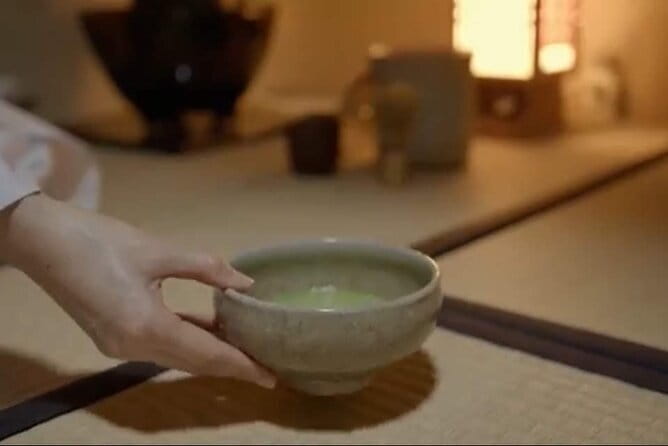
I would recommend this experience to you if you want several Japanese dishes in one sitting and prefer doing things over watching a demonstration.
It suits:
- First-time visitors who want a practical food activity in Kyoto
- Ramen fans who want to learn broth preparation
- Couples, friends, and families with children aged 13 or older
- Home cooks who want recipes they can repeat without unusual equipment
- Diners who appreciate a generous lunch after a morning activity
- People who want an English-speaking class in a small group
It may not suit you if you want a slow, detailed study of one dish. It also misses the mark for anyone set on handmade noodles, strict dietary accommodation, or a private lesson.
The class has a maximum of eight people, but it is not described as private. You should expect to cook as part of a small shared group rather than receive one-on-one instruction throughout.
Price, timing, and cancellation
At $92.47 per person, this is not a bargain cooking demonstration. It becomes better value when you count the meal, the ingredients, the English instruction, the small group, and the number of dishes covered.
You learn broth preparation, two ramen styles, gyoza wrapping, and onigiri shaping in about 90 minutes. That is a lot of material for the time, so the strength is variety and efficiency rather than a leisurely pace.
Free cancellation is available if you cancel at least 24 hours before the local start time. Cancellations or changes made inside that window are not accepted for a refund. This is worth noting if your Kyoto schedule is still shifting.
The experience has a 5 out of 5 rating from 44 ratings, with 100 percent recommendation shown in the supplied details. The strongest praise centers on the friendly team, clear organization, good food, and the amount covered in a short session. Those are the areas I would use to judge the booking, rather than expecting a formal culinary school lesson.
Should you book the Manryo ramen class?
Book it if you want a cheerful, practical introduction to several Japanese comfort foods and you like the idea of eating your work at the end. The broth focus is useful, the small group helps, and the combination of ramen, gyoza, and onigiri gives you more to remember than a one-dish class.
Skip it if handmade noodles are your main goal, or if you need vegan, gluten-free, halal, kosher, pescatarian, or allergy-specific cooking. Also skip it if you prefer a slow pace with time for detailed culinary theory.
For the right eater, this is a strong Kyoto activity: arrive hungry, read the booking email, check the menu rules, and leave room for lunch.
FAQ
How long does the cooking class last?
The class lasts approximately 1 hour and 30 minutes.
What dishes will I make?
You will learn to prepare ramen broth, gyoza, and onigiri. The cooking sessions described also include two types of ramen.
Does the class include handmade noodles?
No. The class does not make noodles. Instead, it focuses on preparing authentic-style ramen broth with ingredients and seasonings you can use at home.
Is a vegetarian menu available?
Yes. The vegetarian menu replaces pork with tofu. Other ingredients remain the same.
Can the class accommodate vegan, pescatarian, or gluten-free diets?
No. Vegan, pescatarian, gluten-free, halal, kosher, and other special diets cannot be accommodated.
What is the maximum group size?
The activity accepts a maximum of eight people.
Where does the class begin and end?
It begins and ends at Manryo Japanese Cooking Class, Life Building B1, 841 Choshoji Monzencho, Sakyo Ward, Kyoto 606-8366, Japan. The location is near public transportation, and private transportation is not included.
More Workshops in Kyoto
- Kyoto: 45-Minute Tea Ceremony Lesson Experience
★ 4.3 · 2,378 reviews - Kyoto : Chopsticks Making Workshop in Gion with Engraving Option
★ 5.0 · 958 reviews - Kyoto: Samurai Sword Class by Experts in Traditional Arts
★ 4.9 · 657 reviews - Ninja 1-hour Hands-on Lesson by Japanese master in Kyoto -Entry
★ 5.0 · 489 reviews
More Cooking Classes in Kyoto
- Kyoto: Ramen, Gyoza, and Onigiri Cooking Class
★ 5.0 · 445 reviews - Kyoto: Japanese Washoku Bento Small Group Cooking Class
★ 5.0 · 380 reviews - Kyoto Ramen and Gyoza Cooking Class with Professional Chefs
★ 5.0 · 282 reviews - Kyoto: Afternoon Japanese Izakaya Cooking Class
★ 4.9 · 241 reviews
Just added around Kyoto
- Private Guided Traditional Buddhist Cooking in Japan★ 5.0 · 16 reviews
- Kyoto: Gion Geisha District & Sake-in-Hand Walking Tour★ 5.0 · 37 reviews
- Your Private Vacation Photography Session In Kyoto★ 5.0 · 110 reviews
- Kyoto: Zen Meditation at a Private Temple with a Monk★ 5.0 · 25 reviews
- Traditional Japanese Washi Papermaking- Kyoto morning★ 5.0 · 77 reviews
- Kyoto Wagashi(Japanese sweets) Cooking Class near Fushimiinari★ 5.0 · 60 reviews
- Private Pewter Sake Cup Experience with a Kyoto Artisan★ 5.0 · 31 reviews
- Kyoto Private 6 hour Tour: English Speaking Driver Only, No Guide★ 5.0 · 88 reviews
Japanese Cooking Classes, compared.
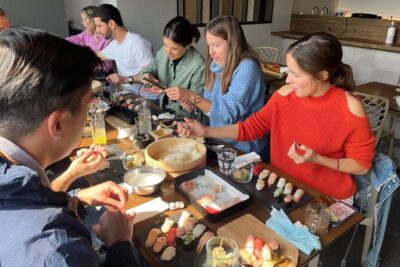
Sushi Making Tokyo Roll and Authentic Japanese Sushi Class
Read our review →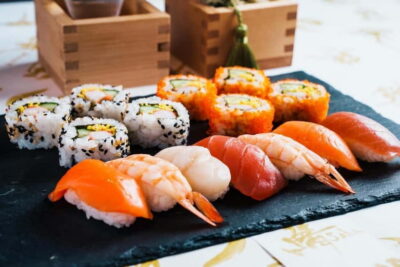
Roll and Authentic Sushi Making Class in Asakusa
Read our review →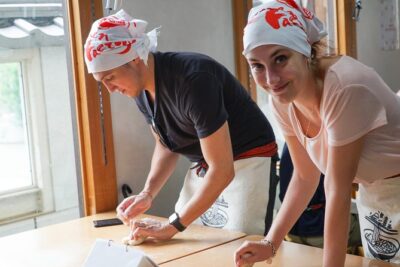
Ramen Cooking Class at Ramen Factory in Kyoto
Read our review →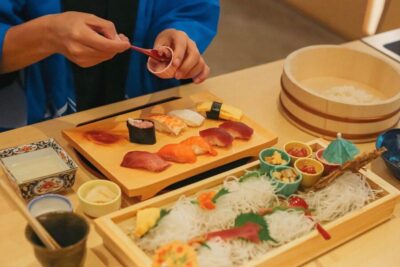
Sushi Making Class in a Happi Coat near a Famous Spot
Read our review →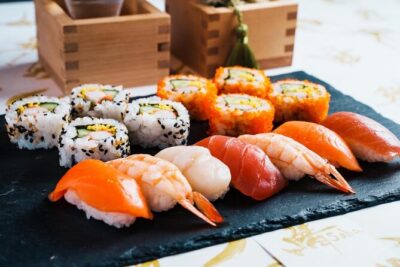
Sushi Making Osaka Roll and Authentic Japanese Sushi Class
Read our review →
Tokyo Sushi Making Class in Tsukiji with Professional Chef
Read our review →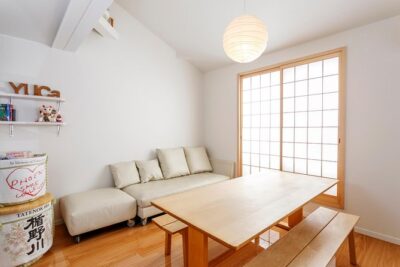
Ramen & Gyoza Cooking Class in Tokyo with Local Supermarket Visit
Read our review →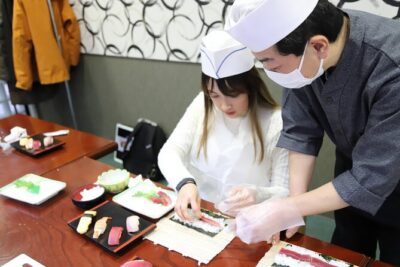
Tsukiji Fish Market Guided Tour and Sushi Making with Pro Chef
Read our review →Browse the lists this tour appears in