
REVIEW · JAPANESE COOKING CLASSES
Kyoto: Ramen, Gyoza, and Onigiri Cooking Class
Making two kinds of ramen, pan-fried gyoza, and onigiri in 90 minutes is a brisk bit of kitchen work, but that is exactly the appeal here. You learn the parts that are useful at home, especially ramen broth, rather than spending the class making noodles from scratch.
I like the small class size and the friendly English instruction. I also like that you eat a full meal at the end and receive recipes for ramen and gyoza. The main caution is dietary: the class cannot handle vegan, pescatarian, gluten-free, or other special diets, and you must be at least 13 and able to cook independently.
In This Review
- Key points at a glance
- What this Kyoto cooking class actually teaches
- Starting in a tucked-away Kyoto classroom
- First course: building miso and shoyu ramen broth
- Gyoza: the most useful hands-on skill
- Onigiri adds a simple Japanese lunch lesson
- Eating everything you make
- Pace, group size, and teaching style
- Dietary rules and age limits
- Booking details that affect your day
- Who should book the ramen, gyoza, and onigiri class
- Should you book it?
- FAQ
- Where is the cooking class held?
- How long does the experience last?
- What dishes will I make?
- Are the instructors English-speaking?
- How many people can join?
- Is food included?
- Are recipes provided?
- Can people with special diets join?
- What is the cancellation policy?
Key points at a glance
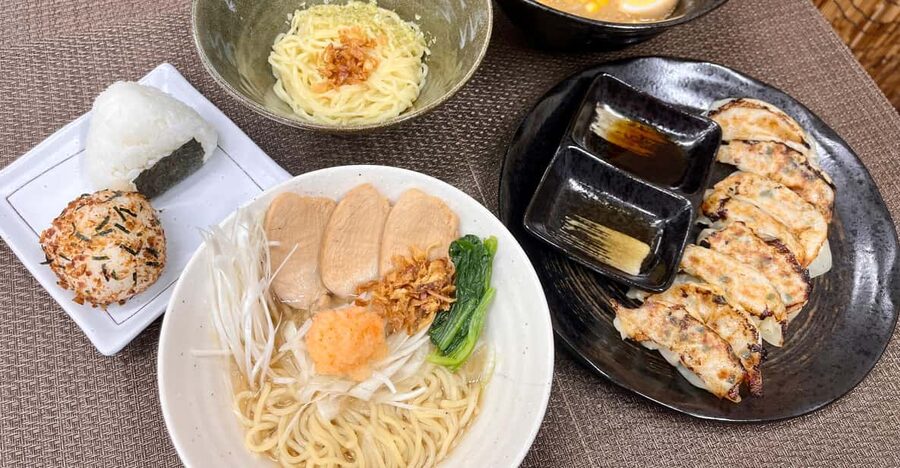
- Two ramen broths: Learn practical methods for miso ramen and shoyu, or soy sauce, ramen using ingredients available to home cooks.
- Gyoza technique: Mix a balanced pork and vegetable filling, then practice the fold and seal that keep dumplings together in the pan.
- Onigiri shaping: Form Japanese rice balls and season them as a quick snack or lunch alternative.
- Small English-language class: The group is limited to eight, with instructors such as Nori, Kairi, Aoi, and Minori helping at the cooking stations.
- A proper meal included: You eat the ramen, gyoza, and onigiri you prepare, with free coffee and tea.
- Easy to miss: The classroom is in the basement of the Life Building, one street off the main road near Family Mart at Sanjo Keihan.
What this Kyoto cooking class actually teaches
This is not a noodle-making workshop. That distinction matters.
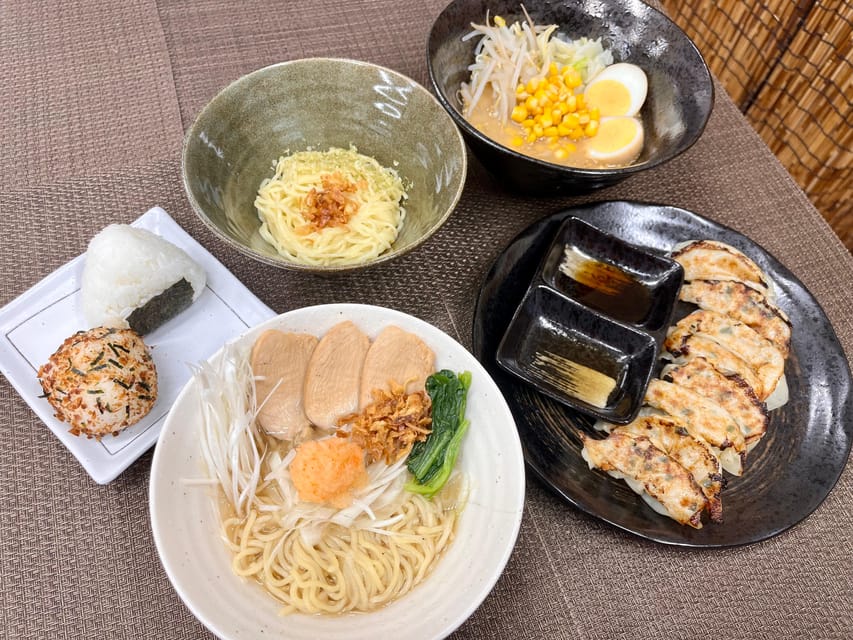
Ramen noodles are often available in supermarkets outside Japan, but a good soup base is harder to reproduce. The class focuses on making broth with seasonings you can find at home, including soy sauce, miso, garlic, ginger, sesame oil, oyster sauce, mirin, chicken stock powder, fish powder, butter, and cooking sake.
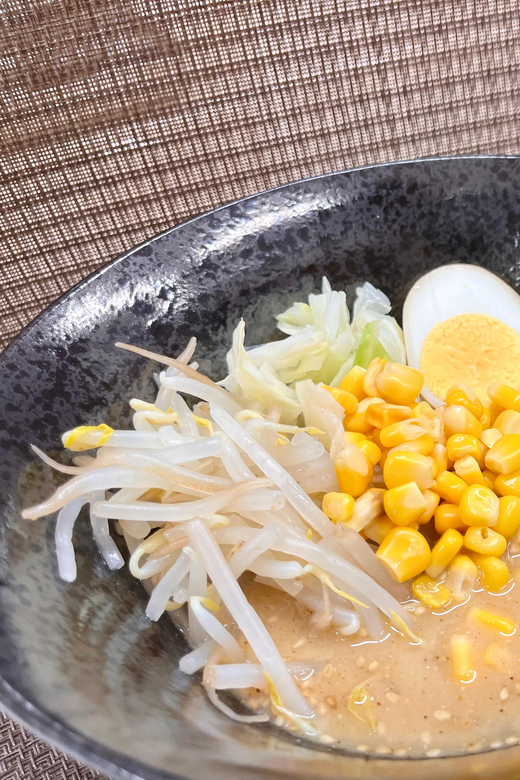
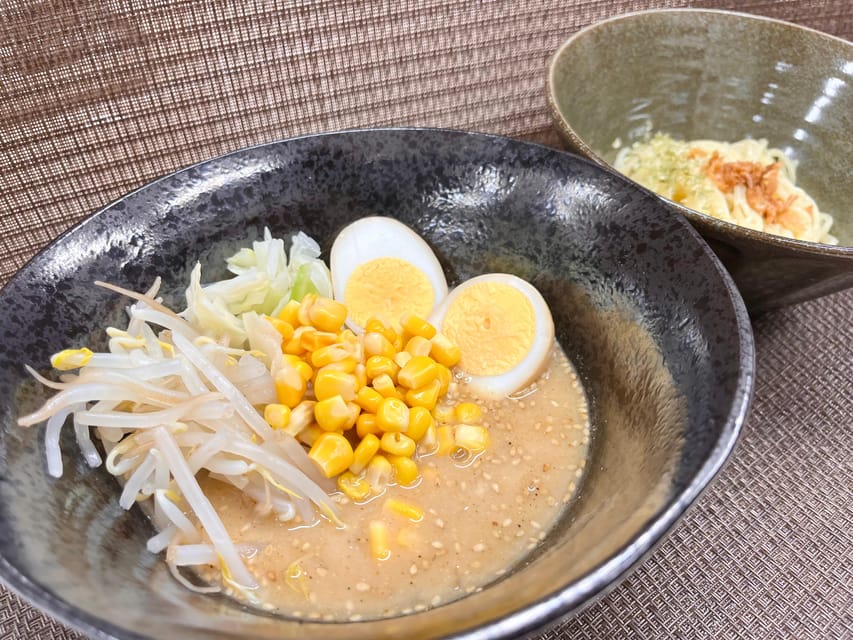
You prepare two styles: miso ramen and shoyu ramen. The miso version comes with a boiled egg, bean sprouts, green onions, and sweet corn. The shoyu version uses chicken, bamboo shoots, and green vegetables. These toppings are deliberately mild. The broth does the heavy lifting, while the vegetables and other additions give the bowl texture and balance.
That is a useful lesson for you to take home. Many first-time cooks pile on strong toppings and lose the taste of the soup. Here, you learn that a few simple additions can be enough when the broth is properly seasoned.
The ingredient list also tells you what kind of food this is. Lard, ground pork, oyster sauce, fish powder, and chicken stock are part of the regular menu. This is a home-style Japanese cooking lesson with practical shortcuts, not a class built around strict dietary substitutions or restaurant-level culinary theory.
More Japanese Cooking Classes in Kyoto
- Ramen Cooking Class at Ramen Factory in Kyoto
★ 5.0 · 1,937 reviews - Sushi Making in Kyoto! Same-day bookings welcome!
★ 5.0 · 713 reviews - Kyoto: Ramen Cooking Class at a Ramen Factory with Souvenir
★ 4.9 · 532 reviews
Starting in a tucked-away Kyoto classroom
The meeting point can take a little care to find. The classroom is on B1 of the Life Building, not directly on the main street. It is one street down, so checking Google Maps before you leave is sensible.
If you use a taxi, the useful landmark is Family Mart at Sanjo Keihan. From there, the walk takes about two minutes. Search Google Maps for Manryo cooking class rather than relying only on the building name. Arriving about 10 minutes early gives you time to find the basement without turning the first part of the class into a small Kyoto treasure hunt.
The setting is built for hands-on instruction. Ingredients and equipment are supplied, and the small group limit means you are not trying to see a demonstration from the back of a crowded room. When the class has only a few people, you may receive especially close help. At the full eight-person limit, the format remains manageable, though the pace is naturally quicker.
The English instruction is another practical strength. Nori is frequently named as the lead teacher, with staff such as Kairi, Aoi, Minori, Ayuna, Riho, and others helping at the stations. The teaching style includes cooking guidance, short explanations of dish origins, and simple cultural context. You should expect clear instruction rather than a formal lecture.
First course: building miso and shoyu ramen broth
The ramen section is the heart of the class. You work with two broth styles and learn how the seasonings change the final taste.
Miso ramen brings a savory, rounded flavor from miso, stock, garlic, ginger, and other seasonings. Shoyu ramen uses soy sauce as its main flavor point, supported by stock and aromatics. The recipes are designed for a home kitchen, so you are not asked to track down obscure ingredients or spend hours preparing a restaurant stock.
This makes the lesson useful after your trip. You can usually buy noodles locally, but recreating the broth is the harder part. The class gives you a method for turning pantry staples into a satisfying bowl, which is better value than simply watching an instructor assemble a finished dish.
You will also see how toppings fit into the bowl. Miso ramen includes egg, bean sprouts, green onions, and corn. Shoyu ramen includes chicken, bamboo shoots, and green vegetables. The contrast between the two bowls helps you understand why ramen is not one single flavor or recipe.
The tradeoff is that you do not make the noodles. If your main goal is learning every stage of ramen production, this class will feel incomplete. If your goal is to make a good bowl at home without buying specialist equipment, the broth-first approach is the sensible choice.
Gyoza: the most useful hands-on skill
Gyoza is where the class becomes especially tactile. You prepare a filling that balances ground pork, cabbage, onion, chives, garlic, ginger, and seasonings. The point is not just to combine ingredients, but to avoid a filling that is too wet, too salty, or too heavy on one flavor.
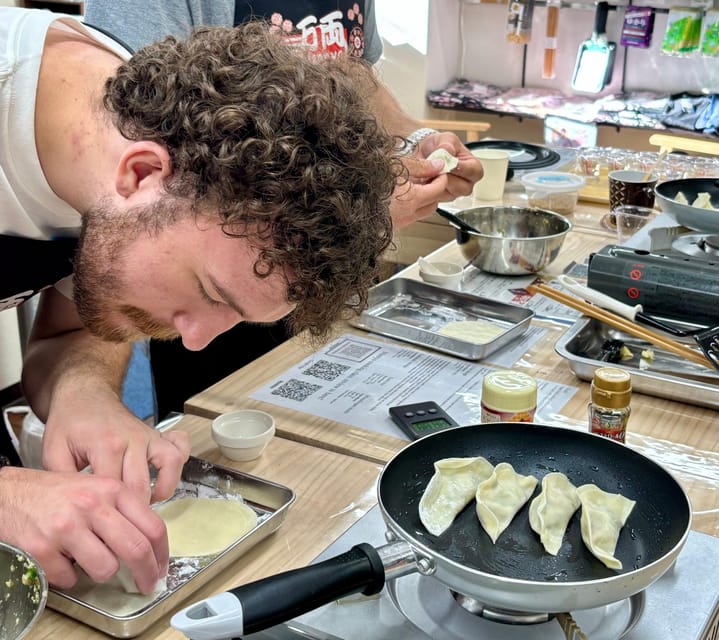
Then comes the fold. You place the filling, moisten the edge, and learn how to press the wrapper into a neat seal. The shape may look simple when a cook does it quickly, but the first few dumplings usually teach you why the technique matters.
A good seal keeps the filling inside during cooking. A consistent shape also helps the gyoza cook at the same rate. You get repeated practice, and the instructors can correct your hand position before you repeat the same mistake across the whole batch.
The finished dumplings are pan-fried, giving them a crisp base and tender wrapper. This is a rewarding dish to recreate at home because the method scales well for a family meal or a casual gyoza party. You leave with recipes for ramen and gyoza, and the instructions are intended for ordinary home cooks.
One small limitation is that the ingredients are prepared in advance and portioned for use. You still cook, season, shape, and assemble the dishes, but you are not spending the lesson chopping every onion or weighing every ingredient from the beginning. Some people will see this as a loss of culinary depth. I see it as a good choice for a 90-minute class that covers three dishes.
Same city, a completely different kind of day:
- PERFECT KYOTO 1-Day Bus Tour
★ 5.0 · 13,518 reviews - Kyoto: Fushimi Inari, Kinkakuji, Bamboo Grove 1 Day Bus Tour
★ 4.8 · 4,316 reviews - Kyoto: Tea Ceremony in a Traditional Tea House in Kiyomizu
★ 4.9 · 3,519 reviews - Kyoto Geisha Walking Tour: Gion District & Hidden Gems
★ 4.7 · 3,273 reviews
Onigiri adds a simple Japanese lunch lesson
Onigiri are Japanese rice balls, often filled or seasoned and shaped by hand. They are everyday food, easy to carry, and a useful alternative to a sandwich. The class teaches you how to form them into an even, attractive shape rather than leaving you with a loose handful of rice.
This part of the experience is less technical than gyoza, but it rounds out the meal. Ramen gives you broth, gyoza gives you folding and pan-frying, and onigiri shows how rice can become a portable snack with very little fuss.
You learn several fillings and flavors, according to the class description, and practice shaping the rice. The task is straightforward, which makes it suitable for anyone who wants a quick win in the kitchen. It also gives you something you can make for lunch at home without assembling an entire Japanese meal.
The three dishes work well together as a lesson because they cover different skills. You season a broth, balance a filling, fold a wrapper, cook dumplings, and shape rice. You are busy, but not stuck on one long recipe.
Eating everything you make
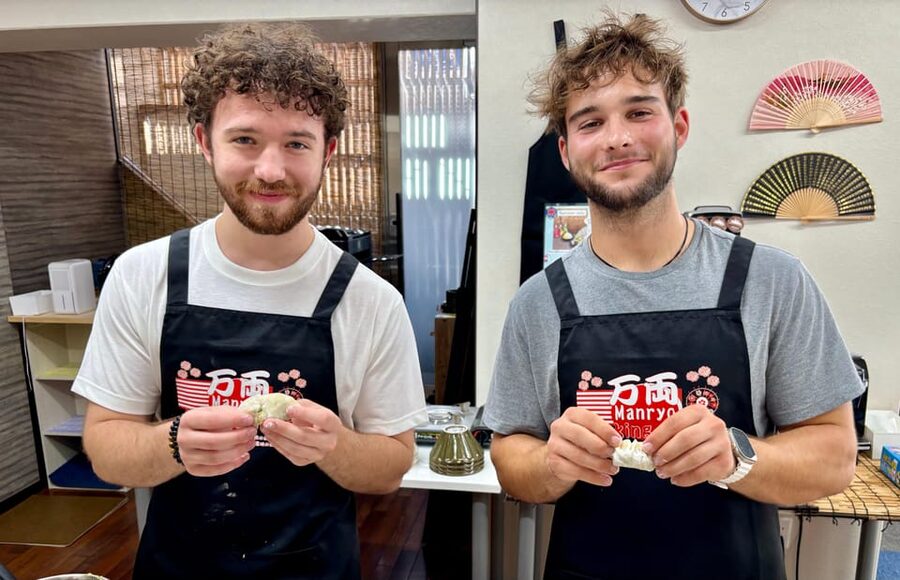
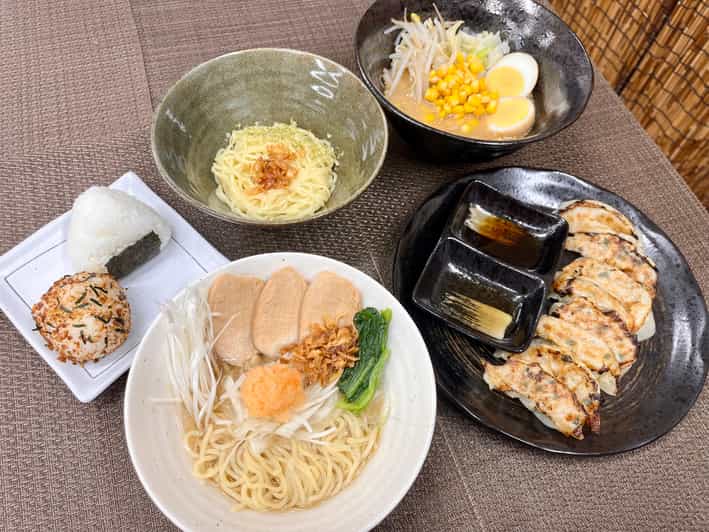
The food you prepare is included, and you eat it during the class. This is not a demonstration followed by a small sample. The amount is substantial enough that you should arrive hungry and avoid planning a large meal immediately afterward.
The meal lets you judge your own work. You can taste the difference between the miso and shoyu broths, check the texture of your gyoza, and see how the toppings affect each ramen bowl. That immediate feedback gives the cooking lesson more meaning than taking home a sheet of instructions alone.
Coffee and tea are free. Beer may also be available for purchase after the meal, but it is not listed as part of the included package. If that matters to you, treat it as an optional extra rather than part of the $90 price.
The food is also a practical measure of value. At $90 per person, this is not a cheap lunch. You are paying for the meal, ingredients, equipment, English instruction, a small group, and recipes. For a 90-minute activity in central Kyoto, the price makes the most sense if you want both lunch and a skill you can use later.
If you only want to eat ramen, a restaurant will cost less. If you want to understand how the broth, filling, wrappers, and rice come together, the class offers more than a meal.
Pace, group size, and teaching style
The class is limited to eight people. That cap is important because the experience includes folding, shaping, measuring, and cooking. A large class could turn those tasks into a slow queue, but eight people allows the instructors to move around and offer corrections.
The pace is fast. Several people have completed two ramen types, gyoza, and onigiri in about an hour of active cooking, with the full experience lasting 90 minutes. Preparation before your arrival helps the class stay on schedule, but you should still expect to keep moving.
This is a good activity for couples, families with older children, and small groups of friends. It also works for solo visitors. If only one or two people book a time, the class may still run, and you could receive very personal instruction. That cannot be guaranteed, but the small format gives you a better chance to ask questions than a large food tour.
The teaching style is light and social. Nori is described as humorous and encouraging, while assistants help without hovering. The staff also answer questions about Japanese cooking and related kitchen topics, such as knives. You get cultural background without losing too much cooking time.
Wear comfortable clothes and shoes. You need to cook independently, so this is not a passive activity where someone else handles the hot pans and detailed steps for you.
Dietary rules and age limits
Read the food restrictions carefully before booking. The official choices are a regular menu and a vegetarian menu in which pork is replaced with tofu. Other ingredients remain the same.
The class cannot accommodate vegan, pescatarian, gluten-free, or other special diets. The vegetarian option is therefore not vegan, and it is not a broad allergy-friendly menu. If you have an allergy or need strict separation from certain ingredients, this experience is not a safe choice based on the stated policy.
The age rule also needs attention. Participants must be at least 13 and able to cook without staff assistance. Some individual experiences have included younger children with close adult or instructor help, but the published requirement is 13, so you should follow that rule when planning your booking.
The class is not suitable for wheelchair users or people with recent surgeries. The classroom is in a basement, and the activity requires standing, moving around a cooking station, and handling food and equipment.
Booking details that affect your day
You can cancel up to 24 hours before the start time for a full refund. A reserve-now, pay-later option is available, which can help if your Kyoto schedule is still shifting.
Book only once for your group. Multiple reservations under the same name for the same day, or for different dates, can be canceled. Also, only paying participants may enter the classroom. If you reserve five places, five people may attend, and nonparticipants cannot come in just to watch.
Plan your route in advance. The side-street location near Sanjo Keihan is convenient once you find it, but arriving late could put you behind during a tightly timed class. Comfortable shoes and clothes are the only stated items to bring.
Who should book the ramen, gyoza, and onigiri class
I would choose this for you if you want a food activity that teaches recipes you can repeat at home. It is especially useful if ramen broth interests you, since that is the part most likely to be missing from a packet of noodles bought outside Japan.
It also suits families with teenagers, couples, and people who enjoy doing rather than watching. You get a full meal, plenty of activity, English guidance, and printed recipes. The instructors make the process approachable, but you still need to take part.
I would skip it if you want noodle-making, advanced knife work, or a slow, chef-focused lesson. I would also skip it if your diet is vegan, pescatarian, gluten-free, or highly restricted. The class covers a lot in little time, so it favors practical home cooking over detailed culinary study.
Should you book it?
Book this Kyoto cooking class if you want to leave Japan with more than food photographs. For $90, you receive a small-group lesson, two ramen broth styles, gyoza practice, onigiri shaping, the meal you prepare, drinks, equipment, and recipes for ramen and gyoza.
The best reason to book is the balance of dishes. You are not spending the whole session on one complicated recipe. Instead, you learn several useful Japanese cooking skills and finish with a generous lunch or dinner.
Just confirm the age and dietary rules first, and allow extra time to find the basement classroom. If those conditions work for you, this is a practical, friendly choice for a hands-on food experience in Kyoto.
FAQ
Where is the cooking class held?
The classroom is on B1 of the Life Building in Kyoto. It is one street away from the main road. If you take a taxi, get out near Family Mart at Sanjo Keihan and walk about two minutes. Search for Manryo cooking class on Google Maps.
How long does the experience last?
The cooking class lasts 90 minutes. You should check the available start times when booking.
What dishes will I make?
You will prepare miso ramen, shoyu ramen, gyoza, and onigiri. The class focuses on ramen broth and does not make ramen noodles.
Are the instructors English-speaking?
Yes. The class is taught in English. Instructors named in the experience include Nori, Kairi, Aoi, Minori, Ayuna, and Riho.
How many people can join?
The class is limited to eight participants. Only people with reservations may enter the classroom.
Is food included?
Yes. You eat the ramen, gyoza, and onigiri you make. All cooking ingredients and equipment are included, along with free coffee and tea.
Are recipes provided?
Yes. Recipes for ramen and gyoza are included.
Can people with special diets join?
Only a regular menu and a vegetarian menu are offered. The vegetarian menu replaces pork with tofu, but other ingredients remain the same. Vegan, pescatarian, gluten-free, and other special diets cannot be accommodated.
What is the cancellation policy?
You can cancel up to 24 hours before the activity for a full refund. A reserve-now, pay-later option is also available.
More Workshops in Kyoto
- Kyoto: 45-Minute Tea Ceremony Lesson Experience
★ 4.3 · 2,378 reviews - Kyoto : Chopsticks Making Workshop in Gion with Engraving Option
★ 5.0 · 958 reviews - Kyoto: Samurai Sword Class by Experts in Traditional Arts
★ 4.9 · 657 reviews - Ninja 1-hour Hands-on Lesson by Japanese master in Kyoto -Entry
★ 5.0 · 489 reviews
More Cooking Classes in Kyoto
- Kyoto: Japanese Washoku Bento Small Group Cooking Class
★ 5.0 · 380 reviews - Kyoto Ramen and Gyoza Cooking Class with Professional Chefs
★ 5.0 · 282 reviews - Kyoto: Afternoon Japanese Izakaya Cooking Class
★ 4.9 · 241 reviews - Izakaya Style Cooking Class
★ 5.0 · 219 reviews
Just added around Kyoto
- Taste of Nishiki Market Walking Food Tour with Local guide★ 5.0 · 17 reviews
- Kyoto: Sushi Making Class with Sushi Chef★ 4.8 · 64 reviews
- Kyoto: City Secrets eBike Tour★ 4.9 · 196 reviews
- Sacred Pathways: Discover the Philosopher’s Path of Kyoto★ 4.9 · 20 reviews
- Private Tour to Monkey Park and Arashiyama Highlights★ 5.0 · 22 reviews
- Private Nara Tour from Osaka – Meet at Your Hotel★ 5.0 · 22 reviews
- Private Sake Tasting in Central Kyoto with Sake Sommelier★ 5.0 · 13 reviews
- Kyoto : Private Custom Walking Tour With A Local Guide★ 4.6 · 144 reviews
Japanese Cooking Classes, compared.
Sushi Making Tokyo Roll and Authentic Japanese Sushi Class
Read our review →
Roll and Authentic Sushi Making Class in Asakusa
Read our review →
Ramen Cooking Class at Ramen Factory in Kyoto
Read our review →
Sushi Making Class in a Happi Coat near a Famous Spot
Read our review →
Sushi Making Osaka Roll and Authentic Japanese Sushi Class
Read our review →
Tokyo Sushi Making Class in Tsukiji with Professional Chef
Read our review →
Ramen & Gyoza Cooking Class in Tokyo with Local Supermarket Visit
Read our review →
Tsukiji Fish Market Guided Tour and Sushi Making with Pro Chef
Read our review →Browse the lists this tour appears in