
REVIEW · TEA CEREMONY EXPERIENCES
Kyoto: Tea Ceremony in a Traditional Tea House in Kiyomizu
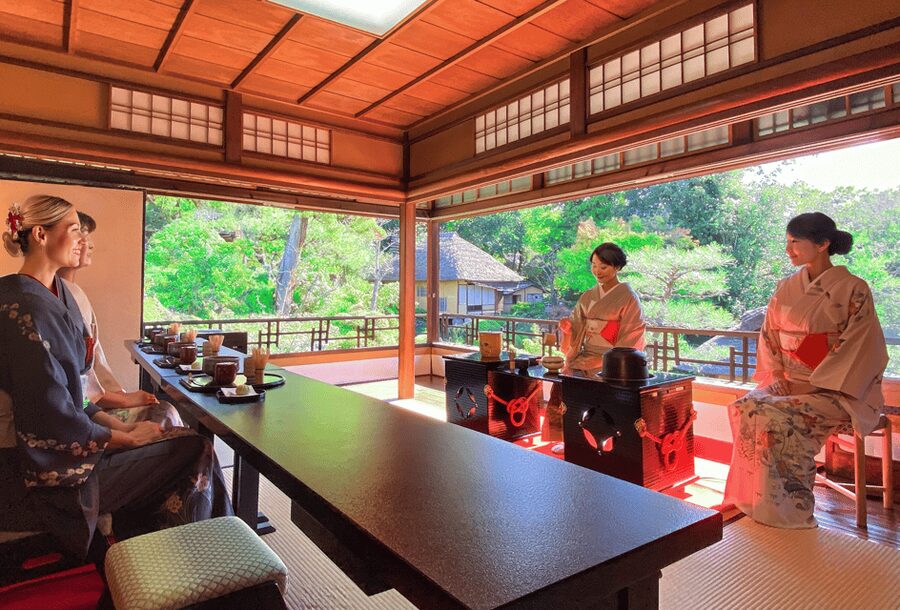
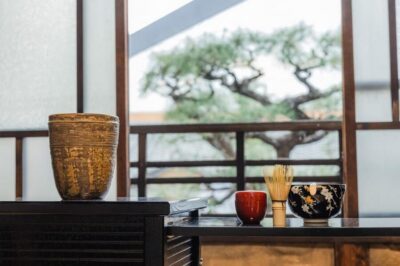
Kyoto’s most peaceful moments can hide just off its busiest lanes. This 45-minute tea ceremony takes place in Sakaguchian, a traditional tea house tucked behind a gate on Sannenzaka near Kiyomizudera Temple. You watch a tea master prepare matcha with careful, practiced movements, then make a bowl yourself while looking onto a garden designed by Ogawa Jihei VII.
I like two things in particular: the garden view, which turns a crowded sightseeing stop into a quiet pause, and the chance to prepare your own tea rather than simply watch a performance. The English explanations also help, especially when the host connects each movement to Japanese ideas of respect, patience, and attention.
The main consideration is time. At 45 minutes, this is an introduction, not a full study of tea ceremony. The $49 price is fair for the setting, instruction, two cups of matcha, a sweet, and a photo, but it may feel high if you only want a quick taste of powdered tea.
In This Review
- Key points to know before booking
- A quiet tea house behind busy Sannenzaka
- The opening explanation gives the ritual some meaning
- The tea master’s demonstration is the heart of the visit
- Making your own matcha turns watching into participation
- The garden does much of the atmosphere-setting
- A traditional sweet completes the tasting
- The photo is useful, but the setting is the real souvenir
- Is $49 a fair price for 45 minutes?
- Who will enjoy this Kyoto tea ceremony most?
- Practical advice for a smooth visit
- Should you book Sakaguchian?
- FAQ
- How long does the Kyoto tea ceremony last?
- How much does the tea ceremony cost?
- Where does the ceremony take place?
- What is included in the booking?
- Do I prepare my own matcha?
- Is the activity offered in English?
- Is kimono rental included?
- Are children allowed to join?
- Can I bring luggage or a large bag?
- What happens if it rains?
- Can I cancel for a refund?
- Do I have to pay when I book?
Key points to know before booking
- Ogawa Jihei VII garden: Look beyond the ceremony itself for the carefully designed garden viewed from the tea house.
- Two cups of matcha: You first taste tea prepared by the master, then whisk your own bowl.
- English guidance: Hosts such as May explain the customs and meaning clearly in English.
- Small-group feel: Sessions are often described as groups of roughly eight to ten people, keeping the demonstration easy to follow.
- Sannenzaka location: Pair the ceremony with Kiyomizudera Temple, but allow extra time to find the entrance.
- No kimono required: Kimono rental is not included, and the ceremony remains focused on tea rather than dress-up.
A quiet tea house behind busy Sannenzaka
Sannenzaka is one of Kyoto’s most popular walking streets. It leads toward Kiyomizudera Temple, with old wooden buildings, shops, food stalls, and plenty of people moving uphill. Sakaguchian feels different once you pass through its entrance gate.
The tea house sits behind a large gate on the right as you walk down Sanneizaka near Kiyomizudera. From the gate, you can see the Japanese garden. Go through the gate, continue about 10 meters, and look for the white gate on your left. That leads to Sakaguchian.
This location is part of the experience. You do not need to travel across Kyoto for the ceremony, and you can fit it neatly around Kiyomizudera, Higashiyama, or Kodaiji Temple. Still, do not treat the address casually. Sannenzaka has several lanes and entrances, so arriving a little early is sensible.
If you take a cab, ask the driver to go toward Kodaiji Temple and get out at the intersection of Sanneizaka and Ishin-no-michi. The Japanese address is Kyoto-shi Higashiyama-ku Kiyomizu 3-334. Large bags and luggage are not allowed, so leave bulky items at your hotel or elsewhere before arriving.
More Tea Ceremony Experiences in Kyoto
- Kyoto: Tea Ceremony Ju-An at Jotokuji Temple
★ 4.9 · 3,207 reviews - Kyoto: 45-Minute Tea Ceremony Lesson Experience
★ 4.3 · 2,378 reviews - Kyoto: Table-Style Tea Ceremony at a Kyo-Machiya
★ 4.9 · 1,211 reviews
The opening explanation gives the ritual some meaning
Your English-speaking host greets you and introduces the tea house, the garden, and the ceremony. The opening talk covers the 500-year history of Japanese tea ceremony, along with some of the customs that can otherwise seem mysterious to first-time visitors.
This short explanation matters. Without it, you might see only a series of beautiful gestures: folding cloth, handling utensils, whisking green tea, and presenting the bowl. With context, you begin to understand why the movements are slow and exact, and why the setting, the bowl, the sweet, and the conduct of the people in the room all matter.
May is one host specifically praised for her warm welcome and clear English. The tone is educational without being stiff. Some sessions also include stories about the training of a tea master and the ideas behind the ceremony, while others may keep the history talk brief. If you want a long lecture on Japanese tea schools, this is not the right format. If you want enough background to make the demonstration meaningful, 45 minutes works well.
The group format can affect the feel. The activity is presented as a small-group experience, and sessions described with eight to ten people still allow you to see the tea master’s hands and ask questions. It is not a private ceremony, so you should expect other people to be present and to share the photo moment.
The tea master’s demonstration is the heart of the visit
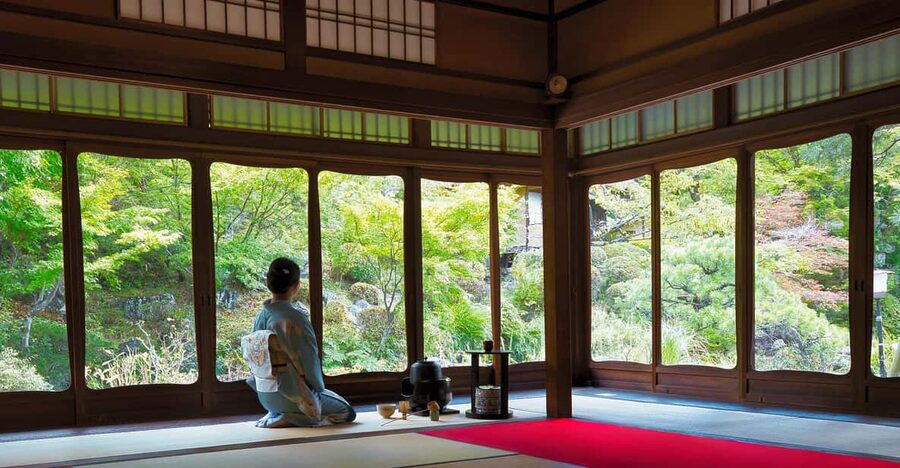
After the introduction, an experienced tea master demonstrates the preparation of matcha. This is the part to watch closely. The ceremony is not a rushed cooking lesson. It is a precise sequence shaped by years of practice, with graceful handling of the utensils and careful attention to presentation.
The tea master’s movements are the main reason to sit quietly and stay focused. One useful point from the experience is simple: do not walk around while the ceremony is taking place. The room is calm, and moving through it can distract from the performance and from the other people watching.
The demonstration also shows the difference between making matcha quickly at home and preparing it as part of a formal tradition. The goal is not just a drink. The preparation creates a shared moment between the person making the tea and the people receiving it.
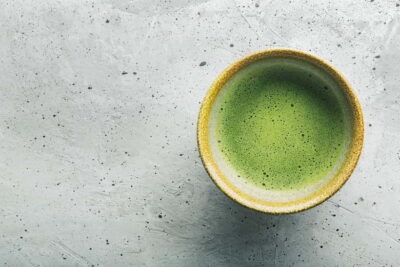
You will first receive a bowl prepared by the tea master. This lets you taste matcha made by someone with professional training before attempting it yourself. The tea is described as pleasantly smooth by many people who normally find matcha too bitter, although matcha remains a strong, earthy drink and taste preferences vary.
Making your own matcha turns watching into participation
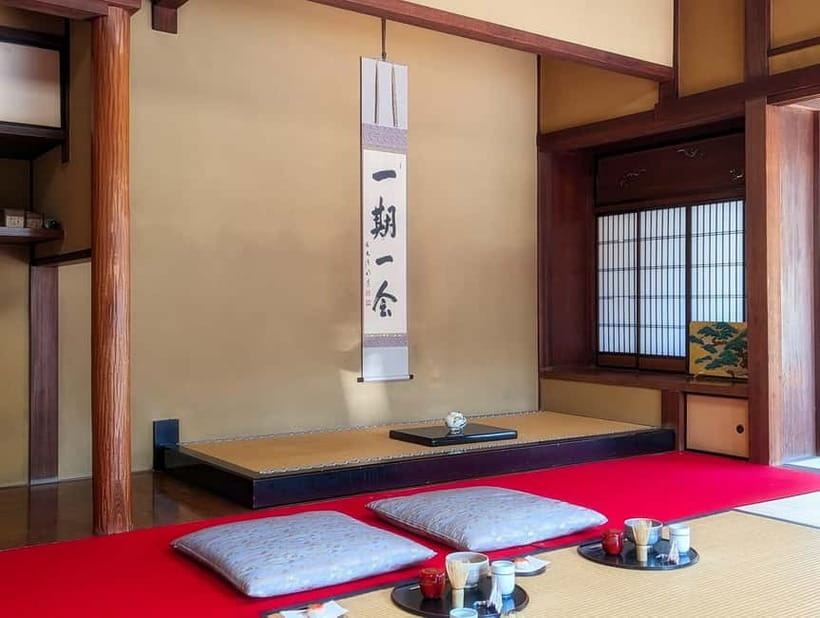
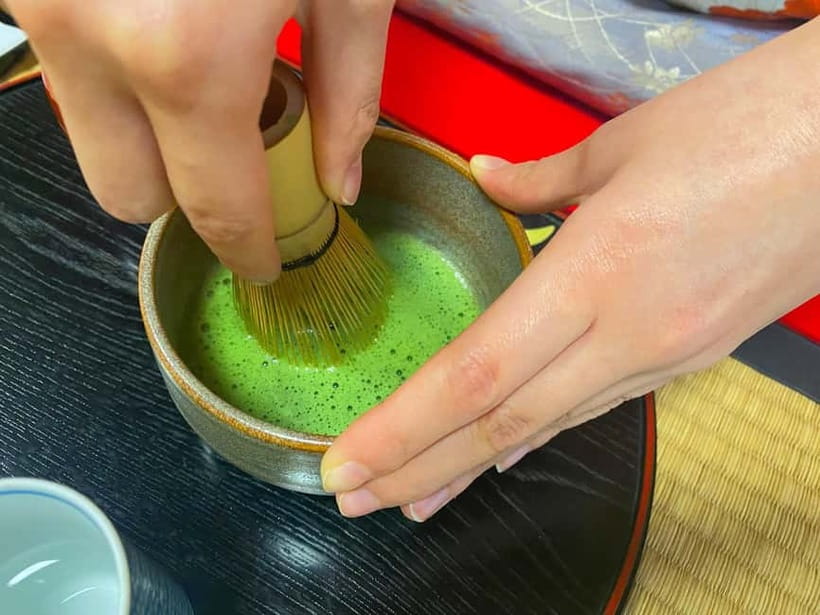
The ceremony becomes more hands-on when you learn to brew your own matcha. You receive instruction on the basic method and then whisk your own bowl. This is not a certification course, but it gives you a practical sense of how the powder, water, whisk, and movement work together.
I like this part because it removes some of the distance between you and the tradition. Watching a tea master is beautiful, but holding the whisk helps you understand how much control and care the process requires. You also get a better appreciation for why the tea master’s performance looks so effortless.
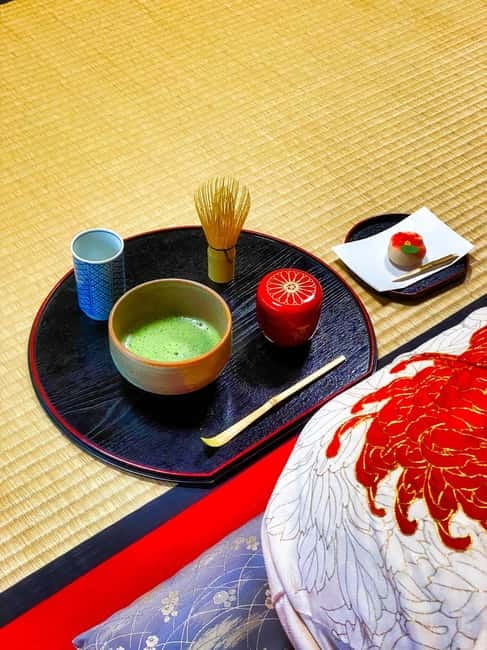
The experience includes two cups of matcha in total: one prepared for you and one you make yourself. That is a good arrangement for beginners. Your first cup lets you focus on the taste, while the second lets you concentrate on technique.
The instruction is designed for English speakers, and the hosts explain each step clearly. If you have never prepared matcha, you should be able to follow along. If you already make matcha at home, you may not learn every detail of the wider tea tradition, but you can still pick up tips on producing a smoother cup.
More Temple & Shrine Tours in Kyoto
- Kyoto: Fushimi Inari, Kinkakuji, Bamboo Grove 1 Day Bus Tour
★ 4.8 · 4,316 reviews - Fushimi Inari Hidden Hiking Tour (Private Option Available)
★ 5.0 · 1,750 reviews - Kyoto/Osaka: Nara, Fushimi Inari Taisha, Arashiyama Bus Tour
★ 4.7 · 1,275 reviews - Arashiyama Bamboo, Temple, Monkeys, or Secret Sake Brewery
★ 4.8 · 886 reviews
The garden does much of the atmosphere-setting
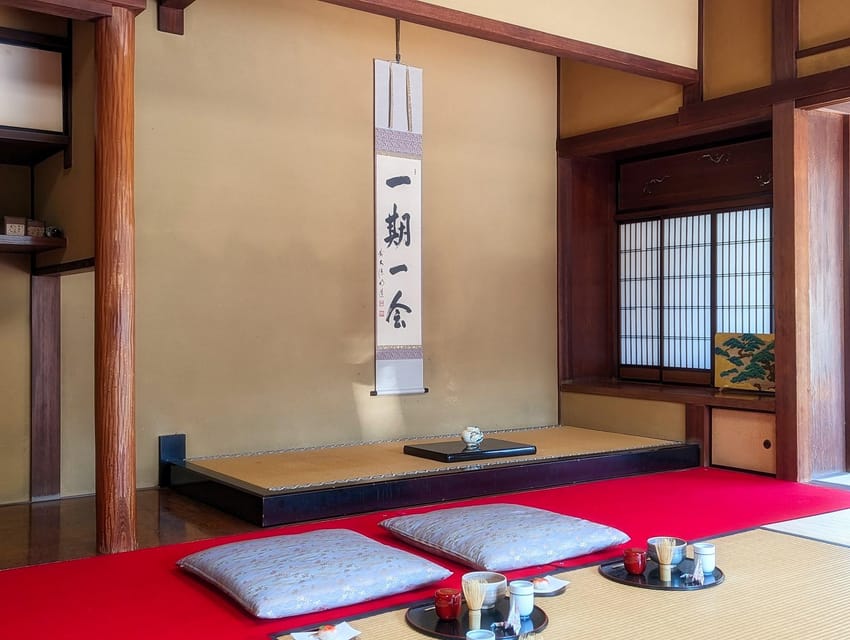
The tea house looks onto a garden created by Ogawa Jihei VII, a famous Japanese landscape artist. The garden is not merely a backdrop for the final picture. Its stillness helps explain why this activity feels so removed from Sannenzaka, even though the busy street is close by.
Depending on the season and weather, the garden’s appearance will change. The ceremony takes place rain or shine, so do not book it only for a particular outdoor view. The tea house still provides the sheltered setting, and the garden remains part of what you see from inside.
The garden is especially useful if you are building a busy Kyoto day. Kiyomizudera and the Higashiyama district can involve a lot of walking, stairs, crowds, and shop browsing. Sitting down for a short tea ceremony gives you a proper pause without taking half a day from your sightseeing plan.
The peaceful setting is also why this experience works well for couples and families with older children. Children aged nine and thirteen have enjoyed it, but the activity is not suitable for children under seven. Younger children may find the quiet pace and formal conduct difficult.
A traditional sweet completes the tasting
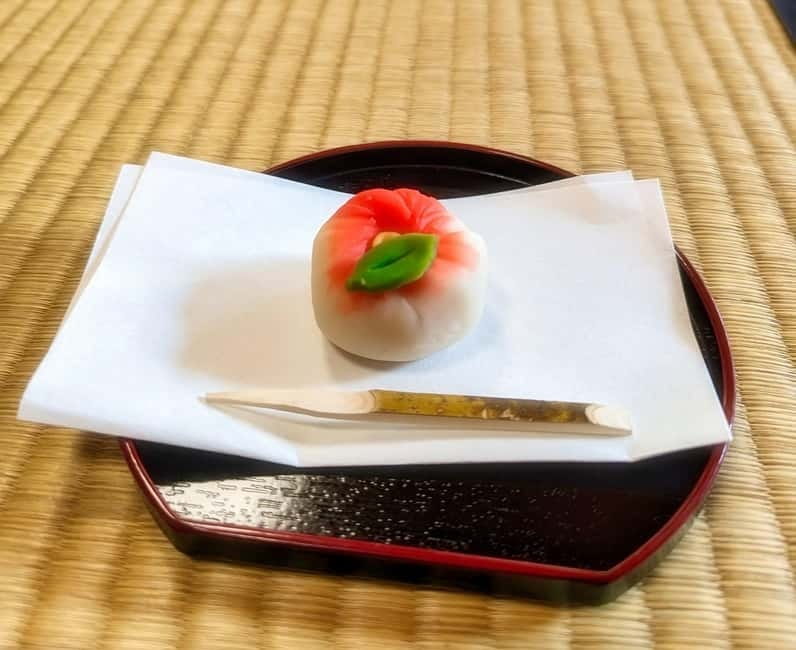
Matcha is traditionally served with a sweet, and this experience includes one customary Japanese sweet with the tea. The sweetness helps balance matcha’s grassy, slightly bitter flavor and gives you another small piece of the ceremony’s etiquette.
You should not expect a full snack or dessert course. The sweet is a modest accompaniment, meant to prepare your palate for the tea rather than fill you up. Eat it as part of the sequence and then focus on the matcha that follows.
This small detail adds value to the lesson. You are not simply handed a bowl of green tea and left to judge it on its own. You get a basic introduction to how the flavor is traditionally enjoyed.
The photo is useful, but the setting is the real souvenir
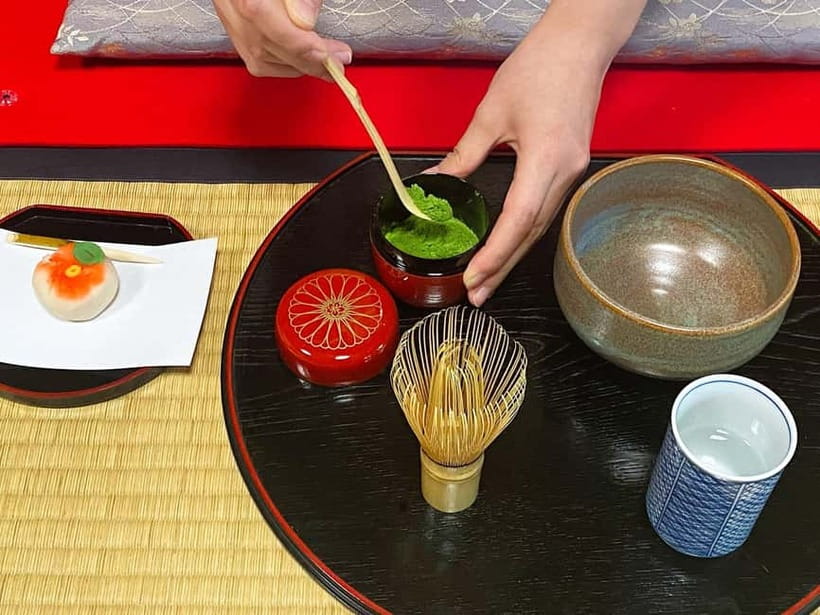
At the end, you can pose for a group photo with the garden behind you. The photo is included, which saves you from having to ask another visitor to take pictures and gives you a record of the activity.
The final photograph is pleasant, but I would not book the experience just for it. The stronger souvenir is the memory of sitting in a traditional tea house, watching the preparation, and making your own bowl. The picture simply gives that memory a physical marker.
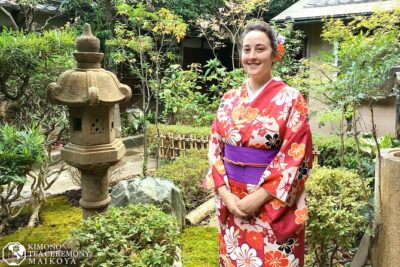
If you hope to wear a kimono, plan separately. Kimono rental is not included, and the ceremony does not depend on dressing up. That may be a drawback for anyone seeking a full costume experience, but it is also a benefit if you prefer a more focused, less theatrical introduction to tea.
Is $49 a fair price for 45 minutes?
At $49 per person, the activity costs more than buying matcha at a Kyoto café. That comparison is not quite fair, since you are paying for the tea house setting, the garden, the demonstration, English instruction, your own preparation, a sweet, and a photo.
The value is strongest if you want cultural context and a guided activity rather than just a drink. The tea master’s demonstration is the part you could not easily reproduce on your own, and the garden provides a setting that would be difficult to match in an ordinary café.
The value is weaker if you are already familiar with formal tea ceremony or want an extended session. The 45-minute schedule gives you a well-shaped introduction, but it moves quickly from history to demonstration to participation. You will leave with a taste of the tradition, not a detailed lesson in every school, utensil, or ceremony form.
The high rating of 4.9 from 3,519 reviews supports the idea that the activity delivers what it promises: a calm, accessible cultural experience. I would still judge it by your interests. For someone who wants to learn, watch, taste, and take a photo in a beautiful setting, the price is reasonable. For someone interested only in matcha flavor, a café is cheaper.
Who will enjoy this Kyoto tea ceremony most?
I would recommend it to first-time visitors who want a manageable introduction to Japanese culture. It fits neatly into a sightseeing day and does not require specialist knowledge, formal clothing, or a long commitment.
It is also a strong choice for couples. The quiet setting and shared activity make it more memorable than simply ordering tea together. Families with children aged seven and older can enjoy it too, especially if the children are willing to sit quietly and follow instructions.
History lovers will appreciate the discussion of the ceremony’s long tradition and the training of tea masters. People who enjoy gardens will likely value the setting as much as the tea. Even if you are not sure you like matcha, the tasting gives you a chance to try a carefully prepared cup before making your own.
I would be more cautious if you dislike sitting still, have a very young child, are carrying luggage, or expect a private event. The ceremony is formal enough to require attention, and the activity takes place in a shared group.
Practical advice for a smooth visit
Book a time that leaves breathing room around Kiyomizudera. Sannenzaka can be slow to walk through, and finding the correct gate takes longer if you are rushing.
Arrive without large bags. The rules specifically exclude luggage and large bags, and the traditional tea house is not the place to manage bulky belongings.
Wear clothing that lets you sit comfortably and move your hands freely. A kimono is not required, and no rental is included. The focus is on the ceremony, not on dressing for a staged photo.
Keep your phone quiet during the demonstration. You can take part in the final photograph, but the tea master’s movements deserve your attention. If you arrive late, ask the host for help rather than entering noisily during the ceremony. One late arrival was accommodated in a later session, but that should not be treated as a guarantee.
The activity runs in all weather. Rain may change the view, but it does not cancel the indoor ceremony. Free cancellation is available up to 24 hours before the start time, and you can reserve now and pay later if you want to keep your Kyoto schedule flexible.
Should you book Sakaguchian?
Book this tea ceremony if you want a short, polished introduction to matcha and Japanese tea customs in a setting that feels genuinely tied to Kyoto. The garden, traditional tea house, English explanations, skilled demonstration, and chance to make your own tea create a well-balanced experience.
I would especially choose it between visits to Kiyomizudera and other Higashiyama sights. You get culture without sacrificing a full morning or afternoon, and the quiet room gives you a welcome break from the crowds outside.
Skip it if you want a long, private ceremony, a kimono rental, or an advanced lesson. For most first-time visitors, though, $49 buys more than two cups of tea. It buys a calm place to pay attention, a practical introduction to a 500-year tradition, and a small but lasting Kyoto memory.
FAQ
How long does the Kyoto tea ceremony last?
The activity lasts 45 minutes.
How much does the tea ceremony cost?
The listed price is $49 per person.
Where does the ceremony take place?
It takes place at Sakaguchian, a traditional tea house on Sannenzaka near Kiyomizudera Temple in Kyoto.
What is included in the booking?
The booking includes the tea ceremony, two cups of matcha, a traditional Japanese sweet, and a photo.
Do I prepare my own matcha?
Yes. You first watch a tea master demonstrate the preparation, then learn how to brew your own bowl of matcha.
Is the activity offered in English?
Yes. The instructor and host provide the experience in English.
Is kimono rental included?
No. Kimono rental is not included.
Are children allowed to join?
Children under seven are not permitted. Older children can join, provided they can take part in the quiet, formal activity.
Can I bring luggage or a large bag?
No. Luggage and large bags are not allowed.
What happens if it rains?
The tea ceremony takes place rain or shine. The activity is held in the tea house, although weather can affect the garden view.
Can I cancel for a refund?
Yes. You can cancel up to 24 hours in advance for a full refund.
Do I have to pay when I book?
The reserve now and pay later option lets you book without paying immediately.
Just added around Kyoto
- Taste of Nishiki Market Walking Food Tour with Local guide★ 5.0 · 17 reviews
- Kyoto: Sushi Making Class with Sushi Chef★ 4.8 · 64 reviews
- Kyoto: City Secrets eBike Tour★ 4.9 · 196 reviews
- Sacred Pathways: Discover the Philosopher’s Path of Kyoto★ 4.9 · 20 reviews
- Private Tour to Monkey Park and Arashiyama Highlights★ 5.0 · 22 reviews
- Private Nara Tour from Osaka – Meet at Your Hotel★ 5.0 · 22 reviews
- Private Sake Tasting in Central Kyoto with Sake Sommelier★ 5.0 · 13 reviews
- Kyoto : Private Custom Walking Tour With A Local Guide★ 4.6 · 144 reviews
Tea Ceremony Experiences, compared.
World Heritage Kyoto & Nara Uji Authentic Matcha Experience
Read our review →
Arashiyama Bamboo Forest, Monkeys, Matcha & Temple Tour
Read our review →Browse the lists this tour appears in