
REVIEW · COOKING CLASSES
Private Guided Traditional Buddhist Cooking in Japan
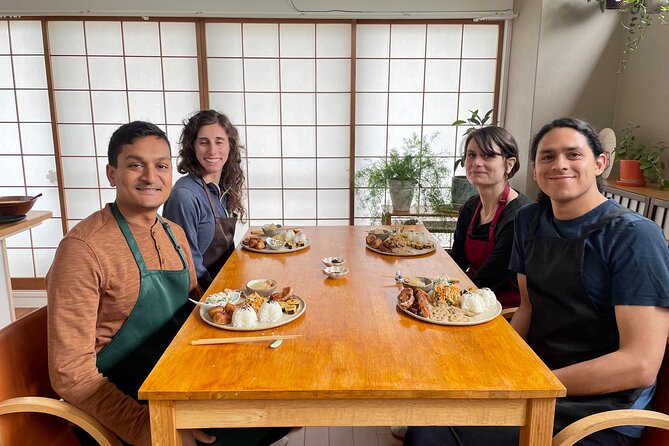
Kyoto’s Buddhist cooking tradition turns simple vegetables, tofu, seaweed, grains, and fermented foods into a carefully balanced meal. In this private class, Yukari or Yuka guides you through seven dishes, from miso-glazed eggplant to vegetarian fried chicken made with wheat gluten, then serves the meal you helped prepare.
I like the hands-on format and the practical recipes you can take home. I also like the cultural context: this is not just a lesson in chopping vegetables, but an introduction to Shojin-ryori and Kyoto’s local ingredients. The main consideration is that the experience lasts about two and a half hours and focuses on cooking, not a full guided temple tour, even though Enkoji, Shisendo, and Ginkakuji appear in the itinerary.
In This Review
- Key points to know before booking
- What Shojin-ryori brings to a Kyoto cooking class
- Meeting Yukari or Yuka in Kyoto
- The seven dishes you prepare
- From ingredient talk to lunch at the table
- The temple names in the itinerary
- Why the private format is worth considering
- Who will enjoy this most
- Timing, transport, and practical details
- The teaching style and strongest praise
- Should you book this Kyoto Buddhist cooking class?
- FAQ
- Where does the cooking class start?
- What time does the activity begin?
- How long does the experience last?
- Is this a private activity?
- What kind of food will I cook?
- Is the meal vegan?
- Can the class accommodate gluten-free diets?
- What is included in the price?
Key points to know before booking
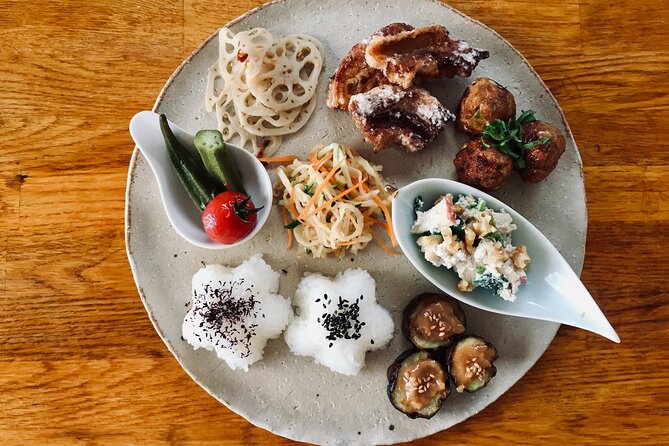
- Seven vegan dishes: Cook seasonal vegetables, lotus root, eggplant, tofu salad, wheat-gluten dishes, and rice balls.
- A private class: Only your group participates, which allows the teacher to adjust explanations and cooking help to your pace.
- Kyoto food culture: Learn why Buddhist cooking avoids meat and fish, and how soybeans, seaweed, grains, and fermented foods shape the meal.
- A complete lunch: Ingredients, water or tea, equipment, apron, facility costs, and recipes are included.
- Good for families and vegetarians: Children as young as 11 have been kept involved, and the food suits vegan diners.
- Easy planning: The class starts at 10:00 a.m., uses a mobile ticket, and offers free cancellation up to 24 hours before the start time.
What Shojin-ryori brings to a Kyoto cooking class
Shojin-ryori is traditional Buddhist cooking made without animal products. Its roots are tied to temple food, where the rules against killing animals shaped a cuisine based on vegetables, tofu, grains, seaweed, mushrooms, and fermented seasonings.
That does not mean plain or repetitive food. The appeal is in the small changes of texture, color, and cooking method. A vegetable may be simmered, braised, fried, dressed with miso, or paired with tofu so that each dish feels different.
I like this approach because it gives you a better sense of Japanese food than a quick restaurant meal. You learn how familiar ingredients are treated with care. Lotus root becomes a thinly sliced kinpira. Eggplant is softened and finished with miso. Tofu becomes shiraae, a mashed tofu salad with a creamy texture but no dairy.
The meal is also designed to feel balanced. You are not preparing seven large plates of the same thing. Instead, you make a selection of small dishes that work together as a composed lunch.
A few more Kyoto trips to weigh up
- Ramen Cooking Class at Ramen Factory in Kyoto
★ 5.0 · 1,937 reviews - Kyoto: Ramen Cooking Class at a Ramen Factory with Souvenir
★ 4.9 · 532 reviews - Kyoto: Ramen, Gyoza, and Onigiri Cooking Class
★ 5.0 · 445 reviews
Meeting Yukari or Yuka in Kyoto
The experience begins at 10:00 a.m. at Fairmont Building 16, Ichijoji Nodacho, Sakyo Ward, Kyoto, postal code 606-8165. The meeting point is near public transportation, and the activity returns there at the end.
The class is led by Yukari or Yuka, depending on the session. The strongest part of the teaching is the personal attention. Yukari is described as a warm host who has written books and articles about Japanese food, while Yuka is praised for patient explanations and an easy manner around the cooking table.
That matters in a class built around unfamiliar ingredients. You may know tofu and eggplant, but the preparation methods, seasonings, and textures can be new. A teacher who explains not only what to do but why you are doing it makes the food easier to recreate later.
This is a private activity, so only your own group takes part. That is useful for couples, families, and small groups with different cooking abilities. You will not be trying to keep up with a large room full of people.
The seven dishes you prepare
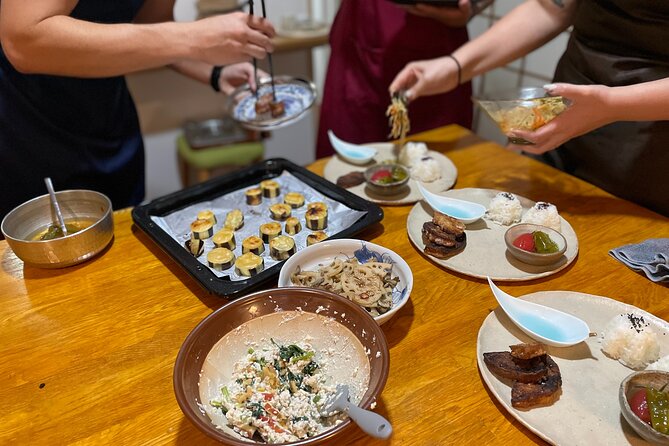
The exact menu centers on seven dishes, with two rice balls included as part of the meal. The recipes make a good introduction to the range of Shojin-ryori.
Simmered seasonal vegetables show how Japanese cooking brings out the natural taste of produce rather than covering it with heavy sauce. The seasonal element means the vegetables can change, but the lesson remains the same: careful cutting and gentle cooking matter.
Dried strips of daikon salad introduce a useful Japanese pantry ingredient. Dried daikon has a different bite from fresh radish, and using it shows how traditional cooking preserves vegetables and adds texture to a meal.
Kinpira of lotus root uses thinly sliced lotus root, braised until seasoned but still pleasantly firm. Lotus root is one of those ingredients that looks unusual at first but becomes approachable once you learn how it is cut and cooked.
Nasu dengaku is eggplant finished with a miso glaze. Eggplant absorbs flavor well, and the sweet-savory miso topping gives this dish a satisfying depth without meat or fish.
Shiraae combines mashed tofu with vegetables in a soft salad. This is a good example of tofu used as a dressing and base rather than as a simple block served on the side.
Spicy teriyaki balls bring a stronger, sweeter flavor to the plate. They provide contrast with the more delicate vegetable dishes and show how a vegetarian meal can still have bold seasoning.
Vegetarian fried chicken uses wheat gluten instead of poultry. The point is not to pretend that the dish is actual chicken. It is a playful way to create a chewy, savory centerpiece from a plant-based ingredient.
You also make two rice balls, which complete the lunch and give you a simple skill to practice at home. By the end, you have handled several techniques and assembled a meal with varied color, flavor, and texture.
From ingredient talk to lunch at the table
The class begins with an explanation of Shojin-ryori and an introduction to local ingredients and products. This opening is important because it gives the dishes a cultural frame before you start cooking.
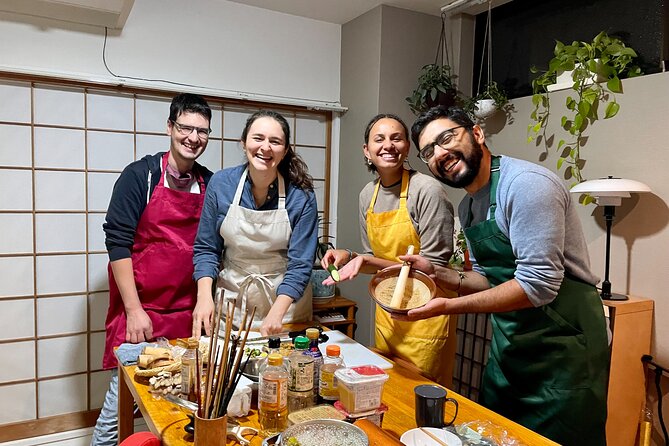
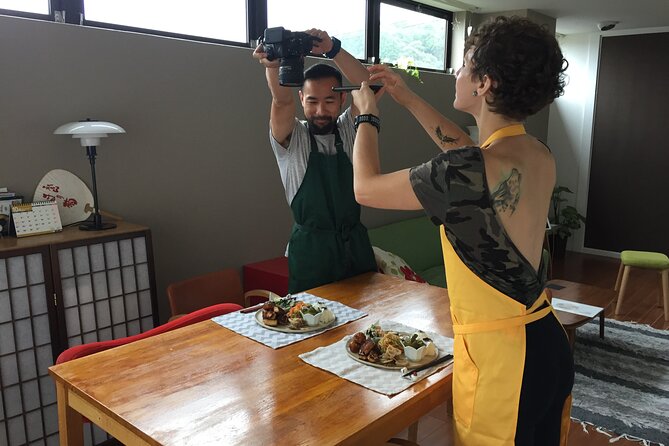
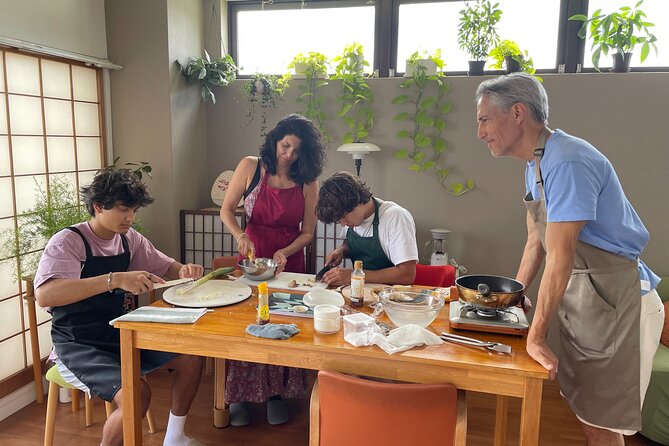
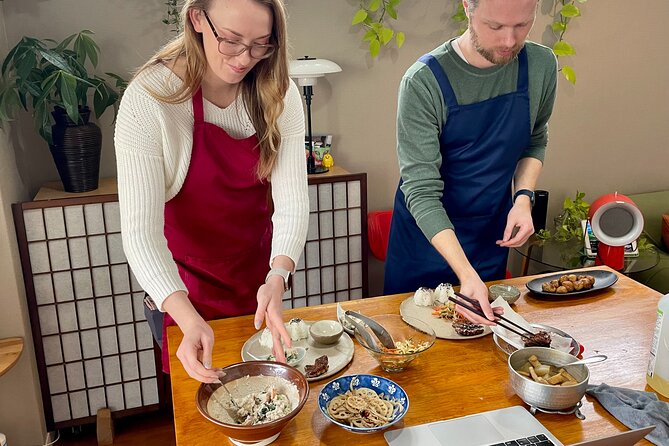
Then you put on an apron and work through the recipes by hand. The class is not presented as a demonstration where you sit quietly and watch a professional do everything. You help prepare the food, learn the techniques, and take part in assembling the final plate.
The pace of two and a half hours gives enough time for instruction, cooking, and eating without turning the morning into an all-day commitment. You should still expect a fairly active session. Seven dishes require attention, especially if your group includes children or people who do not cook often.
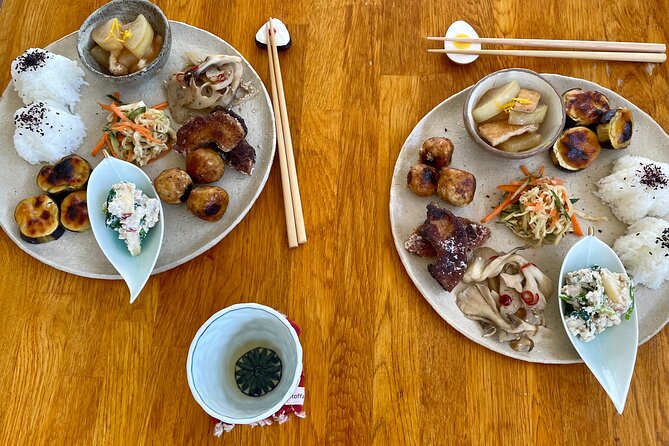
At the end, you sit down to a plate lunch made by your group. Water or tea is included. The meal is the payoff, but the real value is that you understand how each item was prepared.
Recipes are included, which makes this more useful than a one-off food activity. You can use them later to recreate parts of the meal at home. The recipes also help you remember ingredients and steps that might otherwise blur together after a busy day in Kyoto.
Same city, a completely different kind of day:
- PERFECT KYOTO 1-Day Bus Tour
★ 5.0 · 13,518 reviews - Kyoto: Fushimi Inari, Kinkakuji, Bamboo Grove 1 Day Bus Tour
★ 4.8 · 4,316 reviews - Kyoto: Tea Ceremony in a Traditional Tea House in Kiyomizu
★ 4.9 · 3,519 reviews - Kyoto Geisha Walking Tour: Gion District & Hidden Gems
★ 4.7 · 3,273 reviews
The temple names in the itinerary
Enkoji Temple, Shisendo Temple, and Ginkakuji Temple are named as itinerary stops. These are important Kyoto sights, but the supplied details do not describe a separate temple visit, guided sightseeing route, or admission arrangement as part of the cooking session.
I would therefore treat the cooking class as the main event and confirm the role of these locations before booking if temple sightseeing is important to you. The activity begins and ends at the listed meeting point, and private transportation is not included.
That distinction matters. You should not assume that the price covers transport between several temples or a full temple commentary. If you want to visit Enkoji, Shisendo, or Ginkakuji independently, you may need to plan that separately.
The location in Sakyo Ward can also shape your day. Since the class begins in the morning and ends at the meeting point, you can use it as one part of a larger eastern Kyoto itinerary, but you should allow time for your own transportation plans.
Why the private format is worth considering
The price is $70.94 per person. For a short group cooking demonstration, that might feel high. Here, the cost includes the ingredients for seven dishes, a drink, apron, cooking equipment, utility charges, facility fees, and recipes.
The private format adds value for families and small groups. You can ask questions without waiting for a turn, and the teacher can spend more time on a technique that gives you trouble. It also keeps the meal personal rather than making you one person in a crowded class.
I would especially consider the price fair if you want a vegan meal that is both educational and substantial. You are not paying only for lunch. You are paying for the instruction, the cultural background, the ingredients, and the chance to repeat the recipes later.
The value is less clear if you are looking for a broad sightseeing tour or a long temple visit. In that case, this activity is too focused on food to replace a proper Kyoto sightseeing experience.
Who will enjoy this most
This class is a natural fit for vegetarians and vegans, since the cooking avoids animal products. It also works well for people who want to understand Japanese food beyond sushi, ramen, and tempura.
Families can benefit from the private setup. An 11-year-old has been kept entertained during the class, suggesting that the teacher can make the session accessible to children. Still, the cooking involves several dishes and may not suit a child who dislikes kitchen tasks or longer seated activities.
Couples and friends who enjoy food will get the most from the relaxed, social format. The class has also worked well for people who had already taken other Japanese cooking courses and wanted something more focused on Buddhist cuisine.
It is less suitable if you want to eat a large amount of familiar Western-style food, or if you prefer to watch rather than participate. Shojin-ryori is built around vegetables and plant-based ingredients, so you should be open to new textures and restrained seasoning.
Gluten-free requests can be accepted, but you need to mention this ahead of time. That is especially important because the menu includes wheat gluten in the vegetarian fried chicken.
Timing, transport, and practical details
The activity lasts about 2 hours and 30 minutes and begins at 10:00 a.m. Because it ends back at the meeting point, you have a clear start and finish, but private transportation is not included.
The mobile ticket makes entry simple. Confirmation is provided at booking, and the meeting point is near public transportation. I would still check your route carefully before the morning of the class, especially if you are staying in another part of Kyoto.
The class includes an apron and all equipment, so you do not need to bring cooking tools. Water or tea is included with the meal.
Service animals are allowed. The activity is private, but the available information does not describe the room layout, step-free access, or other mobility details. If those points matter to you, ask the provider before booking.
Cancellation is free up to 24 hours before the start time for a full refund. Changes or cancellations made less than 24 hours before the start time are not accepted for a refund, with cut-off times based on local Kyoto time.
The teaching style and strongest praise
The teaching receives especially strong praise for kindness, patience, and clear explanations. That combination is worth noting because cooking classes can become frustrating when instructions move too quickly.
Yukari’s background in Japanese food adds depth to the lesson, while Yuka is described as a thoughtful teacher who enjoys cooking and conversation with participants. The tone appears friendly rather than formal, which helps when you are handling ingredients you have never used before.
The food itself also receives repeated praise. That is not surprising given the menu, but it is still useful: the class is not only about learning Buddhist food in theory. You finish with a meal people found delicious, varied, and satisfying.
The written recipes are another repeated strength. I would keep them with your travel notes and mark the dishes you most want to make at home. The eggplant, tofu salad, lotus root, and rice balls are likely to be the easiest starting points, while wheat gluten may require a special shopping trip depending on where you live.
Should you book this Kyoto Buddhist cooking class?
Book it if you want a personal food lesson with a full vegan lunch, practical recipes, and a clear connection to Kyoto’s Buddhist traditions. The seven-dish menu gives you much more range than a class built around one famous item, and the private format is a real advantage for families or small groups.
I would also choose it if you have already seen several temples and want an activity that teaches you how Japanese food works at home. At $70.94, the included food, equipment, drink, recipes, and instruction make the price reasonable for a private 2.5-hour class.
Skip it if your main goal is a guided temple tour or if you are not interested in plant-based cooking. The temple names in the itinerary should not lead you to assume that transport and sightseeing are included.
For vegetarians, curious cooks, and anyone who wants a quieter, more hands-on side of Kyoto, this is a strong choice.
FAQ
Where does the cooking class start?
The class starts at Fairmont Building 16, Ichijoji Nodacho, Sakyo Ward, Kyoto, postal code 606-8165.
What time does the activity begin?
The start time is 10:00 a.m.
How long does the experience last?
The cooking experience lasts approximately 2 hours and 30 minutes.
Is this a private activity?
Yes. Only your group participates in the activity.
What kind of food will I cook?
You will prepare seven dishes inspired by Shojin-ryori, including simmered seasonal vegetables, dried daikon salad, lotus root kinpira, miso-glazed eggplant, shiraae tofu salad, spicy teriyaki balls, vegetarian fried chicken made with wheat gluten, and two rice balls.
Is the meal vegan?
The Buddhist cooking is made without animal products such as meat and fish. The class focuses on vegan dishes.
Can the class accommodate gluten-free diets?
Yes, gluten-free requests can be accepted. You should let the provider know in advance.
What is included in the price?
The price includes lunch ingredients, water or tea, an apron, cooking equipment, utility charges, facility fees, and recipes. Private transportation is not included.
Just added around Kyoto
- Kyoto: Gion Geisha District & Sake-in-Hand Walking Tour★ 5.0 · 37 reviews
- Your Private Vacation Photography Session In Kyoto★ 5.0 · 110 reviews
- Kyoto: Zen Meditation at a Private Temple with a Monk★ 5.0 · 25 reviews
- Traditional Japanese Washi Papermaking- Kyoto morning★ 5.0 · 77 reviews
- Kyoto Wagashi(Japanese sweets) Cooking Class near Fushimiinari★ 5.0 · 60 reviews
- Private Pewter Sake Cup Experience with a Kyoto Artisan★ 5.0 · 31 reviews
- Kyoto Private 6 hour Tour: English Speaking Driver Only, No Guide★ 5.0 · 88 reviews
- Kyoto:Family-Friendly Kimono & Yukata Experience at WARGO★ 5.0 · 147 reviews
Cooking Classes, compared.
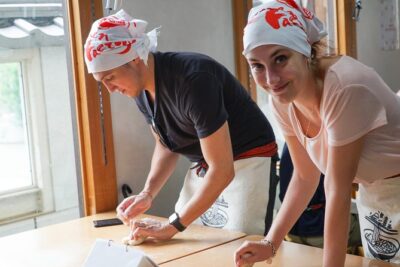
Ramen Cooking Class at Ramen Factory in Kyoto
Read our review →
Ramen & Gyoza Cooking Class in Tokyo with Local Supermarket Visit
Read our review →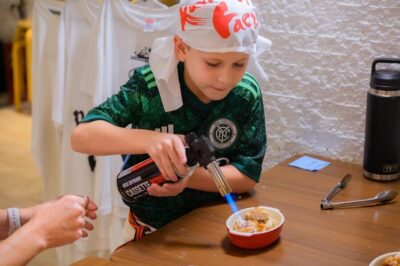
Ramen Cooking Class at a Ramen Factory with Souvenir
Read our review →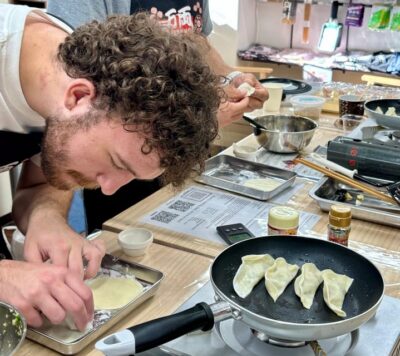
Japanese Washoku Bento Small Group Cooking Class
Read our review →

Easy Ramen Cooking Experience in Kabukicho, Shinjuku
Read our review →
Ramen and Sushi Cooking Class with Sake Pairing Set in Tokyo
Read our review →Browse the lists this tour appears in