
REVIEW · JAPANESE COOKING CLASSES
Ramen & Gyoza Cooking Class in Tokyo with Local Supermarket Visit
Tokyo’s best food lessons do not always happen in a restaurant school. At YUCa’s Japanese Cooking, you enter a real home kitchen in Nishiogu, meet host YUCa, and learn to make two familiar Japanese dishes: ramen and gyoza. The class combines demonstration, shared preparation, cultural explanation, and lunch.
I like the small maximum group of seven, which gives the session a friendly, social feel without the scale of a large cooking studio. I also like the practical recipes, especially the way gyoza can be made while the ramen cooks. The main consideration is that the class is not fully hands-on at every stage, since one kitchen means some steps are demonstrated rather than completed individually.
In This Review
- Key points at a glance
- A home kitchen lesson in Nishiogu
- The 10:15 introduction to Japanese home cooking
- Making ramen between demonstration and preparation
- Folding gyoza while the ramen cooks
- Eating the meal you helped make
- The optional supermarket visit from 12:30 to 1:00
- What the $122.70 price means
- Who should book this Tokyo cooking class?
- Should you book YUCa’s ramen and gyoza class?
- FAQ
- Where does the ramen and gyoza cooking class take place?
- What time does the class start?
- How long does the experience last?
- What dishes will I make?
- Is the supermarket visit included?
- Is a vegetarian option available?
- Can I report dietary requirements?
- How many people can join the class?
- Where does the activity end?
- Can I cancel for a full refund?
Key points at a glance
- A real Tokyo home kitchen: You see a more personal side of the city than you would from a restaurant counter or formal cooking school.
- Two useful dishes in one class: Learn approachable ramen and minced-pork gyoza, then eat the meal you helped prepare.
- Friendly instruction from YUCa: Her warm, energetic teaching style suits beginners, families, couples, and mixed-age groups.
- A neighborhood beyond central Tokyo: The class takes place in Nishiogu, in Arakawa City, away from the usual sightseeing circuit.
- Optional supermarket visit: The planned add-on runs from 12:30 to 1:00, but you should confirm it in advance because it has not always taken place.
- Good for English-speaking visitors: Instructions and cultural explanations are given in English, and dietary needs should be stated when booking.
A home kitchen lesson in Nishiogu
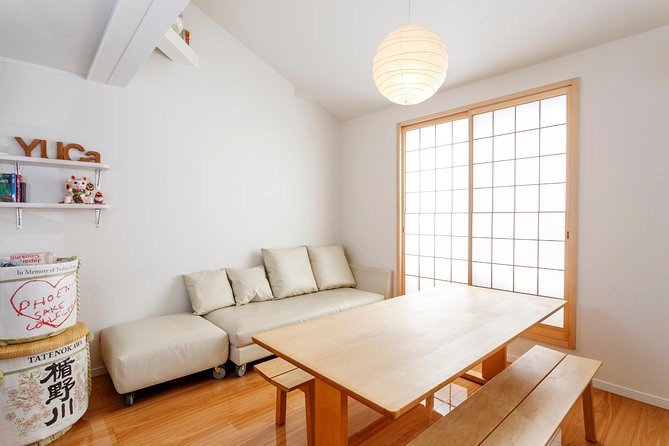
The class begins at 10:00 a.m. at YUCa’s Japanese Cooking, located at 2-chome-34-8 Nishiogu in Arakawa City. This is not central Tokyo’s neon core, and that is part of the appeal. You reach a residential neighborhood where the experience feels connected to daily life rather than built only for sightseeing.
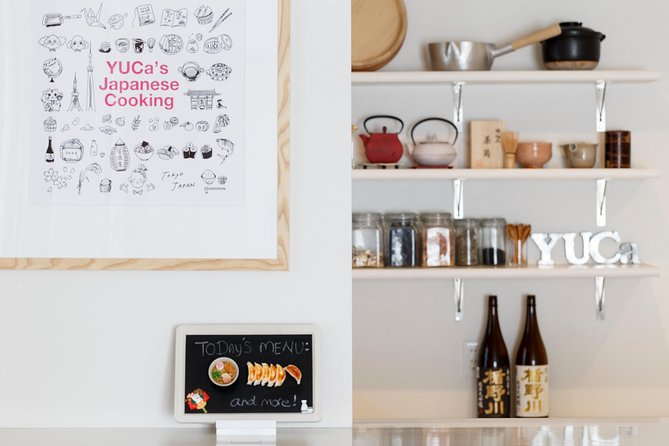
The setting matters. In a home kitchen, you get a glimpse of how Japanese cooking works in an ordinary domestic space. You can ask questions about ingredients, methods, and food customs in a relaxed setting. Several participants have also appreciated the chance to see a part of Tokyo that many first-time visitors miss.
The kitchen is described as cute, comfortable, and well prepared. The group size is capped at seven people, although the exact number in your session can vary. A small class makes it easier to talk with YUCa and the other people at the table, but it does not mean every person will have a separate cooking station.
More Japanese Cooking Classes in Tokyo
- Sushi Making Tokyo Roll and Authentic Japanese Sushi Class
★ 5.0 · 3,971 reviews - Tokyo: Roll and Authentic Sushi Making Class in Asakusa
★ 4.9 · 1,957 reviews - Tokyo: Sushi Making Class in a Happi Coat near a Famous Spot
★ 4.9 · 1,377 reviews
The 10:15 introduction to Japanese home cooking
After the meeting period, the formal lesson begins with a short talk from 10:15 to 10:30. YUCa introduces Japanese home cooking and everyday lifestyle, giving the food some context before you start preparing it.
This is a useful part of the class because ramen and gyoza are not just menu items. They are dishes you can find in restaurants, family kitchens, convenience stores, and supermarkets across Japan. The introduction helps explain how they fit into ordinary meals and why simple ingredients can produce such satisfying food.
YUCa is praised for clear English, patience, and an easy teaching manner. She also adds personal touches, such as writing participants’ names in Japanese characters based on their pronunciation. Those details are small, but they help make the morning feel like a cultural exchange instead of a recipe demonstration.
Making ramen between demonstration and preparation
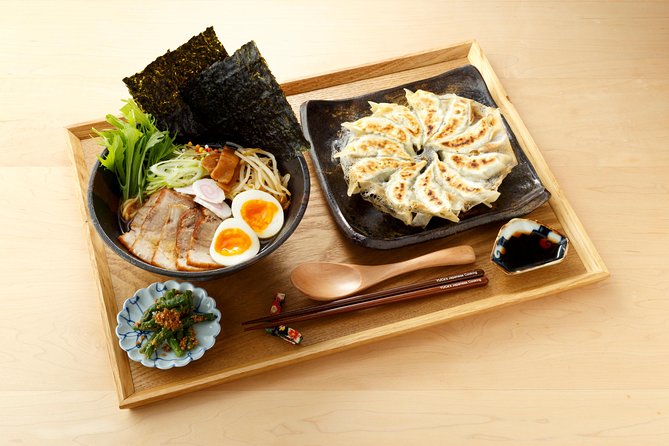
The main cooking session runs from 10:30 to 12:30. You work through a ramen preparation that is designed to be manageable for home cooks. The supplied description refers to different vegetables and meat, along with a noodle soup assembled from several components.
You should expect a mix of watching, assisting, and assembling. Some parts involve adding measured powders or liquids rather than making every element from scratch. That keeps the class within two and a half hours and makes the recipes easier to repeat at home, but it may disappoint you if you want a technical lesson on long-simmered broth or handmade noodles.
This is the key distinction to understand before booking. The experience teaches you how to put together a delicious ramen meal and understand its parts. It is not presented as an advanced ramen-making course covering every stage of stock production, noodle manufacture, or professional kitchen technique.
I see that as a fair trade for a short class. You get a recipe that feels possible in a normal home kitchen, rather than a process that requires specialist equipment or an entire day. The meal is also served during the experience, so you can judge the finished result immediately and ask questions while the details are fresh.
Folding gyoza while the ramen cooks
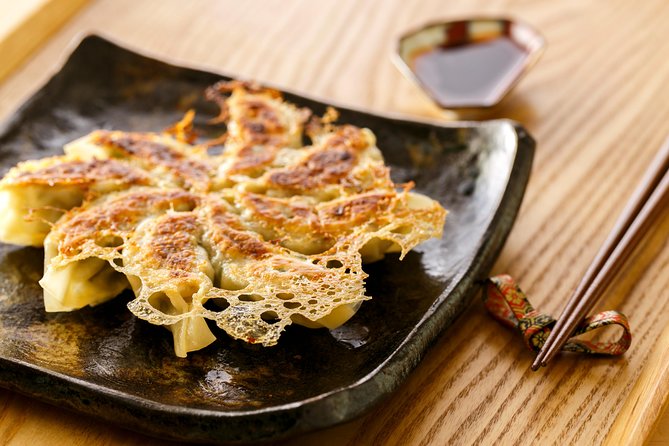
The gyoza portion adds the most hands-on fun. While the ramen ingredients cook, you prepare minced-pork dumplings with vegetables and learn how to fold them by hand.
Gyoza shaping is especially good for families and mixed groups because it is easy to try, compare, and improve. Children and teenagers can take part, and the task does not require advanced knife skills. The class has been described as suitable for cooks and non-cooks alike, which makes sense here: the pleasure comes from learning a repeatable technique, not from proving your kitchen ability.
You will not simply watch YUCa make the dumplings. Participants are given roles and take part in the preparation, though the amount of individual work depends on the group size and the step being taught. If you want to be involved as much as possible, tell YUCa at the start and ask which tasks you can handle.
The recipes are also practical souvenirs. You leave with more than a meal and a few photographs. You have learned a way to prepare ramen and gyoza using ingredients and steps that can be adapted at home. Several people have specifically looked forward to recreating the dishes after returning home.
Same city, a completely different kind of day:
- Mt Fuji and Hakone 1-Day Bus Tour Return by Bullet Train
★ 5.0 · 26,383 reviews - 1-Day Tokyo Bus Tour
★ 5.0 · 14,250 reviews - Tokyo: TOKYO SKYTREE® Admission ticket
★ 4.5 · 11,192 reviews - Tokyo: teamLab Planets TOKYO Digital Art Museum Entry Ticket
★ 4.6 · 9,779 reviews
Eating the meal you helped make
The best part of the schedule arrives naturally: you sit down and eat the ramen and gyoza after preparing them. The meal functions as both lunch and a lesson review. You can taste how the vegetables, meat, dumpling filling, noodles, and soup work together.
Portion size may be a consideration. One participant found the food portions a little small, so you should think of this as a substantial tasting lunch rather than a guaranteed large feast. For most people, the value lies in the instruction, setting, and meal combined.
The social side is another reason the class works. You share the kitchen with people from different places, and the format encourages conversation while food cooks. If you prefer a private lesson with uninterrupted individual attention, a larger cooking school or private booking may suit you better. If you enjoy meeting people over lunch, the shared format is a plus.
The optional supermarket visit from 12:30 to 1:00
The advertised schedule allows for a local supermarket tour after the cooking and tasting, from 12:30 to 1:00 p.m. This can be one of the most useful parts for a visitor who wants to keep cooking Japanese food at home.
A supermarket gives you a practical look at products that can be hard to identify in Japan. You can ask about ingredients, packaging, unusual foods, and what to buy for future recipes. The visit also takes you further into the everyday rhythm of the neighborhood, away from the shops most visitors see around major stations.
There is an important catch: the supermarket portion is optional and has not always been included in practice. One participant was unable to join it because a companion was ill and needed to return to a hotel. Other feedback also says the tour did not happen and wonders if an older description was still being used.
Because of this, confirm the supermarket visit before you book and again before the class. Do not treat it as guaranteed unless YUCa confirms that it is operating on your date. The cooking class remains the main product, and you should be happy with that part on its own.
What the $122.70 price means
At $122.70 per person, this is not a budget lunch. You are paying for a two-and-a-half-hour activity, instruction, ingredients, a home setting, and the chance to eat the food you prepare. The price makes more sense if you value access to a local host and want a cultural activity that goes beyond ordering food in a restaurant.
The small group helps support the cost. A maximum of seven creates a more personal setting than a large class, and YUCa’s role includes explaining cooking methods and Japanese home life, not just handing you a printed recipe.
The value is strongest for families, first-time visitors, and anyone who wants a recipe they can repeat. It is less compelling if you already cook ramen and gyoza regularly or expect a fully individual, chef-level workshop. You should also price it with the supermarket visit treated as a possible extra, not the main reason for paying.
The experience is currently shown with a 5 out of 5 rating from 823 reviews and a 100 percent recommendation rate. Those figures suggest unusually strong satisfaction, but the specific criticism about limited hands-on work and the inconsistent supermarket stop is worth keeping in mind.
Who should book this Tokyo cooking class?
I would recommend it to families with older children, couples, siblings, solo visitors comfortable joining a small group, and anyone who enjoys food as a way to understand a place. The class has worked well for children around school age through teenagers, grandparents, and adults with little cooking experience.
It is also a good choice if you have already seen Tokyo’s major sights and want a quieter neighborhood activity. The location takes you outside the inner tourist zones, giving you a different view of the city without requiring a full day away from sightseeing.
Vegetarians can request an option, and you should provide any dietary requirements when booking. The published information does not list every possible allergy accommodation, so be specific about your needs rather than assuming a substitution will be available.
You may want to skip it if your main aim is an intensive, fully hands-on cooking workshop. The kitchen has one main workspace, and some steps are demonstration-style. You will participate, but not necessarily perform every part of the recipe yourself.
The start time is 10:00 a.m., and the activity ends back at the meeting point. The location is near public transportation, though you should allow time to find the residential address. One participant used a taxi service, while another specifically valued the trip outside central Tokyo. A mobile ticket is provided, and confirmation arrives at booking.
Free cancellation is available up to 24 hours before the start time for a full refund. Changes or cancellations inside that window are not accepted for a refund, and the activity requires at least two people per booking. If the minimum is not met and the class is canceled, you are offered another date or experience, or a full refund.
Should you book YUCa’s ramen and gyoza class?
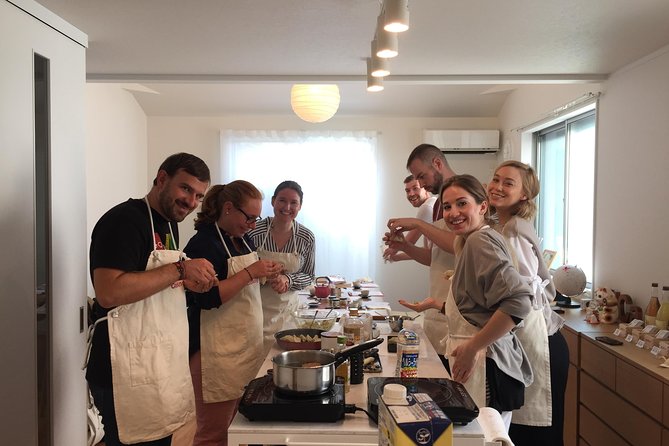
Book it if you want a warm, home-based food experience with approachable recipes, a friendly teacher, and a meal you make yourself. The strongest reasons are YUCa’s welcoming style, the chance to see a real Tokyo kitchen, and the useful combination of ramen and hand-folded gyoza.
Go in with the right expectations. This is a social cooking lesson, not a professional ramen seminar, and not every step is fully hands-on. Confirm the optional supermarket visit before committing to it as part of your plan.
For most visitors, the class offers good cultural value as well as lunch. If you want to leave Tokyo with a recipe, a new cooking skill, and a look at residential Arakawa City, this is a sensible choice.
FAQ
Where does the ramen and gyoza cooking class take place?
It takes place at YUCa’s Japanese Cooking, 2-chome-34-8 Nishiogu, Arakawa City, Tokyo 116-0011, Japan.
What time does the class start?
The meeting time is 10:00 a.m.
How long does the experience last?
The cooking class lasts approximately two hours and 30 minutes. The schedule lists a 10:00 a.m. meeting, cooking and tasting from 10:30 a.m. to 12:30 p.m., and an optional supermarket visit from 12:30 to 1:00 p.m.
What dishes will I make?
You will learn to prepare ramen and gyoza. The gyoza are minced-pork dumplings, and the recipes use different vegetables and meat.
Is the supermarket visit included?
The supermarket visit is listed as optional and scheduled for 12:30 to 1:00 p.m. Because it has not always taken place, confirm its availability with the provider before booking.
Is a vegetarian option available?
Yes. A vegetarian option is available, but you must request it when booking.
Can I report dietary requirements?
Yes. You should advise the provider of any specific dietary requirements at the time of booking.
How many people can join the class?
The maximum group size is seven people. A minimum of two people per booking is required.
Where does the activity end?
The activity ends back at the meeting point.
Can I cancel for a full refund?
Yes, if you cancel at least 24 hours before the experience start time. Cancellations or changes made less than 24 hours before the start time are not refunded or accepted.
More Workshops in Tokyo
- Tokyo Shinjuku Chopsticks Making Class
★ 5.0 · 1,763 reviews - Chopstick Making Workshop in Ginza
★ 4.8 · 1,366 reviews - Tokyo Sushi Making Class in Tsukiji with Professional Chef
★ 5.0 · 1,177 reviews - Matcha Making Class in Tokyo with Authentic Japanese Sweets Set
★ 5.0 · 744 reviews
More Cooking Classes in Tokyo
- Tokyo: Easy Ramen Cooking Experience in Kabukicho, Shinjuku
★ 4.6 · 321 reviews - Ramen and Sushi Cooking Class with Sake Pairing Set in Tokyo
★ 5.0 · 291 reviews - Tokyo: Wagyu and 7 Japanese Dishes Cooking Class
★ 4.9 · 273 reviews - Tokyo Washoku 4-hour Cooking Class: From Market to Table
★ 5.0 · 253 reviews
Just added around Tokyo
- Tokyo: Customizable Private Guided Walking Tour★ 4.5 · 129 reviews
- Private Harajuku Omotesando Architecture Tour★ 4.9 · 18 reviews
- Tokyo: Private Personalized Local Food Tour★ 4.5 · 101 reviews
- Tokyo: Guided Helicopter Ride★ 4.9 · 24 reviews
- Tokyo: Guided Walking Tour of Tsukiji Market with Lunch★ 4.4 · 24 reviews
- Tokyo GINZA: KONPARU Japanese Cabaret Show with Drink★ 4.8 · 38 reviews
- Tokyo: Guided Walking Tour of Tsukiji Market with Breakfast★ 4.4 · 134 reviews
- Tokyo: Gotokuji Cat Temple, Shinjuku Cat Cafe & 3D Cat Tour★ 4.9 · 38 reviews
Japanese Cooking Classes, compared.
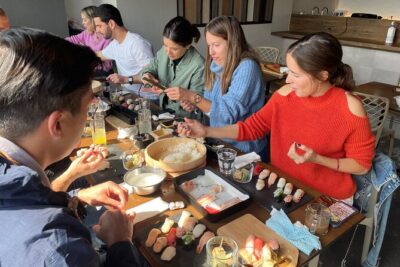
Sushi Making Tokyo Roll and Authentic Japanese Sushi Class
Read our review →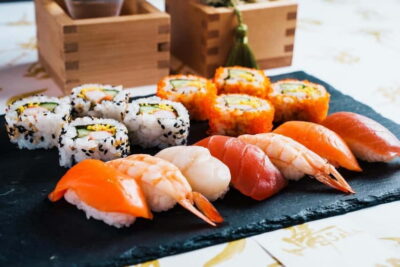
Roll and Authentic Sushi Making Class in Asakusa
Read our review →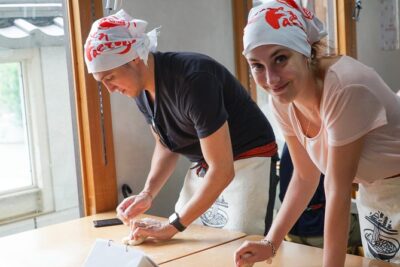
Ramen Cooking Class at Ramen Factory in Kyoto
Read our review →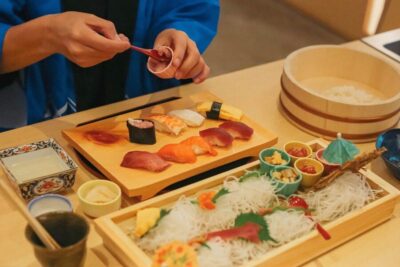
Sushi Making Class in a Happi Coat near a Famous Spot
Read our review →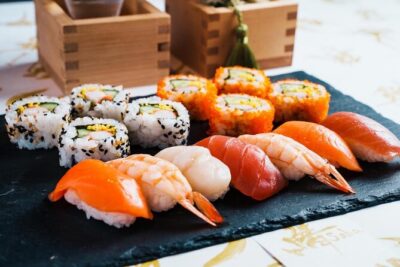
Sushi Making Osaka Roll and Authentic Japanese Sushi Class
Read our review →
Tokyo Sushi Making Class in Tsukiji with Professional Chef
Read our review →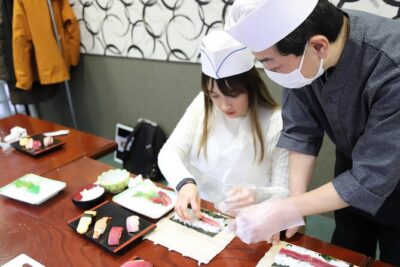
Tsukiji Fish Market Guided Tour and Sushi Making with Pro Chef
Read our review →
Sushi Making in Kyoto! Same-day bookings welcome!
Read our review →Browse the lists this tour appears in