
REVIEW · WORKSHOPS
Tokyo Photography Masterclass – Private Photography Lesson
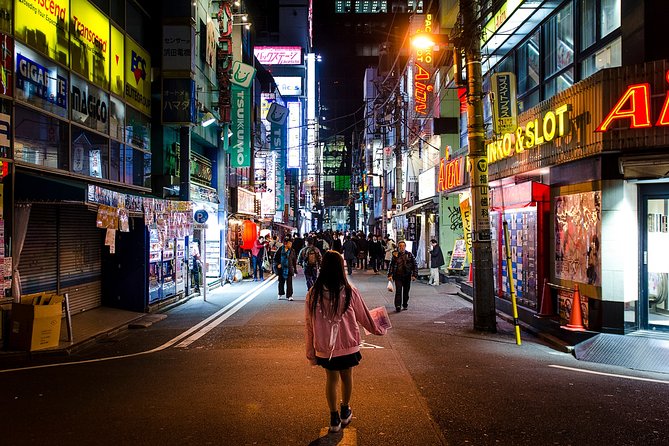
Tokyo Photography Masterclass is less a sightseeing walk with a camera than a one-on-one lesson in seeing. You can work on Hachiko Crossing, Shibuya back streets, Harajuku street scenes, neon-lit Shinjuku, or the temple paths around Asakusa after dark.
I like the fully private format, which lets you spend time on the subjects that matter to you. I also like that the guide teaches both camera controls and visual judgment, from aperture and shutter speed to lines, repetition, texture, lighting, and subject choice.
The main consideration is cost: at $190 per person for about three hours, this is a serious purchase for a short activity. You also need to bring your own camera, and a tripod costs extra if you want one.
In This Review
- Key points at a glance
- What this Tokyo photography lesson actually offers
- Starting at Hachiko and working the Shibuya crossing
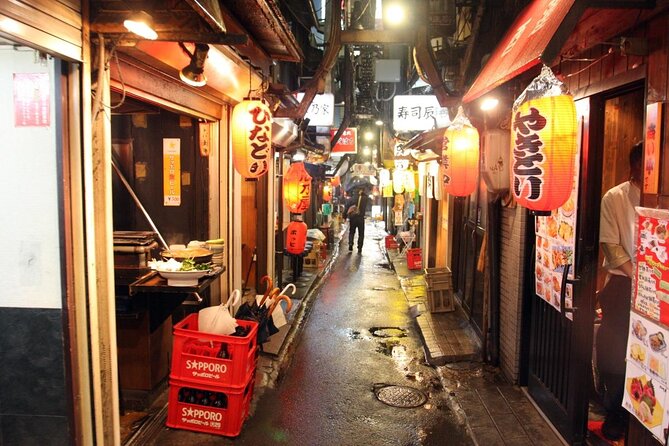
- Shibuya back streets and Harajuku street photography
- Shinjuku after dark: neon, towers, and light trails
- Asakusa after dark and Senso-ji
- The camera skills you will practice
- How the private format affects the experience
- Is $190 per person good value?
- Who should book this photography experience?
- Final call: book it for instruction, not just pictures
- FAQ
- How long does the Tokyo Photography Masterclass last?
- What is the price?
- Is this a private activity?
- Where does the tour start?
- Where does the tour end?
- Is a camera included?
- Can I rent a tripod?
- Which Tokyo areas can the tour cover?
- Can beginners take the lesson?
Key points at a glance
- A private lesson, not a standard group walk: Your guide can adjust the pace and location to your interests and skill level.
- Hachiko is the starting point: The meeting spot puts you beside one of Tokyo’s most famous street-photo settings.
- Several photo styles are possible: Choose from crossings and youth fashion, car-light trails, neon streets, or temple photography after dark.
- Technical skills are part of the tour: You work on aperture, shutter speed, ISO, focus, and composition.
- Guide Karl is praised for teaching: His friendly approach and clear explanations are especially useful if you want more than snapshots.
- You need your own camera: A tripod is not included, though one can be rented.
What this Tokyo photography lesson actually offers
The appeal here is personal attention. Instead of following a large group from one fixed stop to another, you spend roughly three hours with a professional photographer and local guide. That changes the feel of the outing. You can ask why a frame works, how to handle difficult light, or which camera setting will help with a moving subject.
The lesson suits a first-time camera owner, but it is not limited to beginners. The teaching covers basic controls, while the guide can also help semi-professionals sharpen composition and develop a more deliberate photographic style.
That range matters in Tokyo. The city gives you crowded crossings, small side streets, fashionable pedestrians, temples, skyscrapers, reflections, signs, and moving traffic. You can make a good picture here by reacting quickly, but you can also make a better one by slowing down and deciding what belongs in the frame.
The tour has a 4.8 rating from 25 ratings, with 96 percent recommending it. That is a strong result, though the sample is not large. The clearest praise centers on the teaching. Guide Karl is described as friendly, experienced, and effective at sharing what he knows. One particularly useful piece of advice comes from the tour provider itself: booking early in your trip gives you more time to use the skills elsewhere in Japan.
A few more Tokyo trips to weigh up
- Best Go Kart Experience in Shibuya Crossing with Iconic Photos
★ 5.0 · 348 reviews - Tokyo Go-Karting Experience: Shibuya Crossing with Photos
★ 4.8 · 190 reviews - Tokyo Cyberpunk Street Photo Tour
★ 5.0 · 165 reviews
Starting at Hachiko and working the Shibuya crossing
The stated meeting point is the Hachiko Statue at 2 Chome-1 Dogenzaka in Shibuya. This is a sensible start for a photography lesson because you are placed directly beside one of Tokyo’s best-known street scenes. Hachiko itself is a familiar subject, but the real attraction is the pedestrian crossing nearby.
A busy crossing gives you practice with timing, layers, and motion. You can work on repeating figures, strong lines, changing gaps between people, and the way signs and buildings frame the scene. The guide can also help you decide whether to capture the whole crossing or isolate one person, gesture, or patch of light.
Do not expect the crossing alone to fill three hours. Its value is as a practical classroom. You can make several attempts, review what is working, and adjust shutter speed or focus rather than simply taking one hurried picture and moving on.
The starting point is also convenient for public transportation. The activity ends back at the meeting point, so you do not need to work out a new return route after the lesson. That is useful if you are carrying camera equipment or planning an evening meal in Shibuya.
Shibuya back streets and Harajuku street photography
From the famous crossing, the street-photo option continues into Shibuya’s back streets and then toward Harajuku. This gives you a useful contrast. The crossing is about scale and movement, while side streets offer closer details, different textures, and less predictable compositions.
Harajuku adds youth fashion and a more eclectic street scene. The guide can help you think about how to photograph clothing, color, gesture, and groups of people without letting the background become distracting. This is where the lesson’s focus on subject and lighting becomes practical rather than theoretical.
The route is not only for people with expensive equipment. A phone photographer or first-time camera user can work on framing and timing, while a more advanced photographer can refine focus choices, shutter speed, and visual rhythm.
Still, street photography has a built-in uncertainty. You cannot control every subject or moment. If you want a guaranteed view or a quiet setting, this option may feel less predictable. If you enjoy reacting to real city scenes, that uncertainty is part of the value.
Shinjuku after dark: neon, towers, and light trails
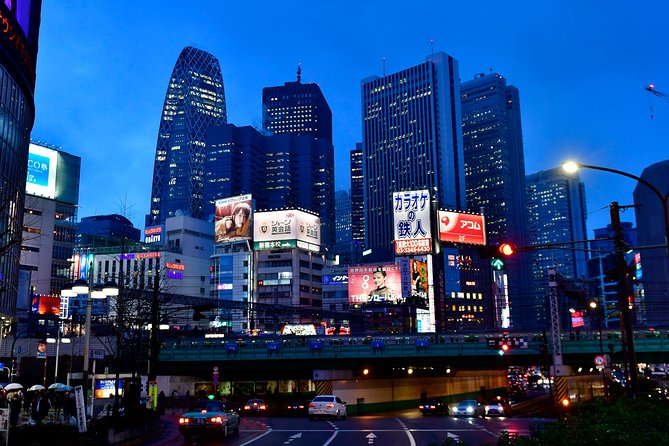
The night photography option can move into Shinjuku, where neon signs, tall buildings, and late-night street activity provide a very different lesson. Artificial light can confuse a camera, so this setting gives you a useful chance to work on exposure, focus, and color.
You may also photograph car-light trails against a futuristic Tokyo backdrop. Light trails require patience and careful control of shutter speed. That makes them a good exercise in technique because the result depends on timing and camera settings, not just on pointing toward a bright street.
The guide can show you how aperture, ISO, shutter speed, and focusing affect the final frame. These settings are easy to memorize and harder to apply when the scene is dark, moving, and full of competing lights. A private session lets you ask the same question more than once and try the adjustment immediately.
Shinjuku is likely the more energetic night choice. Signs and traffic provide plenty to photograph, but the setting may feel visually crowded. You will need to decide what to exclude. That is a useful composition exercise, but it may not suit someone hoping for a calm evening walk.
Same city, a completely different kind of day:
- Mt Fuji and Hakone 1-Day Bus Tour Return by Bullet Train
★ 5.0 · 26,383 reviews - 1-Day Tokyo Bus Tour
★ 5.0 · 14,250 reviews - Tokyo: TOKYO SKYTREE® Admission ticket
★ 4.5 · 11,192 reviews - Tokyo: teamLab Planets TOKYO Digital Art Museum Entry Ticket
★ 4.6 · 9,779 reviews
Asakusa after dark and Senso-ji
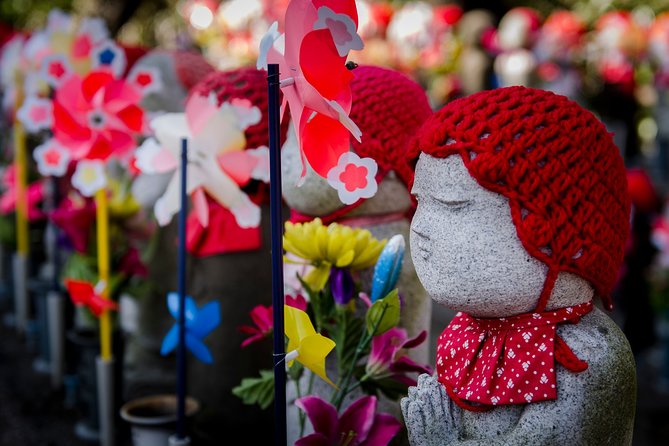
If you prefer a quieter mood, the night option can focus on Asakusa and Senso-ji. The Buddhist temple and nearby paths offer a slower setting than Shinjuku, with architectural details and nighttime atmosphere replacing the bright signs and heavy traffic.
Senso-ji gives you a chance to practice composition through symmetry, lines, texture, and angles. Temple spaces can also teach you to work with limited light without relying on a busy subject. The nearby paths add room for smaller details and less obvious frames.
This choice may be better if you want photographs with a sense of place rather than fast street action. It is also a useful setting for someone who finds crowded crossings or neon signs overwhelming.
The tradeoff is variety. Shinjuku offers more artificial light and movement, while Asakusa is calmer and more focused. Since the tour is private, you can discuss which style suits your goals instead of being locked into a group’s preference.
The camera skills you will practice
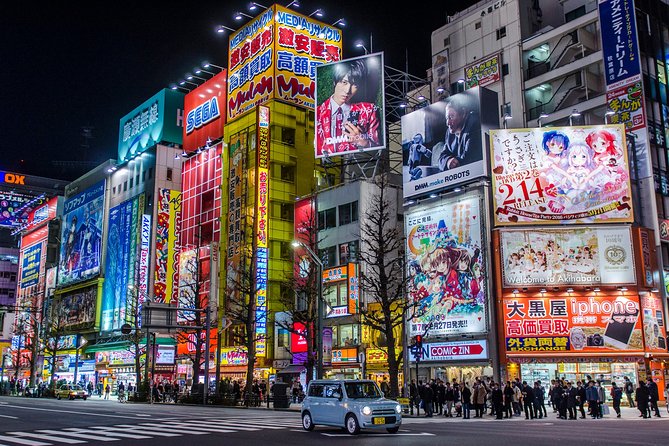
The technical teaching is one of the strongest reasons to book this experience. The guide covers four core controls:
- Aperture: Useful for controlling how much of the scene appears sharp and for shaping the background.
- Shutter speed: Important for freezing movement at a crossing or creating streaking car lights.
- ISO: Helps you handle darker scenes, though it affects image quality.
- Focusing: Essential when people, vehicles, and changing distances compete for your attention.
The lesson also covers composition. You can work with lines, repetition, texture, angles, subject placement, and lighting. These ideas apply to any camera, including a phone, because they are about how you choose and arrange a picture.
The phrase sharpening your eye is useful here. A camera can record a busy Tokyo street, but it cannot decide what the picture is about. The guide’s role is to help you notice the subject, background, light, and moment before you press the shutter.
The session includes a review of your photography as well. This is valuable because advice becomes clearer when it is tied to your own images. You can learn not only what to change, but also why a frame feels weak or why another one holds together.
How the private format affects the experience
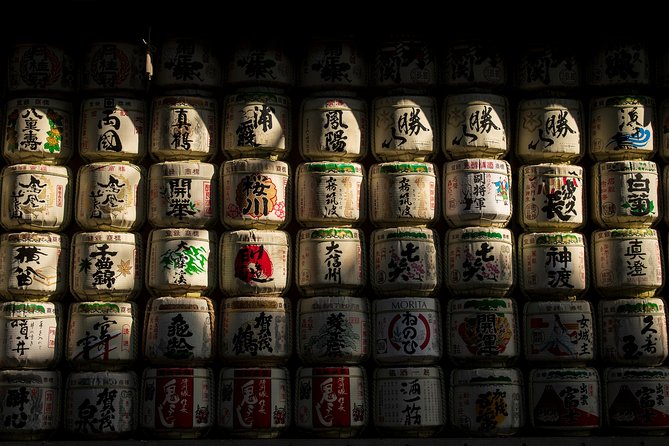
A private tour means only your group participates. For photography, that is a major advantage. You do not have to keep pace with strangers, and you can spend longer at Hachiko, move on quickly, or ask for more help with a particular setting.
It also allows the route to reflect your interests. You can concentrate on famous landmarks, less familiar streets, people, architecture, night scenes, or a mixture. The description specifically allows time for the perfect shot at Hachiko Crossing or for places you would not normally find on your own.
The limitation is that the quality of the session depends partly on how clearly you explain your goals. If you are a beginner, say so. If you already understand exposure but want help with composition, say that too. A private lesson gives the guide room to adapt, but you need to tell the guide what you hope to improve.
The guide’s personality matters more in a private setting than in a large group. Karl is specifically praised for a friendly manner and clear instruction. That suggests a good fit for photographers who want patient coaching rather than a fast tour with a few technical comments.
Is $190 per person good value?
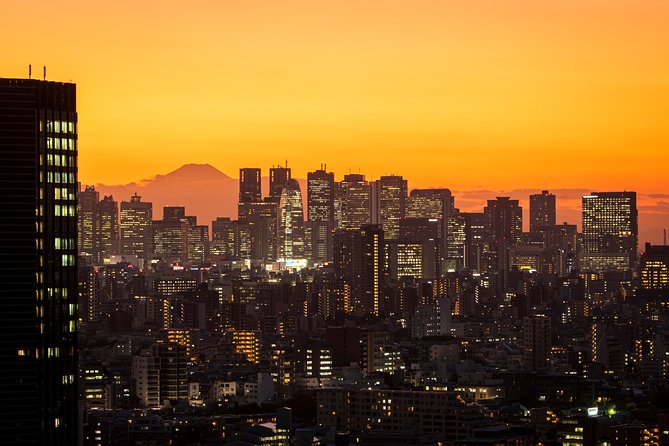
The price is $190 per person. That is not a cheap way to see Tokyo, especially for a three-hour activity. You are paying for private instruction and a professional photographer guide, not simply for admission or transportation.
For a beginner who wants to understand a camera early in a Japan trip, the cost can make sense. You may use the skills later at temples, markets, streets, and night scenes. The value improves if you arrive with clear questions and use the session as a working class rather than a guided photo stop.
For an experienced photographer, the price is harder to judge. It depends on whether you want local help finding subjects and refining your eye. If you already know aperture, shutter speed, ISO, and focusing well, ask yourself if tailored composition advice and local route planning justify the fee.
Group discounts may reduce the per-person cost when more than one person books. Even then, remember that the experience is private for your group, not a large shared class. A mobile ticket is provided, and a tripod can be rented if needed, but your camera is not included.
The activity is booked an average of 24 days ahead. That is a useful planning signal, especially if you want a particular day or a night session. The stated cancellation terms allow a full refund when you cancel at least 24 hours before the start time. Changes or cancellations inside that window are not accepted for a refund.
Who should book this photography experience?
I would put this tour high on the list for three kinds of people. First are beginners who have a camera but are unsure how to use manual controls. Tokyo provides plenty of subjects, and private instruction can prevent three hours of random button pressing.
Second are photographers who want help with street work. Shibuya and Harajuku give you people, motion, fashion, and changing light. The guide can help you work faster and make stronger choices in a difficult setting.
Third are visitors who want night photographs but do not know how to handle them. Shinjuku’s neon and light trails, or Senso-ji after dark, give the lesson a clear purpose.
I would be more cautious if your main goal is sightseeing. The tour teaches while it moves, so you will spend time adjusting settings, repeating shots, and reviewing images. That is exactly right for a photography lesson, but not the best use of time if you want a broad tour of Tokyo.
Final call: book it for instruction, not just pictures
Book the Tokyo Photography Masterclass if you want to leave with better habits, not merely a folder full of Tokyo snapshots. The private format, choice of street or night settings, and review of your own photographs give the three hours real teaching value.
The $190 price is substantial, and the camera is yours to provide. But if you book near the start of your trip, you can put the lessons to work for the rest of your time in Japan. Choose Shibuya and Harajuku for people and movement, Shinjuku for neon and light trails, or Asakusa for temple scenes after dark.
FAQ
How long does the Tokyo Photography Masterclass last?
The private lesson lasts approximately three hours.
What is the price?
The listed price is $190 per person. Group discounts are available.
Is this a private activity?
Yes. Only your group participates in the activity.
Where does the tour start?
It starts at the Hachiko Statue at 2 Chome-1 Dogenzaka, Shibuya, Tokyo 150-0043, Japan.
Where does the tour end?
The activity ends back at the meeting point.
Is a camera included?
No. You need to bring your own camera.
Can I rent a tripod?
Yes. A tripod is available to rent, but it is not included in the tour price.
Which Tokyo areas can the tour cover?
The options include Hachiko Crossing, Shibuya back streets, Harajuku, Shinjuku after dark, and Asakusa with Senso-ji after dark.
Can beginners take the lesson?
Yes. The experience is suitable for all levels, from people using a camera for the first time to semi-professional photographers.
Just added around Tokyo
- Private Memorable Tokyo Tour with English Speaking Driver★ 5.0 · 30 reviews
- Private Tokyo Custom Full-Day Tour by Chartered Vehicle★ 5.0 · 16 reviews
- Private Sightseeing to Mt Fuji and Hakone with English Driver★ 5.0 · 51 reviews
- Private Mt. Fuji Day Trip from Tokyo with English-Speaking Driver★ 5.0 · 33 reviews
- 4 Day Tour – Mount. Fuji, Tokyo, Hakone, Kamakura and Yokohama★ 5.0 · 19 reviews
- Private Unforgettable Mt Fuji Tour with English Speaking Driver★ 5.0 · 142 reviews
- Private Tokyo Food Tour – A Journey Through Time Through Food★ 5.0 · 36 reviews
- Private Tokyo Custom Half-Day Tour by Chartered Vehicle★ 4.5 · 13 reviews
Workshops, compared.

Sushi Making Tokyo Roll and Authentic Japanese Sushi Class
Read our review →

Roll and Authentic Sushi Making Class in Asakusa
Read our review →
Ramen Cooking Class at Ramen Factory in Kyoto
Read our review →
Sushi Making Class in a Happi Coat near a Famous Spot
Read our review →

Sushi Making Osaka Roll and Authentic Japanese Sushi Class
Read our review →
Tokyo Sushi Making Class in Tsukiji with Professional Chef
Read our review →Browse the lists this tour appears in