
REVIEW · GO-KARTS
Tokyo Go-Karting Experience: Shibuya Crossing with Photos
Driving a go-kart across Shibuya Crossing turns a familiar Tokyo landmark into a moving photo shoot. You pass through Harajuku, Omotesando, Yoyogi Park, and Shinjuku, then roll into one of the city’s most famous intersections in a tiny open kart. It is a strange, noisy, highly memorable way to see central Tokyo.
I like the small group size, capped at four, and the guides’ hands-on approach. Names such as Rakesh, Luna, Serhii, Reece, Julian, and Ken come up often in the experience, and the tour depends heavily on clear instructions and calm road leadership. I also like that digital photos and one hard-copy photo are included, rather than being sold as an extra.
The main catch is simple: this is a driving activity, not a sightseeing bus. You must be confident handling a kart in city traffic, and the tour can be rescheduled in rain. The paperwork is also strict. Japan requires a physical 1949 Geneva Convention International Driving Permit booklet for most drivers, not a phone image, photocopy, card, or permit issued under the 1968 Vienna Convention.
In This Review
- Key points at a glance
- What this Tokyo kart tour really feels like
- Starting at Monkey Kart SHIBUYA
- Choosing a costume before the ride
- Harajuku and Omotesando: style before speed
- Yoyogi Park and the change in scenery
- Shinjuku and the Tokyo street view
- The Shibuya Crossing moment
- How good are the photos?
- Safety, confidence, and the paperwork trap
- Is $90 a fair price?
- Who should book this?
- Should you book the Shibuya go-kart tour?
- FAQ
- Where does the Tokyo go-kart tour meet?
- How long does the activity last?
- How much does the experience cost?
- What areas does the route visit?
- Is Shibuya Crossing included?
- What driving permit do I need?
- Are 1968 Vienna Convention permits accepted?
- What is included in the price?
- Can I cancel the booking?
Key points at a glance
- Shibuya Crossing from the driver’s seat: Cross the famous intersection in a go-kart rather than simply watching from the pavement.
- A four-person maximum: Small groups give the guide room to help each driver and take photos of everyone.
- Costumes included: Pick a playful outfit before setting off, with options such as character-style costumes and jerseys.
- A central Tokyo circuit: The route links Harajuku, Omotesando, Yoyogi Park, Shinjuku, and Shibuya in about an hour.
- Photos are part of the deal: You receive digital images and one printed photo, with a mount available for your own action camera.
- Driving documents matter: Bring your passport and the correct hard-copy IDP, or a JAF Japanese translation if your license is from one of the specified countries.
What this Tokyo kart tour really feels like
This is not a quiet way to look at Tokyo. The kart puts you close to the street, at a low height, with the city moving around you. You notice signs, buildings, traffic lights, and people at a very different level than you do from a train or taxi.
The route is led by an English-speaking guide, who rides ahead and uses instructions and hand signals to keep the group moving together. That matters more than a long talk about local sights. You need to watch the guide, follow the pace, and stay alert.
The activity lasts one hour, including the city circuit. That is enough time to cover several districts, but it will feel short if you are having fun. One driver who booked an otherwise empty time slot was able to move a little faster and make a short extra detour, but you should not count on having the road to yourself or receiving extra time.
You should also expect attention from pedestrians and other road users. Costumes, bright karts, and Shibuya make this a public performance of sorts. If you prefer to blend into the background, choose a normal walking tour instead.
A few more Tokyo trips to weigh up
- Flagship 2-Hours Official Street Go-Kart Tour – Tokyo Bay Shop
★ 5.0 · 4,974 reviews - Official Street Go-Kart in Shibuya
★ 5.0 · 3,435 reviews - Official Street Go-Kart Tour – Akihabara
★ 5.0 · 1,578 reviews
Starting at Monkey Kart SHIBUYA
Meet at Monkey Kart SHIBUYA, where the staff prepare you for the road. Bring your passport and driving documents with you. The operator provides a go-kart, water, a tour guide, the photo shoot, digital photos, one printed photo, and a mount for an action camera or Insta360 device.
The preparation is practical rather than elaborate. You receive instructions on how to use the kart and what to do while driving. Guides such as Jerom and Rakesh have been praised for explaining the controls, road behavior, and hand signals before setting off. That early briefing is especially useful if you feel nervous.
The group limit of four is one of the best features. A large convoy would be harder to manage, and each driver would get less personal attention. With only a few people, the guide can keep an eye on the group and make sure the photo stops include everyone.
You can leave your phone, passport, and international license in a secure place at the shop, according to the operating arrangements described by the company. You may also want your phone for pictures at stops and traffic lights, but keep both hands and your attention where the guide tells you to. The action camera itself is not included, only the mount.
Choosing a costume before the ride
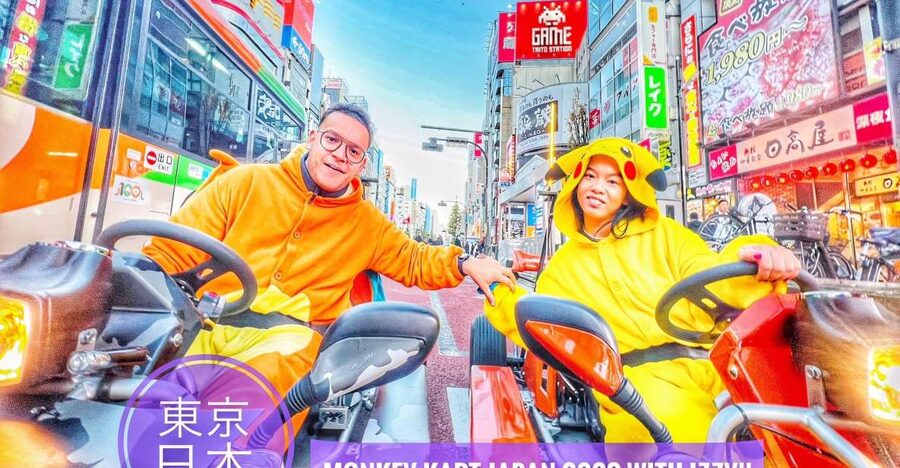
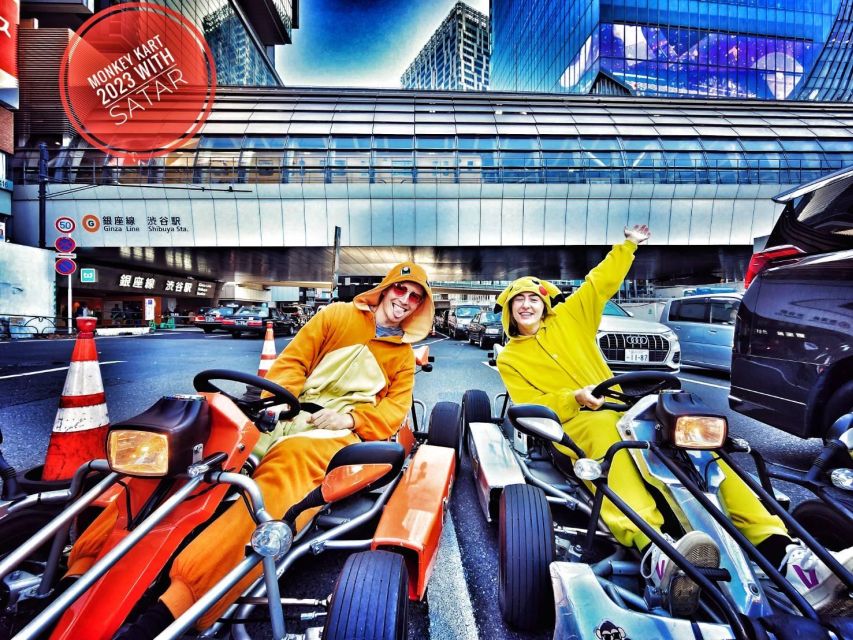
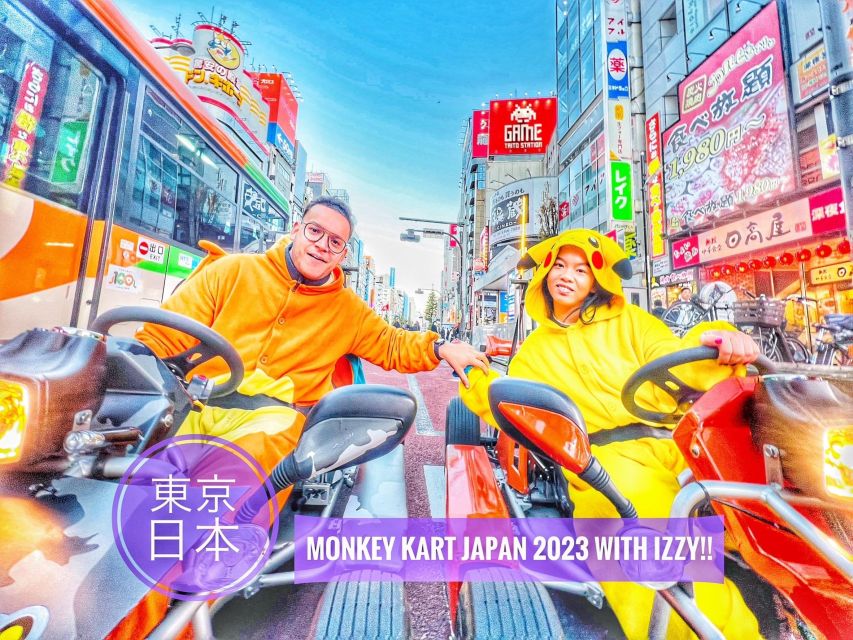
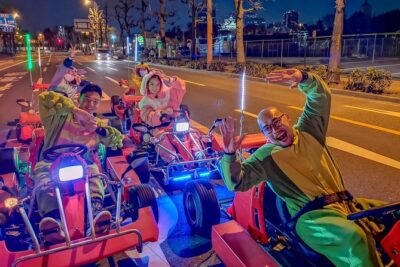
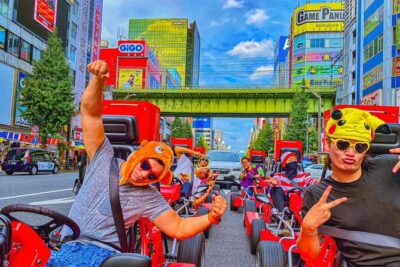
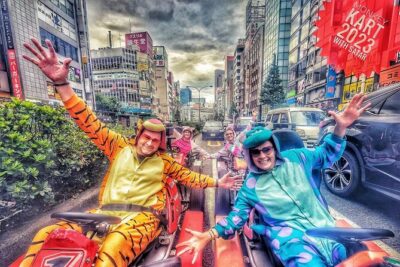
Before you set off, you choose a costume to make the photos more playful. The options are designed for fun rather than serious dress-up, and you might find character-style outfits, a Pikachu look, or sports jerseys among the choices.
This adds more than a silly extra. The costume makes the photos immediately recognizable as Tokyo kart photos, and it helps create a shared mood in the group. At the same time, you are still driving through public streets, so pick something that does not restrict your vision, movement, or ability to operate the kart.
The costumes are best for people who enjoy being noticed. Guides take photos at stops and during the route, and people on the street may look over or take their own pictures. You do not need to dress up to appreciate the ride, but the costume is part of what makes this different from renting a normal vehicle.
Harajuku and Omotesando: style before speed
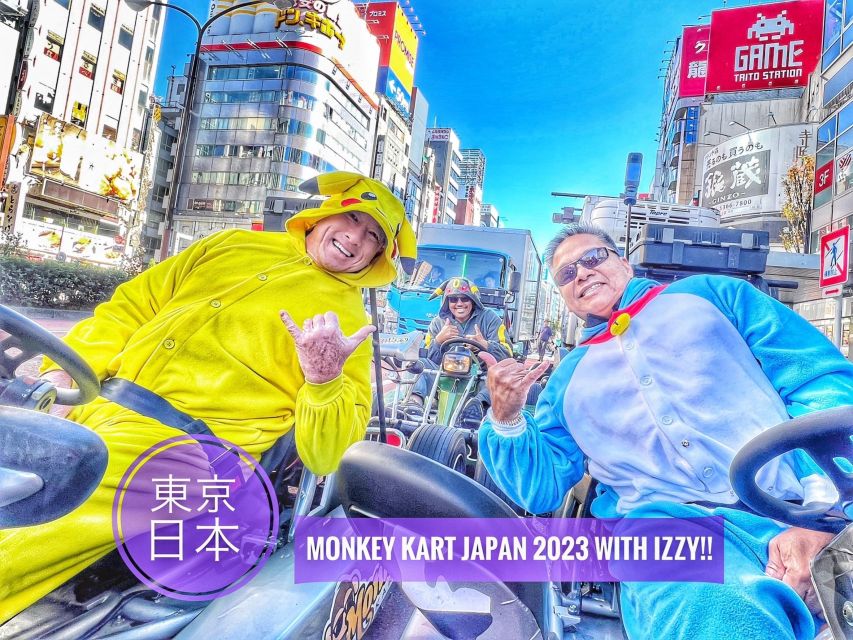
The route heads through Harajuku, one of Tokyo’s main districts for youth fashion, pop culture, and unusual shops. From a kart, you do not stop to browse in detail, but you get a quick street-level look at the district’s energy and changing style.
Omotesando provides a different mood. Its broad, polished avenue is associated with high-end shops, modern architecture, and carefully designed storefronts. The change from Harajuku to Omotesando gives the route some variety in a short time.
This part is more about seeing Tokyo in motion than checking off monuments. You will not have time to explore every side street, shop, or cafe. Think of it as a moving introduction that can help you decide where to return on foot later.
The guide adds useful context as you go. Julian, for example, was praised for explaining destinations along the route, while other guides have offered tips about nearby parts of the city. Do not expect a full history lecture. The value is in linking the streets you are passing with the larger shape of Tokyo.
Same city, a completely different kind of day:
- Mt Fuji and Hakone 1-Day Bus Tour Return by Bullet Train
★ 5.0 · 26,383 reviews - 1-Day Tokyo Bus Tour
★ 5.0 · 14,250 reviews - Tokyo: TOKYO SKYTREE® Admission ticket
★ 4.5 · 11,192 reviews - Tokyo: teamLab Planets TOKYO Digital Art Museum Entry Ticket
★ 4.6 · 9,779 reviews
Yoyogi Park and the change in scenery
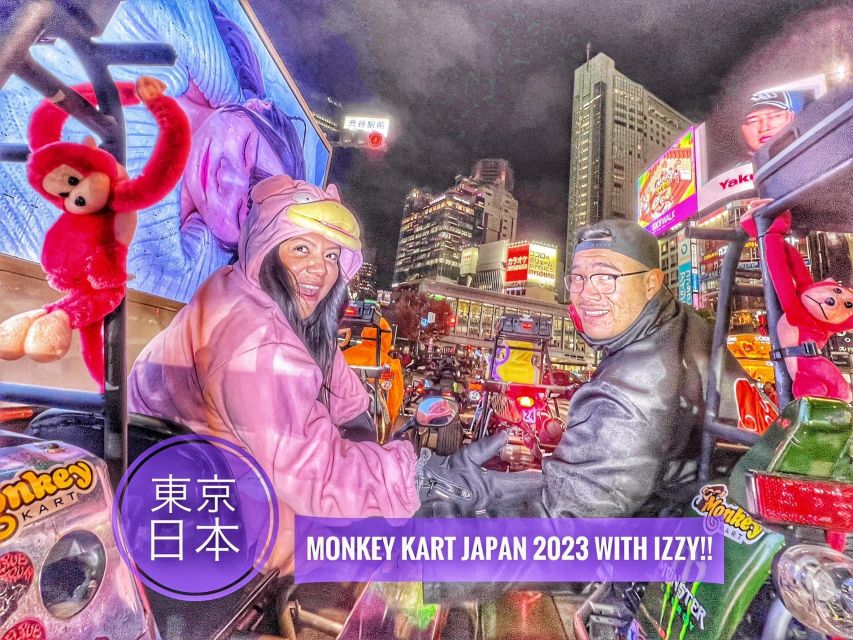
The route also passes Yoyogi Park, giving you a break from the dense commercial streets. The greenery is a welcome contrast to the signs, buildings, and traffic of Harajuku and Shibuya.
You see the park from the road rather than entering it, so this is not a park visit. Still, the change in scenery helps prevent the hour from feeling like one long stretch of shops and intersections. It also creates a better range of photo backgrounds.
The road sections between stops are part of the fun, but they are also where you need to concentrate most. You are driving, not sitting back with a camera. The guide sets the pace, and you should never let the excitement of taking pictures distract you from traffic signals or instructions.
Shinjuku and the Tokyo street view
Shinjuku brings another side of central Tokyo into the circuit. The district is known for its tall buildings, major streets, bright signs, and busy nightlife areas. The tour gives you a fast look at this urban center before returning toward Shibuya.
Several visitors have described the route through Shibuya, Shinjuku, Harajuku, and nearby districts as a strong way to cover a lot of Tokyo in one hour. I agree with that assessment, with one qualification: you see these places from the road, so the tour works best as an overview rather than a replacement for exploring them.
Morning and evening departures offer different sights. A morning ride may have lighter traffic, as one 9:30 a.m. driver found, which can make the driving feel easier. An evening departure gives you illuminated streets and a more dramatic setting, especially around Shibuya. Madeleine specifically enjoyed a 5 p.m. ride at night, while other drivers liked quieter morning roads.
The Shibuya Crossing moment
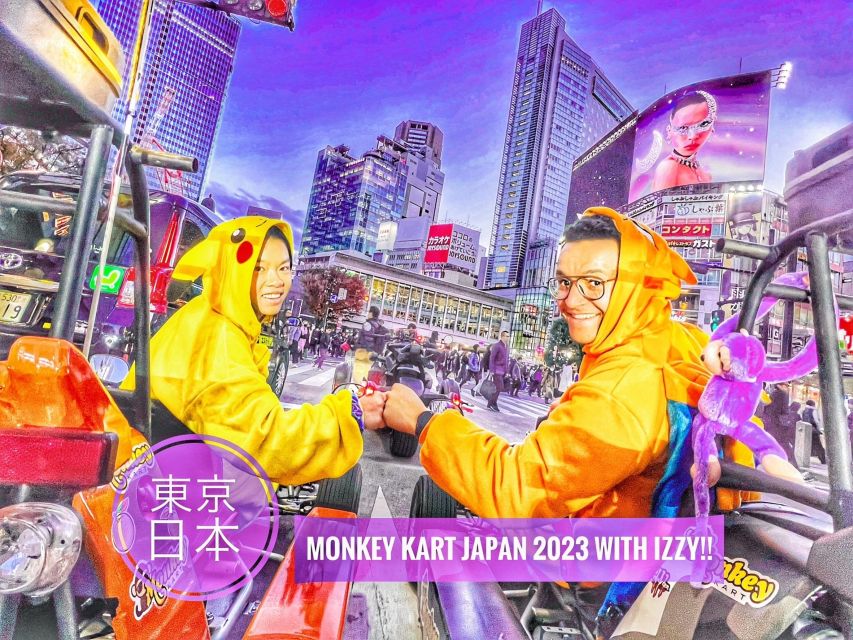
Shibuya Crossing is the centerpiece. You approach with the city lights, screens, buildings, and crowds around you, then cross the intersection as part of the guided route. This is the moment most people book the tour for, and it delivers a very different view from the usual observation points.
You will not get a long pause in the middle of the crossing. The appeal is the movement: you are part of the scene for a brief stretch, surrounded by the scale and energy of central Tokyo. The guide manages the route, so your job is to stay in line and follow the signals.
Photos make the crossing even more valuable. Guides stop at suitable points and take pictures of the group, then share digital images afterward. The included printed photo gives you a physical souvenir without an added charge.
Some guides also use a 360-degree camera when available, but the listed inclusion is a mount for your own action camera or Insta360 device, not the camera itself. If recording your own ride matters to you, bring compatible equipment and confirm how it should be mounted before leaving the shop.
How good are the photos?
The photo service is one of the strongest parts of this activity. Guides take pictures at stops and along the route, and the best images are provided digitally. You also receive one printed photo, which is a nice touch for a tour centered on memories and costumes.
The guide’s effort makes a difference. Rakesh is repeatedly praised for taking many photos and videos, while Luna, Serhii, Ken, and others are noted for making sure each person appears in the set. You cannot choose your guide in advance from the information provided, but the photo work is clearly treated as part of the service rather than a quick afterthought.
You can take your own phone pictures at stops and, in some situations, while waiting at a light. Do not assume you can freely use your phone while moving. The guide’s directions and road safety come first.
A mask may be useful if you are sensitive to exhaust. One driver sitting at the back noticed the smell of fuel, so position and traffic conditions may affect comfort. This is an open-air kart, not an enclosed vehicle, and you should dress for the weather.
Safety, confidence, and the paperwork trap
You need to be at least 18 years old. The activity is not suitable for pregnant women, children under 18, or people over 95 years old. You also need enough confidence to drive on Tokyo streets while keeping up with a guide.
Nervousness is normal. One driver described feeling anxious at first but getting comfortable with the kart within about five minutes. Guides such as Rafael, Rakesh, and Serhii have been praised for giving clear instructions and helping people feel safe. Still, a friendly guide cannot remove the basic responsibility of driving in city traffic.
The most important practical point is the driving permit. Most drivers must bring a hard-copy paper booklet of a 1949 Geneva Convention International Driving Permit issued by the official agency in their home country, such as AAA, AA, CAA, or the relevant agency where they live.
Japan does not recognize 1968 Vienna Convention permits, nor permits issued by IDA or IAA. Online copies, photocopies, and card-style licenses are not valid. You need to arrange the correct physical document before leaving home.
Drivers with licenses from France, Switzerland, Taiwan, Germany, Monaco, or Belgium need a Japanese translation of their local license. The physical translation can be obtained through the Japan Automobile Federation, or JAF.
The activity also says that permits from Indonesia, Pakistan, Saudi Arabia, Mexico, Brazil, Costa Rica, Colombia, Kuwait, Qatar, and some other countries may not be accepted. Check your exact eligibility before paying. This is not a detail to sort out at the shop.
Is $90 a fair price?
At $90 per person, this is not cheap transport around Tokyo. You are paying for a short guided driving activity, equipment, costumes, photos, water, and a printed image. The value comes from the unusual access and the fact that the tour combines several districts in one hour.
The included photos help. Digital images can cost extra on many activities, while here they are part of the package. You also avoid arranging your own route, figuring out the best photo stops, or managing a larger group.
The price makes more sense if you want a memorable activity rather than a detailed sightseeing tour. If your main goal is learning about Tokyo’s neighborhoods, public transport and walking will give you more time and more context for less money. If your goal is a bold travel story and distinctive photos, the kart earns its place in a Tokyo budget.
The small group limit improves the value too. A four-person maximum gives you a better chance of receiving personal guidance and photos than a large convoy would. One-hour timing keeps the cost and commitment manageable, though some people will wish the ride lasted longer.
Who should book this?
I would choose this for adults who enjoy driving, novelty, costumes, and being photographed in public. It works well for couples, friends, and small family groups with adult children. It can also suit a solo driver, though the group atmosphere will depend on who else books the same time.
You should skip it if you dislike road traffic, feel uncomfortable on a small open vehicle, or want a slow look at Tokyo’s architecture. It is also a poor fit if you cannot obtain the correct IDP before your trip.
For the best mood, consider an evening slot if you want illuminated Tokyo streets and a stronger Shibuya photo backdrop. Choose morning if you prefer lighter traffic and a calmer start. Rain can cause rescheduling, so keep some flexibility in your Tokyo plans.
The tour is operated by Monkey Adventure Kart and follows Japanese laws and regulations, with procedures confirmed by the relevant local authorities. That does not make it risk-free, but it does mean the activity is presented as a regulated road experience rather than an informal ride.
Should you book the Shibuya go-kart tour?
Book it if you want one hour of playful, street-level excitement and do not mind driving in costume. The route covers a lot, the photos are useful, and the small group format gives the guide room to look after you. The best part is not simply crossing Shibuya. It is seeing how quickly Tokyo changes from Harajuku style to Omotesando polish, Yoyogi greenery, Shinjuku towers, and Shibuya lights.
Before booking, check the permit rules with care. If your paperwork is correct and you are a confident driver, this is a strong choice for a memorable Tokyo afternoon or evening. If you want a quiet, detailed city tour, spend the $90 elsewhere.
FAQ
Where does the Tokyo go-kart tour meet?
You meet at Monkey Kart SHIBUYA.
How long does the activity last?
The tour lasts one hour.
How much does the experience cost?
The listed price is $90 per person.
What areas does the route visit?
The route passes through Harajuku, Omotesando, Yoyogi Park, Shinjuku, and Shibuya Crossing.
Is Shibuya Crossing included?
Yes. Crossing Shibuya Crossing is a main highlight of the route.
What driving permit do I need?
Most drivers need a hard-copy paper booklet of a 1949 Geneva Convention International Driving Permit issued by the official agency in their country.
Are 1968 Vienna Convention permits accepted?
No. Japan does not recognize 1968 Vienna Convention permits, IDA permits, or IAA permits for this activity.
What is included in the price?
The price includes the go-kart, guided tour, English-speaking guide, photo shoot, digital photos, water, one hard-copy photo, and an action camera or Insta360 mount. The camera itself is not included.
Can I cancel the booking?
You can cancel up to 24 hours in advance for a full refund. The activity can also be reserved with payment made later, subject to availability.
Just added around Tokyo
- Tokyo: Customizable Private Guided Walking Tour★ 4.5 · 129 reviews
- Private Harajuku Omotesando Architecture Tour★ 4.9 · 18 reviews
- Tokyo: Private Personalized Local Food Tour★ 4.5 · 101 reviews
- Tokyo: Guided Helicopter Ride★ 4.9 · 24 reviews
- Tokyo: Guided Walking Tour of Tsukiji Market with Lunch★ 4.4 · 24 reviews
- Tokyo GINZA: KONPARU Japanese Cabaret Show with Drink★ 4.8 · 38 reviews
- Tokyo: Guided Walking Tour of Tsukiji Market with Breakfast★ 4.4 · 134 reviews
- Tokyo: Gotokuji Cat Temple, Shinjuku Cat Cafe & 3D Cat Tour★ 4.9 · 38 reviews
Go-Karts, compared.
Flagship 2-Hours Official Street Go-Kart Tour – Tokyo Bay Shop
Read our review →
Tokyo Go Kart: Asakusa, Skytree, and Akihabara **IDP MUST**
Read our review →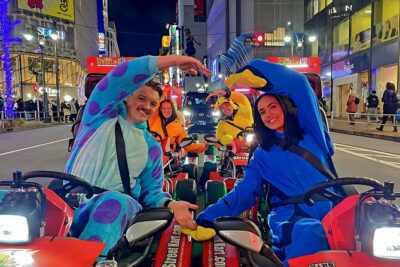
Shibuya Official Street Go-Kart in Shibuya Annex
Read our review →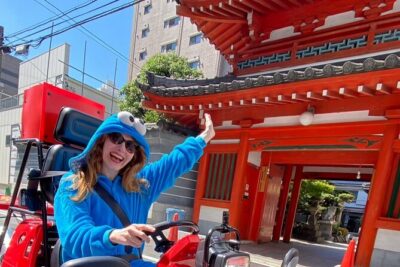
Asakusa, Skytree & Akhihabara Go-Kart City Experience
Read our review →Browse the lists this tour appears in