
REVIEW · GO-KARTS
Tokyo: Asakusa, Skytree & Akhihabara Go-Kart City Experience
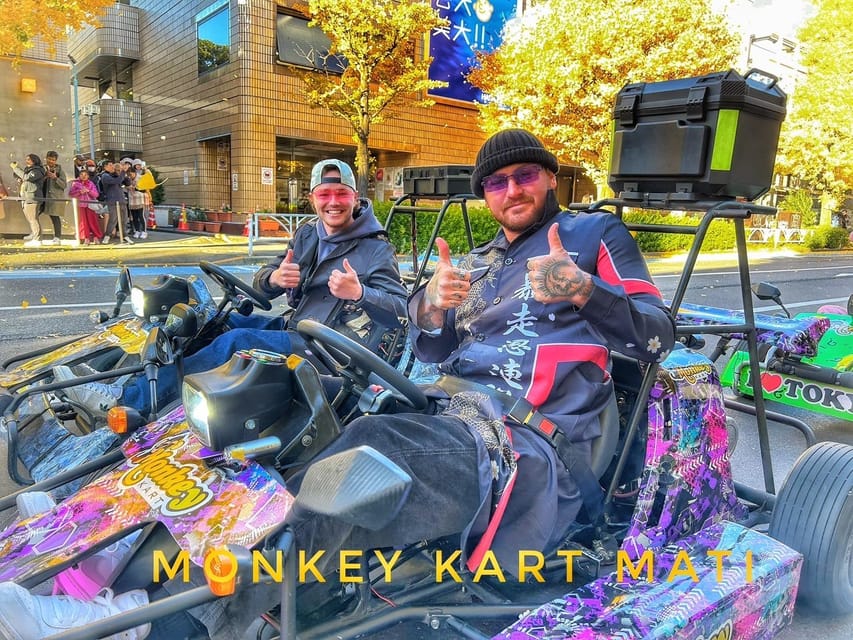
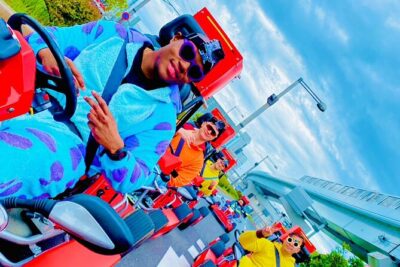
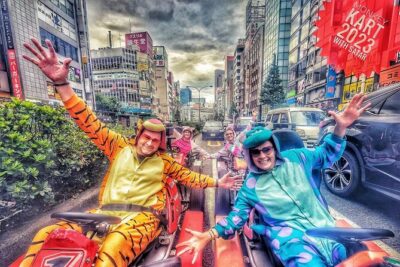
Tokyo looks different from a low-slung go-kart. You feel the air, sit close to the road, and pass through Asakusa, beneath the gaze of Tokyo Skytree, and toward Akihabara’s pop-culture streets. I like the small groups of up to eight and the fact that your guide, with names such as Adam, Shoma, Brandon and Hannah, leads the whole route rather than sending you off on your own.
I also like the included photo service, since handling a phone while driving is a poor plan. Costumes, water, an action-camera or Insta360 mount, and one hard-copy photo add useful fun without a long list of surprise extras. The main drawback is serious: you need the correct hard-copy driving permit, and Japan rejects several common international permits. Check this before leaving home.
In This Review
- Key points at a glance
- Why this go-kart tour gives you a different Tokyo view
- Arriving near Oshiage and getting ready
- Asakusa: traditional Tokyo from the road
- Tokyo Skytree Town and the photo stops
- Akihabara and the electric city atmosphere
- Safety, traffic and the real driving commitment
- What the $96 price really covers
- Who will enjoy it most
- Six practical questions before you reserve
- FAQ
- Where is the meeting point?
- Which driving permit do I need?
- Are 1968 Vienna Convention permits accepted?
- Is the tour conducted in English?
- How many people are in each group?
- What happens if it rains?
- Should you book this Tokyo go-kart experience?
Key points at a glance
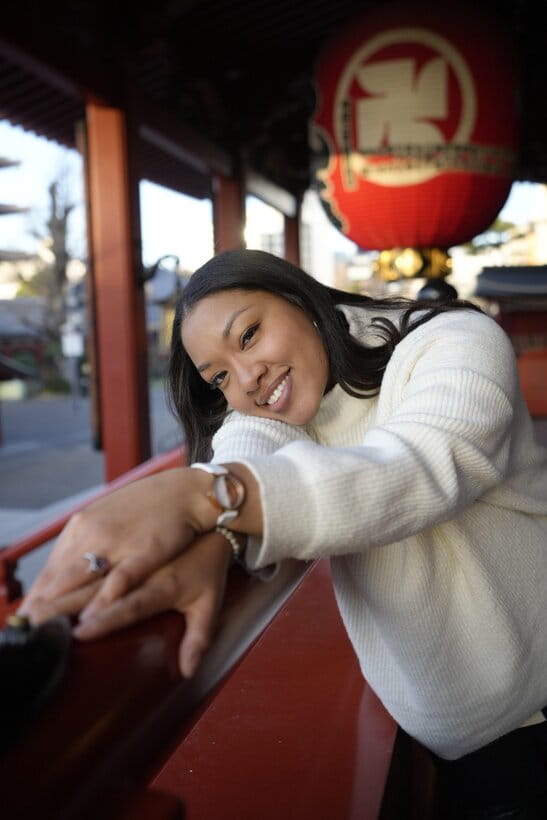
- Three very different Tokyo areas: See historic Asakusa, Tokyo Skytree and Akihabara during one 70-minute street ride.
- A guide-led road experience: An English-speaking guide controls the pace and gives a safety briefing before departure.
- Photos are part of the package: Your guide takes pictures at key points, then sends the full set by AirDrop or email.
- Costumes make the photos memorable: Choose a character outfit before setting out.
- Small-group format: The maximum group size is eight, a useful limit when riding on city streets.
- The license rule is strict: Japan requires a hard-copy 1949 Geneva Convention IDP for many drivers, not a digital file or a 1968 Vienna permit.
Why this go-kart tour gives you a different Tokyo view
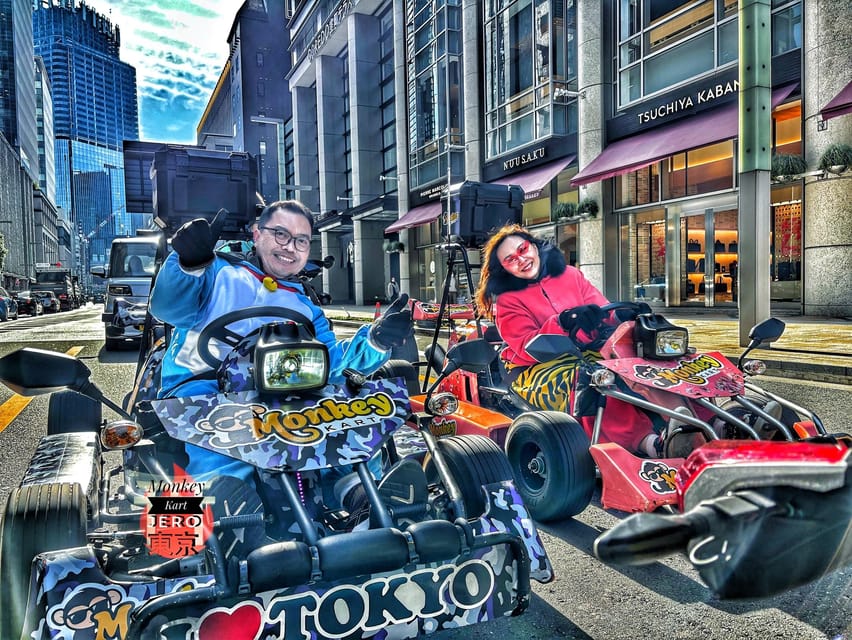
At $96 per person, this is not a cheap way to get from one sightseeing district to another. It is a short driving attraction that happens to pass major sights. I would compare it with a themed activity, not with a regular sightseeing bus.
That distinction matters. From a bus, you sit above traffic and watch Tokyo through glass. Here, you are part of the street scene. People may wave or give you a thumbs-up, and the costume choice turns a normal ride into a small public performance. You will need to enjoy attention rather than avoid it.
The route lasts 70 minutes, which feels like a sensible length for an open kart. It gives you enough time to see several areas without making you sit in the same driving position for half a day. The ride is also focused. You are not stopping for long museum visits or entering attractions. This is a moving city experience with photo pauses and guided sightseeing.
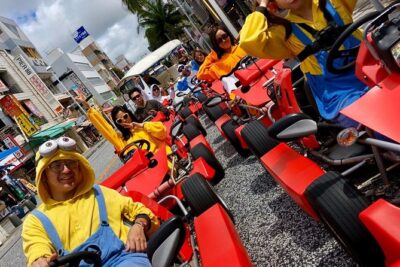
The operator, Monkey Adventure Kart, limits the group to eight participants. That is important in Tokyo traffic. A smaller group is easier to keep together, and the guide can watch how each driver is doing. Several people who felt nervous at first found the briefing and patient instruction reassuring. I would still call this a driving activity first and a sightseeing tour second.
A few more Tokyo trips to weigh up
- Flagship 2-Hours Official Street Go-Kart Tour – Tokyo Bay Shop
★ 5.0 · 4,974 reviews - Official Street Go-Kart in Shibuya
★ 5.0 · 3,435 reviews - Official Street Go-Kart Tour – Akihabara
★ 5.0 · 1,578 reviews
Arriving near Oshiage and getting ready
The meeting point is at 4-chōme-9-9 Yokokawa, about a seven-minute walk from Oshiage Station. You are asked to arrive 20 minutes before your booked time. Do not treat that as a casual suggestion. The staff need time for check-in, paperwork, the safety briefing, costume selection and vehicle preparation.
At the start, staff welcome you and explain how the karts work. The safety talk is a key part of the experience, not a box to tick before the fun begins. Guides explain the road procedure and lead the group once you set off. Reports of guides such as Airton, Frederico, Julian, Lewis, Luis, Matias and Adam taking time with nervous drivers suggest that the tone is friendly, but you still need to listen closely.
The karts are custom-built and street-legal. Several participants found them comfortable and well maintained, though one ride had a minor mechanical issue that the guide dealt with promptly. Any motor vehicle can have a problem, so the sensible approach is to follow staff instructions and tell them at once if something feels wrong.
You can choose a costume before departure. This is more than a silly extra if you want memorable pictures. A character outfit makes the photos instantly readable, especially with Tokyo’s signs and Skytree in the background. Costumes may not be for everyone, and you can skip the dress-up angle if you prefer a plain ride.
Water is included. Gloves have also been provided on cold outings, according to one winter experience, but I would not rely on that as a guaranteed seasonal amenity. Tokyo’s weather can change the feel of an open vehicle quickly. Bring practical layers, especially for an evening ride.
Asakusa: traditional Tokyo from the road
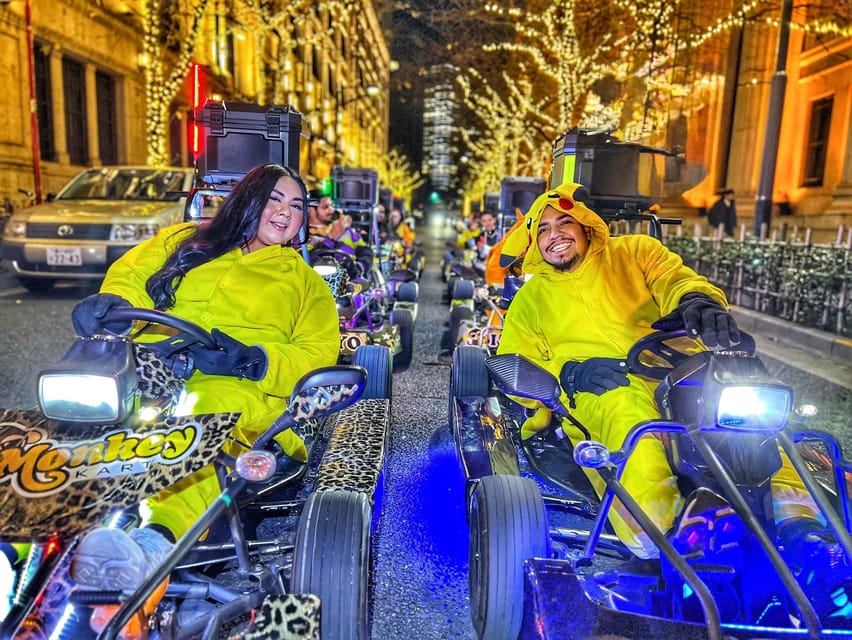
The ride takes you through Asakusa, one of the most recognizable older districts in eastern Tokyo. Its appeal here is not a long temple visit. Instead, you see the streets, shop fronts and traditional atmosphere as part of the drive.
This is where the low seating position changes the experience. You are close to pedestrians, traffic signals and the constant movement of the city. You may notice details that pass too quickly from a bus, while still covering more ground than you could on foot in 70 minutes.
The trade-off is that you should not expect a full cultural tour. The activity does not include an extended stop at a temple or a formal walking explanation of Asakusa. Your guide offers sightseeing commentary while leading the group, but the main pleasure comes from the ride itself.
Asakusa can also be busy, so the route demands attention. You are not free to stop whenever you see something interesting. Keep your place in line, watch the guide, and enjoy the view at the pace of city traffic.
Tokyo Skytree Town and the photo stops
Tokyo Skytree is the central landmark on this route. The itinerary includes a guided sightseeing section and a photo stop around Tokyo Skytree Town, with the possibility of a sunset departure depending on the time you book.
Skytree works especially well as a backdrop because its height gives the pictures a clear sense of place. Your guide takes photos at suitable points so you can keep both hands on the controls. This is one of the strongest practical features of the tour. You do not have to choose between enjoying the ride and trying to photograph yourself.
The photo service includes pictures taken by the guide, shared after the tour through AirDrop or email, plus one hard-copy photo. The number and style of images can vary, but the supplied details promise high-quality photos and several people received many images. If you want your own moving footage, the karts include an action-camera or Insta360 mount. One useful tip is to check that your camera is fully charged before setting out.
The Skytree stop is not a tower visit. Your ticket does not include entry to an observation deck, and the experience is not designed around going inside Tokyo Skytree Town. Think of this as an outdoor viewing and photography moment during a driving loop.
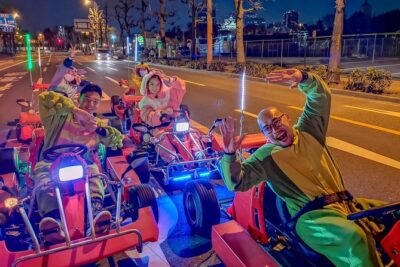
For timing, late afternoon has a clear advantage. A start around 4 p.m. can give you changing light and the beginning of Tokyo’s evening glow. Night rides bring illuminated streets and signs, while morning rides offer a different, calmer visual mood. The tour can be enjoyable at any listed start time, but sunset or evening is the better pick if city lights are a priority.
Same city, a completely different kind of day:
- Mt Fuji and Hakone 1-Day Bus Tour Return by Bullet Train
★ 5.0 · 26,383 reviews - 1-Day Tokyo Bus Tour
★ 5.0 · 14,250 reviews - Tokyo: TOKYO SKYTREE® Admission ticket
★ 4.5 · 11,192 reviews - Tokyo: teamLab Planets TOKYO Digital Art Museum Entry Ticket
★ 4.6 · 9,779 reviews
Akihabara and the electric city atmosphere
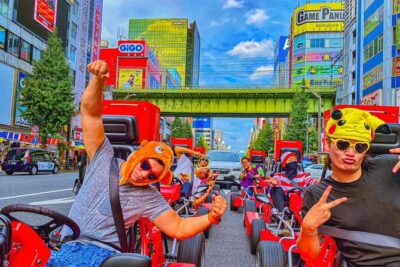
The route continues toward Akihabara, famous for electronics, anime, games and Japanese pop culture. Here, costumes feel especially fitting. Driving through the district dressed as a favorite character gives the ride a playful connection to the surroundings.
Akihabara is best understood from the street. You see the signs, traffic and constant visual energy rather than visiting individual shops. The kart gives you a quick moving view, so do not book this as a replacement for an afternoon of browsing stores or visiting arcades.
There is also a useful social element. The compact karts and costumes attract attention, and people may wave as you pass. That interaction is part of the charm, but it can feel conspicuous. If you dislike being photographed or noticed, this may not be your ideal Tokyo activity.
Your guide’s job becomes especially important in a district with heavy visual distractions. Follow the lead vehicle, maintain your position and wait for instructions. A participant raised a fair concern about hand signals being hard to see from several karts back. In a group ride, keep enough attention on the guide that you can respond promptly, and do not assume the driver ahead will always communicate everything clearly.
Safety, traffic and the real driving commitment
The tour is operated as a legal road activity, and the company says it follows Japanese laws and guidance confirmed by local authorities. That does not make it a theme-park ride. You are driving on city streets, so you need a valid license, steady attention and comfort around traffic.
The legal paperwork is the biggest booking trap. Most drivers need a hard-copy paper booklet of a 1949 Geneva Convention International Driving Permit, issued by the official agency in their home country. A phone image, scanned document or soft copy is not valid. Permits issued under the 1968 Vienna Convention, including those from FIA, IDA and IAA, are not recognized by Japan.
Drivers from France, Switzerland, Taiwan, Germany, Monaco and Belgium need a Japanese translation of their local license, obtained through the Japan Automobile Federation. Licenses from Indonesia, Pakistan, Saudi Arabia, Mexico, Brazil, Costa Rica, Colombia, Kuwait, Qatar and some other countries may not permit driving in Japan. Check your own national rules before booking, and obtain the paperwork before leaving home.
You must be over 18. The activity is not suitable for pregnant women, people over 150 kilograms, or people taller than 180 centimeters. The height limit is unusually restrictive, so take it literally rather than assuming it is flexible.
Alcohol and drugs are forbidden, and you cannot drive while intoxicated. Rain can force a schedule change. Since the vehicles are open, weather is not a minor detail. Check the forecast and leave room in your Tokyo plans in case the start time changes.
What the $96 price really covers
The price includes the go-kart, guide, costume, water, photo service, one printed photo and the camera mount. Optional insurance is not included. That bundle gives the tour better value than a bare kart rental because you are paying for a guided route, staff support and a ready-made photo record as well as the vehicle.
The strongest value comes from the combination of access and memories. You see several well-known districts without arranging your own route, while the guide takes the pictures you would struggle to make safely from the driver’s seat. For a couple or a small group celebrating something, the included photos can matter more than a few extra minutes on the road.
Still, $96 is a premium price for 70 minutes. You should not book it if your main aim is to visit Tokyo Skytree, shop in Akihabara or explore Asakusa in depth. It makes sense if you want the activity itself, enjoy novelty and are happy to pay for the costume and photo package.
Free cancellation up to 24 hours before departure and reserve-now, pay-later booking make planning less risky. Those terms do not remove the need to check your license or watch the weather.
Who will enjoy it most
I would recommend this for adults over 18 who already hold the correct Japanese driving documents and want a playful break from temples, department stores and train rides. Couples, friends, repeat visitors and small groups are a natural fit.
First-time drivers may manage well because the guide gives a briefing and leads the route, but this is not a lesson for someone who has never driven any vehicle. If Tokyo traffic makes you tense, be honest with yourself. A calm driver who follows instructions will get much more from the tour than someone focused only on the thrill.
The experience can suit older adults too. A 44-year-old participant enjoyed it with a 21-year-old relative, and another person with back problems found the kart comfortable. Those examples do not override the formal restrictions, but they show that the activity is not aimed only at teenagers.
Families need to read the age rule carefully. Everyone who drives must be over 18, and the supplied details do not describe a passenger option for children. The activity also may not suit taller people because of the 180-centimeter limit.
Six practical questions before you reserve
FAQ
Where is the meeting point?
The meeting point is 4-chōme-9-9 Yokokawa, about a seven-minute walk from Oshiage Station. Arrive 20 minutes before your scheduled departure.
Which driving permit do I need?
Most drivers need a hard-copy paper booklet International Driving Permit issued under the 1949 Geneva Convention by the official agency in their country. Digital copies and soft copies are not valid.
Are 1968 Vienna Convention permits accepted?
No. Permits issued under the 1968 Vienna Convention, including FIA, IDA and IAA permits, are not recognized by Japan for this activity.
Is the tour conducted in English?
Yes. The live tour guide speaks English.
How many people are in each group?
The group is limited to eight participants.
What happens if it rains?
The tour may be rescheduled because of rain. The vehicles are open, so check the forecast before setting aside your sightseeing time.
Should you book this Tokyo go-kart experience?
Book it if you want a lively, photo-friendly road adventure and you have the correct permit already in hand. The best reasons are the compact group, guide-led route, changing views from Asakusa to Akihabara, costumes and photos handled for you.
Skip it if you want quiet sightseeing, a detailed visit inside the landmarks, or an inexpensive way to move around Tokyo. Check the 180-centimeter height limit, age rule, license paperwork and weather before paying. For the right driver, this is a memorable 70-minute change of pace, with Tokyo itself becoming the backdrop.
Just added around Tokyo
- Tokyo: Customizable Private Guided Walking Tour★ 4.5 · 129 reviews
- Private Harajuku Omotesando Architecture Tour★ 4.9 · 18 reviews
- Tokyo: Guided Helicopter Ride★ 4.9 · 24 reviews
- Tokyo: Guided Walking Tour of Tsukiji Market with Lunch★ 4.4 · 24 reviews
- Tokyo: Private Personalized Local Food Tour★ 4.5 · 101 reviews
- Tokyo GINZA: KONPARU Japanese Cabaret Show with Drink★ 4.8 · 38 reviews
- Tokyo: Guided Walking Tour of Tsukiji Market with Breakfast★ 4.4 · 134 reviews
- Tokyo: Gotokuji Cat Temple, Shinjuku Cat Cafe & 3D Cat Tour★ 4.9 · 38 reviews
Go-Karts, compared.
Flagship 2-Hours Official Street Go-Kart Tour – Tokyo Bay Shop
Read our review →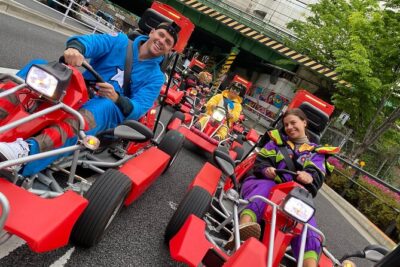
Tokyo Go Kart: Asakusa, Skytree, and Akihabara **IDP MUST**
Read our review →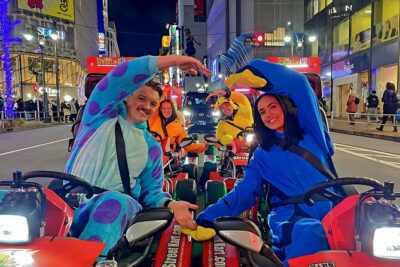
Shibuya Official Street Go-Kart in Shibuya Annex
Read our review →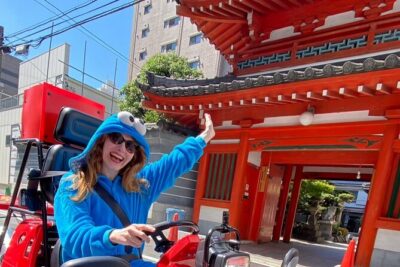
Browse the lists this tour appears in