
REVIEW · MUSEUMS
Tokyo: teamLab Planets TOKYO Digital Art Museum Entry Ticket
Tokyo’s teamLab Planets turns art into a physical adventure. You walk barefoot through water, follow shifting lights, lie beneath digital flowers, and watch the room change because you are in it. This is not a museum where you keep your hands behind your back.
I like the water rooms, where projected fish and changing light make a simple walk feel strange and dreamlike. I also like the flower and orchid installations, which give the experience a quiet, almost meditative side. The main drawback is that timed admission can mean waiting outdoors before your slot, and the rooms may feel hectic at busy times.
In This Review
- Key points to know before you go
- What teamLab Planets actually feels like
- Before entering: timed tickets and the outdoor wait
- The barefoot route and the first sensory shift
- The Water Gallery: the most memorable section for many visitors
- Falling flowers and the Flower Universe rooms
- Orchids, gardens, and the slower middle of the visit
- Why the five senses matter here
- How long to allow and how to choose your entry time
- Is the 25 dollar ticket good value?
- Who should skip teamLab Planets
- Practical ways to make the visit better
- Should you book teamLab Planets TOKYO?
- FAQ
- How much does admission to teamLab Planets TOKYO cost?
- Can I buy a ticket on the same day?
- How long is the teamLab Planets ticket valid?
- What should I wear?
- Do I need to bring identification?
- Are children allowed to enter alone?
- Is the exhibition wheelchair accessible?
Key points to know before you go
- Bare feet are part of the experience: You will remove your shoes and use lockers for small items.
- Water reaches knee height in places: Wear trousers you can roll well above your knees.
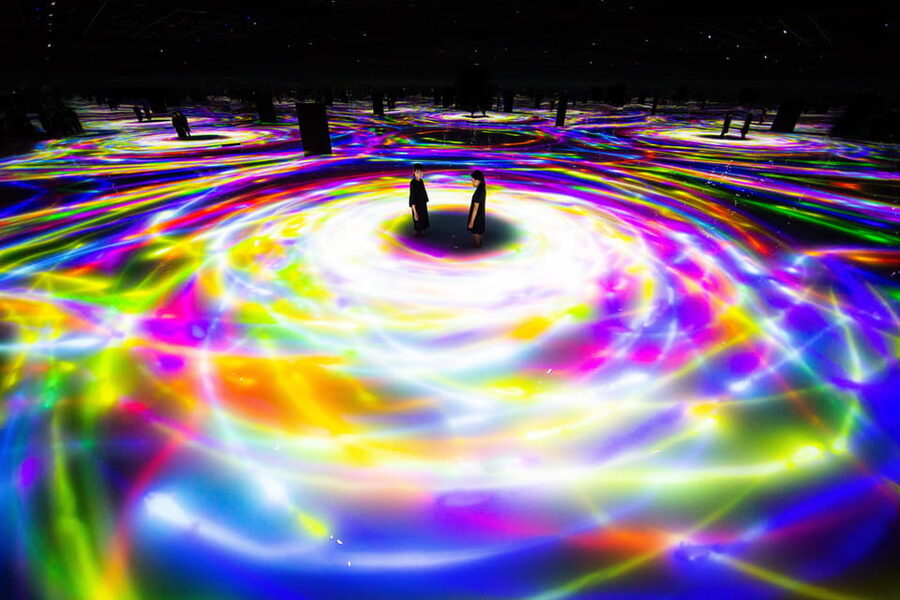
- Your movements affect the artwork: Light, sound, flowers, and digital creatures respond to people in the rooms.
- Plan on roughly two hours: The ticket is valid for one day, but your entry time is fixed.
- Arrive on time: Entry is allowed only during the first 30 minutes after your selected time.
- This is not suitable for everyone: Wheelchair users, people with epilepsy, heart problems, or strong light sensitivity should reconsider.
What teamLab Planets actually feels like
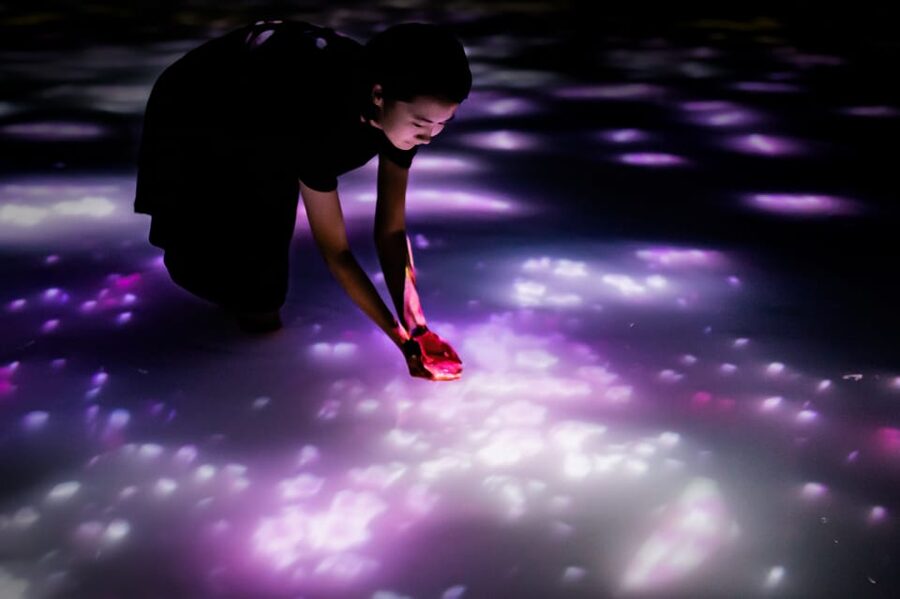
teamLab Planets is best understood as a sequence of sensory rooms rather than a standard art exhibition. You do not simply look at a screen. You walk through the work, sit or lie down in some spaces, feel water under your feet, and watch digital images react to your presence.
The total exhibition area covers more than 10,000 square meters, with several different sections. The installations use projected light, sound, mirrors, water, flowers, and changing surfaces. Each room has its own mood, so the experience keeps shifting from playful to peaceful to mildly disorienting.
That physical element is what gives the visit its value. Digital art can be easy to forget when you view it from a distance. Here, your body becomes part of the display. A person walking through a projected scene can alter what appears on the floor or walls, while a group can change the rhythm and movement of an installation.
You should not expect a traditional explanation of the artists, techniques, or cultural background at every stop. The pleasure comes from paying attention and letting the rooms unfold. If you prefer clear labels and historical context, this may feel thin. If you enjoy unusual settings and hands-on art, it offers something you will not get from a regular gallery.
More theme park tickets in Tokyo:
- Osaka: teamLab Botanical Garden Entry Ticket
★ 4.5 · 1,710 reviews - Osaka: Universal Studios Japan E-Ticket
★ 4.4 · 958 reviews - Osaka: Universal Studios Japan Express Pass Only
★ 3.2 · 93 reviews
Before entering: timed tickets and the outdoor wait
You must choose an entry time in advance. Same-day admission tickets cannot be purchased, and the ticket is non-refundable, so check your schedule carefully before booking.
Your official voucher is emailed to you and must be used at the facility. Bring your passport or another ID card. Staff may ask for identification to confirm age or school affiliation, so do not leave it behind at your hotel.
The important timing rule is simple: you can enter only within the first 30 minutes after your selected time. Arriving late does not earn a refund. I would aim to reach the venue a little early, but not excessively early. Some people have found themselves waiting outside because staff would not allow them to join the admission line before the time printed on the ticket.
That matters in Tokyo’s changing weather. The entrance area has a semi-outdoor feel, so bring a layer in cooler weather and consider rain protection during wet conditions. One practical complaint is the lack of a convenient place to settle in before admission. The cafe has not impressed everyone, and nearby coffee options may not be clearly signposted.
Check your venue name closely before leaving. Tokyo has two teamLab locations, and it is possible to hold tickets for different sites without noticing. Your meeting point can also vary according to the option booked.
The barefoot route and the first sensory shift
After admission, you remove your shoes. Small lockers are available, but avoid carrying more than you need. Bare feet help you notice the temperature and texture of each room, and they also make the water sections possible.
The route begins with a transition away from ordinary museum habits. You are asked to move through the space rather than stand in one place. The changing surfaces and sound design make the first rooms feel like a reset button after the noise of Tokyo outside.
Some areas use mirrors on the floor. This affects what you wear and how you move. Trousers that roll above the knee are the safest choice, especially because water can rise to knee height. Staff may provide short pants in some situations, but it is easier to arrive prepared.
You should also think about your phone. Photography is allowed as part of the experience in practice, but a phone can pull you away from the work. One useful approach is to first walk through each room without trying to record everything. Then take a few photographs when you have a sense of what deserves your attention.
The Water Gallery: the most memorable section for many visitors
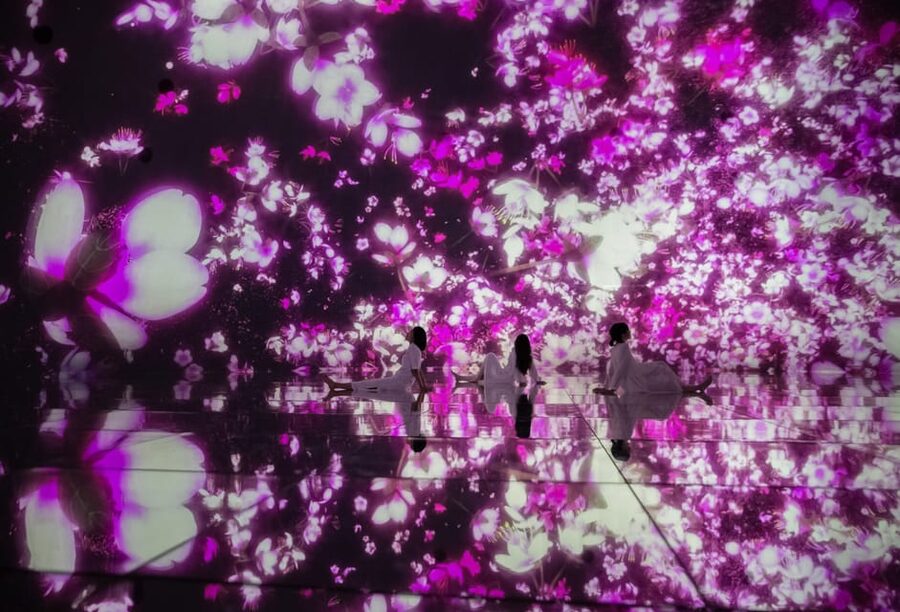
The water section is the part I would prioritize if your time or energy is limited. You walk through shallow water while digital images move across the surface and around you. Light, sound, and projected forms turn a basic passage into something much more unusual.
The water is not just a visual trick. You feel the room as well as see it. That is why this section works for people who might otherwise find digital projections passive. Your feet, balance, and pace all become part of the visit.
Projected fish and other digital forms can appear to respond to the people moving among them. The effect is simple to understand but still surprising when you are standing inside it. You might find yourself slowing down to watch the water and images rather than hurrying toward the next room.
This area also has practical limits. If you dislike wet feet, have difficulty walking, or do not want to roll your trousers above your knees, the visit becomes less comfortable. The water level can rise to the knee, so keep wallets, cameras, and other valuables secure.
Families often find this section especially engaging because it gives younger visitors something physical to do. Still, it is not designed only for children. Adults who approach it as a visual and sound installation may find it more contemplative than expected.
A few more Tokyo trips to weigh up
- Tokyo: Samurai Ninja Museum Guided tour and Experience
★ 4.6 · 1,010 reviews - Ninja Experience (Family Friendly) at Samurai Ninja Museum TOKYO
★ 5.0 · 441 reviews - Tokyo Studio Ghibli Museum and Ghibli Film Appreciation Tour
★ 4.5 · 421 reviews - Tokyo Sword Experience – includes Museum Ticket/Ninja Experience
★ 5.0 · 314 reviews
Falling flowers and the Flower Universe rooms

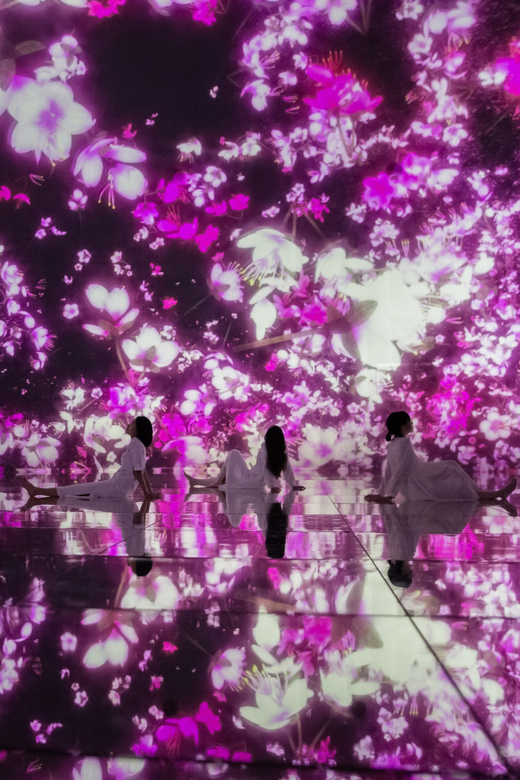
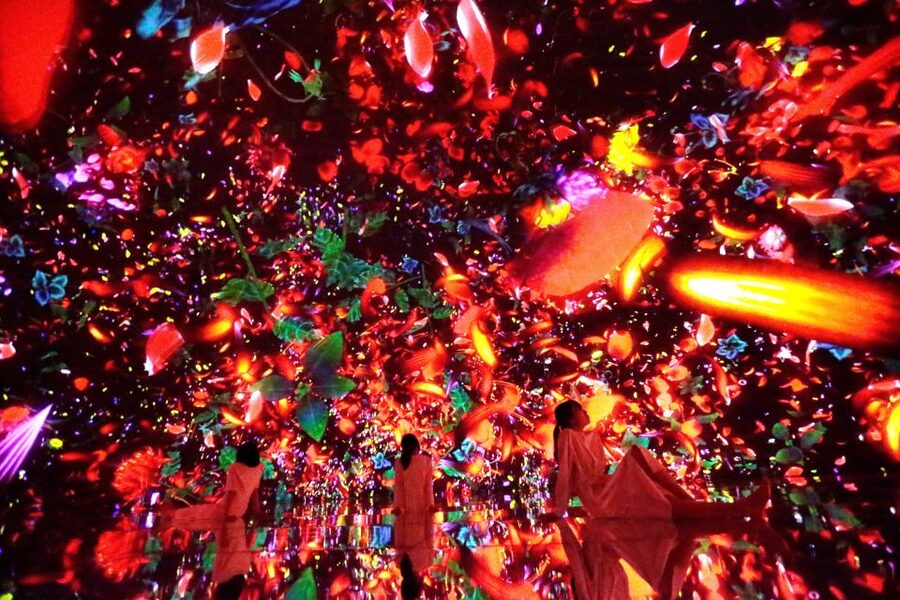
The flower rooms are among the most restful parts of the route. Digital flowers appear to fall, spread, and shift around you. You may see patterns moving toward your face or covering the walls and floor, creating the feeling of lying beneath a changing sky.
The falling-flower installation rewards patience. At first glance, it is easy to focus on the scale and color. Stay a little longer and you can watch the movement change in response to people in the room. Sitting or lying down can make the perspective more powerful, though you should follow staff directions about where to position yourself.
The Flower Universe area has a different energy. Instead of a single scene, it gives you a field of digital flowers and light. The effect can feel joyful, but it can also be calming when the room is not too noisy.
Noise is one of the few things that can weaken the mood. Staff do a good job managing movement, but other people still shape the atmosphere. If quiet contemplation matters to you, an early entry time may be a better choice than a popular evening slot.
The flower displays also make clear why a phone can be both useful and distracting. Photos may look impressive, but the scale, sound, and movement are difficult to capture in a flat image. I would treat the camera as a secondary activity.
Orchids, gardens, and the slower middle of the visit
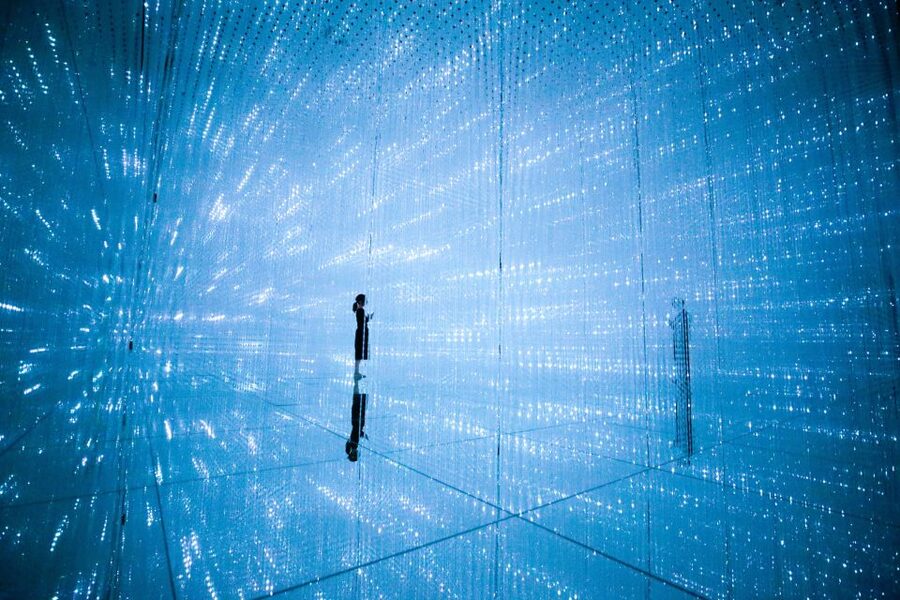
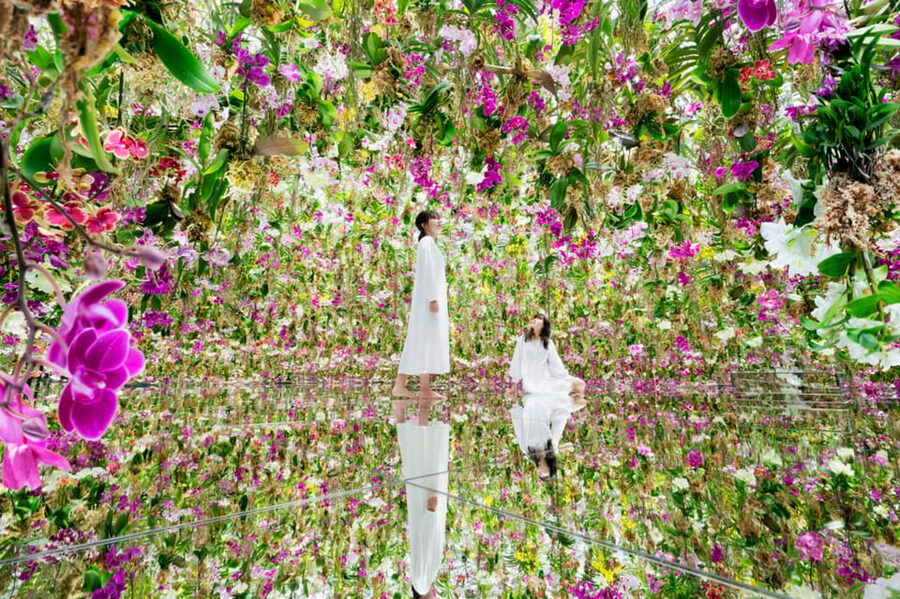
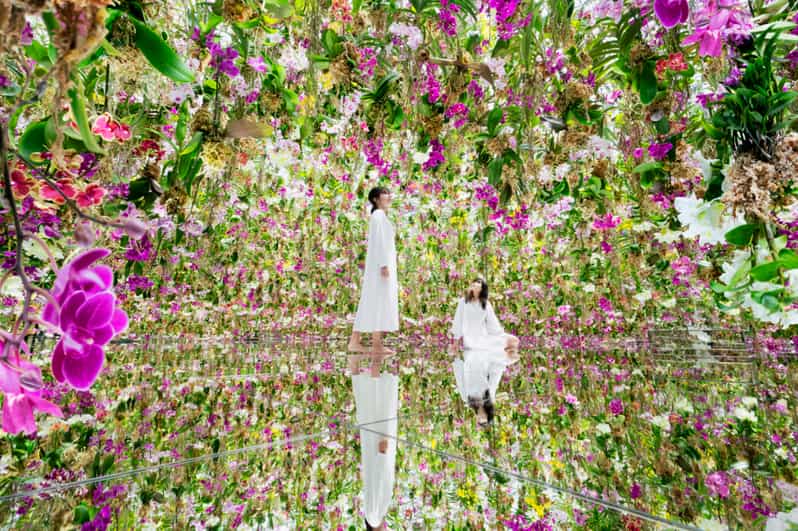
The orchid and garden installations provide a welcome change from the water and large digital rooms. Flowers appear to hang, rise, or shift through the space, creating a softer experience with more room to pause.
The garden section is a favorite for good reason. It combines natural forms with technology without making the flowers feel like decoration added after the fact. You are encouraged to look closely at how the display changes as people move through it.
This part may appeal most to adults who initially worry that teamLab Planets is only a family attraction. The exhibition has playful moments, but it also leaves room for quiet attention. Some people find themselves thinking about nature, time, and the relationship between a person and the space around them.
The orchids are also a good reminder that you should not judge the visit by its most photographed rooms. The appeal is the contrast between sections. Water gives you physical contact, flowers offer calm, and the darker digital spaces create a more theatrical mood.
Directions inside can occasionally be unclear. The route is generally easy to follow, but you may need to look for staff guidance so you do not miss a room or take the wrong turn. Give yourself time rather than treating the exhibition as a quick photo stop.
Why the five senses matter here
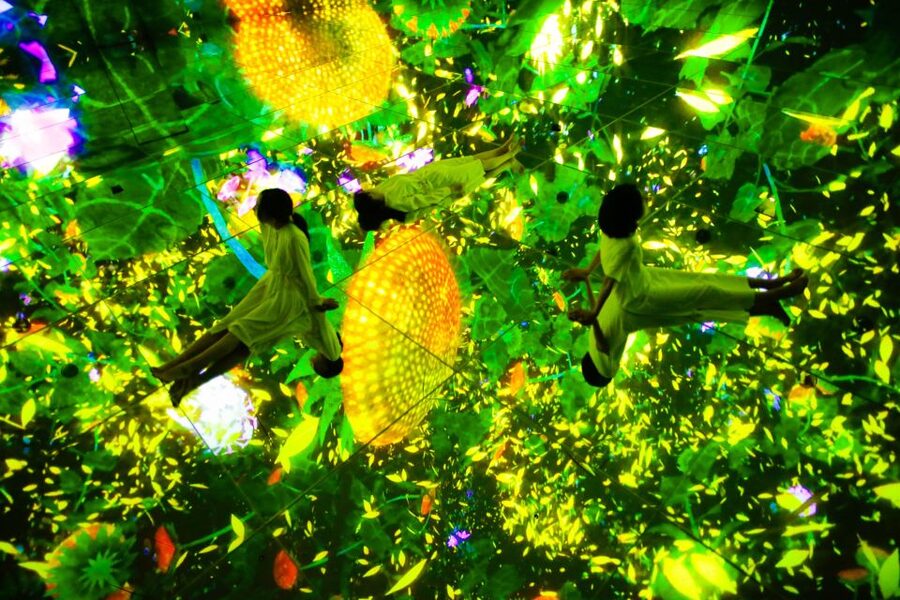
The phrase five senses can sound like marketing language, but teamLab Planets does make a real effort to involve more than sight. You hear changing soundscapes, feel water and different surfaces, see projections shift around you, and notice how movement affects the artwork.
Smell and taste are not equal parts of the exhibition. Eating and drinking are prohibited inside, and the cafe is separate from the main art experience. The strongest sensory combination is sight, sound, touch, and balance.
That distinction is useful when deciding if the ticket suits you. This is not a food tour or a scent-based installation. It is a body-focused art visit, with the greatest impact coming from walking, standing, sitting, and feeling your way through changing environments.
The experience can also feel surprisingly personal even when the building is busy. Staff control the flow well, which prevents the rooms from becoming completely chaotic. Still, busy periods bring more people into your field of view, and some installations lose a little of their peaceful quality when visitors are loud.
How long to allow and how to choose your entry time
The ticket is valid for one day, but that does not mean you can arrive at any time. Your selected entry period controls access, and the 30-minute arrival window is strict.
Allow at least two hours if you want to move at a comfortable pace. You can rush through more quickly, but that defeats the purpose of rooms designed for lingering. The falling flowers, orchids, garden, and water displays all reward a few extra minutes.
An early slot is a sensible choice if you want a calmer visit. It may also help you avoid some of the crowd pressure that builds during popular periods. A rainy evening can work well too, since the exhibition gives you a structured indoor activity, but remember that the entrance and waiting area may not be fully sheltered.
Do not schedule an important appointment immediately afterward. The exact pace depends on crowd flow, how long you spend in each installation, and how easily you move through the wet areas.
Is the 25 dollar ticket good value?
At about $25 per person, this is not a cheap gallery admission, but it is reasonable for a large, purpose-built experience that can occupy much of an afternoon. You are paying for several different environments rather than a single projection room.
The value is strongest if you enjoy interactive art and take your time. Families can make good use of the ticket because teenagers and adults have different ways to enjoy the rooms. People who dislike conventional museums may also find the physical format more inviting.
The value is weaker if you want a short, conventional sightseeing stop or a long list of separate attractions. One person may find there is less to do than expected, especially if they move quickly. The exhibition is about atmosphere and participation, not a high number of independent rides or displays.
Prebooking also has practical value. Since same-day tickets are not available, planning ahead protects your chance to visit. A prearranged ticket can also help you avoid a separate line to buy admission, although you still need to arrive at the correct time and follow the entry process.
Who should skip teamLab Planets
This experience is not suitable for wheelchair users because some areas are inaccessible. It is also not recommended for people with epilepsy, heart problems, or light sensitivity.
Children younger than 13 must be accompanied by an adult, and unaccompanied minors are not permitted. Intoxicated people cannot enter. These rules are sensible because the route involves water, darkness, flashing or changing light, and uneven sensory demands.
If you are traveling solo, you can still enjoy the exhibition, but a few activities may feel awkward without a companion. If you are with friends or family, the interactive rooms give you something to share without requiring a guide or scheduled performance.
You should also be comfortable removing your shoes and walking barefoot. Anyone uneasy around water or reflective floors should consider that before paying for a non-refundable ticket.
Practical ways to make the visit better
- Wear trousers that can roll above your knees, not just to the knee.
- Bring your passport or ID card.
- Keep valuables to a minimum and use the small lockers.
- Arrive early enough to find the venue, but expect that staff may not admit you before your time.
- Choose an early slot if quiet rooms matter to you.
- Download the teamLab app in advance if you want the smoothest visit.
- Take a first pass without filming every room.
- Check the exact Tokyo venue on your voucher.
- Do not eat, drink, or smoke inside the exhibition.
- Bring a warm layer if you will wait outside in cool weather.
Should you book teamLab Planets TOKYO?
Book it if you want a Tokyo experience that asks you to participate instead of simply look. The water rooms, falling flowers, orchids, and responsive projections create a strong mix of wonder and play, and the $25 price is fair when you allow around two hours.
I would especially recommend it for families with older children and teenagers, couples, and adults who think they do not like art museums. I would be more cautious if you have light sensitivity, mobility concerns, heart problems, epilepsy, or a strong dislike of wet feet.
Choose your time carefully, wear practical clothes, and treat the visit as an experience rather than a photo assignment. Done that way, teamLab Planets can become one of the more unusual and memorable stops in Tokyo.
FAQ
How much does admission to teamLab Planets TOKYO cost?
The listed price is $25 per person and includes the entrance ticket. Transportation is not included.
Can I buy a ticket on the same day?
No. Same-day admission tickets cannot be purchased, so you need to arrange your ticket in advance.
How long is the teamLab Planets ticket valid?
The ticket is valid for one day, but you must use it during the selected entry time. Entrance is allowed only within the first 30 minutes after that time.
What should I wear?
Wear trousers that can be rolled above your knees. You enter barefoot, and water can rise to knee height in some areas. Some floors also use mirrors.
Do I need to bring identification?
Yes. Bring your passport or ID card. Staff may request ID as proof of age or school affiliation.
Are children allowed to enter alone?
No. Children younger than 13 must be accompanied by an adult, and unaccompanied minors are not allowed.
Is the exhibition wheelchair accessible?
Some areas are not accessible by wheelchair, so this experience is not suitable for wheelchair users. It is also not recommended for people with epilepsy, heart problems, or light sensitivity.
Just added around Tokyo
- Tokyo: Customizable Private Guided Walking Tour★ 4.5 · 129 reviews
- Private Harajuku Omotesando Architecture Tour★ 4.9 · 18 reviews
- Tokyo: Guided Helicopter Ride★ 4.9 · 24 reviews
- Tokyo: Guided Walking Tour of Tsukiji Market with Lunch★ 4.4 · 24 reviews
- Tokyo: Private Personalized Local Food Tour★ 4.5 · 101 reviews
- Tokyo GINZA: KONPARU Japanese Cabaret Show with Drink★ 4.8 · 38 reviews
- Tokyo: Guided Walking Tour of Tsukiji Market with Breakfast★ 4.4 · 134 reviews
- Tokyo: Gotokuji Cat Temple, Shinjuku Cat Cafe & 3D Cat Tour★ 4.9 · 38 reviews
Museums, compared.

Samurai Ninja Museum Guided tour and Experience
Read our review →
Tea Museum Tickets and Matcha Grinding Experience
Read our review →
Skip the lines Basic Ticket at SAMURAI NINJA MUSEUM KYOTO
Read our review →
Ninja Experience (Family Friendly) at Samurai Ninja Museum TOKYO
Read our review →
Tokyo Studio Ghibli Museum and Ghibli Film Appreciation Tour
Read our review →
Geiko Maiko Dance of Kyoto & Visits of Gion Museum
Read our review →
Tokyo Sword Experience – includes Museum Ticket/Ninja Experience
Read our review →
Samurai Ninja Museum Asakusa: Samurai Sword Lesson & Tour
Read our review →Browse the lists this tour appears in