
REVIEW · KIMONO & CULTURE EXPERIENCES
Tokyo Sword Experience – includes Museum Ticket/Ninja Experience
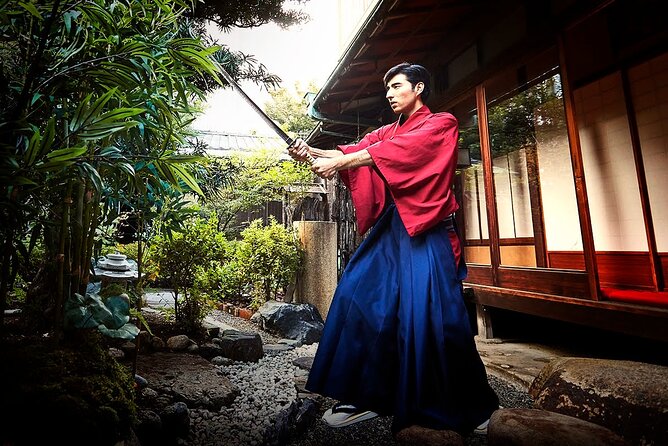
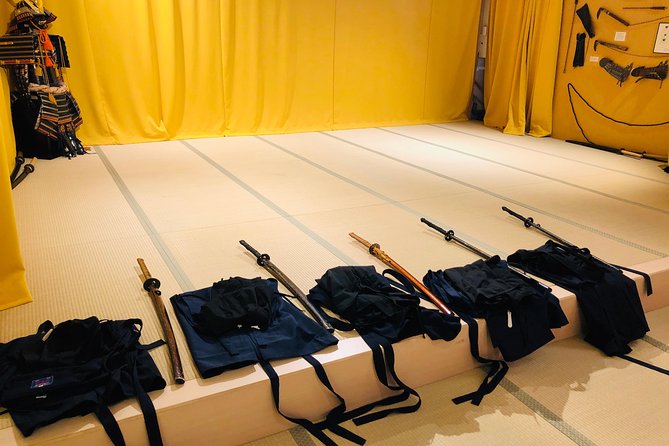
The most exciting part is the hands-on sword lesson. You put on a hakama, learn how to hold and move a practice sword, then work through simple attack and defense patterns before a controlled foam-sword duel. It feels more involved than simply posing in a costume.
I like the helpful staff, especially instructors such as Ryo, Akira, Hector, Leon, Ren, and Koki, and I like the mix of samurai history, dress-up photos, and ninja star throwing. The main caution is that the advertising and guest accounts describe the sword portion differently. Current information says no real sword or sharp blade is used, so confirm exactly what your session includes before paying.
In This Review
- Key points to know before booking
- Putting on a Hakama in Asakusa
- Learning Iaido With a Replica Sword
- The Real Sword Question
- A Small Samurai Museum With a Guide
- Ninja Stars and the Lighter Side of the Visit
- Group Size Can Change the Experience
- How Much Time Should You Allow?
- Is the $84.23 Price Fair?
- Age Limits and Family Suitability
- Booking, Cancellation, and Practical Tips
- Should You Book This Samurai Activity?
- FAQ
- Where does the Tokyo Sword Experience begin and end?
- How long does the experience last?
- Do I use a real samurai sword?
- Can children join the activity?
- Is the museum tour included?
- What is the cancellation policy?
Key points to know before booking
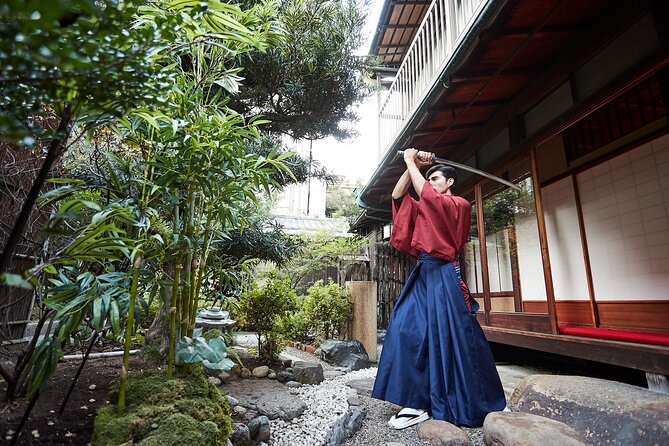
- Hakama and sword practice: You dress in traditional-style clothing and learn basic iaido movements with a replica sword.
- Samurai and ninja extras: The visit can include a museum tour, armor photos, and plastic ninja-star throwing.
- Sword rules need checking: Current terms say the activity does not use a real sword, though some older session descriptions refer to cutting a tatami mat with an authentic katana.
- Timing can vary: The listed duration is about 1 hour 15 minutes, but the full package may take closer to two hours or longer.
- Crowds have been an issue: Group size is described in different ways, and busy sessions can feel crowded.
- Asakusa location: The meeting point is at 1-chōme-8-13 Nishiasakusa, near public transportation and close to major Asakusa sights.
This activity is designed for people who want more than a quick costume photo. At the Samurai Ninja Museum in Asakusa, you take part in a short sequence of samurai-themed activities, with the sword lesson as the main event.
The basic program includes dressing in a hakama, learning sword movements with a replica, practicing a simple fight, posing with swords, and receiving a guided tour of the samurai and ninja displays. A ninja activity, usually involving plastic throwing stars and targets, may also be included as part of the package.
The advertised session lasts about 75 minutes. In practice, the complete visit can take longer because the museum tour, costume fitting, photos, and ninja activity are treated as additional parts of the visit. Some people finish the core activity in the expected time, while others spend about two hours or more when all the complimentary elements are included.
That difference matters. If you have a restaurant booking, train reservation, or another timed tour, tell the staff at the start that you need to leave on schedule. You may be able to skip some of the free extras.
Putting on a Hakama in Asakusa
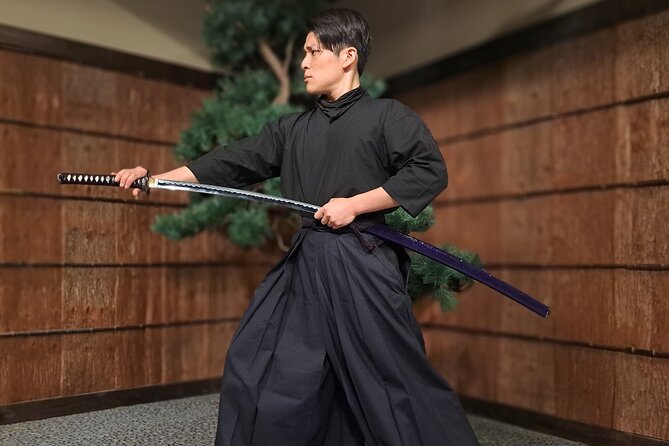
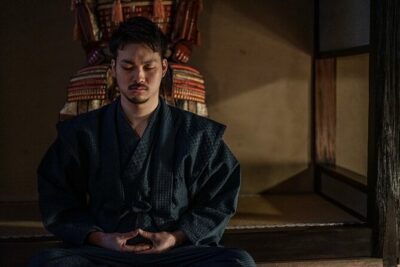
The visit usually begins with clothing. You put on a hakama, the pleated garment associated with formal Japanese dress and martial arts. The outfit is one of the easiest ways to shift the mood from ordinary sightseeing to role-play.
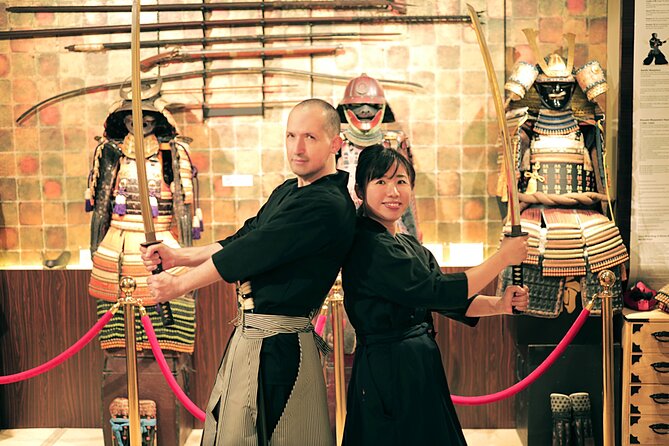
You can also pose with swords in front of studio or samurai-themed backgrounds. This is fun for families, couples, and anyone who wants photos that feel different from the usual Tokyo snapshot.
Keep your expectations sensible. The armor and costumes are modern costume pieces, not museum-grade garments. Some use plastic parts and clips, and the photo setting is a studio-style backdrop rather than an old samurai residence. The result can look playful rather than historically exact.
That is not a serious problem if you treat the costume portion as a lighthearted extra. It becomes a problem only if you book this expecting a professional photo shoot or the chance to wear original armor.
Staff members such as Leon have helped with dressing and photos, while Ren has led educational portions of the visit. The exact guide can change, but the staff’s role is important because the clothing can take time to arrange, especially when several people are being fitted at once.
More Kimono & Culture Experiences in Tokyo
- Tokyo: Samurai Ninja Museum Guided tour and Experience
★ 4.6 · 1,010 reviews - Tokyo: Samurai Sword & Archery Class from Samurai Descendant
★ 5.0 · 603 reviews - Best Samurai Experience in Tokyo
★ 5.0 · 458 reviews
Learning Iaido With a Replica Sword
After dressing, you receive instruction in basic iaido techniques. Iaido is built around controlled sword movements, posture, focus, and careful handling. You are not simply handed a sword and told to swing it. The instructor breaks the movement into steps, then shows how the parts fit together.
You practice with a safe replica sword. This gives you a feel for the grip, stance, and motion without putting a sharp weapon in your hands. The instructor watches your form and corrects mistakes, which gives the activity a more serious tone than a standard photo stop.
The lesson is accessible, but you still need a moderate level of physical fitness. You will stand, bend, hold the sword with both hands, and repeat movements. You do not need martial arts experience, though listening closely matters. The safety rules are part of the activity, not a side note.
The sword can feel heavier than expected, especially for children or anyone with limited arm strength. This is one reason to follow the instructor rather than trying to add force. Good technique matters more than a hard swing.
The session may finish with a simple sword fight using foam or another safe replica. This is a playful, controlled duel rather than a full martial arts class. You learn a short sequence, face a partner, and follow the instructor’s count and commands.
I like this section because it gives you a small taste of the discipline behind the samurai image. You will not become a swordsman in 75 minutes, but you will understand that stance, timing, and control matter more than theatrical slashing.
The Real Sword Question
This is the most important point to settle before booking.
The current activity information clearly says that Japanese law now prevents the provider from facilitating or selling activities involving a real sword. It also says the experience does not involve a real sword or a sharp blade. The listed sword lesson therefore uses a replica.
At the same time, some descriptions connected with earlier versions of the activity refer to holding an authentic Edo-period katana and cutting a tatami mat. Some participants also describe a real sword-cutting section, with two attempts at slicing a rolled mat. Those accounts may reflect an older format, a different booking option, or a change in the rules.
Do not assume that mat cutting is part of your booking. If that is the reason you are interested, contact Maikoya or the booking platform before reserving and ask three direct questions:
- Will I handle a real katana?
- Will I cut a tatami or bamboo target?
- Is the sword portion conducted with a replica only?
This distinction changes the value of the activity. A replica-sword lesson is a safe, entertaining introduction. A supervised cutting session with an authentic blade would be a very different product, but the current information supplied for this activity says that it is not offered.
A Small Samurai Museum With a Guide
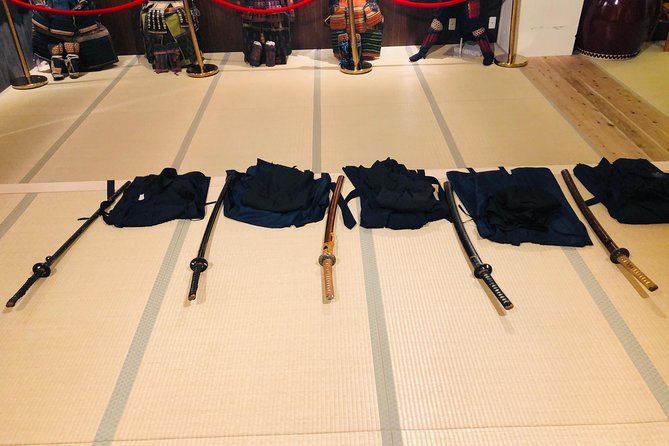
The museum portion adds useful context to the costume and sword lesson. You may see samurai-related artifacts and hear an explanation of samurai customs, weapons, and daily life.
The museum is small, described in one account as a compact four-room space. That has advantages and limits. You can see the displays without committing half a day, but you should not expect a large national collection or many interactive exhibits.
The quality of this section depends heavily on the guide. Ren, Santo, and other staff members have led educational portions, while Ryo has taught sword forms. Some guides use humor and clear English, while the level of explanation may vary between sessions.
For adults and older children who enjoy listening, the museum can make the activity more meaningful. You learn why the clothing, sword posture, and rituals are presented with such care. Younger children may find the talking portion slow because the displays are not especially hands-on.
Check that the museum tour is included in your schedule. It is described as a free guided service, but several accounts indicate that time pressure or crowd management can cause people to miss it. If the museum matters to you, arrive ready to join the tour and ask when it begins.
Same city, a completely different kind of day:
- Mt Fuji and Hakone 1-Day Bus Tour Return by Bullet Train
★ 5.0 · 26,383 reviews - 1-Day Tokyo Bus Tour
★ 5.0 · 14,250 reviews - Tokyo: TOKYO SKYTREE® Admission ticket
★ 4.5 · 11,192 reviews - Tokyo: teamLab Planets TOKYO Digital Art Museum Entry Ticket
★ 4.6 · 9,779 reviews
Ninja Stars and the Lighter Side of the Visit
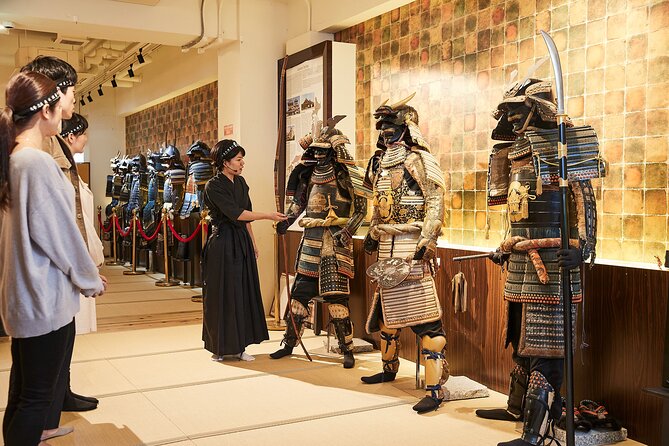
The ninja portion is less serious than the sword instruction. You throw plastic ninja stars, or shuriken, at soft or polystyrene targets. It is safe, quick, and easy to understand, though the equipment is clearly designed for fun rather than historical training.
Koki has been associated with teaching samurai movements and ninja star throwing. His section gives children and adults another activity to try while the sword group is being organized.
I would not book this tour just for the ninja stars. They are a pleasant extra, especially for families, but the target throwing does not carry the same sense of focus as the iaido lesson.
The mix works well for groups with different interests. One person may care about samurai history, another about photos, and another about trying the sword forms. If everyone wants a serious martial arts lesson, the extra activities may feel like padding.
Group Size Can Change the Experience
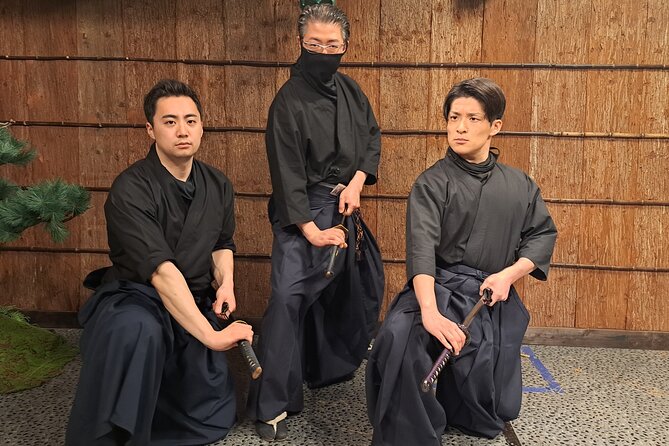
The published details are not fully consistent about capacity. One section says the activity has a maximum of four participants, another says a booking can include up to five people, and another describes an average group of about eight. The provider also accepts bookings from other platforms, so your session may include people who reserved elsewhere.
Past accounts describe much larger groups, including sword sessions with more than 20 people and museum gatherings of around 40. The provider says it has moved to a larger venue, expanded the program, and added more sessions to reduce crowding.
That change may improve the experience, but you should still prepare for a shared class rather than a private lesson. The sword instruction is conducted as a group, and each person may have an individual turn during some activities. With a large group, you spend more time watching and waiting.
The issue is not only comfort. A crowded room makes photos harder, slows costume fitting, and reduces the instructor’s time with each person. A small group lets you hear instructions more easily and feel less self-conscious during the duel.
If group size matters to you, ask the provider how many people are booked for your time. You can also choose an off-peak departure if the schedule allows, though no specific quiet time is promised.
How Much Time Should You Allow?
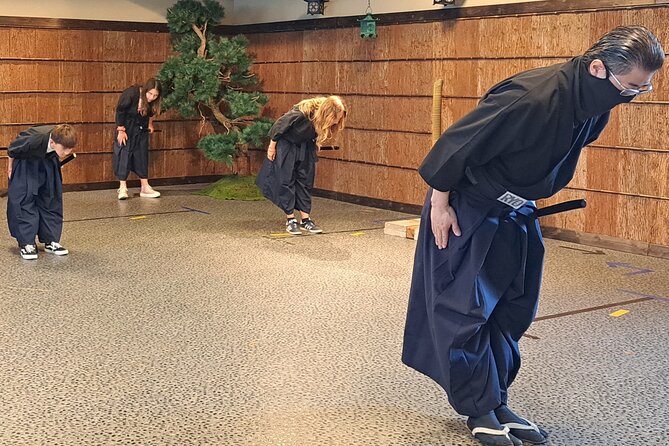
The stated duration is approximately 1 hour 15 minutes. That appears to describe the basic activity, but the full combination of museum, photos, armor, sword practice, and ninja throwing can stretch to two hours.
Some sessions have taken longer because the activities were spread between different areas or because many people were waiting for their turn. A few accounts describe visits lasting more than four hours, although that appears to involve unusually large groups, extra services, or organizational delays rather than the normal advertised schedule.
I would allow at least two hours if you want the complete package and avoid placing a hard reservation immediately afterward. If you only want the sword lesson, tell the staff and confirm the expected finish time.
The venue is in Nishiasakusa, close to public transportation and within the wider Asakusa sightseeing area. It is a useful pairing with Senso-ji and the neighborhood’s other sights, but you still need to plan your route to the exact meeting point at 1-chōme-8-13 Nishiasakusa.
The activity ends where it begins. Transportation to and from the venue is not included.
Is the $84.23 Price Fair?
At $84.23 per person, this is not a cheap photo opportunity. The value depends on what you want from it.
The price covers the guided activity, hakama rental, sword instruction with a replica, costume photos, and access to the samurai and ninja museum services. The provider also presents the history tour and ninja activity as complimentary extras.
That is a reasonable package for someone who wants several short cultural activities in one stop. You avoid paying separately for a costume studio and a museum, and the instructor-led sword lesson gives the visit a clear focus.
The value drops if you expect a private class, a large museum, professional photographs, or use of a sharp katana. It also drops when a crowded session leaves you waiting for most of the time.
The strongest part is the teaching. The staff generally explain the movements step by step, and instructors such as Ryo have made the class both firm and entertaining. The weakest parts are the variable group size, the modest museum, and the confusion over whether real sword cutting is offered.
Compared with similar themed activities, the provider describes this as costing about half as much as some alternatives. That may be true in the local market, but price comparisons are useful only when the programs are alike. Before booking, compare class size, actual lesson time, museum access, and the type of sword used.
Age Limits and Family Suitability
Children under six cannot enter the samurai venue. The information also indicates that real-katana cutting, when such a version has been offered, may be restricted to people aged 18 and older.
That second rule is easy to miss and can cause serious disappointment. Teenagers may be allowed to join the costume, museum, ninja, and replica-sword portions but excluded from any real-blade activity. Since the current update says no real sword is used, ask the provider to explain the age rules for your exact booking.
The activity suits families with older children, couples, solo visitors, and groups of friends. Children who enjoy costumes and targets will likely prefer the photos and ninja section. Adults who want the most substance should focus on the sword lesson and museum explanation.
If your child is excited specifically about cutting a mat with a katana, do not promise that part until you have written confirmation.
Booking, Cancellation, and Practical Tips
You receive confirmation when booking, and the experience uses a mobile ticket. The meeting point is near public transportation, and service animals are allowed.
The cancellation policy is straightforward: cancel at least 24 hours before the local start time for a full refund. Cancellations or changes made inside that 24-hour window are not refunded or accepted.
I would book ahead rather than leave this until the last day. The activity is booked an average of 31 days in advance, which suggests that popular time slots can fill. At the same time, check the exact group size and sword policy before finalizing your reservation.
Arrive with enough time to find the entrance, but do not assume arriving very early means the doors will be open. If you are unsure, wait near the stated meeting point and contact the provider rather than wandering away.
Wear clothes that allow you to stand and move comfortably under the hakama. The provider asks for moderate physical fitness, and you should be ready to follow safety instructions closely.
Should You Book This Samurai Activity?
Book it if you want a lively, structured introduction to samurai culture and you enjoy taking part rather than only looking at displays. The hakama fitting, guided sword forms, foam duel, museum talk, and ninja stars give you several ways to engage with the subject.
I would especially recommend it for first-time visitors to Tokyo who are already planning to explore Asakusa. It works well for couples and families with children old enough to enter, provided everyone understands that the costumes are modern and the museum is small.
Think twice if your main goal is authentic sword cutting, a quiet private lesson, or a full museum collection. Confirm the current weapon policy and group size before booking. At $84.23, the activity is worthwhile when you value the instruction and the variety of included activities, but it can feel expensive if a large crowd turns the session into a long queue.
FAQ
Where does the Tokyo Sword Experience begin and end?
It begins at the Samurai Ninja Museum Asakusa Tokyo, at 1-chōme-8-13 Nishiasakusa, Taito City, Tokyo 111-0035, Japan. The activity ends back at the same meeting point.
How long does the experience last?
The listed duration is approximately 1 hour 15 minutes. The full package with the museum tour, photos, hakama, and ninja activity may take about two hours or longer, especially with larger groups.
Do I use a real samurai sword?
The current information says the activity does not use a real sword or sharp blade and that the iaido lesson uses a replica sword. Some older descriptions refer to authentic-katana cutting, so confirm the current format directly before booking if this matters to you.
Can children join the activity?
Children under six cannot enter the samurai venue. Any age restriction for a real-katana section should be confirmed with the provider, as the current activity information says sharp-blade use is not included.
Is the museum tour included?
A free guided tour of the samurai and ninja museum is included as part of the offered services. If you are short on time, ask when the tour begins because some participants have missed it while completing other activities.
What is the cancellation policy?
You can cancel for a full refund if you do so at least 24 hours before the experience start time. Cancellations and changes made less than 24 hours before the start are not accepted and are not refunded.
More Museums in Tokyo
- Ninja Experience (Family Friendly) at Samurai Ninja Museum TOKYO
★ 5.0 · 441 reviews - Tokyo Studio Ghibli Museum and Ghibli Film Appreciation Tour
★ 4.5 · 421 reviews - Samurai Ninja Museum Asakusa: Samurai Sword Lesson & Tour
★ 4.8 · 306 reviews - Tokyo: Art Aquarium Museum GINZA Entry Ticket
★ 4.5 · 278 reviews
Just added around Tokyo
- Tokyo: Customizable Private Guided Walking Tour★ 4.5 · 129 reviews
- Private Harajuku Omotesando Architecture Tour★ 4.9 · 18 reviews
- Tokyo: Guided Helicopter Ride★ 4.9 · 24 reviews
- Tokyo: Guided Walking Tour of Tsukiji Market with Lunch★ 4.4 · 24 reviews
- Tokyo: Private Personalized Local Food Tour★ 4.5 · 101 reviews
- Tokyo GINZA: KONPARU Japanese Cabaret Show with Drink★ 4.8 · 38 reviews
- Tokyo: Guided Walking Tour of Tsukiji Market with Breakfast★ 4.4 · 134 reviews
- Tokyo: Gotokuji Cat Temple, Shinjuku Cat Cafe & 3D Cat Tour★ 4.9 · 38 reviews
Kimono & Culture Experiences, compared.
Kyoto Geisha Walking Tour: Gion District & Hidden Gems
Read our review →
Gion Magical Night Walking Tour with Geisha Trivia
Read our review →
Gion Geisha District Walking Tour – Stories of Geisha
Read our review →
Best of Kyoto: Gion, Geisha, Pagodas & Cobblestones
Read our review →
Kyoto Gion Geisha District Walking Tour – The Stories of Geisha
Read our review →
Browse the lists this tour appears in