
REVIEW · KIMONO & CULTURE EXPERIENCES
Night Walk in Gion: Kyoto’s Geisha District
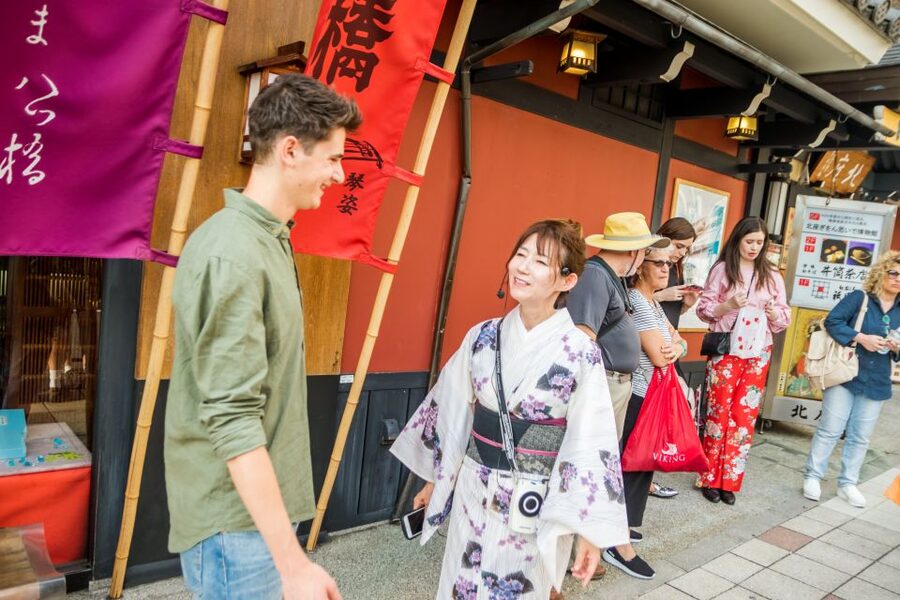
Gion after dark is not a stage set. It is a working neighborhood where geiko and maiko move quietly between boarding houses and evening appointments. This walk helps you read the details: the kimono, hairstyle, greetings, tea-house signs, and rules that are easy to miss on your own. Guides such as Mia, Mie, and Chako bring plenty of local knowledge and personality.
I like two things here. First, the guide explains geiko and maiko life instead of treating the district as a photo backdrop. Second, the $21 price buys a focused introduction to Gion, including scenic lanes and the streamside streets made famous by Memoirs of a Geisha. The main consideration is simple: seeing a geiko or maiko is not guaranteed, and photo expectations are strict.
In This Review
- Key points to know before booking
- Starting near Gion Shijo Station
- Walking the classic streets after sunset
- Learning what geiko and maiko really do
- What happens if you see a geiko or maiko
- Guides make the difference
- The value of $21 for 100 minutes
- Walking conditions and practical limits
- Who should book this Gion night walk
- Should you book the Gion night walk?
- FAQ
- Where does the Night Walk in Gion begin?
- How long does the tour last?
- What language is the tour offered in?
- Is hotel pick-up included?
- Will I definitely see a geiko or maiko?
- Can I record video during the walk?
- Is the tour suitable for people with mobility impairments?
- Can I cancel for a refund?
Key points to know before booking
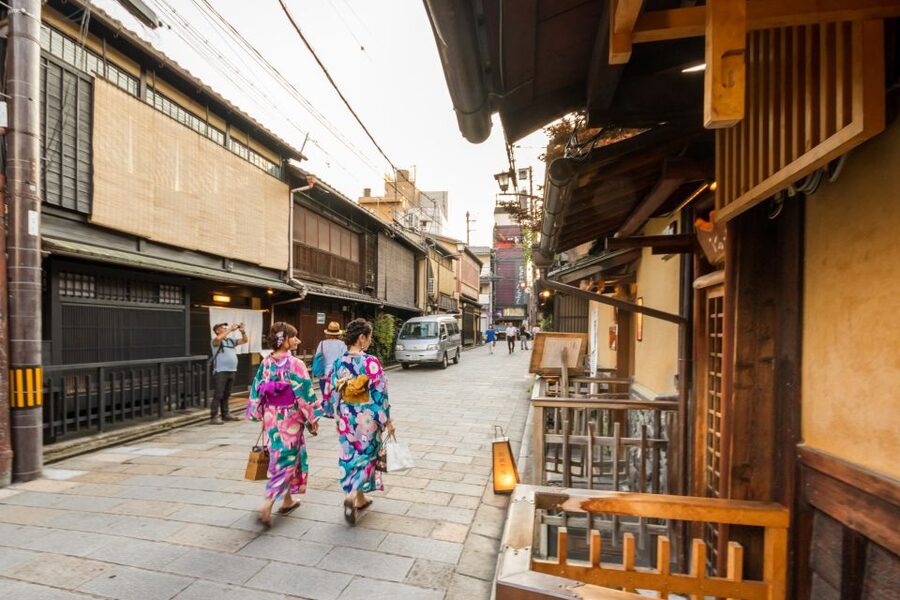
- Nighttime Gion feels more authentic: You walk through the district while evening appointments are beginning, rather than seeing it only as a daytime sightseeing area.
- The guide supplies the context: Learn about kimono, hairstyles, training, daily routines, tea houses, and traditional rules.
- Sightings are possible, not promised: Some walks have seen several geiko and maiko, while the central purpose is still the guided explanation.
- Respect comes first: You may be asked to observe quietly and avoid taking photos of geiko and maiko. Video recording is not allowed.
- The walk is a good value at $21: For 100 minutes with a licensed English-speaking guide, the cost is modest by Kyoto tour standards.
- Plan for a walking tour: The experience is not suitable for people with mobility impairments, and transportation is not included.
Starting near Gion Shijo Station
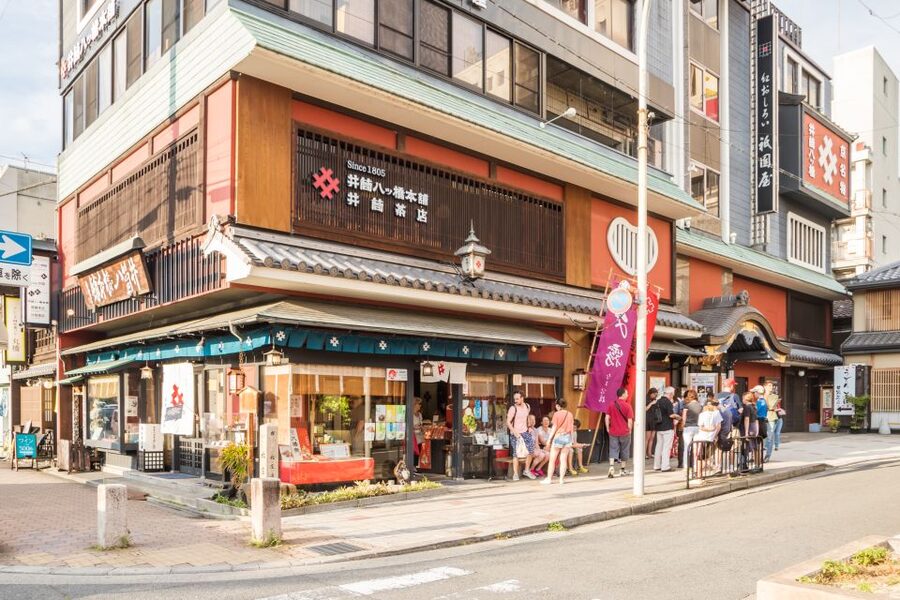
The meeting point is in front of Gion Omoide Museum, connected to the Izutsu Yatsuhashi pastry shop. It sits near Gion Shijo Station, making the start fairly easy to reach if you are already exploring central Kyoto.
Look for the pastry shop and museum connection rather than relying only on the name of the tour. The coordinates are 35.0044519, 135.7723814. I would arrive a little early, especially at night, since Gion’s small streets can make quick orientation harder than expected.
The walk is advertised as 100 minutes, although the fuller description calls it a two-hour guided walk. Treat it as roughly an hour and forty minutes to two hours, depending on the pace and the group. Starting times vary, so check the available slot when you book.
You handle your own transportation to the meeting point. There is no hotel pick-up, hotel drop-off, or transport between attractions. That is normal for a walking tour, but it matters if you are planning a tight evening around dinner reservations.
More Kimono & Culture Experiences in Kyoto
- Kyoto Geisha Walking Tour: Gion District & Hidden Gems
★ 4.7 · 3,273 reviews - Kyoto: Gion Magical Night Walking Tour with Geisha Trivia
★ 4.9 · 2,393 reviews - Kyoto: Gion Geisha District Walking Tour – Stories of Geisha
★ 4.7 · 2,187 reviews
Walking the classic streets after sunset
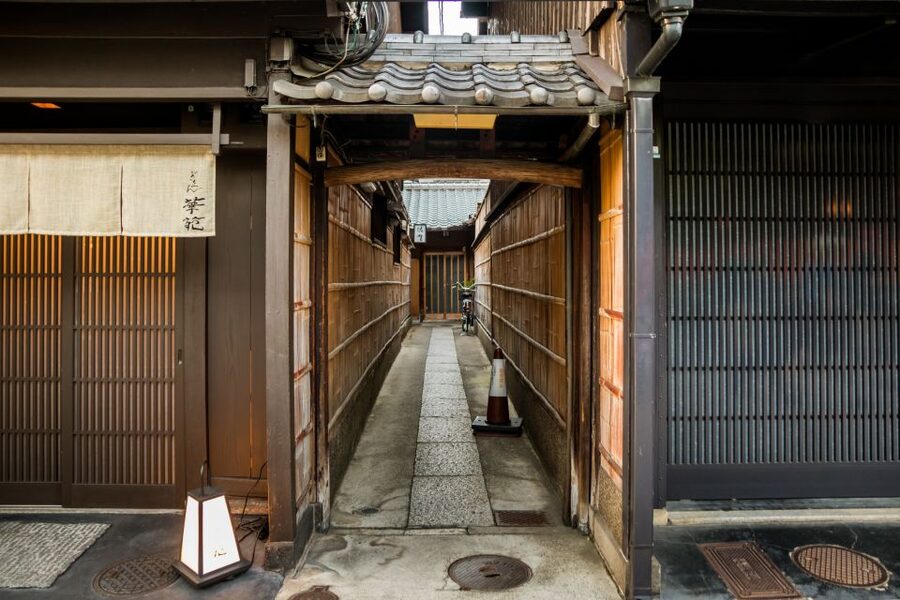
Once the walk begins, you head through the traditional streets of Gion. The appeal is not a long list of formal stops. It is the way the guide gives meaning to ordinary-looking doors, narrow lanes, traditional facades, and the quiet movement of the neighborhood.
The district is often linked with the scenes and atmosphere of Memoirs of a Geisha. That connection can make the area feel familiar, but the tour is more useful when it moves beyond the film. You learn that Gion is a living workplace, not simply a movie location or costume display.
The evening timing helps. Daytime crowds can make parts of Gion feel like a parade route. At night, the streets take on a more subdued mood, and you have a better chance of seeing the district as an operating entertainment quarter. One guide, Mia, was praised for choosing less crowded areas, while other guides have been credited with finding picturesque corners away from the busiest routes.
Do not expect an empty Kyoto. Gion remains popular, and the size of your group can affect how easily you hear the guide or move through narrow streets. Still, several accounts describe small groups, with one comparison noting that other tours nearby had more than 30 people. Group size can change by departure, so consider it a possible benefit rather than a firm promise.
Learning what geiko and maiko really do
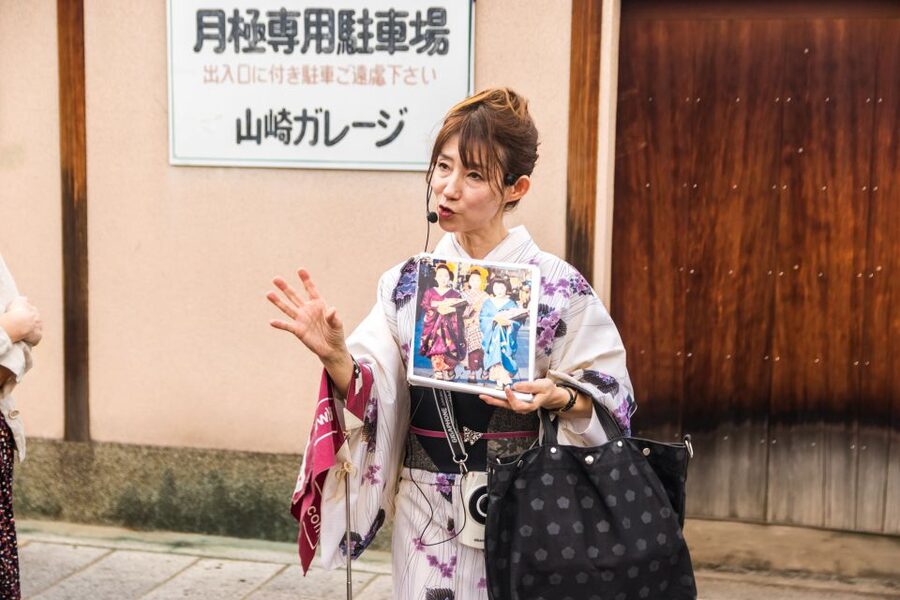
The strongest part of the experience is the explanation of geiko and maiko life. The guide covers the visible details first: kimono, hairstyles, makeup, and the differences you can notice between an apprentice maiko and an established geiko.
That visual information is useful because it gives you something specific to look for. A guide may use photographs or charts to explain the details. Mie was especially praised for arriving with a thick file of images, while another guide, Tako, used charts to make the history and context easier to follow.
The talk also reaches beyond appearance. You learn about training, daily life, traditional rules, and the evening appointments that bring geiko and maiko through the streets. Guides explain the role of tea houses and distinguish a formal Tea House from an ordinary tea house, a small distinction that can prevent a lot of confusion.
This is where the tour earns its price. Without context, you might see a beautifully dressed woman hurrying down a lane and understand very little about what you are watching. With a guide, you can recognize the difference between a maiko and geiko, understand why the clothing is arranged as it is, and appreciate the discipline behind the presentation.
The cultural explanation also avoids reducing these women to a tourist attraction. Several guides, including Mia, Mie, and Chako, are described as respectful and protective of geiko and maiko. That attitude is important in Gion, where crowded groups and intrusive photography have caused real problems.
What happens if you see a geiko or maiko
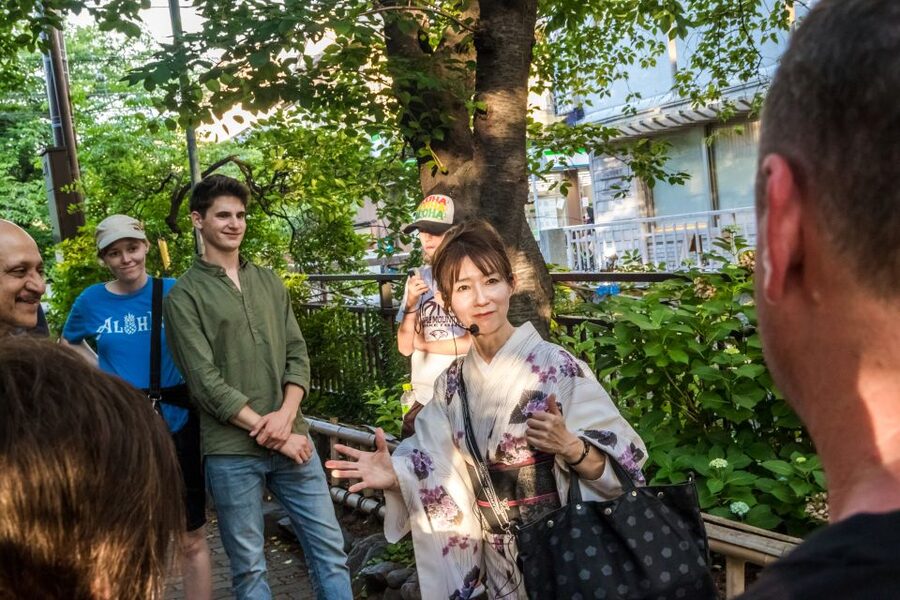
Sightings are one of the tour’s great possibilities, but they should never be the only reason you book. Several recent walks have seen multiple geiko and maiko. One group saw more than eight, another saw four maiko and one geiko, and other walks spotted three or several people heading to evening appointments.
Those results are encouraging, but they vary. A quiet night may bring no sighting at all. The tour provider does not promise one, and the walk remains worthwhile because the guide explains the district even when the streets are quiet.
If you do see someone, the correct response is restraint. Your guide may ask you to bow, greet quietly, keep a respectful distance, and avoid blocking the street. One guide was praised for teaching exactly how to observe without intruding, including small points of etiquette that you would not learn from a guidebook.
Photography requires particular care. Video recording is specifically not allowed. Some groups were also politely asked not to photograph geiko and maiko, and one participant noted that this was a necessary response to the harassment performers have faced from tourist groups.
You should be ready to put your phone away. That may disappoint you if you are hoping for a dramatic portrait, but it improves the experience for everyone. The point is to witness a working moment, not turn a person on the way to work into a souvenir.
Same city, a completely different kind of day:
- PERFECT KYOTO 1-Day Bus Tour
★ 5.0 · 13,518 reviews - Kyoto: Fushimi Inari, Kinkakuji, Bamboo Grove 1 Day Bus Tour
★ 4.8 · 4,316 reviews - Kyoto: Tea Ceremony in a Traditional Tea House in Kiyomizu
★ 4.9 · 3,519 reviews - Kyoto: Tea Ceremony Ju-An at Jotokuji Temple
★ 4.9 · 3,207 reviews
Guides make the difference
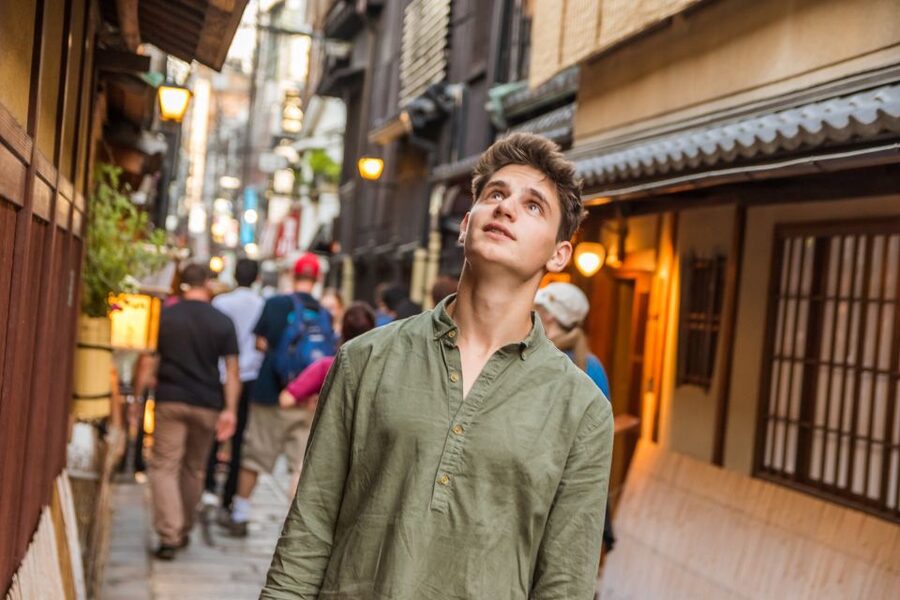
This tour depends heavily on the individual guide. The most praised guides are not just fluent in English. They explain difficult cultural details clearly, answer questions patiently, and keep the pace lively during a walk through streets that might otherwise blur together.
Mia receives repeated praise for her humor, passion, and personal familiarity with the geiko and maiko world. She has been described as someone who can add useful details about people encountered along the way, though her ability to identify individuals should not be taken as a guarantee that you will meet them.
Mie is another frequent favorite. Her English has been described as excellent, and she uses photographs, anecdotes, and even Japanese slang to give the walk a more personal feel. Chako is praised for patience, enthusiasm, and an inclusive approach that keeps different members of a group involved.
Other named guides include Mai, Toko, Haruto, and Tako. The tone can differ from one guide to another. Some lean into humor, while others focus more heavily on history and explanation. That variation is normal for a live guided walk, and it is one reason the experience feels less scripted than a recorded audio tour.
If you have children, the guide’s personality matters even more. Families have found the walk enjoyable for children, including a group with three children and one child in a pram. Two children who were initially unsure about the subject ended up enjoying the information and humor. Still, it is a nighttime walking tour, so younger children need to manage the pace and stay close to the group.
The value of $21 for 100 minutes
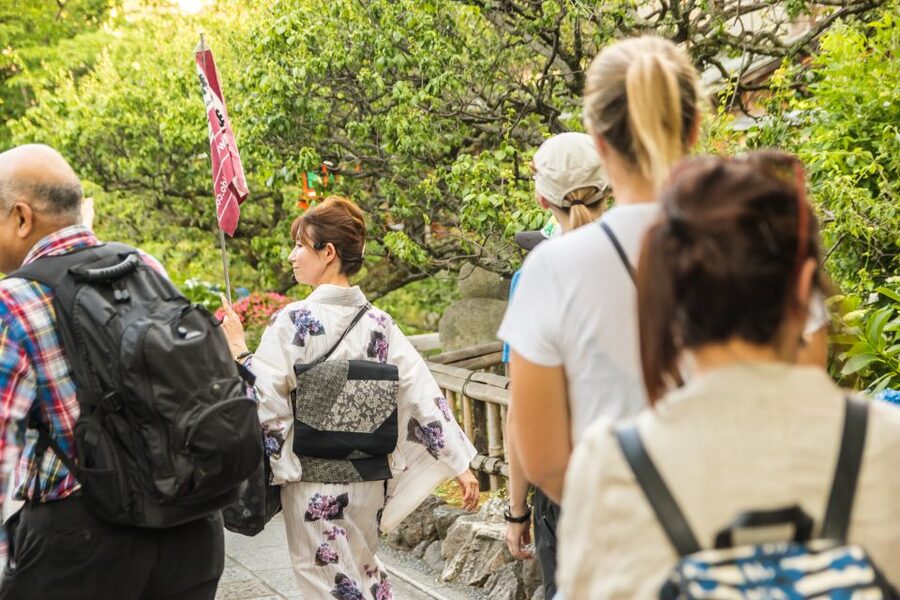
At $21 per person, this is an easy activity to justify if Gion is already on your Kyoto plan. You are paying for a licensed English-speaking guide and about 100 minutes of focused interpretation. There is no meal, transport, hotel pick-up, or admission to a private tea house included.
That low price also sets the right expectation. This is an orientation walk, not a private encounter with geiko and maiko. You are not buying guaranteed access to a boarding house, a performance, or a tea-house gathering. One participant specifically appreciated the guide’s honesty about not entering a geisha boarding school because of privacy concerns.
I see the value in using this as a first introduction to Gion. It gives you enough background to return later with better eyes, and the evening timing fits well before or after dinner. If you already know the history of geiko and maiko in detail, the price is still fair for a guided stroll, but the educational benefit will be smaller.
The flexible booking terms also help. You can reserve now and pay later, and cancellation is free up to 24 hours before the activity for a full refund. Keep in mind that child discounts require valid identification.
Walking conditions and practical limits
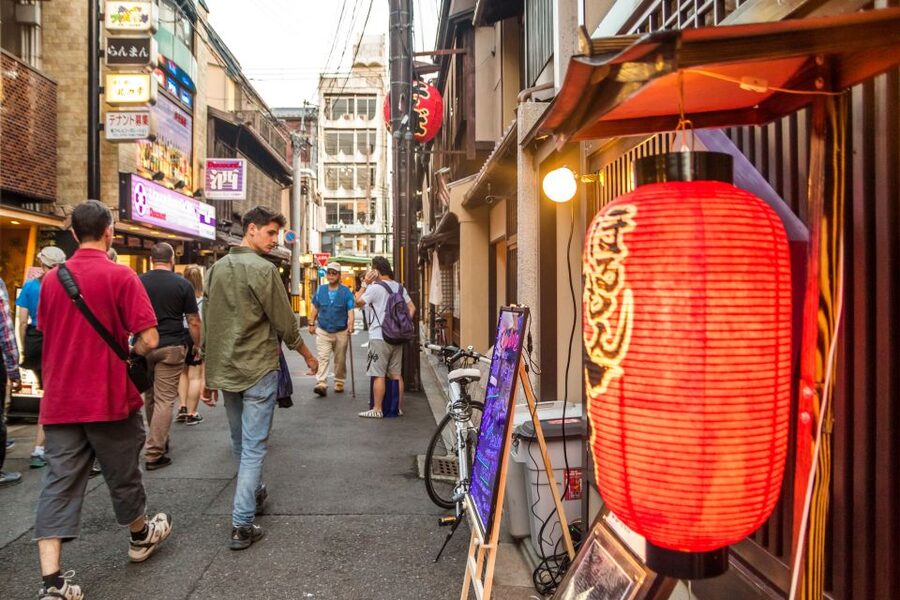
You should be comfortable walking for the full duration. The route passes through streets and lanes rather than offering a seated presentation, and the experience is listed as unsuitable for people with mobility impairments.
Weather does not necessarily stop the walk. Guides have continued through rain, keeping the group together at crossings and maintaining the explanations. Even so, bring suitable footwear and rain protection when the forecast calls for wet weather. The tour takes place outdoors, so comfort affects how much you absorb.
The pace has been described as manageable, but narrow streets and crossings can briefly separate a large group. Stay near the guide and pay attention when the group moves on. A guide named Chako was praised for keeping track of people, including when a group became spread out at a crosswalk.
The tour is offered in English with a live guide. That makes it a useful choice if you want more than a translated sign or a few stock facts. It also means you can ask about details that catch your attention, such as clothing, greetings, tea-house customs, or the modern role of geiko and maiko.
Who should book this Gion night walk
I would recommend it most strongly to first-time visitors who want a respectful introduction to Kyoto’s geiko culture. It suits you if you like local history, neighborhood walks, cultural etiquette, and small details that turn a pretty street into a place with a purpose.
It also works well for families, provided everyone can manage the walk. Children may respond better than expected to the guide’s humor and visual aids, especially when the explanation is tied to clothing and daily life.
Book it if you hope to see geiko or maiko, but do not book it as a guaranteed sighting hunt. The best result is a walk that teaches you how to behave and what you are seeing. A sighting is an added treat.
You may want to skip it if you dislike walking at night, cannot comfortably manage the route, or mainly want close-up photographs. The no-video rule and likely photography restrictions are central to the respectful nature of the experience.
Should you book the Gion night walk?
For $21, I think this is a strong Kyoto activity, especially if you are curious about geiko and maiko but do not know where to begin. The best guides, including Mia, Mie, Chako, and Mai, make the district easier to understand without turning it into a sideshow.
Book with realistic expectations. You will walk through Gion, learn about its traditions and present-day life, and possibly see performers heading to appointments. You may not see anyone, and you should be prepared to watch quietly rather than photograph freely. If that sounds like a fair exchange for a respectful, well-priced introduction, this walk belongs on your Kyoto schedule.
FAQ
Where does the Night Walk in Gion begin?
The meeting point is in front of Gion Omoide Museum, connected to the Izutsu Yatsuhashi pastry shop. The coordinates are 35.0044519, 135.7723814, near Gion Shijo Station.
How long does the tour last?
The activity is listed as 100 minutes. Its description also refers to a two-hour guided walk, so plan for roughly one hour and forty minutes to two hours.
What language is the tour offered in?
The tour is conducted in English by a live, licensed English-speaking guide.
Is hotel pick-up included?
No. Transportation to and from the attractions is not included, and there is no hotel pick-up or drop-off.
Will I definitely see a geiko or maiko?
No. Encounters are possible but are not guaranteed. Some walks have seen several geiko and maiko, while the tour also focuses on the history, culture, and streets of Gion.
Can I record video during the walk?
No. Video recording is not allowed.
Is the tour suitable for people with mobility impairments?
No. The activity is listed as unsuitable for people with mobility impairments.
Can I cancel for a refund?
Yes. You can cancel up to 24 hours in advance for a full refund. You can also reserve now and pay later.
More Evening Experiences in Kyoto
- Kyoto Night Foodie Tour in Gion (9+ dishes + 6 Sake tastings)
★ 5.0 · 1,762 reviews - Kyoto Gion Night Walk & Geisha District Guided Tour
★ 5.0 · 786 reviews - Kyoto Ghost Tour: Dark Tales, Urban Legends, Bamboo Forest Night
★ 5.0 · 625 reviews - Kyoto Bar Hopping Night Tour
★ 5.0 · 613 reviews
Just added around Kyoto
- Taste of Nishiki Market Walking Food Tour with Local guide★ 5.0 · 17 reviews
- Kyoto: Sushi Making Class with Sushi Chef★ 4.8 · 64 reviews
- Kyoto: City Secrets eBike Tour★ 4.9 · 196 reviews
- Sacred Pathways: Discover the Philosopher’s Path of Kyoto★ 4.9 · 20 reviews
- Private Tour to Monkey Park and Arashiyama Highlights★ 5.0 · 22 reviews
- Private Nara Tour from Osaka – Meet at Your Hotel★ 5.0 · 22 reviews
- Private Sake Tasting in Central Kyoto with Sake Sommelier★ 5.0 · 13 reviews
- Kyoto : Private Custom Walking Tour With A Local Guide★ 4.6 · 144 reviews
Kimono & Culture Experiences, compared.
Kyoto Geisha Walking Tour: Gion District & Hidden Gems
Read our review →
Gion Magical Night Walking Tour with Geisha Trivia
Read our review →
Gion Geisha District Walking Tour – Stories of Geisha
Read our review →
Best of Kyoto: Gion, Geisha, Pagodas & Cobblestones
Read our review →
Kyoto Gion Geisha District Walking Tour – The Stories of Geisha
Read our review →

Kyoto Gion: 2-Hour Geisha Culture & History Walking Tour
Read our review →Browse the lists this tour appears in