
REVIEW · KIMONO & CULTURE EXPERIENCES
Kyoto: Gion Geisha District Walking Tour – Stories of Geisha
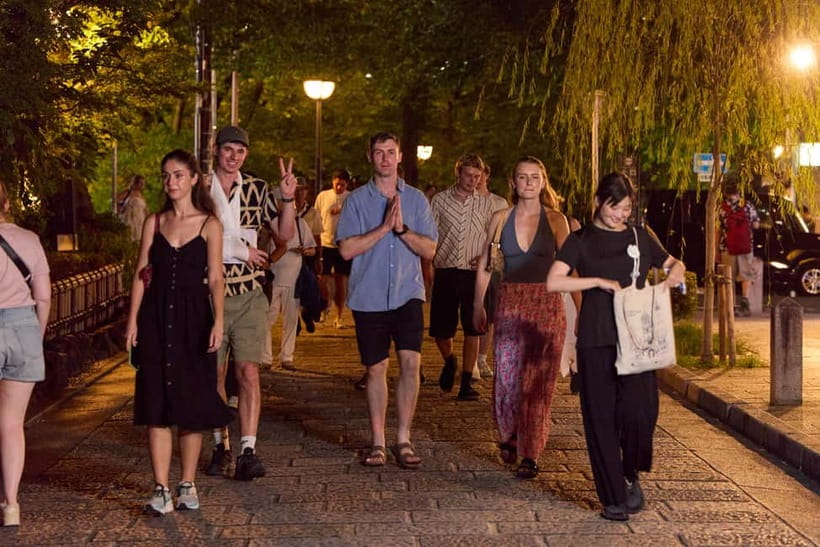
Kyoto’s geisha districts are easiest to appreciate after sunset, when lanterns glow outside old wooden teahouses and the narrow lanes take on a quieter, more private feel. This two-hour walk links Pontocho and Gion, giving you the setting and the cultural background needed to understand what you are seeing.
I like the way the tour combines atmospheric streets with clear explanations of geiko and maiko life. I also like the modest $20 price, which makes a local guide a sensible addition to a Kyoto stay. The main consideration is that seeing a geiko or maiko is never guaranteed, and some evening views can be harder to see once darkness arrives.
In This Review
- Key points at a glance
- Why Gion makes more sense with a guide
- Starting at Ben’s Cookies Kyoto Shijo
- Pontocho Alley: Kyoto’s discreet dining street
- The Izumo-no-Okuni statue and the birth of kabuki
- Entering Gion, Kyoto’s best-known geisha district
- Yasaka Shrine after dark
- Gion Corner and Hanamikoji Street
- The guides make the biggest difference
- Is $20 good value for two hours?
- Who should book this walk?
- Should you book the Gion Geisha District Walking Tour?
- FAQ
- Where does the tour meet?
- How long does the tour last?
- What areas does the route cover?
- Is the tour conducted at night?
- What languages are available?
- Are geisha sightings guaranteed?
- What is the difference between geiko and maiko?
- Is the tour suitable for young children?
- What should I bring?
- Can I cancel the booking?
Key points at a glance
- Nighttime route through two famous districts: Walk Pontocho Alley, Gion, Hanamikoji Street, and the area around Yasaka Shrine.
- Stories behind the costumes and customs: Learn the difference between geiko and maiko, along with their training and place in Kyoto culture.
- Small-group feel on many departures: Several guides, including Yuki, Nami, and Deborah, are praised for keeping the pace relaxed and making time for questions.
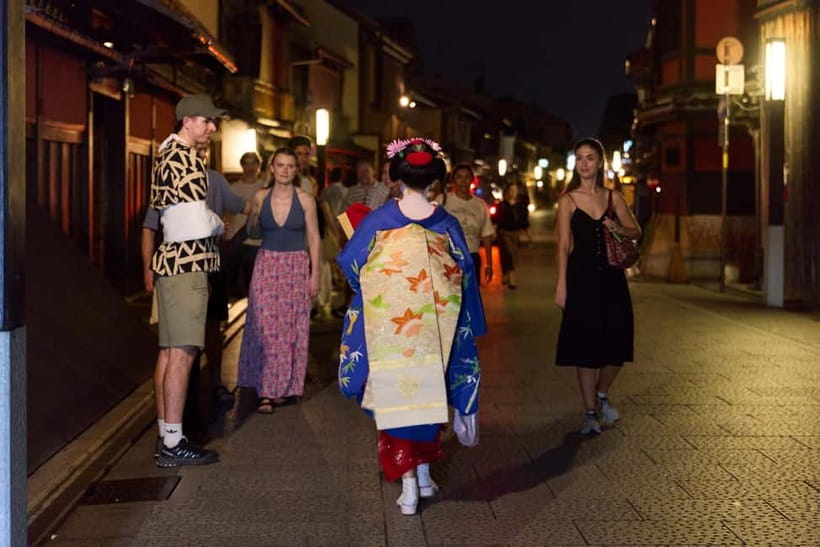
- Real encounters are possible, not promised: You may spot a geiko or maiko heading to an appointment, but the tour is valuable even when the lanes are quiet.
- Useful first-night orientation: Guides can help you understand the district and may offer suggestions for what to do next in Kyoto.
- Simple practical setup: Meet in front of Ben’s Cookies Kyoto Shijo, bring water, and expect about two hours on foot.
Why Gion makes more sense with a guide
At first glance, Gion can seem like a collection of pretty streets and closed doors. The wooden facades, paper lanterns, and discreet entrances are attractive, but much of the district’s meaning is easy to miss if you simply walk through with a camera.
A guide gives those streets a human story. You learn that the women you may see are generally called geiko in Kyoto, while maiko are apprentices still completing their training. You also gain a clearer idea of the discipline behind their appearance, from formal dress and makeup to music, dance, manners, and the demanding path toward a professional career.
That context matters because Gion is not a theme park. The teahouses are working places, and the people moving through the lanes may be heading to private appointments. A good guide helps you look without treating the district like a stage set.
This tour’s strongest feature is its storytelling. Guides such as Yuki, Nami, Yukari, Deborah, Manuel, Kenji, and Michael are repeatedly praised for explaining the subject in a friendly, lively way. The best guides adjust their explanations to the group, so you can ask basic questions without feeling lost, or ask for more detail if you already know something about geisha culture.
More Kimono & Culture Experiences in Kyoto
- Kyoto Geisha Walking Tour: Gion District & Hidden Gems
★ 4.7 · 3,273 reviews - Kyoto: Gion Magical Night Walking Tour with Geisha Trivia
★ 4.9 · 2,393 reviews - Best of Kyoto: Gion, Geisha, Pagodas & Cobblestones
★ 4.9 · 2,058 reviews
Starting at Ben’s Cookies Kyoto Shijo
The meeting point is in front of Ben’s Cookies Kyoto Shijo, where your guide holds a sign board. This is a straightforward central meeting place, but give yourself enough time to find the shop and gather before the walk begins.
The route is entirely on foot, so wear comfortable shoes. You will be outside for two hours, with stops for explanations and photographs. Water is the only listed item to bring, but sensible walking clothes and weather protection are important, especially since one group completed the tour in heavy rain.
The walking pace is generally easy. One guide was praised for checking that everyone was comfortable, while another adjusted the route by finding sheltered places to stop during poor weather. Still, this is not a seated cultural lecture. You should be ready to walk narrow streets and stand while listening.
The tour is offered in English and Spanish. Children under 10 are not accepted, which makes sense given the subject matter and evening timing.
Pontocho Alley: Kyoto’s discreet dining street
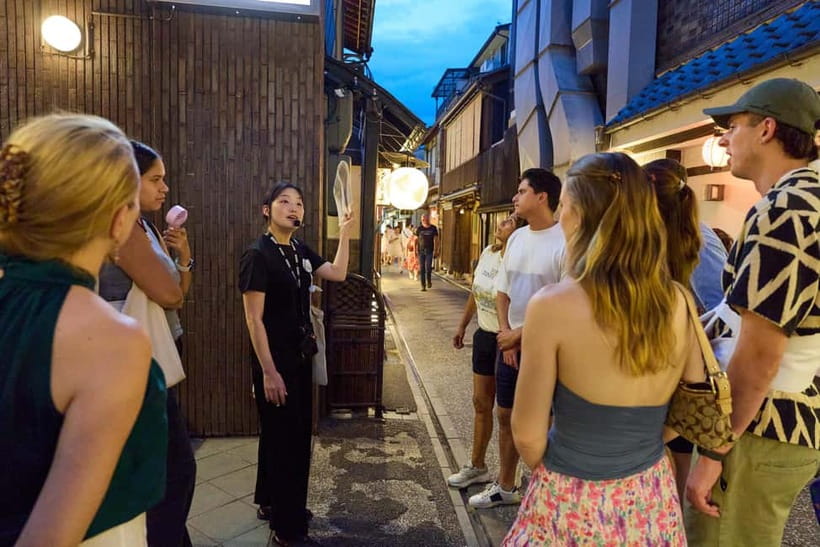
The first major stop is Pontocho Alley, reached after a short introductory period. This narrow lane runs along the Kamo River and is lined with traditional Japanese restaurants, teahouses, and exclusive clubs.
Pontocho is attractive precisely because it does not explain itself. Many entrances are small and understated. A guide can point out how the street developed as an entertainment quarter and explain the difference between a restaurant open to the public and a private establishment where access may depend on introductions.
Expect around 15 minutes here, though the walk itself begins to establish the mood. The lane is narrow, and evening foot traffic can make it feel crowded at points. You will not be touring the interiors of the clubs or teahouses. The value comes from understanding the street and the social world connected to it.
This is also a good place to ask questions. The guides are encouraged to keep the discussion open, and the small groups described by several participants made it easier to speak up. If you want to know how a maiko’s training differs from a geiko’s professional life, this is a natural moment to ask.
The Izumo-no-Okuni statue and the birth of kabuki
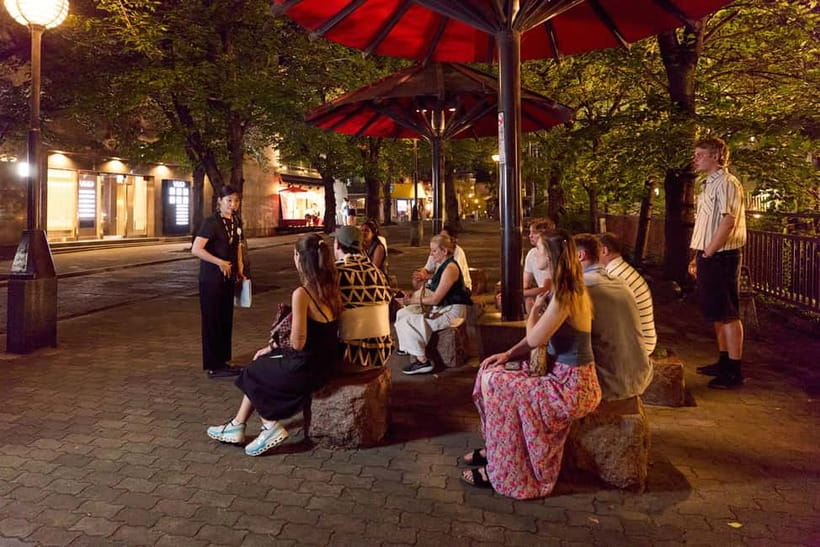
The route then crosses the river to the statue of Izumo-no-Okuni. The stop lasts about 15 minutes and adds a useful piece of Kyoto’s performing-arts story.
Izumo-no-Okuni is associated with the creation of kabuki, so the statue provides a chance to place geisha culture within a larger tradition of dance, music, theatre, and formal entertainment. The point is not that geisha and kabuki are the same thing. Rather, the stop helps you see how Kyoto’s artistic life developed through linked forms of performance.
This part is especially useful if you arrive knowing little about Japanese theatre. You can ask your guide to explain how the arts connect, and why ceremony, costume, music, and controlled movement matter so much in Kyoto’s traditional entertainment.
The statue itself is a brief stop, not a major monument visit. If you expect a long sightseeing break, you may find it modest. Its importance comes from the explanation given there.
More Walking Tours in Kyoto
- Private Kyoto Tour with a Local, Highlights & Hidden Gems, Personalised
★ 5.0 · 1,543 reviews - Kyoto Gion Geisha District Walking Tour – The Stories of Geisha
★ 5.0 · 1,441 reviews - Nishiki Market Brunch Walking Tour (7 Tastings + Brunch)
★ 5.0 · 1,355 reviews - Kyoto Arashiyama Walking Tour: Bamboo, Monkeys, Gardens & Secrets
★ 5.0 · 1,216 reviews
Entering Gion, Kyoto’s best-known geisha district
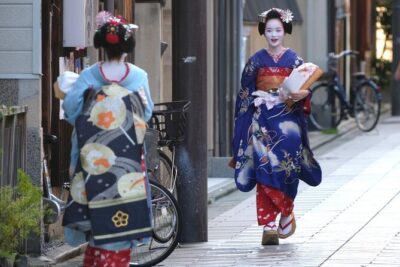
After Pontocho, the tour continues into Gion for about 30 minutes. This is the heart of the evening, with old wooden buildings, quiet side lanes, and the possibility of seeing a geiko or maiko traveling to an appointment.
The phrase possibility is important. Some groups see one or more maiko, and one group encountered geiko rather than maiko. Other groups see few or none. The timing, weather, season, and private schedules all affect what is happening on the streets.
You should not judge the tour only by sightings. A guide can explain what you are seeing even when no one in formal dress appears. You may learn about the stages of maiko training, the transition to geiko, and the importance of preserving skills that are not easily learned from a book or museum display.
If a geiko or maiko does pass by, follow your guide’s lead. Keep a respectful distance, avoid blocking the lane, and do not treat a private appointment as a public performance. The tour’s emphasis on respect is one of its most worthwhile features.
Several guides use photographs to explain hairstyles, clothing, and stages of training. That helps because a quick glimpse on a dark street is not enough to take in every detail. You get the visual reference without needing to stare at people as they walk past.
Yasaka Shrine after dark
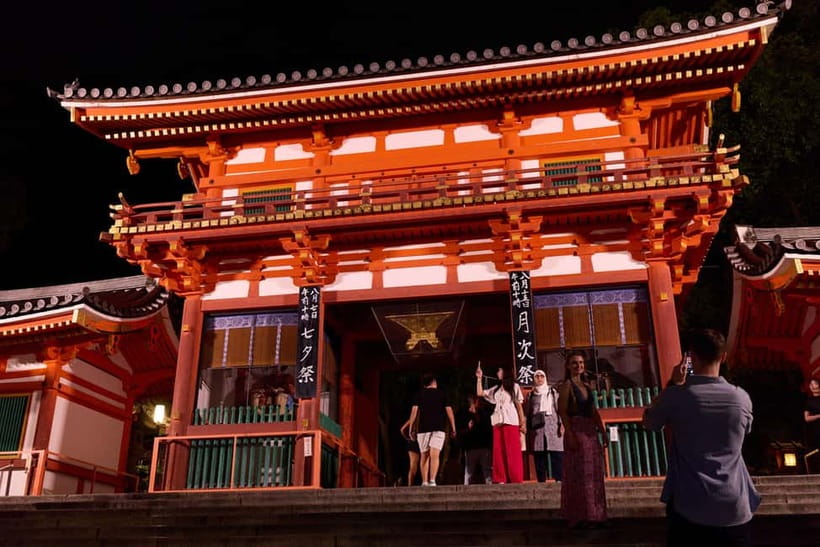
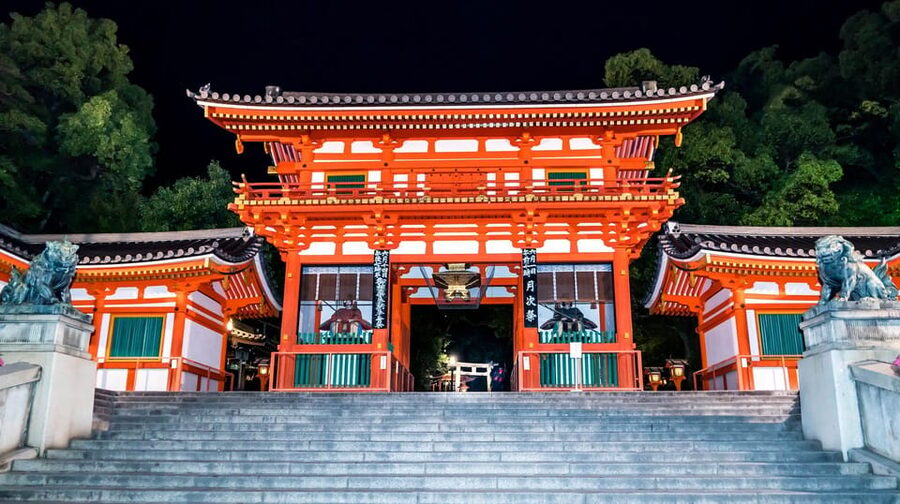
The route spends about 25 minutes at Yasaka Shrine, one of the key religious sites in the Gion area. The shrine gives the evening a welcome change of pace: after narrow entertainment lanes and private teahouse entrances, you reach an open sacred space.
Your guide explains the shrine as part of the local setting rather than treating it as an isolated sightseeing stop. This helps you understand why Gion grew where it did and how religion, festivals, commerce, and entertainment have long overlapped in Kyoto.
The shrine can be atmospheric at night, but darkness has a practical downside. Details that are easy to see in daylight may be less clear, especially if you want architectural photographs. One autumn group found that certain sites might have been easier to appreciate earlier in the day.
That is a fair limitation. I see this tour as an evening introduction, not a replacement for a daytime shrine visit. If Yasaka Shrine is high on your list, return during daylight when you have more time to inspect it.
Gion Corner and Hanamikoji Street
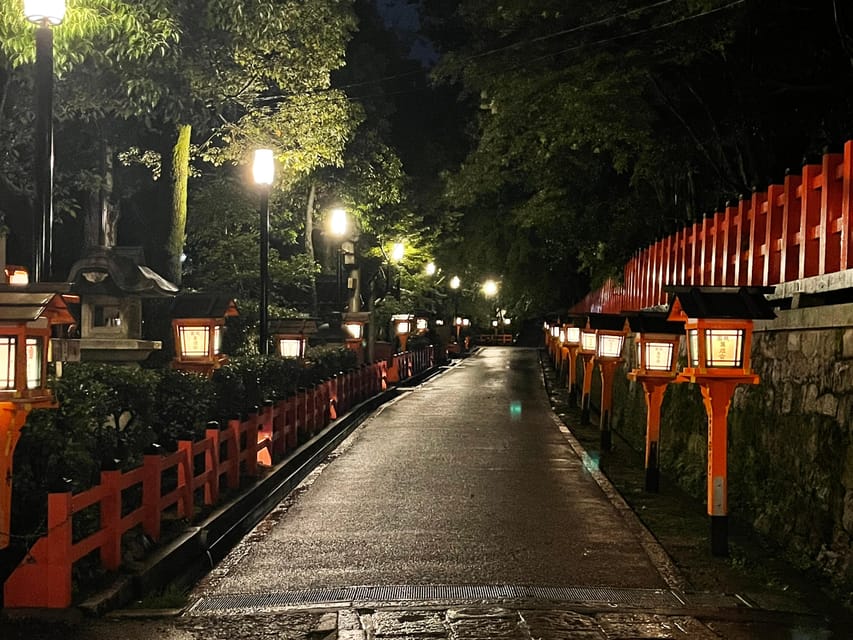
The itinerary includes a roughly 10-minute stop at Gion Corner, followed by about 15 minutes on Hanamikoji Street. These final sections bring together the history and atmosphere you have encountered earlier.
Gion Corner is linked to traditional performing arts, making it a fitting place to discuss Kyoto’s stage traditions and the relationship between entertainment and formal hospitality. The stop is short, so do not expect a full show as part of this walking tour. It is a point for orientation and explanation.
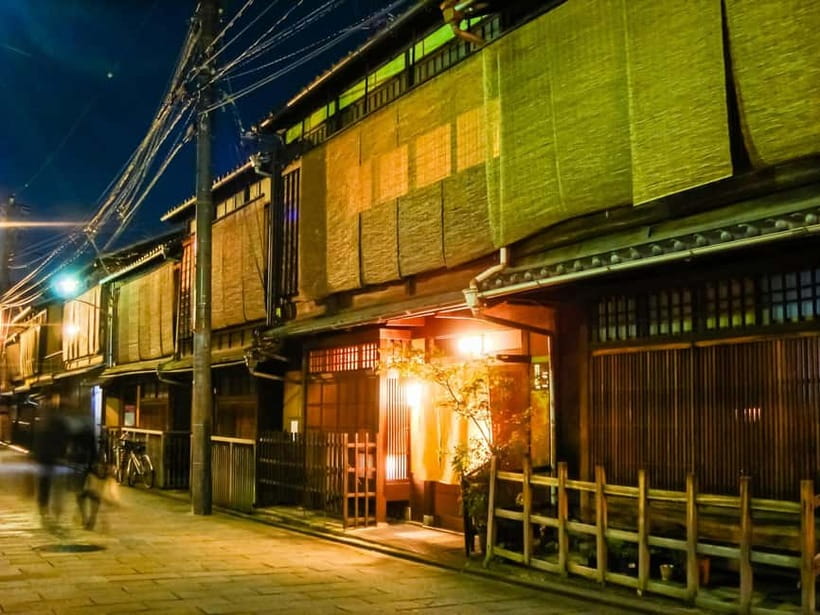
Hanamikoji Street is one of Gion’s most recognizable lanes. Its preserved wooden buildings and traditional fronts make it an excellent place to see how the district presents itself today. It is also one of the places where you might spot a geiko or maiko on the way to work.
The street can be busy with people taking photographs. That is where the guide’s presence helps. You can learn which details matter, avoid blocking entrances, and keep your attention on the district rather than simply collecting pictures.
The tour does not finish where it starts. This caught one participant by surprise, although finding the way back was not considered difficult. Before leaving, ask your guide to point out your best route onward.
The guides make the biggest difference
The route is well chosen, but the guide shapes the experience. Names that appear repeatedly in strong feedback include Yuki, Nami, Yukari, Deborah, Manuel, Kenji, Michael, Ann, Shin, and Melanie.
Yuki is praised for his warmth, local pride, and respect for Kyoto’s traditions. Nami is noted for clear communication, careful pacing, and checking that everyone has time for questions. Deborah is especially associated with lively explanations, photographs, humor, and a strong grasp of geiko and maiko life.
Other guides bring their own strengths. Ann is described as able to adapt the content for beginners and people with prior knowledge. Kenji is praised for organized background information, while Manuel is noted for making historical material interesting. These details suggest a tour team with different personalities rather than one fixed script.
Because guide assignments can vary, you should not book on the assumption that a particular person will lead your departure. If you do meet one of these guides, you can expect an approachable style and plenty of room for questions, but the exact experience will depend on the person and group.
Is $20 good value for two hours?
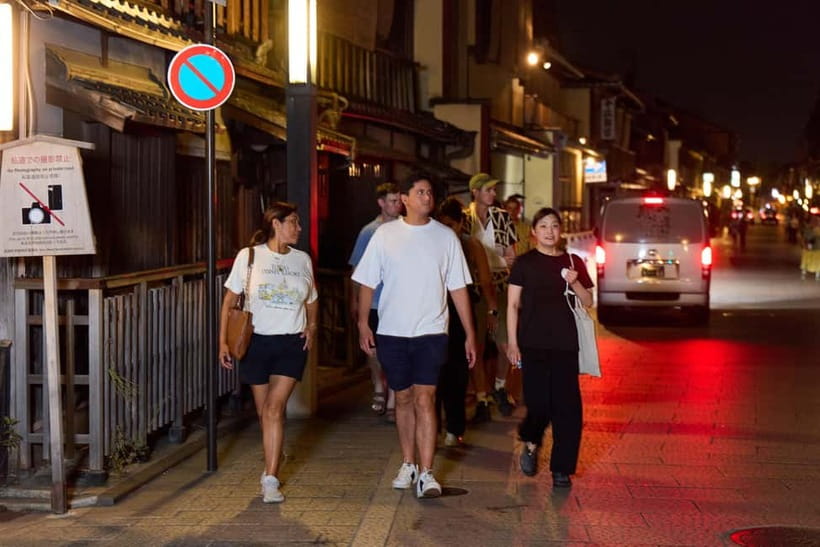
At $20 per person, this is good value if you want cultural context rather than a costly staged encounter. You receive two hours with a local guide, a route through two major historic districts, and explanations that would be difficult to assemble while walking alone.
The price does not include a meal, a tea ceremony, tickets to a performance, or guaranteed contact with geiko or maiko. That keeps expectations clear. You are paying for guided interpretation and access to a well-planned walking route, not a private appointment with Kyoto’s traditional entertainers.
I especially like the value for a first visit. A short tour can help you understand what you are seeing for the rest of your time in Kyoto. One guide also offered suggestions for additional activities, which can be helpful when your stay is brief.
Free cancellation is available up to 24 hours before the start time, and you can reserve while paying later. Check the available departure times when booking, since the exact start time can vary.
Who should book this walk?
This tour suits adults and older children who want a clear introduction to Kyoto’s geisha culture, especially if this is your first visit to Gion. It also works well for anyone who prefers stories and local interpretation to a long list of monuments.
You will get the most from it if you are curious about:
- The difference between geiko and maiko
- Training, performance, etiquette, and traditional dress
- Kyoto’s teahouse districts
- The connection between entertainment, theatre, and religion
- How to behave respectfully around working performers
It may not suit you if you want a private geisha performance, guaranteed sightings, extensive shrine sightseeing, or a food tour. Alcohol and drugs are not allowed, and children under 10 cannot join.
Bring an open mind and realistic expectations. The strongest part of the evening is not a single sighting. It is learning to read the streets, understand the doors and costumes, and see why this culture still matters.
Should you book the Gion Geisha District Walking Tour?
I would book this tour early in a Kyoto stay if you want a practical introduction to Gion and Pontocho. At $20, the risk is low, and the guide can give you useful cultural footing before you explore the districts on your own.
Book it if you value good explanations, a relaxed two-hour walk, and the chance to see working historic neighborhoods after dark. Do not book it solely for a guaranteed geisha sighting. The most reliable payoff is the guide’s account of geiko and maiko traditions, supported by the streets and buildings where that culture continues.
If you can choose an evening with decent weather, do so. Clear conditions make the lanes easier to enjoy, but the tour can still work in rain when the guide can find sheltered stopping places. For a first look at Kyoto’s traditional entertainment districts, this is a useful, fairly priced choice.
FAQ
Where does the tour meet?
Meet your guide in front of the Ben’s Cookies Kyoto Shijo shop. The guide will be holding a sign board.
How long does the tour last?
The walking tour lasts two hours.
What areas does the route cover?
The route covers Pontocho Alley, the area around the Izumo-no-Okuni statue, Gion, Yasaka Shrine, Gion Corner, and Hanamikoji Street.
Is the tour conducted at night?
Yes. This is a nighttime walking tour of Gion and Pontocho.
What languages are available?
The tour is offered with a live guide in English or Spanish.
Are geisha sightings guaranteed?
No. You may encounter geiko or maiko traveling to appointments, but sightings are not guaranteed.
What is the difference between geiko and maiko?
The tour explains the history, training, and traditions of geiko and maiko. In Kyoto, geiko refers to professional entertainers, while maiko are apprentices.
Is the tour suitable for young children?
No. Children under 10 are not suitable for this activity.
What should I bring?
Bring water. Comfortable footwear and clothing suited to the weather are also practical for a two-hour outdoor walk.
Can I cancel the booking?
Yes. You can cancel up to 24 hours in advance for a full refund. You can also reserve now and pay later.
Just added around Kyoto
- Taste of Nishiki Market Walking Food Tour with Local guide★ 5.0 · 17 reviews
- Kyoto: Sushi Making Class with Sushi Chef★ 4.8 · 64 reviews
- Kyoto: City Secrets eBike Tour★ 4.9 · 196 reviews
- Sacred Pathways: Discover the Philosopher’s Path of Kyoto★ 4.9 · 20 reviews
- Private Tour to Monkey Park and Arashiyama Highlights★ 5.0 · 22 reviews
- Private Nara Tour from Osaka – Meet at Your Hotel★ 5.0 · 22 reviews
- Private Sake Tasting in Central Kyoto with Sake Sommelier★ 5.0 · 13 reviews
- Kyoto : Private Custom Walking Tour With A Local Guide★ 4.6 · 144 reviews
Kimono & Culture Experiences, compared.
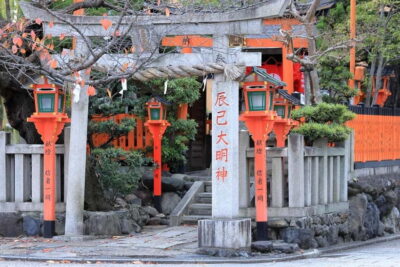
Kyoto Geisha Walking Tour: Gion District & Hidden Gems
Read our review →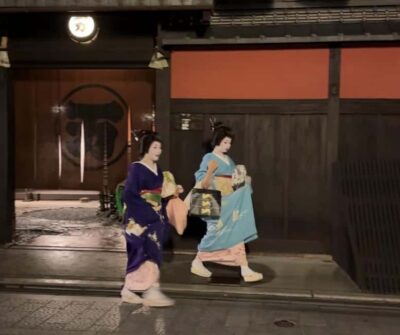
Gion Magical Night Walking Tour with Geisha Trivia
Read our review →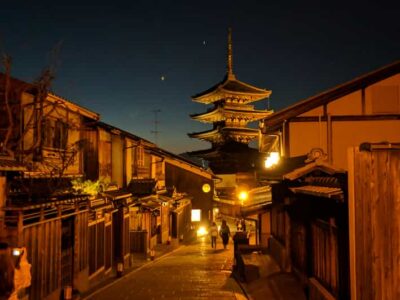
Best of Kyoto: Gion, Geisha, Pagodas & Cobblestones
Read our review →
Kyoto Gion Geisha District Walking Tour – The Stories of Geisha
Read our review →
Kyoto Gion: 2-Hour Geisha Culture & History Walking Tour
Read our review →Browse the lists this tour appears in