
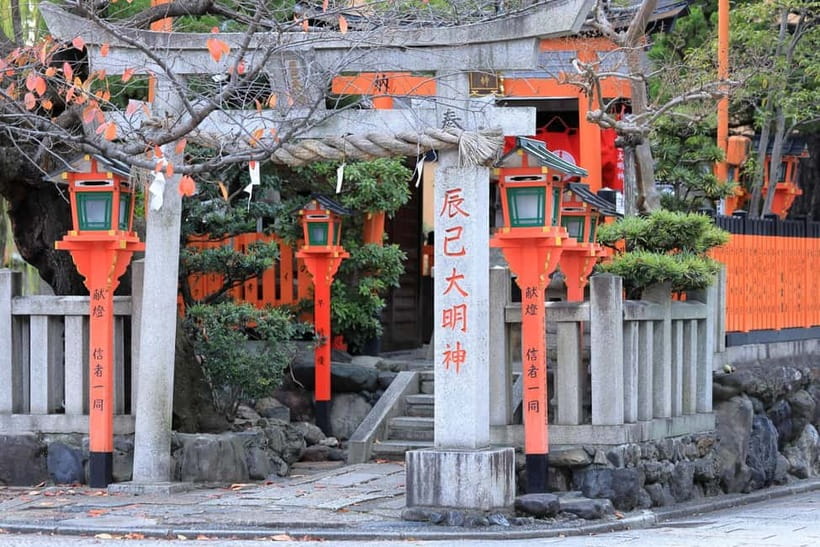
REVIEW · KIMONO & CULTURE EXPERIENCES
Kyoto Geisha Walking Tour: Gion District & Hidden Gems
Gion is at its most atmospheric when lanterns begin to glow and a Geiko or Maiko slips along a side street toward an evening appointment. This tour helps you understand what you are seeing, rather than treating the district as a stage set for photographs. The best part is the context, especially the clear explanation of Geisha traditions, Kyoto’s past, and the role of the old teahouse quarter today.
I like the tucked-away streets and photo stops, including preserved machiya townhouses and quieter corners that are easy to miss alone. I also like the useful finish: your guide shares personal suggestions for restaurants, bars, shops, and further sights. The main consideration is simple: seeing a Geiko or Maiko is possible, not promised, and the two-hour walk may feel brisk if you want long temple visits.
In This Review
- Key points
- Gion’s lantern-lit streets and the search for Geiko
- Geiko, Maiko, and what the tradition means today
- Hōkan-ji Pagoda and Gion’s best photo angles
- Kennin-ji, Kyoto’s oldest Zen temple
- Chion-in and the overlooked religious side of the route
- Small shops, machiya homes, and useful local advice
- How the two-hour format affects the experience
- Is $25 a fair price for a Gion walking tour?
- Who should book this walk?
- Final verdict: book it early in your Kyoto stay
- FAQ
- How long does the Kyoto Geisha Walking Tour last?
- What language is the tour conducted in?
- How much does the tour cost?
- Where is the meeting point?
- Will I definitely see a Geiko or Maiko?
- What places are included on the walk?
- Can I cancel or pay later?
Key points
- Gion after dark: Lantern-lit lanes give the district its most memorable mood, especially on later departures.
- Geisha culture explained clearly: Learn the difference between Geiko and Maiko, their training, their appointments, and the history behind the tradition.
- Major sights and quiet corners: The route can include Hōkan-ji Pagoda, Kennin-ji Temple, Chion-in, machiya homes, tea houses, and small shops.
- Guides with strong local knowledge: Michael receives especially frequent praise for his history, humor, language skills, and practical advice. Yuri, Anton, Ikuro, and Ron also lead tours.
- Useful for the rest of your trip: Leave time afterward for food, shopping, pottery, or perfume-making near Gion.
- Good value at $25: Two hours with a live English-speaking guide is a modest price for a first look at one of Kyoto’s most famous districts.
Gion’s lantern-lit streets and the search for Geiko
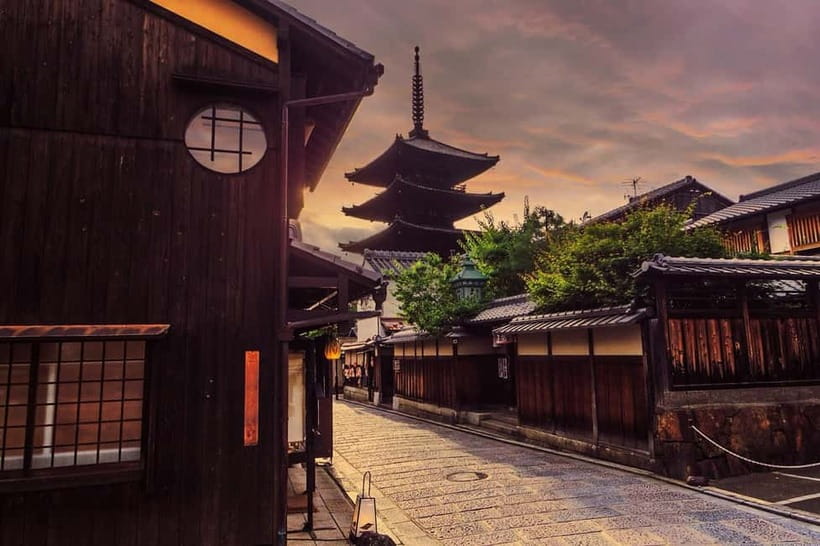
The tour begins beside Hotel Alza Kyoto, on the side street marked by red parasols and marble seats. That meeting point matters because Gion has many small lanes and several similarly named locations. Arrive with enough time to find the umbrellas without rushing.
From there, you walk into Gion, Kyoto’s traditional entertainment district. The setting is immediately attractive: narrow streets, wooden facades, tiled roofs, hanging lanterns, and tea houses with a quiet, private air. Some buildings are beautifully preserved machiya townhouses, the long, narrow homes that help give old Kyoto its distinctive look.
Your guide explains why the area feels so reserved. The tea houses are not ordinary cafés, and some host private performances for wealthy clients. That detail helps you read the street properly. A closed door or discreet entrance is not a missed attraction waiting to be photographed. It is part of a working cultural district that still serves a local purpose.
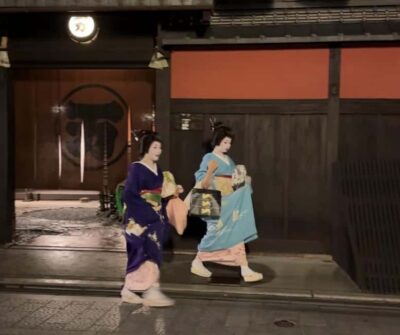
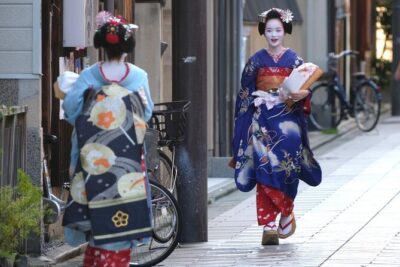
The chance to spot a Geiko or Maiko is one reason many people book this walk. You might see one moving quickly between appointments, often in the late afternoon or evening. The sight can be striking, with formal dress, elaborate hair, and a measured pace. But do not treat it as a wildlife sighting. One tour participant saw no Geisha at all and still found the walk worthwhile because the guide filled the route with history and stories.
Good manners are essential. Keep your distance, do not block a narrow lane, and follow your guide’s instructions about photography. The value of the experience comes from understanding the people and place, not simply collecting a close-up image.
More Kimono & Culture Experiences in Kyoto
- Kyoto: Gion Magical Night Walking Tour with Geisha Trivia
★ 4.9 · 2,393 reviews - Kyoto: Gion Geisha District Walking Tour – Stories of Geisha
★ 4.7 · 2,187 reviews - Best of Kyoto: Gion, Geisha, Pagodas & Cobblestones
★ 4.9 · 2,058 reviews
Geiko, Maiko, and what the tradition means today
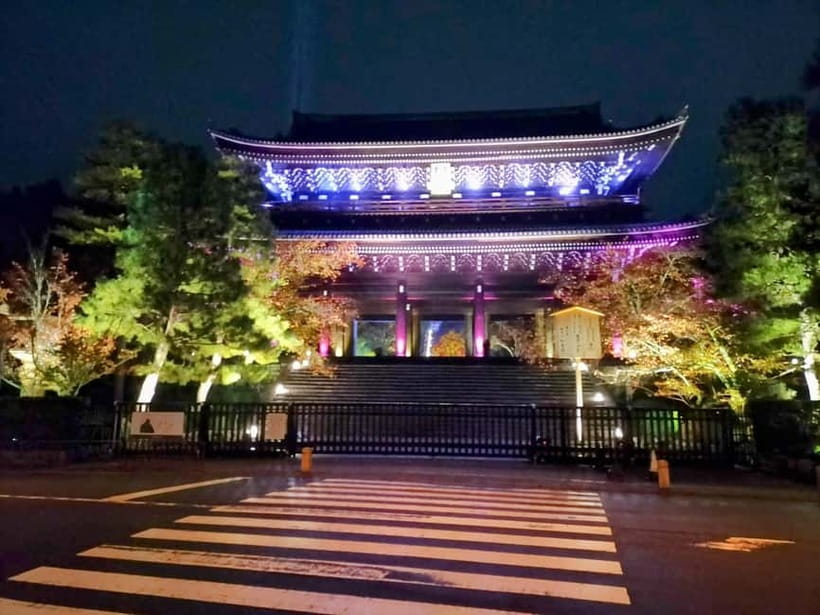
A strong part of this experience is the explanation of Geisha culture. In Kyoto, the preferred terms are Geiko and Maiko. Geiko are accomplished entertainers, while Maiko are younger apprentices in training. Your guide discusses the origins of the tradition, the skills involved, and its place in modern Japanese society.
This background is useful because popular images often reduce Geisha to costume and mystery. The tour gives you a fuller picture. You learn about performance, etiquette, training, the teahouse system, and the connection between these women and Kyoto’s traditional arts.
Michael is especially well suited to this subject. His approach, as described by many participants, combines historical facts with stories and humor. He also speaks English, French, Japanese, and some Arabic, which can be helpful for a mixed-language group. Yuri, Anton, and Ikuro are also named as guides, and the comments about them point to the same strengths: clear explanations, a warm manner, and an ability to answer questions.
You should not expect a formal performance during this tour. The route takes you past the places where private performances happen, but it is a walking introduction to the district, not a Geisha dinner or cultural show. That keeps the price low, but it also means the focus is on observation and explanation.
I find this approach more respectful and more useful for a first visit. You get to ask what you are seeing, learn why the district developed here, and understand the difference between a public street and a private entertainment venue.
Hōkan-ji Pagoda and Gion’s best photo angles
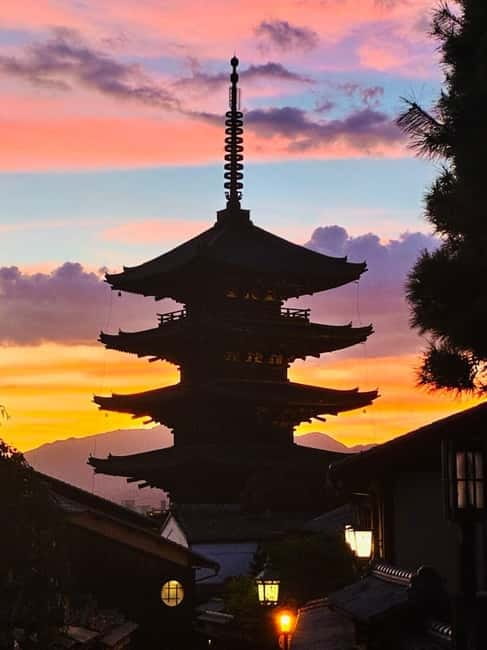
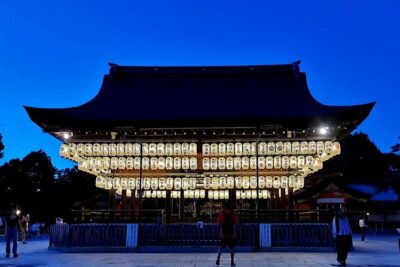
One of the route’s visual highlights is Hōkan-ji Pagoda, often called Yasaka-no-To. Its shape rises above the surrounding streets and makes a strong subject for photographs. The pagoda also helps connect the district’s old residential lanes with Kyoto’s larger religious heritage.
Your guide points out places where the architecture reads best, including off-the-main-road views that you might pass without noticing. This is where the tour earns its modest fee. You could walk through Gion alone, but a local guide helps you stop at the right corners and explains what makes each view significant.
The photo opportunities are plentiful, but the pace remains a walking tour rather than a dedicated photography outing. You may have time for attractive pictures, not necessarily long tripod sessions or repeated attempts at the perfect frame. If you want the clearest light, an afternoon departure may suit you better. One participant specifically found a 3 p.m. start preferable because a later time meant less daylight.
Evening departures have a different advantage. Around 6 p.m., the streets can feel quieter, and lantern light adds a softer mood. You will trade some daylight for atmosphere. If photography is your priority, check the available starting times and choose according to the season and your own preference.
Kennin-ji, Kyoto’s oldest Zen temple
Kennin-ji gives the walk a calm change of pace. It is described as the oldest Zen temple in Kyoto, and its grounds offer a quieter setting after the narrow streets of Gion. The temple helps show that this neighborhood is not only about tea houses and evening entertainment.
Expect your guide to discuss the temple’s place in Kyoto and the broader religious setting around the district. The stop is valuable because it places Gion within the city’s spiritual and architectural story. You see how temples, homes, shops, and entertainment quarters sit close together in old Kyoto.
Do keep your expectations realistic. The tour lasts only two hours and includes several locations, so this is an introduction rather than a full temple visit. Your guide may point out key features and give you a sense of the grounds, but you are unlikely to have the same amount of time as you would on a dedicated temple itinerary.
That limitation is not necessarily a problem. I would use this walk to mark places you want to revisit. If Kennin-ji catches your attention, you can return later with more time and a slower pace.
More Walking Tours in Kyoto
- Private Kyoto Tour with a Local, Highlights & Hidden Gems, Personalised
★ 5.0 · 1,543 reviews - Kyoto Gion Geisha District Walking Tour – The Stories of Geisha
★ 5.0 · 1,441 reviews - Nishiki Market Brunch Walking Tour (7 Tastings + Brunch)
★ 5.0 · 1,355 reviews - Kyoto Arashiyama Walking Tour: Bamboo, Monkeys, Gardens & Secrets
★ 5.0 · 1,216 reviews
Chion-in and the overlooked religious side of the route
Chion-in is another important stop. Its large grounds are picturesque, and the temple is home to three designated national treasures. That gives the route more substance than a simple stroll through photogenic lanes.
Chion-in can feel like a welcome surprise because it is less closely associated with the standard Gion postcard than Hōkan-ji. Your guide helps you notice the scale of the grounds and the details that make the temple important. This is one of the places where historical explanation matters more than a quick photograph.
Again, the two-hour time limit shapes the experience. You get an overview of Chion-in and its connection to Kyoto’s cultural heritage, but not a full examination of every building or treasure. For many visitors, that is enough to decide if a return visit belongs on the schedule.
The route’s mix of temples and entertainment streets is one of its strongest features. You are not shown only the polished image of Gion. You see a district where religious sites, homes, old businesses, and traditional arts all exist within a compact part of the city.
Small shops, machiya homes, and useful local advice
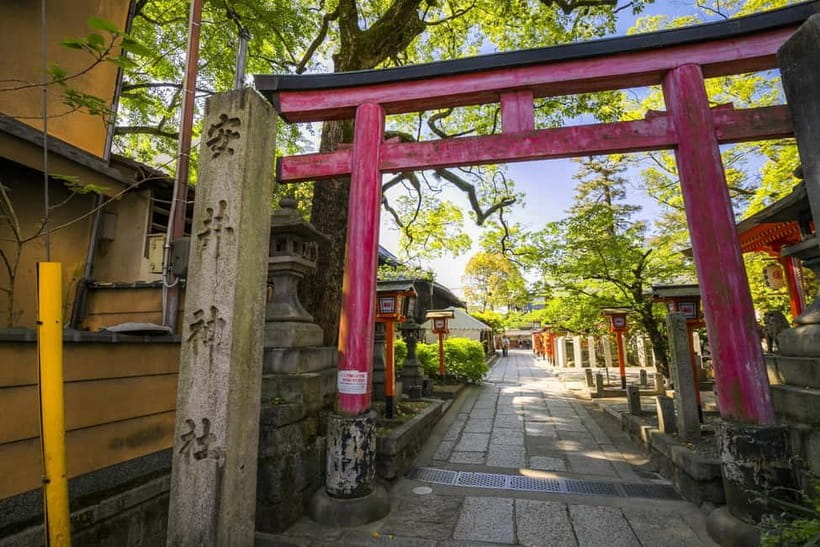
Along the way, your guide points out boutique-style souvenir shops and small businesses. These stops are not presented as a shopping obligation. They give you ideas for browsing after the walk, particularly if you want something more distinctive than a generic souvenir.
The machiya townhouses are equally interesting. Their narrow fronts and carefully maintained facades reveal how Kyoto’s traditional streets were built and lived in. A guide can explain details that are easy to overlook, from the arrangement of the buildings to the way the street frontage protects privacy.
Save your questions for the final part of the tour. Guides share personal recommendations for restaurants, bars, shops, and other attractions, and several participants found this advice especially useful. The tips can help you decide where to eat after the walk or what to do next in Kyoto.
One practical suggestion is to schedule dinner afterward rather than before. The walk finishes in an area with plenty of food choices, and a recommendation from Michael or another guide may be more useful once you have seen the neighborhood. Leave a little time after the tour for browsing, eating, or trying activities such as pottery or perfume-making, which are mentioned as possibilities nearby.
How the two-hour format affects the experience
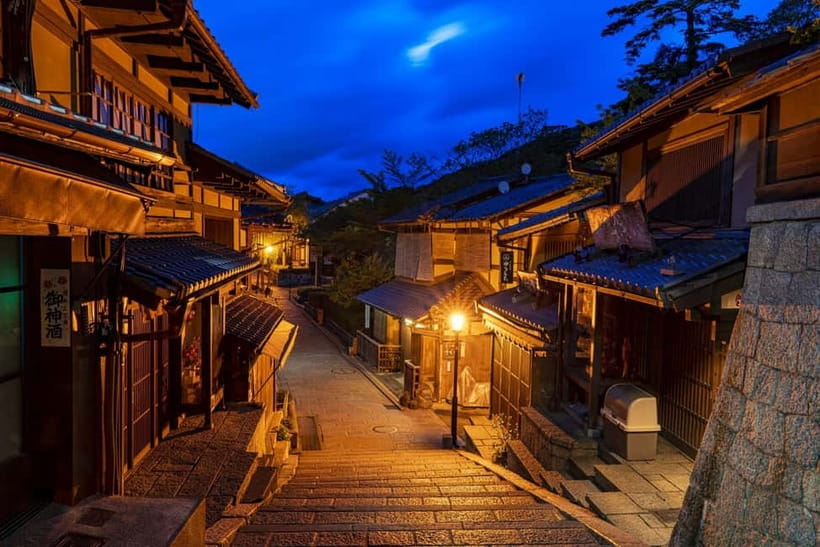
Two hours is long enough to cover a good introduction to Gion without taking over your day. You will walk continuously through streets and temple grounds, so wear comfortable shoes and expect a fair amount of time on foot. The activity is not suitable for people with mobility impairments or wheelchair users.
The pace has generally been described as comfortable, but the route covers a lot. You may see several historic locations, learn about Geisha culture, stop for photos, and hear recommendations before the clock runs out. If you like to linger at every temple gate, this may feel too short.
Group size can vary. Some departures have been small enough to feel almost private, and one person ended up alone with Michael and received a route adjusted to personal interests. Another participant noted a small group and plenty of useful facts. You should not assume every departure will be private, but a smaller group can make it easier to ask questions and hear the guide clearly.
Weather deserves attention. The tour continues outdoors, and a winter departure can be cold. One person suggested that a warming stop would have helped on a freezing day. Check the forecast, dress for the season, and remember that evening charm comes with lower temperatures in colder months.
Is $25 a fair price for a Gion walking tour?
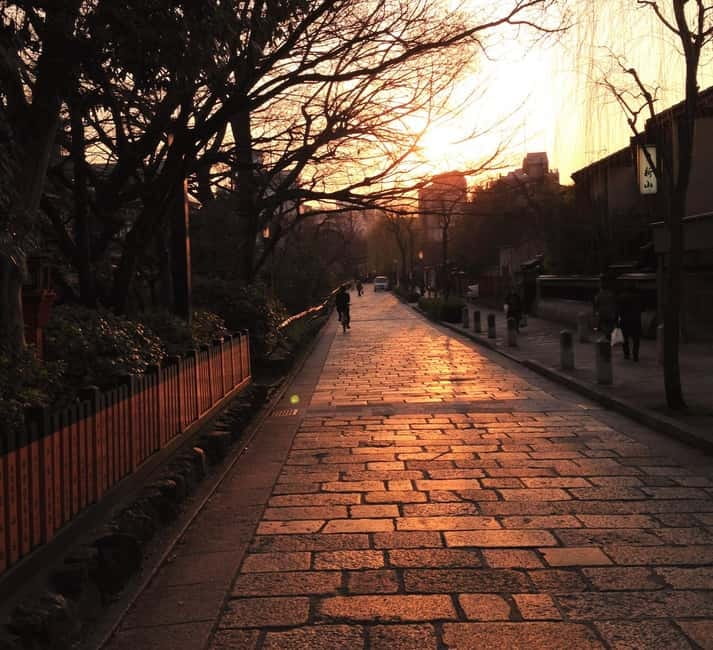
At $25 per person, this is good value if you want orientation, cultural background, and a practical introduction to Gion. You are paying for two hours with a live English-speaking guide, not admission to a show or a private meal with a Geiko.
The price is especially sensible early in your Kyoto stay. You learn where the main streets are, see several places you may want to revisit, and get food and sightseeing suggestions for the days ahead. The tour can save you from wandering past important sites without knowing what you are looking at.
The value is lower if your only goal is to photograph a Geiko. Sightings are not guaranteed, and you can walk through many Gion streets without booking a tour. The difference is that a guide gives the district meaning and helps you behave appropriately around working performers and private venues.
Free cancellation up to 24 hours before the start and the option to reserve now and pay later make the booking reasonably flexible. Starting times vary, so check availability before you plan dinner or temple visits around it.
Who should book this walk?
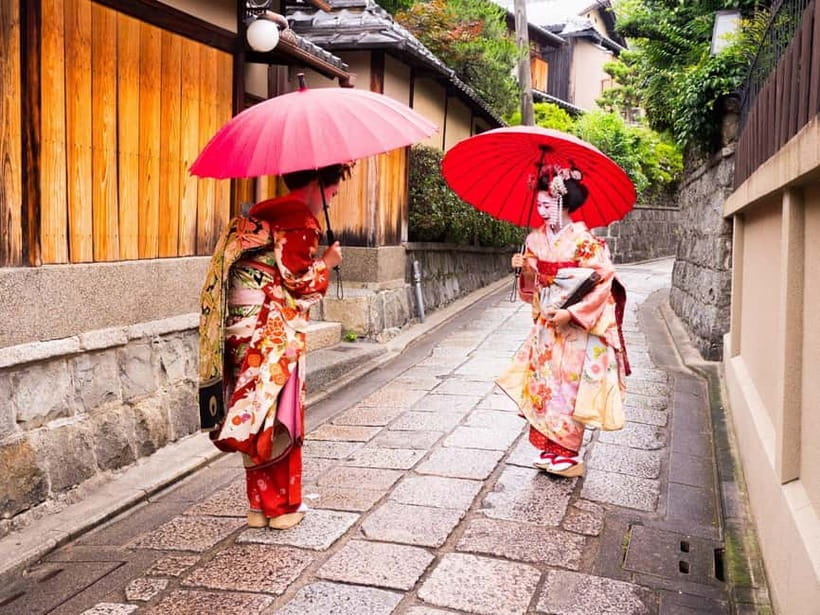
I would recommend it to first-time Kyoto visitors, culture-minded travelers, families with older children, and anyone who wants a clear introduction to Geisha traditions. The guides are praised for being friendly with children, answering questions, and making complicated historical subjects easy to follow.
It also suits you if you enjoy walking and want more than a checklist of famous streets. Michael, Anton, Yuri, and Ikuro are named guides, with Michael receiving especially strong praise for his enthusiasm, humor, history, and recommendations. Ron is also mentioned alongside Michael on one particularly small departure.
You may want something else if you need step-free access, dislike outdoor walking, or want a guaranteed Geisha performance. This is not a substitute for a formal cultural show, and it is not a full temple tour. It is a compact, informative walk through one of Kyoto’s most distinctive neighborhoods.
Final verdict: book it early in your Kyoto stay
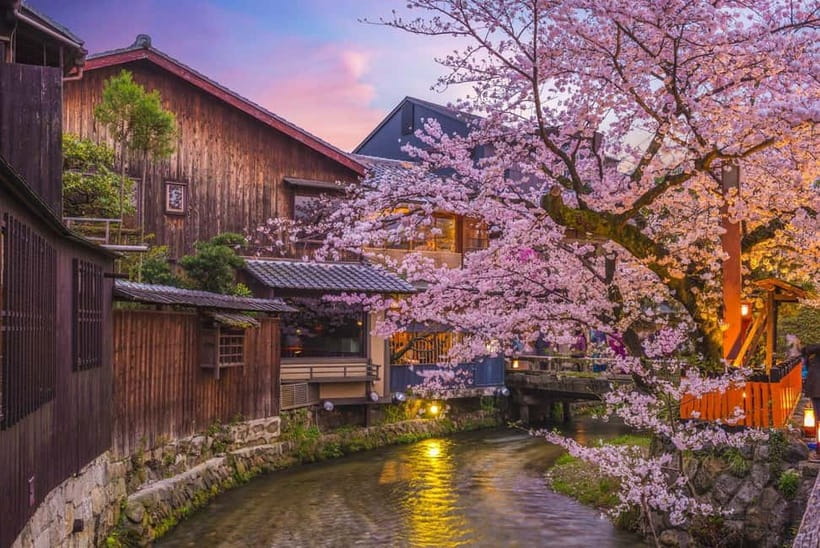
Book this tour if you want Gion to make sense, not just look pretty. The combination of Geiko and Maiko background, temples, tea houses, machiya homes, quiet photo locations, and restaurant advice gives you a strong first look at the district for $25.
Choose an afternoon start for more daylight and clearer photographs, or an evening start for lanterns and a quieter atmosphere. Keep your expectations sensible about Geisha sightings, dress for the weather, and leave time afterward for dinner or further exploring.
For most visitors, this is a worthwhile first walk in Kyoto. It gives you enough history to see Gion with fresh eyes, while still leaving plenty to discover on your own.
FAQ
How long does the Kyoto Geisha Walking Tour last?
The tour lasts two hours.
What language is the tour conducted in?
The live tour guide speaks English.
How much does the tour cost?
The listed price is $25 per person.
Where is the meeting point?
Meet on the side street beside Hotel Alza Kyoto. Look for the red parasols or umbrellas with marble seats underneath.
Will I definitely see a Geiko or Maiko?
No. The tour gives you an opportunity to spot Geiko and Maiko as they travel to appointments, but sightings are not guaranteed.
What places are included on the walk?
The experience covers the Gion district and may include Hōkan-ji Pagoda, Kennin-ji Temple, Chion-in Temple, preserved machiya townhouses, tea houses, side streets, and boutique-style souvenir shops.
Can I cancel or pay later?
You can cancel up to 24 hours in advance for a full refund. The reserve-now, pay-later option lets you book without paying immediately.
Just added around Kyoto
- Taste of Nishiki Market Walking Food Tour with Local guide★ 5.0 · 17 reviews
- Kyoto: Sushi Making Class with Sushi Chef★ 4.8 · 64 reviews
- Kyoto: City Secrets eBike Tour★ 4.9 · 196 reviews
- Sacred Pathways: Discover the Philosopher’s Path of Kyoto★ 4.9 · 20 reviews
- Private Tour to Monkey Park and Arashiyama Highlights★ 5.0 · 22 reviews
- Private Nara Tour from Osaka – Meet at Your Hotel★ 5.0 · 22 reviews
- Private Sake Tasting in Central Kyoto with Sake Sommelier★ 5.0 · 13 reviews
- Kyoto : Private Custom Walking Tour With A Local Guide★ 4.6 · 144 reviews
Kimono & Culture Experiences, compared.
Gion Magical Night Walking Tour with Geisha Trivia
Read our review →
Gion Geisha District Walking Tour – Stories of Geisha
Read our review →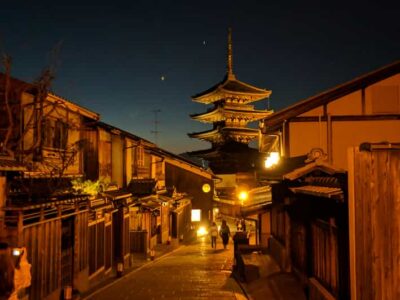
Best of Kyoto: Gion, Geisha, Pagodas & Cobblestones
Read our review →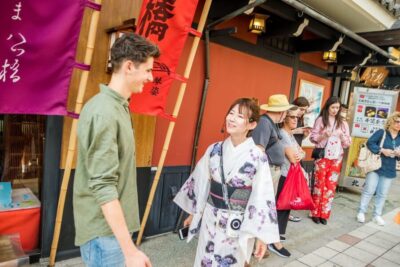
Kyoto Gion Geisha District Walking Tour – The Stories of Geisha
Read our review →
Kyoto Gion: 2-Hour Geisha Culture & History Walking Tour
Read our review →Browse the lists this tour appears in