
REVIEW · KIMONO & CULTURE EXPERIENCES
Tokyo: Samurai Restaurant Show Ticket with 2 Drinks
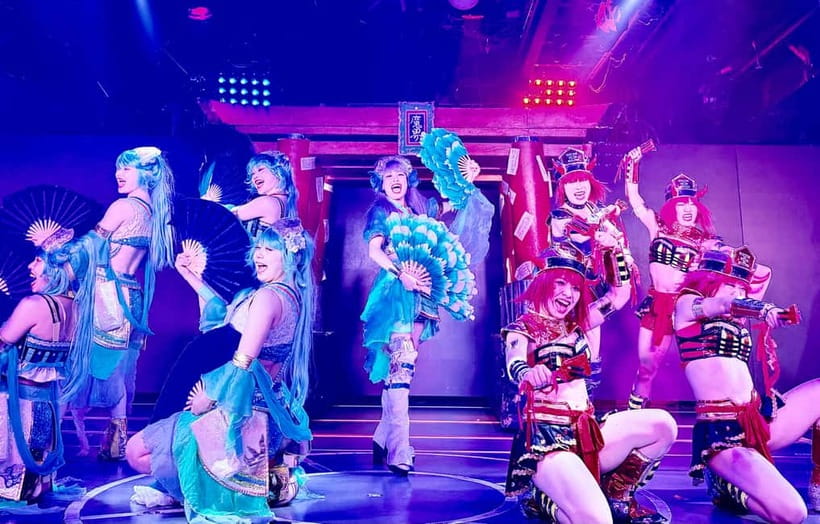
Tokyo’s Samurai Restaurant Show is less a lesson in historical Japan than a full-throttle burst of samurai, ninjas, dancers, neon, and pounding music. The theater in Kabukicho is wildly decorated, and the compact stage puts the action close enough to feel immediate. You get two drinks, with alcoholic and non-alcoholic choices available.
I like the show’s sheer energy and the way it mixes traditional Japanese images with modern music, costumes, and lighting. I also like the easy fit in a Tokyo evening: the performance lasts about 90 minutes, making it a lively break from sightseeing or a fun start to a night in Shinjuku. The main drawback is sensory overload, especially the very loud sound and frequent pauses between scenes.
In This Review
- Key points at a glance
- What kind of show is this?
- Arriving in Kabukicho, Shinjuku
- Inside a restaurant built for spectacle
- The performance: samurai, ninjas, and dancers
- Two drinks, snacks, and dinner planning
- How long the evening takes
- Is the location comfortable for families?
- Who will enjoy it most?
- Why the show feels distinctively Tokyo
- Practical tips for a better visit
- Should you book the Samurai Restaurant Show?
- FAQ
- Where is the Samurai Restaurant Show located?
- How long does the experience last?
- What does the ticket include?
- Is food included?
- Can children attend?
- What identification should I bring?
- What happens if I arrive late?
- Can I cancel my booking?
Key points at a glance
- Two drinks included: Choose alcoholic or non-alcoholic drinks with your ticket.
- A neon-heavy production: Samurai, ninjas, dance, costumes, music, lighting, and sound all arrive at once.
- Compact Kabukicho location: The restaurant is in Shinjuku’s famous entertainment district, close to plenty of places to eat afterward.
- Adults only: Nobody under 18 may enter, and intoxicated customers are refused.
- Late arrival has a cost: If you miss the start, you must wait for an intermission before taking your seat.
- Bring identification: A passport or ID card is required, though a copy is accepted.
What kind of show is this?
I would describe the Samurai Restaurant Show as a theatrical party with a samurai theme. It uses familiar images from Japan’s warrior past, then throws them into a modern production filled with dancers, bright colors, amplified music, and rapid visual changes.
The show is not presented as a careful account of samurai history. You may not always understand the story, and that is part of the deal. The appeal comes from the performers’ energy, striking outfits, fast dance scenes, dramatic movement, and the feeling that anything might appear next.
That makes this a good choice if you want an entertaining Tokyo night out rather than a quiet cultural performance. If you are hoping for a traditional theater piece with a clear plot, formal pacing, or detailed historical explanation, this may not be the best match.
More kimono & culture experiences in Japan:
- Kyoto Geisha Walking Tour: Gion District & Hidden Gems
★ 4.7 · 3,273 reviews - Kyoto: Gion Magical Night Walking Tour with Geisha Trivia
★ 4.9 · 2,393 reviews - Kyoto: Gion Geisha District Walking Tour – Stories of Geisha
★ 4.7 · 2,187 reviews
Arriving in Kabukicho, Shinjuku
The Samurai Restaurant is in Kabukicho, at the center of Shinjuku’s entertainment district. This is one of Tokyo’s most famous night areas, with dense signs, bars, restaurants, arcades, and a steady stream of people. The surroundings are part of the experience, but they can also feel more adult and hectic than the neighborhoods around major temples or museums.
The meeting point is the reception inside the restaurant entrance. Give yourself time to find the building and get settled. The show has a fixed starting time, and late arrivals cannot simply slip in during an active scene. You will wait until intermission before staff seat you.
That rule matters more than it may sound. Tokyo trains are reliable, but Shinjuku Station is large and can take time to navigate. Add a few minutes for walking through Kabukicho, and you will be much better off arriving early rather than aiming for the last possible minute.
The staff speak English, and the English-speaking welcome is one reason the experience works well for international visitors. A staff member named Kushiro was singled out for being especially friendly and good at keeping the crowd engaged during the breaks. Names and staffing can change, but the general service is designed to help overseas visitors find their way.
Inside a restaurant built for spectacle
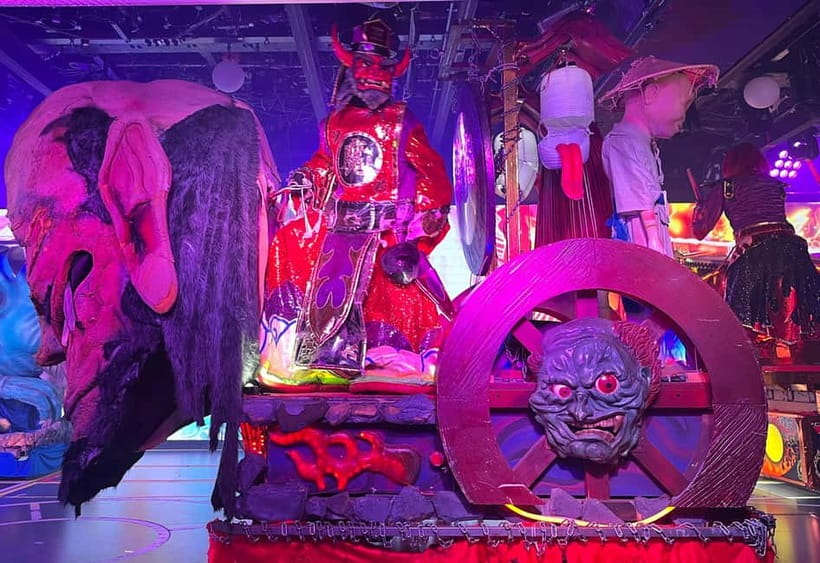
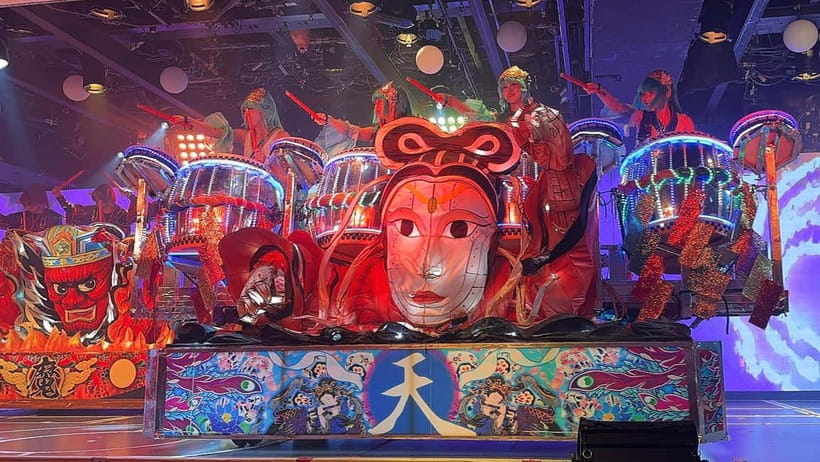
Before the performance begins, take a look around the interior. The venue was reportedly created at a cost of more than 10 billion yen, and it is designed to make an impression before the first performer appears.
Do not expect a restrained dining room. The setting is part theater, part fantasy version of Japan, and part neon dream. The decoration prepares you for the show’s main idea: historic symbols can be presented in a loud, playful, highly modern way.
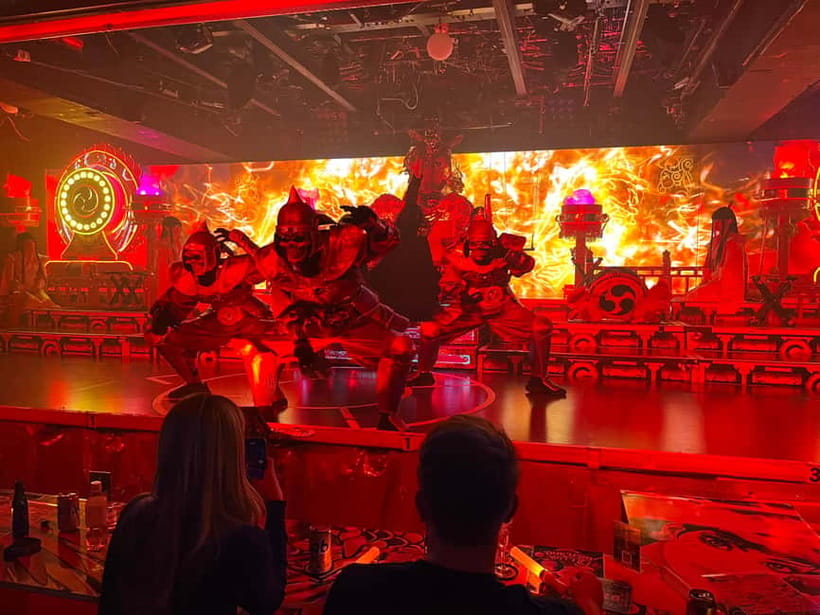
The room is not huge, which has two effects. You are close to the action, so costumes, movement, and facial expressions are easy to notice. At the same time, the sound can feel intense because the stage and audience are packed into a relatively compact space.
If loud music bothers you, ask staff for earplugs or bring your own. One visitor found the volume especially strong, and another specifically advised protecting your hearing. That is practical advice, not a minor footnote. The lights and sound are central to the production, so sensitive visitors should know what they are signing up for.
The performance: samurai, ninjas, and dancers
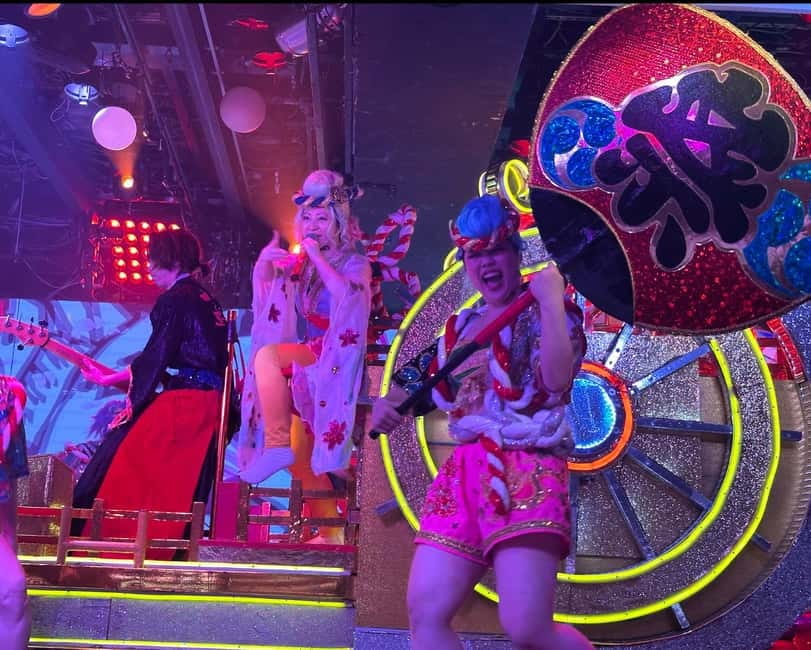
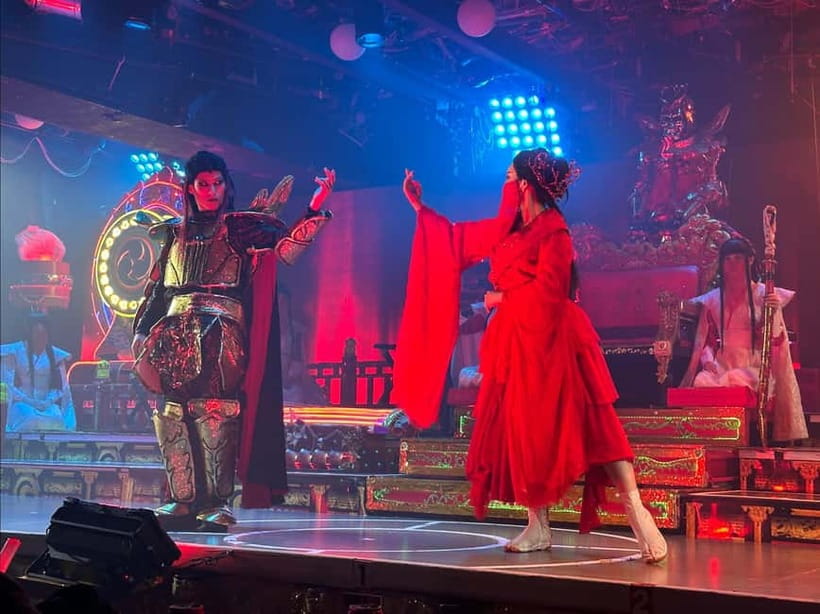
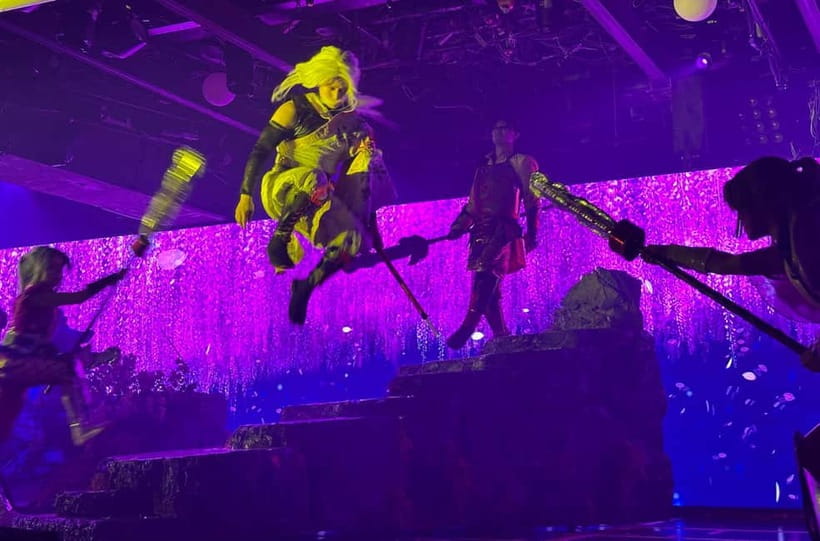
The main event brings samurai and ninjas onto the stage alongside dancers and other performers. The action is supported by neon lighting, sound effects, music, and elaborate costumes. The production aims for momentum and surprise more than subtle storytelling.
I like the close-up view offered by the small stage. You are not watching distant figures in a large auditorium. The performers are right in front of you, and their expressions and movement carry the show. The cast is clearly expected to give the room a lot of energy, and that commitment is a major part of the experience.
The dance scenes are fast, colorful, and often deliberately over the top. Costumes are one of the show’s strongest features, and the changing visual style helps keep the 90 minutes moving. You might not be able to explain the plot afterward, but you will remember the colors, music, outfits, and general rush of it.
The performance also includes short breaks between scenes. These pauses allow time for stage changes and give you a chance to drink or order something. If you want a continuous, tightly edited theater piece, the interruptions may feel long. If you like having a moment to catch your breath and take in the room, they are useful.
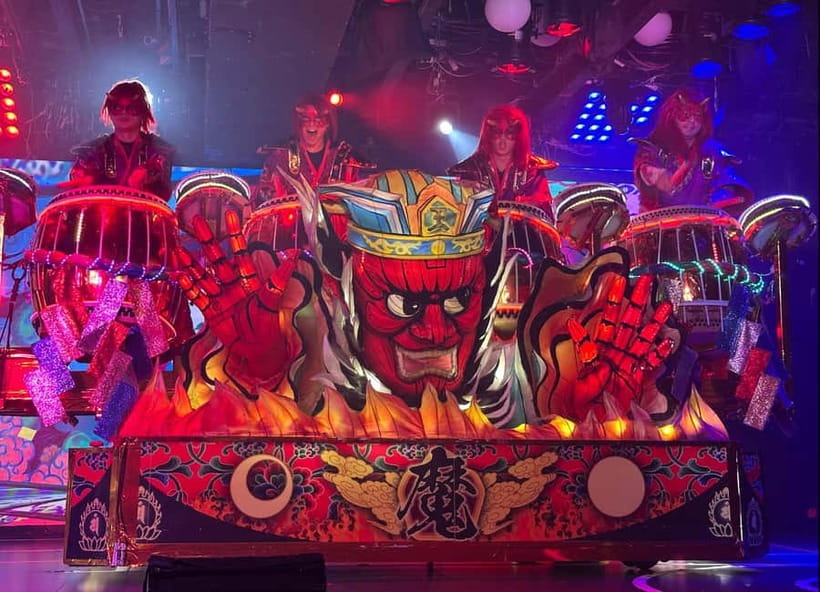
The closing Kabuki-style performance has been especially memorable for some ticket holders. It provides a more recognizable link to Japanese stage tradition after the neon-heavy samurai and dance sections. The exact running order can change, so I would not plan the evening around a specific sequence, but the production does bring traditional imagery into its modern show.
A few more Japan trips to weigh up
- Tokyo Bar Hopping Tour in Shinjuku (All-You-Can-Drink + Dinner)
★ 5.0 · 3,587 reviews - Tokyo: Sumo Show and Dining Experience
★ 4.8 · 2,742 reviews - Deep Backstreet Osaka Tours (Option to add Dinner)
★ 5.0 · 1,290 reviews - Osaka: Deep Backstreets Walking Tour with Dinner Option
★ 4.9 · 902 reviews
Two drinks, snacks, and dinner planning
Your ticket includes two drinks. You can choose alcoholic or non-alcoholic options, which makes the package workable for people who do not drink. The drinks help turn the performance into a social night out, but you should not treat the ticket as a full meal.
Food and extra drinks are not included. Snacks such as popcorn and other small items may be available for purchase, and some visitors enjoyed the food offered inside. Still, the selection is snack-sized rather than dinner-sized.
I recommend eating before the show or planning a meal afterward. This is especially important if you are booking the experience for an evening out. Kabukicho gives you plenty of nearby choices, but the show itself should not be your only food plan.
The two-drink allowance is a fair part of the $55 price, especially if you want an easy package with entertainment and refreshments. The value depends on what you enjoy. For someone seeking a polished, quiet theater performance, the cost may seem high for a short show with a loose story. For someone who wants an unusual Tokyo night filled with costumes, music, lights, and comedy, the price is easier to justify.
Remember that additional food and drinks cost extra. Also, intoxicated customers are not allowed. The drinks are meant to accompany the evening, not to turn the theater into a drinking party.
How long the evening takes
The activity information gives the experience a duration of 90 minutes, while the ticket description refers to a two-hour show ticket. Since the stated duration is 90 minutes, plan on about an hour and a half for the performance itself, with extra time for arrival, seating, intermissions, and any food or drinks you purchase.
This is a useful length for a busy Tokyo itinerary. You can fit it between afternoon sightseeing and dinner, or use it as an opening act before exploring Shinjuku at night. It is long enough to feel like a proper event without consuming an entire evening.
The breaks also mean the show is not a nonstop 90-minute rush. You will have chances to settle in, drink, and follow the stage changes. Some people enjoy this rhythm. Others may find the repeated pauses interrupt the momentum.
Starting times vary, so check availability when booking. The activity offers reserve-now, pay-later booking, and free cancellation up to 24 hours before the scheduled time for a full refund. Those terms are helpful in Tokyo, where plans often shift around weather, jet lag, and changing sightseeing hours.
Is the location comfortable for families?
No. Children under 18 cannot enter, so this is an adults-only activity regardless of the show’s content. The performance itself has no mature content according to the supplied information, but the venue is in Kabukicho and the age rule is firm.
The neighborhood is safe to visit as part of a normal Tokyo itinerary, but it is an entertainment district rather than a family sightseeing zone. You will see nightlife businesses and a more adult atmosphere around the restaurant. That setting may be interesting to some adults and uncomfortable for others.
The show suits couples, friends, solo adults who enjoy theatrical spectacle, and groups looking for something unusual. It is also a good option for a first Tokyo visit if you want an experience that cannot easily be replicated at home.
Who will enjoy it most?
You are likely to enjoy this show if you:
- Like strong visual effects and loud music.
- Enjoy performances that are playful, dramatic, and a little chaotic.
- Want a short evening activity in central Tokyo.
- Appreciate unusual combinations of traditional Japanese imagery and modern entertainment.
- Are happy to enjoy a show without following every part of the story.
- Want drinks included rather than buying every refreshment separately.
You may want to skip it if you dislike flashing lights, very loud sound, crowded entertainment venues, or frequent scene changes. The production is not subtle. It asks you to accept the excess and enjoy the ride.
People with sensitivity to flashing lights should take care. One visitor compared the experience to a psychedelic production and specifically raised concern for people with epilepsy. The available information does not provide a detailed lighting warning, so contact the venue before booking if this is important for you.
Professional cameras are not allowed. Sunglasses, outside food and drinks, costumes, cosplay, bizarre clothing, and intoxication are also prohibited. Bring a passport or ID card, and note that a copy is accepted.
Why the show feels distinctively Tokyo
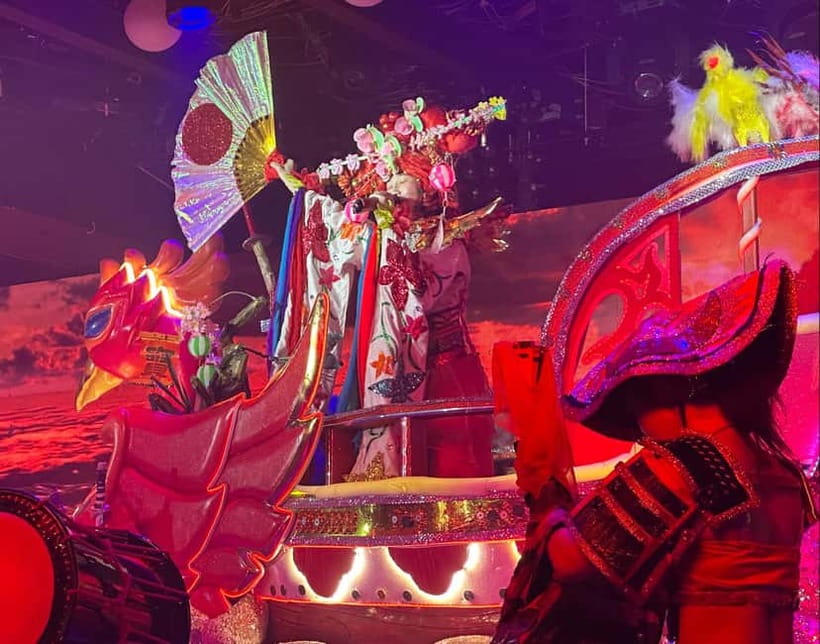
The strongest idea here is the collision of old and new. Samurai and Kabuki references point toward Japan’s theatrical past, while neon, amplified music, energetic choreography, and dramatic lighting belong to modern Tokyo nightlife.
That blend is why the show can feel hard to describe in ordinary terms. It is not a museum display, a formal Kabuki performance, or a standard dance show. It is a purpose-built spectacle that uses Japanese themes as raw material for a modern night out.
I would not call it a substitute for visiting a temple, castle, museum, or traditional theater. It gives you a different kind of cultural snapshot. You see how Japanese symbols can be repackaged for a global audience, with the emphasis on mood, style, movement, and fun.
Some visitors leave unsure what the story meant but delighted by the performance. That is a fair outcome. You do not need to decode every scene to enjoy the cast’s enthusiasm or the room’s visual impact.
Practical tips for a better visit
Arrive early. The reception is inside the entrance, and late arrivals wait until intermission before being seated.
Eat beforehand or afterward. Snacks may be sold inside, but the included package is two drinks, not a full meal.
Bring earplugs if you are sensitive to sound. The stage is close, and the music can be extremely loud.
Carry identification. A passport or ID card is required, and a copy is accepted.
Dress normally. Costumes, cosplay, bizarre clothing, and sunglasses are not allowed.
Keep your camera modest. Professional cameras are prohibited, so do not plan on making this a serious photography event.
Use the cancellation flexibility wisely. You can cancel up to 24 hours in advance for a full refund, and reserve-now, pay-later booking can help if your Tokyo schedule is still changing.
Should you book the Samurai Restaurant Show?
Book it if you want high-energy, colorful, unapologetically unusual entertainment and you are comfortable with loud music and a loose storyline. The two drinks and 90-minute format make it easy to fit into a Shinjuku evening, and the elaborate room adds value beyond the stage performance.
Skip it if you want quiet, historical depth, a full dinner, or a traditional Japanese theater experience. This is not a calm cultural introduction. It is a neon-powered show built for surprise and fun.
At $55 per person, I see it as a reasonable splurge for adults who enjoy spectacle. The best reason to go is not the promise of learning about samurai. It is the chance to spend an hour and a half in a wildly theatrical version of Tokyo, close to the performers, with two drinks in hand and plenty to talk about afterward.
FAQ
Where is the Samurai Restaurant Show located?
It is located in Kabukicho, Shinjuku, in the heart of Tokyo. The meeting point is the reception inside the entrance of Samurai Restaurant.
How long does the experience last?
The stated activity duration is 90 minutes. The ticket information also refers to a two-hour show ticket, so allow additional time for arrival, seating, intermissions, and refreshments.
What does the ticket include?
The ticket includes admission to the samurai show and two alcoholic or non-alcoholic drinks of your choice.
Is food included?
No. Additional food and drinks are not included. Snacks may be available for purchase inside, but you should plan another meal before or after the show.
Can children attend?
No. Children under 18 cannot enter the Samurai Restaurant Show.
What identification should I bring?
Bring a passport or ID card. A copy of the document is accepted.
What happens if I arrive late?
If you arrive after the scheduled show time, you must wait until the intermission before you can be seated.
Can I cancel my booking?
Yes. You can cancel up to 24 hours in advance for a full refund. Reserve-now, pay-later booking is also available.
More Show in Japan
- Mt Fuji & Hakone Cruise, Drum Show Bullet Train 1 Day from Tokyo
★ 4.0 · 7,413 reviews - Tokyo: Sumo Show Experience with Chicken Hot Pot and a Photo
★ 4.8 · 6,678 reviews - the SUMO show
★ 5.0 · 1,960 reviews - Tokyo Shinjuku Sumo Show & Experience with Photo
★ 5.0 · 1,750 reviews
Just added around Japan
- Tokyo: Customizable Private Guided Walking Tour★ 4.5 · 129 reviews
- Private Harajuku Omotesando Architecture Tour★ 4.9 · 18 reviews
- Tokyo: Guided Helicopter Ride★ 4.9 · 24 reviews
- Tokyo: Guided Walking Tour of Tsukiji Market with Lunch★ 4.4 · 24 reviews
- Tokyo: Private Personalized Local Food Tour★ 4.5 · 101 reviews
- Tokyo: Guided Walking Tour of Tsukiji Market with Breakfast★ 4.4 · 134 reviews
- Tokyo: Gotokuji Cat Temple, Shinjuku Cat Cafe & 3D Cat Tour★ 4.9 · 38 reviews
- Tokyo GINZA: KONPARU Japanese Cabaret Show with Drink★ 4.8 · 38 reviews
Kimono & Culture Experiences, compared.
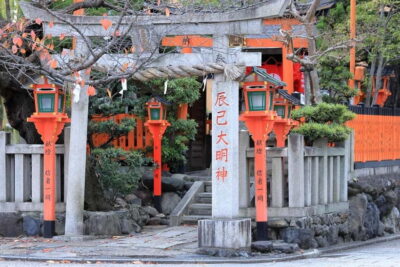
Kyoto Geisha Walking Tour: Gion District & Hidden Gems
Read our review →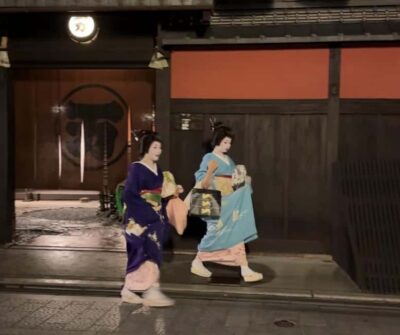
Gion Magical Night Walking Tour with Geisha Trivia
Read our review →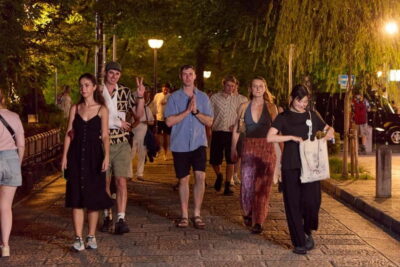
Gion Geisha District Walking Tour – Stories of Geisha
Read our review →
Best of Kyoto: Gion, Geisha, Pagodas & Cobblestones
Read our review →
Kyoto Gion Geisha District Walking Tour – The Stories of Geisha
Read our review →
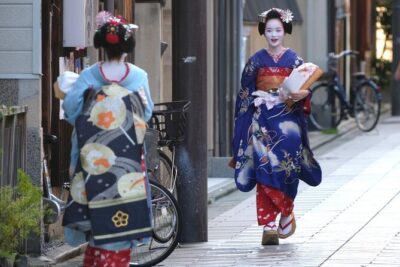
Kyoto Gion: 2-Hour Geisha Culture & History Walking Tour
Read our review →Browse the lists this tour appears in