
REVIEW · SUMO EXPERIENCES
Tokyo Shinjuku Sumo Show & Experience with Photo
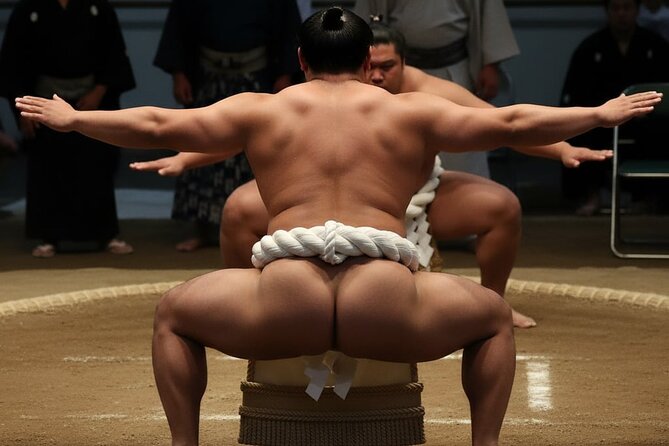
The best part of this Shinjuku experience is the close look at sumo beyond the big clash. You see the salt throwing, ring stomping, and pre-match rituals, then hear why these movements matter from a bilingual MC. I like the audience participation and the chance to take photos with the wrestlers. The humor keeps the lesson from feeling like a lecture.
I also like the clear 90-minute format. It gives you a useful first look at Japan’s national sport without taking up half a day. The main thing to keep in mind is that this is a staged cultural show, not a serious tournament. If you want the tension of official competition, attend a real sumo event instead.
In This Review
- Key points to know before you book
- What happens inside the Shinjuku Sumo Club
- The rituals are more than opening ceremony
- Watching two athletes work at close range
- The audience becomes part of the show
- Photo time gives you a lasting memory
- What the 90-minute schedule means for your day
- Is $79.59 a fair price?
- Who will enjoy this most?
- How it compares with seeing official sumo
- Practical details that can make the visit smoother
- My verdict: book it for the introduction, not the tournament
- FAQ
- Where does the sumo experience take place?
- How long does the experience last?
- What language is the show in?
- Are the wrestlers professional?
- Can I participate in sumo wrestling?
- Can I take photos with the wrestlers?
- Is the activity suitable for children?
- Is food or drink available?
- Can I cancel for a full refund?
Key points to know before you book
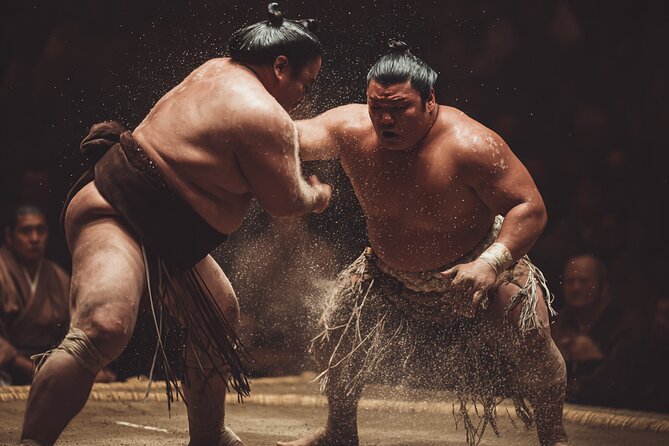
- Two real wrestlers perform live demonstrations: You get to watch their power, balance, speed, and technique at close range.
- A bilingual MC explains the action: The host covers rituals, rules, tactics, origins, and the wrestlers’ way of life in an easy, humorous style.
- You may step into the dohyō: Audience members can take part in a friendly sumo challenge, with inflatable sumo costumes sometimes used for children.
- Photo time is part of the experience: You can pose with the wrestlers and ask questions after the demonstrations.
- The show suits families: Children and adults can follow the explanations, and the interactive sections keep the mood light.
- The ticket costs $79.59 per person: That is fair if you want a guided cultural activity with live performers, but less compelling if you only want to watch formal sumo bouts.
What happens inside the Shinjuku Sumo Club
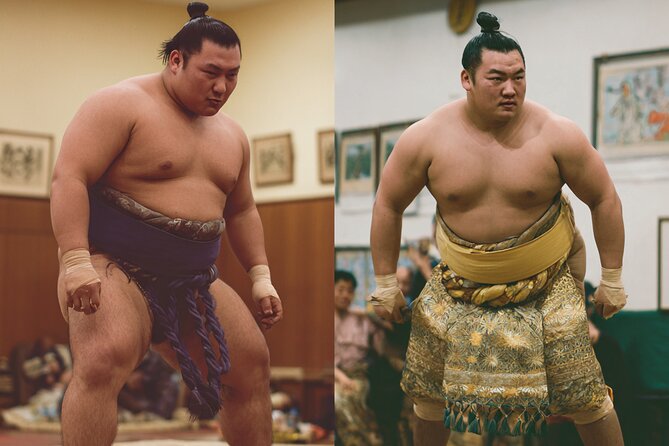
You enter a traditional-style venue in Shinjuku and take your place near the action. The setting is made for a close view, so the wrestlers do not feel like distant figures in a large arena. You can see the size of their bodies, the quickness of their movement, and the effort behind even a short exchange.
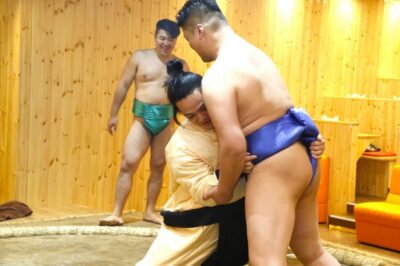
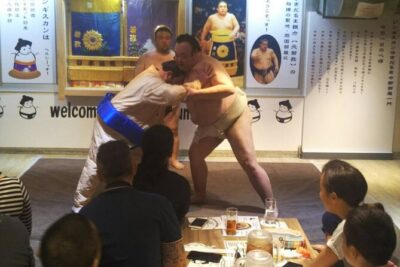
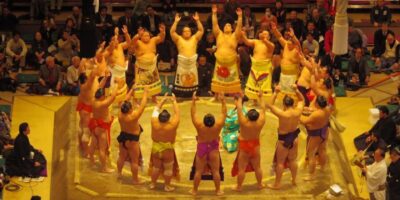
Two real sumo wrestlers lead the physical part of the show. They demonstrate how the sport works, perform live bouts, and play to the crowd. Their role is not only to wrestle. They also help turn an unfamiliar sport into something you can understand and enjoy.
The bilingual MC guides the whole program. Past sessions have featured hosts named Shane, Manny, and Mr. So, so the specific host may vary with the date. The important point is that the format gives you explanations in English and keeps the pace moving with questions, jokes, and simple descriptions of each movement.
You will not need prior knowledge of sumo. The host explains what to watch for, why the wrestlers make certain gestures, and how the match is shaped by rules and tactics. That makes this a useful first encounter for anyone who has seen sumo on television but never understood what was happening.
More Sumo Experiences in Tokyo
- Tokyo: Sumo Show and Dining Experience
★ 4.8 · 2,742 reviews - the SUMO show
★ 5.0 · 1,960 reviews - Tokyo: Sumo Show and Experience in Shinjuku
★ 4.8 · 1,001 reviews
The rituals are more than opening ceremony
Sumo can look simple at first: two large athletes push, pull, and try to force one another out of the ring. The opening rituals show that the sport has a serious ceremonial side.
You learn about throwing salt into the ring, stomping the feet, and taking part in the pre-match movements. These actions are not random decoration. They help connect the bout to the customs and beliefs that surround sumo.
I like this part because it gives the wrestling a sense of place. Without an explanation, you might see salt as a dramatic prop or assume the stomping is just a warm-up. With the MC’s help, you can read the ring and the ritual before the physical contest begins.
The tone stays light, but the subject receives respect. That balance matters. The show is designed for entertainment, yet it does not reduce sumo to a costume or a novelty. You get a basic look at the rules, traditions, tactics, and origins of the sport.
Watching two athletes work at close range
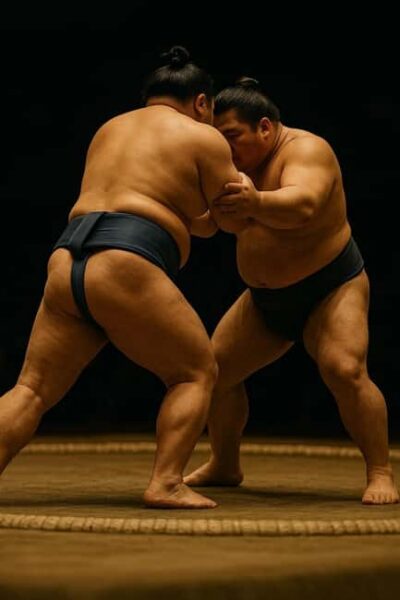
The wrestlers’ size gets your attention first. Their speed comes next. One of the useful lessons in this experience is seeing how quickly a large body can shift, brace, and attack.
The live demonstrations help you notice the difference between raw strength and technique. Sumo is not simply about being the biggest person in the ring. Timing, stance, balance, and the ability to control an opponent all matter.
The matches are presented for an audience, so expect a show with humor and interaction rather than the quiet intensity of a professional tournament. The wrestlers are entertainers as well as athletes during this session. They use facial expressions, comic timing, and audience reaction to make the demonstrations easy to follow.
That approach works well for families and first-time visitors. It also explains why the experience may feel lighter than you expect. If your picture of sumo is a formal tournament with long pauses and high stakes, adjust it here. This is a friendly introduction built around participation and clear teaching.
The audience becomes part of the show
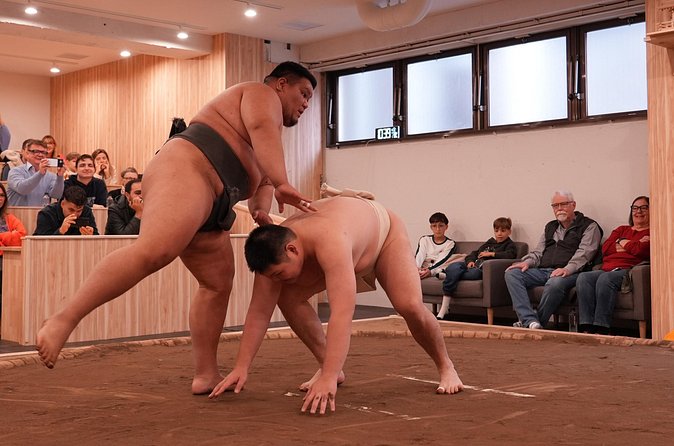
The audience participation is the most distinctive part of the experience. After watching the professionals, you may have the chance to step onto the dohyō and challenge a wrestler in a friendly bout.
The challenge is meant to be fun, not competitive. You do not need to know a technique or have athletic experience. The format lets you feel the scale and strength of the sport from a safe, playful angle.
Children can be especially entertained by the inflatable sumo costumes used in some audience bouts. Seeing a child in an oversized suit face a full-size wrestler turns the lesson into a comic scene, while still showing how difficult it is to move and hold position in the ring.
Participation is not the only way to enjoy this section. You can cheer, watch family members take part, or simply stay in your seat. The show does not require every person to wrestle, which helps couples and mixed-age groups enjoy it together.
The question-and-answer time adds another useful layer. You can ask about the sport and the athletes, and the answers make the wrestlers feel like people rather than distant figures in a traditional institution. That personal contact is one reason the experience works well as a cultural activity.
Same city, a completely different kind of day:
- Mt Fuji and Hakone 1-Day Bus Tour Return by Bullet Train
★ 5.0 · 26,383 reviews - 1-Day Tokyo Bus Tour
★ 5.0 · 14,250 reviews - Tokyo: TOKYO SKYTREE® Admission ticket
★ 4.5 · 11,192 reviews - Tokyo: teamLab Planets TOKYO Digital Art Museum Entry Ticket
★ 4.6 · 9,779 reviews
Photo time gives you a lasting memory
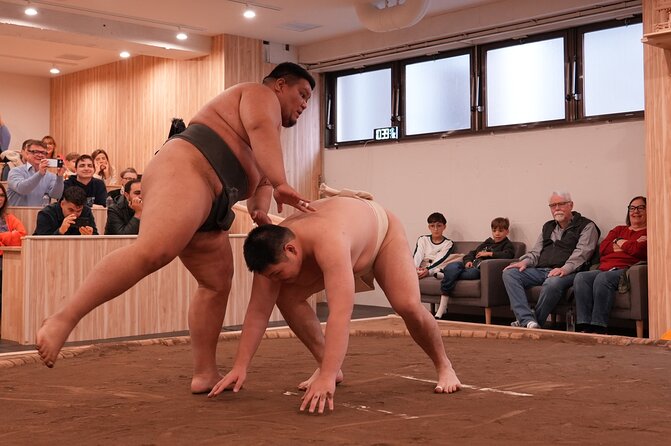
The photo session lets you stand with the wrestlers and capture the moment. This is more than a quick picture of a performance. You get a close-up sense of their size and presence, which is difficult to understand from a television screen.
You can also ask questions and look at the wrestlers from nearby after the main demonstrations. Keep your expectations practical: the available information confirms photo opportunities, but it does not promise a specific number of photos, a professional photographer, or a particular pose.
The photo element is useful for families, couples, and anyone who wants a physical reminder of the activity. It also makes the experience feel personal. You are not just watching a cultural presentation, you are meeting the people who performed it.
What the 90-minute schedule means for your day
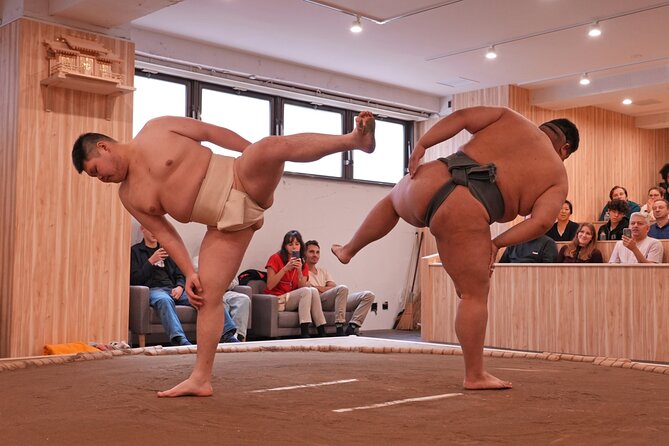
The listed duration is about one hour and 30 minutes. That is long enough to cover the basic story of sumo, show live action, include audience participation, and allow time for questions and photos.
I like this length for a Tokyo schedule. You can fit it between other plans in Shinjuku without giving up an entire afternoon. It also works well when you want a planned activity with a clear start and finish.
Arrive early enough to find the venue calmly. One past booking note advises allowing at least 30 minutes because traffic can slow you down. The venue is near public transportation, and the train approach is described as easy to find, but Shinjuku can still take time to navigate.
Food and drink are available to buy while you watch, according to the information supplied. One practical detail is that any included drink may be limited to one bottled water per person rather than a choice of beverages. If refreshments matter to you, think of the available purchases as a convenience, not a major part of the ticket.
The mobile ticket makes entry simple. Confirmation is provided when you book, and most people can participate. No special skill or sumo background is required.
Is $79.59 a fair price?
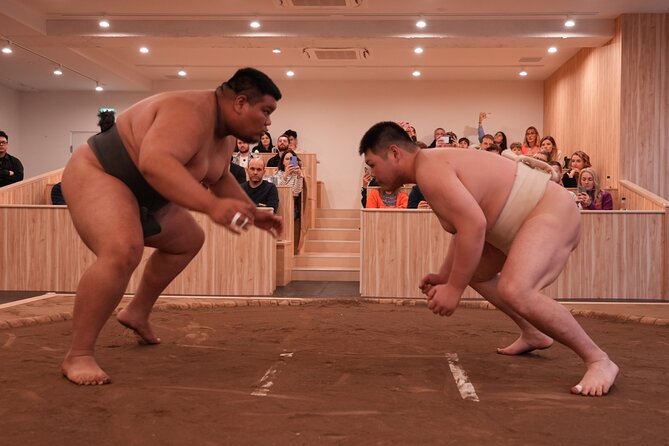
At $79.59 per person, this is not the cheapest way to spend 90 minutes in Tokyo. The value depends on what you want from the outing.
You are paying for a hosted cultural presentation, live performances by two wrestlers, explanations in English and another language, audience interaction, and photo opportunities. For a family, the price can make sense because one booking combines a show, a lesson, and an activity for children.
It is also good value if you have limited time and want an introduction to sumo without working out the rules on your own. The MC keeps the presentation understandable, and the session gives you a basic grasp of the rituals and tactics in one sitting.
The value is weaker if you already know sumo well or mainly want serious competition. This is not a substitute for a formal tournament. It is a polished, friendly performance that uses humor and participation to explain the sport.
A 99 percent recommendation rate and a five-star score from 1,753 ratings point to strong overall satisfaction, but the minority view is worth taking seriously. A few people find the experience only average compared with other Tokyo activities, especially if they arrive expecting an official match. Book it for the interaction and teaching, not for tournament-level suspense.
Who will enjoy this most?
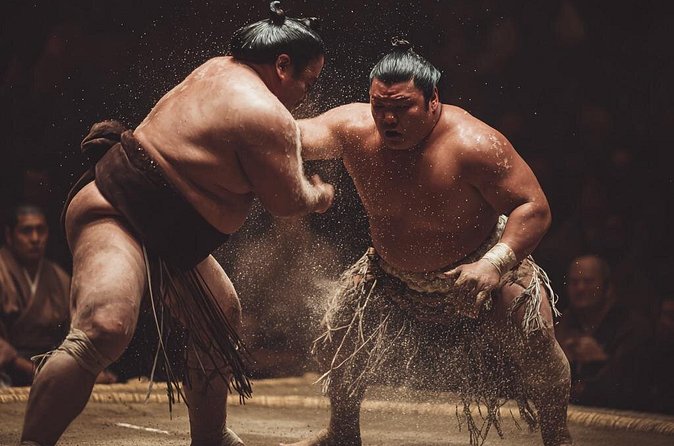
I would suggest this experience to families with children, first-time visitors to Japan, couples looking for an unusual evening activity, and anyone curious about sumo but unsure where to begin.
It is especially useful for people who want context. You learn why the wrestlers throw salt, what the ring movements mean, and how the sport works before watching the action. That turns a short show into a cultural lesson you can carry with you when you later see sumo elsewhere.
It also suits mixed groups. One person can enjoy the athletic display, another can focus on the history and rituals, and children can look forward to the costume challenges and photos.
I would be more cautious about booking it for a serious sumo fan seeking a sanctioned bout. The wrestlers may be retired, and the mood is deliberately fun and audience-friendly. That is a strength for beginners, but a limitation for anyone looking for the real pressure of a tournament.
How it compares with seeing official sumo
A formal sumo tournament offers competition, tradition, and uncertainty. You do not know how each bout will unfold, and the atmosphere comes from watching athletes compete under official conditions.
The Shinjuku Sumo Club offers access and explanation. You are closer to the performers, the MC tells you what is happening, and you get to ask questions and possibly enter the ring yourself.
For a first visit, this experience may be the easier choice. You leave with a basic understanding of the rituals and rules instead of simply watching large athletes collide without context. If you later attend an official tournament, you will know more about what you are seeing.
Think of the two as different activities rather than substitutes. One is a cultural show and introduction. The other is a sporting event.
Practical details that can make the visit smoother
The experience is in Shinjuku, a convenient part of Tokyo with strong public transportation links. The venue is reported to be easy to find from the train, but give yourself extra time. A 30-minute buffer is sensible if you are coming during heavy traffic or connecting from another part of the city.
Your mobile ticket is accepted, and booking confirmation arrives at the time of booking. Free cancellation is available if you cancel at least 24 hours before the local start time. Cancellations or changes made inside that window are not refunded or accepted.
Most people can participate. The information does not promise a specific accessibility setup, seating plan, or group size, so contact the provider, Shinjuku Sumo Club, if you need details beyond the general statement that most people can take part.
The show lasts about 90 minutes. Plan around that time, then add your transport buffer and a little extra time for finding the venue.
My verdict: book it for the introduction, not the tournament
I would book the Tokyo Shinjuku Sumo Show if you want a lively, clear, and family-friendly way to understand Japan’s national sport. The bilingual explanation, live demonstrations, ring rituals, wrestler photos, and audience challenges give you far more than a simple stage performance.
The strongest reason to go is the mix of learning and participation. You see the sport, hear what it means, and may even test the ring yourself. The main reason to skip it is equally clear: this is not formal sumo competition.
For $79.59, the experience makes sense when you value personal interaction and a well-organized cultural activity. Arrive early, keep your expectations realistic, and book it as a first lesson in sumo. If that sounds like your kind of Tokyo evening, it is a solid choice.
FAQ
Where does the sumo experience take place?
It takes place at the Shinjuku Sumo Club in Shinjuku, Tokyo.
How long does the experience last?
The experience lasts approximately one hour and 30 minutes.
What language is the show in?
A bilingual MC explains the rituals, history, rules, and demonstrations.
Are the wrestlers professional?
The experience features two real sumo wrestlers performing live matches and demonstrations.
Can I participate in sumo wrestling?
Audience members have the opportunity to take part in a friendly sumo challenge on the dohyō.
Can I take photos with the wrestlers?
Yes. The experience includes a photo opportunity with the wrestlers.
Is the activity suitable for children?
Yes. The experience is described as family-friendly, and children may take part in playful audience activities, including inflatable sumo costume challenges.
Is food or drink available?
You can buy drinks and snacks while watching. Any included drink may be limited to one bottled water per person.
Can I cancel for a full refund?
Yes, if you cancel at least 24 hours before the experience start time. Cancellations or changes made less than 24 hours before the start time are not refunded or accepted.
More Show in Tokyo
- Mt Fuji & Hakone Cruise, Drum Show Bullet Train 1 Day from Tokyo
★ 4.0 · 7,413 reviews - Mt Fuji & Hakone Cruise, Drum Show Bus 1 Day from Tokyo
★ 4.0 · 1,287 reviews - Tokyo:Luxury Sumo Show Experience & Japanese cuisine & Drink
★ 4.7 · 577 reviews - Tokyo Bay Yakatabune Dinner/Day Cruise with Japan Show and Drinks
★ 4.5 · 473 reviews
Just added around Tokyo
- Tokyo: Customizable Private Guided Walking Tour★ 4.5 · 129 reviews
- Private Harajuku Omotesando Architecture Tour★ 4.9 · 18 reviews
- Tokyo: Guided Helicopter Ride★ 4.9 · 24 reviews
- Tokyo: Guided Walking Tour of Tsukiji Market with Lunch★ 4.4 · 24 reviews
- Tokyo: Private Personalized Local Food Tour★ 4.5 · 101 reviews
- Tokyo: Guided Walking Tour of Tsukiji Market with Breakfast★ 4.4 · 134 reviews
- Tokyo: Gotokuji Cat Temple, Shinjuku Cat Cafe & 3D Cat Tour★ 4.9 · 38 reviews
- Tokyo GINZA: KONPARU Japanese Cabaret Show with Drink★ 4.8 · 38 reviews
Sumo Experiences, compared.
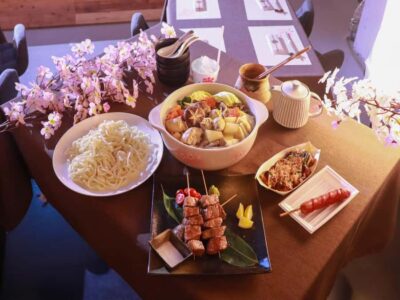
Sumo Show Experience with Chicken Hot Pot and a Photo
Read our review →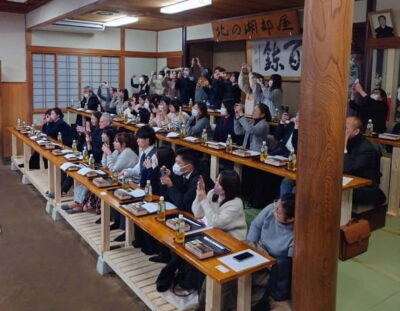
Sumo Show & Experience w/ Optional Kimono & Hot Pot
Read our review →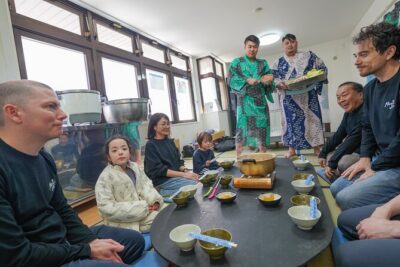
Authentic Sumo Experience in Tokyo: Enter the Sanctuary
Read our review →
Luxury Sumo Show Experience & Japanese cuisine & Drink
Read our review →Browse the lists this tour appears in