
REVIEW · SUMO EXPERIENCES
Tokyo: Sumo Tournament Tour with Chair Seat Tickets
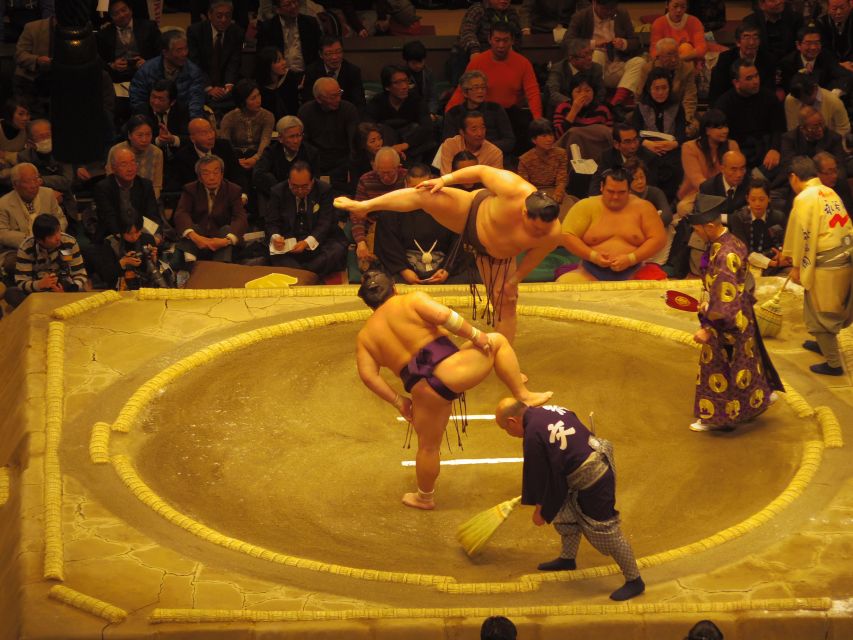
A Tokyo sumo tournament is not a staged cultural show. It is a real competition, held during one of the city’s limited annual tournament periods, with formal ceremonies, serious athletes, sponsor banners, and a crowd that knows exactly who it wants to cheer. At Ryogoku Kokugikan, you get to watch the action as part of a Japanese sporting tradition that visitors rarely encounter elsewhere.
I like the way an English-speaking guide turns a confusing first match into something you can follow. I also like the practical help: meeting near JR Ryogoku Station, getting into the arena together, and receiving explanations about ranks, rituals, and individual wrestlers. The main drawback is that 2F chair seats can be high and fairly small, and the guide may not provide continuous commentary once the bouts begin.
In This Review
- Key Points Before You Book
- Why a Tokyo Sumo Tournament Feels Different
- Meeting at Ryogoku Station at 2:15 PM
- Ring Entering at 3:40 and 3:55 PM
- The Makuuchi Bouts Begin at 4:10 PM
- What You See From 2F Chair Seats
- Why the Guide Can Be Worth the Extra Cost
- Food, Lunch Options, and What to Bring
- Is $141 a Fair Price?
- Who Should Choose This Sumo Experience?
- Booking Details That Matter
- Should You Book the Tokyo Sumo Tour?
- FAQ
- Where does the tour meet?
- What time does the tournament finish?
- When do the main bouts begin?
- What ceremonies can I see?
- What seating is available?
- Do 1F box seats provide private space?
- Is a guide included?
- Is food included?
- Can young children attend?
- Are wheelchairs, strollers, or large luggage allowed?
Key Points Before You Book
- The afternoon schedule matters: Meet at 2:15 PM, see the Makuuchi ring-entering ceremony at 3:40 PM, the Yokozuna ceremony at 3:55 PM, and the top-division bouts from 4:10 to 6:00 PM.
- This is real tournament sumo: You are watching official competition, not a tourist demonstration or a staged dinner show.
- Guides make the sport easier to follow: Guides such as Mieko, Taka, Mia, Yuko, Hiro, and Sho have been praised for explaining rules, rankings, rituals, and wrestlers.
- Seat type changes the experience: The standard option uses 2F chair seats, while the 1F option uses a box seat with your own seating space.
- Tickets can be hard to get directly: The $141 price includes the ticket and guidance, which may be worthwhile when official tickets sell out quickly.
- Plan for food and luggage: Food and drinks are not generally included, large luggage cannot enter the seating area, and strollers are not allowed.
Why a Tokyo Sumo Tournament Feels Different
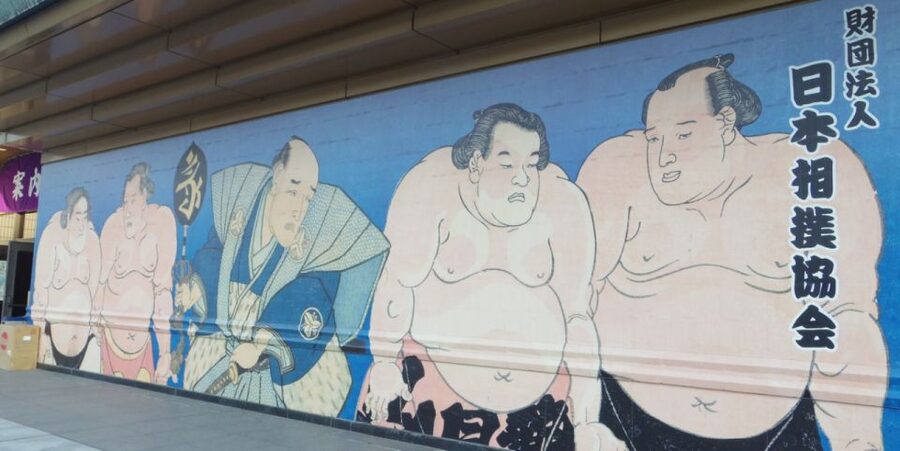
Sumo is easy to dismiss as a simple contest of size. Then the wrestlers enter the ring, salt the ground, perform their ritual movements, and spend time preparing before the brief clash. The actual bout can be over in seconds, but the ceremony and tension give each match more weight than a quick push might suggest.
You will see wrestlers trying to force an opponent outside the ring or make any part of the opponent’s body, other than the soles of the feet, touch the ground. The rules are straightforward, but the tactics are not. A guide can point out the difference between a power contest and a bout won through timing, balance, or a wrestler’s favored move.
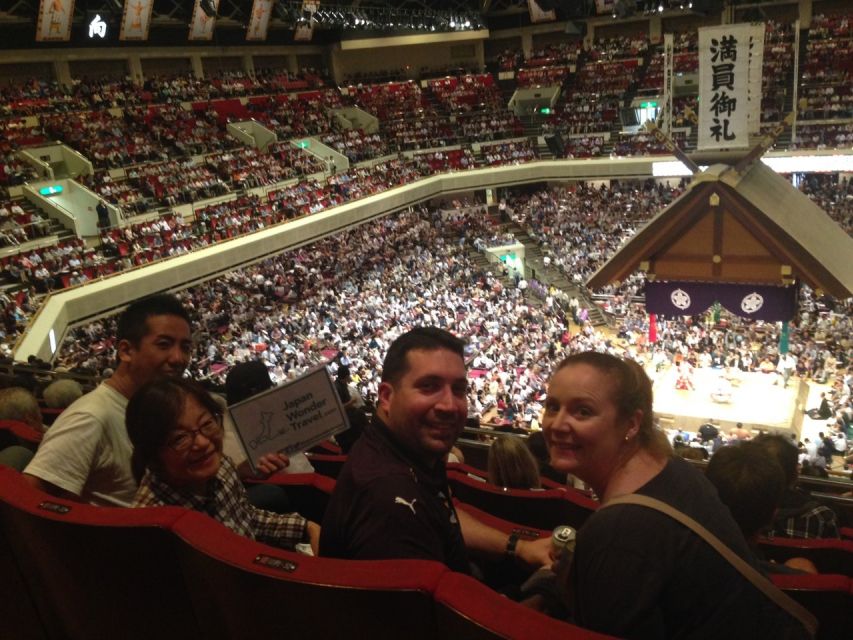
The atmosphere is another reason to attend. You sit among a Japanese audience rather than in a performance created mainly for visitors. That makes the cheering more meaningful, especially after you learn which wrestlers are highly ranked, which are receiving many sponsors, and why certain names draw a stronger response.
The schedule is limited. Tokyo hosts three of Japan’s annual major sumo tournaments, and each tournament runs for 15 days. A supplied estimate puts the total official tournament period in Tokyo at only about 45 days each year, so your dates may decide if this experience is possible at all.
More sumo experiences in Japan:
- Tokyo: Sumo Show Experience with Chicken Hot Pot and a Photo
★ 4.8 · 6,678 reviews - Tokyo: Sumo Show and Dining Experience
★ 4.8 · 2,742 reviews - the SUMO show
★ 5.0 · 1,960 reviews
Meeting at Ryogoku Station at 2:15 PM
The tour begins at the West Gate of JR Ryogoku Station at 2:15 PM, although the exact meeting point can vary with the option you book. Ryogoku is the right part of Tokyo for this outing, and the station is close to Ryogoku Kokugikan, the national sumo stadium.
Give yourself time to find the correct group. Several groups may meet in the same area, and the instructions can include a group number or color. Keep the booking message available on your phone, especially if you are traveling without mobile data. One person found the check-in process confusing because multiple groups gathered together, so arriving early is a smart move.
Your guide then takes you toward the stadium and helps with entry. This is more useful than it sounds. The arena has its own layout, and an English-speaking guide who knows the language and building can save you the stress of finding the correct entrance and seats.
Some booking choices include an entrance assistant instead of a full guide experience. In that case, staff take you to Ryogoku Kokugikan but do not go inside with you. Check the option carefully if explanations during the tournament are important to you.
Ring Entering at 3:40 and 3:55 PM
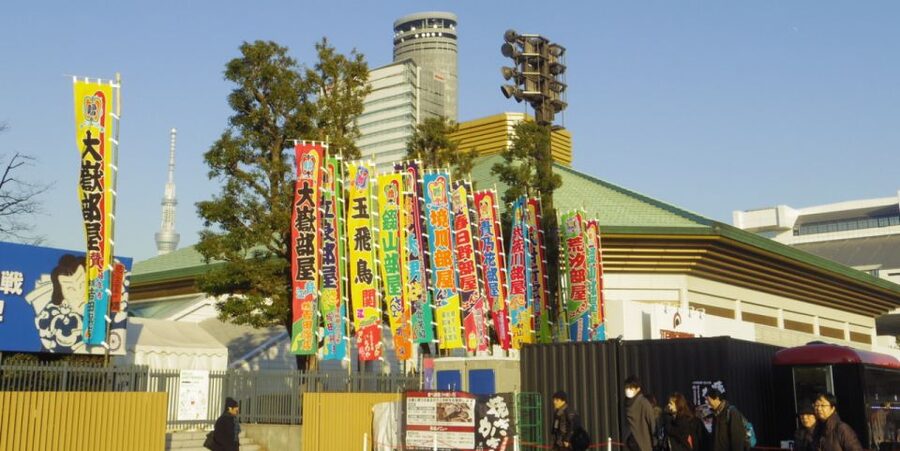
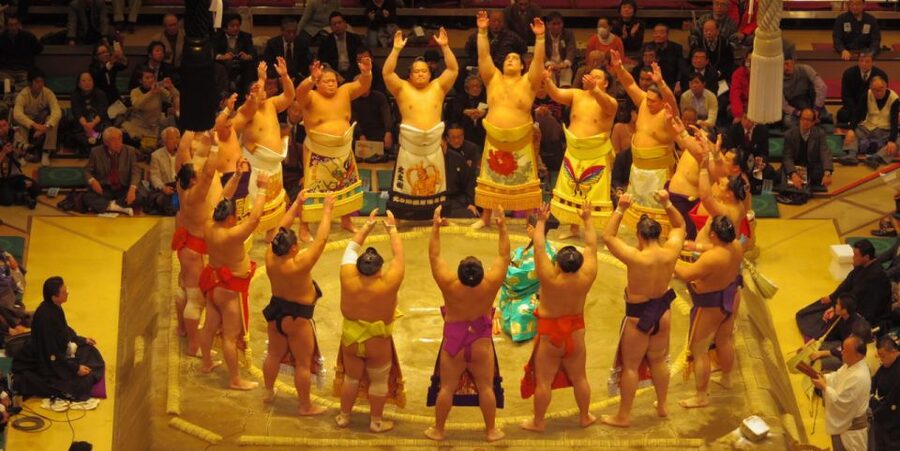
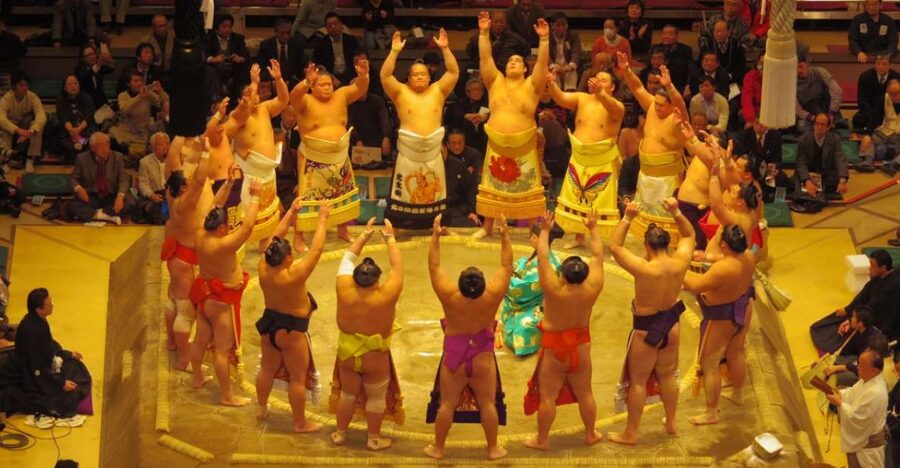
The Makuuchi Division ring-entering ceremony begins at 3:40 PM. The Makuuchi division is the top broad division of professional sumo, and these wrestlers receive more attention, higher ranking, and more elaborate presentation than the lower divisions.
At 3:55 PM, the Yokozuna ceremony follows. Yokozuna are the highest-ranked wrestlers in sumo, and their appearance is one of the afternoon’s key moments. Even if you know little about the sport, the contrast between the formal ceremony and the physical bouts makes the schedule easy to appreciate.
This is where your guide’s explanation pays off. You may receive a printed sheet listing the day’s fights, wrestlers, and current positions. That small aid can help you understand why a match matters and why the crowd reacts strongly to a particular competitor.
A good guide also gives you someone to cheer for. Guides such as Taka, Mieko, Mia, Sho, and Yuko have been praised for sharing favorite wrestlers and encouraging the group to join the crowd. You do not need to know every name before arriving. The point is to gain enough context to make the action personal.
The Makuuchi Bouts Begin at 4:10 PM
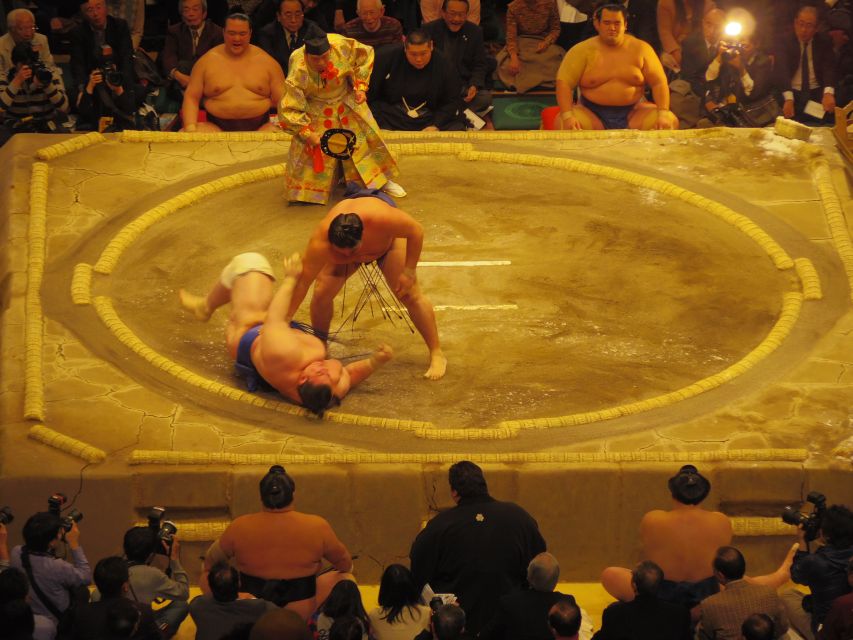
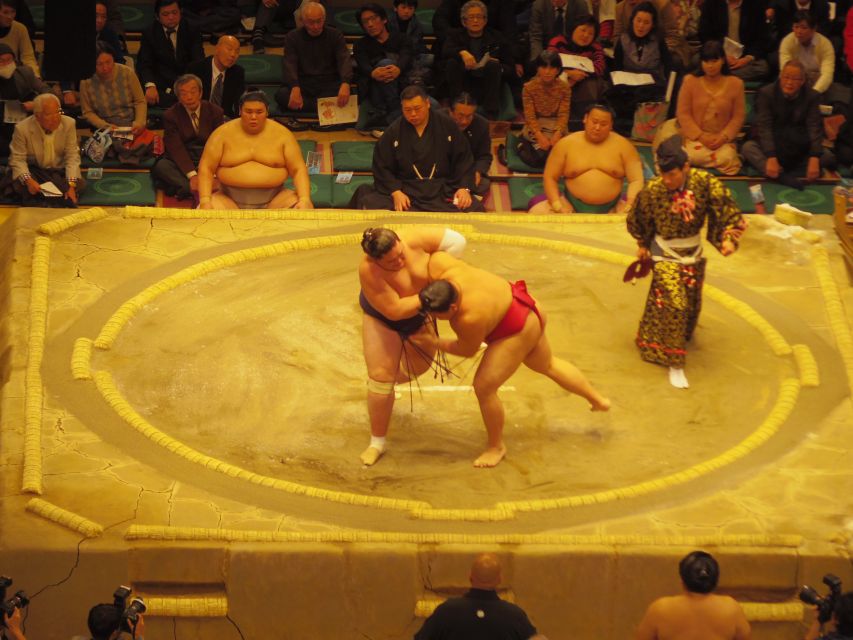
At 4:10 PM, the Makuuchi bouts begin. This is the part most people picture when they think of sumo: two heavily built wrestlers face each other in the ring, wait for the right moment, and explode into action.
The bouts move faster than many first-time viewers expect. A match can be decided quickly, so it helps to watch the wrestlers’ stance, foot placement, and initial charge instead of waiting for a long struggle. Once you understand the basic winning conditions, you can start noticing strategy.
Your guide may explain individual wrestling styles, unusual moves, current rankings, and the reasons certain wrestlers have more sponsor banners. That context changes the experience from watching large men collide to watching athletes with different records, techniques, and standing within the sport.
The guide may not talk through every second of every bout. This is not a private lesson, and the arena is too lively for constant commentary. Still, the explanations before the matches and the ability to ask questions make a large difference, especially if this is your first tournament.
The tournament ends at about 6:00 PM, and the activity returns to the meeting point. That gives you a clear three-hour window inside the main portion of the event, though the full outing begins earlier with the station meeting and stadium entry.
A few more Japan trips to weigh up
- Tokyo: TOKYO SKYTREE® Admission ticket
★ 4.5 · 11,192 reviews - Tokyo: teamLab Planets TOKYO Digital Art Museum Entry Ticket
★ 4.6 · 9,779 reviews - Tokyo: Hop-On Hop-Off Sightseeing Bus Ticket
★ 3.9 · 4,207 reviews - Tokyo Tower: Admission Ticket
★ 4.6 · 3,661 reviews
What You See From 2F Chair Seats
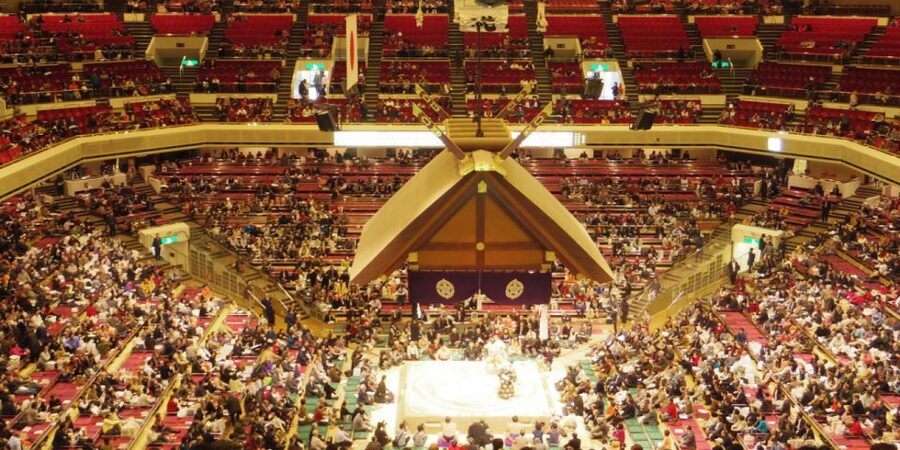
The standard ticket is a 2F chair seat, and you cannot choose the exact seat. Some people find these seats higher and farther away than expected, but the stadium is compact enough that the view can still be good. One visitor felt the B seats looked far away on the map but found the perspective more than adequate.
The advantage of the upper level is a broad view of the ring. You can see the full setup, the movement around the arena, and the crowd’s reaction. The disadvantage is less closeness and less legroom than you might hope, and some chair seats are small.
If your priority is seeing every part of the ring clearly, 2F seating is a sensible choice. If you want your own defined space and a closer feel, consider the 1F box-seat option. The first floor has box seats only, and those who select that option receive their own seating space without sharing it with others.
Seat selection depends on availability and the option purchased. You should not assume that the guide can move your party to a preferred location. The ticket is handed to you on the tour date, so review the exact seating option before paying.
Why the Guide Can Be Worth the Extra Cost
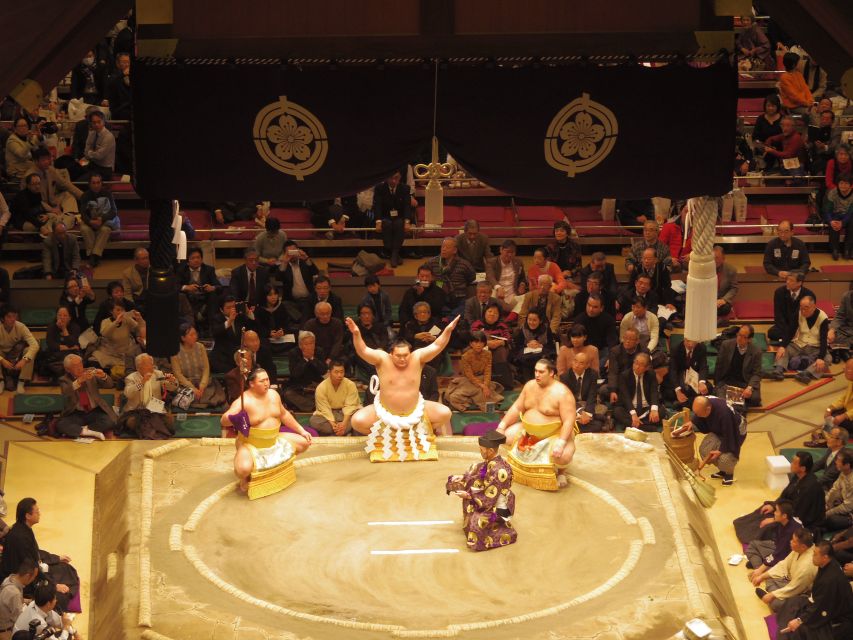
You can watch sumo without a guide, but the sport has enough customs and ranking details to leave a first-time viewer puzzled. The strongest part of this experience is often the person explaining what you are seeing.
Mieko has been praised for answering questions, preparing a useful fight sheet, and explaining each wrestler’s current position. Taka has been described as friendly and deeply informed about the sport. Mia’s enthusiasm helped people follow the bouts, while Hiro was noted for checking that the group understood what was happening.
Other guides, including Yuko, Sho, Michiko, Naomi, Take, Kaz, and Maddie, have also been singled out for their enthusiasm and clear explanations. You cannot request a particular guide from the information provided, but the repeated pattern is clear: the human guidance is a major part of the value.
The guide also handles the awkward parts of the visit. You are taken to the entrance, shown where to go, and given a local point of contact for questions. That is especially useful when tickets are scarce and you are paying for a reliable route into an event that can be difficult to arrange alone.
One fair criticism is that the tour may feel more like a guided ticket handoff than a traditional sightseeing tour. Depending on the option, the guide may explain the sport, lead you to the stadium, and then remain available rather than give a formal running commentary. If you already understand sumo, you may value the ticket more than the tour.
Food, Lunch Options, and What to Bring
Food and drinks are not included in the basic experience. The stadium has food and drink available, and one person found the prices reasonable. You should still check your specific booking because some options include lunch or a chanko nabe meal, while others do not.
Chanko nabe is the hearty hot pot associated with sumo wrestlers, and it can add a fitting food element to the day. The information about lunch is not fully consistent across all options, so read the selected package carefully. If you have allergies or other dietary restrictions, provide that information when booking or as soon as possible afterward.
A packed lunch may also be included in some choices. Several people enjoyed this, but at least one person expected a hot pot lunch that did not materialize. This is a simple case where checking the wording of your exact option can prevent disappointment.
Leave large luggage at your accommodation. Large bags cannot be brought into the seating area, and baby strollers are not allowed. Children aged three and under can enter free, but they do not receive their own seat and must sit on an adult’s lap. Children aged four and up need their own tickets.
The experience is not suitable for wheelchair users. That matters because the arena seating and access arrangements may be difficult for anyone who needs step-free facilities.
Is $141 a Fair Price?
At $141 per person, this is not a cheap afternoon activity. The price includes admission, either a 2F chair seat or a 1F box seat depending on your choice, and a professional English-speaking guide. A sumo fan cheer kit is included only when you select the relevant option, and food is not part of the standard package.
The value depends on how much you value certainty. Official tournament tickets can sell out quickly, and several people tried to buy through the official sumo site without success. Paying a markup through an organized experience can make sense when the alternative is missing the tournament entirely.
The seats also affect the calculation. If you receive a high 2F chair seat, you are paying for access and guidance more than premium proximity. If you choose a 1F box seat, the added personal space may make the price easier to justify, particularly for a group.
I would compare the exact ticket option with the official face value before booking. The difference may be reasonable for the help with language, entry, and explanations, but you should not assume every $141 option includes lunch, a fan kit, or a first-floor seat.
Who Should Choose This Sumo Experience?
This is a strong choice for a first visit to a sumo tournament. You get the atmosphere of a genuine competition while someone explains the history, rules, ranks, customs, and wrestlers in plain English.
It also suits families with older children. A family of four enjoyed the event, and the quick bouts can hold attention better than a long, slow sporting contest. Just remember the ticket rule for young children and the ban on strollers.
I would also recommend it to anyone visiting Tokyo for only a few days. The tournament dates are limited, so if one happens during your stay, it is a rare chance to see an important part of Japanese culture without spending weeks learning how the ticket system works.
You may want to skip the guided option if you already follow professional sumo closely or if you are seeking a close-up experience with wrestlers. The 2F seats are not ringside, and this is an official tournament, not a stable visit or dinner show.
Booking Details That Matter
The activity costs $141 per person and is offered in English. You can reserve now and pay later, which is useful when you are building a Tokyo schedule around uncertain tournament dates.
Cancellation is allowed up to 24 hours before the activity for a full refund. Meeting points can vary by option, and the tour ends back at the meeting point, so read the voucher carefully for the exact location.
Choose between 2F chair seating and 1F box seating if both are offered for your date. Add the sumo supporter kit if cheering with supplied fan materials appeals to you, and check the lunch wording rather than assuming a meal is included.
Should You Book the Tokyo Sumo Tour?
Book it if a Tokyo tournament falls during your visit and you want a real event with enough explanation to make the customs and bouts understandable. The limited schedule, quick sellouts, station-to-stadium assistance, and strong guide involvement make the $141 cost reasonable for many first-time visitors.
Think twice if you need accessible seating, are bringing a stroller or large luggage, or expect close seats and a fully guided commentary from the first bout to the last. For most people, though, this is one of the more distinctive sports experiences available in Tokyo, especially when guides such as Mieko, Taka, Mia, Hiro, or Yuko are able to share their enthusiasm and help you cheer with some idea of what is happening.
FAQ
Where does the tour meet?
The standard meeting point is the West Gate of JR Ryogoku Station at 2:15 PM. The exact meeting point may vary depending on the option you book.
What time does the tournament finish?
The tournament portion finishes at about 6:00 PM.
When do the main bouts begin?
Makuuchi Division bouts begin at 4:10 PM.
What ceremonies can I see?
You can see the Makuuchi ring-entering ceremony at 3:40 PM and the Yokozuna ring-entering ceremony at 3:55 PM.
What seating is available?
Depending on the option selected, you receive a 2F chair seat or a 1F box seat. Specific 2F seats cannot be chosen.
Do 1F box seats provide private space?
Yes. Those who select 1F box seats have their own seating space without sharing it with others.
Is a guide included?
Yes, the main experience includes a professional English-speaking guide. An entrance assistant option is also available, but that staff member takes you to the stadium and does not enter with you.
Is food included?
Food and drinks are not included in the standard package. Some options may include lunch, so check the exact option and provide allergy or dietary information when booking.
Can young children attend?
Children aged three and under can enter free, but they do not have their own seat and must sit on an adult’s lap. Children aged four and older need their own tickets.
Are wheelchairs, strollers, or large luggage allowed?
The experience is not suitable for wheelchair users. Baby strollers are not allowed, and large luggage cannot be brought into the seating area.
Just added around Japan
- Tokyo: Customizable Private Guided Walking Tour★ 4.5 · 129 reviews
- Private Harajuku Omotesando Architecture Tour★ 4.9 · 18 reviews
- Tokyo: Guided Helicopter Ride★ 4.9 · 24 reviews
- Tokyo: Guided Walking Tour of Tsukiji Market with Lunch★ 4.4 · 24 reviews
- Tokyo: Private Personalized Local Food Tour★ 4.5 · 101 reviews
- Tokyo GINZA: KONPARU Japanese Cabaret Show with Drink★ 4.8 · 38 reviews
- Tokyo: Guided Walking Tour of Tsukiji Market with Breakfast★ 4.4 · 134 reviews
- Tokyo: Gotokuji Cat Temple, Shinjuku Cat Cafe & 3D Cat Tour★ 4.9 · 38 reviews
Sumo Experiences, compared.
Sumo Show Experience with Chicken Hot Pot and a Photo
Read our review →
Tokyo Shinjuku Sumo Show & Experience with Photo
Read our review →
Sumo Show & Experience w/ Optional Kimono & Hot Pot
Read our review →
Authentic Sumo Experience in Tokyo: Enter the Sanctuary
Read our review →
Luxury Sumo Show Experience & Japanese cuisine & Drink
Read our review →Browse the lists this tour appears in