
REVIEW · DINNER EXPERIENCES
Deep Backstreet Osaka Tours (Option to add Dinner)
Osaka’s most revealing stories are often found away from the neon signs and famous food streets. This evening walk takes you through narrow lanes, a historic red light district, an old ghetto area, abandoned homes, unusual shops, and an important place of worship. It is a look at the city’s social history, not just its postcard sights.
I like the small-group format, with no more than 15 people, and I like the mix of walking, food, and serious discussion. Guides such as Mari, Knox, Rudy, Alex, Bennett, and Mark have been praised for making difficult subjects clear and approachable. The optional dinner adds local dishes at an izakaya that you are unlikely to find on a standard sightseeing route.
The main consideration is tone. This is not a glossy Osaka food tour. You will hear about poverty, sex work, gangs, discrimination, homelessness, mental health, and social class. You will also walk for more than three hours, often stopping outside, so comfortable shoes and a willingness to discuss uncomfortable subjects matter.
In This Review
- Key points to know before booking
- Why this Osaka walk feels different
- Starting near Daikokucho at 5:30 pm
- Old lanes, odd shops, and Osaka’s retro side
- Food stalls and Osaka’s everyday cooking
- The place of worship and the city’s older beliefs
- The red light district and its difficult past
- The former ghetto and Osaka’s social divisions
- Choosing the optional izakaya dinner
- What the $53.06 price gives you
- Which guide style suits you
- Who should book this experience
- Practical booking advice
- Should you book the Osaka backstreet tour?
- FAQ
- How long does the Deep Backstreet Osaka Tour last?
- What time and where does the tour start?
- Where does the tour finish?
- Is dinner included?
- Are drinks included with dinner?
- How many people can join the tour?
- Is the tour suitable for most people?
- Can I cancel for a full refund?
Key points to know before booking
- Former ghetto and red light district: Learn about areas with controversial pasts and links to organized crime, sex work, and social exclusion.
- Two family-run food stops: Taste local Osaka snacks during the walk, with the option to add a full izakaya meal.
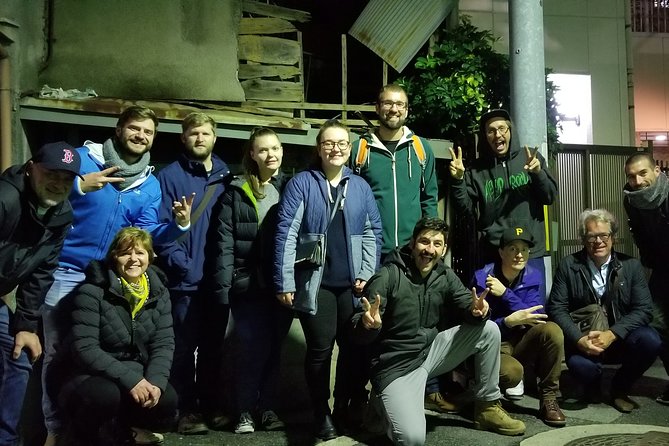
- Small evening group: The maximum group size is 15, giving you a better chance to ask questions and keep up with the guide.
- Unusual backstreet sights: Expect old alleys, retro shops, abandoned houses, and places most visitors pass without noticing.
- A serious but safe outing: The tour covers sensitive topics in areas described as safe, but the subject matter is not light entertainment.
- Useful local help afterward: The guide can assist with suggestions for bars, shopping, or entertainment areas after the walk.
Why this Osaka walk feels different
Most first visits to Osaka center on Dotonbori, Osaka Castle, Shinsekai, and the city’s famous food districts. Those places are worth seeing, but they show only one side of Osaka. This tour asks you to pay attention to what sits behind the polished streets.
The walk focuses on communities shaped by work, poverty, religion, social class, and old prejudice. You are not simply shown a run-down lane and told that it is interesting. The guide explains why certain areas developed as they did and why some of their problems remain visible today.
I especially value that wider context. A tour about the darker side of a city can easily become voyeuristic. Here, the better guides, including Mari, Marie, Knox, and Thomi, have been praised for treating the subjects thoughtfully while still keeping the group engaged and comfortable.
The tone can vary with the guide. Some guides use more humor, while others take a quieter and more reflective approach. That is part of the nature of a guide-led experience, but the repeated strengths are clear: strong local context, patience with questions, and a willingness to discuss subjects that guidebooks often avoid.
A few more Osaka trips to weigh up
- Osaka: Deep Backstreets Walking Tour with Dinner Option
★ 4.9 · 902 reviews - Osaka Umeda: PICCADILLY DINNER SHOW & NIGHTCLUB with Tasting
★ 4.8 · 49 reviews - Eat Our Favorites! Osaka’s Backstreet Dining
★ 4.9 · 19 reviews
Starting near Daikokucho at 5:30 pm
The meeting point is the FamilyMart MYS Daikokucho Station at 2-chome-5-16 Shikitsuhigashi, in Naniwa Ward. The tour starts at 5:30 pm and finishes back at the same meeting point.
The timing works well for an evening in Osaka. You begin while there is still some daylight, then continue as the city changes mood after dark. That transition suits the route, since the walk moves between ordinary residential streets, older commercial areas, and entertainment districts.
You should arrive ready to walk rather than expecting a bus or train between stops. The full outing lasts about three hours, and one account describes it as slightly longer than three hours. Breaks make the pace manageable, but you will spend plenty of time on your feet.
The route is near public transportation, and most people can participate. The practical details are simple: wear shoes you can walk in, carry water, and bring protection against mosquitoes if you are visiting in a warm season. One stop in a park was described as uncomfortable because of mosquitoes, so it is worth being prepared.
Old lanes, odd shops, and Osaka’s retro side
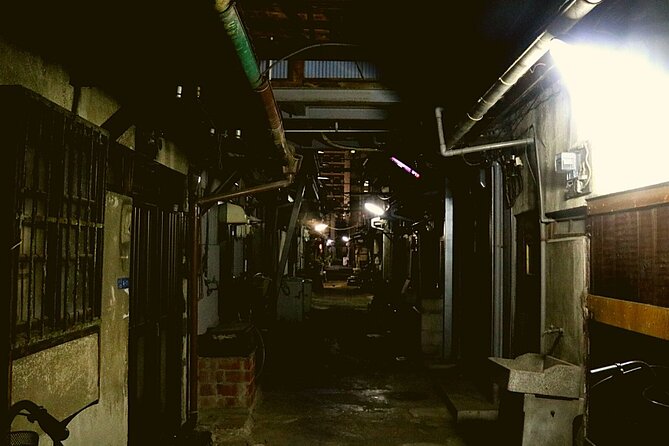
Early in the walk, you are taken through older backstreets and a retro zone filled with unusual shops. This is where the experience begins to feel unlike a normal city tour. You may find curious storefronts and small businesses that are easy to miss if you are moving between major attractions.
The narrow alleys are part of the appeal. They give you a closer look at the scale of older Osaka, where homes, shops, and places of worship can sit close together. The lanes may be uneven or cramped, and the group will sometimes pause in public spaces rather than enter a formal attraction.
That lack of polish is useful. I would not book this tour for grand architecture or a long list of ticketed sights. I would book it to see how a neighborhood works, how old buildings fit into a modern city, and how much local character can remain just a few streets from major tourist routes.
The abandoned-houses zone adds another layer. The guide explains how family names, social status, inheritance, and a home’s past can affect its future. Some houses are not simply empty because they need repair. Social pressure and the history attached to a family can also make them difficult to pass on or occupy.
This section may be sad rather than entertaining. That is exactly why it has value, but you should expect observation and explanation, not access to abandoned buildings. The experience takes place from public areas, and the focus is on what these homes reveal about society.
Food stalls and Osaka’s everyday cooking
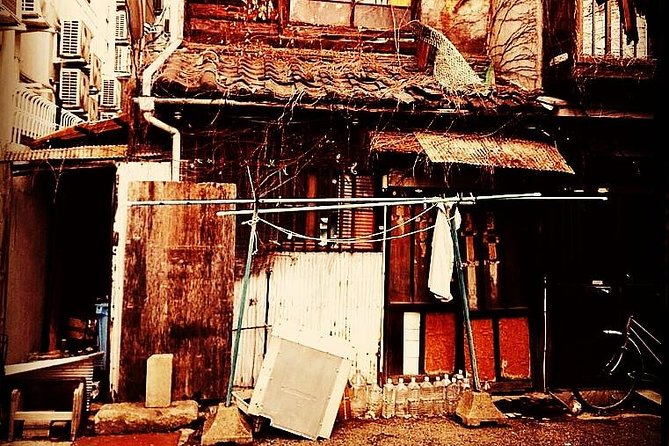
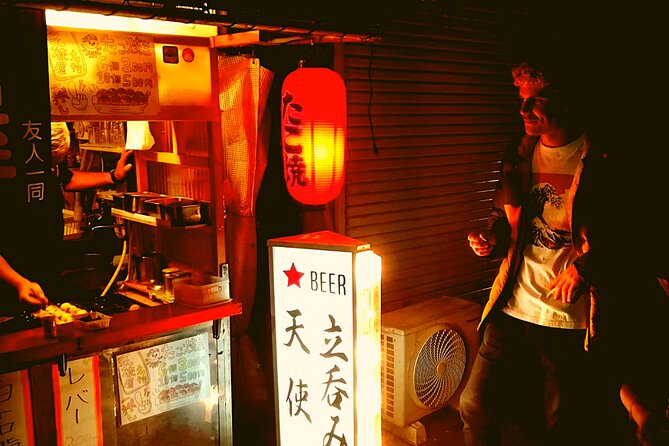
Food is woven into the walk rather than treated as a separate meal at the end. You taste local food at two family-run street stalls, and the included food-stall tasting gives the group a chance to pause and talk over something distinctly Osakan.
The exact dishes served during the walking portion are not specified, so you should not book this expecting a fixed tasting menu. Think of it as a small local sample that breaks up the history and walking.
That balance works well. Osaka is known for food, but eating a snack while standing near a working neighborhood tells you more than sitting in a restaurant built for sightseeing. The stops also give you time to meet the rest of the group, which is useful if you are visiting alone.
The meal is not included in the basic version unless you choose the dinner option. Alcoholic drinks at the restaurant are separate, though drink prices are described as reasonable. Keep that in mind when comparing the total cost.
Same city, a completely different kind of day:
- Osaka Go Karting Tour with Funny Costume
★ 5.0 · 2,658 reviews - Osaka Castle: Museum and Tower Entry Ticket
★ 4.5 · 2,380 reviews - Osaka: Shinsekai Food Tour with 13-15 Dishes at 5 Eateries
★ 4.8 · 2,204 reviews - Osaka Food Tour: 13 Dishes at 5 Local Eateries
★ 5.0 · 2,149 reviews
The place of worship and the city’s older beliefs
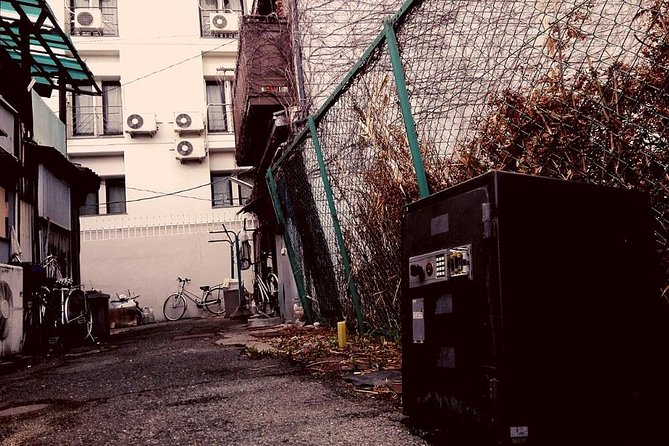
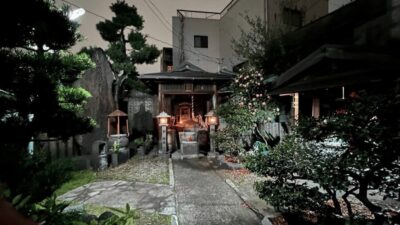
One stop brings you to an important but little-known place of worship in Osaka. The guide explains what the site represents and how religion fits into present-day life.
This is a welcome change of pace from the more difficult material. The tour is not only about crime, poverty, or taboo subjects. Religion, family, work, and community all form part of the story, and the worship site helps connect older traditions with the city you see today.
You should expect an explanation rather than a formal temple tour. The appeal comes from learning why the place matters and how it relates to the surrounding district. If you want a detailed art-historical visit, this will not replace a dedicated temple tour. If you want to understand the local setting, it adds useful depth.
The red light district and its difficult past
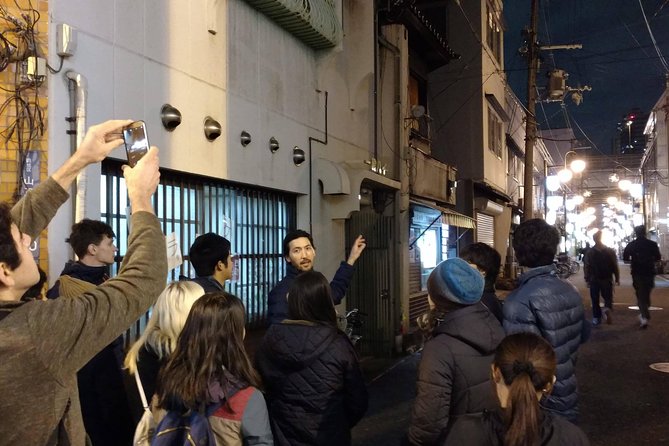
The red light district is one of the tour’s most talked-about sections. You learn about sex work, the district’s historical development, and its links to the yakuza. The guide also places the area within Osaka’s wider class structure instead of treating it as a spectacle.
This part requires respect. You are walking through a real neighborhood, not a themed attraction, and the best approach is to listen rather than take intrusive photographs or behave like an audience at a show.
The subject matter is direct. You may hear about the way sex workers lived and worked, how certain districts were controlled, and how social attitudes shaped the area. The route is described as safe, but safe does not mean carefree. Stay with the group and follow the guide’s instructions.
I like that this section gives you facts and social context instead of a sensational ghost story. It also helps explain why some parts of Osaka have a different atmosphere from the city’s better-known shopping and dining streets.
The former ghetto and Osaka’s social divisions
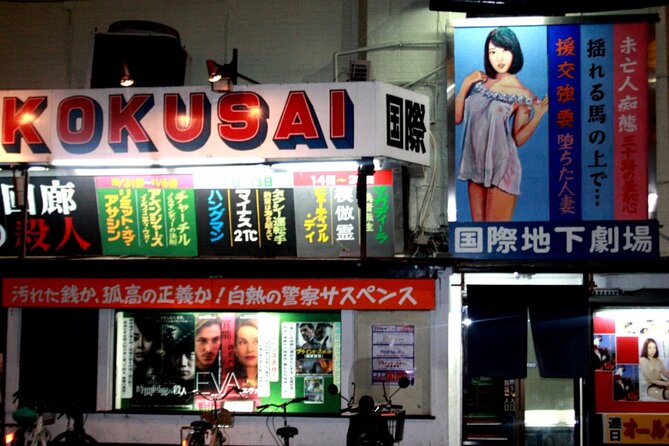
The tour also enters an area with a controversial past as a former ghetto. This is where the discussion moves toward discrimination, poverty, social class, and the way prejudice can continue to affect a neighborhood long after official conditions change.
The guide’s role matters greatly here. A careless explanation could reduce a complex community to a label. The strongest approach, reflected in the praise for guides such as Thomi, Marie, and Josh, is to connect the past with modern questions about housing, work, family names, and social exclusion.
You will also hear about homelessness and the unhoused population. The discussion challenges simple assumptions about why people lose housing and how society responds. This is one of the sections I would remember longest because it asks you to look beyond the tidy image of Japan often presented to visitors.
The tour does not pretend that Osaka’s hard problems are solved. Nor does it suggest that the city is defined by them. Instead, you get a more honest picture of how prosperity and hardship can exist close together.
Choosing the optional izakaya dinner
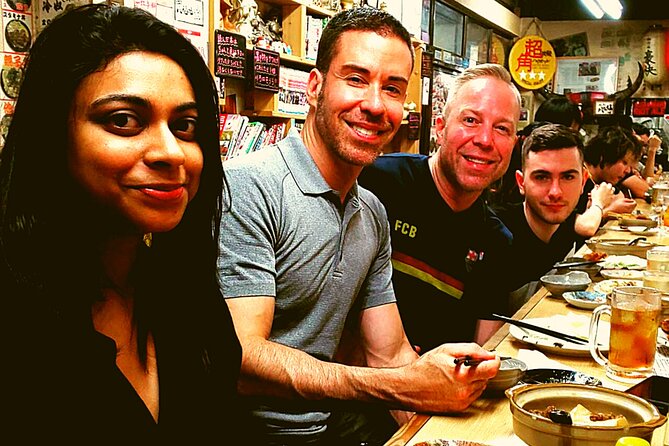
The dinner upgrade turns the walking tour into a longer food-and-culture evening. At a traditional izakaya, you can try Osaka comfort food such as tonpeiyaki, karaage, nikudofu, yakitori, and dessert.
The restaurant is described as the kind of place you would be unlikely to find on another tour. That matters because the value is not just the number of dishes. You are eating in a local setting chosen for the experience, after the guide has explained the neighborhood and its people.
The dinner is described as vegetarian friendly, though you should confirm your needs when booking or with the provider. Alcohol is not included, so budget separately if you want beer or another drink.
I would choose the dinner option if you enjoy social evenings and want the tour to end with a proper meal. If you already have a restaurant reservation, the walking portion alone still offers the main cultural content. The choice depends on how much food and group time you want, since the dinner is an addition rather than a required part of the basic tour.
What the $53.06 price gives you
At $53.06 per person, the basic tour is priced above a short introductory city walk but below many full food tours. The value comes from the amount of guide time, the small group limit, the street-food tasting, and the access to local context that is difficult to gain by wandering alone.
You are paying for interpretation more than for admission tickets. There are no famous monuments or museum entries built into the route. If you measure value by the number of major sights, this may feel modest. If you want a guide to explain social history and lead you through places you would probably skip, the price is more convincing.
The dinner option changes the calculation because the meal is separate from the standard booking. Since the added price is not provided here, compare it with what you would spend on a local dinner, remembering that the value includes the guide’s choice of restaurant and the shared evening.
A 97 percent recommendation rate and a 4.9 rating from 1,290 reviews suggest a strong track record, but I would still match the tour to your interests. High ratings do not make the subject matter lighter or the walk shorter.
Which guide style suits you
The guide is the heart of this experience. Named guides praised for humor, warmth, and clarity include Mari, Marie, Knox, Rudy, Alex, Bennett, Mark, Josh, Thomi, Tommy, Kane, Nox, Rat, and Dillan.
You should not expect to choose a specific guide unless the provider confirms one for your date. What you can expect is a personal, conversational approach rather than a recorded audio route. Several guide descriptions point to patient answers, strong pacing, and a sense of humor that helps with serious topics.
Some guides add more personality than others. One was described as an Irish-rock singer, while others were noted for a direct, no-nonsense style. That variety can make the evening memorable, but people seeking a quiet, formal lecture may prefer a different format.
The maximum of 15 people keeps the outing personal without guaranteeing an intimate private tour. It is large enough to meet people from different countries, yet small enough for questions and conversation.
Who should book this experience
I would recommend this tour to you if you have already seen Osaka’s main sights and want to understand the city’s less polished side. It is also a strong choice for solo visitors who want an organized evening and a chance to meet other people.
It suits curious visitors interested in religion, social class, sex work, organized crime, homelessness, mental health, housing, and local food. You do not need prior knowledge, since the guides explain the background as you walk.
I would be more cautious about booking it for young children or anyone who wants only cheerful sightseeing. The content can be frank, and some subjects are emotionally heavy. The three-hour walking time also makes it a poor match if you have difficulty standing or walking for long periods.
After the tour, the guide can help you find a bar, shopping area, or entertainment district. That follow-up help is useful, especially if you want to continue the evening without planning another route.
Practical booking advice
Book at least 24 hours ahead if you want the option of a full refund. Cancellation later than that is not refundable, and changes made within 24 hours are not accepted. The local cut-off time applies.
The tour requires good weather. If poor weather causes cancellation, you are offered another date or a full refund.
Bring comfortable walking shoes and clothing suitable for an evening outdoors. Expect pauses in parks, parking areas, alleys, and other ordinary public spaces, rather than comfortable indoor seating at every stop.
The meeting point is near public transportation, and the end is back at the starting point. A mobile ticket is provided, so keep the booking available on your phone.
Should you book the Osaka backstreet tour?
Book it if you want an honest, sometimes uncomfortable look at Osaka beyond Dotonbori and the usual food stops. The strongest reasons are the guides, the small group, the family-run food tasting, and the way the route connects ordinary streets with larger questions about Japanese society.
Skip it if your ideal evening means bright signs, famous landmarks, and light conversation. This is a walking tour about overlooked communities and difficult subjects, with food used as part of the local setting rather than as the sole attraction.
For most curious adults, I think the basic walk offers very good value at $53.06. Add the dinner if you want a full social evening and a meal of Osaka soul food in a local izakaya. Give yourself time, wear sensible shoes, and come ready to listen. That is how this unusual side of Osaka makes the strongest impression.
FAQ
How long does the Deep Backstreet Osaka Tour last?
The tour lasts approximately three hours, though the walking portion can run slightly longer. Breaks are included along the way.
What time and where does the tour start?
It starts at 5:30 pm at FamilyMart MYS Daikokucho Station, 2-chome-5-16 Shikitsuhigashi, Naniwa Ward, Osaka.
Where does the tour finish?
The activity finishes back at the original meeting point.
Is dinner included?
Dinner is available as an option. The basic tour includes food-stall tasting, while the optional dinner features dishes such as tonpeiyaki, karaage, nikudofu, yakitori, and dessert.
Are drinks included with dinner?
Alcoholic beverages are not included. Drinks at the restaurant are described as reasonably priced.
How many people can join the tour?
The tour has a maximum of 15 participants.
Is the tour suitable for most people?
Most people can participate, but you should be comfortable walking and standing for about three hours. The tour also discusses serious subjects including sex work, homelessness, gangs, mental health, and social discrimination.
Can I cancel for a full refund?
Yes. You can cancel up to 24 hours before the start time for a full refund. Cancellations or changes made less than 24 hours before the start time are not refunded or accepted. If bad weather cancels the tour, you are offered another date or a full refund.
Just added around Osaka
- (Ticket Included) Explore Osaka Castle & Museum of History★ 4.8 · 21 reviews
- Hidden Osaka – Yukaku Red Light Tour & Culinary Adventure★ 4.8 · 96 reviews
- Osaka: Walking Tour and Top Highlights★ 4.8 · 104 reviews
- Osaka: Private Ceramic Painting Workshop★ 5.0 · 13 reviews
- Pickleball in Osaka, Kobe & Kyoto with Locals!★ 4.7 · 80 reviews
- Eat Like a Local in Osaka – Private Custom Street Food Tour★ 4.3 · 33 reviews
- Osaka:SUMO BEATS SHOWCASE: Taiko Drum and Wagyu burger!★ 4.2 · 37 reviews
- Kimono photoshoot-Includes 100 photo data★ 5.0 · 21 reviews
Dinner Experiences, compared.
Tokyo Bar Hopping Tour in Shinjuku (All-You-Can-Drink + Dinner)
Read our review →
Deep Backstreets Walking Tour with Dinner Option
Read our review →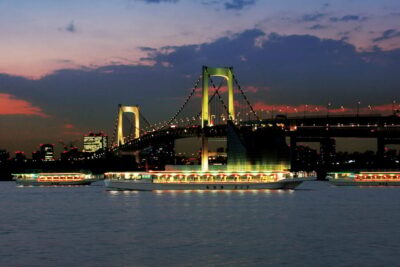
Sumida River: Japanese Traditional Yakatabune Dinner Cruise
Read our review →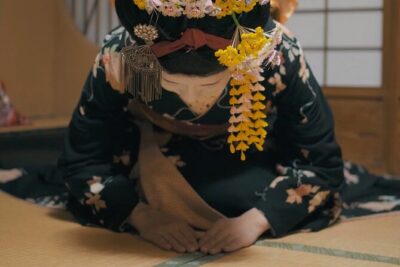
Kyoto Gion Cultural Walk & Geisha Show with Dining Options
Read our review →Kyoto Gion Cultural Walk & Geisha Show with Dining Options
Read our review →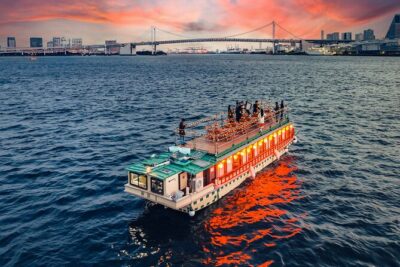
Tokyo Bay Yakatabune Dinner/Day Cruise with Japan Show and Drinks
Read our review →
Shinjuku Bar Hopping with All-You-Can-Drink & Dinner
Read our review →Browse the lists this tour appears in