
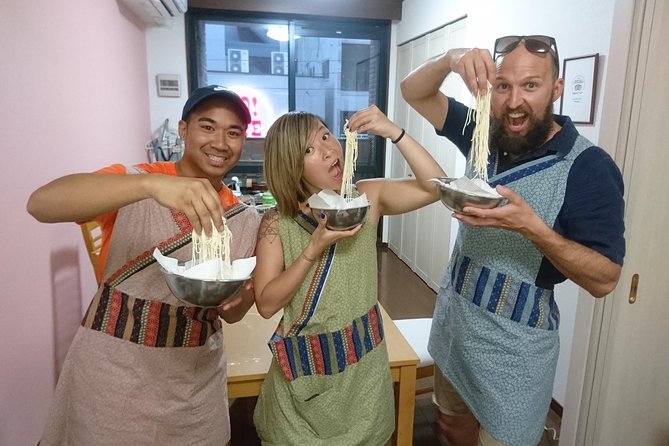
REVIEW · JAPANESE COOKING CLASSES
Three Types of Ramen Cooking Class in Osaka
Making three distinct bowls of ramen in two and a half hours is the clever part of this Osaka class. You start with noodles from scratch, then prepare salt, soy sauce, and miso broths with different toppings. It is a practical way to see how small changes in seasoning create very different Japanese dishes.
I like the hands-on format and the printed recipe you take home. I also like that the class includes the meal, dessert, seasonal fruit, and green tea, so you are not paying extra just to taste what you made. The main consideration is the modest noodle portion: the total amount is listed as 100 grams, so hungry adults may find the class more educational than enormous.
In This Review
- Key points to know before booking
- Why three ramen styles make this Osaka class worthwhile
- Starting with handmade noodles
- Salt ramen with pork, sprouts, and seaweed
- Soy sauce ramen with vegetables and corn
- Miso ramen with spicy chicken and egg
- The teaching style and group size
- What the $79.28 price covers
- Vegetarian requests and dietary planning
- Meeting at Kitahorie in Osaka
- Who will enjoy this class most
- Booking details worth checking
- Should you book the Sakura Cook ramen class?
- FAQ
- How long does the ramen cooking class last?
- How much does the experience cost?
- Which types of ramen do I make?
- Are the noodles made from scratch?
- What food and drinks are included?
- Where does the class meet?
- Can I cancel for a full refund?
Key points to know before booking
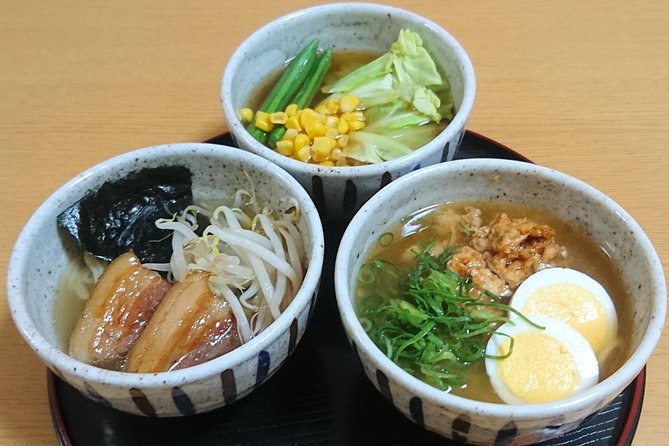
- Three ramen styles in one class: Prepare salt ramen, soy sauce ramen, and miso ramen rather than focusing on one recipe.
- Fresh noodles from scratch: You make the noodles yourself, then work on soups and toppings.
- Personal instruction: The class is designed for a small group, with a stated limit of eight people, though the additional information allows up to 12.
- A full sit-down finish: Your food is served with dessert, seasonal fruit, and green tea.
- Useful for home cooks: Kitchen tools and ingredients are supplied, and a printed recipe goes home with you.
- Convenient Osaka setting: Meet at Banix Kitahorie in Nishi Ward, close to public transportation.
Why three ramen styles make this Osaka class worthwhile
Many cooking classes ask you to make one dish carefully. This one takes a broader approach. You make one batch of noodles, then learn how salt, soy sauce, and miso change the character of the finished ramen.
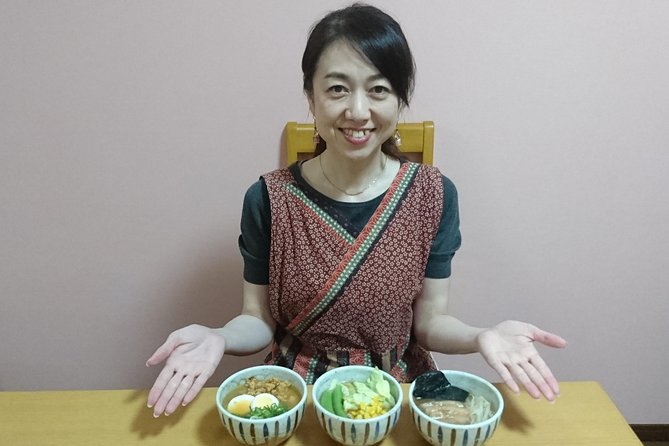
The three styles also come with different toppings. Salt ramen is served with juicy sweet pork, bean sprouts, and seaweed. Soy sauce ramen comes with steamed cabbage, green vegetables, and sweet corn. Miso ramen uses spicy chicken, boiled egg, and green onion.
That lineup gives you a useful lesson in balance. The toppings are not just decoration. Pork and bean sprouts bring a different feel from cabbage and corn, while spicy chicken and green onion give the miso version a stronger finish. You get to compare the bowls while the cooking steps are still fresh in your mind.
I especially like this format if you are curious about ramen but do not know which style you prefer. Instead of ordering three full bowls at a restaurant, you sample three approaches in one sitting. The total noodle amount is 100 grams, so the food is not meant to be a giant feast, but the class gives you plenty to taste and discuss.
More Japanese Cooking Classes in Osaka
- Sushi Making Osaka Roll and Authentic Japanese Sushi Class
★ 5.0 · 1,220 reviews - Osaka Sushi Making Experience
★ 5.0 · 400 reviews - Osaka: Ramen and Gyoza Cooking Class in Dotonbori
★ 5.0 · 378 reviews
Starting with handmade noodles
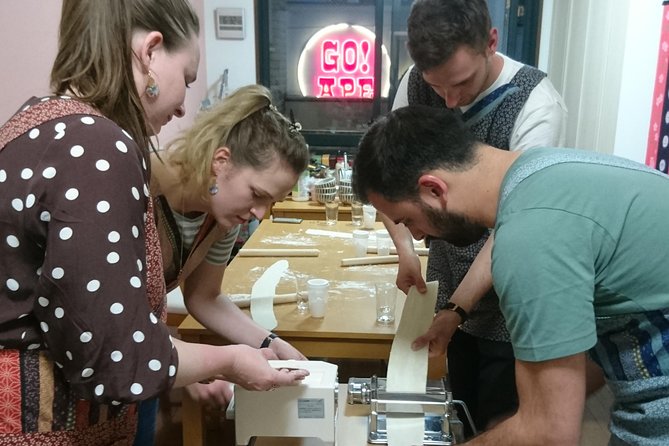
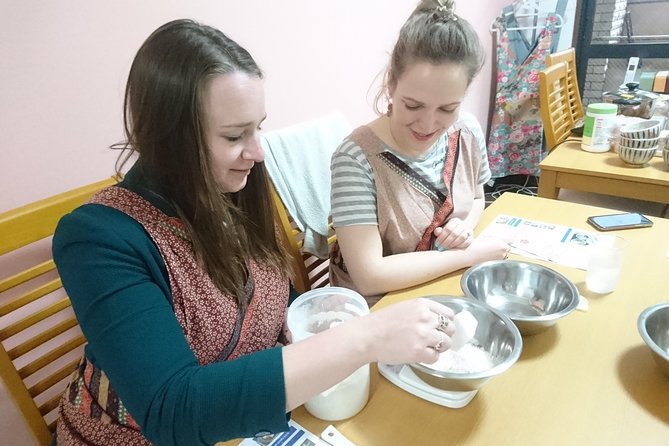
The class begins with an apron and noodle making. This is the part that turns the session from a simple meal into a real cooking lesson.
You work with the ingredients and equipment provided, so there is no need to arrive with special tools. The focus is on making noodles rather than watching a chef do everything. That matters because ramen noodles can seem like the difficult part when you encounter them in a restaurant. Here, the process is broken into clear steps.
The class suits people with little kitchen experience. One family reported that a 10-year-old could follow the instructions and stay involved through the course. Another participant who described themselves as unable to cook still managed to produce good results. You should still expect to stand, handle food, and follow directions, but advanced cooking skills are not required.
The noodle lesson also gives you something useful to repeat at home. You receive a printed recipe, and the instructions are designed to be practical rather than purely decorative. Several people have gone home planning to buy ingredients and try the recipes again.
Salt ramen with pork, sprouts, and seaweed
The first bowl is salt ramen. Its toppings are juicy sweet pork, bean sprouts, and seaweed.
This is a good opening style because it lets you focus on the basic relationship between broth and seasoning. Salt ramen can look simple, but the toppings provide contrast: meat for substance, sprouts for freshness, and seaweed for a distinctly Japanese note.
You prepare the topping ingredients as part of the class rather than simply receiving a finished bowl. That gives you a closer look at how the final result is assembled. It is also a chance to pick up small kitchen tips from the instructor, which is one of the strongest reasons to choose this class over a standard ramen meal.
The teaching is in English, and the instructors are described as clear, patient, and friendly. Names that come up in the class feedback include Fumi, Keiyo, Keigo, and Tomiko. The specific instructor may vary, but you can expect an English-friendly lesson with step-by-step help.
Soy sauce ramen with vegetables and corn
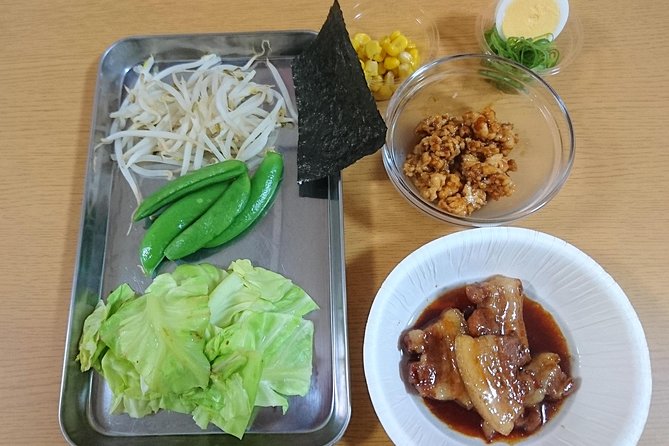
Next comes soy sauce ramen, topped with steamed cabbage, green vegetables, and sweet corn.
This bowl gives you a different flavor direction without changing the basic noodle-making work. The vegetables also make the finished dish feel lighter and more colorful than the pork-topped salt ramen.
I find this middle course useful because it shows how ramen can shift from one style to another through seasoning and toppings. You are not memorizing three unrelated dishes. You are learning a basic method and seeing how the broth and garnish change the result.
The class is also suitable for families and mixed-skill groups. A parent and child can work together, and couples or friends can divide tasks at the counter. Because the group is intended to be small, you should have a better chance to ask questions than in a large demonstration class.
Same city, a completely different kind of day:
- Osaka Go Karting Tour with Funny Costume
★ 5.0 · 2,658 reviews - Osaka Castle: Museum and Tower Entry Ticket
★ 4.5 · 2,380 reviews - Osaka: Shinsekai Food Tour with 13-15 Dishes at 5 Eateries
★ 4.8 · 2,204 reviews - Osaka Food Tour: 13 Dishes at 5 Local Eateries
★ 5.0 · 2,149 reviews
Miso ramen with spicy chicken and egg
The final style is miso ramen with spicy chicken, boiled egg, and green onion.
This is the boldest combination of the three. Miso brings a fuller flavor, while the spicy chicken and green onion add more punch. Take care with the chili oil if it is offered during the finishing stage. One useful tip is to add a small amount first. It is easy to add more, but not so easy to remove it.
The egg is another nice teaching detail because it shows how a familiar ramen topping becomes part of the overall balance. The chicken, egg, and onion create a more substantial finish than the vegetable-focused soy sauce bowl.
By the end, you have cooked three versions with different broths and toppings. The class then moves from preparation to the best part: arranging the dishes, setting out chopsticks, and eating what you made. The session includes dessert, seasonal fruit, and green tea, giving the meal a pleasant close.
The teaching style and group size
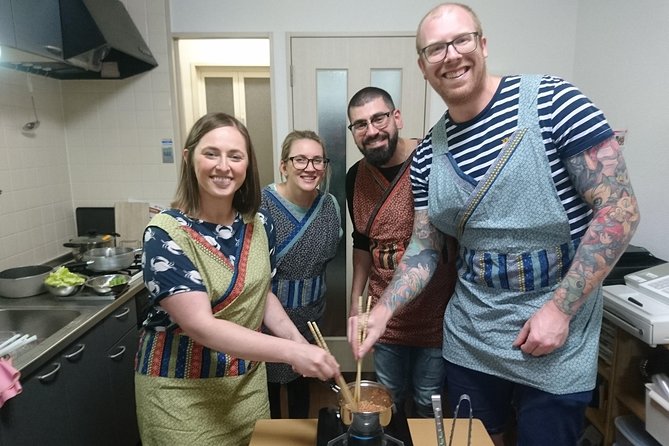
The advertised group limit is eight people, which is a strong fit for a hands-on cooking class. Small groups matter here because you are working with noodles, broth, toppings, and kitchen tools rather than simply sitting in a demonstration room.
The additional details allow a maximum of 12 participants, so you should check the booking information for your date if group size is important to you. Some sessions may be especially intimate. A booking with only two people can feel close to a private lesson, while a fuller group will have more shared energy but less individual attention.
The instructors receive repeated praise for clear English, calm explanations, and useful cooking advice. Fumi is named as an especially engaging teacher in several accounts, while Keigo and Keiyo are also mentioned as helpful hosts. That range suggests Sakura Cook has a capable teaching team, though you should not assume a particular instructor unless your confirmation specifies one.
Photos may be taken during the session, according to the experience details shared by participants. If you like bringing home more than a recipe, this can help preserve the process as well as the meal.
What the $79.28 price covers
At $79.28 per person, this is not the cheapest way to eat ramen in Osaka. You can find a bowl of ramen for far less. The value comes from the combination of instruction, fresh noodle making, three broth styles, toppings, kitchen use, and the meal at the end.
The price includes all lunch or dinner ingredients, utensils, and kitchen equipment. Dessert, seasonal fruit, and green tea are also included. You do not need to budget for a separate restaurant meal immediately afterward, although the 100-gram total noodle amount may not satisfy a very large appetite.
The printed recipe improves the value for anyone who wants a lasting souvenir. A restaurant meal disappears after dinner. This class gives you a method you can try again, plus a better understanding of what separates salt, soy sauce, and miso ramen.
For a family, couple, or food-focused visitor, the price is easier to justify than for someone who only wants a quick taste. You are paying for time, guidance, and participation. If your main goal is to eat famous Osaka food as cheaply as possible, skip the class and visit a ramen shop. If you want a skill-based activity with dinner included, the cost is reasonable.
Vegetarian requests and dietary planning
Vegetarian cooking is possible, but you need to request it. The class has accommodated a fully vegetarian version, including broth without animal products, with care taken over every ingredient.
Do not wait until you arrive to mention dietary needs. Make the request during booking or as early as possible so the kitchen can prepare suitable ingredients. The standard menu includes pork and spicy chicken, so the vegetarian format is a variation rather than the default.
The supplied information does not give a full list of other allergy accommodations. If you have a serious allergy, ask before booking and wait for confirmation. The class provides the ingredients, but the available dietary changes should be confirmed for your date.
Meeting at Kitahorie in Osaka
The meeting point is Banix Kitahorie, written in the address details as Banix北堀江Japan, 550-0014 Osaka, Nishi Ward, Kitahorie, 3-chōme62 システマギャラリー.
The location is near public transportation, but hotel pickup and drop-off are not included. Plan to make your own way there and allow time to find the entrance. One practical tip from the class information is to look for the instructor outside wearing a red apron. That can make the meeting point easier to identify, especially if the address looks unfamiliar.
The class ends back at the same meeting point. This makes it simple to continue exploring Osaka afterward, but you should not treat the cooking session as a transfer or sightseeing tour. The activity is focused on food and takes about two hours and 30 minutes.
A mobile ticket is provided. Keep it ready on your phone, along with the meeting details and confirmation.
Who will enjoy this class most
I would recommend this class to ramen fans, curious home cooks, families, and anyone seeking a break from Osaka’s usual restaurant routine. It is especially useful if you want to learn a repeatable skill rather than collect another meal photo.
It also works well for mixed groups. Experienced cooks can focus on technique and seasoning, while beginners can follow the guided steps. Children aged 10 have been able to take part successfully, but adults should still judge whether a child is comfortable with a two-and-a-half-hour kitchen session.
Couples may like the intimate format, particularly if the class is not full. Friends can share the work and compare the three styles. Vegetarians should request changes in advance.
I would be less likely to book it if I had a tight sightseeing schedule, a very large appetite, or no interest in cooking. The class takes a solid block of time, and the noodle portion is not designed as an oversized meal. You are paying for the lesson as much as the food.
Booking details worth checking
The price is $79.28 per person, and the experience has recorded more than 10 bookings in the last month. Confirmation is sent within 48 hours of booking, subject to availability, so do not leave the reservation until the last moment if your Osaka schedule is fixed.
Free cancellation is available when you cancel at least 24 hours before the start time. Cancellations or changes made less than 24 hours ahead are not accepted for a refund. The cut-off follows local Osaka time.
The stated small-group limit is eight, while the additional information lists a maximum of 12. If you want the most personal format possible, check the group size before committing.
Should you book the Sakura Cook ramen class?
Book it if you want an active food experience, clear English instruction, and the chance to make noodles rather than simply eat them. The strongest reasons are the three contrasting ramen styles, the supportive teaching, the take-home recipe, and the fact that dessert and green tea are already included.
Think twice if you need a very large meal or prefer to spend your Osaka hours visiting sights. For everyone else, this is a sensible two-and-a-half-hour choice, particularly for families and first-time cooks. Ask for vegetarian preparation in advance, arrive with the mobile ticket ready, and use a light hand with the chili oil.
FAQ
How long does the ramen cooking class last?
The class lasts approximately two hours and 30 minutes.
How much does the experience cost?
The listed price is $79.28 per person.
Which types of ramen do I make?
You make salt ramen, soy sauce ramen, and miso ramen.
Are the noodles made from scratch?
Yes. The class begins with handmade noodle preparation.
What food and drinks are included?
The ingredients for the meal, dessert, seasonal fruits, and green tea are included. Personal expenses and additional drinks are not included.
Where does the class meet?
You meet at Banix Kitahorie, Banix北堀江Japan, 550-0014 Osaka, Nishi Ward, Kitahorie, 3-chōme62 システマギャラリー. The class ends at the same location.
Can I cancel for a full refund?
Yes, if you cancel at least 24 hours before the experience start time. Cancellations or changes made less than 24 hours in advance are not accepted for a refund.
More Workshops in Osaka
- Matcha Making Class in Osaka with Authentic Japanese Sweets Set
★ 5.0 · 509 reviews - Osaka Sushi Making Class – Hands-On Nigiri & Rolls (Same-Day OK)
★ 5.0 · 352 reviews - Osaka: Roll and Authentic Sushi Making Class in Dotonbori
★ 4.9 · 239 reviews - Osaka: Sushi Class in Dotonbori
★ 4.9 · 160 reviews
More Cooking Classes in Osaka
- Osaka Cooking Class: Okonomiyaki &Japanese cuisines experience
★ 5.0 · 261 reviews - Ramen and Gyoza Cooking Class in Osaka
★ 5.0 · 202 reviews - Osaka Sake Tasting with Takoyaki Cooking
★ 5.0 · 156 reviews - Osaka Sake Tasting & Takoyaki Cooking Experience
★ 5.0 · 149 reviews
Just added around Osaka
- Samurai dress-up and shows, plus Tea Ceremony & Calligraphy★ 5.0 · 27 reviews
- Kyoto & Nara Private customized tour with English speaking Guide★ 4.5 · 99 reviews
- Well-balanced BENTO (lunch box) Cooking Class★ 5.0 · 35 reviews
- Urban Canvas: Osaka Street Art Bike Tour★ 5.0 · 47 reviews
- OSAKA:Feel the Power! Learn Taiko Drum from Professionals★ 5.0 · 28 reviews
- Volleyball in Osaka & Kyoto with Locals!★ 5.0 · 21 reviews
- 1.5〜2 Hours Traditional Kintsugi Work Shop in Namba Osaka★ 5.0 · 75 reviews
- Umami Town Street Food Tour★ 5.0 · 120 reviews
Japanese Cooking Classes, compared.
Sushi Making Tokyo Roll and Authentic Japanese Sushi Class
Read our review →
Roll and Authentic Sushi Making Class in Asakusa
Read our review →
Ramen Cooking Class at Ramen Factory in Kyoto
Read our review →
Sushi Making Class in a Happi Coat near a Famous Spot
Read our review →
Sushi Making Osaka Roll and Authentic Japanese Sushi Class
Read our review →
Tokyo Sushi Making Class in Tsukiji with Professional Chef
Read our review →
Ramen & Gyoza Cooking Class in Tokyo with Local Supermarket Visit
Read our review →
Tsukiji Fish Market Guided Tour and Sushi Making with Pro Chef
Read our review →Browse the lists this tour appears in