
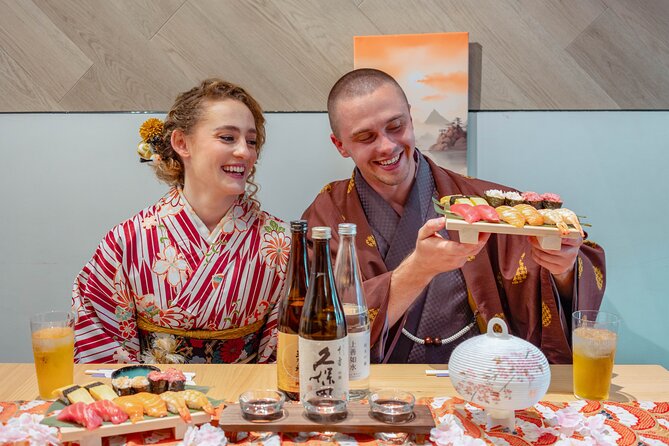
REVIEW · JAPANESE COOKING CLASSES
Osaka Sushi Making Experience
Sushi is more than raw fish on rice, and this 90-minute Dōtonbori class lets you see why. You’ll prepare 12 pieces in two styles, nigiri and gunkan sushi, while learning the small tricks that make sushi hold together instead of collapsing on the plate.
I like the central location and the patient, hands-on teaching. Instructors such as Mika, Kosei, Yui, and Mako have helped beginners measure rice, shape sushi, and understand the difference between styles. You also get to eat what you make, which is the best kind of cooking lesson.
The main consideration is that the class can feel polished and tourist-friendly rather than like a quiet lesson in a working sushi shop. One person found the pace a little rushed, and the venue can be hard to find at first. Vegan diners should also ask about the menu in advance, since the seafood and vegetable portions may not be equal.
In This Review
- Key points at a glance
- Making sushi in the heart of Dōtonbori
- What happens during the 90-minute class
- Nigiri, gunkan, and the useful lesson behind them
- A social class with a friendly, young feel
- Eating the sushi you shaped
- Dietary choices require advance planning
- Is $29.85 good value?
- Who should book this Osaka activity?
- Practical details before you book
- Should you book the Sushi Making Experience Namba?
- FAQ
- Where does the sushi-making class meet?
- How long does the experience last?
- How many pieces of sushi will I make?
- Is the class available in English?
- Can I request a vegetarian, vegan, or halal menu?
- Is alcohol included in the price?
Key points at a glance
- Make 12 pieces yourself: The class covers nigiri and gunkan sushi, with enough food to make the lesson feel like a meal.
- Learn useful home techniques: You’ll practice rice portions, shaping, and the basic ingredients needed to make sushi at home.
- Meet in central Dōtonbori: The location is near public transportation and easy to pair with an evening in Namba.
- Get help in three languages: Guidance is available in English, Chinese, and Korean.
- Ask for dietary menus early: Vegetarian, vegan, and halal sushi can be arranged by request.
- Expect a small-group format: The maximum group size is 16 people, though some sessions may be much smaller.
Making sushi in the heart of Dōtonbori
The meeting point is Sushi Making Experience Namba1A, at 2-chōme 6-11 Nishishinsaibashi in Osaka’s Chūō Ward. That puts you in the Namba and Dōtonbori area, a useful base for a meal, shopping, or a night walk before or after class.
The central setting is one of the best reasons to book this activity. You do not need to spend half a day crossing Osaka for it. Plan around the class, then continue exploring the surrounding streets once you finish.
You should allow a little extra time to locate the entrance. The address is specific, but one person had trouble finding the venue, so I would not arrive at the last minute. Keep the meeting address ready on your phone, and check the location before leaving your hotel.
The activity begins and ends at the same meeting point. That makes the class simple to fit into an Osaka schedule, especially if you choose an afternoon or evening session. The available times also let you decide if you want sushi as a late lunch or as part of your evening plans.
More Japanese Cooking Classes in Osaka
- Sushi Making Osaka Roll and Authentic Japanese Sushi Class
★ 5.0 · 1,220 reviews - Osaka: Ramen and Gyoza Cooking Class in Dotonbori
★ 5.0 · 378 reviews - Osaka Sushi Making Class – Hands-On Nigiri & Rolls (Same-Day OK)
★ 5.0 · 352 reviews
What happens during the 90-minute class
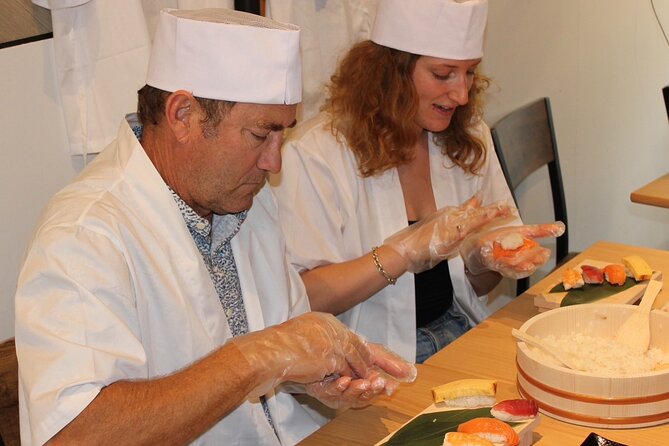
The class is built around making 12 pieces of sushi. The main styles are nigiri, sushi rice topped with an ingredient and shaped by hand, and gunkan sushi, a small rice base wrapped with seaweed to hold a soft topping.
You are not just shown a finished plate. The point is to practice the steps yourself, with the instructors correcting your technique as you go. This matters for first-time cooks, because sushi can look simple until you try to handle sticky rice without crushing it.
A useful tip taught in the class is the rice ratio. One participant recalled learning to use about 10 grams of rice for the right balance between rice and topping. That sort of precise measurement is more useful at home than a vague instruction to use a little rice.
You will also work on shaping and rolling. Your pieces may not come out perfectly even, and that is part of the fun. The class is designed for people who want to learn the basics, not for professional chefs preparing a restaurant service.
The total food amount is generous for a short activity. Twelve pieces give you enough practice to make mistakes, improve, and still sit down to eat a proper plate at the end. The food is described as snacks in the inclusions, but for many people this will function as a light meal rather than a small nibble.
Nigiri, gunkan, and the useful lesson behind them
Nigiri is the style most people picture when they think of sushi: a compact mound of rice with a topping placed over it. The challenge is to keep the rice together while making it light enough that it does not become a dense block.
Gunkan sushi uses seaweed around the rice, creating a little cup for toppings. It looks different and teaches another skill, since you need to build a firm base and leave enough room for the topping.
Learning both styles gives the class more range than a simple rolling demonstration. You begin to see that sushi has different shapes for practical reasons, not just for decoration. The lesson also introduces different sushi types and gives some background on where they came from.
The instructors are central to the experience. Names connected with the class include Mika, Kosei, Yui, Mako, Shiori, Toshiki, and Hana. The teaching style appears warm and energetic, with clear English guidance and plenty of help at the work surface.
English, Chinese, and Korean instruction is available. That is useful if you are nervous about a cooking class in Japan, since the key details involve touch, timing, and shape. You can ask questions as you work rather than trying to copy every motion from across the room.
A social class with a friendly, young feel
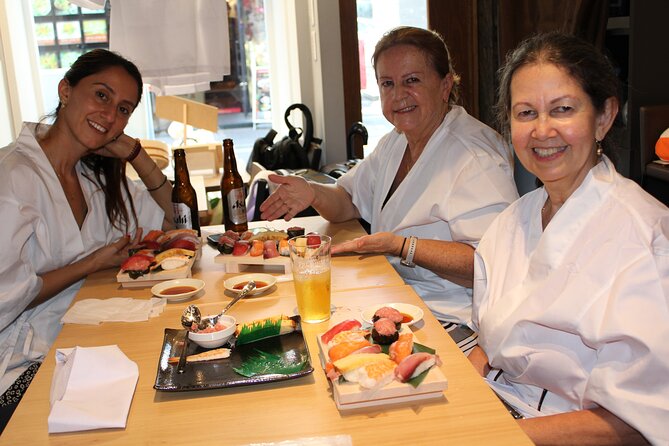
The atmosphere is relaxed and informal. The people running the class are described as young, friendly, and full of energy, and several sessions have included conversation about Osaka, Japanese writing, and local culture.
You may receive more attention than expected if your session has only a few people. One small group had a private-style lesson because nobody else had booked that time. That is not guaranteed, but the group limit of 16 keeps the class from becoming enormous.
At full capacity, the tone will naturally be more group-oriented. You may have to share the instructor’s attention, and the process may move on once most people have completed a step. If you prefer very slow, detailed coaching, a quieter session would likely suit you better.
There is also a slightly staged side to the experience. Sushi-making classes aimed at international visitors often include costumes, photos, certificates, and a lively presentation. Here, the sushi-chef costume is part of the activity, and some participants receive a certificate with their name written in Japanese characters.
That approach will appeal to families and first-time visitors who want a memorable activity. It may feel too commercial if you are looking for a behind-the-scenes look at professional sushi preparation. The class is best understood as an accessible cultural activity, not an apprenticeship in a traditional sushi counter.
Same city, a completely different kind of day:
- Osaka Go Karting Tour with Funny Costume
★ 5.0 · 2,658 reviews - Osaka Castle: Museum and Tower Entry Ticket
★ 4.5 · 2,380 reviews - Osaka: Shinsekai Food Tour with 13-15 Dishes at 5 Eateries
★ 4.8 · 2,204 reviews - Osaka Food Tour: 13 Dishes at 5 Local Eateries
★ 5.0 · 2,149 reviews
Eating the sushi you shaped
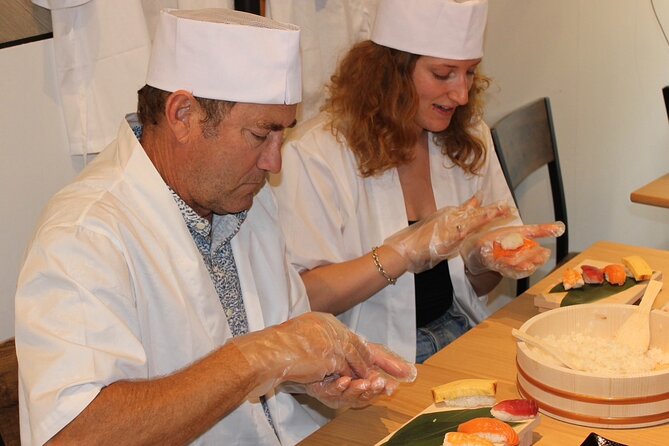
The best moment comes at the end, when you eat the finished pieces. Sushi tastes different when you have measured the rice, shaped each piece, and watched it slowly become recognizable.
The food is described as fresh and delicious, though the exact ingredients can vary. You are promised 12 pieces of sushi, with seafood options for the standard menu and alternative menus available by request.
Sake and beer are mentioned as part of the experience, but alcoholic beverages are also listed as not included. I would treat alcohol as an optional extra or an item that may be available for purchase, not as part of the $29.85 booking price.
The class may also include small extras such as snacks, a photo, a certificate, and a personalized candy with your name. These touches do not replace the cooking lesson, but they give you something to remember the activity by.
For children, the eat-what-you-make format is a real advantage. A family of five found that even the children enjoyed the class. The activity also works for couples, solo visitors, and friends, since the tasks are simple enough for beginners and social enough to encourage conversation.
Dietary choices require advance planning
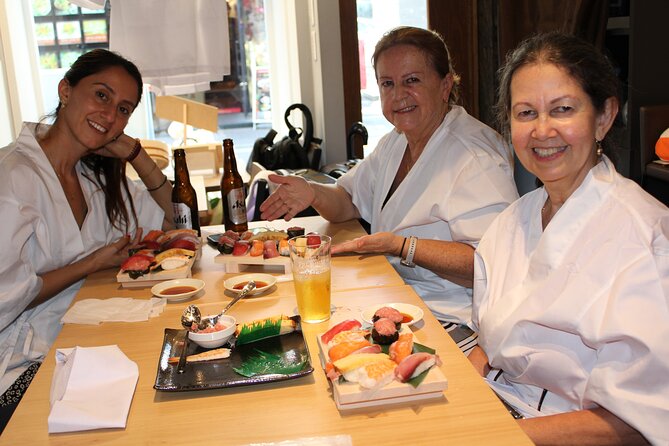
Vegetarian, vegan, and halal sushi are available by request. This makes the class more flexible than a standard sushi meal, but you should state your needs when booking rather than waiting until you arrive.
The vegan version deserves a little care. One participant felt the vegetable selection was less generous than the seafood and shrimp served to people on the standard menu. That does not mean the vegan option is unsuitable, but it does mean you should ask what the alternative menu includes.
The same advice applies to halal diners. The activity states that a halal menu is available, but the supplied information does not specify every ingredient or preparation detail. Ask for confirmation before the class if you need strict dietary control.
Vegetarian sushi is specifically provided, and the class can adapt its menu. Still, available by request is the important phrase here. Mention your requirements early so the staff has time to prepare the right ingredients.
Is $29.85 good value?
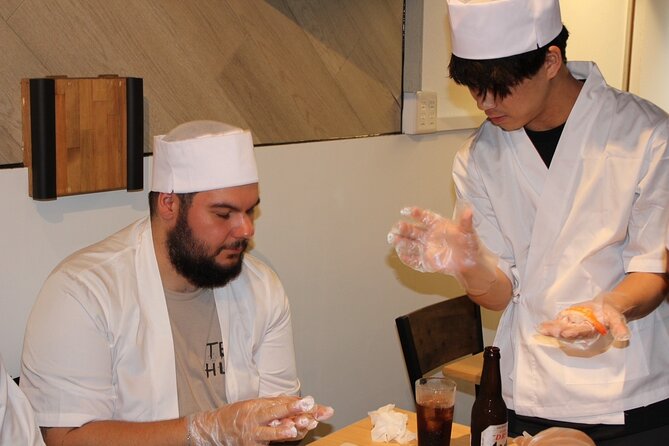
At $29.85 per person, this is a reasonable price for a 90-minute central Osaka activity. You receive instruction, ingredients, 12 pieces of sushi, and the use of the class facilities, with fees and taxes included.
The value is strongest if you want more than a meal. A plate of sushi would be quicker, but it would not teach you how to portion rice, shape nigiri, or make gunkan sushi. You are paying for an activity, a meal, and a practical skill you can try again at home.
The value is also good for families and couples who want a shared experience. Each person takes part, rather than watching one cook prepare everything. You can leave with photos, a certificate, and enough basic knowledge to try homemade sushi for friends or family.
The price is less compelling if your only goal is to eat high-end sushi. This is a beginner class, not an omakase meal, and the setting is built around instruction and fun. Food-focused visitors who already know how to make sushi may find the lesson too basic.
Alcohol is not included in the stated price, so budget separately if you want sake or beer. Dietary substitutions may also change how satisfying the meal feels, especially for vegans, so clarify the menu before deciding.
Who should book this Osaka activity?
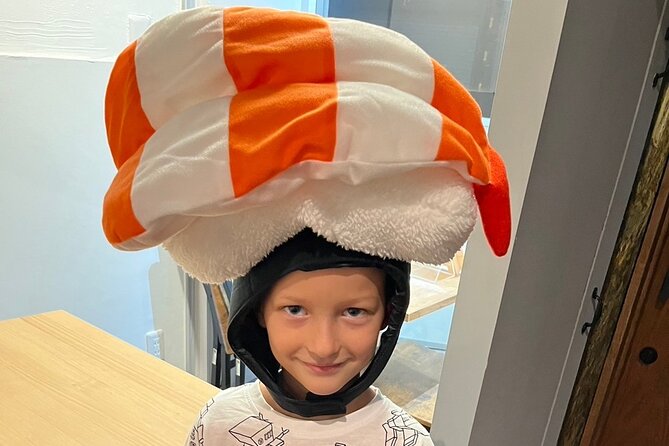
I would recommend it to first-time sushi makers, families with older children, couples, and solo visitors who enjoy practical activities. You do not need cooking experience, and the instruction is designed to be easy to follow.
It is also a smart choice for visitors who want a scheduled activity close to central Osaka sights. The afternoon and evening options make it easy to place the class between shopping, sightseeing, and dinner plans.
The class suits people who enjoy a social setting. You will likely talk with the instructors and other participants, and the tone is more cheerful than formal. The costumes and photo opportunities add to that light atmosphere.
I would be more cautious if you want a quiet, traditional restaurant experience or a serious culinary course. The class may feel commercial, and one participant felt the instructors were trying to move too quickly. A full group could also mean less individual time.
Practical details before you book
Your booking confirmation is sent at the time of booking, and the activity accepts mobile tickets. You can cancel for a full refund if you do so at least 24 hours before the local start time. Changes or cancellations made inside that window are not accepted for a refund.
The maximum group size is 16 people. Some sessions may be much smaller, but you should book with the expectation of a shared class rather than a private lesson.
The venue is near public transportation, but the location may take a little effort to find. I would arrive early, especially for an evening class when Dōtonbori is crowded and you may be tempted to stop for food along the way.
Service animals are allowed. The activity ends back at the meeting point, so you do not need to arrange a separate pickup or navigate to another part of Osaka afterward.
Should you book the Sushi Making Experience Namba?
Book it if you want a short, central, hands-on activity that combines food with a little Japanese culture. The strongest parts are the clear instruction, the chance to make 12 pieces yourself, and the friendly help available in English, Chinese, and Korean.
Think carefully if you dislike tourist-style presentation, need a large vegan meal, or want advanced sushi training. For most beginners, though, $29.85 buys a useful lesson, a light meal, and an entertaining memory in the middle of Osaka. Ask about dietary details, allow extra time to find the venue, and choose the class time that best matches your appetite.
FAQ
Where does the sushi-making class meet?
The class meets at Sushi Making Experience Namba1A, 2-chōme 6-11 Nishishinsaibashi, Chūō Ward, Osaka, Japan. It is in the Dōtonbori area and near public transportation.
How long does the experience last?
The activity lasts approximately 1 hour and 30 minutes. It begins and ends at the same meeting point.
How many pieces of sushi will I make?
You will make 12 pieces of sushi. The class covers two main types, nigiri and gunkan sushi.
Is the class available in English?
Yes. Guidance is available in English, Chinese, and Korean.
Can I request a vegetarian, vegan, or halal menu?
Yes. Vegetarian, vegan, and halal sushi are available by request. You should provide your dietary needs when booking.
Is alcohol included in the price?
Alcoholic beverages are not included in the listed price. Sake and beer are mentioned as part of the experience, so ask the provider about availability and any additional cost.
Just added around Osaka
- (Ticket Included) Explore Osaka Castle & Museum of History★ 4.8 · 21 reviews
- Hidden Osaka – Yukaku Red Light Tour & Culinary Adventure★ 4.8 · 96 reviews
- Osaka: Walking Tour and Top Highlights★ 4.8 · 104 reviews
- Osaka: Private Ceramic Painting Workshop★ 5.0 · 13 reviews
- Pickleball in Osaka, Kobe & Kyoto with Locals!★ 4.7 · 80 reviews
- Eat Like a Local in Osaka – Private Custom Street Food Tour★ 4.3 · 33 reviews
- Osaka:SUMO BEATS SHOWCASE: Taiko Drum and Wagyu burger!★ 4.2 · 37 reviews
- Kimono photoshoot-Includes 100 photo data★ 5.0 · 21 reviews
Japanese Cooking Classes, compared.
Sushi Making Tokyo Roll and Authentic Japanese Sushi Class
Read our review →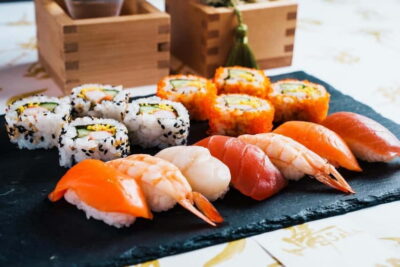
Roll and Authentic Sushi Making Class in Asakusa
Read our review →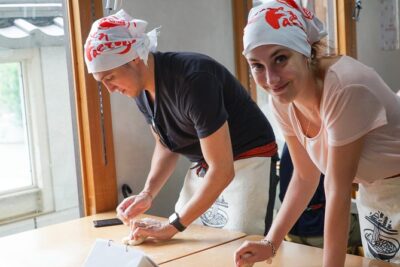
Ramen Cooking Class at Ramen Factory in Kyoto
Read our review →
Sushi Making Class in a Happi Coat near a Famous Spot
Read our review →
Sushi Making Osaka Roll and Authentic Japanese Sushi Class
Read our review →
Tokyo Sushi Making Class in Tsukiji with Professional Chef
Read our review →
Ramen & Gyoza Cooking Class in Tokyo with Local Supermarket Visit
Read our review →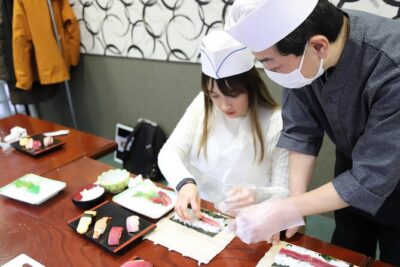
Tsukiji Fish Market Guided Tour and Sushi Making with Pro Chef
Read our review →Browse the lists this tour appears in