
REVIEW · JAPANESE COOKING CLASSES
Well-balanced BENTO (lunch box) Cooking Class
The heart of this Osaka experience is not just eating Japanese food, but learning how a balanced home lunch comes together. You make dashi, cook seven dishes with ingredients such as Wagyu beef, shrimp, salmon, egg, squash, and mushrooms, then arrange everything in a bento box.
I like the class for two clear reasons: you do the cooking yourself, and the small maximum of eight people gives the instructor room to help. Yumi and Fumi are singled out for careful, warm instruction, and one family found the recipes manageable for a 12-year-old.
The main consideration is time. Two and a half hours is enough for a full meal, but the class covers several techniques and dishes in one sitting. If you prefer a slow, single-recipe lesson, this may feel busy. You also need to share dietary requirements when booking.
In This Review
- Key points at a glance
- What this Osaka bento class really teaches
- Choosing your box before the cooking begins
- Starting with dashi, the base of Japanese home cooking
- Seven dishes and four basic cooking methods
- Making triangular rice balls with a plastic mold
- Packing the bento with color and order
- Saying itadakimasu and eating what you made
- The teaching style and group size
- Is $92.24 a fair price?
- Who should book this experience?
- Booking, timing, and cancellation advice
- Should you book the Sakura Cook bento class?
- FAQ
- Where does the bento cooking class take place?
- How long does the experience last?
- How much does the class cost?
- How many people can join the class?
- What food will I prepare?
- Will I learn how to make dashi?
- Which cooking techniques are included?
- Is food included at the end?
- Can children attend?
- Can I cancel for a refund?
Key points at a glance
- Seven home-style dishes: Cook with Wagyu beef, shrimp, salmon, egg, squash, mushrooms, and green vegetables.
- Dashi comes first: Learn how the basic Japanese broth gives depth to many dishes.
- Two shaped rice balls: Practice using plastic molds before making triangular onigiri.
- Bento packing is part of the lesson: Your instructor shows you how to arrange food attractively with fresh vegetables.
- Small Osaka class: The maximum is eight people, with Yumi or Fumi leading the session.
- A complete meal at the end: Eat your finished bento with chopsticks and complimentary miso soup.
What this Osaka bento class really teaches
Many cooking classes focus on a single famous dish. This one takes a broader view. You work through the building blocks of a Japanese home meal, from broth and marinades to frying, grilling, simmering, and presentation.
That range is the class’s biggest strength. You do not simply follow a recipe and leave with one new trick. You see how several modest dishes can share a lunch box without becoming heavy or repetitive. The focus on balance explains the title: protein, vegetables, rice, soup, color, and texture all have a place.
I also like that the class treats the bento box as part of the cooking. In Japan, presentation is not an afterthought. The way food is placed affects how the meal feels, and you get direct guidance on arranging your finished dishes with fresh vegetables.
The experience takes place at Sakura Cook in Osaka’s Nishi Ward, at Banix Kitahorie, 3-chōme 6-2, inside Systema Gallery. The activity returns to this same meeting point, and the location is near public transportation.
More Japanese Cooking Classes in Osaka
- Sushi Making Osaka Roll and Authentic Japanese Sushi Class
★ 5.0 · 1,220 reviews - Osaka Sushi Making Experience
★ 5.0 · 400 reviews - Osaka: Ramen and Gyoza Cooking Class in Dotonbori
★ 5.0 · 378 reviews
Choosing your box before the cooking begins
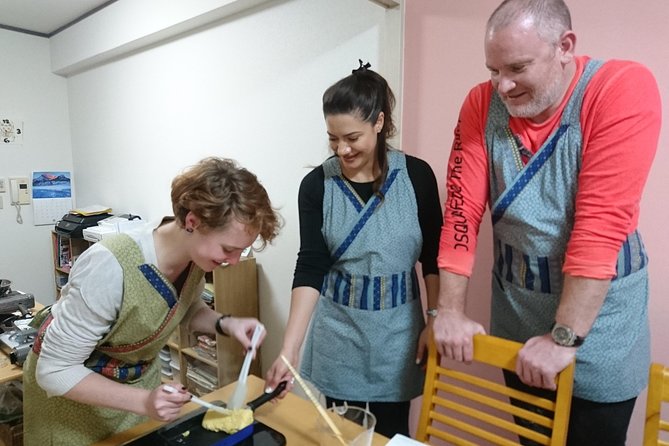
The opening is simple but personal. You choose your favorite lunch box and put on an apron before the cooking starts.
That choice gives the class an immediate sense of purpose. You are not preparing food only for a demonstration. You are building a meal that will eventually fit into the box you selected, which makes the final packing stage more satisfying.
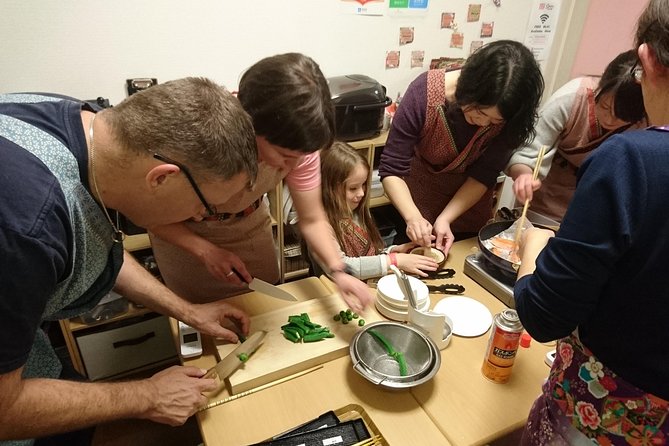
The class is designed for active participation. You should expect to handle ingredients and take part in the preparation of each dish, rather than sit back while an instructor does most of the work. The small group limit of eight matters here, since everyone needs a chance to cook, shape, and pack food.
Children must be accompanied by an adult. The class has also worked well for families, including a 12-year-old who could follow the instructions and participate in every dish. If you are booking with a child, remember that this is a real cooking lesson, not simply a food tasting.
Starting with dashi, the base of Japanese home cooking
Cooking begins with dashi, the traditional Japanese broth. This is an important place to start because dashi appears in many Japanese dishes and helps explain why simple ingredients can taste so full and rounded.
The instructor covers the history and process behind the stock, rather than treating it as a minor step. That cultural context adds value to the class. You learn not only what to do, but why the broth matters in Japanese cooking.
Dashi also gives the lesson a useful rhythm. You start with a base, then move into separate preparations that use different methods and ingredients. This is a better introduction to Japanese cooking than a narrow lesson built around one popular dish.
You should pay close attention here if you want to repeat the meal at home. The method for making broth is one of the more transferable parts of the class, and it can help you understand Japanese soups and sauces beyond this particular lunch.
Seven dishes and four basic cooking methods
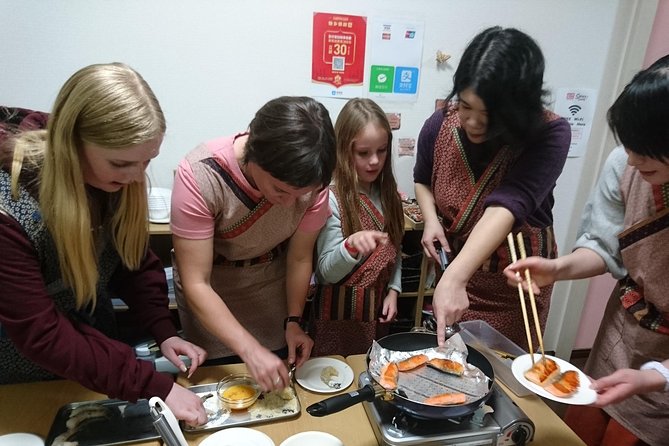
After the broth, you prepare seven Japanese dishes commonly made in home kitchens. The ingredients include Wagyu beef, shrimp, salmon, egg, squash, mushrooms, and green vegetables.
The exact balance of the menu gives you a useful sample of Japanese cooking. Beef and seafood provide savory proteins. Egg adds a familiar comfort-food element. Squash, mushrooms, and green vegetables bring color and variety to the box.
The class also teaches several practical techniques:
- Frying
- Grilling
- Simmering
- Marinating
This is where the lesson becomes more than a pleasant meal. You are learning how different cooking methods change the character of food. A marinade prepares one ingredient for flavor, while grilling or simmering produces a different result. The class moves quickly, but the methods are basic enough for a home cook to understand.
The Wagyu is a nice touch, especially for visitors who want to connect the meal with Japanese ingredients without booking an expensive steak dinner. Shrimp and salmon add more variety, while mushrooms and vegetables keep the lunch from feeling like a box of meat and rice.
I would not book this class expecting a restaurant-style tasting menu. The food is presented as a practical Japanese lunch, with an emphasis on healthy and balanced eating. That is precisely the point, but it may not satisfy someone looking for a highly elaborate culinary performance.
Same city, a completely different kind of day:
- Osaka Go Karting Tour with Funny Costume
★ 5.0 · 2,658 reviews - Osaka Castle: Museum and Tower Entry Ticket
★ 4.5 · 2,380 reviews - Osaka: Shinsekai Food Tour with 13-15 Dishes at 5 Eateries
★ 4.8 · 2,204 reviews - Osaka Food Tour: 13 Dishes at 5 Local Eateries
★ 5.0 · 2,149 reviews
Making triangular rice balls with a plastic mold
Rice balls are one of the most recognizable parts of a Japanese bento, and this class gives them their own hands-on lesson. You practice making the triangular shape with plastic molds before completing two rice balls.
That molded practice is helpful. Shaping rice by hand can be less intuitive than it looks, especially when you are trying to create a neat triangle without compacting the rice too much. The molds give you a clear starting point and make the task approachable for children and first-time cooks.
The rice balls also show how Japanese food can be practical and attractive at the same time. They are easy to place in a lunch box, and their shape gives the finished meal a strong visual anchor.
The class does not present onigiri as a difficult culinary achievement. Instead, you learn a simple technique you can try again later. If you enjoy cooking after returning home, this may be one of the easiest skills from the session to repeat.
Packing the bento with color and order
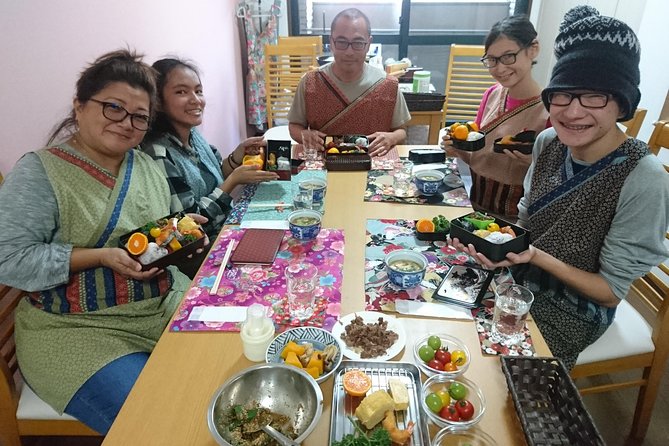
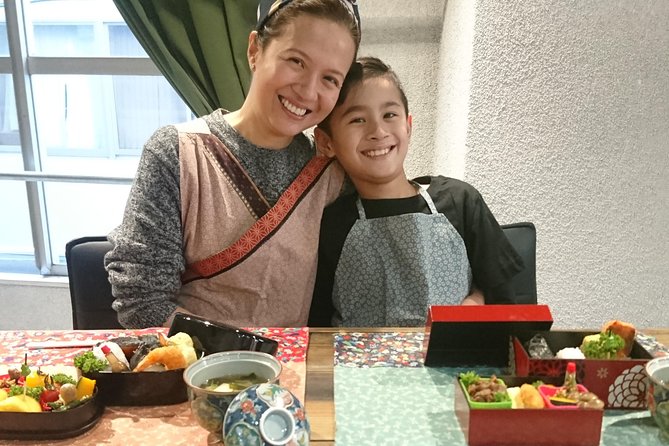
Once the individual dishes are finished, you pack everything into your chosen lunch box. This is not a rushed final step. Your instructor advises you on an attractive way to arrange the food and use fresh vegetables.
Packing is where the separate parts become one meal. You need to consider size, shape, color, and placement. A rice ball may serve as a visual centerpiece, while vegetables can fill spaces and add contrast around the proteins.
I like this stage because it connects cooking with Japanese ideas about presentation without turning the lesson into a formal art class. You get useful advice that applies to any packed lunch. The goal is not perfection. It is to make a meal that looks inviting before you take the first bite.
The bento format also helps explain the class’s focus on balance. You see the proportions directly in front of you. Rice, protein, vegetables, and side dishes must share limited space, so the box encourages restraint and variety.
Saying itadakimasu and eating what you made
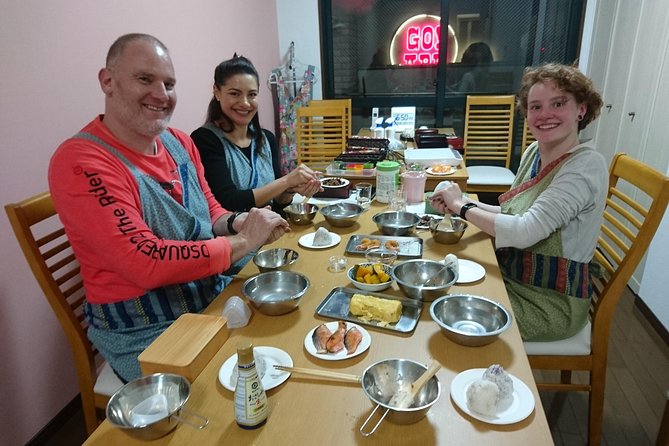
At the end, you place the dishes in the box with chopsticks and say itadakimasu before eating. The meal is served with complimentary miso soup.
This closing moment gives the class a clear finish. You have moved from raw ingredients to broth, cooked dishes, shaped rice, and a packed lunch. Eating the food immediately lets you judge the results while the techniques are still fresh.
The miso soup is a fitting companion. It completes the meal in the same way a simple Japanese home lunch might be served, rather than adding another complicated dish to the lesson.
You should expect the food to be the reward for your own work. The class is built around participation, so the final lunch has more meaning than a meal prepared entirely for you. If a recipe does not come out exactly as planned, that is part of learning, and the instructor is there to guide you through the process.
The teaching style and group size
The class is led by Yumi or Fumi. Yumi is described as careful and earnest, with a warm, direct style of English. Fumi is also noted for teaching gracefully and giving detailed explanations.
The maximum group size is eight people. That is small enough to keep the lesson personal, though your actual class could be smaller. One pair had the instructor largely to themselves and received more detailed teaching as a result.
A small group is especially useful during the rice-ball and packing stages. You may need help with shape, timing, or placement, and an instructor can only give that help if the class is not too large.
The lesson has also been praised for being punctual, clean, professional, and well paced. Those details matter in a 2-hour-30-minute class. You want enough time to cook and eat without feeling that the session is drifting.
Still, the number of dishes means the schedule will have some momentum. If you ask many questions or need extra time with a technique, the pace could feel brisk. Tell the instructor about dietary needs at booking so the class can address them before the session begins.
Is $92.24 a fair price?
At $92.24 per person, this is not the cheapest lunch you can buy in Osaka. You are paying for more than ingredients, though. The price includes instruction, hands-on preparation, the lunch box experience, and the chance to learn several techniques in a small class.
The value is strongest if you want an activity with a practical result. You leave having made a complete meal, and you gain methods you can use again: dashi, marinating, grilling, simmering, frying, rice-ball shaping, and bento arrangement.
The value is weaker if your main goal is simply to eat Wagyu or seafood. Osaka has many ways to sample Japanese food without spending this much or committing two and a half hours. This class makes sense when the process matters as much as the meal.
The average booking point is 53 days ahead, so you should plan early if your Osaka dates are fixed. Confirmation arrives within 48 hours, subject to availability. A mobile ticket is provided, which keeps the entry process straightforward.
Who should book this experience?
I would recommend the class to first-time visitors who want a cultural activity with a clear, useful focus. It offers a look at Japanese home cooking rather than only restaurant food, and it gives you a meal to eat at the end.
It is also a good fit for families with children who enjoy cooking. An adult must accompany each child, but the hands-on format allows younger participants to take part instead of watching from the side.
Couples, siblings, and small groups should also find the format appealing. The class has enough variety to keep two people engaged, and a smaller group may allow for more direct help from Yumi or Fumi.
You might skip it if you have severe dietary restrictions and cannot confirm suitable arrangements in advance. You might also prefer another activity if you dislike structured instruction or want a relaxed lunch with no cooking duties.
Booking, timing, and cancellation advice
The meeting point is Banix Kitahorie in Osaka’s Nishi Ward, 550-0014, at Systema Gallery. The activity ends at the same location, and public transportation is nearby.
Plan to arrive ready to begin at the scheduled time. The class is carefully timed, and late arrival could reduce your chance to take part in every preparation, although no late-arrival policy is provided.
You should advise the operator of specific dietary requirements when booking. Children need an accompanying adult, and the group can include no more than eight people.
Free cancellation is available up to 24 hours before the experience start time for a full refund. Changes or cancellations made less than 24 hours before the start are not accepted or refunded, and the cut-off follows Osaka local time.
Should you book the Sakura Cook bento class?
Book it if you want to understand how a Japanese lunch is built, not simply buy one. The combination of dashi, seven dishes, rice-ball shaping, and bento packing gives you a useful two-and-a-half-hour introduction to everyday Japanese cooking.
I especially like the class for its balance of food and instruction. Yumi and Fumi bring a personal teaching style, the group size stays small, and the meal includes enough variety to feel like a proper lunch. The main caution is the pace and price, so make sure you want a hands-on lesson before committing.
For families, curious home cooks, and visitors looking for an activity beyond sightseeing, this is a strong Osaka choice. Book early, disclose dietary needs, and arrive ready to cook.
FAQ
Where does the bento cooking class take place?
The class takes place at Banix Kitahorie, 3-chōme 6-2, Systema Gallery, in Osaka’s Nishi Ward, postal code 550-0014.
How long does the experience last?
The cooking class lasts approximately 2 hours and 30 minutes.
How much does the class cost?
The listed price is $92.24 per person.
How many people can join the class?
The maximum group size is eight people.
What food will I prepare?
You prepare seven Japanese home-style dishes using Wagyu beef, shrimp, salmon, egg, squash, mushrooms, and green vegetables. You also make two triangular rice balls.
Will I learn how to make dashi?
Yes. The class begins with traditional Japanese dashi broth and explains its history and preparation.
Which cooking techniques are included?
The class covers frying, grilling, simmering, and marinating.
Is food included at the end?
Yes. You eat the bento you made, along with complimentary miso soup, chopsticks, and the packed dishes.
Can children attend?
Yes. Children can attend, but they must be accompanied by an adult.
Can I cancel for a refund?
You can cancel at least 24 hours before the start time for a full refund. Cancellations or changes made less than 24 hours before the start are not accepted or refunded.
More Lunch Experiences in Osaka
- Osaka: Five Must-See Highlights Walking Tour & Ramen Lunch
★ 4.7 · 411 reviews - Osaka/Kyoto: Amanohashidate & Miyama Tour with Boat & Lunch
★ 4.6 · 207 reviews - Walking Tour of Osaka’s 5 Must-See Sights, with Ramen for Lunch
★ 5.0 · 158 reviews - 5-Hour Osaka Highlights Bike Tour with Lunch
★ 4.8 · 146 reviews
More Cooking Classes in Osaka
- Osaka Cooking Class: Okonomiyaki &Japanese cuisines experience
★ 5.0 · 261 reviews - Ramen and Gyoza Cooking Class in Osaka
★ 5.0 · 202 reviews - Osaka Sake Tasting with Takoyaki Cooking
★ 5.0 · 156 reviews - Osaka Sake Tasting & Takoyaki Cooking Experience
★ 5.0 · 149 reviews
Just added around Osaka
- Samurai dress-up and shows, plus Tea Ceremony & Calligraphy★ 5.0 · 27 reviews
- Kyoto & Nara Private customized tour with English speaking Guide★ 4.5 · 99 reviews
- Urban Canvas: Osaka Street Art Bike Tour★ 5.0 · 47 reviews
- OSAKA:Feel the Power! Learn Taiko Drum from Professionals★ 5.0 · 28 reviews
- Volleyball in Osaka & Kyoto with Locals!★ 5.0 · 21 reviews
- 1.5〜2 Hours Traditional Kintsugi Work Shop in Namba Osaka★ 5.0 · 75 reviews
- Umami Town Street Food Tour★ 5.0 · 120 reviews
- Three Types of Ramen Cooking Class in Osaka★ 5.0 · 119 reviews
Japanese Cooking Classes, compared.
Sushi Making Tokyo Roll and Authentic Japanese Sushi Class
Read our review →
Roll and Authentic Sushi Making Class in Asakusa
Read our review →
Ramen Cooking Class at Ramen Factory in Kyoto
Read our review →
Sushi Making Class in a Happi Coat near a Famous Spot
Read our review →
Sushi Making Osaka Roll and Authentic Japanese Sushi Class
Read our review →
Tokyo Sushi Making Class in Tsukiji with Professional Chef
Read our review →
Ramen & Gyoza Cooking Class in Tokyo with Local Supermarket Visit
Read our review →
Tsukiji Fish Market Guided Tour and Sushi Making with Pro Chef
Read our review →Browse the lists this tour appears in