
REVIEW · SAKE & BAR HOPPING TOURS
Osaka Sake Tasting & Takoyaki Cooking Experience
Osaka’s famous street food becomes much more fun when you make it yourself. At MOMO to SAKE, sake sommelier Momoko teaches you how to mix batter, handle the hot takoyaki pan, and turn soft rounds into crisp, golden balls. You then eat your work with sake chosen to match your tastes.
I especially like the small maximum of six people, which gives the cooking a friendly, hands-on feel. I also like the sake lesson: you learn how sake is made, how to read labels, and how to order with more confidence at an izakaya. The main caution is that this is a sake tasting, not a quick sample. Please come prepared to drink, and remember that only legal adults may take part in the alcohol portion.
In This Review
- Key points
- What the Osaka sake and takoyaki class is really about
- Meeting Momoko and starting with Japanese sake
- Choosing from seasonal sake
- Making Osaka takoyaki from scratch
- Eating the food with your chosen sake
- Why the two-hour length works
- Is $72.67 a fair price?
- Who should book this Osaka experience?
- Practical booking advice
- Final verdict: a strong pick for food and sake fans
- FAQ
- How long does the Osaka sake and takoyaki experience last?
- Where does the activity start?
- Where does the activity end?
- How many people can join the class?
- Are afternoon and evening sessions available?
- Is sake included in the price?
- What food and cooking supplies are included?
- Is hotel pickup included?
- Can I cancel for a full refund?
Key points
- Seven or more sake styles may be available: The seasonal menu offers a broad introduction to Japanese sake, with more than 10 varieties listed as available to choose from.
- Momoko leads both parts: Your host combines certified sake expertise with practical instruction on making takoyaki.
- Takoyaki is cooked from scratch: You make the batter, turn the balls, choose fillings, and eat the finished food.
- Wagyu and cheese add a twist: The recipe includes special fillings alongside the classic octopus.
- The class suits solo visitors: Afternoon and evening options, plus the small room, make it easy to join alone or with a partner.
- The setting is central but modest: The activity takes place on the second floor of 吉春会館 in Higashishinsaibashi, near public transportation and north of Dotonbori.
What the Osaka sake and takoyaki class is really about
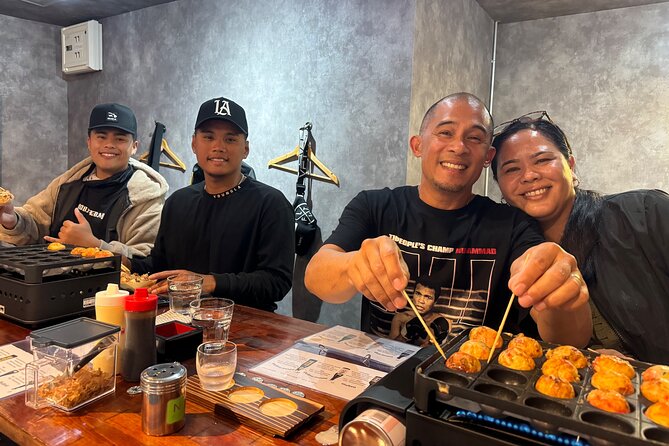
This two-hour activity brings together two things Osaka does especially well: casual food and easygoing drinking. You do not simply sit at a counter while someone explains sake and cooks for you. You take part in the meal, with Momoko showing you how to work the pan and helping you adjust your choices from the sake menu.
That combination matters. A sake lecture on its own can feel formal, while a cooking class without local context can become just another meal. Here, the two parts support each other. You learn enough about sake to understand what you are tasting, then settle in over freshly cooked takoyaki.
The class is held at MOMO to SAKE, at 1-chōme 6-22 Higashishinsaibashi, on the second floor of 吉春会館 in Osaka’s Chuo Ward. The room is small, and the maximum group size is six. That is a real advantage for anyone who wants help at the pan rather than a demonstration viewed from the back of a large room.
The small setting also means you should not expect a grand restaurant or a polished show kitchen. This is a compact, personal class. For me, that is part of its appeal, but it may not suit you if you prefer a large venue with lots of space.
More Sake & Bar Hopping Tours in Osaka
- Osaka Bar Hopping Night Walking Tour in Namba (3 bars, 6 tastes)
★ 5.0 · 958 reviews - Osaka: Izakaya Bars Guided Walking Tour
★ 4.9 · 385 reviews - Osaka Sake Tasting with Takoyaki Cooking
★ 5.0 · 156 reviews
Meeting Momoko and starting with Japanese sake
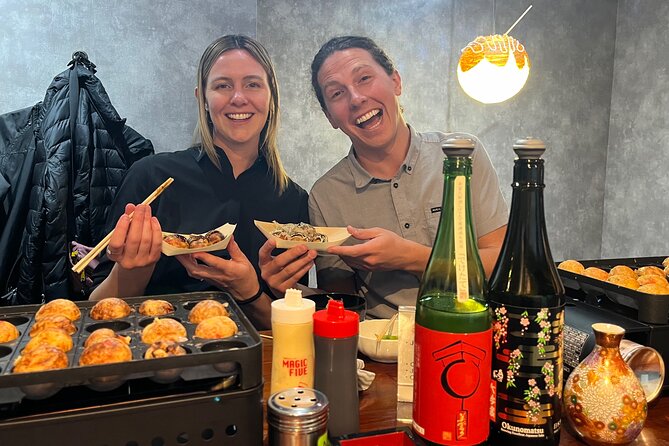
Momoko handles the experience in English and brings a clear passion for sake. Her introduction covers the basics of nihonshu, including its making process, different types, cultural background, and the information printed on a sake label.
That last point is particularly useful. Sake menus can look confusing when you do not know the difference between styles or grades. Learning how to read the label gives you a practical tool for the rest of your time in Japan. You may not remember every technical term, but you should leave with a better sense of what to ask for at a sushi restaurant, fine-dining counter, or neighborhood izakaya.
The class also explains how sake is made. The details help you understand why different bottles taste different, rather than treating sake as one single drink. Some pours may be dry, fruity, light, full, polished, or more suited to food. Momoko uses the tasting to connect those differences with your own preferences.
I like this approach because it is not only about naming bottles. You can tell Momoko what you normally enjoy, and she can help point you toward a seasonal selection. That makes the tasting feel personal without requiring prior sake knowledge.
The exact lineup can change. The experience offers more than 10 varieties to choose from, and several detailed accounts describe tasting around seven types. Think of that as a generous sampling rather than a fixed flight with one guaranteed list.
Choosing from seasonal sake
The sake tasting is one of the strongest reasons to book this experience. You do not need to be a sake fan before arriving. The class is designed to give you a starting point, with Momoko explaining the differences and answering questions as you taste.
You can also use the session to work out what you actually like. That is more valuable than memorizing a few Japanese words. If you discover that you prefer junmai daiginjo, for example, you will have a better idea what to look for later. If you prefer something less fragrant or less dry, you can say so when ordering.
The seasonal menu adds variety, but it also means the experience is not identical every day. A bottle available during your visit may not appear on a later trip. That is normal for a tasting built around current selections, and it gives the class a local, changing quality.
The alcohol content is worth taking seriously. With seven or more pours possible, you may feel the effects by the end, especially if you are not eating during the first part. The meal comes after the cooking, so pace yourself and use the afternoon or evening timing to plan the rest of your day.
The listing specifies alcoholic beverages for legal adults only. If someone in your party does not drink, the alcohol portion may not be a good fit, since sake is a central part of the experience.
Making Osaka takoyaki from scratch
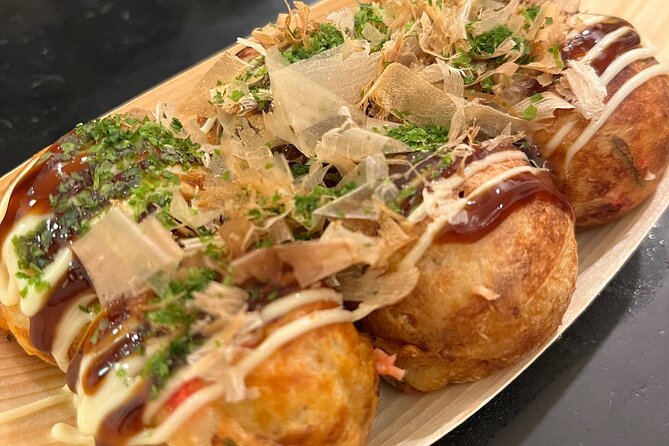
After the sake introduction, you move to the cooking portion. Takoyaki are round, grilled snacks made in a special molded pan. The classic version contains octopus, though the class also lets you use other fillings.
You work with the batter, ingredients, and tools supplied by the host. Momoko gives you her own recipe and shows you how to cook the mixture in the pan. The key skill is turning each soft round as it cooks so it develops a crisp outside while staying tender inside.
That sounds simple until you try it. The first few turns can be awkward, and the balls may not look perfect right away. This is exactly why the small group helps. Momoko can guide your hand, point out when to turn the batter, and help you shape the pieces as they cook.
The food is not limited to octopus. Special additions include wagyu beef and cheese, along with the traditional ingredients. This makes the class useful for mixed groups. Someone who avoids seafood can still take part with suitable fillings, as one detailed account makes clear.
You make and eat your own takoyaki, so the class is also a proper meal rather than a tiny cooking sample. Several descriptions of the session mention making roughly 10 pieces, though the exact amount can vary. Come hungry, since the food is meant to be enjoyed after cooking with the sake.
There is also a small lesson in texture. Freshly cooked takoyaki can be crisp outside and soft within, which gives you a different sense of the dish than simply buying a tray from a street stand. You will still find plenty of excellent takoyaki around Osaka, but making it yourself gives the snack more meaning.
Same city, a completely different kind of day:
- Osaka Go Karting Tour with Funny Costume
★ 5.0 · 2,658 reviews - Osaka Castle: Museum and Tower Entry Ticket
★ 4.5 · 2,380 reviews - Osaka: Shinsekai Food Tour with 13-15 Dishes at 5 Eateries
★ 4.8 · 2,204 reviews - Osaka Food Tour: 13 Dishes at 5 Local Eateries
★ 5.0 · 2,149 reviews
Eating the food with your chosen sake
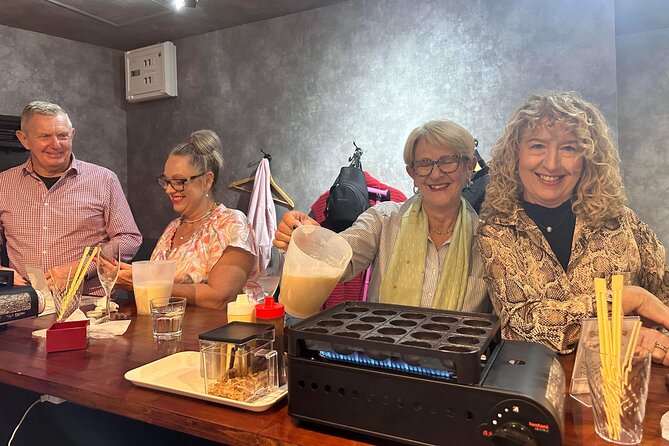
The order of the activity is important. You cook first, then drink sake with the finished takoyaki. That keeps the meal social and gives you a chance to compare the food with the styles you tasted earlier.
Takoyaki has strong flavors and a soft, hot center. The right sake can refresh your palate or add another layer to the meal. You do not need to become an expert in pairings, but Momoko can help you think about why one style works better for you than another.
This is also the part that feels most like an evening with a local host. The cooking creates an easy reason to talk, and the sake gives the conversation a clear focus. The class is not built around rushing through a checklist. It leaves room for questions about Japanese drinking customs, ingredients, and the foods you plan to try during your stay.
The compact space can be a plus or a drawback. Couples, solo visitors, and small groups of friends can find it warm and personal. If you dislike close quarters or want a quiet meal with little interaction, this may feel more social than you expect.
Why the two-hour length works
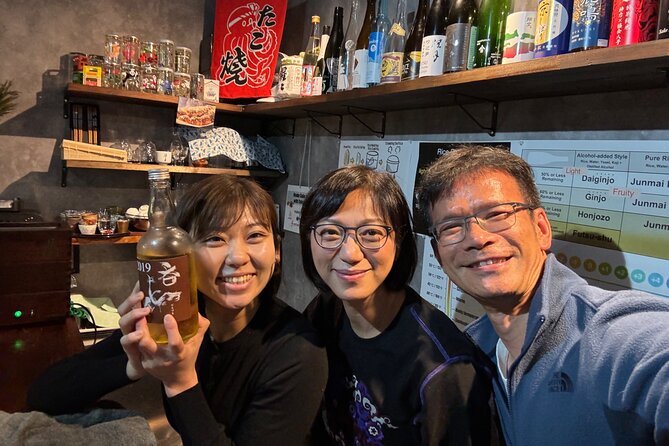
Two hours is enough time to cover the sake basics, taste several varieties, cook, and eat without turning the activity into a full-day commitment. I like the balance for an Osaka itinerary. You can fit the class between sightseeing plans, or use the evening session as a relaxed start to a night around Shinsaibashi and Dotonbori.
The afternoon option is useful if you want to keep the evening open. It can also help solo visitors who prefer a daytime activity. The evening class, by contrast, fits naturally into a food-focused night.
Because the class ends at the meeting point, you need to arrange your own way there and back. Hotel pickup and drop-off are not included. Public transportation is nearby, but the information provided does not include a station name or walking time, so check the address carefully before setting out.
The meeting point is not a large landmark. It is MOMO to SAKE on the second floor of 吉春会館. Give yourself enough time to find the building and go upstairs rather than arriving at the last second.
Is $72.67 a fair price?
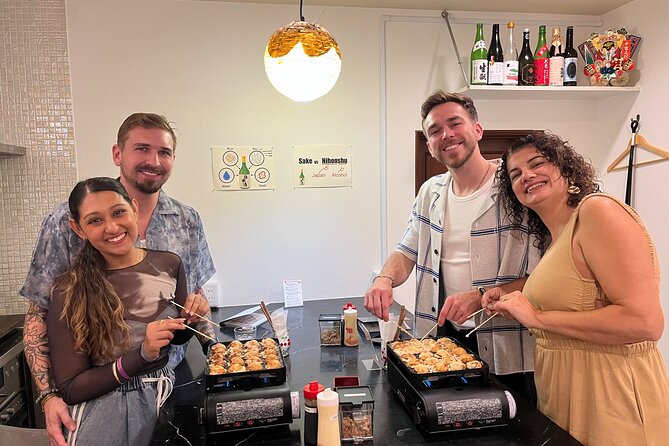
At $72.67 per person, this is more expensive than buying a plate of takoyaki and a single drink from a street stall. That comparison misses the point, though. You are paying for a small cooking class, ingredients, a full serving of food, personal instruction, and a sake tasting led by a sommelier.
The value is strongest if you want to understand sake rather than simply consume it. Trying several styles can be costly on your own, especially if you are ordering unfamiliar bottles in restaurants. The label and ordering advice may help you make better choices for the rest of your trip.
The price is also easier to justify for people who enjoy hands-on food activities. You are not only watching a chef work. You prepare the food, practice turning it, and eat the result. For a couple or small group, it can replace a meal and a separate sake tasting.
The value is weaker if you do not drink alcohol, do not enjoy group instruction, or have already booked several cooking classes. You may also find the cost high if your main goal is simply to eat inexpensive Osaka street food. In that case, local stalls offer a cheaper route.
The overall rating is 5 out of 5 from 149 ratings, with 100 percent recommending the experience. Those figures point to very strong satisfaction, and the praise focuses on the same practical strengths: Momoko’s teaching, the range of sake, the hands-on cooking, and the generous food.
Who should book this Osaka experience?
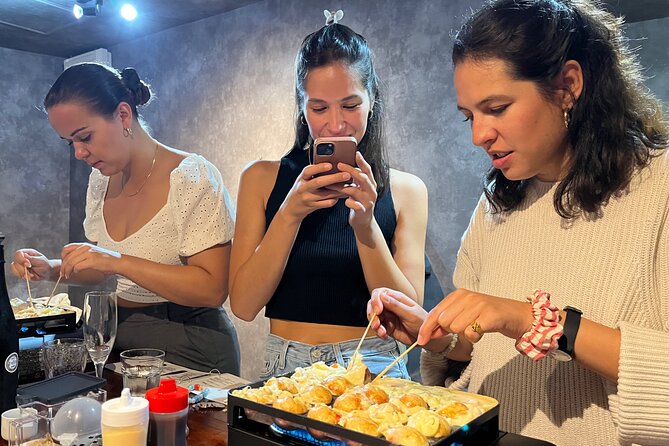
I would put this near the top of the list for:
- First-time visitors who want a simple introduction to sake
- Food lovers who prefer cooking to watching
- Solo visitors seeking a social activity
- Couples looking for an intimate evening in Osaka
- People who want help ordering sake later in Japan
- Groups with mixed seafood preferences, since fillings can include wagyu and cheese
It is less suitable for children and anyone under the legal drinking age because alcoholic beverages are part of the activity. It is also not ideal for anyone who wants a large, spacious venue or a strictly non-alcoholic cooking class.
Dietary needs deserve advance notice. Momoko has prepared gluten-free ingredients when informed ahead of time, which is encouraging, but you should contact the provider before booking if you have allergies or other restrictions. Do not assume every substitution is available without asking.
Service animals are allowed, and the venue is near public transportation. No hotel transfer is included.
Practical booking advice
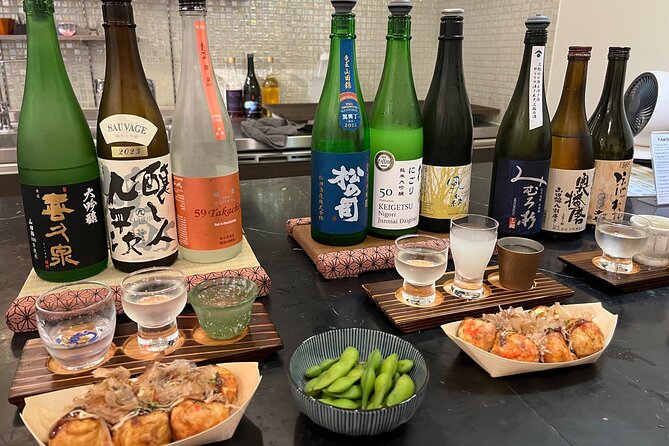
Book this for the sake lesson, not only for the takoyaki. Osaka has many places to eat takoyaki, but the combination of making it yourself and learning how to choose sake is harder to find.
Choose the afternoon if you want a flexible activity before dinner. Choose the evening if you like the idea of cooking, eating, and then continuing into Osaka’s nightlife. In either case, arrive ready for a full meal and several sake samples.
Free cancellation is available if you cancel at least 24 hours before the start time. Changes or cancellations inside that window are not accepted for a refund, and cut-off times follow Osaka local time.
Final verdict: a strong pick for food and sake fans
I would book this if you want a personal Osaka activity with real take-home value. Momoko’s sake instruction can help you read a menu and order with less guesswork, while the takoyaki lesson gives you a fun skill and a satisfying meal.
The main tradeoffs are the price, the small room, and the alcohol-heavy format. If those fit your plans, $72.67 buys more than food and drinks. It gives you a useful introduction to two parts of Osaka’s everyday culture, with enough hands-on work to make the experience stick.
FAQ
How long does the Osaka sake and takoyaki experience last?
The experience lasts approximately two hours.
Where does the activity start?
It starts at MOMO to SAKE, located at 1-chōme 6-22 Higashishinsaibashi, Chuo Ward, Osaka, in 吉春会館 on the second floor.
Where does the activity end?
The activity ends back at the meeting point.
How many people can join the class?
The maximum group size is six people.
Are afternoon and evening sessions available?
Yes. The experience offers both afternoon and evening class options.
Is sake included in the price?
Yes. Alcoholic beverages are included, with more than 10 varieties of Japanese sake available to choose from. Only legal adults may take part in the alcohol portion.
What food and cooking supplies are included?
Ingredients and tools for making takoyaki are included, along with the takoyaki you prepare and cook.
Is hotel pickup included?
No. Public transportation and hotel pickup or drop-off are not included.
Can I cancel for a full refund?
Yes, if you cancel at least 24 hours before the experience start time. Cancellations or changes made less than 24 hours before the start time are not accepted for a refund.
More Drinking Tours in Osaka
- Osaka: Namba Pub Bar Crawl with a Local Guide
★ 4.9 · 424 reviews - Osaka: Guided Pub Crawl
★ 4.4 · 331 reviews - Osaka Pub Crawl and Nightlife Tour
★ 5.0 · 293 reviews - Osaka: Bar-Hopping Night Tour in Namba
★ 4.7 · 117 reviews
More Cooking Classes in Osaka
- Osaka: Ramen and Gyoza Cooking Class in Dotonbori
★ 5.0 · 378 reviews - Osaka Cooking Class: Okonomiyaki &Japanese cuisines experience
★ 5.0 · 261 reviews - Osaka: Cooking Class Ramen & Gyoza Course in Nanba
★ 4.9 · 86 reviews - Osaka: Gluten-Free Ramen and Gyoza Cooking Class
★ 5.0 · 42 reviews
Just added around Osaka
- (Ticket Included) Explore Osaka Castle & Museum of History★ 4.8 · 21 reviews
- Hidden Osaka – Yukaku Red Light Tour & Culinary Adventure★ 4.8 · 96 reviews
- Osaka: Walking Tour and Top Highlights★ 4.8 · 104 reviews
- Osaka: Private Ceramic Painting Workshop★ 5.0 · 13 reviews
- Pickleball in Osaka, Kobe & Kyoto with Locals!★ 4.7 · 80 reviews
- Eat Like a Local in Osaka – Private Custom Street Food Tour★ 4.3 · 33 reviews
- Osaka:SUMO BEATS SHOWCASE: Taiko Drum and Wagyu burger!★ 4.2 · 37 reviews
- Kimono photoshoot-Includes 100 photo data★ 5.0 · 21 reviews
Sake & Bar Hopping Tours, compared.
Tokyo Bar Hopping Tour in Shinjuku (All-You-Can-Drink + Dinner)
Read our review →
Best of Shinjuku: Izakaya Food Tour (4 Stops, 14+ Tastings)
Read our review →
Kyoto Night Foodie Tour in Gion (9+ dishes + 6 Sake tastings)
Read our review →
Shibuya Meltdown Nightlife Tour: All-You-Can-Drink Bar Hopping
Read our review →
1-Day Snow Monkeys, Zenko-ji Temple & Sake in Nagano
Read our review →
Osaka Bar Hopping Night Walking Tour in Namba (3 bars, 6 tastes)
Read our review →
3-Hour Kyoto Insider Sake Brewery Tour with Tastings & Pairings
Read our review →
Browse the lists this tour appears in