
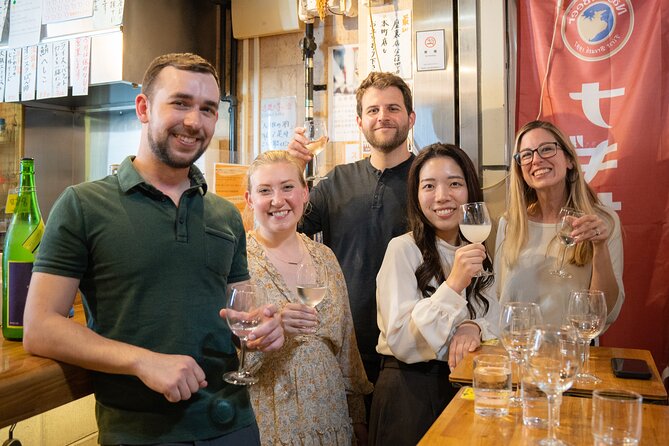
REVIEW · DRINKING TOURS
Osaka Local Bar Crawl in Dotombori & Uranamba Area
Dotonbori is easy to see in its neon, camera-ready form. This crawl takes you a few turns farther, from the Glico sign and Hozenji Temple into Uranamba, where small izakayas, alley bars, and local drinking spots feel less built for sightseeing. The best part is the local route: you get help finding places you might not enter on your own.
I like two things here. First, the food gives you a practical introduction to Osaka drinking culture, from yakitori and karaage with sake to gyoza and sashimi. Second, guides such as Yui, Hitomi, Taiga, Naoko, Soma, and Lala have been praised for friendly conversation, strong English, and useful tips for the rest of your stay. The catch is important: the $26.53 fee covers the guide, not dinner or alcohol, and added bar charges can make the night much more expensive than expected.
In This Review
- Key points to know before you book
- Starting under the Glico sign
- Hozenji Temple, a quiet pause near Dotonbori
- Uranamba izakaya food and the first drinks
- Namba for gyoza, sashimi, and a more social table
- Small bars and the Misono Building
- What the $26.53 price really buys you
- Guides make the difference
- Pace, group size, and who will enjoy it
- Cancellation and practical planning
- Should you book the Osaka Local Bar Crawl?
- FAQ
- How long does the Osaka Local Bar Crawl last?
- Where does the tour start?
- Are food and alcoholic drinks included?
- What food might I try?
- How large can the group be?
- Can I cancel for a refund?
Key points to know before you book
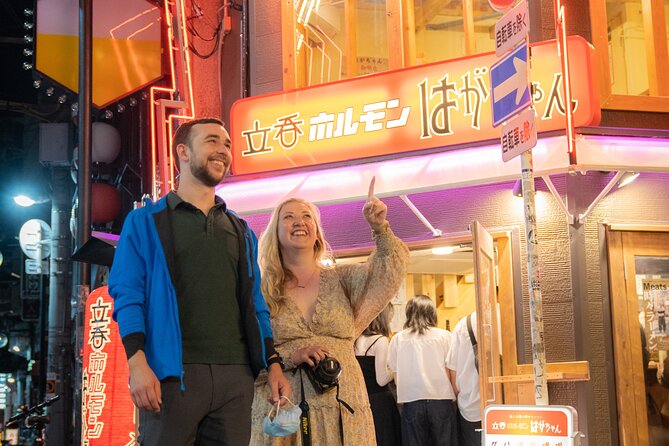
- Hozenji Temple breaks up the drinking with a short cultural stop just behind the Dotonbori crowds.
- Uranamba is the heart of the evening, with local izakayas serving yakitori, karaage, sake, gyoza, sashimi, and other small dishes.
- Takoyaki may be prepared at your table, giving you something to do as well as something to eat.
- The route can include small specialty bars and the Misono Building, a particularly unusual stop with many tiny bar rooms.
- The group can reach 15 people, so the social side is part of the appeal, though a larger group can make intimate bars feel less intimate.
- Your final bill needs attention because alcohol and food are extra, and some drinks may cost far more than you expect.
Starting under the Glico sign
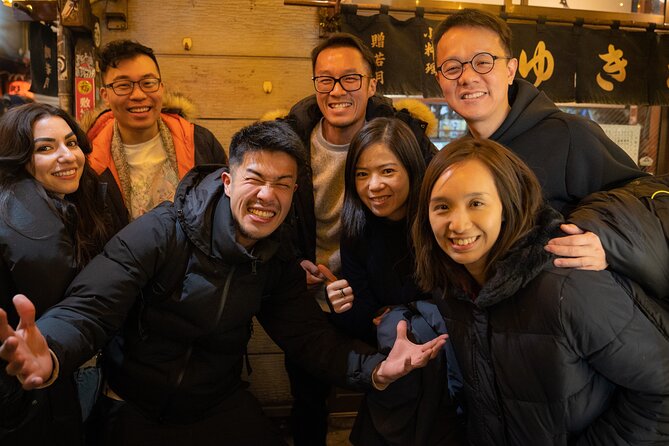
The meeting point is the Dotonbori Humanity Song Monument, at 1 Chome-10 Dotonbori. That puts you close to one of Osaka’s most famous sights, the Glico running man sign, so the tour begins in a place you can recognize easily.
Your guide explains the story and significance of the Glico sign before leading you away from the main photo stop. This is a useful opening because Dotonbori can feel like a wall of signs, restaurant fronts, and foot traffic. A short explanation gives the district some context instead of treating it as a backdrop for quick photographs.
I would arrive with time to spare. The meeting point is in a busy part of Osaka, and a mobile ticket is convenient, but convenience does not remove the need to find the exact monument. Keep your phone charged and make sure you know the local start time.
The first walk is short but important. You begin in the Osaka most people know, then move toward the smaller lanes and side streets that give the evening its purpose.
A few more Osaka trips to weigh up
- Osaka Bar Hopping Night Walking Tour in Namba (3 bars, 6 tastes)
★ 5.0 · 958 reviews - Osaka: Namba Pub Bar Crawl with a Local Guide
★ 4.9 · 424 reviews - Osaka: Izakaya Bars Guided Walking Tour
★ 4.9 · 385 reviews
Hozenji Temple, a quiet pause near Dotonbori
Hozenji Temple is close to Dotonbori, yet it offers a sharp change in mood. The stop is brief, but your guide explains basic temple customs and why people come to this particular place.
The contrast is one of the strongest parts of the route. One minute you are near bright signs and crowded restaurant streets. Soon after, you are in a small temple setting that feels closer in mood to Kyoto than to the main Dotonbori strip.
Do not expect a long temple visit or a full religious tour. The schedule gives this stop limited time, and the purpose is orientation rather than a detailed study of Japanese Buddhism. Still, it is a smart inclusion. It helps you see that the entertainment district is not separate from Osaka’s older neighborhoods. Both exist side by side.
This is also where the tour has a little breathing room before the food and drink begin. If you want a full temple-focused visit, you will need to return on your own. For a nightlife tour, the short visit is enough to add meaning without taking over the evening.
Uranamba izakaya food and the first drinks
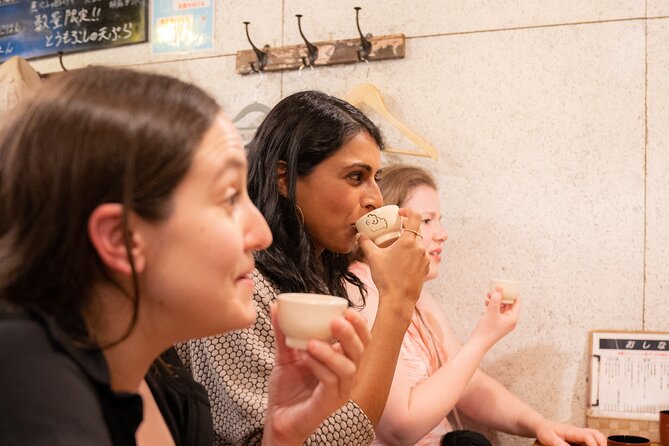
The first main stop is in Uranamba, an area known for local drinking. Your guide takes you to an izakaya, the Japanese style of casual pub where food and drinks are ordered together and shared across the table.
The expected food lineup includes yakitori, karaage, and sake. Yakitori gives you grilled chicken on skewers, while karaage offers crisp fried chicken. These are simple dishes, but they make sense in this setting. You are not just sampling random bites. You are learning how salty, grilled, and fried foods pair with drinks in an ordinary Osaka night out.
The food can be more generous than the low tour price might suggest. One particularly positive account described plenty of dishes across several stops and advised arriving hungry. Takoyaki was also part of that evening, with participants cooking the octopus balls at the table. That adds a playful touch, though you should not assume every group will have the same menu or cooking setup.
Food quality and selection can vary with the chosen venue. One less successful evening included only a small amount of tempura, a few takoyaki pieces, and a tapioca-like item that did not appeal to the diner. That is a useful warning. You are paying for access to a guided route, not a fixed tasting menu with a guaranteed number of premium dishes.
The first stop is listed at about 40 minutes. That is long enough to eat, order a drink, and speak with the guide and other people in the group. It is not long enough for a relaxed multi-course dinner.
Namba for gyoza, sashimi, and a more social table
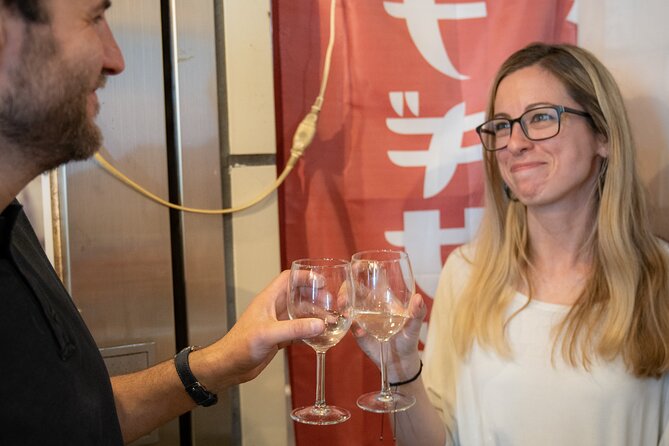
The route continues to another local izakaya in the Namba area. This section lasts about 1 hour and 20 minutes, making it the longest scheduled stop.
Here the food may shift toward gyoza and sashimi, along with more drinks. Gyoza is a natural match for a casual Osaka bar: inexpensive, shareable, and easy to order for the table. Sashimi gives the meal a cooler, lighter contrast to fried chicken and grilled skewers.
This longer stop is where the social side matters most. The guide can explain the dishes, help with ordering, and keep conversation moving between people who may have arrived alone or in pairs. Some groups form quick friendships and continue the night together after the official route ends.
You should think of this as a guided introduction rather than a formal dinner. The menu is not presented as a fixed list, and alcohol is not included. If you have dietary restrictions, the information provided does not promise substitutions, so ask the provider before booking rather than relying on the guide to solve the issue on the night.
Same city, a completely different kind of day:
- Osaka Go Karting Tour with Funny Costume
★ 5.0 · 2,658 reviews - Osaka Castle: Museum and Tower Entry Ticket
★ 4.5 · 2,380 reviews - Osaka: Shinsekai Food Tour with 13-15 Dishes at 5 Eateries
★ 4.8 · 2,204 reviews - Osaka Food Tour: 13 Dishes at 5 Local Eateries
★ 5.0 · 2,149 reviews
Small bars and the Misono Building
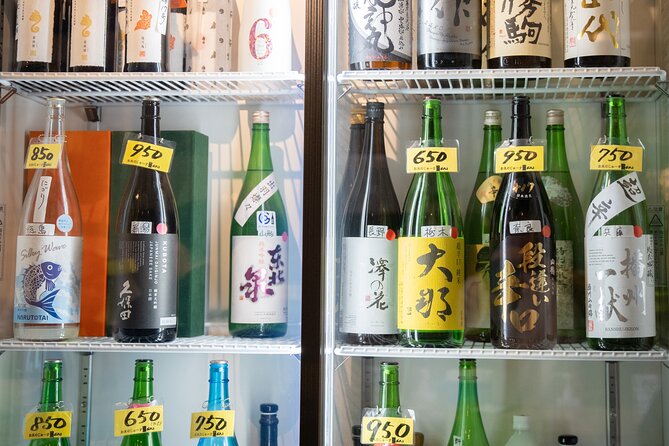
The route may include three or four venues, depending on the evening. Some versions finish in the Misono Building, a memorable place packed with tiny bar rooms and individual counters.
This is one of the more unusual parts of the experience. The building has an old, compact nightlife feel, with many small spaces close together. It can look odd at first, but it gives you a glimpse of a side of Osaka that is difficult to understand from the main shopping streets.
A stop like this is also the clearest example of why a local guide can help. Finding the building is one thing. Knowing which small bar to enter, how long to stay, and how to handle ordering is another.
The downside is price uncertainty. One evening included a bar described as a whiskey stop where drinks were expensive and did not meet expectations. Another account warned that some drinks at the final bar reached ¥3,000 each. The exact places and prices can change, but the lesson is steady: ask for the price before ordering, especially at a small specialty bar.
What the $26.53 price really buys you
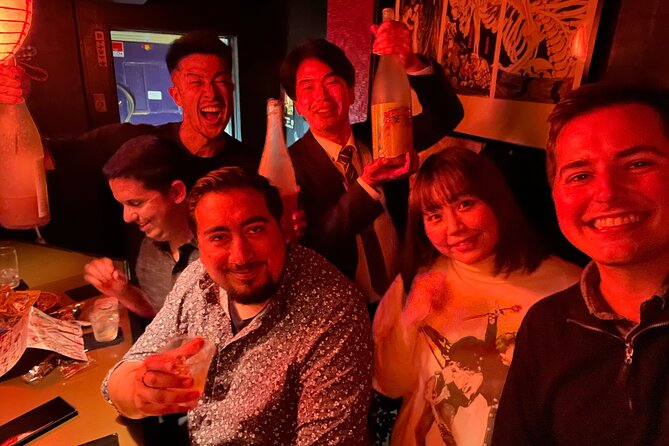
At $26.53 per person, the advertised fee is attractive for a three-hour guided walk in central Osaka. It pays for the local guide and the route. Admission fees are free, but dinner and alcoholic drinks are not included.
That distinction changes the budget. You may pay separately at each izakaya, and the amount depends on what you order and which venues the guide uses. One account described charges of about ¥2,000 at the first stop, ¥2,500 at the second, and another ¥2,500 at a final bar. That came to roughly ¥7,000 in venue costs, in addition to the booking fee.
This is not necessarily poor value if you want a guide, several food stops, and help meeting people. It can be reasonable for a first night, especially if you would otherwise spend time and money testing random bars on your own.
It becomes poor value if you expect the booking fee to cover a full dinner and several drinks. You might also feel disappointed if the food portions are small or if the final bar serves costly drinks that do not match your expectations.
I would set a spending limit before you start. Carry enough yen or a payment method accepted by the venues, and ask the guide what is included at each stop. Do not assume that a drink recommended as part of the route is included in the base price.
Guides make the difference
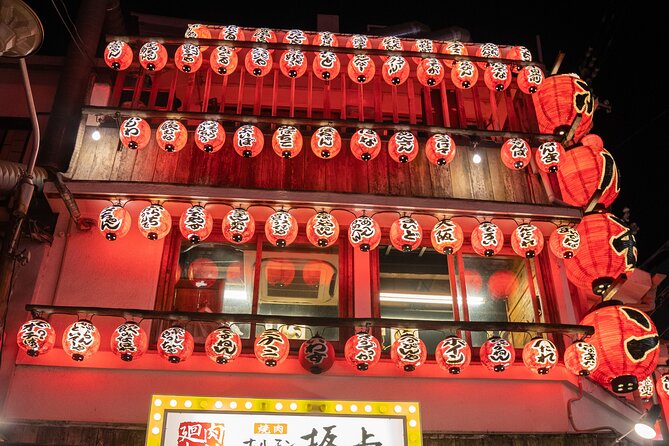
The guide is central to this experience. A strong guide turns a walk between bars into a useful introduction to Osaka. A weaker evening can feel like paying to be escorted to ordinary venues.
Several guides have been singled out for making the night work. Yui has been praised for clear English and good neighborhood recommendations. Hitomi has been described as warm and attentive, including on a very small group outing. Kosuke brought history and culture into the food-and-drink format, while Taiga was praised for keeping conversation lively and offering further Osaka advice.
Naoko, Soma, Mikey, Lala, and Yuta have also been associated with friendly, social evenings. Lala’s table-side takoyaki preparation was a memorable detail, and Soma was noted for helping people feel comfortable and included.
Guide assignments can vary, so you should not book solely because you hope for one specific person. The useful pattern is that the guide can help you order, explain local customs, and point you toward places to revisit later.
Pace, group size, and who will enjoy it
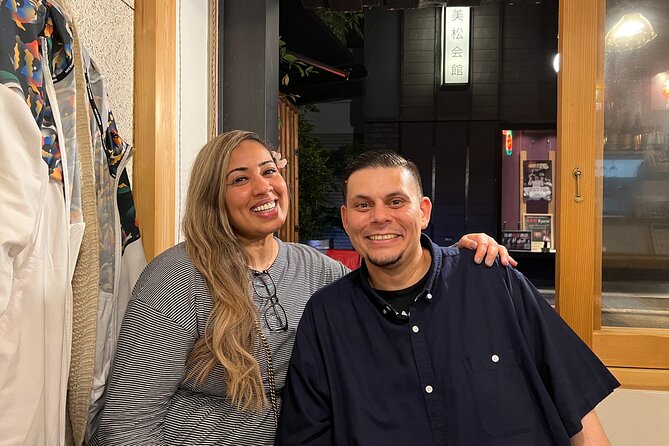
The tour lasts about three hours and ends back at the original meeting point. Walking connects the stops, including the route from Dotonbori toward Uranamba, so comfortable shoes are sensible.
The maximum group size is 15. That is small enough for a guide to manage, but not so small that you should expect a private food tour. A larger group can help shy solo visitors meet people, though it may make seating and ordering more awkward in tiny bars.
I think this suits:
- First-time visitors who want an easy first night in Osaka
- Solo visitors or couples who enjoy meeting people over shared food
- People curious about izakaya manners and local drink pairings
- Visitors who want to see beyond the main Dotonbori signs
- Anyone who values a local guide more than a fixed gourmet menu
I would hesitate if you want a quiet evening, a carefully planned dinner, or a fully prepaid package. Heavy drinkers should also check the cost at every stop, since the booking fee does not cover alcohol.
The activity is near public transportation, and most people can participate. Service animals are allowed. The practical restrictions are less about fitness and more about nightlife: you need to be comfortable walking between venues, eating shared dishes, and ordering drinks in busy local settings.
Cancellation and practical planning
Free cancellation is available if you cancel at least 24 hours before the start time. Inside that window, the payment is not refunded, and changes are not accepted.
The activity requires a minimum number of people. If the provider cancels because that minimum is not reached, you are offered another date or activity, or a full refund.
Book this for the route and the guide, not simply for cheap drinks. The strongest evenings combine Hozenji Temple, local food, lively conversation, and a small-bar finish that you would be unlikely to arrange confidently on your own.
Should you book the Osaka Local Bar Crawl?
I would book it as a first-night orientation to Osaka nightlife, provided you budget separately for food and drinks and ask prices before ordering. The route gives you Dotonbori’s famous starting point, a temple pause, Uranamba izakayas, and the chance to meet local guides and other people.
I would skip it if your main goal is maximum food quality for the lowest possible price. In that case, choose your own izakayas and spend the $26.53 booking fee on dinner instead.
For the right person, the value is not six cheap drinks. It is the confidence to walk into Osaka’s smaller drinking districts, understand what you are ordering, and leave with a few places you may want to revisit.
FAQ
How long does the Osaka Local Bar Crawl last?
The activity lasts approximately three hours and ends back at the original meeting point.
Where does the tour start?
It starts at the Dotonbori Humanity Song Monument, at 1 Chome-10 Dotonbori, Chuo Ward, Osaka.
Are food and alcoholic drinks included?
No. Alcoholic beverages and dinner are not included in the booking price. You pay for food and drinks separately at the venues.
What food might I try?
The route may include yakitori, karaage, gyoza, sashimi, takoyaki, and other local dishes. The exact food can vary by venue.
How large can the group be?
The activity has a maximum of 15 participants.
Can I cancel for a refund?
Yes, you can cancel at least 24 hours before the start time for a full refund. Cancellations or changes made less than 24 hours before the start time are not refunded.
Just added around Osaka
- Samurai dress-up and shows, plus Tea Ceremony & Calligraphy★ 5.0 · 27 reviews
- Kyoto & Nara Private customized tour with English speaking Guide★ 4.5 · 99 reviews
- Well-balanced BENTO (lunch box) Cooking Class★ 5.0 · 35 reviews
- Urban Canvas: Osaka Street Art Bike Tour★ 5.0 · 47 reviews
- OSAKA:Feel the Power! Learn Taiko Drum from Professionals★ 5.0 · 28 reviews
- Volleyball in Osaka & Kyoto with Locals!★ 5.0 · 21 reviews
- 1.5〜2 Hours Traditional Kintsugi Work Shop in Namba Osaka★ 5.0 · 75 reviews
- Umami Town Street Food Tour★ 5.0 · 120 reviews
Drinking Tours, compared.
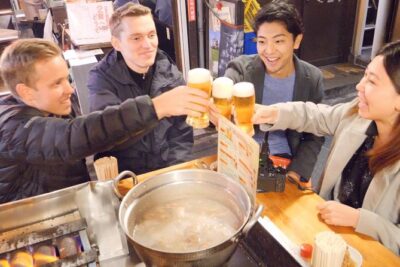
Tokyo Bar Hopping Tour in Shinjuku (All-You-Can-Drink + Dinner)
Read our review →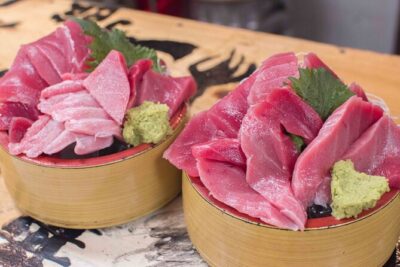
Best of Shinjuku: Izakaya Food Tour (4 Stops, 14+ Tastings)
Read our review →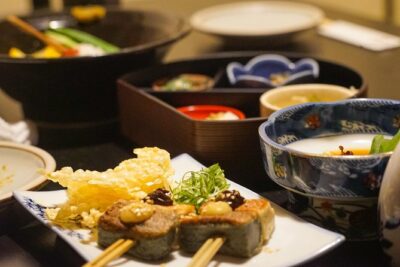
Kyoto Night Foodie Tour in Gion (9+ dishes + 6 Sake tastings)
Read our review →
Shibuya Meltdown Nightlife Tour: All-You-Can-Drink Bar Hopping
Read our review →
1-Day Snow Monkeys, Zenko-ji Temple & Sake in Nagano
Read our review →
Osaka Bar Hopping Night Walking Tour in Namba (3 bars, 6 tastes)
Read our review →
3-Hour Kyoto Insider Sake Brewery Tour with Tastings & Pairings
Read our review →Browse the lists this tour appears in