
REVIEW · FOOD MARKET TOURS
Tsukiji Fish Market Guided Tour and Sushi Making with Pro Chef
Tsukiji’s best story is not just what ends up on your plate. It is the route from sea to market stall to sushi counter. This four-hour experience connects those pieces with a walk through the outer market and a hands-on lesson with a professional sushi chef.
I like the local food guidance, which helps you make sense of unfamiliar ingredients, utensils, snacks, and seafood. I also like the practical sushi class, where you make five types of nigiri and one rolled sushi, then eat what you prepare with dashi soup, green tea, and sushi made by the chef.
The main catch is value. At $104.13, this is not a cheap market walk, and the market portion does not include tastings. You will also be in a group of up to 22 people, and the class may take place in a simple upstairs room rather than a polished cooking studio.
In This Review
- Key points to know before booking
- Tsukiji today, and what this tour actually visits
- Meeting at Tsukiji Honganji Temple
- Walking through the outer market and mini wholesale area
- The sushi lesson in a traditional building
- Eating what you make
- What the guides add to the experience
- How the four hours are divided
- Is $104.13 a fair price?
- Who should book this Tsukiji experience?
- Practical tips for a smoother visit
- Should you book it?
- FAQ
- Where does the tour meet?
- Does the tour visit the former Tsukiji inner market?
- How long does the experience last?
- What types of sushi will I make?
- Is lunch included?
- Can vegetarians or people with allergies join?
- What should I wear?
Key points to know before booking
- The tour visits Tsukiji’s outer market, not the former inner wholesale market: The professional fish auction and main business market moved to Toyosu in 2018.
- The class teaches five nigiri types and one roll: The chef demonstrates the basics step by step, including sushi preparation and presentation.
- The market walk includes Tsukiji Honganji Temple: You learn temple customs and local history before reaching the food stalls.
- There are no included market tastings: You can buy food from vendors, so bring cash if you want snacks.
- The class is upstairs: The traditional building has no elevator, and you need to manage stairs comfortably.
- The route and ending can change: The sushi class may be held in Tsukiji, Asakusa, or Yotsuya, with the final location depending on the date and venue.
Tsukiji today, and what this tour actually visits
Start with the right expectation: this is an outer-market food and culture tour, not a visit to the working inner market that once handled Tokyo’s famous tuna auctions.
The inner market moved from Tsukiji to Toyosu on October 6, 2018. Tsukiji’s outer market remains open as a maze of small food shops, retail stalls, restaurants, ingredient sellers, and utensil stores. A small wholesale section is also included in the route, giving you a look at how seafood and Japanese cooking supplies move through the district.
That distinction matters. If your dream is to watch the early-morning auction or see the full commercial wholesale operation, this tour will not provide it. For that, you need a separate Toyosu visit. If you want an approachable introduction to Japanese food culture, Tsukiji works well.
A guide gives the market some order. Left alone, you could spend hours wandering from one stall to another without knowing what you are seeing or which items are worth stopping for. The guide points out notable shops and explains products that may be unfamiliar, from seafood varieties to Japanese ingredients and kitchen tools.
More Food Market Tours in Tokyo
- Tokyo: Shinjuku Food Tour (13 Dishes at 4 Local Eateries)
★ 5.0 · 6,603 reviews - Tokyo Tsukiji Fish Market Food and Culture Walking Tour
★ 5.0 · 3,184 reviews - Tokyo: Shinjuku Food Tour (15 Dishes and 4 Eateries)
★ 4.9 · 2,033 reviews
Meeting at Tsukiji Honganji Temple
The meeting point is the main gate of Tsukiji Honganji Temple, at 3-chōme-15-1 Tsukiji. Do not follow Google Maps to the back side of the temple. The group meets at the front gate, where a guide holds a Japan Wonder Travel sign.
The tour leaves sharply at the scheduled time. There is no extension for late arrivals, and same-day late arrival or cancellation means no refund. I would arrive early, especially if Tsukiji is new to you or you are coming by train and need to find the correct exit.
The temple is more than a place to gather. It gives the opening walk a cultural frame before the food begins. Guides such as Sachi have shown participants how to approach and pray properly at a Buddhist temple, while guides including Ko have explained local customs and the area’s past.
You do not need to be religious to enjoy this part. It is a useful lesson in how to behave respectfully at Japanese temples and shrines, and it prevents the market visit from becoming just a shopping trip.
Walking through the outer market and mini wholesale area
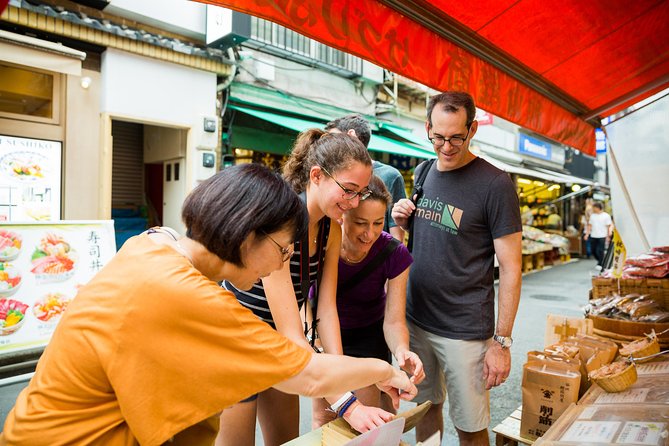
From the temple, the guide leads you into Tsukiji’s food district. This is the most spontaneous part of the experience. You pass stalls selling seafood, prepared foods, snacks, seasonings, cooking ingredients, and utensils. The guide explains what you are looking at and helps place the products in a Japanese cooking context.
I especially like this section for first-time visitors. Japanese food shops can be hard to read when you do not know the ingredients or the customs around them. A guide can explain what a product is used for, how it fits into a meal, and which foods are worth trying.
The walk also covers the Tsukiji Jogai Market and Tsukiji Nippon Fish Port Market. The exact order may vary, but the purpose is the same: to show how the district serves both local shoppers and people seeking a taste of Tokyo’s seafood culture.
You may stop near vendors and receive suggestions about what to buy. Those suggestions are useful, but food purchases are extra. This is not a progressive tasting tour with a set number of samples. You choose and pay for anything you want from the stalls.
That is one of the tour’s biggest points to consider. If you want to eat your way through Tsukiji, bring cash and budget extra. One participant found that street food spending could quickly approach the cost of the class itself. A group can also make sampling less flexible, since you move at the group’s pace rather than stopping at every stall that catches your eye.
Still, the guided walk gives you a better starting point for returning to Tsukiji on your own. You can note shops, foods, and utensils that interest you, then come back later with more time and fewer people around you.
The sushi lesson in a traditional building
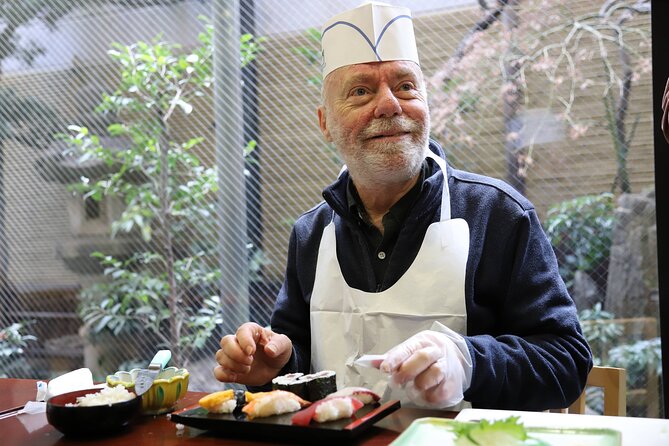
After the market, you move to a Japanese-style classroom in a local building. The class may be in a room above or near the market, although venue availability can shift the sushi-making portion to Asakusa or Yotsuya.
The setting is functional rather than luxurious. The classroom is on the third floor and reached only by stairs. You should be comfortable climbing several flights, and comfortable shoes are a must because the morning or afternoon includes a good deal of walking.
The group size can reach 22 people. That is large enough to make the experience social, but it also means this is not a private lesson. You will have instruction and assistance, yet the amount of individual attention can vary.
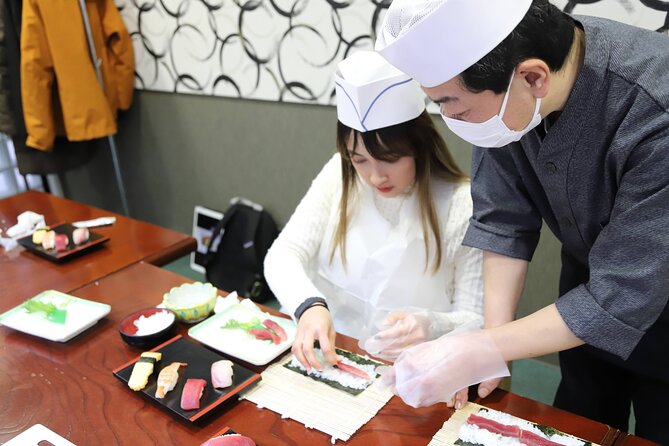
The class itself is the stronger half of the experience for many people. A sushi chef demonstrates the process, and you follow along with fresh ingredients at your place. The instruction is designed for beginners, so you do not need previous cooking experience.
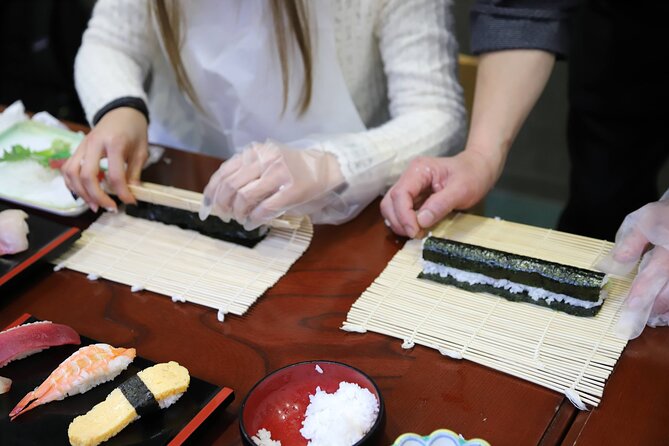
You learn to make five varieties of nigiri sushi and one rolled type. The class focuses on the basics: handling rice, shaping sushi, placing toppings, and working with the ingredients. The chef also demonstrates fish preparation and deboning. The lesson does not appear to be a full professional apprenticeship, but it gives you a real sense of how much care goes into even simple-looking sushi.
Some sessions include a presentation or visual explanation before the hands-on work. The demonstrations are given in Japanese and English, with staff helping participants follow the steps. Guides and hosts have included names such as Ishii, Miky, and Chef Kate, while the exact chef and staff can vary.
One useful expectation: the lesson teaches sushi assembly more clearly than it teaches every stage of fish preparation. If you want detailed instruction on slicing fish for sushi, ask about it during the demonstration, since the emphasis is on making the sushi rather than training you to process a whole fish at home.
More Japanese Cooking Classes in Tokyo
- Sushi Making Tokyo Roll and Authentic Japanese Sushi Class
★ 5.0 · 3,971 reviews - Tokyo: Roll and Authentic Sushi Making Class in Asakusa
★ 4.9 · 1,957 reviews - Tokyo: Sushi Making Class in a Happi Coat near a Famous Spot
★ 4.9 · 1,377 reviews - Tokyo Sushi Making Class in Tsukiji with Professional Chef
★ 5.0 · 1,177 reviews
Eating what you make
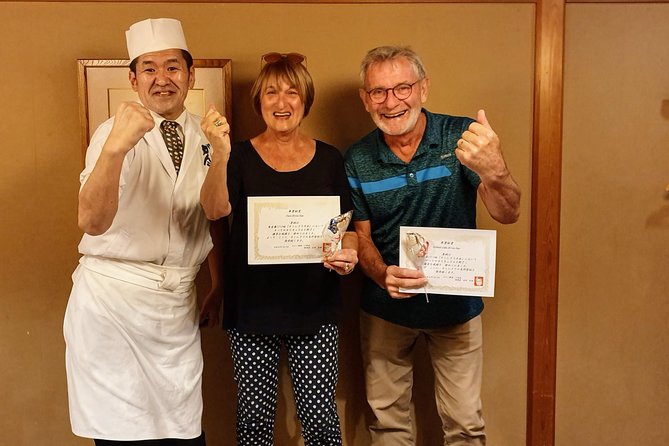
The best payoff comes at the table. Once the sushi is prepared, you eat your own work rather than simply watching a demonstration.
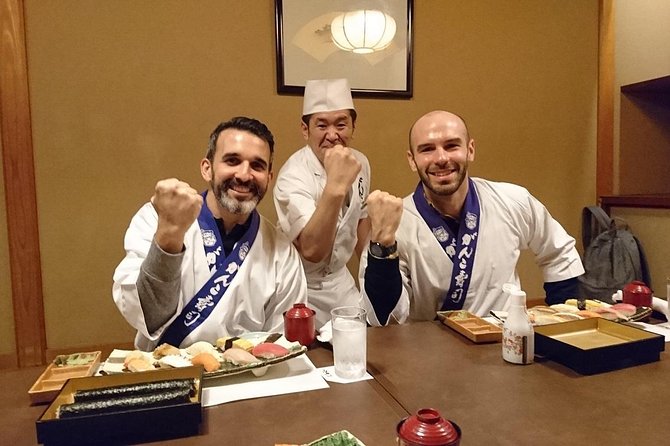
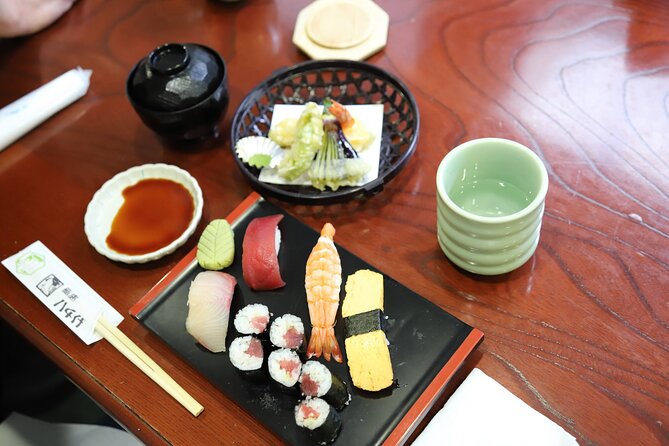
Your meal also includes sushi made by the master, expertly prepared wasabi, traditional dashi soup, and green tea. The chef’s sushi gives you a helpful comparison. You can see the difference between your beginner’s shaping and the professional version, while still enjoying the satisfaction of making lunch yourself.
The fresh ingredients and clean preparation area are important here. Seafood handling can make some people cautious, and the class setting has been described as clean, with fresh food prepared under the chef’s direction.
The meal is filling enough to function as lunch, but do not count on the market walk to provide a full tasting meal before class. If you eat breakfast lightly, you can buy a snack in the market. Bring water if you prefer it, since green tea is the standard drink provided.
What the guides add to the experience
The guide can make or break the market section. This route covers familiar sights for locals but can feel confusing to someone seeing Tsukiji for the first time. A good guide turns rows of stalls into a readable story.
Several guides have been singled out for their approach. Monami has been praised for helping people find good food at sensible prices. Sachi has combined temple instruction with market history. Ko has been appreciated for explaining food and customs in clear English, while Mari has been noted for patience and hospitality. Yuki and Tad have also led groups through the market and sushi class.
The names do not guarantee who will lead your departure, but they give you an idea of the guide style to expect: friendly, explanatory, and focused on helping you understand what you are seeing.
Some guides move at a relaxed pace and allow time to look around. Others may keep the group moving, especially when the market is crowded or the class schedule is tight. With a maximum of 22 people, you should not expect a private food crawl.
How the four hours are divided
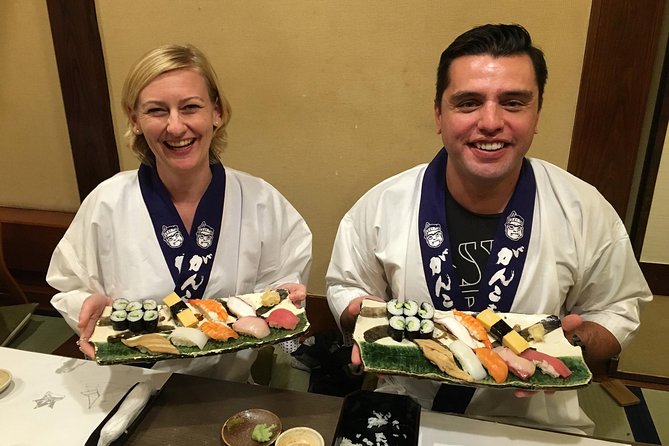
The advertised duration is about four hours. The experience begins at Tsukiji Honganji Temple, continues through the market, and finishes with sushi preparation and lunch.
The exact timing can vary. The market section may feel short if you want to browse every shop, while the class can feel more substantial because it includes demonstrations, preparation, and eating. A delay is possible at the end, so do not schedule a train, show, airport transfer, or restaurant reservation immediately afterward.
The ending point also needs attention. The activity is sometimes described as returning to the meeting area, but the operating details note that the final location may be Tsukiji or Shinjuku depending on the date. If the class moves to Asakusa or Yotsuya, the tour ends there. Confirm the day’s arrangements before building a tight schedule around it.
Is $104.13 a fair price?
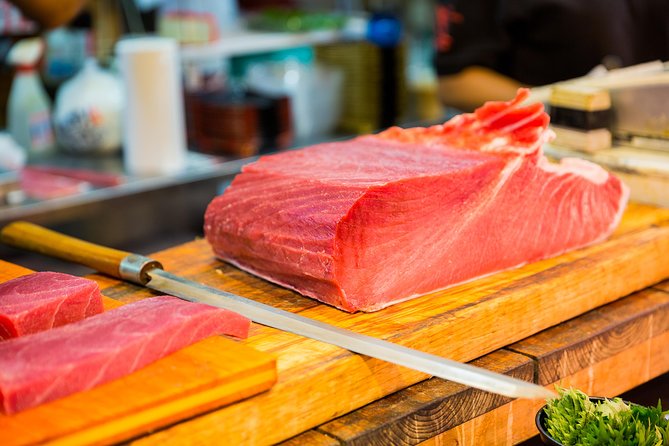
At $104.13 per person, the price is reasonable if you want two linked activities: a guided Tsukiji introduction and a hands-on sushi lunch with a chef.
The class is where much of the value lies. You receive instruction, ingredients, the chance to make six sushi styles, soup, tea, and a chef-prepared comparison plate. You also avoid the uncertainty of trying to book a sushi class separately.
The market walk adds context that you would not necessarily get from a self-guided visit. A guide can explain unfamiliar foods, point out useful shops, and connect Tsukiji to Japanese customs and seafood distribution.
The price is less attractive if you mainly want to eat your way through the market. There are no included tastings, and extra purchases can add up quickly. A self-guided visit costs less, gives you more freedom, and may suit confident food shoppers better.
I would also compare the group size with your expectations. A group of up to 22 is fine for a friendly introduction, but people seeking a quiet, highly personal lesson should look for a smaller class or private chef experience.
Who should book this Tsukiji experience?
This tour suits first-time visitors to Tokyo who want a clear introduction to Tsukiji without spending half a day trying to decode the market alone. It is also a good fit for families. Children and teenagers can take part in the food preparation, and the hands-on work gives the visit a focus beyond looking at stalls.
It works well for couples, friends, and anyone who wants a useful cooking memory to take home. You will leave with a better sense of sushi’s technique, not just its appearance.
The experience is less suitable for strict vegetarians, halal diners, people needing gluten-free or kosher food, and anyone with serious allergies. The operating information says these requests are not accommodated, although you can list dietary needs when booking and ask whether anything is possible. Do not assume a safe substitute will be available.
You should also skip it if stairs are a problem or if you need a guaranteed end time. The walking is manageable for most people who wear comfortable shoes, but this is not a seated market tour.
Practical tips for a smoother visit
- Meet at the front gate of Tsukiji Honganji Temple, not the rear side.
- Arrive early. The guide leaves at the stated start time.
- Wear comfortable walking shoes and clothing suitable for climbing stairs.
- Bring cash for optional market food and shopping.
- Carry your own water if you do not want to rely on green tea.
- Keep your schedule open after the four-hour estimate.
- Tell the operator about food restrictions during booking, but understand that several dietary requests may not be accommodated.
- Check the final venue and ending point on the day, especially if the class has moved away from Tsukiji.
Should you book it?
Book this experience if you want context plus participation. The temple and market walk explain where Japanese food culture comes from, while the sushi lesson lets you handle the ingredients and eat the result. That combination is more useful than a market stroll alone and more memorable than a cooking class with no connection to the food district.
Do not book it expecting the old Tsukiji auction, a long series of free tastings, or a private chef lesson. The market is the outer market, the group may be sizable, and the classroom is simple.
For first-time Tokyo visitors, families, and curious sushi beginners, I think the package earns its price, especially when the guide is as helpful as Monami, Sachi, Ko, Mari, Yuki, or Tad have been. For independent food experts, strict dietary needs, or anyone focused mainly on value, a self-guided Tsukiji visit followed by a smaller sushi class may be the better choice.
FAQ
Where does the tour meet?
Meet at the main gate of Tsukiji Honganji Temple, located at 3-chōme-15-1 Tsukiji, Chuo City, Tokyo. Look for a guide holding a Japan Wonder Travel sign.
Does the tour visit the former Tsukiji inner market?
No. The inner market moved to Toyosu in 2018. This experience visits the Tsukiji outer market and a mini wholesale area focused on Japanese food and culture.
How long does the experience last?
The tour lasts approximately four hours, although the ending may be delayed. Avoid making a tight appointment immediately afterward.
What types of sushi will I make?
You will learn to make five types of nigiri sushi and one rolled type. The chef provides step-by-step instruction and demonstrations.
Is lunch included?
Yes. You eat the sushi you make, along with sushi prepared by the chef. Traditional dashi soup and green tea are also offered.
Can vegetarians or people with allergies join?
You should provide dietary information during booking or afterward, but vegetarian, halal, gluten-free, kosher, and allergy-related requests may not be accommodated. Ask before booking if this is important to you.
What should I wear?
Wear comfortable walking shoes. The tour involves walking through the market, and the classroom is on the third floor of a traditional building with stairs only.
More Shopping Tours in Tokyo
- Tsukiji Fish Market Small-Group Food Walking Tour
★ 5.0 · 621 reviews - Tokyo: Tsukiji Fish Market Sushi Making Class with Pro Chef
★ 4.9 · 506 reviews - Tokyo Food Tour Taste Fresh Delights at Tsukiji Market
★ 5.0 · 429 reviews - Tokyo Tsukiji Fish Market Tour and Sushi Making Lesson
★ 5.0 · 390 reviews
More Markets in Tokyo
- Tokyo: Tsukiji Fish Market Food and Walking tour
★ 5.0 · 1,724 reviews - Tokyo: Tsukiji Fish Market Guided Walking Tour
★ 4.9 · 1,397 reviews - Tokyo: Tsukiji Fish Market Food and Culture Walking Tour
★ 4.7 · 757 reviews - Tsukiji Fish Market: Street Food & Culture Walking Tour
★ 5.0 · 669 reviews
Just added around Tokyo
- Tokyo: Customizable Private Guided Walking Tour★ 4.5 · 129 reviews
- Private Harajuku Omotesando Architecture Tour★ 4.9 · 18 reviews
- Tokyo: Guided Helicopter Ride★ 4.9 · 24 reviews
- Tokyo: Guided Walking Tour of Tsukiji Market with Lunch★ 4.4 · 24 reviews
- Tokyo: Private Personalized Local Food Tour★ 4.5 · 101 reviews
- Tokyo GINZA: KONPARU Japanese Cabaret Show with Drink★ 4.8 · 38 reviews
- Tokyo: Guided Walking Tour of Tsukiji Market with Breakfast★ 4.4 · 134 reviews
- Tokyo: Gotokuji Cat Temple, Shinjuku Cat Cafe & 3D Cat Tour★ 4.9 · 38 reviews
Food Market Tours, compared.
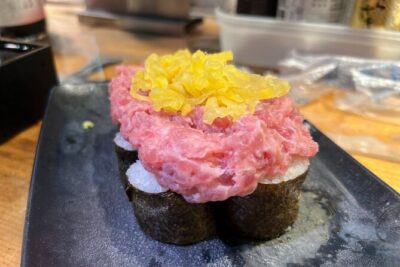
Shinjuku Food Tour (13 Dishes at 4 Local Eateries)
Read our review →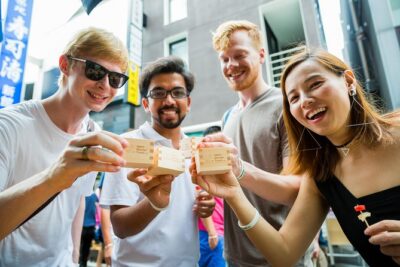
Tokyo Tsukiji Fish Market Food and Culture Walking Tour
Read our review →
Shinsekai Food Tour with 13-15 Dishes at 5 Eateries
Read our review →
Osaka Food Tour: 13 Dishes at 5 Local Eateries
Read our review →
Shinjuku Food Tour (15 Dishes and 4 Eateries)
Read our review →
Best of Shinjuku: Izakaya Food Tour (4 Stops, 14+ Tastings)
Read our review →
Hungry Osaka Street Food Tour:15 Tastings & 3 Drinks with a Local
Read our review →
Browse the lists this tour appears in