
REVIEW · FOOD MARKET TOURS
Tsukiji Fish Market Small-Group Food Walking Tour
Tsukiji is no longer Tokyo’s main wholesale fish market, but it remains one of the city’s best places to eat seafood in a maze of small shops. This three-hour walk takes you through the Tsukiji Outer Market, where you can sample sushi, tamagoyaki, scallops, eel, crab, and other local bites before sitting down to a fresh seafood lunch.
I like two things here. First, the food comes in a useful variety, from familiar sushi to less obvious snacks such as dried seafood. Second, the walk adds Japanese religious sites and market history, so you get more than a meal-by-meal tasting. The main consideration is simple: if you expect to watch the huge wholesale tuna auctions, this is the wrong market.
- Fresh seafood lunch included: You finish with a proper meal, not just a series of tiny tastes.
- Small groups of up to seven: A compact group makes narrow market lanes easier to handle.
- Several tasting stops: Possible bites include tamagoyaki, sushi, eel, scallops, crab, and local snacks.
- Temple and shrine visits: Tsukiji’s food culture is paired with an introduction to Japanese religion.
- Guides shape the experience: Guides such as Kazu, Yuki, Hitomi, Mark, Tiger, and others have led food-focused walks here.
- The inner market moved: The wholesale market relocated to Toyosu in 2018, while Tsukiji’s Outer Market remains open and active.
In This Review
- Starting at Tsukiji Station Exit 1
- What Tsukiji Is Today
- Sampling Through the Old Market
- The Included Seafood Lunch
- Tsukiji Hongwanji Temple and a Shinto Shrine
- Guide Quality Makes the Difference
- Timing, Heat, and Market Manners
- Who Will Get the Most From This Walk
- Is $87.37 a Fair Price?
- Should You Book the Tsukiji Food Tour?
- FAQ
- Is this tour held at the wholesale fish market?
- How long does the Tsukiji food tour last?
- Is lunch included?
- How many people can join the tour?
- Are vegan options available?
- Can the tour accommodate allergies or dietary restrictions?
Starting at Tsukiji Station Exit 1
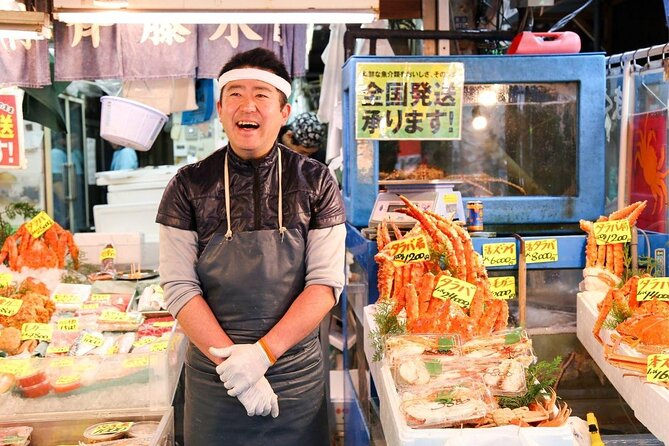
The tour begins at Tsukiji Station, Exit 1, at 3 Chome-9 Tsukiji. Your guide waits near the station, and the meeting portion takes only about five minutes. Bring your mobile ticket and allow enough time to find the correct exit without rushing.
Tsukiji Station is close to public transportation, which makes the start fairly easy to reach from other parts of Tokyo. The tour ends near Shiodome Tower in Higashi-Shimbashi, not back at the station. That matters when you plan the rest of your day. You can continue toward Shiodome after lunch, but you should not assume the walk returns you to your starting point.
The group can include a maximum of seven people. That is a useful size for this setting. Tsukiji has tight lanes, busy shop fronts, and signs asking people not to stop in the middle of the walkway. A small group is easier to keep together than a large sightseeing crowd, though you will still need to stay alert and keep moving when the guide does.
What Tsukiji Is Today
The name Tsukiji Fish Market can cause confusion. Tokyo’s inner wholesale market moved to Toyosu in 2018, so this experience does not take you into the main wholesale trading floor or the famous tuna auction area.
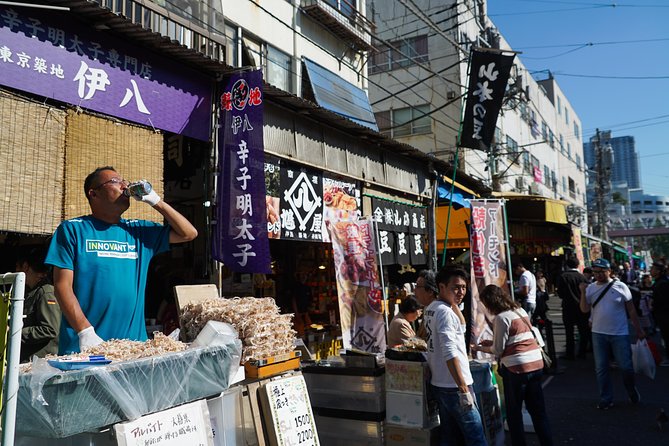
Tsukiji’s Outer Market is still worthwhile. It has roughly 460 businesses selling fish, vegetables, fruit, meat, dried goods, seasonings, cooking tools, tableware, and prepared food. The market serves local residents, professional buyers, and visitors, giving it a practical food-shopping purpose beyond sightseeing.
That distinction helps set the right expectation. You are not watching industrial-scale seafood trading. You are walking through a living retail market, tasting food, learning how ingredients are used, and seeing the compact shops that make Tsukiji a useful stop for cooks and curious eaters.
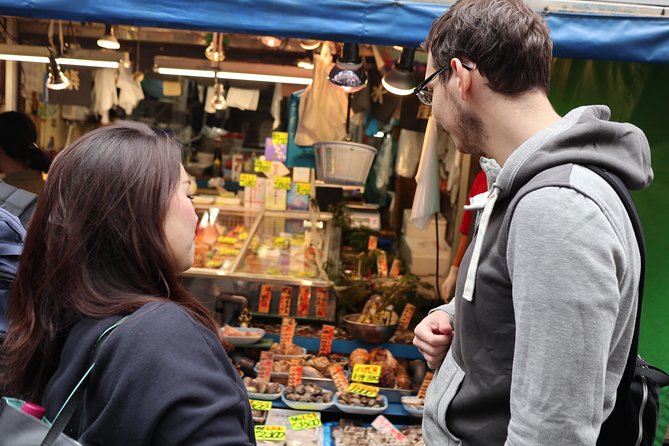
The market can feel crowded, especially around popular food stalls. Some stands have little or no room to eat in place, and signs may tell you to keep moving. Your guide’s value is partly practical here: the right person can guide you through the lanes, explain what you are seeing, and point out nearby seafood businesses that still operate around the market.
More Food Market Tours in Tokyo
- Tokyo: Shinjuku Food Tour (13 Dishes at 4 Local Eateries)
★ 5.0 · 6,603 reviews - Tokyo Tsukiji Fish Market Food and Culture Walking Tour
★ 5.0 · 3,184 reviews - Tokyo: Shinjuku Food Tour (15 Dishes and 4 Eateries)
★ 4.9 · 2,033 reviews
Sampling Through the Old Market
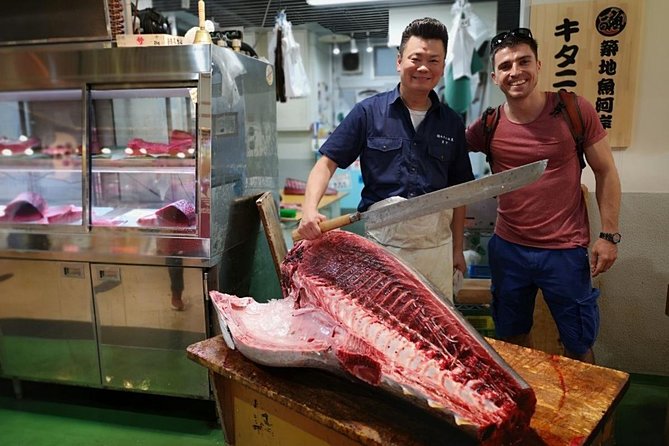
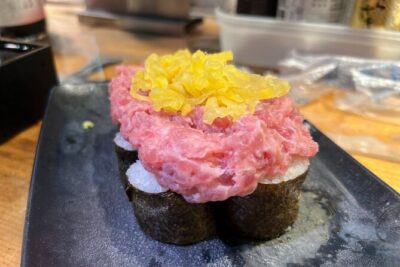
The food tastings are the heart of the morning. The exact selection can change, but the experience may include tuna nigiri, grilled eel, tamagoyaki, scallops on a stick, crab legs, dried seafood, and other market snacks.
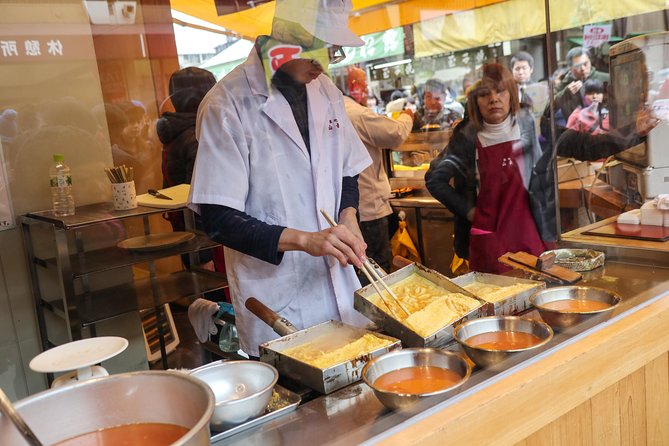
Tamagoyaki is a good example of why a guide helps. This Japanese rolled omelette is lightly sweet and has a soft, layered texture. It is familiar enough for first-time visitors but different from the savory egg dishes many people expect. You may also encounter items such as dried stingray meat, which can be a fun test of how adventurous your appetite is.
The seafood is not served as one large tasting platter. Instead, you move between shops and stalls, trying small portions along the way. That keeps the walk active, but it also means the quality and size of each bite can vary. One stop may offer a memorable piece of sushi, while another may feel less special.
One practical warning: lines can change the plan. A stop for takoyaki, for example, may be skipped if the wait is too long. Substitutions are not guaranteed at every shop, although the operator says it will try to make up for missed items at another stop.
You should arrive hungry, but not starving. There are enough samples to fill you before lunch, and rushing through the food is no fun. The best approach is to treat the tastings as a guided introduction to market ingredients rather than a fixed menu with exact dishes guaranteed.
The Included Seafood Lunch
The included lunch gives the experience a proper finish. After sampling around the market, you sit down for fresh seafood at a local restaurant or small dining space. Several people have especially liked having a choice for the sit-down meal, though the exact arrangement can vary by stop.
This is where the $87.37 price becomes easier to judge. You are paying for a guide, multiple tastings, a full seafood lunch, cultural stops, and three hours of help in a place that can be confusing on your own. If you already know Tsukiji and plan to eat only one inexpensive dish, the cost may feel high. If you want to try several foods without guessing at every shop, the package is more useful.
The lunch also gives you time to sit after walking through narrow lanes. Seafood lovers should find the meal satisfying, but remember that the tour is not designed around vegan food. Vegan options are not available, and the operator cannot guarantee allergy-free food or accommodate every dietary restriction.
That warning deserves attention. Food is prepared in kitchens that do not belong to MagicalTrip, and substitutions may not be possible at some stops. A guide may try to arrange alternatives, and one experience included extra care for a person with coeliac disease, but you should not book this as a fully controlled allergy-safe meal plan.
Tsukiji Hongwanji Temple and a Shinto Shrine
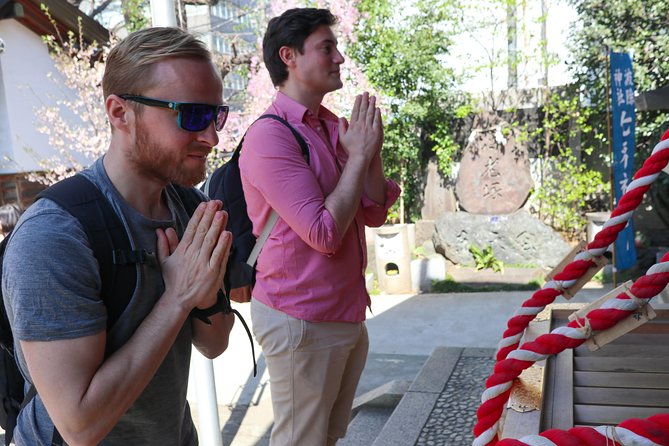
Food is only half of Tsukiji’s identity. The route also includes a Japanese Buddhist temple and a Shinto shrine, adding useful context about two major religious traditions in Japan.
The Buddhist temple stop helps explain the area’s history and the role religion has played in the community. The Shinto shrine offers a different look at Japanese belief and local custom. The tour description does not promise a long formal lecture at each site, so think of these visits as short cultural pauses woven into the food walk.
This combination is one of the tour’s best features. You see seafood as part of daily life, then connect the market district with worship, neighborhood history, and Tokyo’s changing city fabric. Guides have been praised for explaining the history before the tastings, but the depth depends on who leads your group.
The route also includes a city view, described as a lookout over the Tokyo Bay area. It gives your morning a change of pace after the close quarters of the market. The view is not the main reason to book, but it rounds out the visit nicely.
More Walking Tours in Tokyo
- Tokyo: Imperial Palace and Shogun Historical Walking Tour
★ 5.0 · 2,251 reviews - Tokyo: Shinjuku Local Bar and Izakaya Guided Walking Tour
★ 4.9 · 1,794 reviews - Tokyo: Tsukiji Fish Market Food and Walking tour
★ 5.0 · 1,724 reviews - Tokyo: Asakusa Walking Tour with Sensoji Temple Visit
★ 4.8 · 1,583 reviews
Guide Quality Makes the Difference
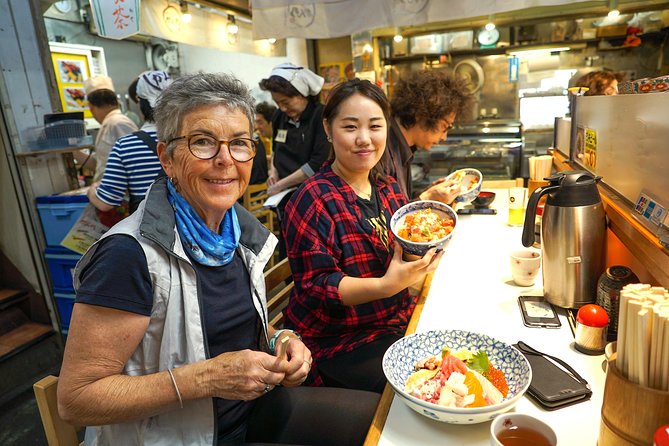
The guide is the swing factor. Strong guides have included Kazu, Yuki, Hitomi, Mark, Tiger, Mia, and Mummy. The best guides do more than carry the group from stall to stall. They identify seafood, explain market customs, provide background before tastings, and help you choose foods you might otherwise pass by.
Kazu, in particular, has been praised for his recommendations and for helping with a coeliac guest’s food needs. Yuki has been noted for knowing good places to stop and what to eat. Hitomi, Mark, and Tiger have also been singled out for making the walk both informative and enjoyable.
But the experience is not perfectly uniform. One poor experience involved little explanation of the food or market, very few samples, and a missed takoyaki stop because of a long line. That is a useful warning. The tour sells a guided food experience, but the amount of explanation can depend heavily on the individual guide and the day’s conditions.
If you want a lecture in Japanese culinary history, say so early. A clear question can help your guide tailor the walk. If you mainly want food and company, the relaxed pace may suit you better.
Timing, Heat, and Market Manners
The tour lasts about three hours. That is long enough for a substantial introduction without taking your entire day, and the start time should leave room for another Tokyo activity afterward.
Wear comfortable shoes. You will be walking through tight market streets and standing at food stops. In summer, Tokyo is hot and humid, so bring water and wear a hat. The heat can make a food-heavy walk feel harder than expected, especially if you are not used to Tokyo weather.
Market etiquette matters. Keep moving when the lanes are crowded, listen when the guide asks the group to shift, and avoid blocking shop entrances. Some places do not allow you to stop and eat directly in front of the stall. The small group helps, but it does not remove the need for courtesy.
Shopping is also possible around Tsukiji. You may find cooking tools, tableware, seasonings, dried goods, and seafood products worth taking home. Keep your hands free at the beginning, since the tastings and walking are the priority. You can return to shops after the tour if something catches your eye.
Who Will Get the Most From This Walk
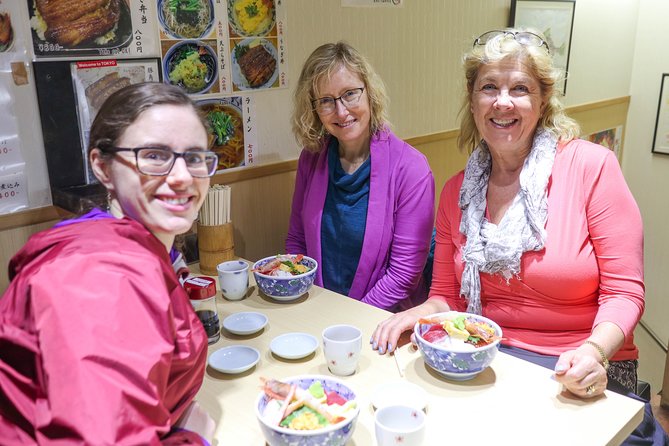
I would choose this tour for a first visit to Tokyo, especially if you want a gentle introduction to Japanese food without planning every stop yourself. Seafood fans get the most obvious benefit, but the temple, shrine, market history, and city view give the morning more range than a simple restaurant crawl.
It also suits couples and small groups who enjoy trying several foods in one outing. A honeymooning couple enjoyed having a very small group, and that experience points to a pleasant advantage of the seven-person limit: you may have room to ask questions and move at a reasonable pace.
You should think twice if you are vegan, have serious food allergies, dislike seafood, or want to see the wholesale auction. You may also prefer to explore independently if you are comfortable reading menus, waiting in lines, and selecting your own stalls.
The 97 percent recommendation rate and 4.9 rating from 621 ratings indicate strong overall satisfaction, but the exceptions matter. The tour is at its best when you want a friendly guide, a broad range of tastes, and a little cultural background. It is less suitable for someone seeking a tightly fixed menu or a guaranteed level of instruction.
Is $87.37 a Fair Price?
At $87.37 per person, this is not the cheapest way to eat at Tsukiji. You can certainly buy individual snacks on your own for less. The price makes more sense when you count the included lunch, several samples, the guide’s navigation help, and the time saved choosing among hundreds of shops.
The small group adds value, especially in a market with narrow lanes and confusing choices. You are not simply paying for food. You are paying for a morning with a route, explanations, and someone who can identify what is worth trying.
Still, value depends on appetite and expectations. If the guide gives only brief explanations or if several planned tastings are changed, the price feels less attractive. Book it for the structure and local guidance, not for a guaranteed list of exact dishes.
Free cancellation is available if you cancel at least 24 hours before the local start time. Changes or cancellations made later are not accepted for a refund.
Should You Book the Tsukiji Food Tour?
Book this experience if you want to eat your way through Tsukiji Outer Market while learning how the district connects food, religion, and daily life. The included lunch and small group make it a convenient choice, and guides such as Kazu, Yuki, Hitomi, Mark, and Tiger have added real personality and useful food advice.
Skip it if your main goal is the wholesale fish market at Toyosu, or if you need vegan or strictly controlled allergy-free dining. Go with realistic expectations, arrive hungry, carry water, and allow the guide some flexibility when lines or shop conditions change. For a first taste of Tsukiji, that is a fair trade.
FAQ
Is this tour held at the wholesale fish market?
No. Tokyo’s inner wholesale market moved to Toyosu in 2018. This tour visits Tsukiji’s Outer Market, which continues to have seafood shops, food stalls, specialty stores, and related businesses.
How long does the Tsukiji food tour last?
The experience lasts about three hours.
Is lunch included?
Yes. A fresh seafood lunch at the market is included, along with food samples at several shops and stalls.
How many people can join the tour?
The maximum group size is seven people.
Are vegan options available?
No. Vegan options are not available on this tour.
Can the tour accommodate allergies or dietary restrictions?
Allergy-free food and dietary substitutions cannot be guaranteed. Food is prepared in kitchens that do not belong to MagicalTrip, and substitutions may not be possible at every stop, although the operator will try to compensate at other stops.
More Food in Tokyo
- Tokyo Night Foodie Tour in Shinjuku – Seasonal Sushi, Wagyu Beef
★ 5.0 · 1,161 reviews - Tsukiji Fish Market: Street Food & Culture Walking Tour
★ 5.0 · 669 reviews - Best of Shibuya Food Tour
★ 5.0 · 612 reviews - Tokyo After 5: Authentic Japanese Food & Drink Night Tour
★ 4.5 · 560 reviews
More Food & Drink in Tokyo
- Best of Shinjuku: Izakaya Food Tour (4 Stops, 14+ Tastings)
★ 5.0 · 1,863 reviews - Eat and Drink Like a Local: Tokyo Ueno Food Tour-Taverns&Ramen
★ 5.0 · 957 reviews - Tokyo: Shibuya Food Tour (13 dishes and 4 Eateries)
★ 5.0 · 770 reviews - Tokyo: Tsukiji Fish Market Food and Culture Walking Tour
★ 4.7 · 757 reviews
Just added around Tokyo
- Tokyo: Customizable Private Guided Walking Tour★ 4.5 · 129 reviews
- Private Harajuku Omotesando Architecture Tour★ 4.9 · 18 reviews
- Tokyo: Guided Walking Tour of Tsukiji Market with Lunch★ 4.4 · 24 reviews
- Tokyo: Private Personalized Local Food Tour★ 4.5 · 101 reviews
- Tokyo: Guided Helicopter Ride★ 4.9 · 24 reviews
- Tokyo GINZA: KONPARU Japanese Cabaret Show with Drink★ 4.8 · 38 reviews
- Tokyo: Guided Walking Tour of Tsukiji Market with Breakfast★ 4.4 · 134 reviews
- Tokyo: Gotokuji Cat Temple, Shinjuku Cat Cafe & 3D Cat Tour★ 4.9 · 38 reviews
Food Market Tours, compared.
Shinjuku Food Tour (13 Dishes at 4 Local Eateries)
Read our review →
Tokyo Tsukiji Fish Market Food and Culture Walking Tour
Read our review →
Shinsekai Food Tour with 13-15 Dishes at 5 Eateries
Read our review →
Osaka Food Tour: 13 Dishes at 5 Local Eateries
Read our review →
Shinjuku Food Tour (15 Dishes and 4 Eateries)
Read our review →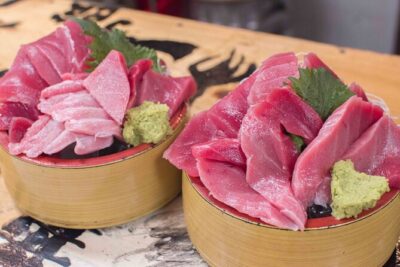
Best of Shinjuku: Izakaya Food Tour (4 Stops, 14+ Tastings)
Read our review →
Hungry Osaka Street Food Tour:15 Tastings & 3 Drinks with a Local
Read our review →
Browse the lists this tour appears in