
REVIEW · EVENING EXPERIENCES
Tokyo After 5: Authentic Japanese Food & Drink Night Tour
Tokyo After 5 is really a lesson in how Tokyo eats after work. You start beneath Ginza’s glowing department-store signs, cook runny monjayaki on a hotplate in Tsukishima, then settle into a small Yurakucho drinking alley for skewers and a drink. The food is local and hands-on, not a parade of famous tourist dishes.
I like the small maximum group of eight and the two subway rides included in the price. I also like the chance to eat in locally run places that can be hard to approach alone. The catch is that the first stop may feel more like a quick department-store visit than a full tasting, and several people found the tour offered only two restaurant stops rather than three.
In This Review
- Key points at a glance
- Starting beneath the Mitsukoshi Lion in Ginza
- Wagashi at Mitsukoshi, a small first taste
- Tsukishima Monja Street and the hotplate lesson
- Yurakucho Yakitori Alley after work
- What the guides add to the evening
- Is $122.33 a fair price?
- Walking, transport, and evening comfort
- Food restrictions and age rules
- Who will get the most from this Tokyo night walk?
- Should you book Tokyo After 5?
- FAQ
- Where does the tour start?
- Where does the tour finish?
- How long does the experience last?
- What food is included?
- How many drinks are included?
- Can children or people with dietary restrictions join?
Key points at a glance
- Monjayaki is the main event: Cook Tokyo’s soft, savory pancake on a table grill in Tsukishima.
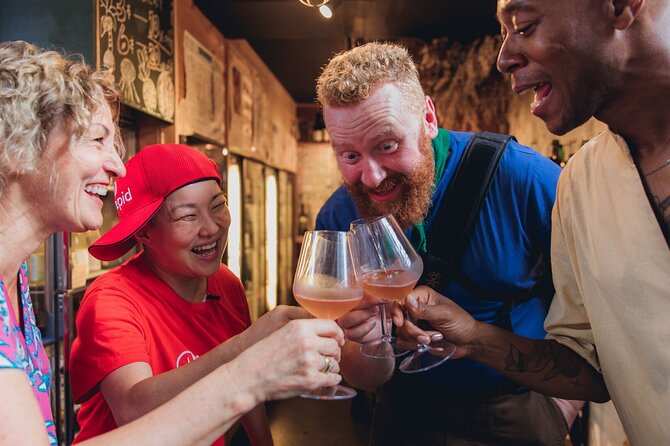
- Yurakucho brings the night to life: Finish with yakitori, a local tare sauce, and beer or sake near the office-worker drinking alleys.
- The group stays small: A maximum of eight people allows more help with menus, cooking, and subway transfers.
- Two drinks are included: Choose from sake, beer, or a soft drink, with alcohol served only to those aged 20 or older.
- Wagashi is a brief opening taste: Expect traditional sweets in Ginza, possibly bought from the department store to take along.
- Food restrictions matter: Vegetarian, vegan, and gluten-free options are not available.
Starting beneath the Mitsukoshi Lion in Ginza
The meeting point is the famous Lion statue outside Mitsukoshi Ginza at 4-chome. The tour begins after 5 pm, and punctuality matters. You should arrive early enough to find the statue, check your phone, and be ready to move at the stated start time.
This is a useful place to begin an evening in Tokyo. Ginza gives you a polished first look at the city, with bright signs, grand department stores, and plenty of people heading into the night. It is also a practical place to meet because Ginza Station is close by.
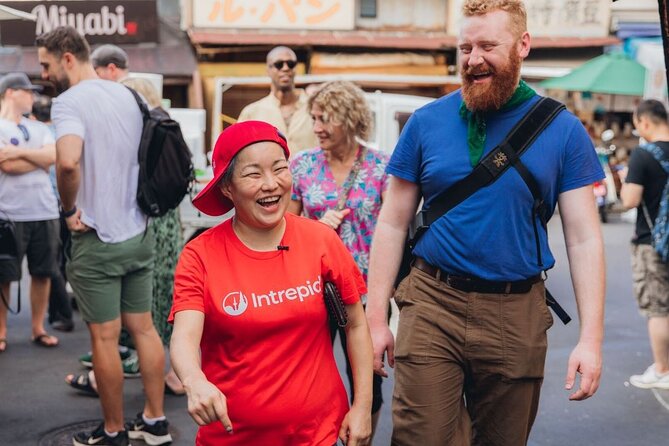
Your guide leads the group through the district before the food becomes the focus. Some departures may include a stop at Itoya, the well-known stationery shop. That is a pleasant Ginza detail, especially if you enjoy Japanese design and paper goods, but it is not a food stop.
The opening pace can be a little uneven. One departure began late while waiting for missing group members, and a few people found the guide walked too quickly through crowded streets. Stay alert at the start and keep the guide in sight, particularly when crossing roads or entering a department store.
A few more Tokyo trips to weigh up
- Tokyo: Shinjuku Food Tour (13 Dishes at 4 Local Eateries)
★ 5.0 · 6,603 reviews - Tokyo Tsukiji Fish Market Food and Culture Walking Tour
★ 5.0 · 3,184 reviews - Tokyo: Shinjuku Food Tour (15 Dishes and 4 Eateries)
★ 4.9 · 2,033 reviews
Wagashi at Mitsukoshi, a small first taste
The first food is wagashi, a traditional Japanese sweet. The exact selection can vary, and it may be purchased from the Mitsukoshi food department rather than served as a sit-down tasting.
That distinction matters. If you expect three full restaurants, this opening course may disappoint. Several people counted only two actual eateries, with the wagashi functioning as a small sample or takeaway treat.
Still, wagashi gives your guide a chance to explain an important side of Japanese food culture. These sweets are often associated with careful shapes, seasonal ideas, and tea. Here, though, the stop is short, so you should view it as an introduction rather than a detailed lesson.
One unusual add-on at one departure was a look at small lettuce plants growing under artificial light on an upper floor. This is not guaranteed, and it may not interest everyone. If the department-store visit runs long, the opening can feel less like a food tour and more like a general Ginza orientation.
Tsukishima Monja Street and the hotplate lesson
The tour then uses the Tokyo subway to reach Tsukishima, a downtown district known for monjayaki. Two subway tickets are included, so you do not need to work out the fare or route while keeping up with the group.
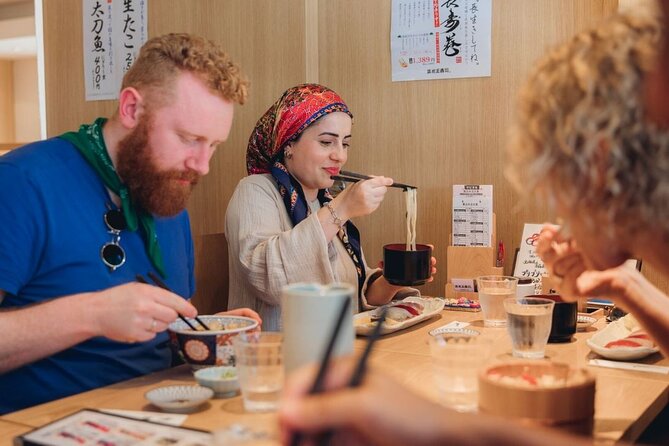
Monjayaki is a Tokyo specialty related to okonomiyaki, but the texture is much softer and looser. It arrives as a mixture that cooks on the griddle at your table. You and the group help shape it, scrape it, and eat it in small bites as it sizzles.
This is the most distinctive food moment of the evening. The cooking is part of the meal, and the chef or guide can explain how the dish developed as a local snack. You are not simply handed a plate. You get to see the ingredients change on the hot surface and learn the basic rhythm of eating it.
The flavor and contents can be modest. Cabbage is central, with seafood such as shrimp and mussels appearing in some servings. If you dislike cabbage or expect a large meal, adjust your expectations. Monjayaki is more about texture, local custom, and the fun of cooking than about a grand portion.
The stop lasts about 90 minutes, making it the longest part of the tour. That gives you time to eat, talk, and ask questions. It also means this is where the guide’s English and food knowledge matter most. Guides such as Yuko and Mizuki received especially warm praise for explaining unfamiliar dishes and helping the group feel comfortable at the grill.
The walk to and from the restaurant can feel longer than expected. One person found the route to the first food stop tiring, and another described the evening as involving a lot of fast walking and stairs. Wear shoes made for city streets, not just stylish evening footwear.
Yurakucho Yakitori Alley after work
After Tsukishima, you ride the subway again toward Yurakucho. The final stop is the Yurakucho Sanchoku Inshokugai, also called Yurakucho Farm to Table Dining Alley. It is a very different setting from Ginza’s department stores.
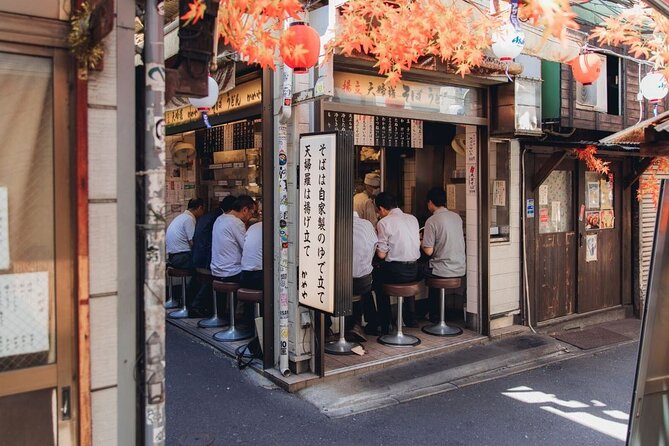
Here, small bars and restaurants sit close together under the railway area, creating the kind of after-work atmosphere many visitors would not find without local help. Office workers wind down over food and drinks, and the narrow spaces make the stop feel immediate and informal.
Yakitori is the main dish. These grilled skewers are usually seasoned with salt or tare, a savory-sweet sauce that differs from place to place. The experience is not only about eating chicken on sticks. It is about seeing how an ordinary Japanese bar handles a classic snack.
Be aware that yakitori can include less familiar cuts. One person expected standard chicken skewers but received cartilage instead. Another found some grilled meat underdone for personal taste. If you are particular about texture or prefer familiar cuts, ask your guide what is being served before you eat.
You receive one of your two included drinks here, often beer or sake. Some guides have made the sake pour a memorable part of the evening, with sake overflowing from a glass into a small wooden box. Alcohol is limited to people aged 20 and over. Anyone younger receives a soft drink instead.
The final stop is scheduled for about 75 minutes. You can say goodbye when the tour ends at Ginza Station, or remain at the bar after the official finish if the establishment allows it. The end point is convenient for continuing your own evening, though additional drinks are not included.
Same city, a completely different kind of day:
- Mt Fuji and Hakone 1-Day Bus Tour Return by Bullet Train
★ 5.0 · 26,383 reviews - 1-Day Tokyo Bus Tour
★ 5.0 · 14,250 reviews - Tokyo: TOKYO SKYTREE® Admission ticket
★ 4.5 · 11,192 reviews - Tokyo: teamLab Planets TOKYO Digital Art Museum Entry Ticket
★ 4.6 · 9,779 reviews
What the guides add to the evening
A good guide is central to this experience. The best guides do more than lead you through the subway. They translate menus, explain food customs, help with the hotplate, keep the group together, and suggest other places to eat during your stay.
Yuko was praised for making the subway transfers easy and for giving clear explanations at the monja restaurant. Mizuki was described as courteous, funny, and good at introducing foods that people had not tried before. Yuki and Shohei were also singled out for friendly, enjoyable hosting.
Guide quality can vary. Some people found the English difficult to follow or felt the cultural explanation was too limited. One person said the guide hurried ahead and did not make sure everyone stayed together. This is a small-group tour, but it is still a moving evening through busy streets and stations, so the guide’s communication style makes a real difference.
The company uses English-speaking guides, but that does not guarantee the same level of fluency on every departure. If learning about food and custom is your main reason for booking, pay close attention to the guide introduction and ask questions early. A quiet group can turn this into a simple meal outing, while an engaged group can get much more from it.
Is $122.33 a fair price?
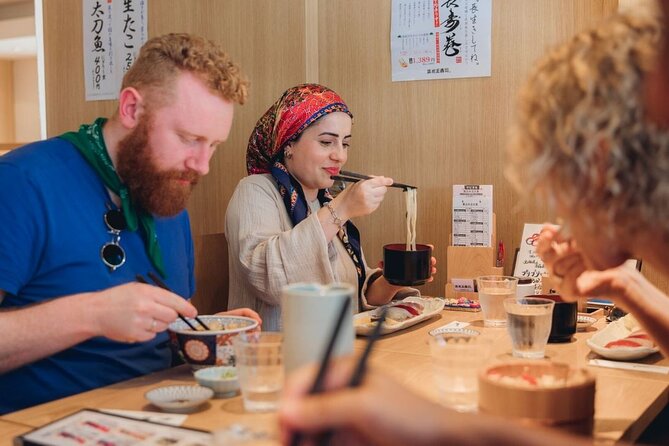
At $122.33 per person, this is not a cheap dinner. The price includes three food experiences as described, two drinks, two subway tickets, and about three and a half hours of guiding.
The value comes from access and confidence. You do not have to decipher a Japanese menu, work out which small bar welcomes newcomers, or navigate two subway trips while trying to keep your evening on schedule. You also get an introduction to monjayaki, a dish many first-time visitors would otherwise miss.
The value is weaker if you judge the tour by quantity. The wagashi portion may be small, and the two main restaurant stops may provide a lighter meal than you expect. Additional drinks cost extra, and the itinerary can feel expensive if your departure includes little explanation or if you were expecting three full eateries.
I would treat this as a guided introduction to local eating customs, not as a three-course dinner. Eat a light snack beforehand if you become hungry easily, but do not arrive after a large meal. The monjayaki and yakitori are the heart of the experience, and you should leave room for both.
Walking, transport, and evening comfort
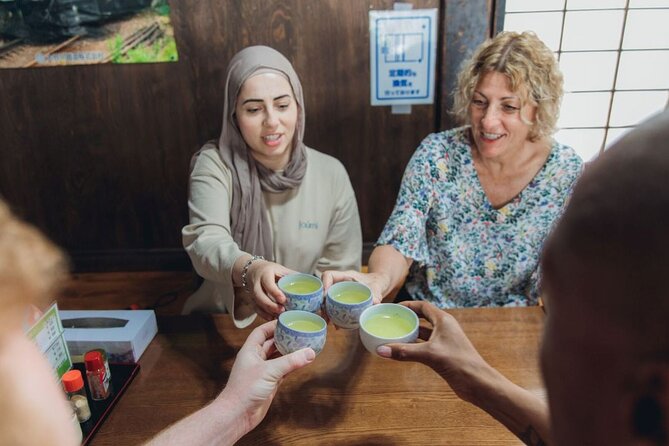
The tour lasts approximately three hours and 30 minutes. It combines neighborhood walking, department-store movement, subway rides, stairs, and time standing or sitting at restaurant counters and grills.
Two subway tickets are included, which is helpful for first-time visitors. The guide handles the route, but you still need to move at the group’s pace. Busy stations can involve stairs, and one person specifically noted the number of steps.
Comfortable walking shoes are essential. You should also keep your belongings close in crowded streets and stations, not because the tour is unsafe, but because the evening moves through active commercial areas.
The tour requires good weather. If poor weather causes cancellation, you are offered another date or a full refund. For your own planning, avoid placing this tour on the same evening as an important timed reservation.
Food restrictions and age rules
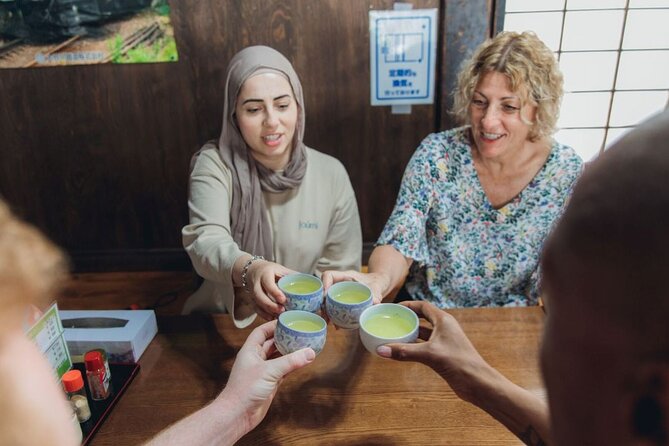
This is not a suitable choice for a vegetarian, vegan, or gluten-free diet. The restaurants cannot cater to those requirements, so you should choose another food experience if avoiding meat, seafood, or gluten is essential.
The minimum age is 12. The legal drinking age in Tokyo is 20, and anyone under 20 receives non-alcoholic drinks. The two included drinks are generally sake, beer, or a soft drink, while any extras are paid separately.
The menu may include seafood, chicken, cartilage, cabbage, and other ingredients you do not usually order at home. If you have allergies or strong dislikes, tell the guide before food is served. The available information does not promise that all allergies can be accommodated, so people with serious food allergies should take particular care.
Who will get the most from this Tokyo night walk?
I would recommend this tour to someone visiting Tokyo for the first time who wants help entering small local places. It suits people who enjoy trying unfamiliar food, cooking at the table, and meeting a few other people rather than eating a private dinner.
It is also a good first or second-night activity. You get a quick sense of Ginza, Tsukishima, and Yurakucho, plus practical suggestions for what to eat and see later in your stay. Guides can help you understand the subway and local dining habits before you go out on your own.
You may want to skip it if you want a large meal, a fixed list of standard chicken skewers, or a polished restaurant setting. It is also a poor match for strict dietary needs, limited walking ability, or anyone who dislikes cabbage, seafood, unusual cuts, or shared small-bar settings.
Should you book Tokyo After 5?
Book it if your priority is local access and guidance, especially the chance to cook monjayaki and finish in a small Yurakucho drinking alley. The best departures, led by guides such as Yuko, Mizuki, Yuki, or Shohei, can turn simple dishes into a lively lesson in how Tokyo eats after work.
Think twice if you are paying $122.33 mainly for food quantity. The opening wagashi stop may be brief, some departures may feel like two restaurants rather than three, and guide communication can vary. Go with comfortable shoes, a flexible appetite, and realistic expectations, and this can be a useful, sociable introduction to Tokyo’s night food culture.
FAQ
Where does the tour start?
It starts at the Lion statue in front of Mitsukoshi Ginza, at 4-chome-6-16 Ginza, Chuo City, Tokyo.
Where does the tour finish?
The tour ends at Ginza Station, at 4-chome-1-2 Ginza, Chuo City, Tokyo.
How long does the experience last?
The experience lasts approximately three hours and 30 minutes.
What food is included?
The included food experiences are wagashi, monjayaki, and yakitori. The wagashi may be a small sample or takeaway item, while monjayaki is cooked at the table and yakitori is served at the final local dining alley.
How many drinks are included?
Two local drinks are included. These may be sake, beer, or a soft drink. Additional drinks are available for purchase.
Can children or people with dietary restrictions join?
The minimum age is 12. People under 20 receive non-alcoholic drinks. Vegetarian, vegan, and gluten-free options are not available on this tour.
More Evening Experiences in Tokyo
- Tokyo Night Foodie Tour in Shinjuku – Seasonal Sushi, Wagyu Beef
★ 5.0 · 1,161 reviews - Tokyo: Daikoku JDM Car Meet & Night Car Culture Tour
★ 4.8 · 626 reviews - Tokyo: Samurai Entertainment Night Show in Kanda Shrine
★ 4.6 · 417 reviews - The Dark Side of Tokyo – Night Walking Tour Shinjuku Kabukicho
★ 4.5 · 297 reviews
Just added around Tokyo
- Tokyo: Customizable Private Guided Walking Tour★ 4.5 · 129 reviews
- Private Harajuku Omotesando Architecture Tour★ 4.9 · 18 reviews
- Tokyo: Private Personalized Local Food Tour★ 4.5 · 101 reviews
- Tokyo: Guided Helicopter Ride★ 4.9 · 24 reviews
- Tokyo: Guided Walking Tour of Tsukiji Market with Lunch★ 4.4 · 24 reviews
- Tokyo GINZA: KONPARU Japanese Cabaret Show with Drink★ 4.8 · 38 reviews
- Tokyo: Guided Walking Tour of Tsukiji Market with Breakfast★ 4.4 · 134 reviews
- Tokyo: Gotokuji Cat Temple, Shinjuku Cat Cafe & 3D Cat Tour★ 4.9 · 38 reviews
Evening Experiences, compared.
Gion Magical Night Walking Tour with Geisha Trivia
Read our review →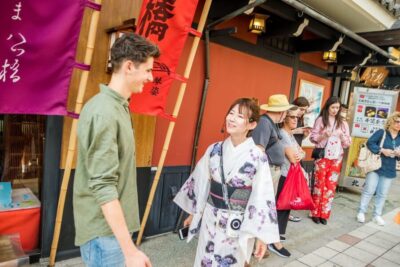
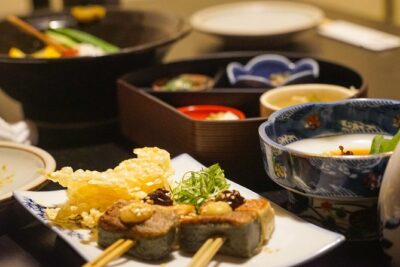
Kyoto Night Foodie Tour in Gion (9+ dishes + 6 Sake tastings)
Read our review →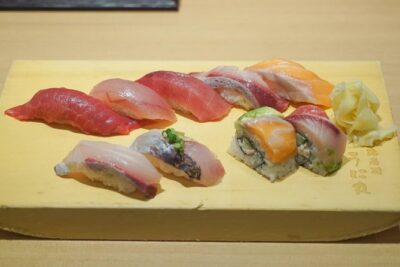
Tokyo Night Foodie Tour in Shinjuku – Seasonal Sushi, Wagyu Beef
Read our review →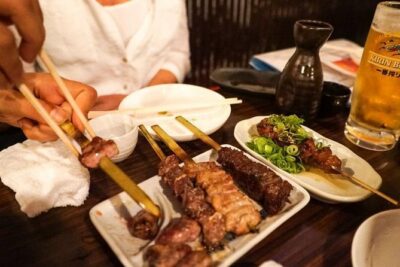
Osaka Bar Hopping Night Walking Tour in Namba (3 bars, 6 tastes)
Read our review →
Kyoto Gion Night Walk & Geisha District Guided Tour
Read our review →
Kyoto Ghost Tour: Dark Tales, Urban Legends, Bamboo Forest Night
Read our review →Browse the lists this tour appears in