
REVIEW · FOOD MARKET TOURS
Tokyo: Shinjuku Food Tour (13 Dishes at 4 Local Eateries)
Shinjuku is easiest to understand with a plate in front of you. This three-hour walk links Omoide Yokocho, Kabukicho, and Golden Gai with four food stops, giving you 13 Japanese dishes without the usual guesswork over menus, ordering, and payment.
I like the tour’s wide food mix, which can include an izakaya, a food stall, a traditional eatery, and a gastrobar. I also like the small maximum of 12 people and the two included drinks, since they make the evening feel social without turning it into a large bus outing.
The main caution is consistency. Guides such as May, Hoshi, Igor, Emma, and Kei have earned strong praise for food knowledge and local tips, but the quality of the explanation and exact route can vary. One group also did not reach Golden Gai, and a few people felt the food descriptions were too brief.
In This Review
- Key points at a glance
- Why Shinjuku works so well for a food tour
- Starting near Shinjuku Station
- Omoide Yokocho: the narrow-lane opening
- Kabukicho: food alongside nightlife
- Golden Gai: preserved postwar Tokyo
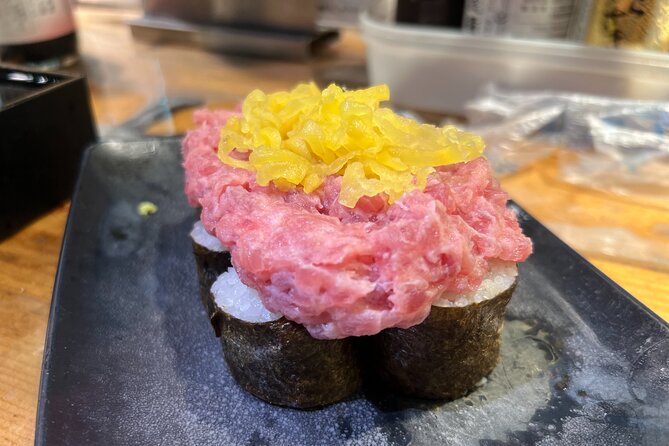
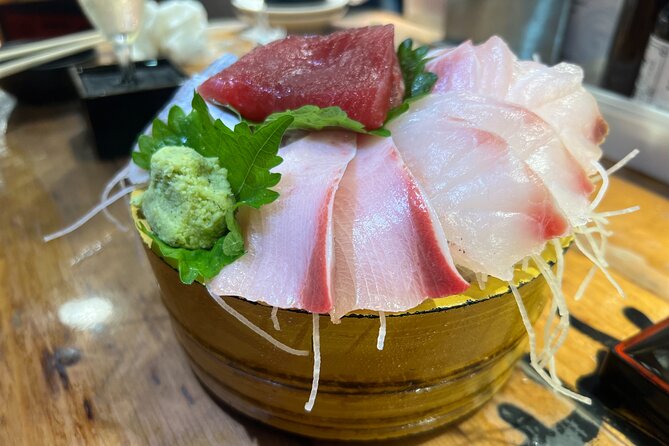
- Four eateries, 13 dishes, and two drinks
- The guide can make or break the evening
- Price and value at $86.22
- Walking, timing, and practical comfort
- Who should book this Shinjuku food walk?
- Should you book it?
- FAQ
- How long does the Shinjuku food tour last?
- How many dishes are included?
- Are drinks included?
- What types of places does the tour visit?
- Which Shinjuku areas are included?
- Where does the tour begin?
- Where does the tour end?
- How large is the group?
- Can I cancel for a full refund?
Key points at a glance
- Thirteen dishes at four stops: You sample a broad spread of Japanese food instead of spending the evening at one restaurant.
- Three famous Shinjuku areas: The route covers Omoide Yokocho, Kabukicho, and, when the route allows, Golden Gai.
- Two included drinks: Alcoholic and non-alcoholic options are included, so you do not need to keep paying at each stop.
- A group capped at 12: This is small enough for conversation, though a full group can still feel tight in tiny eateries.
- A useful first-night tour: You get food ideas, ordering confidence, and neighborhood orientation in one evening.
- A three-hour walking plan: Wear comfortable shoes and arrive at the meeting point with time to spare.
Why Shinjuku works so well for a food tour
Shinjuku can feel like several cities packed into one district. Office towers, department stores, nightlife streets, narrow alleys, small bars, and old food counters all sit close together. A first visit can be exciting, but it can also leave you unsure which doorway is welcoming and which place is aimed mainly at a different crowd.
That is where this tour earns its keep. You are not simply taken to a famous restaurant for one meal. You move through several food settings and see how the district changes from one block to the next.
The included food also removes a common source of stress. You do not need to study every menu, order several dishes blindly, or stop to settle a bill at each place. Your guide handles the food choices and helps explain what arrives.
The strongest version of this experience is an introduction, not a final word on Tokyo dining. You will not cover every style of Japanese cooking in three hours. You will, however, gain a useful set of starting points for the rest of your trip.
More Food Market Tours in Tokyo
- Tokyo Tsukiji Fish Market Food and Culture Walking Tour
★ 5.0 · 3,184 reviews - Tokyo: Shinjuku Food Tour (15 Dishes and 4 Eateries)
★ 4.9 · 2,033 reviews - Best of Shinjuku: Izakaya Food Tour (4 Stops, 14+ Tastings)
★ 5.0 · 1,863 reviews
Starting near Shinjuku Station
The meeting point is outside AOKI Shinjukunishiguchi Honten at 1-chōme-8-5 Nishishinjuku. This is near public transportation, but Shinjuku Station is famously large, so give yourself extra time to find the correct exit and walk to the store.
This matters more than it might in a smaller neighborhood. One group had trouble finding the starting point, though the guide waited and helped them reach the meeting place. I would still avoid cutting it close. The tour has four food stops in about three hours, and a late start can make the evening feel rushed.
The walk ends near the Southeast Exit of JR Shinjuku Station. If you would rather return to the starting point, tell your guide and they can escort you back to the Starbucks near the meeting area.
The group limit is 12 people. That is a sensible number for a food walk, especially when you are entering tiny restaurants. Still, 12 people can feel like a crowd in a narrow izakaya, and one person found the full group too large for the experience. If you prefer a private meal with long conversations at each stop, this is not that kind of outing.
Omoide Yokocho: the narrow-lane opening
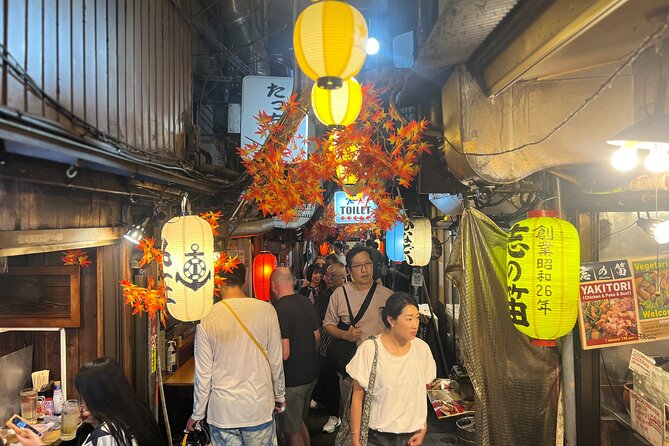
The first hour is set around Omoide Yokocho, a compact area of narrow lanes lined with small izakayas and food stalls. The setting gives you an immediate taste of old-style Shinjuku dining, where the room may be small, the menu may be short, and the food comes in quick, shareable portions.
This is a good place to begin because the atmosphere does much of the teaching. You see how a tiny Japanese drinking spot works, rather than hearing only a general explanation about izakaya culture.
Expect food to arrive in several portions as the group settles in. The tour includes a total of 13 dishes, but the exact dishes can vary by guide, restaurant availability, and dietary needs. One person found raw food on the table without enough explanation, so ask directly what each item is and how you should eat it.
That small question can improve the whole evening. Ask about the ingredients, the usual way to eat the dish, and whether it is meant to be shared. Guides who explain these details well, including Hoshi and Igor, were praised for making unfamiliar foods easier to try.
Omoide Yokocho is also a place to watch your footing and personal space. The lanes are tight, the eateries are small, and the walking portion includes frequent movement between crowded streets and compact interiors.
Kabukicho: food alongside nightlife
The tour then moves into Kabukicho, Tokyo’s best-known entertainment district. Your guide explains the area’s many types of establishments before taking you to a traditional Japanese restaurant.
This part is valuable because Kabukicho is easy to misread. It is not only a nightlife zone. It is also a district where restaurants, bars, entertainment venues, bright signs, and regular neighborhood dining sit side by side. A guide can give you context that is hard to pick up during a solo walk.
The traditional restaurant stop adds contrast to the first eatery. Instead of staying with one style of casual food, you get another look at Japanese dining and more dishes toward the 13-item total.
The food was the high point for most people who enjoyed the tour, with particular praise for the range and quality. One especially liked a pork katsu dish at a restaurant described as the oldest and famous for that food. Other comments point to unusual tastes, including snails, so this is a good choice if you want a nudge toward dishes you might not order alone.
You should tell the guide about food preferences and restrictions at the beginning. Kei was praised for making sure everyone had something suitable, but the available details do not promise that every dietary request can be met. The tour is built around shared tastings, so strict restrictions deserve a clear conversation before booking.
Same city, a completely different kind of day:
- Mt Fuji and Hakone 1-Day Bus Tour Return by Bullet Train
★ 5.0 · 26,383 reviews - 1-Day Tokyo Bus Tour
★ 5.0 · 14,250 reviews - Tokyo: TOKYO SKYTREE® Admission ticket
★ 4.5 · 11,192 reviews - Tokyo: teamLab Planets TOKYO Digital Art Museum Entry Ticket
★ 4.6 · 9,779 reviews
Golden Gai: preserved postwar Tokyo
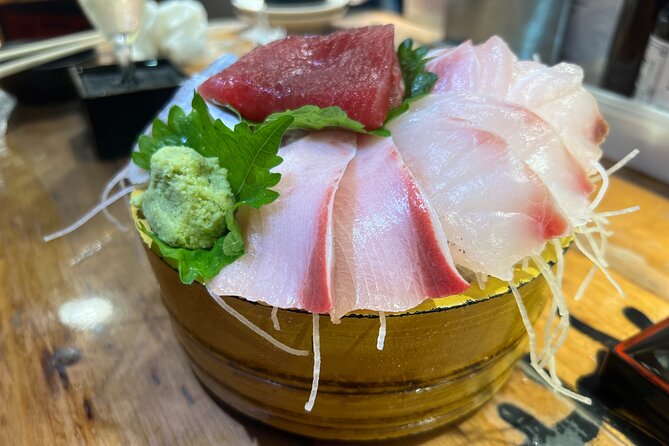
The final named area is Shinjuku Golden Gai, a maze of narrow lanes known for more than 200 tiny bars. Its small buildings and compact alleys preserve a piece of postwar Tokyo that feels very different from the high-rise streets nearby.
Golden Gai is not mainly a food market. Its appeal comes from the scale and character of the lanes, along with the way old buildings survive in one of Tokyo’s most modern districts. A guide can help you understand what you are seeing instead of treating it as a quick photo stop.
The published route includes Golden Gai, but the actual visit may not always happen. One person booked partly for this stop and did not go there. That is the clearest practical warning in the whole experience: if Golden Gai is your main reason for booking, confirm the expected route with the operator before paying.
Some guides add extra sights along the way. Kei took a group past the giant 3-D cat, Godzilla on a building, and the red-light district. These additions are not guaranteed, but they show how the walk can become a broader introduction to Shinjuku rather than a simple restaurant crawl.
Four eateries, 13 dishes, and two drinks
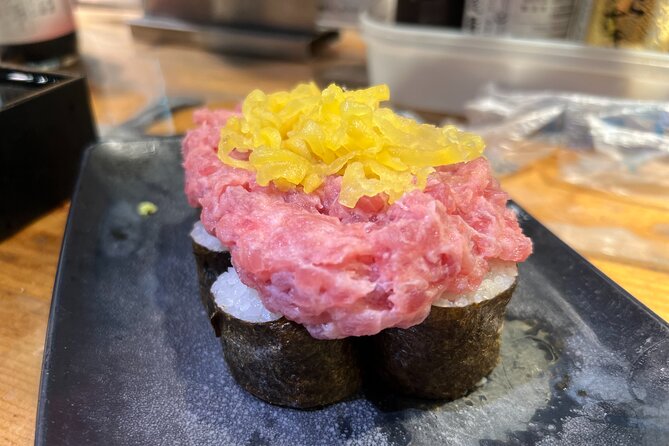
The food plan covers one stall, one izakaya, one traditional eatery, and one gastrobar. That range is the tour’s strongest practical feature. You can compare settings as well as flavors, and you get more than one chance to find a dish that suits you.
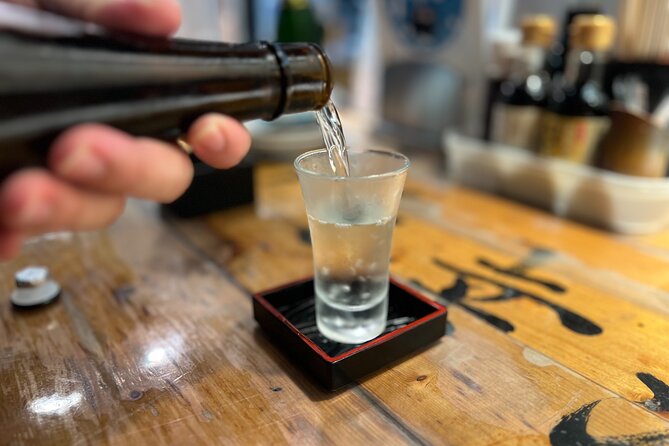
Two drinks are included, with alcoholic and non-alcoholic choices. That is useful in an izakaya-centered evening, where drinks can quickly increase the final bill. Gratuity is not included, but it is optional.
The phrase 13 dishes sounds large, and it is. Come hungry. The food is spread across four places, so you are tasting rather than sitting down for four full meals, but the total can still fill you up. One person described the tour as something that fills both your stomach and your senses, which is a fair expectation.
The exact balance matters. Some people found the food varied, local, and delicious. Others felt the dishes were ordinary and not worth the price, particularly compared with food they found on their own. I would book this for access and guidance, not because every item will be a personal favorite.
The tour can also be useful for cautious eaters. You get small chances to try foods you might otherwise pass by, and you can ask before taking a bite. The best guides turn each dish into a short lesson about ingredients, customs, or ordering.
The guide can make or break the evening
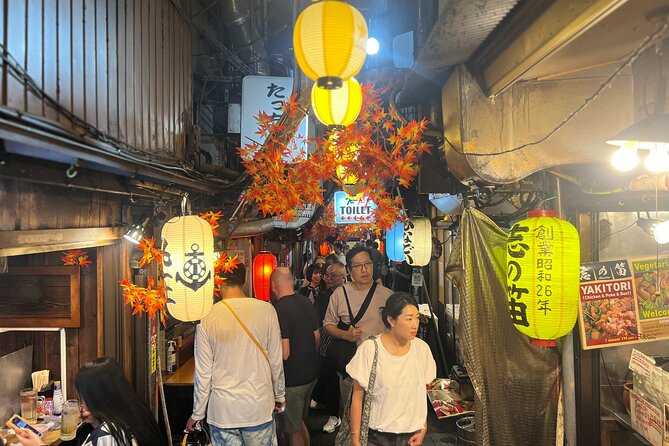
The guide is the most important variable here. May was praised for friendly service, fun stops, and useful suggestions for the rest of a Tokyo visit. Hoshi received especially strong marks for clear English and explanations of Japanese food and culture.
Igor was praised for explaining both the dishes and the areas along the route. Emma was described as energetic and good at presenting cultural background in an easy way. Other guides, including Agathe, Mak, Nathan, Lloyd, Daiichi, Izzy, Paula, Shane, and Maya, were singled out for warmth, humor, help with food choices, or practical advice.
That range tells you two things. First, this provider has many guides who can add real value. Second, you should not assume every guide will give the same depth of commentary. Some people wanted more information about the restaurants and dishes and felt they were mainly being moved from place to place.
If you want the cultural side, speak up. Ask why a restaurant was chosen, what makes the dish local, and how people normally order it. A good guide will welcome those questions. If the guide is less talkative, direct questions can still make the experience more useful.
The social side is another plus. A solo participant met people on the tour and later made plans with them in Tokyo. The small group, shared plates, and short walks between stops create an easy setting for conversation.
Price and value at $86.22
At $86.22 per person, this is not the cheapest way to eat in Shinjuku. You can find inexpensive Japanese food on your own, and independent dining gives you complete control over the menu and pace.
The price makes more sense when you count what is included: 13 dishes, four eateries, two drinks, a professional guide, and a three-hour walking tour. You are also paying for the time saved in finding places and deciding what to order.
I see the value as strongest for a first visit, a solo visitor, or anyone who wants a social evening with a clear plan. It is weaker for an experienced Tokyo eater who already knows Shinjuku’s izakayas and feels comfortable ordering without help.
The tour also works well early in a Tokyo stay. You can note dishes you like, ask for restaurant suggestions, and use the guide’s advice later. Nathan, for example, was praised for giving useful tips for the rest of a visit, and several guides sent or shared further food recommendations.
Walking, timing, and practical comfort
The experience lasts about three hours and includes city walking between stops. The pace was described as manageable by someone with a leg injury, while another person advised being prepared to walk enough to work off the food.
Wear comfortable shoes. The route moves through busy entertainment streets and narrow lanes, and the food stops are spread across the district rather than placed in one building.
Most people can take part, and the activity is near public transportation. If mobility is a concern, raise it with the operator before the tour. One guide helped coordinate taxis for a parent with mobility issues, but that kind of assistance should not be treated as a formal feature of the booking.
Confirmation comes when you book, and the experience uses a mobile ticket. Cancellation is free up to 24 hours before the start time. Inside 24 hours, the payment is not refunded, and changes are not accepted.
Who should book this Shinjuku food walk?
I would choose this tour if you want a friendly introduction to Shinjuku food without spending your first evening decoding menus. It is a good match for solo visitors, couples, small groups, and first-time Tokyo visitors who want both food and neighborhood context.
It also suits adventurous eaters. The format gives you a chance to try items such as snails and unfamiliar raw dishes, with a guide nearby to explain them. You can also meet other people without committing to a full group dinner.
I would hesitate if Golden Gai is the one essential stop, since the route may not always reach it. I would also hesitate if you want detailed culinary instruction at every dish or a guaranteed list of exact foods.
Ask questions, arrive early, and tell the guide about restrictions. Those simple steps give you the best chance of getting the full value from the evening.
Should you book it?
Book it if you want a well-planned, social way to taste Shinjuku and learn how its food districts fit together. The combination of 13 dishes, four eateries, two drinks, and a three-hour walk is a solid first-night package at $86.22, especially when guides such as Hoshi, May, Igor, Emma, or Kei are leading with energy and clear explanations.
Skip it if you already have a strong Shinjuku food plan, need a guaranteed Golden Gai visit, or prefer choosing every dish yourself. For most first-time visitors, though, this is a practical shortcut into a complicated dining district, with enough variety to make the evening feel like more than one restaurant meal.
FAQ
How long does the Shinjuku food tour last?
The tour lasts approximately three hours.
How many dishes are included?
The experience includes 13 Japanese dishes at four eateries.
Are drinks included?
Yes. Two complimentary drinks are included, with alcoholic and non-alcoholic options.
What types of places does the tour visit?
The food plan includes one stall, one izakaya, one traditional Japanese eatery, and one gastrobar.
Which Shinjuku areas are included?
The route is planned around Omoide Yokocho, Kabukicho, and Shinjuku Golden Gai.
Where does the tour begin?
It begins at AOKI Shinjukunishiguchi Honten, 1-chōme-8-5 Nishishinjuku, Shinjuku City, Tokyo 160-0023, Japan.
Where does the tour end?
The tour concludes near the Southeast Exit of JR Shinjuku Station. You can ask the guide to escort you back to the Starbucks near the starting point.
How large is the group?
The maximum group size is 12 people.
Can I cancel for a full refund?
Yes. You can cancel at least 24 hours before the experience start time for a full refund. Cancellations or changes made within 24 hours are not accepted and are not refunded.
More Food in Tokyo
- Tokyo Night Foodie Tour in Shinjuku – Seasonal Sushi, Wagyu Beef
★ 5.0 · 1,161 reviews - Tsukiji Fish Market: Street Food & Culture Walking Tour
★ 5.0 · 669 reviews - Tsukiji Fish Market Small-Group Food Walking Tour
★ 5.0 · 621 reviews - Best of Shibuya Food Tour
★ 5.0 · 612 reviews
More Food & Drink in Tokyo
- Tokyo: Tsukiji Fish Market Food and Walking tour
★ 5.0 · 1,724 reviews - Eat and Drink Like a Local: Tokyo Ueno Food Tour-Taverns&Ramen
★ 5.0 · 957 reviews - Tokyo: Shibuya Food Tour (13 dishes and 4 Eateries)
★ 5.0 · 770 reviews - Tokyo: Tsukiji Fish Market Food and Culture Walking Tour
★ 4.7 · 757 reviews
Just added around Tokyo
- Tokyo: Customizable Private Guided Walking Tour★ 4.5 · 129 reviews
- Private Harajuku Omotesando Architecture Tour★ 4.9 · 18 reviews
- Tokyo: Guided Helicopter Ride★ 4.9 · 24 reviews
- Tokyo: Guided Walking Tour of Tsukiji Market with Lunch★ 4.4 · 24 reviews
- Tokyo: Private Personalized Local Food Tour★ 4.5 · 101 reviews
- Tokyo GINZA: KONPARU Japanese Cabaret Show with Drink★ 4.8 · 38 reviews
- Tokyo: Guided Walking Tour of Tsukiji Market with Breakfast★ 4.4 · 134 reviews
- Tokyo: Gotokuji Cat Temple, Shinjuku Cat Cafe & 3D Cat Tour★ 4.9 · 38 reviews
Food Market Tours, compared.
Tokyo Tsukiji Fish Market Food and Culture Walking Tour
Read our review →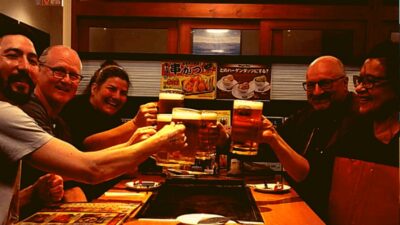
Shinsekai Food Tour with 13-15 Dishes at 5 Eateries
Read our review →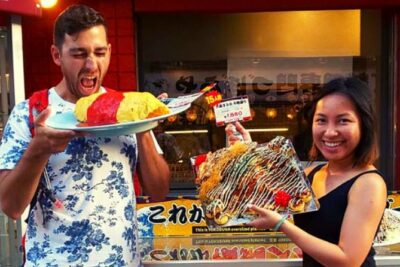
Osaka Food Tour: 13 Dishes at 5 Local Eateries
Read our review →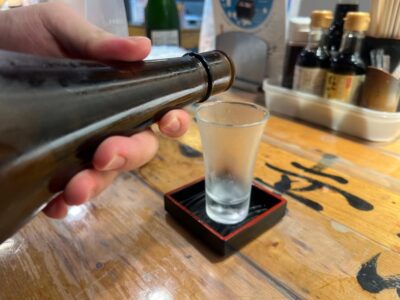
Shinjuku Food Tour (15 Dishes and 4 Eateries)
Read our review →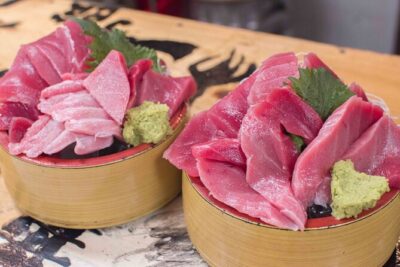
Best of Shinjuku: Izakaya Food Tour (4 Stops, 14+ Tastings)
Read our review →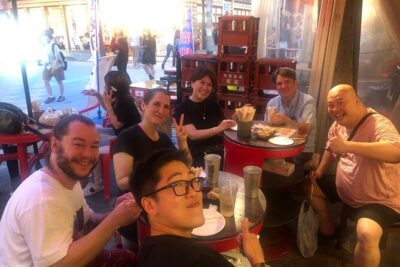
Hungry Osaka Street Food Tour:15 Tastings & 3 Drinks with a Local
Read our review →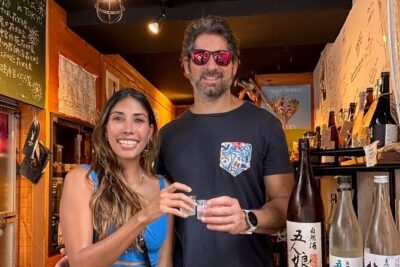
Browse the lists this tour appears in