
REVIEW · FOOD MARKET TOURS
Tokyo: Tsukiji Fish Market Guided Walking Tour
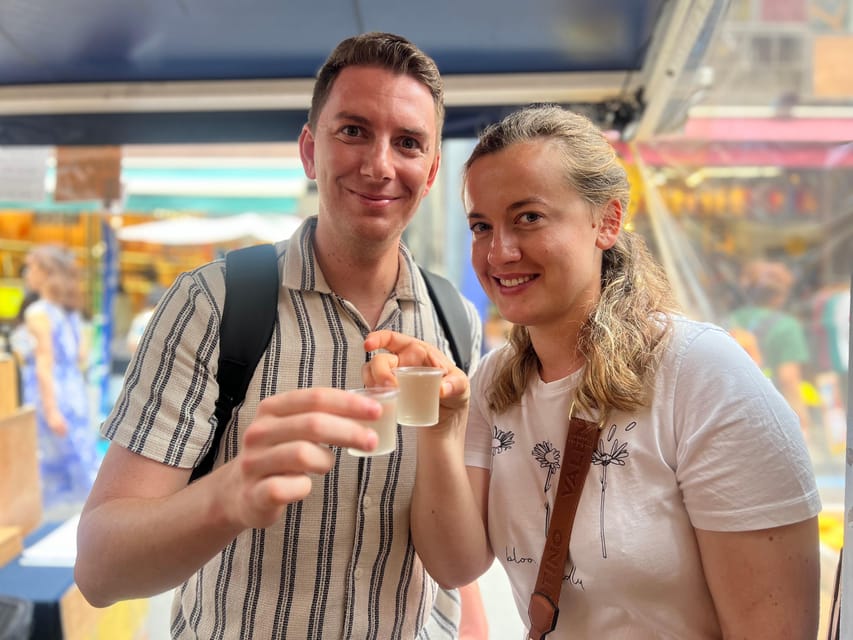
Tsukiji is best understood one bite and one stall at a time. This two-hour walking tour begins at Tsukiji Hongwan-ji, then leads you through the Outer Market’s seafood counters, dried-goods shops, sweets stalls, and small food stands. Guides such as Jim, Rie, Yayoi, and Sayaka help you order and explain what you are seeing.
I like the small groups of up to 10 and the freedom to choose your own food instead of being locked into a set menu. I also like the useful mix of temple culture, market history, and eating advice. The catch is simple: food and drinks cost extra, and some tastings can be pricey, so bring cash and set a food budget.
In This Review
- Key points to know
- Starting at Tsukiji Station with a clear plan
- Tsukiji Hongwan-ji gives the market a cultural opening
- Entering the Tsukiji Outer Market
- What you can eat, from tamago to wagyu
- Why the guide makes such a difference
- What the $22 price really buys you
- A practical pace for a crowded market
- Who will enjoy this Tsukiji tour most
- Booking, cancellation, and meeting details
- FAQ
- How long does the Tsukiji Fish Market tour last?
- Where do I meet the guide?
- Is food included in the tour price?
- How much does the tour cost?
- What foods might I try?
- Do I need to bring cash?
- What language is the tour offered in?
- How large is the group?
- Can I cancel the booking?
- Should you book this Tsukiji walk?
Key points to know
- Tsukiji Hongwan-ji comes first: Spend about 15 minutes seeing the temple and learning how religion and food culture fit into the neighborhood.
- You choose what to eat: Try items such as tamago, oysters, sushi, wagyu beef, eel, sea urchin, sweets, and sake, but pay each stall separately.
- The guide solves the market maze: This matters when crowds, unfamiliar menus, and small counters make independent wandering awkward.
- Cash is essential: Several tastings and purchases are paid directly to vendors, and some products can cost more than expected.
- The tour is more than seafood: You may learn about vegetables, spices, dried fish, fruit, nuts, sweets, and other Japanese cooking staples.
- It is a good first-day activity: You leave with food suggestions and a better sense of how to approach Japanese markets for the rest of your trip.
Starting at Tsukiji Station with a clear plan
Your meeting point is the Starbucks in front of Tsukiji Station. The guide waits in front of the bench, which gives you a simple landmark in a busy part of Tokyo. There are two starting-location options listed, but the stated meeting point is the Starbucks at Tsukiji Station, so check your booking details before setting off.
From there, you walk about five minutes to Tsukiji Hongwan-ji. That short transfer gets the tour moving without wasting time on transport. Wear comfortable shoes, since the experience is on foot and the market section involves steady walking, stopping, and standing.
The tour lasts two hours. That is long enough to get a useful introduction without turning the market into an all-day food crawl. It is also short enough to fit neatly into a morning or early afternoon plan, depending on the available departure time.
You meet an English-speaking guide, and the group is limited to 10 people. That size matters here. A large party would have trouble staying together at narrow stalls, while a small group can pause for explanations and make food choices without creating too much confusion.
More Food Market Tours in Tokyo
- Tokyo: Shinjuku Food Tour (13 Dishes at 4 Local Eateries)
★ 5.0 · 6,603 reviews - Tokyo Tsukiji Fish Market Food and Culture Walking Tour
★ 5.0 · 3,184 reviews - Tokyo: Shinjuku Food Tour (15 Dishes and 4 Eateries)
★ 4.9 · 2,033 reviews
Tsukiji Hongwan-ji gives the market a cultural opening
The first formal stop is Tsukiji Hongwan-ji, with around 15 minutes for guided sightseeing. The temple is known for detailed carvings and a calm interior, so it provides a sharp contrast to the food stalls that follow.
I like this opening because it keeps the tour from becoming a simple parade of snacks. You get a short introduction to a religious and cultural site before looking at the ingredients used in everyday Japanese cooking. Guides have explained temple details, local beliefs, and the area’s past, giving the market visit a wider setting.
Do not expect a long temple lecture. Fifteen minutes is a brief visit, and the main focus remains Tsukiji. Still, it is enough time to look closely, ask questions, and understand why the neighborhood is more than a place to buy fish.
Some guides also add nearby temples or shrines when time allows, but the confirmed itinerary centers on Tsukiji Hongwan-ji. Treat any extra stop as a possible bonus, not a guaranteed part of the plan.
Entering the Tsukiji Outer Market
After another five-minute walk, you reach the Tsukiji Outer Market. This is where most of the tour takes place. The market is filled with stalls selling seafood, vegetables, fruit, dried fish, shrimp, scallops, sweets, spices, nuts, and other ingredients used in Japanese cooking.
The itinerary lists two 50-minute guided visits in the Outer Market, giving you roughly 100 minutes among the food stalls. In practical terms, that means the market is the heart of the experience, not a quick photo stop.
Tsukiji can feel confusing on your own. There are many choices, unfamiliar products, busy lanes, and small vendors selling items that may not be obvious to a first-time visitor. Your guide points out which stalls are worth your time, explains what products are, and helps with ordering when needed.
That service is especially useful if you do not read Japanese menus or are unsure about market etiquette. Guides have helped people choose between several options, handle payments, and avoid stalls that feel less suitable for their interests. You still decide what to buy, but you are not forced to make every decision without context.
The market is active even on weekday mornings. You may need to wait briefly, keep close to the group, and accept that not every stall can be visited. The benefit is that the guide helps you use the limited two-hour window well.
What you can eat, from tamago to wagyu
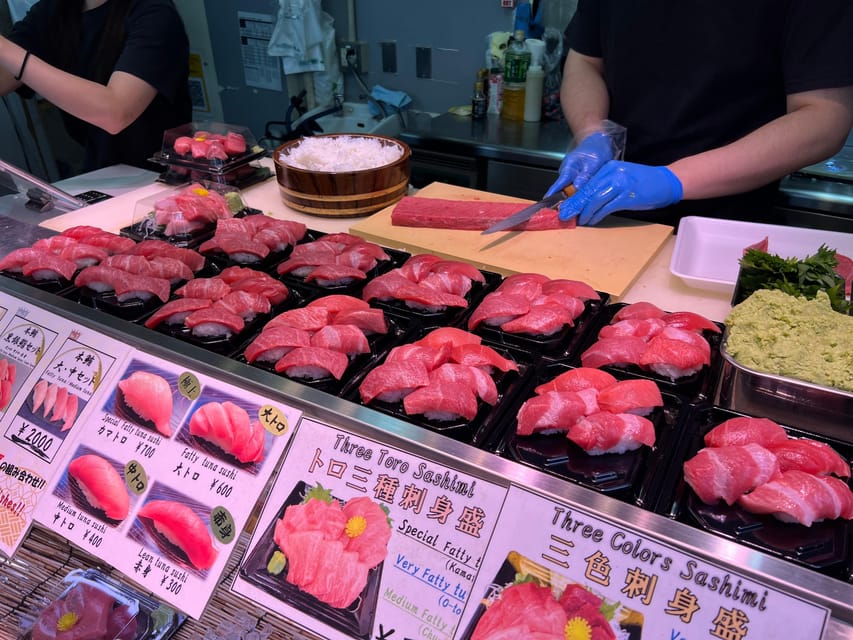
Food is not included in the $22 tour price. That may sound like a drawback, but I see a real advantage in the arrangement. You order only what appeals to you, rather than paying for a fixed tasting menu filled with items you may not want.
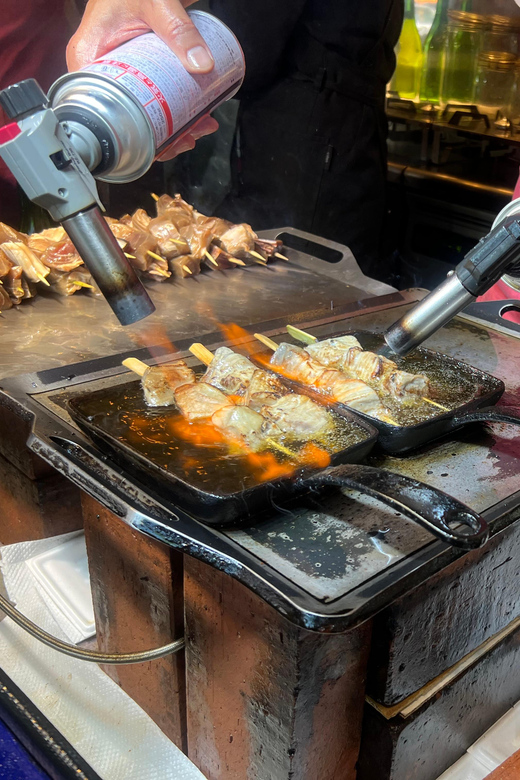
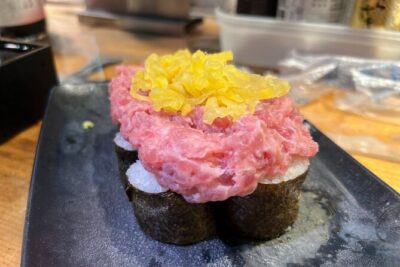
Past stops have included tamago, oysters, sushi, fatty tuna, wagyu beef, unagi eel, sashimi, sea urchin, nuts, dried seafood, sweets, and matcha recommendations. Some people have tried whale sashimi and sake as well. The exact selection depends on the guide, current stall offerings, and your own choices.
Tamago, or Japanese rolled omelet, has been a favorite for some participants. It is an easy introduction to the market if you are not ready for raw seafood. Wagyu beef skewers offer another non-fish option, while eel gives you a cooked seafood choice with a different texture and flavor from sushi.
If you like seafood, this is a good place to be adventurous. You might find oysters, tuna, sea urchin, or sashimi served in ways you would not think to order alone. If you do not like seafood, you are not stuck. Beef, egg dishes, sweets, nuts, fruit, and other products can fill out the experience.
Some stalls offer free samples, including snacks and dried goods. These small tastes help you learn what you like before spending money. Do not assume every food you see is included, though. Free samples are occasional, and most substantial items require a separate purchase.
The best way to approach the food is to share small portions with the group when possible. That lets you try more varieties and keeps the cost under control. The alternative is to buy a large serving at every stop, which can quickly become expensive and uncomfortable within two hours.
More Walking Tours in Tokyo
- Tokyo: Imperial Palace and Shogun Historical Walking Tour
★ 5.0 · 2,251 reviews - Tokyo: Shinjuku Local Bar and Izakaya Guided Walking Tour
★ 4.9 · 1,794 reviews - Tokyo: Tsukiji Fish Market Food and Walking tour
★ 5.0 · 1,724 reviews - Tokyo: Asakusa Walking Tour with Sensoji Temple Visit
★ 4.8 · 1,583 reviews
Why the guide makes such a difference
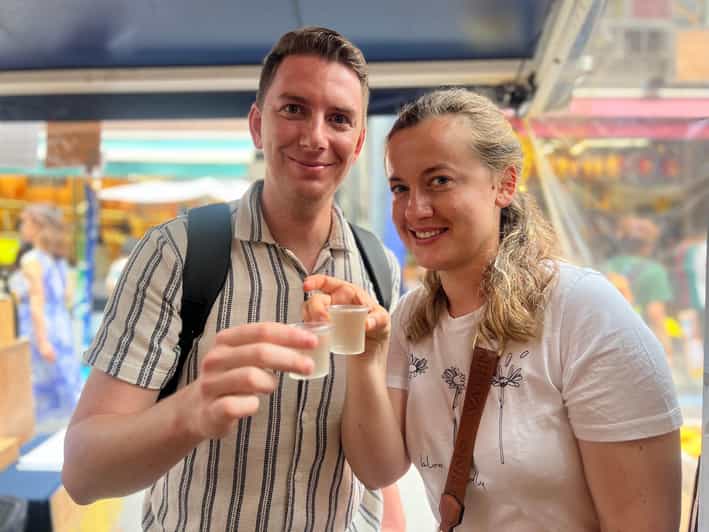
A guide is most valuable here not because you need directions to a market, but because you need help interpreting it. The stalls sell ingredients with specific uses, grades, preparation methods, and traditions. A good explanation turns a quick purchase into a lesson in Japanese cooking.
Guides including Jim, Haydn, Rie, Yayoi, Nicolas, Minori, Sayaka, Shino, and Joe have been praised for explaining food, customs, temple details, and local history in clear English. The assigned guide will vary, so do not book solely for one particular person. Still, the range of guide names gives you a sense of the regular team running these walks.
Several guides are especially good at connecting food with daily life. You may learn why an ingredient matters, how it is normally used, or how a market product fits into Japanese eating habits. That context is more useful than simply being told that a particular fish or sweet is popular.
Guides also help with social details. They can explain how to order, point out suitable portions, help with payments, and answer questions at the stall. One guide even helped a participant arrange a taxi back to the hotel, although that is not a promised part of the tour.
The strongest benefit is confidence. Instead of staring at ten unfamiliar choices, you can ask what is worth trying and why. You remain free to say no, but you get a clearer path through the choices.
What the $22 price really buys you

At $22 per person, this is inexpensive for a two-hour small-group activity in central Tokyo. The entry fees for Tsukiji Fish Market and Hongwan-ji Temple are free, so you are mainly paying for the guide’s time, explanations, market navigation, and photos taken during the tour.
The food bill is separate. This makes the total cost flexible, but you need to plan for it. A cautious eater can spend little by choosing one or two modest items and accepting samples. Someone eager to try wagyu, sea urchin, tuna, oysters, sweets, and sake could spend considerably more.
Some products are not cheap. Wagyu, premium tuna, sea urchin, and certain specialty seafood can carry a high price. Ask the guide or vendor about the cost before ordering, especially if you are sharing several items.
I consider the flexible food setup a good value for couples, families, and mixed groups. One person can order seafood, another can choose beef, and someone else can skip a stop without wasting money on a package meal.
The tour also saves you from paying for food you would not choose. That is a better deal than a set tasting experience if you have allergies, strong dislikes, or a limited budget. Bring cash, since it is specifically listed as something you need and vendors may not all handle payments the same way.
A practical pace for a crowded market
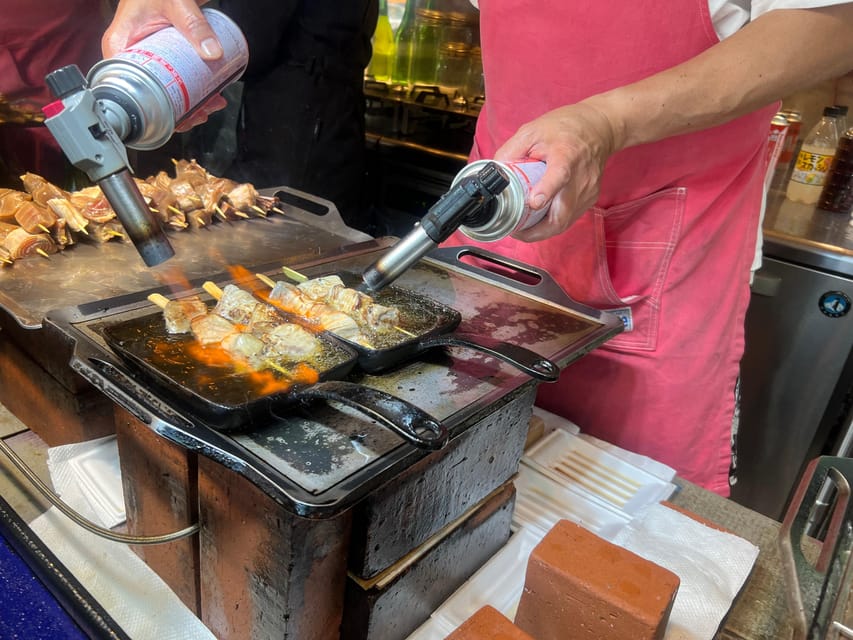
The market portion is active and can be crowded, even on a weekday morning. Your guide keeps the group together and directs you from one stop to another, but you should expect some standing and careful walking through busy areas.
A two-hour tour cannot cover every part of Tsukiji. It is a focused introduction, not a complete market survey. The upside is that you avoid spending the first hour simply trying to work out where to go.
The schedule usually gives you time to look, listen, order, eat, and move on. If you are hoping to sit down for a long meal, this is not the right format. Food is sampled in the flow of the market, and the focus is on variety and discovery.
Bring cash and wear comfortable shoes. You may also want to carry only what you need, since crowded lanes are easier to manage with a light bag. If you have food allergies or dietary limits, tell the guide before ordering. The flexible stall-by-stall format makes choices easier, but the tour does not promise a special dietary program.
Photos taken during the tour are included. That is a pleasant extra, especially when you are busy handling food, listening to the guide, and moving with the group. The main value remains the guided experience, not the photography service.
Who will enjoy this Tsukiji tour most
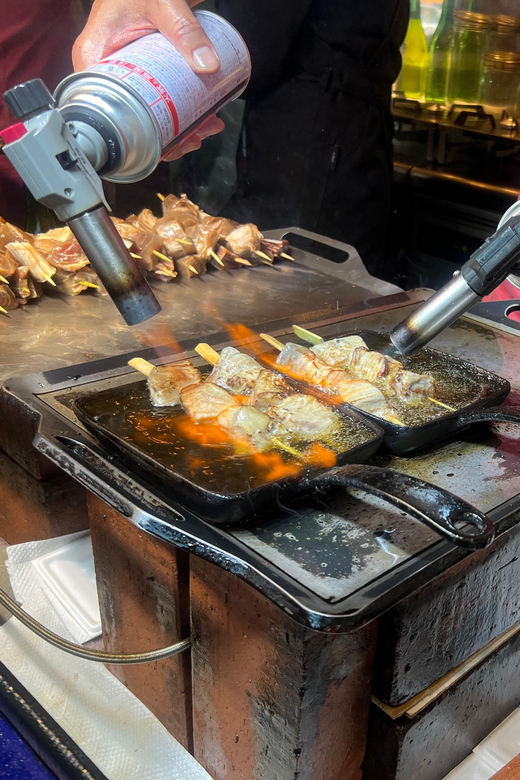
This tour fits first-time visitors who want a simple introduction to Japanese food culture. It is also useful for anyone who has looked at Tsukiji online and worried that the market will be too confusing to tackle alone.
Food lovers will get the most from it, especially if you enjoy trying small portions of unfamiliar dishes. The tour is also a good match for cautious eaters, since you can choose your own stops and mix seafood with beef, eggs, sweets, or other foods.
Families and mixed-age groups may appreciate the freedom to order selectively. A child who does not want raw fish can choose tamago or a sweet, while adults try oysters or tuna. The group limit of 10 keeps the experience more personal than a large coach tour.
I would also recommend it near the start of a Tokyo stay. You can ask for further food suggestions and return later to stalls or ingredients that caught your attention. Some people wish they had taken it on their first day because it made later food decisions easier.
This is less suitable if you want a quiet, private tour or a leisurely sit-down meal. It may also disappoint you if your only goal is to see the wholesale fish auction area. The itinerary focuses on Tsukiji Hongwan-ji and the Outer Market, with food stalls and shopping, not a promised auction visit.
Booking, cancellation, and meeting details
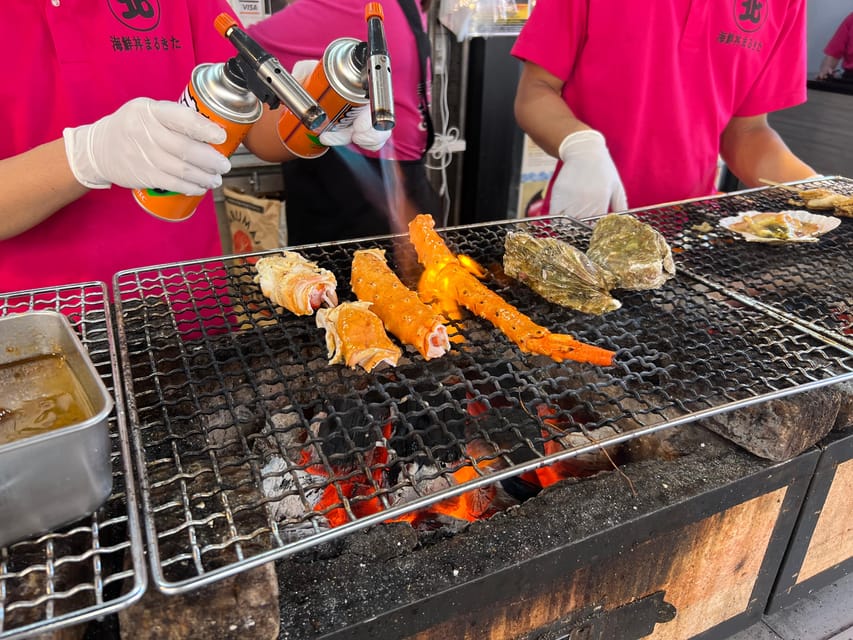
The activity offers free cancellation up to 24 hours before the start for a full refund. You can also reserve now and pay later, which helps if your Tokyo schedule is still changing.
Check available departure times before booking. The tour lasts two hours, but the exact start time depends on the date you choose. You finish at one of two listed drop-off locations, including the Starbucks at Tsukiji Station.
English is the stated tour language. Entry to the market and temple is free, and the walking tour, guide, and photos are included. Food, drinks, and anything you buy from vendors are not included.
FAQ
How long does the Tsukiji Fish Market tour last?
The tour lasts two hours. It includes the walk to Tsukiji Hongwan-ji, a short temple visit, and guided time in the Tsukiji Outer Market.
Where do I meet the guide?
You meet the guide at the Starbucks located in front of Tsukiji Station. The guide waits in front of the bench at Starbucks.
Is food included in the tour price?
No. Food and drinks are not included. You choose and pay for items directly at the food stalls.
How much does the tour cost?
The listed price is $22 per person. This covers the guided walking tour and included entry arrangements, while food and drinks cost extra.
What foods might I try?
Possible foods include tamago, oysters, sushi, wagyu beef, unagi eel, sashimi, sea urchin, sweets, nuts, dried seafood, and other market products. The exact selection depends on the stalls and your choices.
Do I need to bring cash?
Yes. Cash is listed as an essential item to bring, particularly because you pay for food and purchases directly at the market stalls.
What language is the tour offered in?
The tour is offered in English with a live English-speaking guide.
How large is the group?
The group is limited to 10 participants, making it easier to stay with the guide and ask questions in the market.
Can I cancel the booking?
You can cancel up to 24 hours in advance for a full refund. The activity also offers a reserve-now, pay-later option.
Should you book this Tsukiji walk?
I would book it if you want more than a quick stroll past seafood stalls. For $22, you get a small-group guide, a short temple visit, food and culture explanations, help choosing stalls, and a practical introduction to one of Tokyo’s best-known food areas.
The main decision is your food budget. Since tastings are extra, bring cash and do not assume the low tour price covers lunch. If you want freedom to choose, that is a strength. If you prefer an all-inclusive meal, look elsewhere.
Book this tour if Tsukiji feels overwhelming, if you want to try foods you would not find alone, or if you would like a useful Tokyo activity for your first few days. Skip it if you need a private experience, a long seated meal, or a guaranteed visit to the wholesale auction.
More Shopping Tours in Tokyo
- Tokyo: Tsukiji Fish Market Sushi Making Class with Pro Chef
★ 4.9 · 506 reviews - Tokyo Food Tour Taste Fresh Delights at Tsukiji Market
★ 5.0 · 429 reviews - Tokyo Tsukiji Fish Market Tour and Sushi Making Lesson
★ 5.0 · 390 reviews - Tsukiji Fish Market: Street Food & Culture Walking Tour
★ 4.8 · 259 reviews
More Markets in Tokyo
- Tsukiji Fish Market Guided Tour and Sushi Making with Pro Chef
★ 5.0 · 775 reviews - Tokyo: Tsukiji Fish Market Food and Culture Walking Tour
★ 4.7 · 757 reviews - Tsukiji Fish Market: Street Food & Culture Walking Tour
★ 5.0 · 669 reviews - Tsukiji Fish Market Small-Group Food Walking Tour
★ 5.0 · 621 reviews
Just added around Tokyo
- Tokyo: Customizable Private Guided Walking Tour★ 4.5 · 129 reviews
- Private Harajuku Omotesando Architecture Tour★ 4.9 · 18 reviews
- Tokyo: Guided Helicopter Ride★ 4.9 · 24 reviews
- Tokyo: Guided Walking Tour of Tsukiji Market with Lunch★ 4.4 · 24 reviews
- Tokyo: Private Personalized Local Food Tour★ 4.5 · 101 reviews
- Tokyo GINZA: KONPARU Japanese Cabaret Show with Drink★ 4.8 · 38 reviews
- Tokyo: Guided Walking Tour of Tsukiji Market with Breakfast★ 4.4 · 134 reviews
- Tokyo: Gotokuji Cat Temple, Shinjuku Cat Cafe & 3D Cat Tour★ 4.9 · 38 reviews
Food Market Tours, compared.
Shinjuku Food Tour (13 Dishes at 4 Local Eateries)
Read our review →
Tokyo Tsukiji Fish Market Food and Culture Walking Tour
Read our review →
Shinsekai Food Tour with 13-15 Dishes at 5 Eateries
Read our review →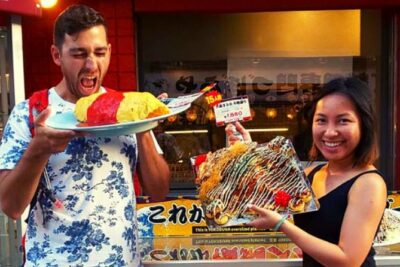
Osaka Food Tour: 13 Dishes at 5 Local Eateries
Read our review →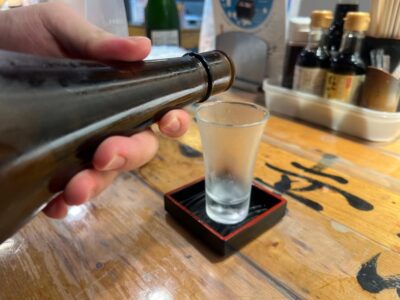
Shinjuku Food Tour (15 Dishes and 4 Eateries)
Read our review →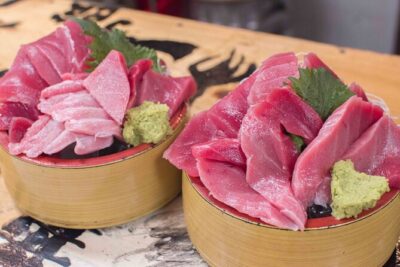
Best of Shinjuku: Izakaya Food Tour (4 Stops, 14+ Tastings)
Read our review →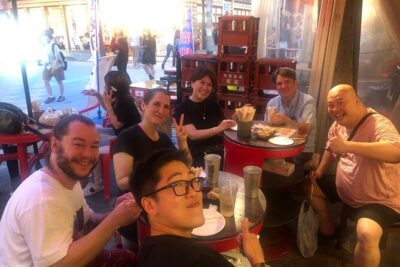
Hungry Osaka Street Food Tour:15 Tastings & 3 Drinks with a Local
Read our review →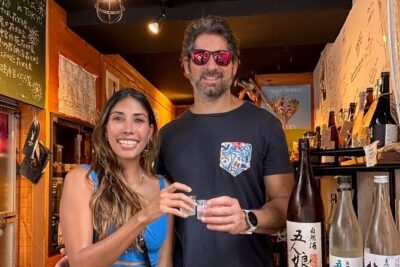
Browse the lists this tour appears in