
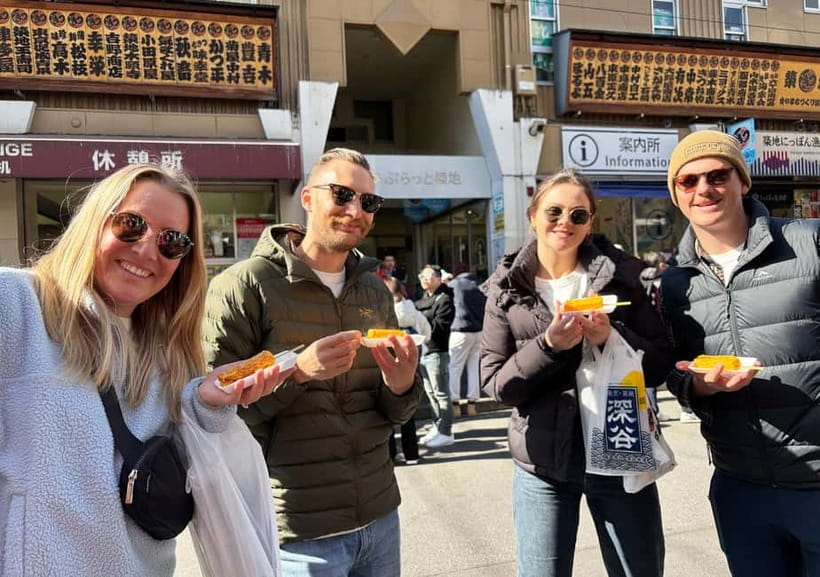
REVIEW · FOOD MARKET TOURS
Tsukiji Fish Market: Street Food & Culture Walking Tour
Tsukiji’s best surprise is not simply the seafood. It is the way a good guide turns a crowded food quarter into a lesson in Japanese cooking, from freshly grated wasabi to tuna preparation, preservation, and the careful work behind each bite. I especially like the temple opening and the chance to taste tuna, wagyu, grilled scallops, eel, and other market foods without guessing where to start. The main consideration is timing: on Wednesdays, Sundays, and national holidays, about half the shops may be closed.
I also like that the tour stays small and practical. Guides such as George, Kawa, Mao, Tomo, and Chihiro have helped visitors choose food, understand ingredients, and find stalls with sensible prices. Bring cash, expect to walk and stand in busy lanes, and keep room in your appetite for several small tastes rather than one formal meal.
In This Review
- Key points at a glance
- Why Tsukiji still matters after the inner market moved
- Starting at Tsukiji Hongwanji Temple
- Eighty minutes among Tsukiji’s food stalls
- Fresh wasabi and the small details behind flavor
- Fish cutting and the craft of Japanese food
- The final 20 minutes and finding your own route
- What the $22 price really buys you
- Best days, weather, and practical comfort
- Who will get the most from this tour
- Should you book Tsukiji Street Food and Culture Walking Tour?
- FAQ
- Where does the Tsukiji walking tour start?
- How long does the tour last?
- Is the tour conducted in English?
- Is food included?
- What kinds of food might I try?
- Can I try fresh wasabi?
- Are all market shops open every day?
- Is the tour wheelchair accessible?
- Can I cancel the booking?
Key points at a glance
- Fresh wasabi tasting: Your guide may grate fresh wasabi for you, a sharp and fragrant addition that changes the flavor of seafood and other foods.
- Temple before the market: The visit begins at Tsukiji Hongwanji Temple, where you learn about the building, its carvings, and the purification customs used before entering sacred places.
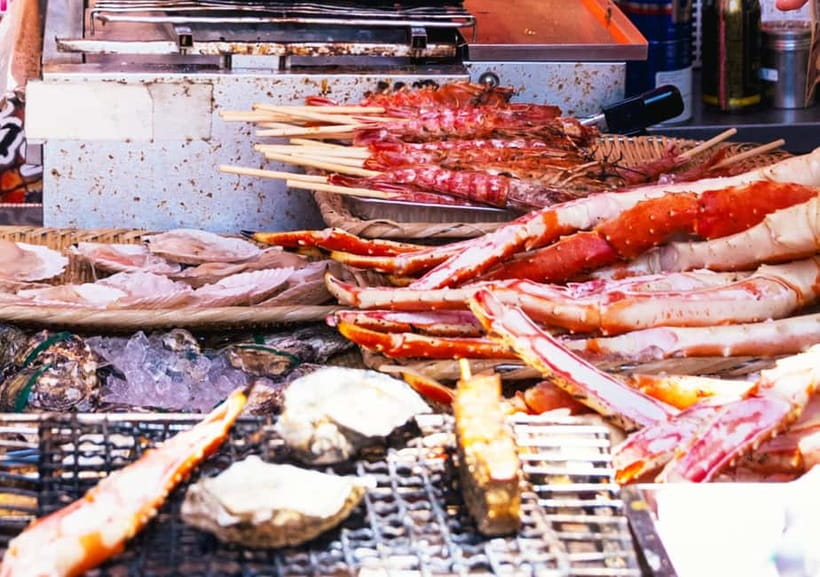
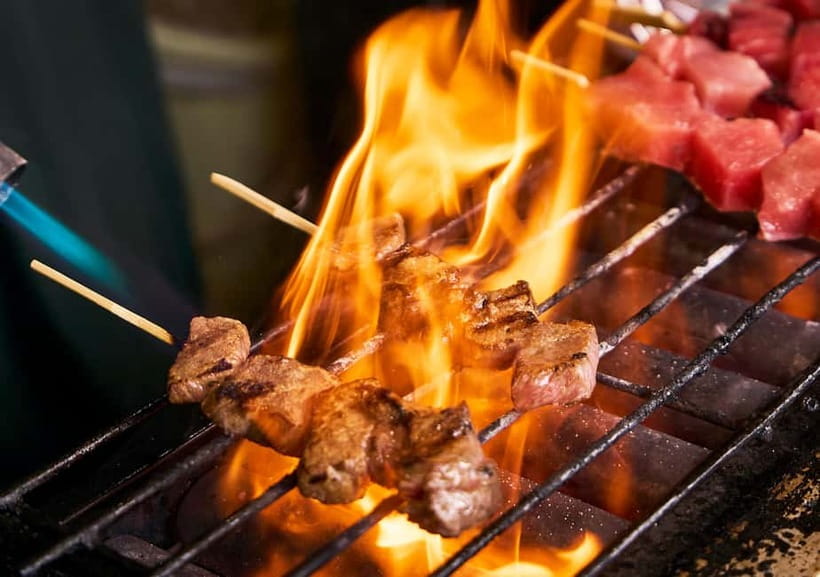
- Food beyond sushi: Tuna, wagyu, eel, grilled scallops, fish cakes, omelets, dumplings, and skewered octopus may all feature, depending on what is open and available.
- A lesson in Japanese ingredients: You learn how preservation, preparation, and seasoning bring out umami in everyday Japanese cooking.
- Good orientation for first-time visitors: The guide helps you decide which stalls to try and gives you ideas for returning on your own later.
- Best on open-market days: Wednesdays, Sundays, and national holidays can feel quieter because many shops do not open.
Why Tsukiji still matters after the inner market moved
Tsukiji is often called the Tsukiji Fish Market, but the part you visit on this tour is the Outer Market. The wholesale inner market moved to Toyosu, yet Tsukiji remains a major food neighborhood with shops selling seafood, Japanese ingredients, knives, ceramics, snacks, and prepared foods.
That distinction matters. You are not walking through the old wholesale auction floor. You are visiting the public-facing district where cooks, shopkeepers, and curious visitors browse ingredients and eat small portions. The market’s decades of importance still show in its specialist shops and food traditions.
A guide gives this setting more meaning than a quick walk with a camera. You learn why certain foods are preserved, how seafood is prepared, and how Japanese cooks use texture and umami as carefully as flavor. The market becomes less about collecting food samples and more about seeing how food fits into daily life.
The experience has been connected with more than 80 years of market history. That long run gives the area a particular character, even as Tokyo changes around it. You will see old methods beside modern stalls, with each vendor focused on a narrow part of Japanese cuisine.
More Food Market Tours in Tokyo
- Tokyo: Shinjuku Food Tour (13 Dishes at 4 Local Eateries)
★ 5.0 · 6,603 reviews - Tokyo Tsukiji Fish Market Food and Culture Walking Tour
★ 5.0 · 3,184 reviews - Tokyo: Shinjuku Food Tour (15 Dishes and 4 Eateries)
★ 4.9 · 2,033 reviews
Starting at Tsukiji Hongwanji Temple
The meeting point is at Tsukiji Hongwanji Temple, with the exact starting point depending on the option booked. The temple is an effective place to begin because it gives you a quiet cultural pause before the market’s narrow lanes and food counters.
The building has an unusual appearance for Tokyo. Inside, you can look at detailed carvings and a calm interior while your guide explains the temple’s place in the neighborhood. Guides may also explain the purification procedure used before entering shrines and temples, including the basic etiquette that can otherwise be easy to miss.
This first stop lasts about 20 minutes. That is long enough for useful context without turning the tour into a full temple visit. I like the balance here. You get a little architecture and custom before moving to the food, rather than treating Tsukiji as only a place to eat.
The temple also provides a clear meeting and return point. The listed coordinates are 35.66661467955698, 139.77199430835137, but check your booked option because the meeting point can vary. Some people have found the meeting instructions slightly confusing, though a guide may call to help arrange the meetup if needed.
Eighty minutes among Tsukiji’s food stalls
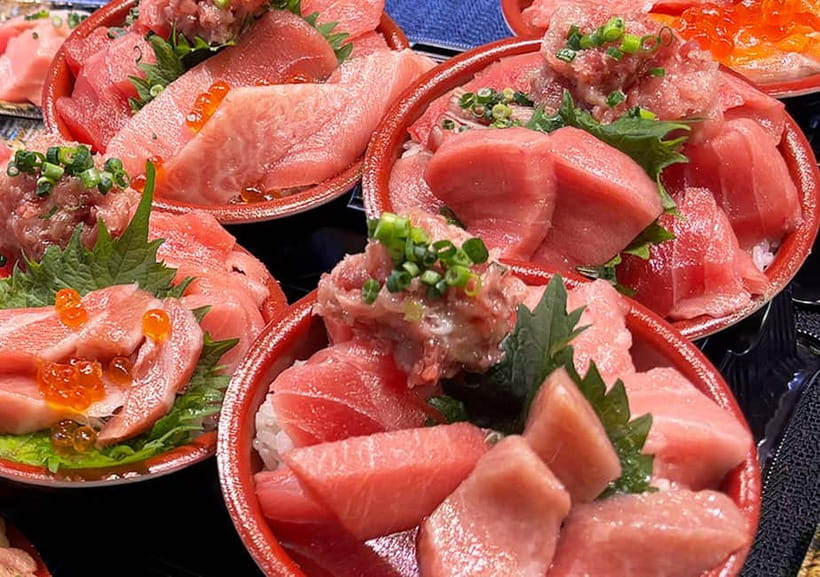
The central part of the tour takes about 80 minutes in the Outer Market. This is where you move from explanation to tasting, with your guide pointing out ingredients and suggesting food stops that match your appetite and interests.
You may encounter fresh tuna, sushi, eel, grilled scallops, wagyu, fish cake, Japanese omelet, dumplings, and skewered octopus. The exact selection can change because the tour operates in an active market, not a fixed restaurant. That is part of the appeal, but it also means you should not treat the food list as a guaranteed menu.
The tastings are generally small bites, so you can try several kinds of food. Some people choose to spend extra money at stalls, while others sample selectively. This flexible approach is useful if your group has different appetites or if you want to save room for a meal later.
Your guide’s recommendations are one of the strongest reasons to book. George has helped visitors find well-priced food and avoid less suitable choices. Kawa is noted for explaining ingredients and cooking methods in detail. Mao, Tomo, Chihiro, Ayaka, and Naoto have also led tours that combine food stops with cultural explanations and personal suggestions.
A guide can also make ordering easier. You may not know which cut of tuna to choose, how a particular fish cake is served, or what a Japanese snack contains. Your guide can identify ingredients and explain how a food was cooked, which is especially helpful if you are cautious about unfamiliar dishes.
Fresh wasabi and the small details behind flavor
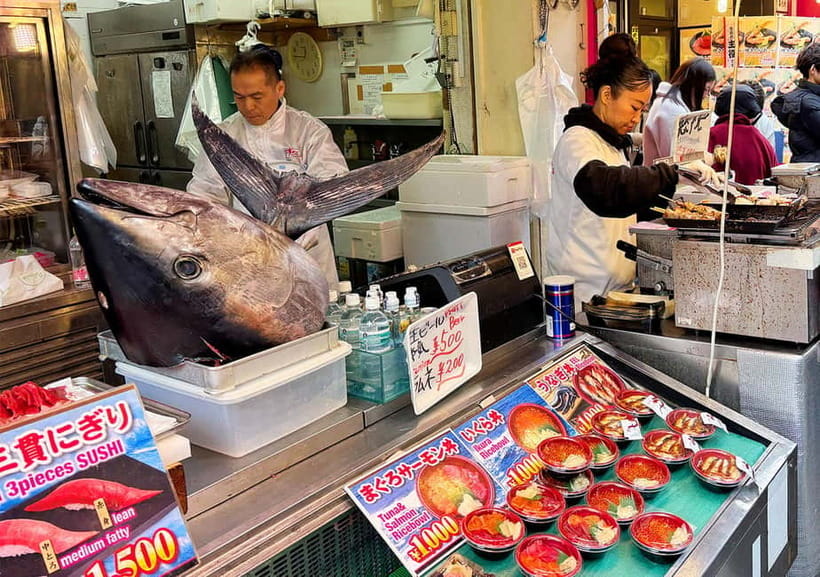
The fresh wasabi is a memorable feature of this experience. Instead of relying only on the familiar green paste served in many restaurants, you may try wasabi that your guide has freshly grated or brought as part of a special wasabi set.
Fresh wasabi is prized for its clean heat and aroma. It can make tuna or sushi taste brighter without simply adding more burn. This is a small extra, but it gives you a direct lesson in how one ingredient changes the balance of a dish.
The tour also explains Japanese preservation methods. In a food culture built around seafood, preservation is not merely a way to keep ingredients edible. Salting, drying, fermenting, and other techniques can build umami and change texture. Your guide connects these methods to the products you see in the market, so the explanation has a practical point.
This is where the tour offers more than a standard street-food crawl. You are not only being told which snack tastes good. You are learning why Japanese food often feels precise, layered, and restrained. A preserved ingredient may supply depth, while wasabi adds sharpness and a fresh garnish provides contrast.
More Walking Tours in Tokyo
- Tokyo: Imperial Palace and Shogun Historical Walking Tour
★ 5.0 · 2,251 reviews - Tokyo: Shinjuku Local Bar and Izakaya Guided Walking Tour
★ 4.9 · 1,794 reviews - Tokyo: Tsukiji Fish Market Food and Walking tour
★ 5.0 · 1,724 reviews - Tokyo: Asakusa Walking Tour with Sensoji Temple Visit
★ 4.8 · 1,583 reviews
Fish cutting and the craft of Japanese food
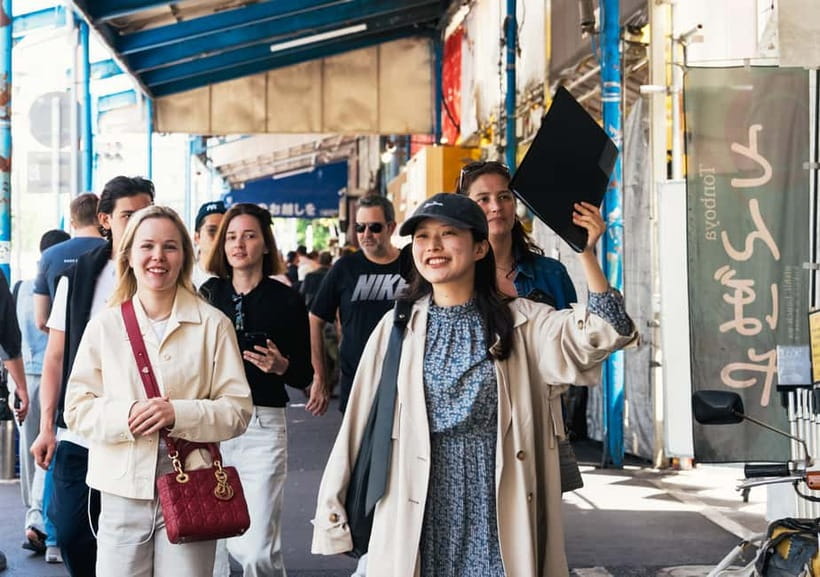
At times, the tour includes a fish cutting demonstration. Seeing a large fish prepared helps you understand the skill involved before it appears as sashimi or sushi. The work is controlled and exact, with little room for waste or rough handling.
The demonstration is not guaranteed on every date, especially when shops are closed. Still, when it takes place, it adds a useful connection between the whole fish in the market and the neat portion on your plate.
You may also see the craftsmanship of other food artisans. Wagyu is prepared as a compact skewer, seafood is grilled, and familiar staples such as omelet or dumplings are made for quick eating. The market shows that Japanese culinary craft is not limited to expensive restaurants. It appears in simple foods sold from small counters.
If you are interested in food preparation, ask questions as you go. The guides are especially useful when explaining what to buy, how to use an ingredient, and which foods are suited to eating immediately. Some visitors have also used the tour to choose rice snacks and other items to enjoy later during their stay.
The final 20 minutes and finding your own route
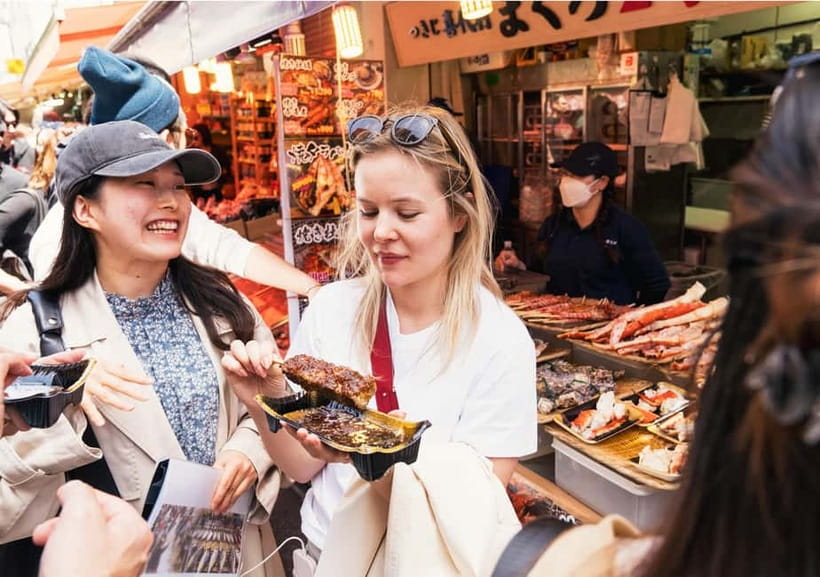
After the main food portion, the tour continues through the Outer Market for about 20 minutes of guided exploration. This last section gives you time to look more carefully at the shops instead of rushing from one taste to the next.
Your guide may point out places to browse for ceramics, packaged snacks, ingredients, and other Japanese goods. This is useful because Tsukiji can feel confusing on a first visit. After the tour, you will have a better sense of which lanes and shops deserve another look.
The tour returns to Tsukiji Hongwanji Temple, with two listed drop-off options that use the temple location. From there, you can continue exploring independently, return to a stall you liked, or make your way to another part of Tokyo.
I particularly value the advice for a second visit. Once you understand how the market works, you can spend your own time comparing foods instead of wandering without a plan. The tour is therefore both a meal-sized experience and an orientation to the neighborhood.
What the $22 price really buys you
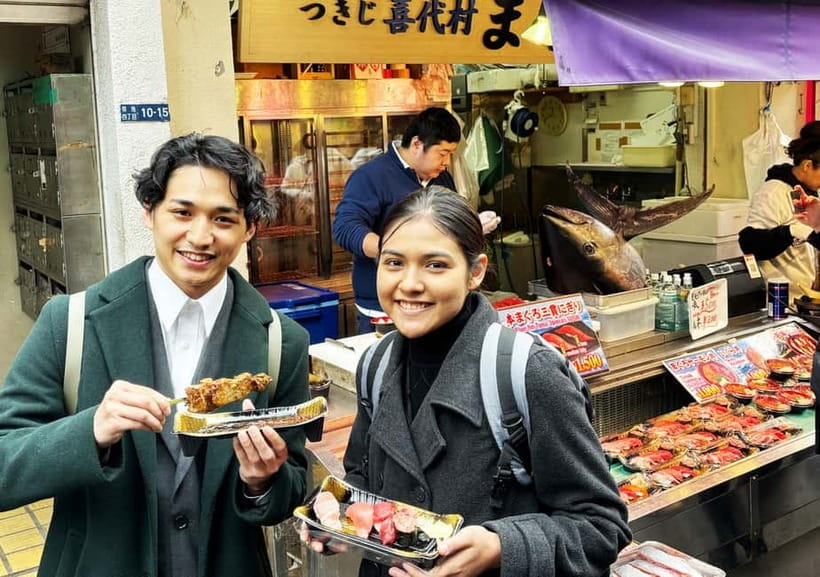
At $22 per person, this is an inexpensive guided introduction to one of Tokyo’s most famous food areas. The value is not simply the number of bites. It comes from having an English-speaking guide explain unfamiliar ingredients, direct you toward sensible choices, and help you use your limited time well.
Food spending deserves a little attention. Cash is required, and the flexible format means you may want to buy extra items beyond the included food tasting. You can spend as much or as little as you like, according to the stops and samples you choose. That makes the tour easier to fit into different budgets, but you should not arrive without money for optional purchases.
Compared with exploring alone, the price can be worthwhile if you are new to Japanese food or unsure how to approach market stalls. If you have already spent time in Tsukiji and feel comfortable choosing ingredients and ordering food, you may find that the guided explanation adds less value.
The small-group option improves the experience. A compact group can move through crowded lanes more easily, and the guide can respond to food preferences and questions. Several tours have even felt nearly private, which is helpful if you want photographs or individual advice.
Best days, weather, and practical comfort
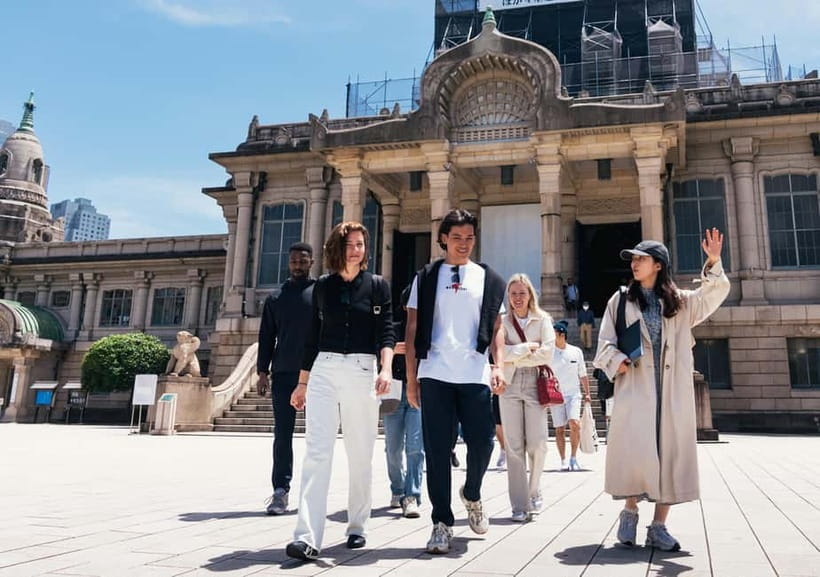
The biggest scheduling issue is the market calendar. About half of the Outer Market shops may close on Wednesdays, Sundays, and national holidays. Tours still operate on those days, but the selection, demonstrations, and general feel can differ.
If your schedule allows, choose a day when more shops are open. That gives you the best chance of seeing more food preparation and a wider range of stalls. If you must book on a Wednesday, Sunday, or holiday, keep your expectations flexible and treat the temple, guide, and available tastings as the main event.
Wear comfortable shoes. The experience lasts two hours and includes walking and time on your feet in a market setting. The tour is wheelchair accessible, though busy market lanes can still require patience and careful movement.
Bring cash, and consider carrying tissues or wipes for street food. Some guides have provided napkins and wipes, but it is sensible to have your own. In hot weather, guides have adjusted the route to find shade, yet Tokyo heat can still affect your comfort.
The tour is conducted in English with a live guide. Free cancellation is available up to 24 hours before the start, and you can reserve now and pay later if you want to keep your plans flexible. Check availability for start times, since the duration is fixed at two hours but the schedule can vary.
Who will get the most from this tour
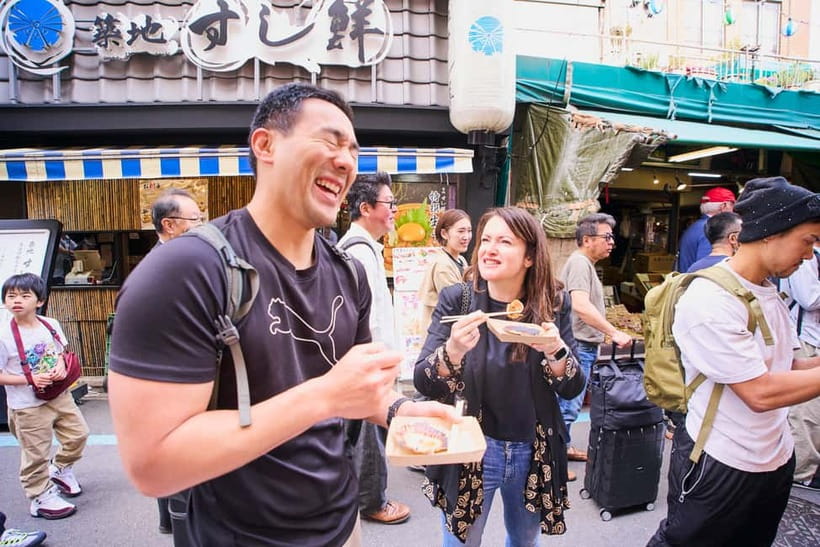
This experience suits a first visit to Tokyo, especially if you want food and culture in one short outing. It is also a good choice for anyone who wants to try seafood but needs help identifying ingredients and choosing stalls.
Families and mixed groups may appreciate the flexible spending. One person can try tuna while another chooses wagyu or a sweet snack, rather than everyone having to order the same dish. Children or cautious eaters can sample selectively.
Food lovers will get the most from the explanations of preservation, preparation, and umami. The fish cutting demonstration, when available, adds another layer for anyone interested in Japanese culinary technique.
You may want to skip it if you prefer a long, seated meal or a tightly fixed menu. This is a walking tour in an active market. The food is eaten in small portions, the route can change, and the market can be crowded or partly closed.
Should you book Tsukiji Street Food and Culture Walking Tour?
I would book this tour if Tsukiji is new to you and you want more than a quick sushi stop. The temple, market orientation, fresh wasabi, varied tastings, and explanations of Japanese cooking make the $22 price easy to justify, especially for a first morning in Tokyo.
Choose an open-market day if possible, and bring cash for extra food and shopping. Guides such as George, Kawa, Mao, Tomo, and Chihiro have made the experience especially useful by answering questions and steering people toward good choices.
Skip it only if you already know Tsukiji well or prefer to explore entirely on your own. For most first-time visitors, this is a practical way to get your bearings, try foods you might otherwise pass by, and leave with a better understanding of why the market matters.
FAQ
Where does the Tsukiji walking tour start?
The meeting point may vary according to the option booked. The listed location is Tsukiji Hongwanji Temple, at coordinates 35.66661467955698, 139.77199430835137.
How long does the tour last?
The tour lasts two hours. About 20 minutes are spent at Tsukiji Hongwanji Temple, about 80 minutes in the Outer Market with food tasting, and about 20 minutes continuing through the market.
Is the tour conducted in English?
Yes. The tour has a live English-speaking guide.
Is food included?
The activity includes food tasting in the Tsukiji Outer Market. Bring cash because you may want to purchase additional food or other market items.
What kinds of food might I try?
Possible foods include fresh tuna, sushi, wagyu, eel, grilled scallops, fish cake, Japanese omelet, dumplings, and skewered octopus. The exact selection depends on what is available and open on the day.
Can I try fresh wasabi?
Yes. A special wasabi set or freshly grated wasabi may be offered during the tour to enhance the flavor of the food.
Are all market shops open every day?
No. About half of the Tsukiji Outer Market shops may be closed on Wednesdays, Sundays, and national holidays. Tours still operate, but the experience can differ.
Is the tour wheelchair accessible?
Yes, the activity is listed as wheelchair accessible.
Can I cancel the booking?
You can cancel up to 24 hours in advance for a full refund. Reserve now and pay later is also available.
More Food in Tokyo
- Tokyo Night Foodie Tour in Shinjuku – Seasonal Sushi, Wagyu Beef
★ 5.0 · 1,161 reviews - Tsukiji Fish Market: Street Food & Culture Walking Tour
★ 5.0 · 669 reviews - Tsukiji Fish Market Small-Group Food Walking Tour
★ 5.0 · 621 reviews - Best of Shibuya Food Tour
★ 5.0 · 612 reviews
More Food & Drink in Tokyo
- Best of Shinjuku: Izakaya Food Tour (4 Stops, 14+ Tastings)
★ 5.0 · 1,863 reviews - Eat and Drink Like a Local: Tokyo Ueno Food Tour-Taverns&Ramen
★ 5.0 · 957 reviews - Tokyo: Shibuya Food Tour (13 dishes and 4 Eateries)
★ 5.0 · 770 reviews - Tokyo: Tsukiji Fish Market Food and Culture Walking Tour
★ 4.7 · 757 reviews
Just added around Tokyo
- Tokyo: Customizable Private Guided Walking Tour★ 4.5 · 129 reviews
- Private Harajuku Omotesando Architecture Tour★ 4.9 · 18 reviews
- Tokyo: Guided Walking Tour of Tsukiji Market with Lunch★ 4.4 · 24 reviews
- Tokyo: Private Personalized Local Food Tour★ 4.5 · 101 reviews
- Tokyo: Guided Helicopter Ride★ 4.9 · 24 reviews
- Tokyo GINZA: KONPARU Japanese Cabaret Show with Drink★ 4.8 · 38 reviews
- Tokyo: Guided Walking Tour of Tsukiji Market with Breakfast★ 4.4 · 134 reviews
- Tokyo: Gotokuji Cat Temple, Shinjuku Cat Cafe & 3D Cat Tour★ 4.9 · 38 reviews
Food Market Tours, compared.
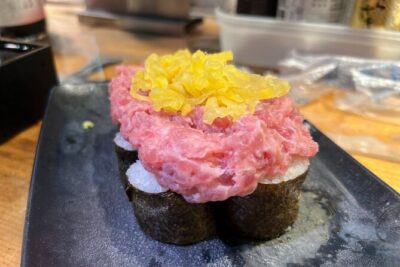
Shinjuku Food Tour (13 Dishes at 4 Local Eateries)
Read our review →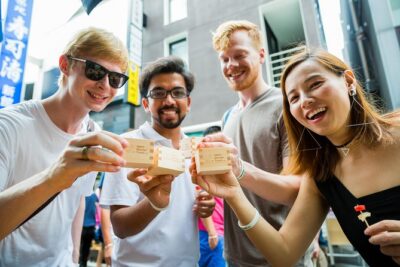
Tokyo Tsukiji Fish Market Food and Culture Walking Tour
Read our review →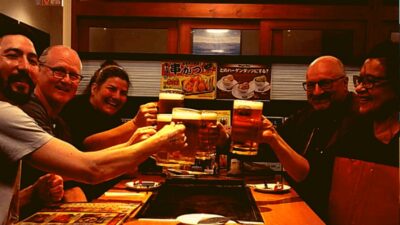
Shinsekai Food Tour with 13-15 Dishes at 5 Eateries
Read our review →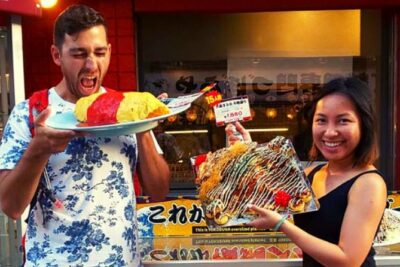
Osaka Food Tour: 13 Dishes at 5 Local Eateries
Read our review →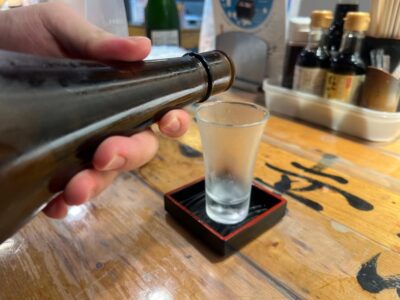
Shinjuku Food Tour (15 Dishes and 4 Eateries)
Read our review →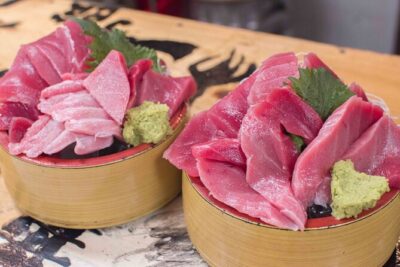
Best of Shinjuku: Izakaya Food Tour (4 Stops, 14+ Tastings)
Read our review →
Hungry Osaka Street Food Tour:15 Tastings & 3 Drinks with a Local
Read our review →
Browse the lists this tour appears in