
REVIEW · FOOD MARKET TOURS
Tokyo: Tsukiji Fish Market Food and Culture Walking Tour
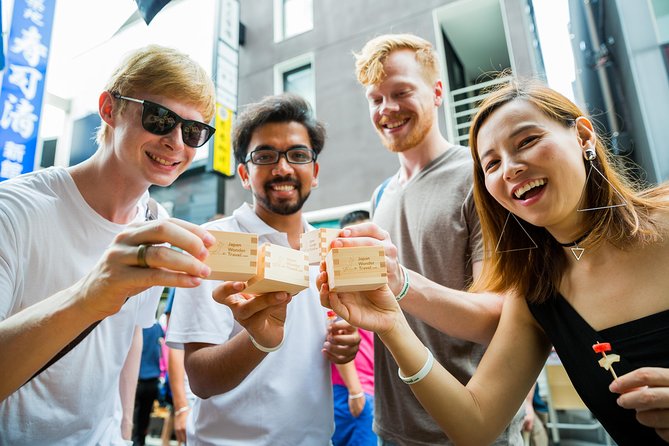
Tsukiji is best understood through your stomach. This three-hour walk takes you through the market’s tight lanes, where you can try high-grade Wagyu beef, fresh seafood, tamagoyaki, fish cakes, and seasonal fruit instead of guessing which stall deserves your yen. The final stop is either sushi or a seafood bowl, depending on the day.
I like the small groups, limited to eight people, and the way a good guide turns a confusing market into an easy morning. Guides such as Shun, Nazu, Robert, Miki, and Yoshiko have been praised for explaining shrine manners, vendor customs, and the story of Tsukiji in clear English. The main drawback is that this is not a vegetarian-friendly tour, and crowds, rain, and market noise can make it hard to hear.
In This Review
- Key points to know before you book
- Starting at Tsukiji Honganji Temple
- Finding your way through Tsukiji Outer Market
- The tasting menu, from Wagyu to fruit
- Ending with sushi or a seafood bowl
- What your guide adds
- Group size, pace, and market conditions
- Is $96 a fair price?
- Dietary needs and accessibility
- What to bring and how to prepare
- Who should book the Tsukiji food walk?
- Should you book it?
- FAQ
- Where does the Tsukiji food tour start?
- How long does the tour last?
- What food is included?
- Is the final meal always sushi?
- Is the tour available in English?
- Can the tour accommodate vegetarian, vegan, halal, or gluten-free diets?
- What happens on market closure days?
Key points to know before you book
- Meet at Tsukiji Honganji Temple: The main gate is the starting point, giving you a clear landmark beside the market.
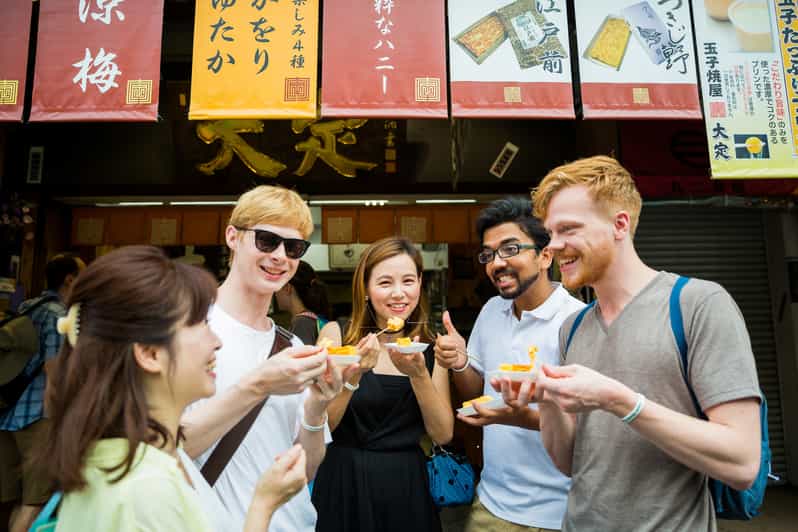
- Eat a proper spread: Tastings include Wagyu beef skewers, Japanese omelet, fish cakes, seasonal fruit, and either sushi or a fresh fish bowl.
- Keep the group small: With only 2 to 8 people, it is easier to ask questions and stay with your guide.
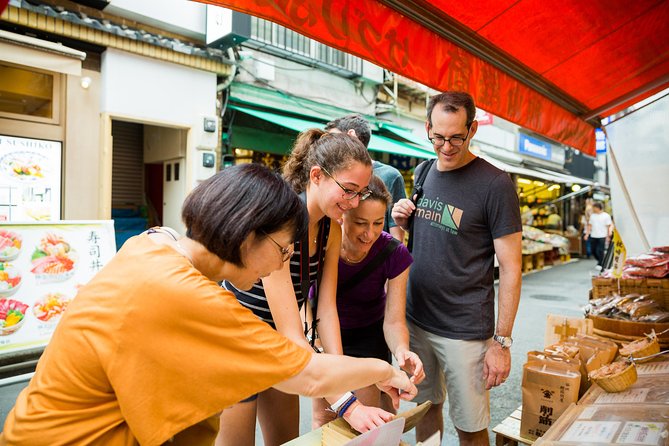
- Expect a serious food-market walk: You will spend about three hours on your feet in crowded lanes, with a moderate amount of walking.
- Check the market calendar: The Uogashi wholesale market is closed on Wednesdays, Sundays, and other market holidays, reducing the number of open shops and tastings.
- Plan for dietary limits: Vegan, vegetarian, halal, and gluten-free requests cannot be accommodated.
Starting at Tsukiji Honganji Temple
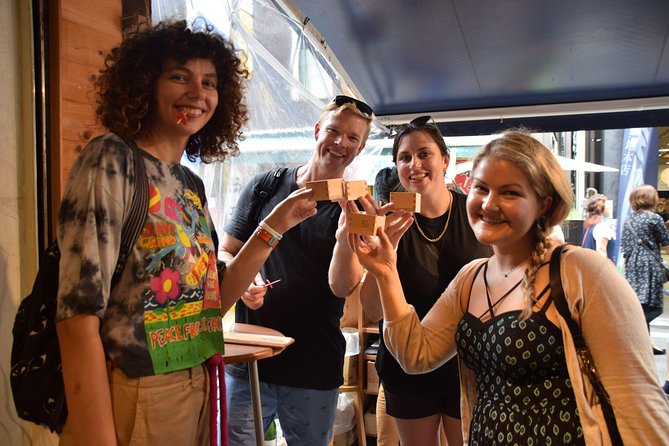
Your meeting point is the main gate of Tsukiji Honganji Temple, written in Japanese as 浄土真宗本願寺派 築地本願寺. This is a useful place to meet because it is a prominent landmark next to the market, rather than an anonymous corner near a shop.
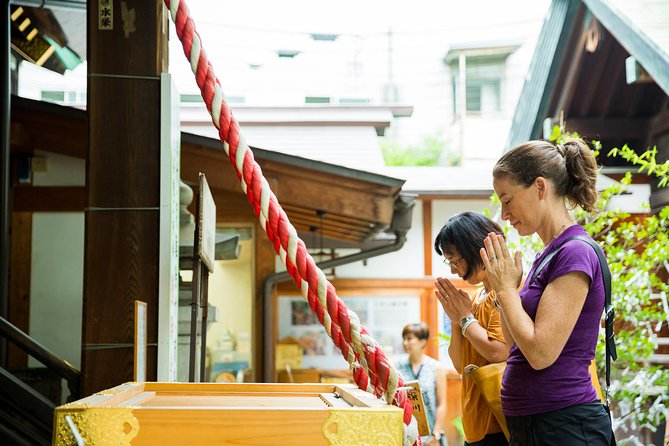
The temple also gives the tour a sensible opening. Before you start eating, your guide may explain the area’s religious and commercial background and show you proper cleansing or shrine etiquette. Do not expect a long temple visit as a separate attraction. The main purpose is to get you oriented before entering the market.
Arrive ready to walk. Comfortable shoes matter more than fashionable ones here. The lanes can be crowded, and you may stop often as the guide points out seafood, prepared foods, cooking ingredients, or small shops that are easy to miss on your own.
More Food Market Tours in Tokyo
- Tokyo: Shinjuku Food Tour (13 Dishes at 4 Local Eateries)
★ 5.0 · 6,603 reviews - Tokyo Tsukiji Fish Market Food and Culture Walking Tour
★ 5.0 · 3,184 reviews - Tokyo: Shinjuku Food Tour (15 Dishes and 4 Eateries)
★ 4.9 · 2,033 reviews
Finding your way through Tsukiji Outer Market
The first part of the tour focuses on Tsukiji Outer Market, the public-facing area that remains a major food destination after the famous wholesale fish market moved away from the site. This is where you see vendors selling fish, shellfish, dried goods, prepared snacks, fruit, tea, and other Japanese ingredients.
The market works best as a guided walk because it is not arranged like a neat food hall. You move through narrow passages and shop-lined streets, stopping at selected vendors rather than following a fixed row of stalls. A guide can explain what you are looking at, how the food is used, and which items are worth trying.
That local help has real value. If you do not read Japanese, a display of unfamiliar fish or a row of neatly cut fruit can be hard to interpret. Your guide also handles the rhythm of the visit, helping you sample food without blocking shop entrances or slowing the flow of business.
The setting is active and sometimes cramped. You may need to stand while eating, wait for space, and keep your belongings close. This is not a quiet museum tour. It is a working food district, and part of the pleasure comes from seeing how seriously Tokyo treats fresh ingredients.
The tasting menu, from Wagyu to fruit
The food is the main reason to book this experience. The advertised menu includes a high-grade Wagyu beef skewer, Japanese omelet, seasonal fruit, fried fish cake, and a final serving of sushi or a seafood bowl.
The Wagyu skewer is likely to be the first major highlight. Several guides have been singled out for taking groups to especially good beef, and one useful practical tip is to leave room for it. Some people enjoyed the skewer so much that they returned after the tour to buy another.
Japanese omelet, or tamagoyaki, gives you a different taste. It is soft, slightly sweet, and quite unlike the savory egg dishes many visitors expect. The fish cake adds another texture, while seasonal fruit shows how much care Japanese vendors put into produce. Availability depends on the shops and the day.
You may also see additional foods along the route, such as squid, sea urchin, oysters, matcha ice cream, tea, or other market snacks. These extra purchases are not guaranteed parts of the menu, so think of them as optional chances to follow your appetite.
The tasting pattern is more useful than a single large meal. You sample small portions while moving through the market, then finish with a substantial seafood dish. By the final stop, you should have tried several types of food rather than spent the whole tour on one plate.
One area for caution is value within the tasting menu. The Wagyu and final seafood course tend to be the strongest parts, while the middle tastings may feel more ordinary to diners expecting premium delicacies at every stop. Drinks such as sake or beer may also cost extra, so ask before ordering.
Ending with sushi or a seafood bowl
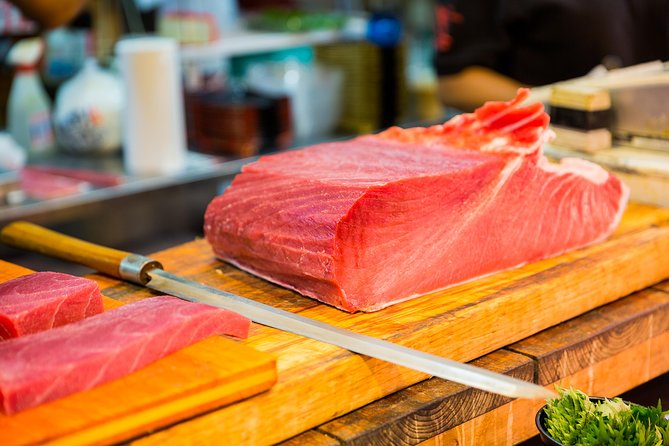
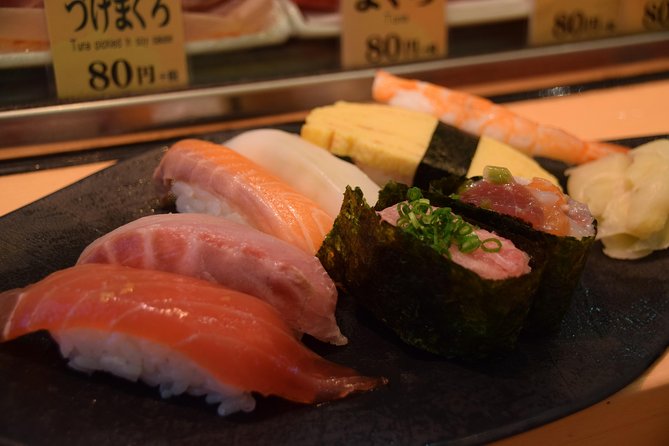
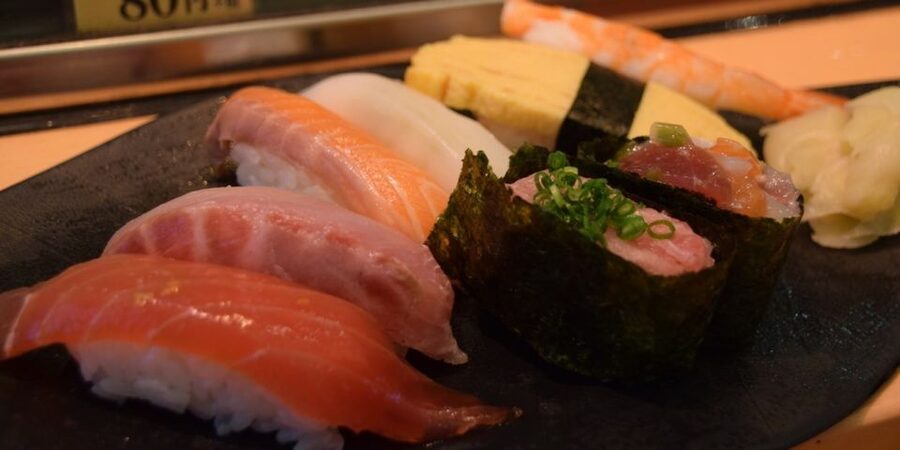
The tour wraps up with either sushi or a fresh fish bowl, depending on the day and time. This final dish gives the walk a clear finish and usually serves as the closest thing to lunch.
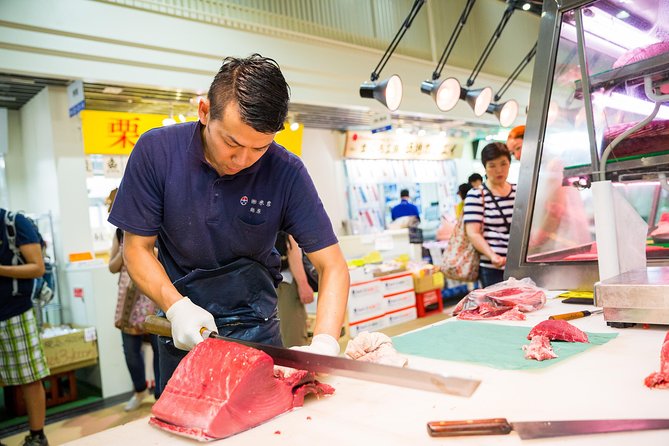
On some departures, a sushi chef demonstrates how to cut and prepare fish before serving the bowl. That short presentation adds useful context because you see the care behind the seafood rather than simply receiving a finished dish.
The exact meal is not fixed. You may receive sushi on one day and a seafood bowl on another. If a restaurant closes unexpectedly, an alternative meal is provided. This flexibility is sensible in a market district, but you should not book expecting one exact restaurant or one guaranteed final dish.
The ending also helps pace the tour. You are not rushed from stall to stall for three hours. The food stops break up the walking, and the final sit-down meal gives you time to ask questions and settle after the noise of the market.
More Walking Tours in Tokyo
- Tokyo: Imperial Palace and Shogun Historical Walking Tour
★ 5.0 · 2,251 reviews - Tokyo: Shinjuku Local Bar and Izakaya Guided Walking Tour
★ 4.9 · 1,794 reviews - Tokyo: Tsukiji Fish Market Food and Walking tour
★ 5.0 · 1,724 reviews - Tokyo: Asakusa Walking Tour with Sensoji Temple Visit
★ 4.8 · 1,583 reviews
What your guide adds
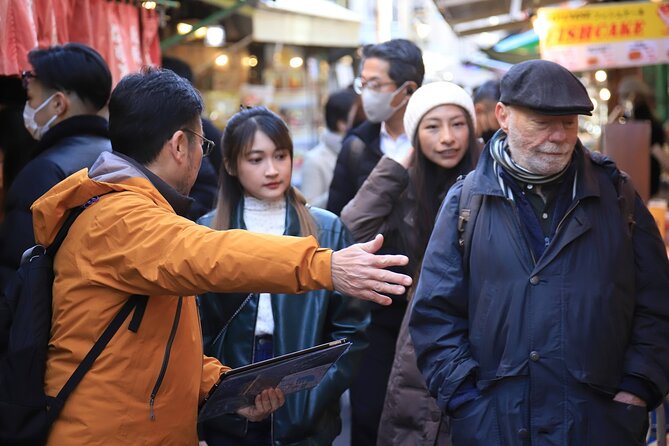
The guide can make or break a market tour, and this experience puts real weight on the person leading it. English-speaking guides named Shun, Nazu, Robert, Miki, Yoshiko, Luna, Kay, and Chi Haru have received especially warm praise for being friendly, clear, and engaging.
The strongest guide experience goes beyond naming foods. You can learn why chefs shop at Tsukiji, how the market changed over time, how to behave around vendors, and how to approach temple or shrine rituals respectfully. Tadashi, for example, was appreciated for explaining proper etiquette and giving useful suggestions for other places to visit.
A good guide also watches the group. One guide waited for a slower-moving parent, while another helped a participant who arrived late after missing a train. That does not remove the need to arrive on time, but it shows why a small group is helpful when people have different walking speeds or interests.
The amount of historical detail can vary with the guide. Some guides provide a strong account of the market’s past and the difference between the inner wholesale area and the outer market. Others focus more on food and vendor stops. If the history of Tsukiji matters greatly to you, ask questions as you go rather than waiting for a formal lecture.
Group size, pace, and market conditions
The group size ranges from two to eight people. That is small enough for direct conversation and quick answers, but not necessarily private unless your booking happens to be for only your party.
Three hours is a good length for a first visit. It gives you enough time to see several parts of the market without turning the morning into an exhausting food crawl. You will walk at a moderate pace, with frequent stops for tasting and explanation.
Crowds are the main practical issue. A Saturday morning around 8:30 can be very crowded, especially when rain forces people under awnings and into narrow lanes. Umbrellas, noise, and foot traffic can make it difficult to hear the guide.
If your schedule allows, a midweek departure may feel easier, but you must check the market’s closing days. Wednesdays and Sundays, along with other closed market days, can mean that the Uogashi wholesale market and some outer-market shops are shut. On those days, Japanese omelet, fish cake, and fruit may not be available.
This is important enough to check before booking. The tour can still offer food and cultural explanation on a closed day, but it will not show the market at full strength.
Is $96 a fair price?
At $96 per person, this is not the cheapest way to eat around Tsukiji. You can buy individual snacks yourself for less, and independent visitors have the freedom to choose exactly what they want.
The tour earns its price through access, explanation, and decision-making help. You are paying for an English-speaking guide who knows where to go, helps you order, explains unfamiliar foods, and keeps a small group moving through a difficult place. The included tastings also form a full sequence rather than a single sample.
I see the best value for first-time visitors to Tokyo, food lovers who want context, and anyone uneasy about ordering in a crowded Japanese market. If you already know Tsukiji well and enjoy exploring alone, the price may feel high.
The booking terms help reduce the risk. You can cancel up to 24 hours before the start for a full refund, and reserve now while paying later. Those policies are useful when your Tokyo plans are still changing.
Dietary needs and accessibility
This is a seafood-and-meat tour. It is not suitable for vegans or vegetarians, and vegetarian, halal, and gluten-free requests cannot be accommodated. Do not assume that a guide can swap the menu after arrival.
The tour also is not suitable for wheelchair users or people with mobility impairments. The moderate walking load, narrow market routes, standing tastings, and crowded conditions make this a poor fit if you need step-free access or frequent seating.
The minimum drinking age is 20, but drinking is not the focus of the experience. If you want sake or beer, check whether it costs extra before ordering.
What to bring and how to prepare
Wear comfortable clothes and shoes with good support. A camera is welcome, but ask before photographing vendors or food preparation, and keep your camera from becoming a nuisance in tight lanes.
Bring an appetite, but do not skip breakfast entirely if you become uncomfortable eating early. The tour includes many small foods followed by sushi or a seafood bowl, so the total amount can be substantial.
Give yourself time to return to the market after the tour if you want to buy tea, fruit, seafood, or another snack. A guide can point out shops, but you should not feel pressured to purchase anything beyond the included food.
Rain does not automatically ruin the experience, yet it makes the market harder to navigate and hear. A light rain jacket may be easier than a large umbrella in narrow walkways.
Who should book the Tsukiji food walk?
I would choose this tour for a first or second day in Tokyo, when you want an easy introduction to Japanese food customs and need help getting your bearings. It is also a strong choice for couples, friends, and solo visitors who prefer conversation to wandering alone.
Families with older children may enjoy the variety of tasting stops, though the walking and crowded lanes require patience. The tour is less suitable for very young children because infant meals are not included and the route is built around adult food sampling.
Food enthusiasts will appreciate the seafood preparation and Wagyu stop. History-minded visitors should still enjoy the temple introduction and market background, but should ask questions if they want more detail about the area’s past.
The tour has a 4.7 rating from 757 bookings, which fits the pattern of its strongest qualities: friendly guides, generous food stops, and a relaxed pace. The main concerns are also clear: closed market days, variable middle tastings, paid drinks, and dietary limits.
Should you book it?
Book this tour if you want Tsukiji made simple. The small group, English-speaking guide, broad tasting menu, and final sushi or seafood bowl remove much of the guesswork from one of Tokyo’s most confusing food districts.
I would avoid booking it on a Wednesday, Sunday, public holiday, or another market closure day unless you are comfortable seeing fewer open stalls. I would also skip it if you are vegetarian, vegan, gluten-free, halal, or unable to manage several hours of walking.
For everyone else, $96 is a reasonable spend for a well-organized introduction to Tsukiji, especially if you value local explanation as much as the food. Save some time afterward to revisit the stalls that catch your eye. The tour shows you how the market works, then gives you the confidence to explore a little on your own.
FAQ
Where does the Tsukiji food tour start?
Meet your guide at the main gate of Tsukiji Honganji Temple at the tour start time.
How long does the tour last?
The experience lasts three hours, with about 30 minutes for an initial visit and guided walk through the market, followed by about two and a half hours of guided food tasting and market exploration.
What food is included?
The included menu features high-grade Wagyu beef skewers, Japanese omelet, seasonal fruit, fried fish cake, and either a fresh fish bowl or sushi, depending on the day.
Is the final meal always sushi?
No. The final meal is either sushi or a seafood bowl, depending on the day and time. If the restaurant closes unexpectedly, an alternative meal is provided.
Is the tour available in English?
Yes. The tour has a live English-speaking guide.
Can the tour accommodate vegetarian, vegan, halal, or gluten-free diets?
No. Vegetarian, halal, and gluten-free requests cannot be accommodated, and the experience is not suitable for vegans or vegetarians.
What happens on market closure days?
The Uogashi wholesale market is closed on Wednesdays, Sundays, and other closed market days. On those days, Japanese omelet, fish cake, and fruit may not be available because the relevant shops are closed.
More Food in Tokyo
- Tokyo Night Foodie Tour in Shinjuku – Seasonal Sushi, Wagyu Beef
★ 5.0 · 1,161 reviews - Tsukiji Fish Market Small-Group Food Walking Tour
★ 5.0 · 621 reviews - Best of Shibuya Food Tour
★ 5.0 · 612 reviews - Tokyo After 5: Authentic Japanese Food & Drink Night Tour
★ 4.5 · 560 reviews
More Food & Drink in Tokyo
- Best of Shinjuku: Izakaya Food Tour (4 Stops, 14+ Tastings)
★ 5.0 · 1,863 reviews - Eat and Drink Like a Local: Tokyo Ueno Food Tour-Taverns&Ramen
★ 5.0 · 957 reviews - Tokyo: Shibuya Food Tour (13 dishes and 4 Eateries)
★ 5.0 · 770 reviews - Tsukiji Fish Market: Street Food & Culture Walking Tour
★ 5.0 · 669 reviews
Just added around Tokyo
- Tokyo: Customizable Private Guided Walking Tour★ 4.5 · 129 reviews
- Private Harajuku Omotesando Architecture Tour★ 4.9 · 18 reviews
- Tokyo: Guided Helicopter Ride★ 4.9 · 24 reviews
- Tokyo: Guided Walking Tour of Tsukiji Market with Lunch★ 4.4 · 24 reviews
- Tokyo: Private Personalized Local Food Tour★ 4.5 · 101 reviews
- Tokyo: Guided Walking Tour of Tsukiji Market with Breakfast★ 4.4 · 134 reviews
- Tokyo: Gotokuji Cat Temple, Shinjuku Cat Cafe & 3D Cat Tour★ 4.9 · 38 reviews
- Tokyo GINZA: KONPARU Japanese Cabaret Show with Drink★ 4.8 · 38 reviews
Food Market Tours, compared.
Shinjuku Food Tour (13 Dishes at 4 Local Eateries)
Read our review →
Tokyo Tsukiji Fish Market Food and Culture Walking Tour
Read our review →
Shinsekai Food Tour with 13-15 Dishes at 5 Eateries
Read our review →
Osaka Food Tour: 13 Dishes at 5 Local Eateries
Read our review →
Shinjuku Food Tour (15 Dishes and 4 Eateries)
Read our review →
Best of Shinjuku: Izakaya Food Tour (4 Stops, 14+ Tastings)
Read our review →
Hungry Osaka Street Food Tour:15 Tastings & 3 Drinks with a Local
Read our review →
Browse the lists this tour appears in