
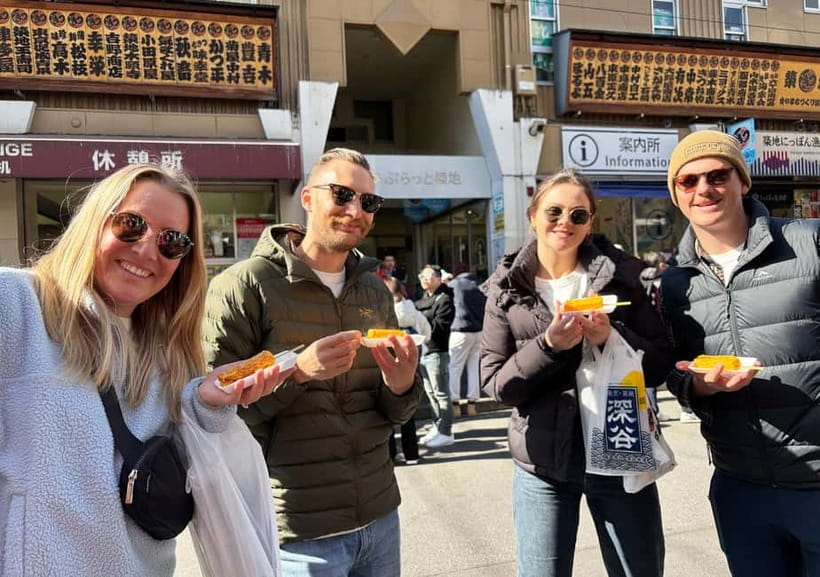
REVIEW · FOOD MARKET TOURS
Tsukiji Fish Market: Street Food & Culture Walking Tour
A whole fish, a sharp knife, and a few practiced cuts can tell you a lot about Japanese food. This small-group Tsukiji tour pairs a traditional fish-cutting show with market snacks, a seafood bowl, and a short visit to Tsukiji Hongwanji Temple. Guides such as George and Tomo have been praised for knowing where to stop and explaining the food clearly.
I like the local food focus, since you are not simply walking past stalls and taking pictures. I also like the balance between tasting and context: you get practical information about ingredients, cooking, Buddhism, and Tokyo’s past. The main drawback is that Tsukiji can become crowded and noisy, and a few visitors found the pacing disorganized or the guide hard to hear.
In This Review
- Key points to know before booking
- Why Tsukiji still matters after the wholesale market moved
- Meeting at Tsukiji Hongwanji Temple
- Forty-five minutes of street food at Tsukiji Jogai Market
- The fish-cutting show and seafood bowl
- Seeing the market as a working place
- A short look at Buddhist culture
- How much personal attention will you get?
- Price, timing, and what you actually receive
- Who will enjoy this Tsukiji tour most?
- Should you book it?
- FAQ
- Where does the Tsukiji tour begin?
- Where does the tour end?
- How long does the experience last?
- Is the tour wheelchair and stroller accessible?
- What is included in the tour?
- Are meals included?
- Can I cancel for a refund?
Key points to know before booking
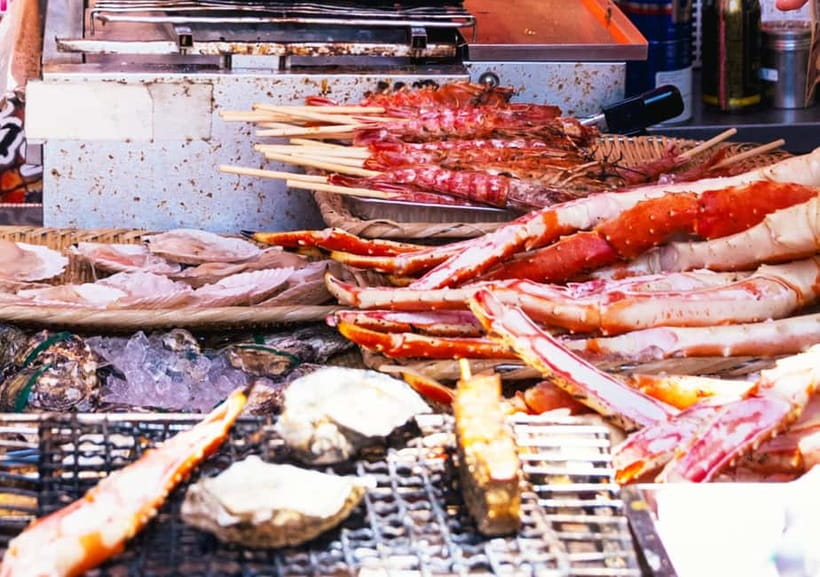
- Watch a whole fish become a seafood meal: The 30-minute fish-cutting presentation shows traditional knife skills, followed by a fresh seafood bowl.
- Taste as you walk: The first 45 minutes focus on Japanese street food and market ingredients, though additional food purchases are not included.
- See Tsukiji beyond the food stalls: A 15-minute visit to Tsukiji Hongwanji Temple adds a short cultural stop.
- Expect a two-hour walking experience: The tour begins and ends at Tsukiji Hongwanji Temple, close to public transportation.
- Small-group attention can vary: The maximum group size is 30, but crowded market conditions may make it harder to stay close to the guide.
- Plan for weather and crowds: The experience requires good weather, and busy periods such as the days near New Year can make the market hectic.
Why Tsukiji still matters after the wholesale market moved
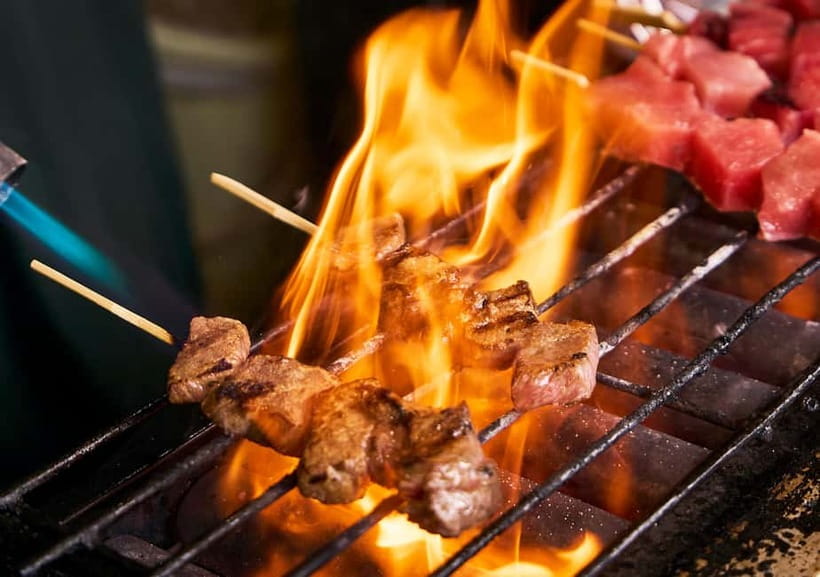
Tsukiji is no longer Tokyo’s main wholesale fish market. That operation moved to Toyosu, but Tsukiji Jogai Market remains a busy food district where shops sell seafood, kitchen tools, produce, prepared food, and ingredients used in Japanese cooking.
That distinction matters. If you arrive expecting a huge auction floor or rows of commercial fish traders, you may be disappointed. This tour focuses on the outer market, where you can walk among food shops and street-food counters while learning how Japanese ingredients reach the plate.
I like this approach because the market makes more sense when someone explains what you are seeing. A guide can point out ingredients, describe cooking methods, and help you decide what is worth trying. Without that help, Tsukiji can feel like a maze of tempting smells and narrow lanes.
The market is also a working place, not a theme park built only for sightseeing. Professional traders operate here, and you need to pay attention to people carrying goods, shop entrances, and the movement of other customers. The guide’s job is partly to help you enjoy the food without getting in the way.
More Food Market Tours in Tokyo
- Tokyo: Shinjuku Food Tour (13 Dishes at 4 Local Eateries)
★ 5.0 · 6,603 reviews - Tokyo Tsukiji Fish Market Food and Culture Walking Tour
★ 5.0 · 3,184 reviews - Tokyo: Shinjuku Food Tour (15 Dishes and 4 Eateries)
★ 4.9 · 2,033 reviews
Meeting at Tsukiji Hongwanji Temple
The tour starts at the main hall of Tsukiji Hongwanji Temple, at 3-chome-15-1 Tsukiji. This is a useful meeting point because it gives you a clear landmark before entering the market streets.
The temple is also part of the tour, rather than just a place to gather. You spend about 15 minutes inside with a local guide who explains Japanese culture and Buddhism. It is a short visit, so do not expect a full temple tour or a long religious lecture. Think of it as a compact introduction before the food-focused part of the morning.
Some people find the temple stop adds welcome context. Others feel it does not add much value compared with the market itself. I would judge it by your interests. If you want a little culture alongside your food tasting, it helps round out the tour. If you only care about eating and market life, the 15-minute stop may feel brief.
The activity ends back at the same meeting point. That is convenient if you want to continue around Tsukiji afterward or use public transportation from the area.
Forty-five minutes of street food at Tsukiji Jogai Market
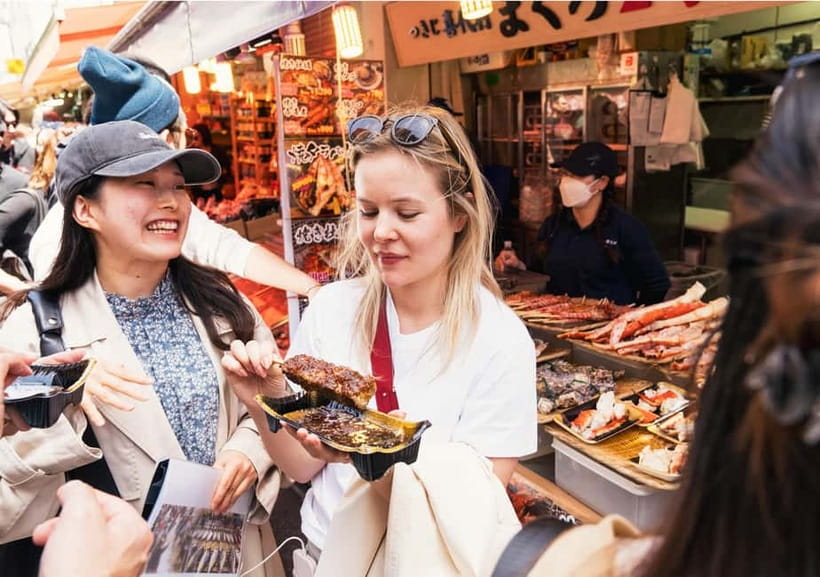
The first major section lasts about 45 minutes and centers on Japanese street food. Your guide leads you through Tsukiji Jogai Market, stopping at selected eateries and food stalls.
This is where the tour feels most personal. Rather than receiving a general lecture about Japanese cuisine, you get to see ingredients where they are sold and learn how locals use them. The exact foods can vary, so you should treat the experience as a guided introduction rather than a fixed tasting menu.
The tour price is $33.16 per person, but meals are listed as not included. That means you should budget for food you choose to buy during the walk. The seafood bowl connected to the fish-cutting presentation is listed as included, but other snacks and purchases should not be assumed to be covered.
That pricing structure is important. If you are happy choosing a few small bites and paying as you go, the arrangement gives you some freedom. If you expect a full meal and several tastings for $33.16, you may find the value less impressive.
A guide can also help you avoid ordering blindly. Tsukiji offers many unfamiliar ingredients and prepared foods, and a short explanation can make the difference between a thoughtful choice and an expensive item you do not want. Guides George and Tomo have received praise for taking people to worthwhile stops and explaining the food in clear English.
Still, this part requires patience. One less favorable experience described a lot of stopping and waiting, with the focus placed more on encouraging people to try food than on explaining the market’s past. That will suit some people and frustrate others. If you prefer a fast, detailed historical walk, this is not the strongest reason to book.
The fish-cutting show and seafood bowl
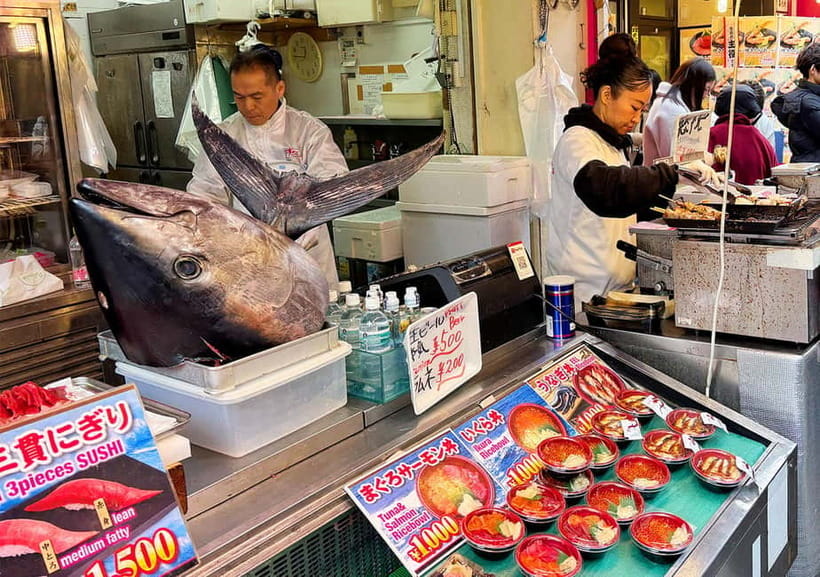
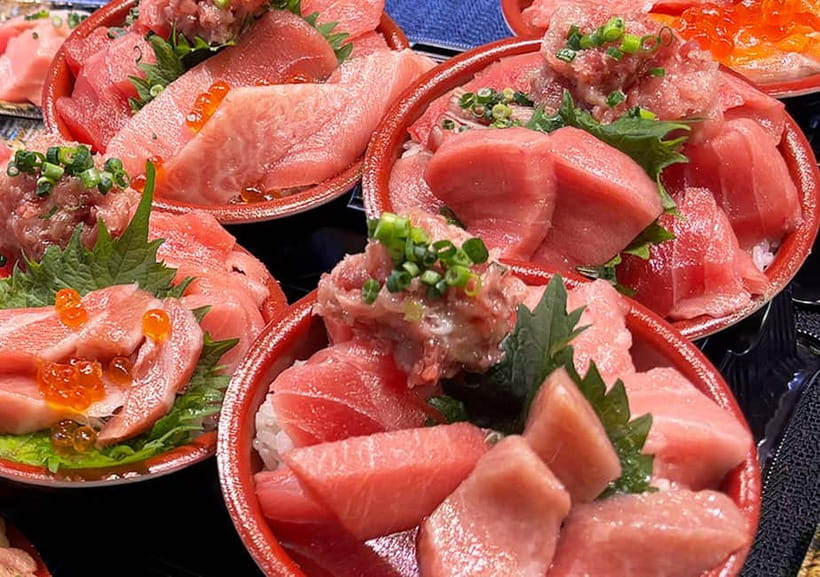
The most distinctive part of the tour is the 30-minute fish-cutting demonstration. A skilled chef fillets a whole fish using traditional techniques, then you enjoy a fresh seafood bowl afterward.
This is more than a quick photo opportunity. Fish preparation is a central part of Japanese food culture, and the demonstration lets you see the control and economy behind the knife work. The chef’s technique connects the market to the meal in front of you. You see the ingredient handled, cut, and prepared rather than encountering seafood only as a finished dish.
The seafood bowl gives the demonstration a practical finish. You can taste the result and think about how texture, freshness, and cutting style affect the food. For many people, this will be the clearest value in the tour because it combines a live skill demonstration with something to eat.
The show is listed as included, while meals in general are listed as not included. I would still read your booking details carefully so you know exactly what the seafood bowl covers and how much extra money to bring for other food.
If you do not eat seafood, this section may be less useful to you. The supplied information does not describe an alternative meal. The tour’s main appeal is plainly its connection to fish, ingredients, and Japanese cooking.
More Walking Tours in Tokyo
- Tokyo: Imperial Palace and Shogun Historical Walking Tour
★ 5.0 · 2,251 reviews - Tokyo: Shinjuku Local Bar and Izakaya Guided Walking Tour
★ 4.9 · 1,794 reviews - Tokyo: Tsukiji Fish Market Food and Walking tour
★ 5.0 · 1,724 reviews - Tokyo: Asakusa Walking Tour with Sensoji Temple Visit
★ 4.8 · 1,583 reviews
Seeing the market as a working place
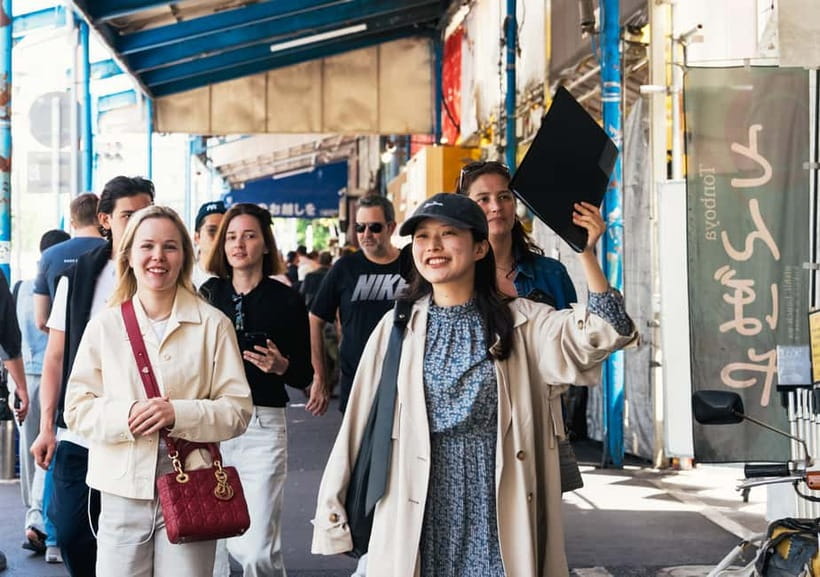
The third stop lasts about 30 minutes and takes you through Tsukiji Fish Market, where professional traders operate.
This section gives the tour a different feel from the street-food walk. You are not only browsing stalls for snacks. You are seeing a place connected to the business of food, where fish and other ingredients are handled for commercial purposes.
The word authentic is easy to overuse, but the practical point here is simple: this is a working market. That means conditions can be crowded, noisy, and less orderly than a museum. You need to stay with the group and follow the guide’s instructions.
Crowds are the biggest concern. One experience during the period around New Year became so busy that the guide did not always wait for everyone, and some stalls had to be skipped. Another person found the whole tour hectic and felt that walking the market alone would have been enough.
I would not dismiss those complaints. A market tour depends heavily on group control and guide volume. A guide who speaks quietly may be difficult to hear over foot traffic and stall activity. If you have hearing concerns, stay near the guide from the start and mention it before the walk begins. The tour has a maximum of 30 participants, which is not always tiny, especially in narrow market lanes.
A short look at Buddhist culture
The visit to Tsukiji Hongwanji Temple lasts about 15 minutes. Your guide explains the temple’s appeal, Japanese culture, and Buddhist traditions.
The stop is short but useful as a change of pace. After food stalls and seafood displays, the temple offers a quieter setting and a chance to consider another part of local life. It also makes the meeting point feel purposeful rather than random.
Do not book this tour expecting an in-depth religious study. The temple section is an introduction, not a full cultural program. Its value depends on how much you want your Tsukiji morning to include. I appreciate the attempt to connect food culture with religion and city history, but I would not pay for the tour mainly because of this stop.
How much personal attention will you get?
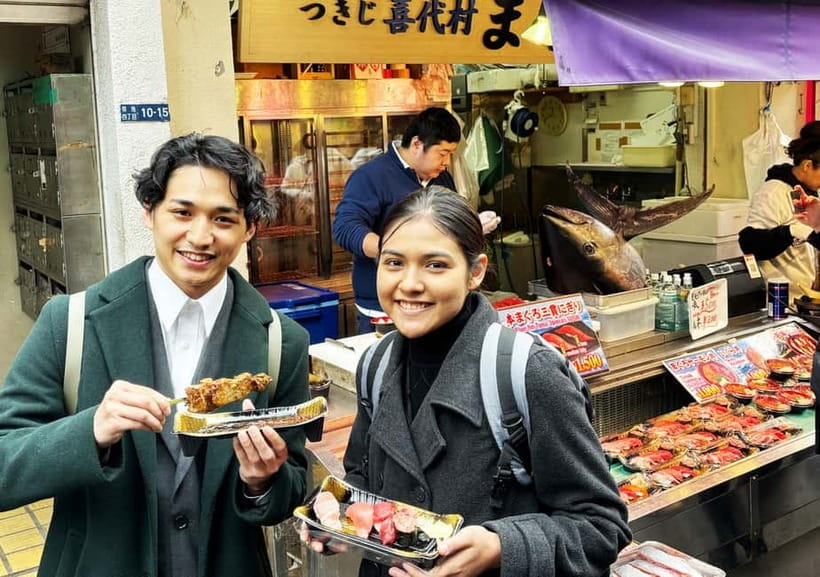
The experience is described as small-group, with a maximum of 30 people. That can mean better access to the guide than a large bus tour, but 30 is still a sizable group in a crowded market.
The best feedback centers on guides who make the group feel well looked after. George has been praised for finding good places to try, while Tomo has been praised for explaining the history and culture in clear English. Those details suggest that the guide can make a major difference.
The weaker experiences point to the risks. Some people encountered a guide who spoke too quietly. Others felt the group was not always kept together, and one person who needed protection from direct sun felt that concern was not handled well.
You can improve your odds by arriving ready to stay close, wearing comfortable shoes, and telling the guide early if you have mobility, hearing, or sun-sensitivity needs. The tour is wheelchair and stroller accessible, which is a useful feature, but accessibility in a market with crowds can still depend on the day’s conditions and the space around individual stalls.
Price, timing, and what you actually receive
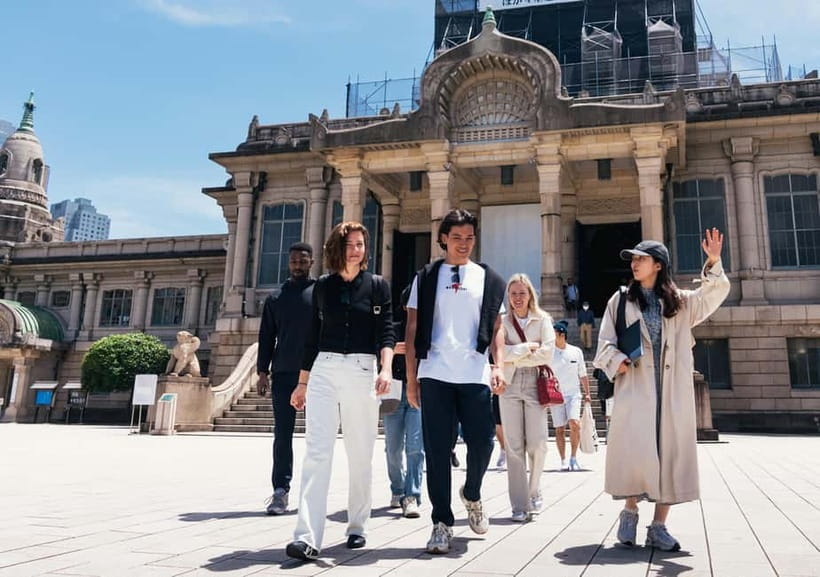
At $33.16 per person for about two hours, this is not an expensive Tokyo tour. The value depends on how much you want guidance.
If you already know Tsukiji, speak Japanese, and feel comfortable choosing food on your own, you may prefer to explore independently. The market is accessible, and several people felt the guide did not add enough beyond walking between stalls.
If this is your first visit, the price can be reasonable. You receive a guided market walk, information about Japanese ingredients and cooking, a fish-cutting show, a seafood bowl, and a temple visit. You also gain help with orientation in a place that can be crowded and confusing.
The tour is strongest for people who want a gentle introduction rather than a specialist food seminar. It does not promise a long historical talk, a major museum visit, or a large number of included dishes. Its value comes from combining access, explanation, and tasting in a short period.
The experience requires good weather. If poor weather causes cancellation, you can receive a different date or a full refund. You can cancel for a full refund up to 24 hours before the start time, but changes or cancellations inside that window are not accepted.
Who will enjoy this Tsukiji tour most?
I would recommend it to first-time Tokyo visitors who want a guided start in Tsukiji and are curious about Japanese food. It also suits people who like watching food preparation, since the fish-cutting show gives the morning a clear centerpiece.
Families may appreciate the wheelchair and stroller access, though you should still expect crowds and narrow market conditions. The two-hour length is manageable for many people, and the return to the original meeting point keeps the plan simple.
Food-focused visitors should bring extra spending money for snacks beyond the seafood bowl. If you want a certain dish, the tour may not guarantee it, since the supplied details do not provide a fixed menu.
I would be more cautious if you dislike crowds, need a very quiet guide, or want detailed history at every stop. The experience can be excellent with a strong guide, but the market setting leaves little room for a slow, perfectly controlled walk.
Should you book it?
Book this tour if you want help making sense of Tsukiji, enjoy trying food, and like the idea of seeing a whole fish prepared before eating it. The fish-cutting show and seafood bowl are the clearest reasons to choose this experience over a solo stroll.
Skip it if you are confident exploring markets alone or mainly want a detailed history tour. In that case, you may get more from walking Tsukiji at your own pace and spending your money directly on food.
The deciding factor is your tolerance for crowds. With a good guide such as George or Tomo, the tour can turn Tsukiji into a friendly, informative morning. On a busy day, the same narrow streets can make the group feel rushed. At $33.16, it is a fair introduction, but not a must-buy for every Tokyo itinerary.
FAQ
Where does the Tsukiji tour begin?
The tour begins at Tsukiji Hongwanji Temple, at 3-chōme-15-1 Tsukiji, Chuo City, Tokyo 104-0045, Japan.
Where does the tour end?
The activity ends back at the meeting point, Tsukiji Hongwanji Temple.
How long does the experience last?
The tour lasts approximately two hours.
Is the tour wheelchair and stroller accessible?
Yes. The activity is described as wheelchair and stroller accessible.
What is included in the tour?
The experience includes insights into Japanese cooking and ingredients, plus a guided tour of Tsukiji Fish Market. The fish-cutting stop also includes a seafood bowl.
Are meals included?
Meals are listed as not included. The seafood bowl following the fish-cutting demonstration is listed as included, while other food purchases should be budgeted separately.
Can I cancel for a refund?
Yes. You can cancel at least 24 hours before the start time for a full refund. Changes or cancellations made less than 24 hours before the start time are not accepted, and poor weather cancellations offer a different date or a full refund.
More Food in Tokyo
- Tokyo Night Foodie Tour in Shinjuku – Seasonal Sushi, Wagyu Beef
★ 5.0 · 1,161 reviews - Tsukiji Fish Market Small-Group Food Walking Tour
★ 5.0 · 621 reviews - Best of Shibuya Food Tour
★ 5.0 · 612 reviews - Tokyo After 5: Authentic Japanese Food & Drink Night Tour
★ 4.5 · 560 reviews
More Food & Drink in Tokyo
- Best of Shinjuku: Izakaya Food Tour (4 Stops, 14+ Tastings)
★ 5.0 · 1,863 reviews - Eat and Drink Like a Local: Tokyo Ueno Food Tour-Taverns&Ramen
★ 5.0 · 957 reviews - Tokyo: Shibuya Food Tour (13 dishes and 4 Eateries)
★ 5.0 · 770 reviews - Tokyo: Tsukiji Fish Market Food and Culture Walking Tour
★ 4.7 · 757 reviews
Just added around Tokyo
- Tokyo: Customizable Private Guided Walking Tour★ 4.5 · 129 reviews
- Private Harajuku Omotesando Architecture Tour★ 4.9 · 18 reviews
- Tokyo: Guided Helicopter Ride★ 4.9 · 24 reviews
- Tokyo: Guided Walking Tour of Tsukiji Market with Lunch★ 4.4 · 24 reviews
- Tokyo: Private Personalized Local Food Tour★ 4.5 · 101 reviews
- Tokyo GINZA: KONPARU Japanese Cabaret Show with Drink★ 4.8 · 38 reviews
- Tokyo: Guided Walking Tour of Tsukiji Market with Breakfast★ 4.4 · 134 reviews
- Tokyo: Gotokuji Cat Temple, Shinjuku Cat Cafe & 3D Cat Tour★ 4.9 · 38 reviews
Food Market Tours, compared.
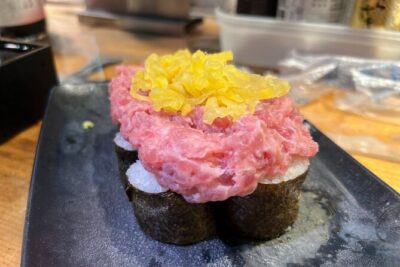
Shinjuku Food Tour (13 Dishes at 4 Local Eateries)
Read our review →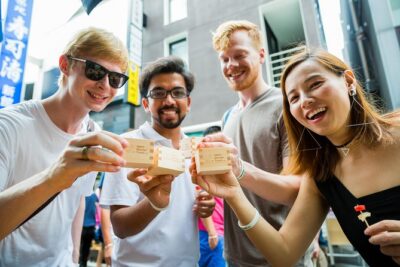
Tokyo Tsukiji Fish Market Food and Culture Walking Tour
Read our review →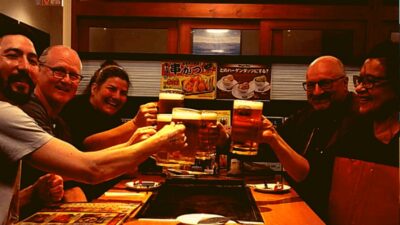
Shinsekai Food Tour with 13-15 Dishes at 5 Eateries
Read our review →
Osaka Food Tour: 13 Dishes at 5 Local Eateries
Read our review →
Shinjuku Food Tour (15 Dishes and 4 Eateries)
Read our review →
Best of Shinjuku: Izakaya Food Tour (4 Stops, 14+ Tastings)
Read our review →
Hungry Osaka Street Food Tour:15 Tastings & 3 Drinks with a Local
Read our review →
Browse the lists this tour appears in