
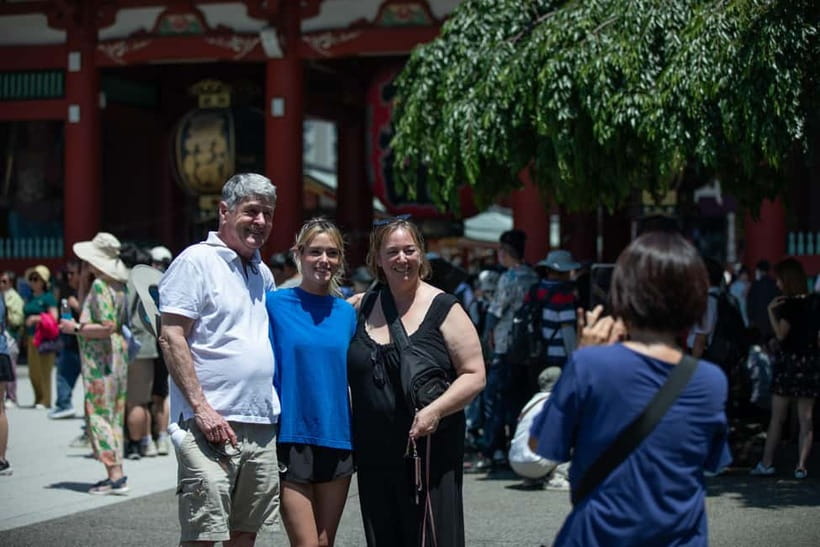
REVIEW · TEMPLE & SHRINE TOURS
Tokyo: Asakusa Walking Tour with Sensoji Temple Visit
Asakusa gives you Tokyo at its most traditional, and this two-hour walk puts its best sights in a tidy order. You begin beneath the huge red lantern of Kaminarimon, follow Nakamise Street to Senso-ji, then continue to Asakusa Shrine and the food streets near the river. I like the clear cultural context and the practical restaurant tips you get along the way.
I also like the price: $22 buys a live English-speaking guide, not just a route on a phone. The main drawback is the fixed two-hour schedule. Asakusa is crowded, and you will have limited time for shopping, food, or quiet temple viewing after the guide moves on.
In This Review
- Key points at a glance
- Why Asakusa is a smart first Tokyo walk
- Meeting at Kaminarimon, the Thunder Gate
- Nakamise Street and the route to Senso-ji
- Senso-ji, Tokyo’s main traditional landmark
- Asakusa Shrine and the value of seeing both faiths
- Hoppy Street and the local food angle
- Shin-Nakamise and the final walk to Azuma Bridge
- What the guides add to the experience
- Is $22 good value for two hours?
- Who should book this Asakusa walk?
- Practical advice for getting the most from the walk
- Should you book it?
- FAQ
- How long does the Asakusa walking tour last?
- Where does the tour begin?
- Where does the tour finish?
- Is the tour conducted in English?
- Which places are included on the route?
- Is the walking tour wheelchair accessible?
Key points at a glance
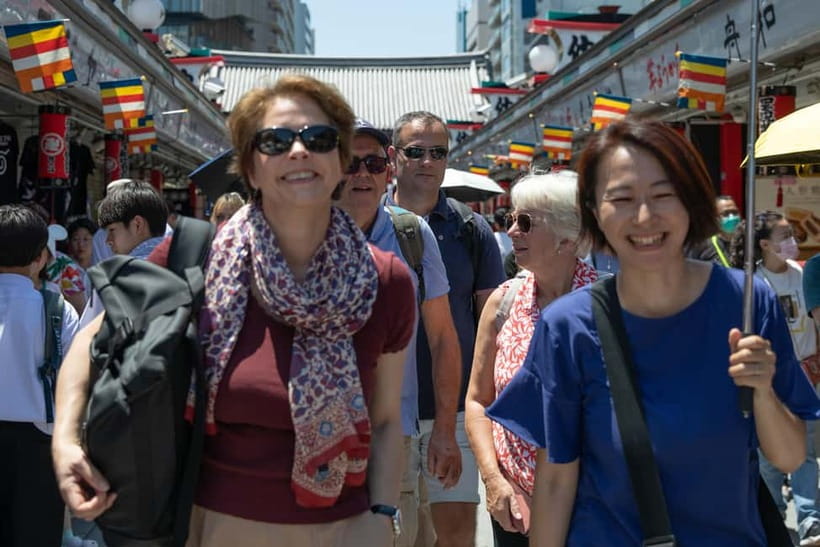
- Kaminarimon starts the story: Meet beside Tokyo’s famous Thunder Gate and learn why this entrance matters.
- Senso-ji gets proper attention: Allow about 30 minutes for temple details, photos, free time, and incense customs.
- Two faiths appear on one walk: Asakusa Shrine adds a useful Shinto contrast to the Buddhist temple.
- Food advice is part of the value: Hoppy Street and nearby shopping arcades lead you toward plenty of lunch options.
- Guide quality is central: Aya, Keiko, Hiroko, Glenda, Polina, Loc, and Miyu are among the guides praised for clear English, humor, patience, and helpful local advice.
- The route ends well: Azuma Bridge gives you a natural stopping point after the temple district.
Why Asakusa is a smart first Tokyo walk
Tokyo can feel enormous and hard to read at first. Asakusa helps you get your bearings because the sights are concentrated, the route is walkable, and the area shows customs that are easy to miss when you explore alone.
This is not a tour of Tokyo’s modern shopping districts or skyscraper viewpoints. It focuses on Buddhist and Shinto traditions, old market streets, local food stops, and the stories attached to familiar landmarks. If you want an introduction to Tokyo’s older character, this is a sensible place to begin.
The tour has earned a 4.8 rating from 1,583 reviews, with repeated praise for the guides rather than only for the sights. That distinction matters. Senso-ji is easy to find on your own, but a guide can explain what to do at the incense burner, how the temple area is arranged, and why the neighboring shrine belongs in the same walk.
More Temple & Shrine Tours in Tokyo
- Tokyo: Meiji Shrine, Asakusa, Skytree Bus Tour and Cruise
★ 4.7 · 1,986 reviews - Nikko: Kegon Falls, Lake Chuzenji & Toshogu Temple
★ 4.6 · 1,577 reviews - Tokyo: Nikko Toshogu Shrine and Kegon Waterfall Tour
★ 4.5 · 1,266 reviews
Meeting at Kaminarimon, the Thunder Gate
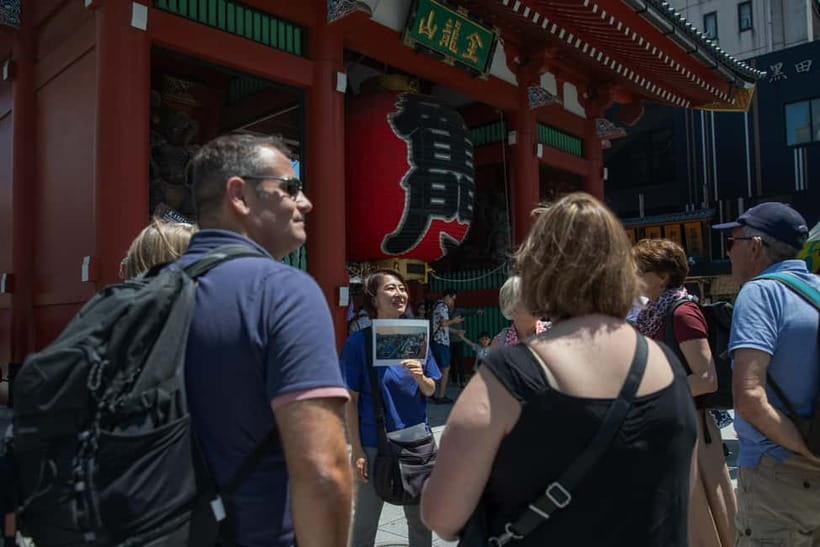
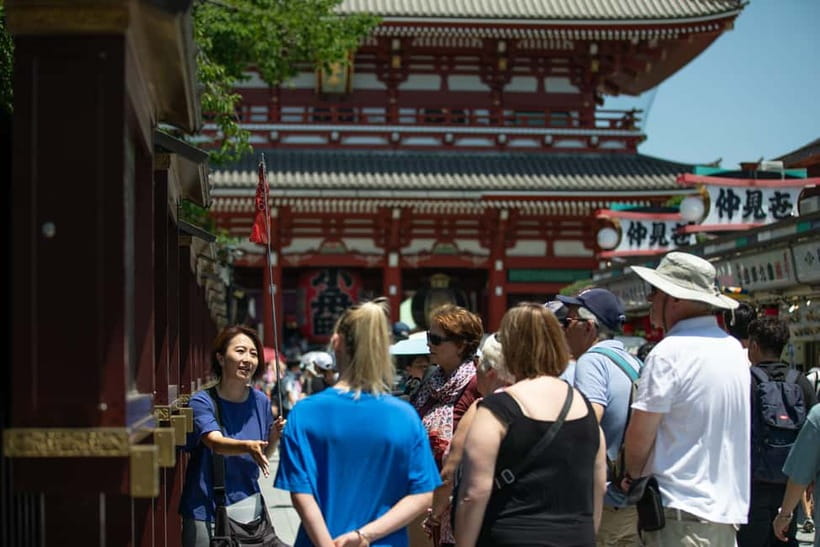
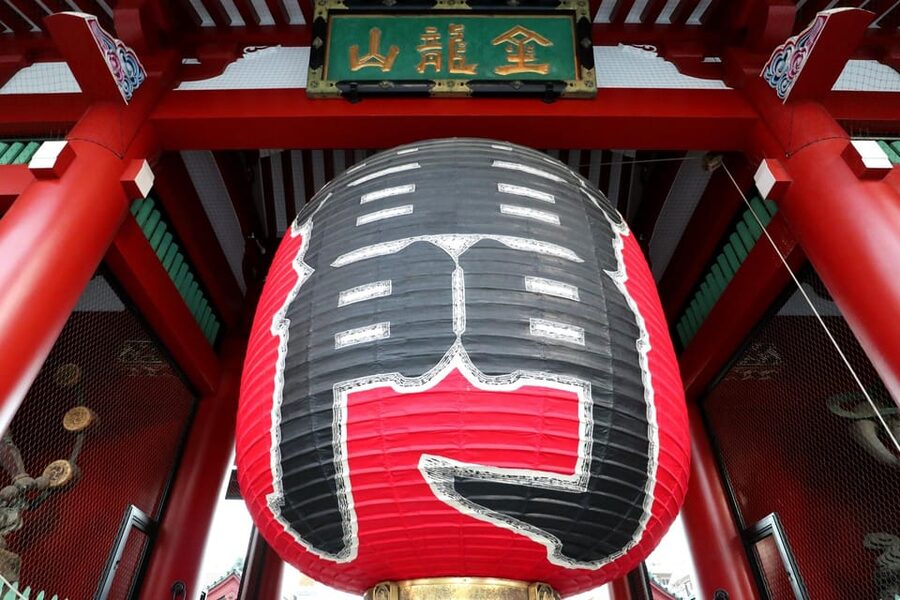
The tour begins at Kaminarimon, the large gate at the entrance to the Senso-ji complex. Your guide waits on the left side, near the Tokiwado Kaminari-okoshi Honpo shop, holding a tour sign.
Arrive early. The meeting point is in a busy pedestrian area, and the guide cannot hold up the whole group for late arrivals. This is one of those small Tokyo logistics points that can save you stress: locate the gate first, then look for the shop and the sign.
Kaminarimon is more than a convenient landmark. Its red structure and enormous lantern create the classic first view of Asakusa, and the guide uses the opening stop to explain the gate’s role. You get roughly 10 minutes here, enough for an introduction and photographs without standing around too long.
I like this start because it gives the walk a strong visual beginning. You do not spend the first part wandering down anonymous streets trying to work out where the famous temple is. You meet at a landmark you can recognize immediately, then move directly into the district.
Nakamise Street and the route to Senso-ji
From Kaminarimon, you walk along Nakamise Shopping Street, one of Japan’s oldest shopping centers. The street leads toward the temple and is lined with small shops selling traditional crafts, souvenirs, snacks, and other local goods.
The planned stop lasts about 15 minutes. That is enough to understand the street’s place in the temple approach, but not enough for a leisurely shopping session. If you spot something you want, note the shop and return after the tour. The guide’s job here is to explain the setting and point out useful details, not to give you a full shopping afternoon.
Nakamise can be crowded, so stay close to the group and keep your eyes up while walking. You will be sharing the route with people taking photographs and shoppers stopping in front of stores. Comfortable shoes help, though the route is not presented as strenuous.
This section is useful because it connects religion and commerce. The temple is not isolated from daily life. Food, small goods, and souvenirs have long formed part of the approach, and the street gives you a sense of how a major religious site functions as a public neighborhood space.
Senso-ji, Tokyo’s main traditional landmark
Senso-ji, also called Asakusa Kannon, is the center of the experience. It is Tokyo’s oldest-established Buddhist temple and the place where the tour’s historical and religious explanations come together.
You spend about 30 minutes here, including a visit, photographs, guided commentary, and some free time. The guide points out architectural details and explains traditions that can seem mysterious if you simply follow the crowd through the grounds.
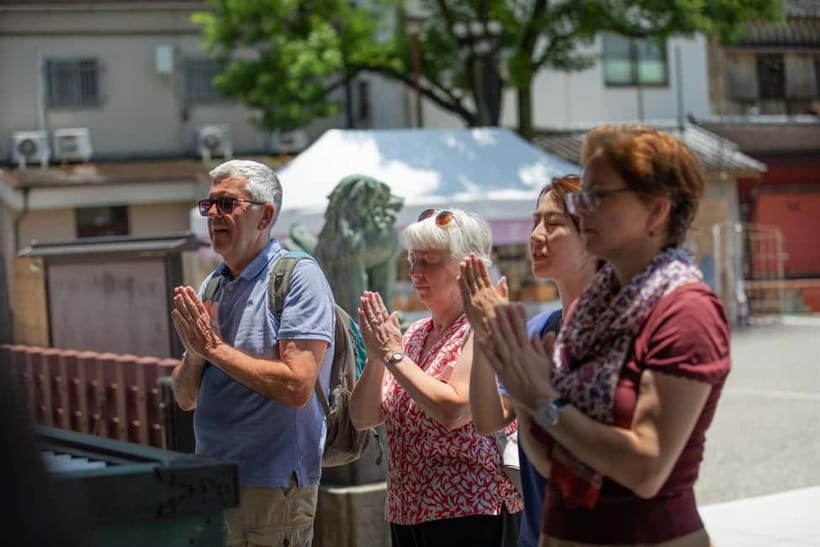
One useful part of the stop is the incense ritual. You can take part in burning incense and watch how people use the temple space. The guide helps place the action in its cultural setting, so it feels like more than a photo opportunity.
This is also your best chance to ask questions. Past guides such as Aya, Keiko, Hiroko, and Polina have been praised for explaining both historical facts and modern customs in clear English. Several guides also use humor, charts, or visual material to make the details easier to follow.
The time limit is the one weakness here. Thirty minutes passes quickly at a temple complex with plenty to see, especially if you want careful photographs or a quiet look inside. Still, the tour gives you the framework. You can return later on your own if Senso-ji deserves more of your day.
Some departures may offer an evening atmosphere, and one account describes seeing the temples lit up at night. Check the available starting time when booking rather than assuming the walk will be in daylight. The mood can change greatly between a bright market morning and a quieter evening visit.
More Walking Tours in Tokyo
- Tokyo Tsukiji Fish Market Food and Culture Walking Tour
★ 5.0 · 3,184 reviews - Tokyo: Imperial Palace and Shogun Historical Walking Tour
★ 5.0 · 2,251 reviews - Tokyo: Shinjuku Local Bar and Izakaya Guided Walking Tour
★ 4.9 · 1,794 reviews - Tokyo: Tsukiji Fish Market Food and Walking tour
★ 5.0 · 1,724 reviews
Asakusa Shrine and the value of seeing both faiths
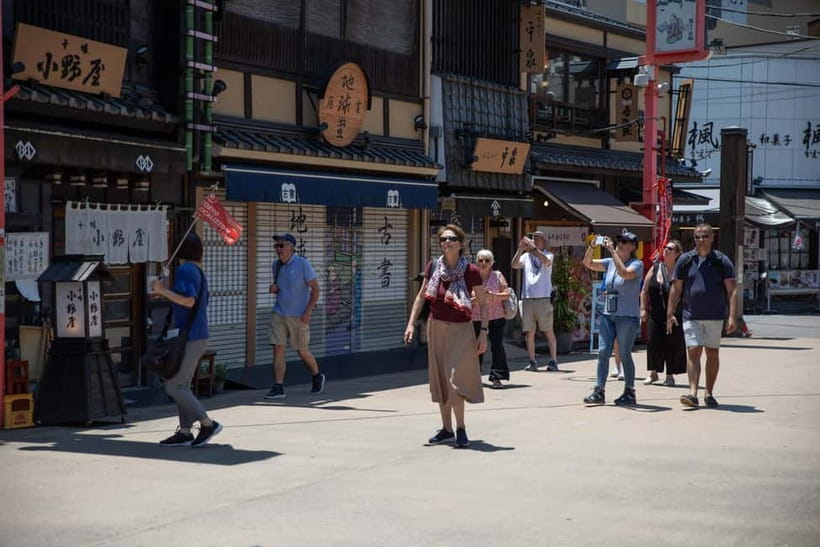
The next stop is Asakusa Shrine, with about 20 minutes for a visit, photos, and explanation. Placing the shrine beside Senso-ji is one of the strongest choices in the route.
You see Buddhist and Shinto sites within the same historic district, then receive help understanding the difference. That does not turn the walk into a formal religion lesson. Instead, it gives you a practical way to notice what you are looking at, how people approach each site, and why both places matter to Asakusa.
The shrine stop also breaks up the large temple complex. After the broad approach to Senso-ji, this is a chance to focus on another kind of sacred space without leaving the neighborhood.
If you are traveling with children or a teenager, this part can work especially well when the guide adjusts the explanation to the group. One guide, Keiko, was praised for including a 14-year-old and pointing out details that kept younger visitors interested. That kind of flexibility is more useful than a memorized speech.
Hoppy Street and the local food angle
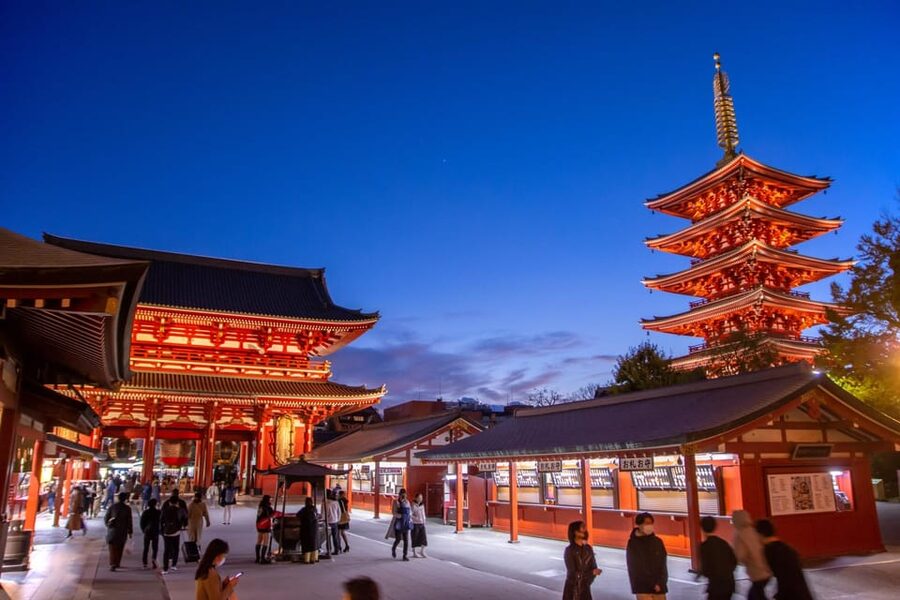
Hoppy Street is a 10-minute stop, and it shifts the tone from sacred buildings to neighborhood eating and drinking. The street is associated with casual local dining, and your guide can help you understand why it is worth returning to after the walk.
Do not expect a full food tour. Food is discussed and places may be pointed out, but the listed inclusions are a walking tour and a guide, not tastings or a meal. Bring your appetite for later, not for a promised sample during the route.
This stop adds practical value. Several guides have given restaurant suggestions for lunch, and the tour often ends around a useful mealtime. Keiko, Aya, Rio, and Polina were singled out for recommending places to eat and things to do after the walk. If you are unsure what to order or where to sit in Asakusa, those tips can be worth more than another five minutes of temple facts.
Hoppy Street is also a reminder that Asakusa is not only a preserved historic display. It is a working district with restaurants, shoppers, and evening activity. The tour does not pretend every part of the area is quiet or timeless, which makes the picture more honest.
Shin-Nakamise and the final walk to Azuma Bridge
The final neighborhood stop is Shin-Nakamise Shopping Street, another covered shopping arcade. You spend about 10 minutes here before finishing at Azuma Bridge.
Shin-Nakamise gives you a different shopping experience from the more famous Nakamise approach. It is a useful place to notice how Asakusa mixes older storefront traditions with everyday retail. The short visit is enough to orient you, though again, serious shopping will need extra time after the tour.
Finishing at Azuma Bridge is practical. You are no longer being led back through the same temple entrance, so you can continue toward the river or make your own plans from there. The ending also gives the walk a clean shape: famous gate, temple approach, sacred sites, food streets, shopping arcade, and riverfront finish.
Ask your guide for suggestions before parting. Guides such as Aya and Keiko have offered advice for the rest of a Tokyo stay, not only for Asakusa. That can make this a useful opening activity on your first or second day in Japan.
What the guides add to the experience
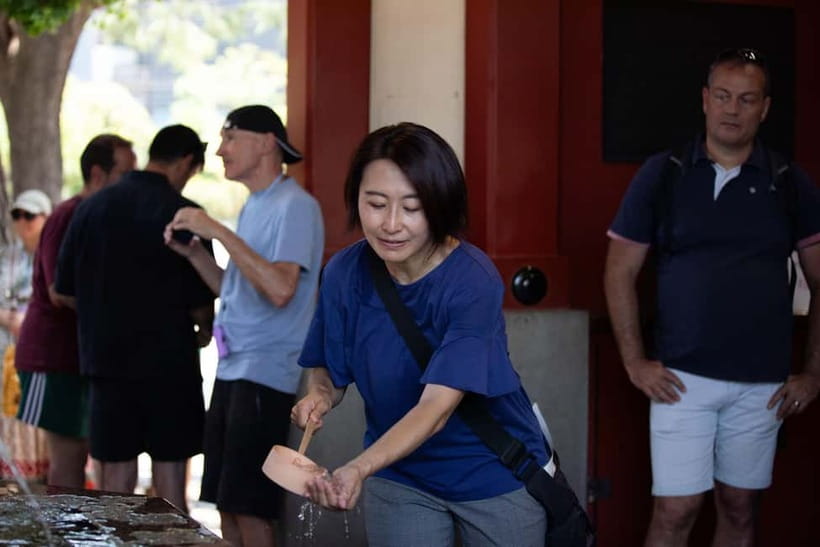
The route is fixed, but the guide shapes the experience. Names frequently associated with strong tours include Aya, Keiko, Hiroko, Glenda, Polina, Loc, Miyu, Rio, Mei, and Paulina. Guides change by departure, so you should not book expecting one particular person unless the booking system confirms it.
The most important qualities here are clear English, patience, pace, and the ability to answer questions. Keiko has been praised for making sure everyone could hear and for adjusting to children. Hiroko is noted for patient explanations and careful attention to the group. Aya appears repeatedly as a warm guide who adds local food suggestions and extra Asakusa landmarks.
Other guides bring different strengths. Glenda is described as energetic and strong on Japanese history and culture. Loc is praised for being punctual and clear. Miyu has been appreciated for humor, cultural explanations, and answers to questions. Rio reportedly brought extra charts and information to support the explanation.
That range is encouraging, but it also means the exact tone may vary. Some guides will emphasize history and architecture. Others may focus more on customs, food, or practical advice. The common thread is direct explanation in English and a willingness to engage with questions.
Is $22 good value for two hours?
At $22 per person, this is inexpensive for a guided introduction to one of Tokyo’s major cultural districts. You are paying for organization and interpretation, not admission tickets, food, or transportation.
The value is strongest if this is your first time in Asakusa. You will see the essential landmarks without spending time planning the order, and you will receive context that is difficult to pick up from signs alone. The restaurant recommendations can also help you make better use of the hours after the tour.
The value is lower if you already know Senso-ji and Asakusa well. You can walk this district independently, and the tour does not include tastings or extended shopping time. Independent visitors who prefer to linger at every stop may find the pace too structured.
Free cancellation up to 24 hours before the activity and the option to reserve without paying immediately make it easier to fit into a changing Tokyo schedule. The walk is wheelchair accessible, though crowded streets and busy shopping areas can still affect the pace. Confirm the route details at booking if accessibility is a major concern.
Who should book this Asakusa walk?
I would recommend it to first-time visitors, couples, families, solo visitors, and anyone who wants a short cultural introduction without committing half a day. It is especially useful early in a Japan trip, when temple customs, shrine etiquette, and food streets are still unfamiliar.
Families may appreciate the two-hour length and the guides’ willingness to include children. Older visitors can benefit from the manageable duration and clear route, while photographers get the major visual landmarks in one outing.
I would be more cautious about booking if your main goal is food sampling. Hoppy Street and the shopping arcades provide food context, but you are not promised tastings. I would also avoid scheduling it too tightly against another activity, since being late can mean missing the group and Asakusa is not a place where finding the guide instantly is guaranteed.
Practical advice for getting the most from the walk
Wear shoes suited to two hours on foot and arrive early at Kaminarimon. Keep the guide’s sign and meeting location in mind, since the gate area can be crowded.
Bring questions. The guides are often at their best when discussing the things you notice: incense, temple design, shrine customs, local food, or the difference between the two sacred sites. A short question can turn a standard stop into a useful personal explanation.
Treat the walk as an introduction, not the whole Asakusa experience. Save restaurant ideas, shopping streets, and any temple details you want to study, then return after the tour at your own pace. The guided route gives you the map in your head. Your later wandering gives you the time.
Should you book it?
Book this tour if you want a low-cost, well-organized introduction to traditional Tokyo with an English-speaking guide and practical advice for the rest of your visit. The best reasons are the strong coverage in two hours, the contrast between Senso-ji and Asakusa Shrine, and the repeated praise for guides who explain clearly and look after mixed-age groups.
Skip it if you already know Asakusa or want a dedicated food tour with tastings. For most first-time visitors, though, $22 is a fair price for getting the history, customs, and layout before exploring the district on your own.
FAQ
How long does the Asakusa walking tour last?
The tour lasts two hours.
Where does the tour begin?
It begins in front of Kaminarimon Gate. The guide waits on the left side, near the Tokiwado Kaminari-okoshi Honpo shop, and holds a sign for the tour.
Where does the tour finish?
The tour finishes at Azuma Bridge.
Is the tour conducted in English?
Yes. The activity includes a live English-speaking guide.
Which places are included on the route?
The route includes Kaminarimon, Nakamise Shopping Street, Senso-ji Temple, Asakusa Shrine, Hoppy Street, and Shin-Nakamise Shopping Street.
Is the walking tour wheelchair accessible?
Yes, the activity is listed as wheelchair accessible.
Just added around Tokyo
- Private Harajuku Omotesando Architecture Tour★ 4.9 · 18 reviews
- Tokyo: Customizable Private Guided Walking Tour★ 4.5 · 129 reviews
- Tokyo: Guided Helicopter Ride★ 4.9 · 24 reviews
- Tokyo: Guided Walking Tour of Tsukiji Market with Lunch★ 4.4 · 24 reviews
- Tokyo: Private Personalized Local Food Tour★ 4.5 · 101 reviews
- Tokyo GINZA: KONPARU Japanese Cabaret Show with Drink★ 4.8 · 38 reviews
- Tokyo: Guided Walking Tour of Tsukiji Market with Breakfast★ 4.4 · 134 reviews
- Tokyo: Gotokuji Cat Temple, Shinjuku Cat Cafe & 3D Cat Tour★ 4.9 · 38 reviews
Temple & Shrine Tours, compared.
Tea Ceremony in a Traditional Tea House in Kiyomizu
Read our review →
Meiji Shrine, Asakusa, Skytree Bus Tour and Cruise
Read our review →
Kamakura & Enoshima Day Trip including Temple Tickets
Read our review →
Kyoto/Osaka: Nara, Fushimi Inari Taisha, Arashiyama Bus Tour
Read our review →
Nikko Toshogu Shrine and Kegon Waterfall Tour
Read our review →
Tokyo Panoramic 1 Day: Meiji Shrine, Asakusa, Odaiba and SKYTREE®
Read our review →
1-Day Snow Monkeys, Zenko-ji Temple & Sake in Nagano
Read our review →Browse the lists this tour appears in