
REVIEW · TEMPLE & SHRINE TOURS
Tokyo: Meiji Shrine, Asakusa, Skytree Bus Tour and Cruise
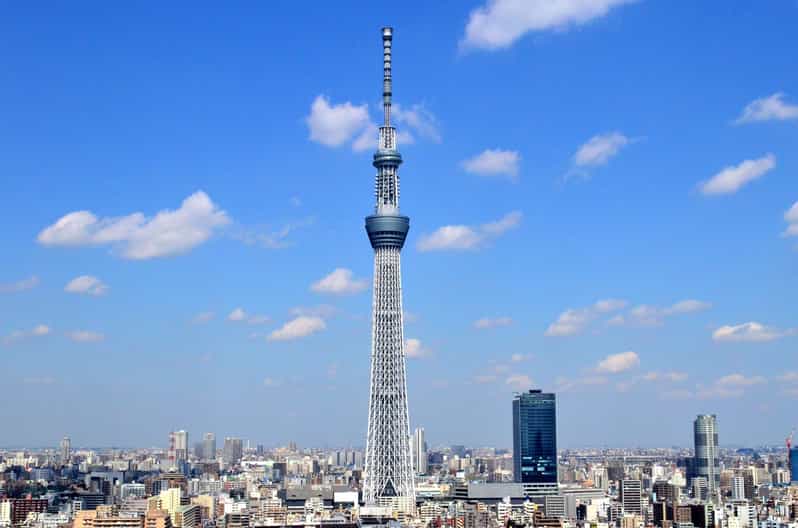
Tokyo can feel impossible to tackle in one day, but this 10-hour coach tour makes a serious attempt. You’ll move from the wooded grounds of Meiji Shrine to the old streets of Asakusa, then rise 350 meters above the city at Tokyo Skytree before ending near Tokyo Bay.
I like the air-conditioned bus, especially in Tokyo’s hot, humid months, and I like the mix of traditional and modern sights. The matcha stop and optional izakaya-style lunch add more than a photo stop. The trade-off is a long, fast day with plenty of walking, and the cruise may be replaced without a refund.
In This Review
- Key points to know before booking
- One day, eighteen Tokyo highlights
- Meiji Shrine: a calm start in the city
- The Imperial Palace area and Tokyo’s political center
- From Akihabara to Kappa-Bashi
- Asakusa: matcha, lunch, and old Tokyo streets
- Tokyo Skytree and the view from 350 meters
- Odaiba and the short bay cruise
- What the guides add
- Walking, pace, and comfort
- Is $122 good value?
- Who should book this Tokyo tour?
- Final call
- FAQ
- How long does the Tokyo sightseeing tour last?
- Is Tokyo Skytree admission included?
- Is lunch included in the price?
- Can I take the Tokyo Bay cruise on any day?
- What languages are available?
- Where does the tour start and finish?
Key points to know before booking
- Meiji Shrine opens the day with quiet forest paths and Shinto customs in the middle of Tokyo.
- Asakusa gives you food, shopping, and old Tokyo atmosphere, including Nakamise Avenue and Kaminarimon Gate.
- The 350-meter Skytree viewing deck is included, with admission arranged in advance.
- The coach saves time between far-flung districts, but traffic can affect the order and length of stops.
- The day includes a matcha experience and optional Japanese lunch, with vegetarian and gluten-free choices available if requested ahead.
- The Tokyo Bay cruise is not guaranteed, especially on Tuesdays, during high tide, or during technical maintenance.
One day, eighteen Tokyo highlights
This is a sightseeing sweep, not a slow neighborhood walk. The coach carries you across central Tokyo while your guide explains what you are seeing, then gives you time on foot at the most important stops.
That format works well if you have only a short stay or want to get your bearings fast. You’ll see areas that are spread widely across the city, including Harajuku, Akihabara, Ueno, Kappa-Bashi, Asakusa, Odaiba, and the Imperial Palace area.
The group begins at a central meeting point, with options connected to Matsuya Ginza or the LOVE statue in Shinjuku, depending on the booking choice. Confirm your exact pickup location before setting out. The day ends near Tokyo Mode Gakuen, rather than returning to your hotel.
The bus has air conditioning and Wi-Fi. That matters here. Tokyo’s distances are large, and the bus gives your feet a break between visits. You also avoid figuring out several train connections while trying to stay on a strict schedule.
More Temple & Shrine Tours in Tokyo
- Tokyo: Asakusa Walking Tour with Sensoji Temple Visit
★ 4.8 · 1,583 reviews - Nikko: Kegon Falls, Lake Chuzenji & Toshogu Temple
★ 4.6 · 1,577 reviews - Tokyo: Nikko Toshogu Shrine and Kegon Waterfall Tour
★ 4.5 · 1,266 reviews
Meiji Shrine: a calm start in the city
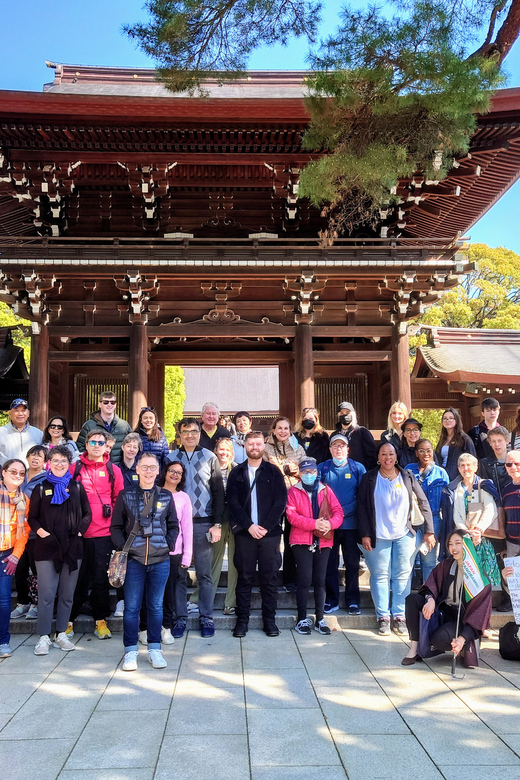
The first major stop is Meiji Jingu, dedicated to Emperor Meiji and Empress Shoken. Its forested setting makes a sharp contrast with the surrounding city, and the walk toward the shrine gives you a useful introduction to Shinto practice.
You have about an hour here. Your guide can explain how to behave at a Shinto shrine, including the basic customs for approaching the worship hall. This cultural guidance is one of the tour’s strongest features. Guides such as Aya, Yui, Hiro, and Tsubasa have been praised for explaining rituals, Japanese culture, and the connection between religion, nature, and daily life.
Wear shoes you can walk in. The shrine visit involves paths and walking rather than simply stepping off the bus for a quick picture. Some people may want more time here, especially if they prefer peaceful historic sites to city views. The schedule is designed to cover many stops, so you should not expect a full morning at Meiji Shrine.
Afterward, the coach passes Harajuku and Omotesando. You will not have a dedicated shopping stop in these districts, but seeing the contrast is useful: Harajuku is associated with youth culture and fashion, while Omotesando is known for its upscale shops and striking architecture.
The Imperial Palace area and Tokyo’s political center
The coach also passes the National Diet Building, Japan’s parliament. Its symmetrical 1936 design is easy to spot from the road, and the guide provides context as you continue toward the Imperial Palace.
At the palace area, you visit either the East Garden or Niju-bashi Bridge in the Outer Garden. The East Garden occupies part of the former Edo Castle grounds and offers traditional gardens and remnants of the old fortress. Niju-bashi is the more classic palace photograph, with its bridge and formal setting.
The exact choice can depend on operations and timing. That is worth knowing if one location matters more to you than the other. This is a sightseeing stop of about 30 minutes, so you will get an overview, not a detailed palace visit.
Still, the stop helps connect modern Tokyo with the city’s earlier identity as Edo. The guide’s commentary is important here because the palace grounds can otherwise seem like a broad open area with limited explanation.
From Akihabara to Kappa-Bashi
Between the palace and Asakusa, the coach passes through Akihabara, Ueno, and Kappa-Bashi. These are not full walking visits, but the route gives you a look at several very different sides of Tokyo.
Akihabara is famous for electronics, games, anime, and Japanese pop culture. Ueno is one of the city’s major cultural and shopping areas. Kappa-Bashi is especially fun to spot from the bus because its shops sell kitchen goods, Japanese dishes, knives, restaurant equipment, and remarkably realistic plastic food models.
This part of the day shows the value of using a coach. You would need separate trips to cover these districts on your own, and they are not all next to one another. The cost is less independence, but you gain a broad view of how Tokyo’s neighborhoods change from one block to the next.
Same city, a completely different kind of day:
- Mt Fuji and Hakone 1-Day Bus Tour Return by Bullet Train
★ 5.0 · 26,383 reviews - 1-Day Tokyo Bus Tour
★ 5.0 · 14,250 reviews - Tokyo: TOKYO SKYTREE® Admission ticket
★ 4.5 · 11,192 reviews - Tokyo: teamLab Planets TOKYO Digital Art Museum Entry Ticket
★ 4.6 · 9,779 reviews
Asakusa: matcha, lunch, and old Tokyo streets
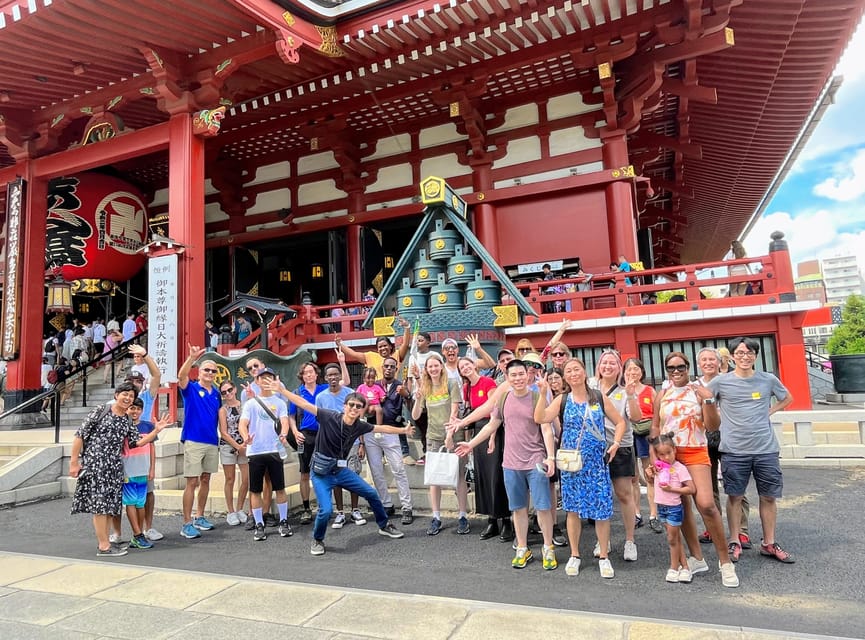
Asakusa is the heart of the tour’s food and culture section. You’ll have a matcha experience, an optional lunch, and about an hour of free time.
The matcha uses first-flush tea from Uji in Kyoto. You can choose a matcha drink or matcha gelato, and some options include matcha beer. The presentation is intended to introduce you to a familiar Japanese flavor without making the experience too formal. If you dislike bitter green tea, the first-flush Uji matcha and sweet gelato option may be easier choices.
Lunch is an izakaya-style set meal when selected during booking. The main dish is Japanese fried chicken, often called karaage, served with tofu and a soft drink. The tofu is made daily at the shop from locally produced soybeans. The meal contains no pork or seafood as main ingredients, but the dashi stock contains fish broth.
Vegetarian and gluten-free meals are available if you give the requested numbers when booking. The gluten-free set is grilled chicken, rice, and tofu. Serious allergies, Muslim-friendly requirements, lactose-free diets, and other special needs are not supported, so the safer choice is to book without lunch if the listed meal does not suit you.
Food quality can vary by personal taste. Several people have enjoyed the lunch and called it authentic, while one found it disappointing. I would treat it as a convenient introduction to everyday Japanese dishes, not as a destination meal.
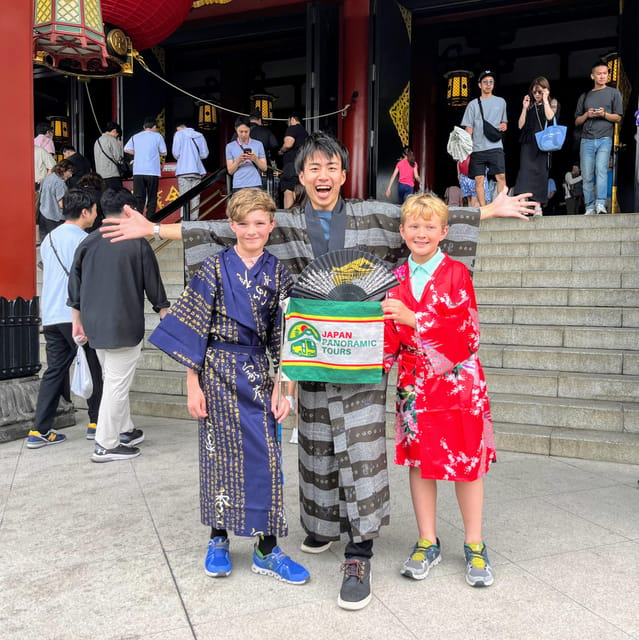
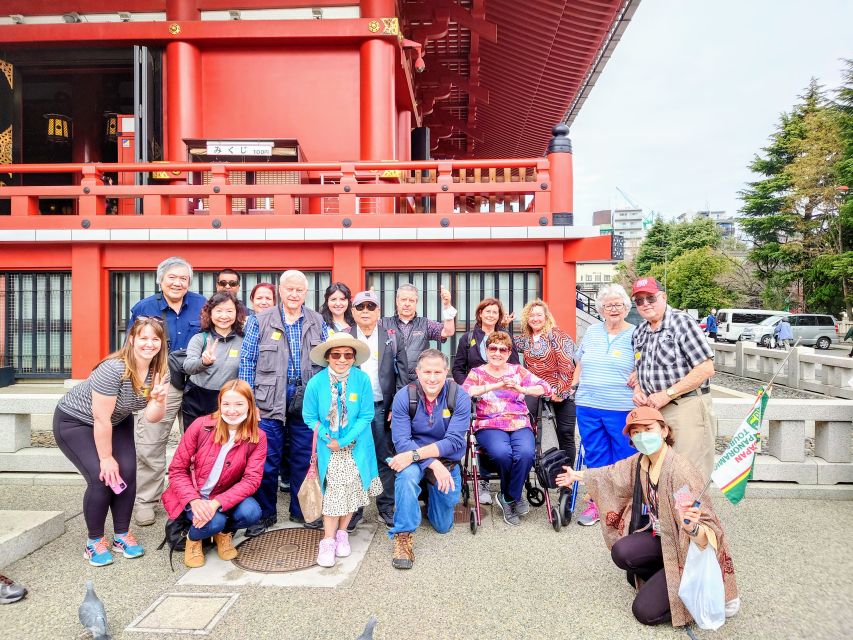
After eating, you have free time around Nakamise Avenue and Senso-ji. Nakamise is lined with souvenir shops and snacks, leading toward Kaminarimon, the famous gate with its huge red lantern. This is the place for the classic Asakusa photograph.
Keep an eye on the clock. One hour goes quickly if you want to browse, eat a snack, photograph the gate, and enter the temple grounds. The area can be crowded, and the tour’s schedule leaves little room for getting lost in side streets.
Tokyo Skytree and the view from 350 meters
The tour then heads to Tokyo Skytree and the Sora-machi shopping complex. Admission to the Tembo Deck at 350 meters is included, and the group receives skip-the-line entry.
This is often the day’s big visual payoff. From the deck, Tokyo stretches in every direction, giving you a clear sense of the city’s enormous scale. On a sunny day, the view is especially rewarding. On hazy or rainy days, visibility can be less impressive, but the height still makes the visit memorable.
You have about 90 minutes here. That is enough for the observation deck and some time in Sora-machi, though it is not enough for a serious shopping session. One practical point: some people would prefer a longer Meiji Shrine visit and a shorter Skytree stop. If you already plan to visit Skytree independently, this portion may feel generous.
The included admission adds real value to the $122 price. You are not only paying for transportation and a guide. You are also covering a major observation deck, a food experience, and a full day of movement through districts that would take careful planning to connect.
Odaiba and the short bay cruise
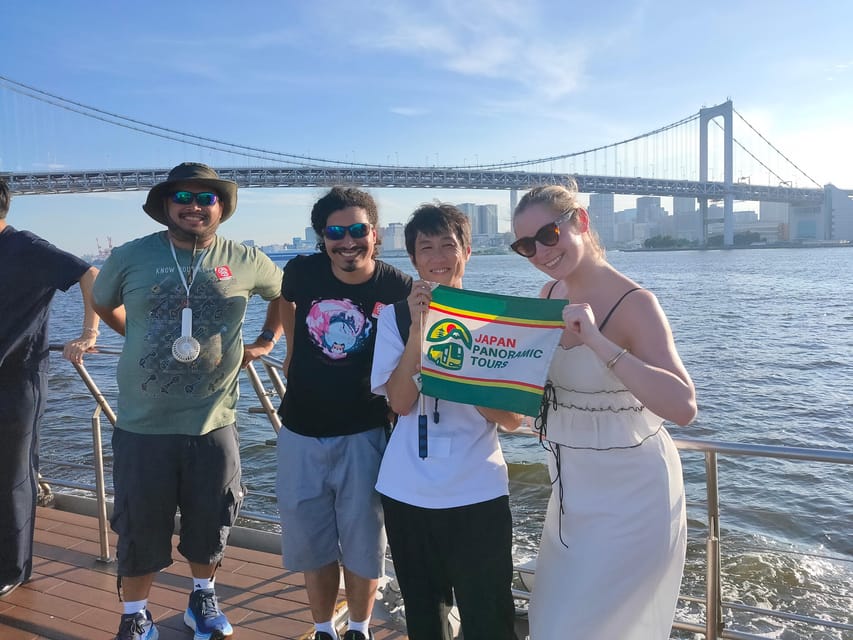
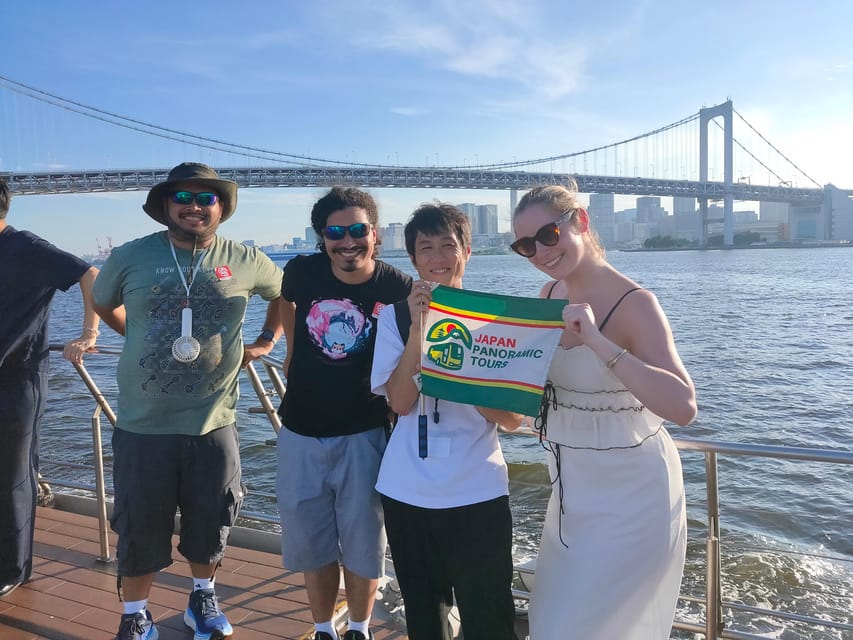
The final activity is a boat ride from the Odaiba area, usually lasting around 15 to 20 minutes. The route goes beneath Rainbow Bridge and offers views of Tokyo’s waterfront towers.
Do not book this tour solely for the cruise. It is a pleasant ending, especially near sunset, but it is short and depends on conditions. The cruise is generally not offered on Tuesdays, when the program includes either Hamarikyu Gardens or the Fukagawa Edo Museum instead.
High tide or technical maintenance can also cancel the boat ride. In those cases, the replacement is Hamarikyu Garden or Fukagawa Museum, and no refund is provided. That policy makes sense operationally, but it is an important booking detail if the boat is your main reason for choosing this tour.
Hamarikyu offers a traditional garden setting beside the modern waterfront. Fukagawa Edo Museum focuses on Tokyo’s earlier Edo period. Both alternatives support the cultural theme of the day, but neither is the same experience as cruising under Rainbow Bridge.
What the guides add
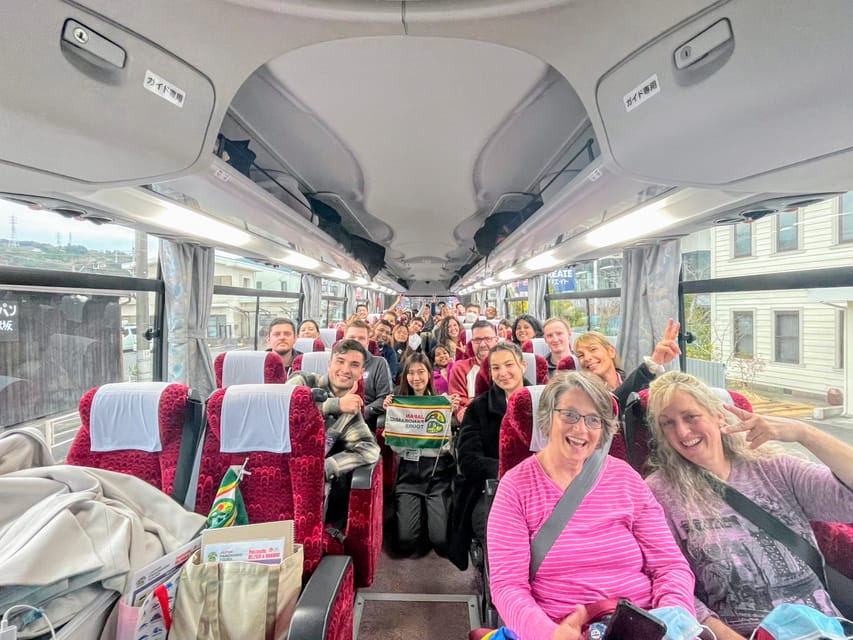
The guide can make or break a full-day group tour, and the strongest part of this experience is the human guidance. Aya, Yui, Hiro, Sora, Levin, Lisa, Lovely, and Tsubasa have all been singled out for clear explanations, humor, patience, and practical help.
Tsubasa, in particular, has been praised for teaching Japanese words and writing as well as explaining history and customs. Yui has helped with restaurant and shopping suggestions, while several guides have offered tips on navigating Tokyo after the tour.
The live guide speaks English. Audio headsets are also available in Spanish, French, Italian, German, Portuguese, and Ukrainian. The multilingual audio option is useful, though the personal interaction with the English-speaking guide remains the main source of explanation.
A good guide also keeps the day moving. With this many stops, you need clear meeting instructions and reminders. The best guides help the group stay together without making the schedule feel harsh.
Walking, pace, and comfort
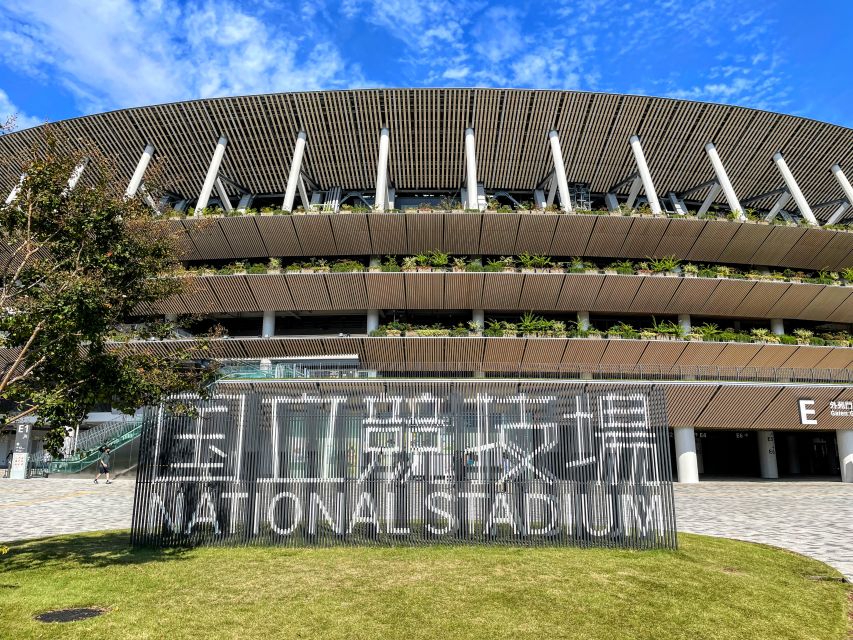
This is not a low-walking bus ride. Expect more than 11,000 steps according to one detailed account, with walking at Meiji Shrine, the palace grounds, Asakusa, Skytree, and the waterfront.
The air-conditioned coach softens the pace, but it does not remove the physical demands. Comfortable shoes are essential. People with mobility impairments may find the tour unsuitable, and you must handle your own luggage, stroller, or wheelchair when loading and unloading.
The schedule is fast by design. You will see a lot, but some stops can feel brief. Traffic, weather, and operational changes can also alter the order. This is a good reason to keep the next morning free for returning to the place you liked best.
Is $122 good value?
At $122 per person, this is not a budget sightseeing day. It can still be good value if you want a single organized introduction to Tokyo.
The price includes transport, an English-speaking guide, Wi-Fi on the bus, Skytree Tembo Deck admission, matcha, and the cruise when available. Lunch is included only if you choose that option. You are paying for time saved as much as for the individual activities.
On your own, you could spend less by using trains and choosing only a few free sights. But you would need to plan the route, manage transfers, reserve Skytree access, and connect districts on opposite sides of the city. The tour earns its price when your stay is short or when you prefer a guide to handle the city’s logistics.
It is less suitable if you already know Tokyo well, dislike group schedules, or want long visits at each location. The tour’s value comes from breadth, not leisurely depth.
Who should book this Tokyo tour?
I would recommend it to first-time visitors with one to three days in Tokyo, especially anyone who wants both traditional Japan and modern city views. Families and older visitors may appreciate the coach, but everyone must be ready for substantial walking.
It also suits solo visitors who want a structured day and cultural explanation. The guide can explain shrine manners, food customs, neighborhood differences, and practical Tokyo navigation in a way that is hard to gather from a map alone.
I would skip it if you want a dedicated food tour, a relaxed temple day, or guaranteed time on the bay. I would also avoid the lunch option if you have serious allergies or strict dietary rules that the listed meal cannot meet.
Final call
Book this tour if your priority is seeing Tokyo’s major sights efficiently, with a friendly English-speaking guide and less stress over transport. Meiji Shrine, Asakusa, and the Skytree make a strong core, while matcha, lunch, and the waterfront add useful variety.
Go in with realistic expectations: it is a full, active day, not a slow cultural stroll. Choose your meeting point carefully, request dietary options in advance, bring good shoes, and consider the cruise a bonus rather than a promise. For a first look at Tokyo, the range of places covered makes the price easier to justify.
FAQ
How long does the Tokyo sightseeing tour last?
The tour lasts about 10 hours. The listed schedule includes one hour at Meiji Shrine, 30 minutes at the Imperial Palace area, time for matcha and lunch in Asakusa, 90 minutes at Tokyo Skytree, and a short boat cruise or replacement visit.
Is Tokyo Skytree admission included?
Yes. Entry to the Tokyo Skytree Tembo Deck at 350 meters is included, with skip-the-line admission arranged as part of the tour.
Is lunch included in the price?
Lunch is included only if you select the lunch option. The set meal includes Japanese fried chicken, tofu, and a soft drink. Vegetarian and gluten-free meals can be requested during booking.
Can I take the Tokyo Bay cruise on any day?
The cruise is not offered on Tuesdays. It can also be replaced by Hamarikyu Garden or Fukagawa Edo Museum because of high tide or technical maintenance. No refund is provided when the cruise is replaced.
What languages are available?
The live guide speaks English. Audio headsets are available in Spanish, French, Italian, German, Portuguese, and Ukrainian.
Where does the tour start and finish?
The meeting point varies by the option booked and may be at Matsuya Ginza or the LOVE statue in Shinjuku. The tour finishes near Tokyo Mode Gakuen. Hotel pickup and drop-off are not included.
Just added around Tokyo
- Private Harajuku Omotesando Architecture Tour★ 4.9 · 18 reviews
- Tokyo: Customizable Private Guided Walking Tour★ 4.5 · 129 reviews
- Tokyo: Guided Helicopter Ride★ 4.9 · 24 reviews
- Tokyo: Guided Walking Tour of Tsukiji Market with Lunch★ 4.4 · 24 reviews
- Tokyo: Private Personalized Local Food Tour★ 4.5 · 101 reviews
- Tokyo GINZA: KONPARU Japanese Cabaret Show with Drink★ 4.8 · 38 reviews
- Tokyo: Guided Walking Tour of Tsukiji Market with Breakfast★ 4.4 · 134 reviews
- Tokyo: Gotokuji Cat Temple, Shinjuku Cat Cafe & 3D Cat Tour★ 4.9 · 38 reviews
Temple & Shrine Tours, compared.
Tea Ceremony in a Traditional Tea House in Kiyomizu
Read our review →
Asakusa Walking Tour with Sensoji Temple Visit
Read our review →
Kamakura & Enoshima Day Trip including Temple Tickets
Read our review →
Kyoto/Osaka: Nara, Fushimi Inari Taisha, Arashiyama Bus Tour
Read our review →
Nikko Toshogu Shrine and Kegon Waterfall Tour
Read our review →
Tokyo Panoramic 1 Day: Meiji Shrine, Asakusa, Odaiba and SKYTREE®
Read our review →
1-Day Snow Monkeys, Zenko-ji Temple & Sake in Nagano
Read our review →Browse the lists this tour appears in