
REVIEW · WALKING TOURS
The Dark Side of Tokyo – Night Walking Tour Shinjuku Kabukicho
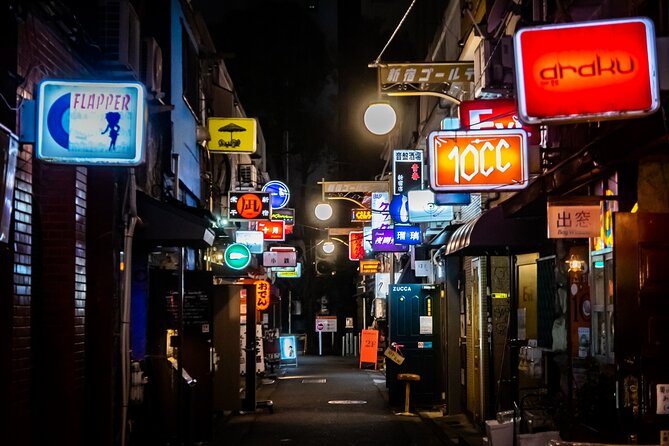
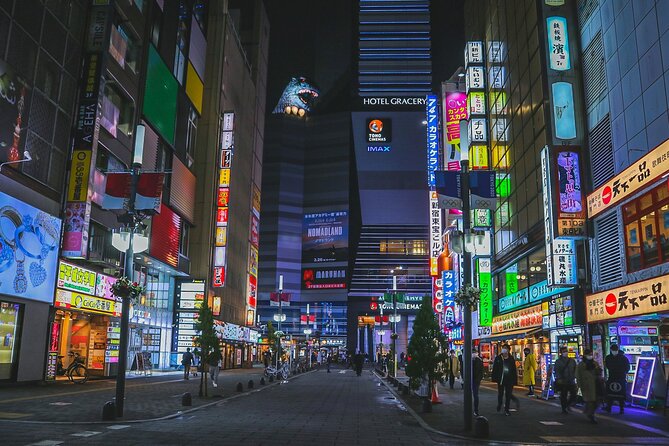
Kabukicho after dark is Tokyo at its most theatrical: hundreds of neon signs, narrow drinking lanes, giant Godzilla looming above the streets, and a nightlife culture that can be hard to read on your own. This small-group walk explains what you’re seeing without sending you into places you did not intend to visit.
I like the small groups of up to 12, which leave room for questions, and I like the mix of famous sights with less obvious social history. Guides including Polina, Gray, Danny, Daniel, Kumi, and Loc are praised for clear English, humor, and useful local explanations. The main drawback is that the walk ends in Shinjuku 3 Chome rather than returning to the starting point, and rain or heavy crowds can make it harder to keep the group together.
In This Review
- Key points at a glance
- What this Shinjuku night walk is really about
- Meeting at Shinjuku East Exit
- Omoide Yokocho and the art of the narrow alley
- Kabukicho, Tokyo’s biggest nightlife district
- Godzilla Head and a touch of movie spectacle
- The narrow bar district
- A Shinto shrine amid the nightlife
- Tokyo’s LGBTQ district, often called Gay Town
- What the guides add
- Is $25 a fair price?
- Who should book this walk?
- The practical finish in Shinjuku 3 Chome
- Cancellation and weather
- Should you book The Dark Side of Tokyo?
- FAQ
- How much does The Dark Side of Tokyo night walking tour cost?
- How long does the tour last?
- Where does the tour begin?
- Where does the tour end?
- How many people can join the tour?
- What happens if the tour is canceled because of bad weather?
Key points at a glance
- Omoide Yokocho first-hand: Walk through Shinjuku’s famous narrow drinking alley and learn how the area fits into Tokyo’s nightlife.
- Kabukicho without guesswork: Get context about the district’s rules, adult businesses, hotels, food, and the laws that shape the area.
- A varied two-hour route: The walk includes Godzilla Head, a narrow bar district, a Shinto shrine, and Tokyo’s largest LGBTQ district.
- Useful for first nights in Tokyo: The route helps you get your bearings before exploring Shinjuku independently.
- Small-group attention: The group limit is 12, though rain and packed streets can make it difficult to stay close to the guide.
- Food is separate: You pay the $25 tour price for the guide, while dinner and drinks cost extra.
What this Shinjuku night walk is really about
The name sounds dramatic, but this is not a haunted walk or a thrill ride. The dark side here means the parts of Tokyo nightlife that are less often explained in standard sightseeing tours: adult entertainment, late-night businesses, narrow bar quarters, local customs, and the practical rules that keep the district operating.
That makes the tour useful. Shinjuku can feel like a wall of signs and entrances, with little English to explain what each street or business is for. A guide gives you a framework. You can ask direct questions, learn which areas are simply colorful and which require more care, and then decide how much of the nightlife you want to see afterward.
I especially like this as a first-evening activity. It gives you a mental map of Shinjuku before you set out for dinner or drinks. You are not just collecting neon photos. You are learning how the neighborhood works.
The advertised duration is about two hours, but one account describes a walk lasting more than three hours. That may reflect a particularly extended outing, so plan for roughly two hours while keeping a little flexibility afterward. The route is on foot, and the exact pace may depend on the guide, group, weather, and street conditions.
More Walking Tours in Tokyo
- Tokyo Tsukiji Fish Market Food and Culture Walking Tour
★ 5.0 · 3,184 reviews - Tokyo: Imperial Palace and Shogun Historical Walking Tour
★ 5.0 · 2,251 reviews - Tokyo: Shinjuku Local Bar and Izakaya Guided Walking Tour
★ 4.9 · 1,794 reviews
Meeting at Shinjuku East Exit
The meeting point is the police box at Shinjuku Station East Exit, at 3 Chome 38 1 Shinjuku. A police box is a small neighborhood police post, not a public telephone booth. This distinction matters because one person had trouble finding the meeting point after looking for the wrong kind of box.
Give yourself extra time at Shinjuku Station. It is a large, busy transport hub, and the tour begins outside the East Exit rather than inside a station corridor. The clearest practical move is to identify the East Exit first, then look for the police box at the stated address.
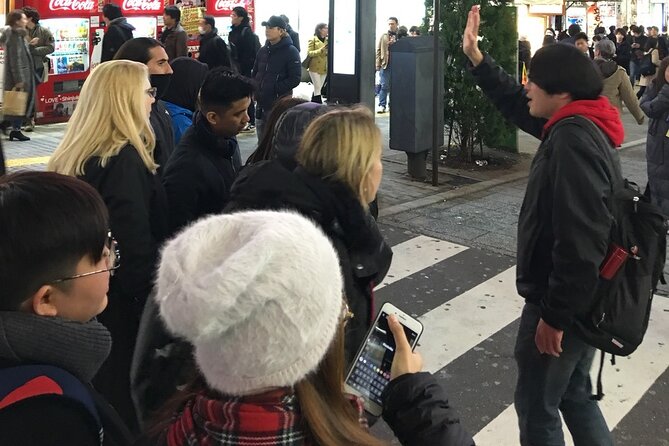
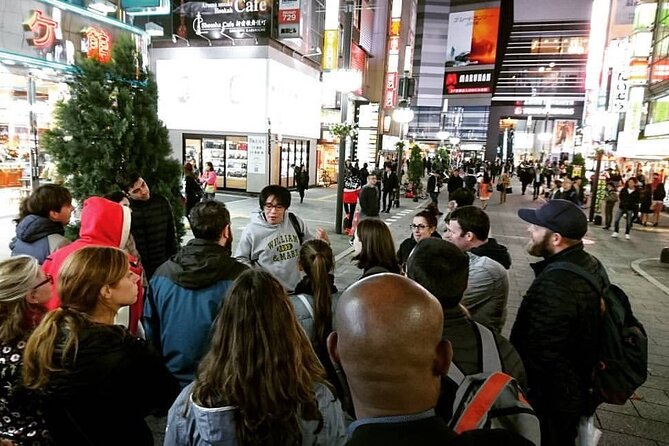
The guide will lead you from there through the evening streets. Since the group can contain up to 12 people, arrive ready to stay near the guide when crossing roads or moving through crowded areas. On a rainy night, one group found it easy to lose sight of the leader among other walking groups. A raised, colorful sign or other marker would help, but the safest habit is to keep the guide in view.
Omoide Yokocho and the art of the narrow alley
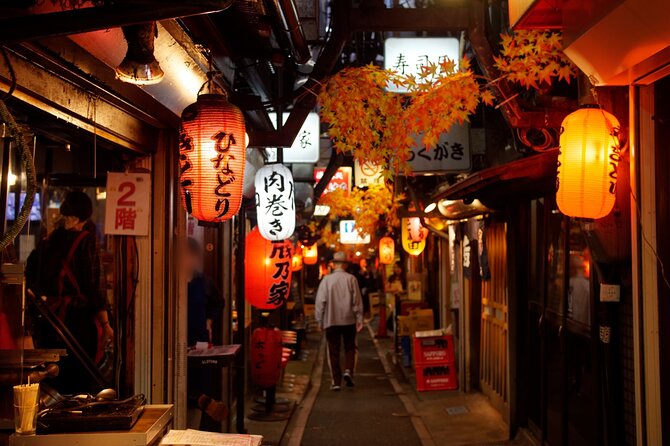
One early stop is Omoide Yokocho, the famous drinking alley in Tokyo. Its narrow lanes and compact restaurants offer a sharp contrast to the huge station area and glowing towers nearby.
The value of seeing it with a guide is not only the photo opportunity. You can ask how the alley fits into Shinjuku’s food and drinking culture, and you receive suggestions for what to try later. Food and drinks are not included, so this stop is for looking, listening, and deciding if you want to return independently.
Do not expect a seated meal as part of the tour. The experience is a walking introduction. If you are hungry, eat before the walk or plan a separate meal afterward. If you want to sample something in the area, budget beyond the $25 tour price.
Omoide Yokocho can also feel tight, especially when several groups pass through at once. Keep your pace comfortable and avoid stopping in the center of a lane. The narrow setting is part of its appeal, but it is not ideal for a slow, relaxed stroll.
Kabukicho, Tokyo’s biggest nightlife district
Kabukicho is the main event. It is one of Tokyo’s best-known nightlife areas, packed with signs, restaurants, bars, hotels, entertainment venues, and businesses aimed at adults. The guide’s job is to explain the district without turning it into a cheap spectacle.
This is where the tour earns its price. The area can look simple from the outside, but the social and legal details are not obvious. The walk covers who operates different parts of the nightlife scene, how workers and businesses work around regulations, and how the adult industry fits into the local economy and culture.
You also learn about the practical side of the district. A guide can point out the difference between streets you may want to explore casually and places where you should not wander without understanding what you are entering. The tour is designed to reduce the chance of getting lost or straying into an unpleasant situation.
The subject matter is frank. You should be comfortable hearing about sex work, adult entertainment, local customs, and the business practices around them. This is not the best choice for a child-focused outing or for anyone seeking only temples, gardens, and traditional architecture.
At the same time, the tone is not necessarily grim. Guides are praised for using humor while handling serious material. Danny, Gray, Polina, and Daniel are each singled out for being engaging and clear, which matters in a district where a dry lecture would quickly get lost under the signs and street noise.
Same city, a completely different kind of day:
- Mt Fuji and Hakone 1-Day Bus Tour Return by Bullet Train
★ 5.0 · 26,383 reviews - 1-Day Tokyo Bus Tour
★ 5.0 · 14,250 reviews - Tokyo: TOKYO SKYTREE® Admission ticket
★ 4.5 · 11,192 reviews - Tokyo: teamLab Planets TOKYO Digital Art Museum Entry Ticket
★ 4.6 · 9,779 reviews
Godzilla Head and a touch of movie spectacle
The route includes the famous Godzilla Head, one of Kabukicho’s most recognizable modern landmarks. You will see the giant monster above the district and have the chance to catch his show.
This stop gives the tour a welcome change of mood. After explanations about nightlife laws and adult businesses, Godzilla offers a straightforward bit of Tokyo pop culture. It also helps you understand how Kabukicho mixes entertainment, fantasy, shopping, dining, and adult nightlife in one compact area.
The Godzilla stop is a viewing point rather than a long attraction visit. Do not expect an admission-based museum experience or an extended show program. Think of it as a memorable landmark on a walking route, with the guide adding context and helping you see where it fits in the district.
The narrow bar district
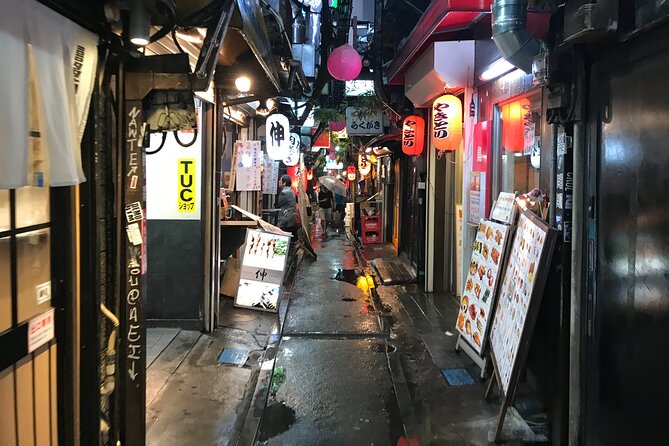
Another stop brings you into a tight bar quarter. The scale changes again. Instead of large illuminated streets, you see small venues packed into narrow passages, with limited space and a more intimate feel.
This part of the walk is useful if you want to understand the range of Shinjuku nightlife. Kabukicho can feel oversized and commercial, while the narrow bar district presents a more compressed, local night-out setting. The guide can explain what the area is known for and suggest places or styles of evening activity to consider later.
Keep in mind that the walk does not include bar entry, drinks, or dinner. You are examining the district with a guide, not joining a pub crawl. That is a benefit if you prefer to choose your own budget and pace, but it may disappoint you if you expect included tastings or a table reservation.
Because these lanes are narrow, the group may need to pause at the edges rather than gather in the middle. Stay attentive and avoid separating from the guide while looking at signs or doorways.
A Shinto shrine amid the nightlife
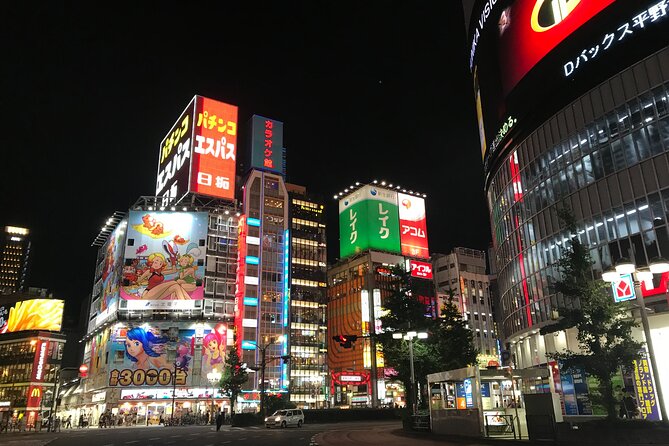
The Shinto shrine is one of the route’s most interesting contrasts. A shrine in the middle of Shinjuku’s nightlife district shows that Tokyo does not divide neatly into old and new, sacred and commercial, quiet and loud.
The stop gives the evening a pause. You can learn about local religious tradition and see a different side of the neighborhood without leaving central Shinjuku. It also keeps the tour from becoming only a tour of bars, signs, and adult entertainment.
Treat the shrine respectfully. The provided details do not promise a formal ritual or extended visit, so expect a brief stop with an explanation rather than a full temple-style sightseeing session. The value lies in the setting and the contrast.
For me, this is the kind of detail that makes a city walk worthwhile. You could pass the shrine alone and barely register it. With context, the same place becomes part of a larger picture of Tokyo life.
Tokyo’s LGBTQ district, often called Gay Town
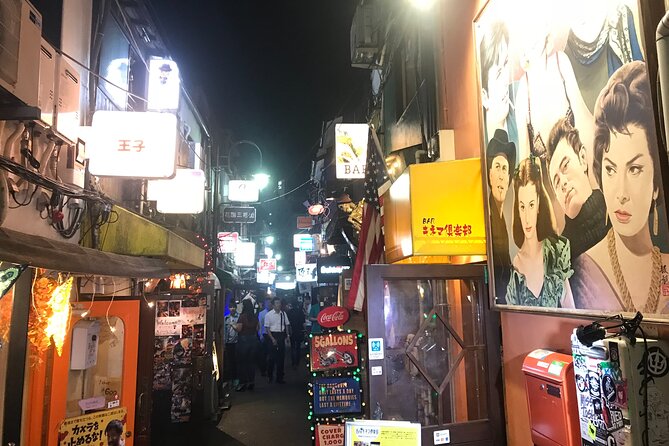
The route also visits the LGBTQ district in Shinjuku, often called Gay Town. This is an important part of the neighborhood’s identity and gives the walk a broader view of nightlife culture.
The guide explains the district as part of Tokyo’s social and entertainment scene rather than treating it as a novelty. That distinction matters. You should approach this stop with respect, especially because it is a living neighborhood and a place where people go out, work, and meet friends.
The district adds another layer to the tour’s subject. You see that Shinjuku nightlife is not one single scene. It includes large entertainment streets, tiny bars, adult businesses, food alleys, religious sites, and LGBTQ venues, each with its own atmosphere and audience.
The tour does not advertise entry into LGBTQ bars or venues. It is a guided walk through the area, with cultural and local explanations. If you want to continue into the district afterward, drinks and any venue costs are your responsibility.
What the guides add
The guide can make or break a night walking tour, and this experience has several named guides praised for strong communication and personality. Polina is described as clear, warm, and professional, with the confidence to explain delicate subjects without becoming crude. Gray is praised for an inclusive, entertaining approach and for answering questions about areas that offer little English information.
Danny receives repeated praise for humor, friendly energy, and detailed explanations of Kabukicho. Daniel is noted for explaining the different Shinjuku areas and suggesting food and drinks. Loc is described as friendly, well prepared, and easy to understand.
Do not assume you will receive a particular guide unless your booking confirms one. Still, the pattern is encouraging: the tour depends heavily on spoken explanation, and the named guides are praised for making complicated material easy to follow.
A strong guide also adjusts to the group. Ask questions. The most useful parts may be the details you would never think to search for, such as local rules, the history of particular streets, or how to avoid entering the wrong kind of business.
Is $25 a fair price?
At $25 per person, this is a reasonable buy if you value explanation more than included food or attractions. You are paying for about two hours of guiding, local orientation, and access to a subject that is difficult to understand from signs alone.
The price does not include dinner, drinks, venue admission, or other purchases. That keeps the base cost low and lets you decide what to spend afterward. It also means you should not compare this directly with a food tour that includes several tastings.
The small-group limit of 12 improves the value. You have a better chance to hear the guide and ask questions than you would on a large coach-style outing. Groups can be much smaller, sometimes only a few people, though the maximum is still 12.
I would consider it especially good value on your first night in Tokyo. A guide can save time, reduce confusion, and help you plan the rest of your stay in Shinjuku. If you already know Kabukicho well, the value depends on how interested you are in the district’s social and legal background.
Who should book this walk?
You should consider it if you want an unusual introduction to Tokyo, enjoy learning how nightlife operates, or feel unsure about navigating Kabukicho alone. It also suits solo visitors and couples who want company and context before deciding where to spend the rest of the night.
The tour is a good fit for first-time Tokyo visitors. Several guides offer food and drink suggestions, and the route gives you a useful sense of direction around Shinjuku. Taking it early in your trip can help you return to the areas that interest you most.
I would be cautious if you want a quiet walk, a conventional history tour, or a meal included in the price. The subject matter is adult-oriented, the streets can be crowded, and the route may feel fast if you prefer long stops at each sight.
Wear comfortable shoes and be prepared for weather. The experience requires good weather and may be canceled if conditions are poor. If rain starts, keep close to the guide and do not rely on being able to spot the group easily.
The practical finish in Shinjuku 3 Chome
The walk ends around Shinjuku 3 Chome, not back at the East Exit police box. That is the main logistical point to remember when planning your evening.
The ending location is useful because you remain in central Shinjuku, with plenty of options for continuing your night. But if you need to return to the station entrance, collect luggage, or meet someone at the start point, allow extra time after the tour.
The route is near public transportation, and service animals are allowed. Most people can participate, but you will be walking through narrow, busy streets, so anyone with mobility concerns should consider how comfortable they are with that setting.
Cancellation and weather
You can cancel up to 24 hours before the start time for a full refund. Changes or cancellations made less than 24 hours before the start are not accepted for a refund, and the cut-off uses Tokyo local time.
The experience requires good weather. If the operator cancels because of poor conditions, you are offered another date or a full refund. Check the forecast before setting out, especially during Tokyo’s wetter seasons.
Should you book The Dark Side of Tokyo?
Book it if you want to understand Shinjuku rather than simply photograph it. The combination of Omoide Yokocho, Kabukicho, Godzilla Head, the narrow bar district, a Shinto shrine, and the LGBTQ district gives you a broad evening view in a short time.
At $25, it is a sensible introduction, especially for a first night or a solo outing. Go in expecting a guided street walk, not dinner or included nightlife. Keep an eye on the guide in crowds, confirm the East Exit police box rather than searching for a telephone box, and remember that the finish is in Shinjuku 3 Chome.
If adult nightlife and frank cultural discussion are not your interests, choose another Tokyo activity. If they are, this is a practical, lively way to see a side of Shinjuku that is easy to miss and even easier to misunderstand.
FAQ
How much does The Dark Side of Tokyo night walking tour cost?
The tour costs $25 per person. Dinner and drinks are not included and cost extra.
How long does the tour last?
The advertised duration is approximately two hours. The actual length may vary, with one reported outing lasting more than three hours.
Where does the tour begin?
It begins at the police box by Shinjuku Station East Exit, at 3 Chome 38 1 Shinjuku, Shinjuku City, Tokyo 160-0022, Japan.
Where does the tour end?
The tour finishes around Shinjuku 3 Chome. It does not necessarily return to the starting point.
How many people can join the tour?
The maximum group size is 12 people. Smaller groups may be possible depending on the booking date.
What happens if the tour is canceled because of bad weather?
You will be offered a different date or a full refund if poor weather causes the experience to be canceled. You can also cancel up to 24 hours before the start time for a full refund.
More Evening Experiences in Tokyo
- Tokyo Night Foodie Tour in Shinjuku – Seasonal Sushi, Wagyu Beef
★ 5.0 · 1,161 reviews - Tokyo: Daikoku JDM Car Meet & Night Car Culture Tour
★ 4.8 · 626 reviews - Tokyo After 5: Authentic Japanese Food & Drink Night Tour
★ 4.5 · 560 reviews - Tokyo: Samurai Entertainment Night Show in Kanda Shrine
★ 4.6 · 417 reviews
Just added around Tokyo
- Tokyo: Customizable Private Guided Walking Tour★ 4.5 · 129 reviews
- Private Harajuku Omotesando Architecture Tour★ 4.9 · 18 reviews
- Tokyo: Guided Helicopter Ride★ 4.9 · 24 reviews
- Tokyo: Guided Walking Tour of Tsukiji Market with Lunch★ 4.4 · 24 reviews
- Tokyo: Private Personalized Local Food Tour★ 4.5 · 101 reviews
- Tokyo GINZA: KONPARU Japanese Cabaret Show with Drink★ 4.8 · 38 reviews
- Tokyo: Guided Walking Tour of Tsukiji Market with Breakfast★ 4.4 · 134 reviews
- Tokyo: Gotokuji Cat Temple, Shinjuku Cat Cafe & 3D Cat Tour★ 4.9 · 38 reviews
Walking Tours, compared.
Kyoto Geisha Walking Tour: Gion District & Hidden Gems
Read our review →
Tokyo Tsukiji Fish Market Food and Culture Walking Tour
Read our review →
Gion Magical Night Walking Tour with Geisha Trivia
Read our review →
Imperial Palace and Shogun Historical Walking Tour
Read our review →
Gion Geisha District Walking Tour – Stories of Geisha
Read our review →
Asakusa Walking Tour with Sensoji Temple Visit
Read our review →
Kyoto Gion Geisha District Walking Tour – The Stories of Geisha
Read our review →Browse the lists this tour appears in