
REVIEW · EVENING EXPERIENCES
Tokyo: Daikoku JDM Car Meet & Night Car Culture Tour
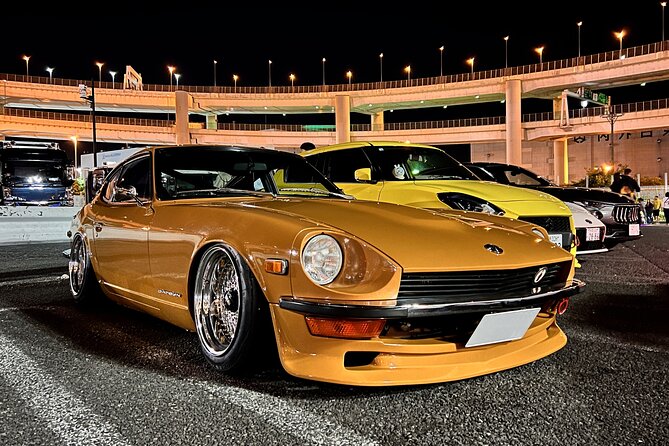
Daikoku Parking Area is not simply a stop on this four-hour outing. It is the main event: a huge public rest stop where tuned Japanese cars, European exotics, American muscle, and curious onlookers may gather under the lights. I like that you reach it as part of a real Tokyo night drive, not by being dropped at a static car museum. I also like the mix of driving, city views, and time to wander among the cars.
The biggest consideration is uncertainty. No particular car is promised, and Daikoku can close without notice. A quiet night or a changed route is possible, though the guides adjust the plan and still make at least three stops.
In This Review
- Key points at a glance
- What this Tokyo car tour really offers
- Leaving Shibuya for Tokyo’s expressways
- APIT Autobacs: Japan’s automotive department store
- Tatsumi First Parking Area and the changing route
- The drive past Skytree, Haneda, and Yokohama
- Daikoku Parking Area, the main reason to go
- The return through Tokyo’s night lights
- Vehicles, comfort, and group size
- Who will enjoy this most
- Languages, booking flexibility, and small practical details
- Should you book the Daikoku JDM tour?
- FAQ
- How long is the Tokyo Daikoku JDM tour?
- How much does the experience cost?
- Where does the tour start?
- Is hotel pickup included?
- Is Daikoku Parking Area guaranteed to be open?
- Are specific cars guaranteed?
- What other places might the tour visit?
- What kind of vehicle will I ride in?
- How many people can join?
- What languages are available?
- Can children join the tour?
- Can I cancel my booking?
Key points at a glance
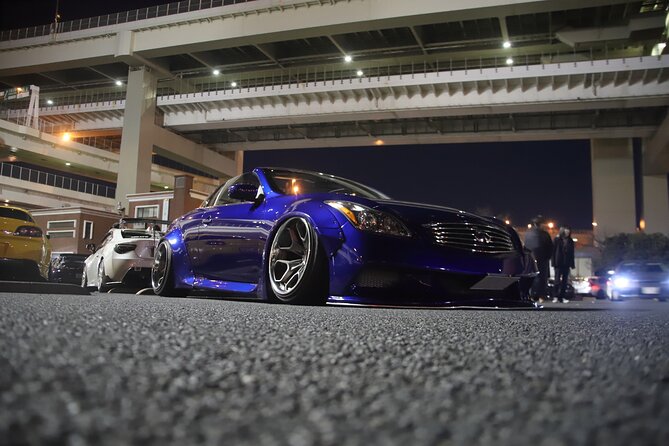
- Daikoku Parking Area: Spend about an hour at Japan’s most famous public car-meet location when it is open.
- Rainbow Bridge at night: See Tokyo’s illuminated skyline from the road rather than from a viewing deck.
- APIT Autobacs Shinonome: Browse a large Japanese automotive store filled with parts, accessories, merchandise, and display cars.
- Passionate local guides: Michael, Mori, Jason, Karim, Julian, and other hosts explain the cars, roads, and local scene.
- Small-group transport: Ride in a carefully maintained JDM, European, luxury, or spacious van, with groups limited to 10.
- Realistic expectations: This is a responsible look at car culture, not illegal drifting or a Fast & Furious stunt show.
What this Tokyo car tour really offers
The appeal here is not just spotting expensive cars. It is seeing how Japanese car culture fits into the city itself. You follow major expressways, cross the Rainbow Bridge, pass Tokyo Tower and the Skytree, and head toward the industrial waterfront and port roads where car enthusiasts meet.
That setting matters. Films and games have borrowed the look of Tokyo’s expressways, but the real scene is quieter and more orderly. Cars arrive, owners talk, people take photographs, and groups move on. You will not be promised street racing, burnouts, or reckless driving. The fun comes from the cars, the setting, and the chance that something remarkable may appear while you are there.
The guides add much of the value. Michael is described as having more than 25 years of auto-industry experience with Japanese, European, and American brands. Mori has been praised for explaining both car culture and Tokyo’s city landmarks. Jason has driven guests in an RX-7 and other performance cars, while Karim is noted for his safe driving and easy conversation.
Guide assignments and vehicles can change, so you should not book a particular car or host as a guarantee. Still, the repeated pattern is clear: the people leading these drives know the subject, enjoy talking about it, and treat safety as part of the experience.
A few more Tokyo trips to weigh up
- Tokyo Night Foodie Tour in Shinjuku – Seasonal Sushi, Wagyu Beef
★ 5.0 · 1,161 reviews - Tokyo After 5: Authentic Japanese Food & Drink Night Tour
★ 4.5 · 560 reviews - Tokyo: Samurai Entertainment Night Show in Kanda Shrine
★ 4.6 · 417 reviews
Leaving Shibuya for Tokyo’s expressways
There are two starting options, with the listed meeting point at the Tōeidō Building at 2-chōme-29-8 Dōgenzaka. Check your exact meeting details carefully because the starting point depends on the option you book. Hotel pickup and drop-off are not included.
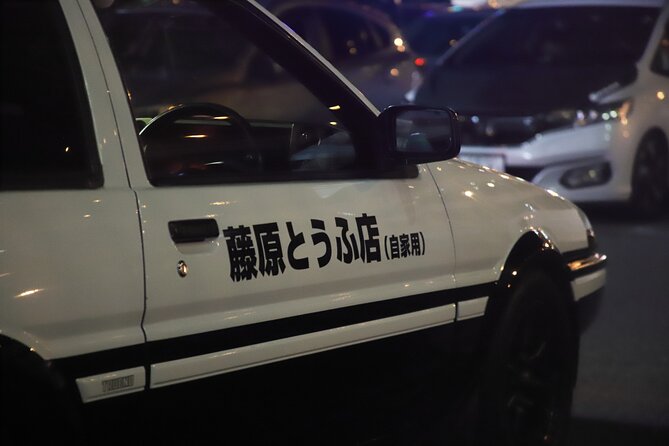
Once everyone is aboard, the tour becomes a moving introduction to Tokyo. You pass Roppongi Hills, then head toward the Rainbow Bridge. The city lights provide plenty to look at, but the guide’s commentary is just as useful here. You can ask about the roads, local car habits, Japanese models, tuning culture, or the influence of games and films such as Initial D and Wangan Midnight.
This part is particularly good for visitors who know cars but do not know Tokyo. The guide can connect a familiar model or road scene with its place in Japanese car culture. If you are only mildly interested in cars, the city views and nighttime drive give the outing enough variety to keep it from feeling like four hours of technical talk.
The vehicles are selected for comfort, style, and group size. You might ride in a customized car, a factory performance model, a luxury sedan, or a roomy van. The exact choice depends on availability. A sedan or sports car can make the ride more memorable, but a van is the more sensible choice for families or larger groups.
One practical point: a van booking may require your party to split between two vans if seats are limited or the group is large. Ask about this ahead of time if staying together is important.
APIT Autobacs: Japan’s automotive department store
The first substantial stop is APIT Autobacs Shinonome, usually for about 25 minutes. Think of it as part auto-parts shop, part enthusiast store, and part showroom. You can browse tuning parts, accessories, memorabilia, and car-related goods, with impressive Japanese builds adding to the atmosphere.
I like this stop because it gives context to the cars you see later. At Daikoku, you mainly see finished projects. At APIT, you get a sense of the products, brands, and visual choices that help owners create them.
Twenty-five minutes is enough for a quick look and some shopping, but not enough for a slow browse if you are seriously interested in parts or souvenirs. One visitor specifically wished for more time in the store, which is a fair point. If APIT is a major reason for booking, treat this as an introduction rather than a dedicated shopping trip.
Food and drinks are not included, and food or drinks are not allowed in the vehicle. The same applies to smoking and alcohol. Keep your shopping focused, since the tour has several more stops and Tokyo traffic can eat into the schedule.
Tatsumi First Parking Area and the changing route
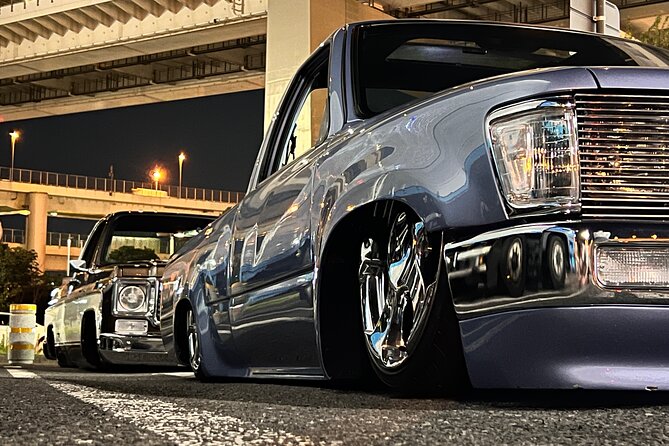
Tatsumi First Parking Area is generally a shorter stop, around 15 minutes. It is another place to look for cars and to see how Tokyo’s expressway rest areas function as meeting points for enthusiasts.
The schedule here is flexible. Depending on the day, time, weekend conditions, traffic, and weather, the additional stop may be Tatsumi, Umiharu, Autobacs, or Gaienmae. The illustrated route describes a weekday pattern, not a rigid promise for every departure.
That flexibility is both a strength and a weakness. It allows the host to respond to what is happening on the night, but it means you should not expect an identical route every time. Some car-meet locations may already be closed or quiet. In that case, the guide may drive by or replace the stop with another suitable location.
The best approach is to see these short stops as part of the search. The tour is not a theater production with a fixed cast of cars. You are checking real public meeting places, and the cars arrive when they arrive.
Same city, a completely different kind of day:
- Mt Fuji and Hakone 1-Day Bus Tour Return by Bullet Train
★ 5.0 · 26,383 reviews - 1-Day Tokyo Bus Tour
★ 5.0 · 14,250 reviews - Tokyo: TOKYO SKYTREE® Admission ticket
★ 4.5 · 11,192 reviews - Tokyo: teamLab Planets TOKYO Digital Art Museum Entry Ticket
★ 4.6 · 9,779 reviews
The drive past Skytree, Haneda, and Yokohama
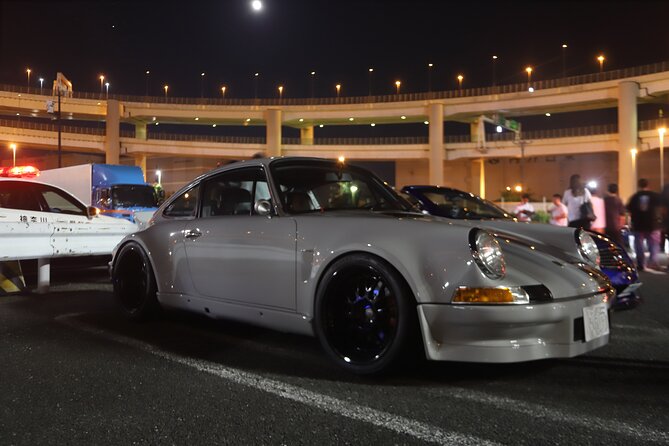
Between the car stops, you pass several of Tokyo’s best-known sights. Tokyo Skytree appears along the route, as do central Tokyo views, Haneda Airport, Yokohama, Tokyo Tower, and the Rainbow Bridge on the return leg.
You do not get a formal sightseeing stop at each landmark. This is important. If you want to climb Tokyo Skytree or photograph Tokyo Tower up close, book a separate visit. Here, the sights serve as changing scenery and reminders of how far the route carries you from central Tokyo.
The expressway loop is part of the experience. One person compared the C1 drive to playing Gran Turismo in real life, which captures the appeal without suggesting anything reckless. You are riding through the same kind of urban setting that inspired racing games, but the driving remains legal and controlled.
Night departures are the best fit if you want the full visual effect. The lights, reflections, elevated roads, and port scenery give the outing its character. Daytime departures may be available depending on conditions, but the route feels less cinematic in daylight.
Daikoku Parking Area, the main reason to go
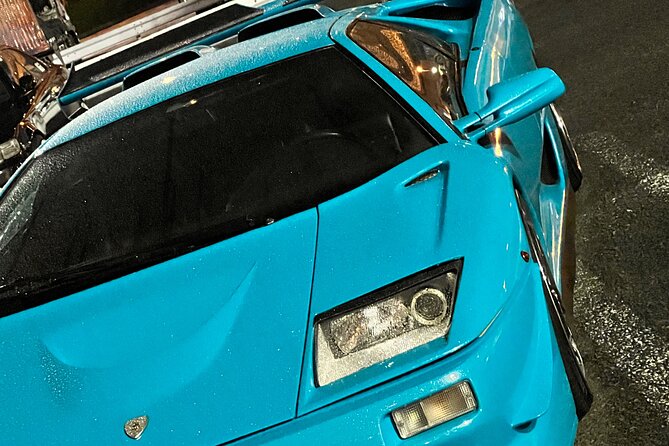
Daikoku Parking Area is the tour’s central stop, with about an hour set aside when access is possible. It is a public highway rest area, not a private attraction, so it can close without warning. Even when open, the number and type of cars are impossible to predict.
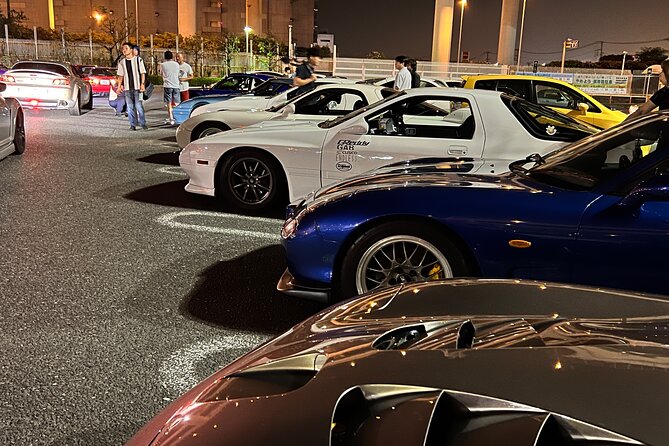
On a busy evening, you might see rows of modified Japanese cars, several generations of Nissan Skyline GT-R, Mazda RX-7s, unusual older models, European sports cars, Ferraris, Lamborghinis, and the occasional very rare machine. One group saw an LFA arrive just before leaving. That kind of surprise is the point, but it cannot be scheduled.
The mood is usually more respectful car gathering than movie set. Owners show their builds, enthusiasts talk, and people admire the work. You may see spectacular engineering and bold styling, but you should not expect drivers to perform for the group.
The guides help you understand what you are looking at. They can explain why a model matters, how modifications fit into Japanese car culture, and how the scene differs from the illegal street-racing image sold by Hollywood. Michael, Mori, Jason, and Karim are all associated with strong car knowledge and friendly conversation, though your actual guide may be someone else.
You should also follow local etiquette. Do not touch cars, block vehicles, provoke drivers, or treat the parking area like a personal photo studio. The tour’s promise of a safe, respectful experience depends on guests behaving like enthusiasts, not spectators at a stunt show.
If Daikoku closes, the host changes the route to preserve the evening. That may be disappointing if you booked mainly for this one location, but it is an unavoidable risk of visiting a public facility. Heavy rain can also lead to cancellation when driving conditions or the quality of the stop would suffer.
The return through Tokyo’s night lights
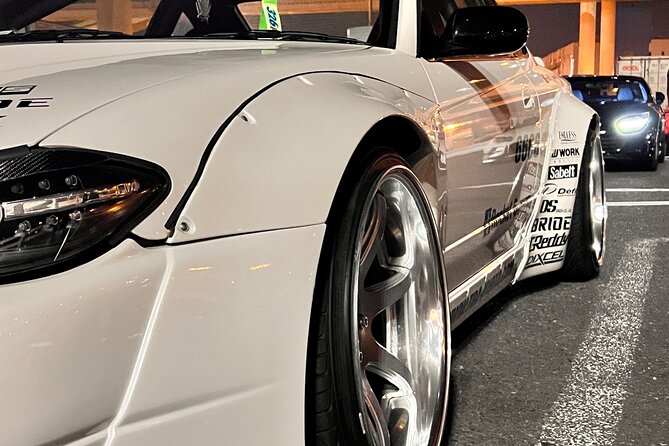
After Daikoku, the route passes Yokohama and returns toward Tokyo, often crossing the Rainbow Bridge again. This second crossing can feel different from the first because you now have the car meet behind you and a better sense of the city’s scale.
The final portion may include Tokyo Tower or another car-meet location, depending on the night. One group chose Tokyo Tower and enjoyed seeing it lit up after the car stops. That is a useful option for anyone in a mixed group, especially if one person loves cars and another wants a classic Tokyo view.
The tour ends back near the Dōgenzaka starting area, with two listed drop-off locations. Drop-off elsewhere is not included, although individual arrangements may depend on the booking option. Do not plan a tight reservation immediately afterward. Traffic, weather, and time spent at a lively meet can shift the finish.
Vehicles, comfort, and group size
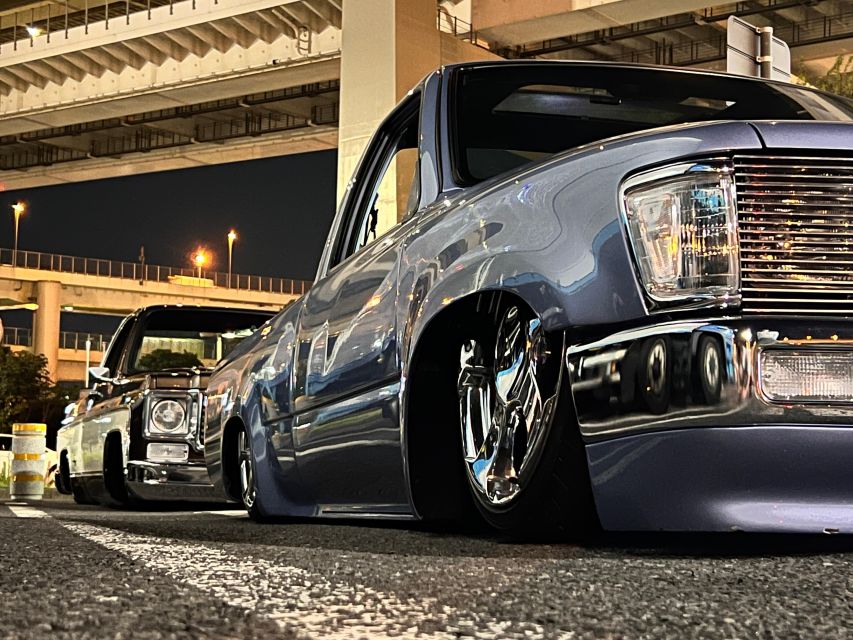
The experience costs $98 per person for four hours. That is a solid price if you value a specialist guide, private-style transport, multiple locations, and access to a car scene that is difficult to reach on your own.
It is not the cheapest way to look at cars in Tokyo. You could visit an automotive store independently, and public transport costs far less. The value comes from connecting the stops, using a suitable vehicle, and having someone who can explain the culture while handling the night drive.
Groups are limited to 10, though the actual feel depends on the vehicle option. A roomy van is practical and social. A sedan or performance car feels more personal but may have tighter rear seating. A guest riding in an RX-7 found the back seat manageable at 5 feet 4 inches, but described it as small. If you are tall or particular about legroom, ask about the vehicle before booking.
The transport has earned a 92 percent perfect score, and safe driving is a repeated theme in the supplied feedback. That matters here. You want a driver who can enjoy the roads without turning the tour into a dangerous thrill ride.
Who will enjoy this most
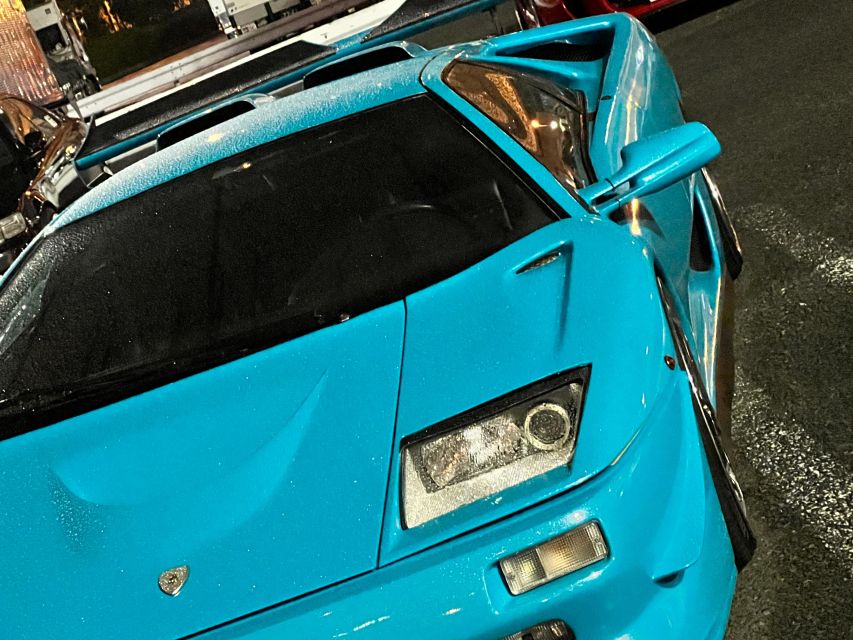
This is an easy choice for a serious JDM fan, especially if you grew up with Gran Turismo, Need for Speed, Tokyo Drift, Initial D, or Wangan Midnight. You will recognize the models, appreciate the setting, and have plenty to discuss with the guide.
It also works for curious partners, parents, and older children. Several families enjoyed the outing, including one with an eight-year-old. The guide’s city commentary and skyline views give non-specialists something to enjoy, though the balance remains firmly tilted toward cars.
Children under five cannot join, and the experience is not suitable for wheelchair users. If a child aged five to seven needs a booster seat, contact the provider before the tour date. Bring a passport or ID card as requested.
Choose a weekend or a later evening if your main goal is a crowded meet, but remember that the tour cannot promise a particular turnout. The day of the week and time affect the route and the number of cars. Friday and Saturday can be rewarding, while quieter nights may offer a calmer look at the cars that do appear.
Languages, booking flexibility, and small practical details
English is the default language. Japanese, Polish, Italian, and German may also be available, depending on the guide. If you need a specific language, confirm it before booking rather than assuming it will be assigned.
You can cancel up to 24 hours before departure for a full refund, and the reserve-now, pay-later option helps if your Tokyo plans are still shifting. Check starting times because the four-hour schedule changes by availability.
Wear comfortable clothes and shoes for standing and walking around the parking areas. Bring your phone or camera, but remember that the most interesting car may arrive when you have just put it away. Keep the vehicle clean, avoid bringing food or drinks, and treat the public meet with the same courtesy you would expect around your own car.
Should you book the Daikoku JDM tour?
I would book it if you want the road experience as much as the cars. The Rainbow Bridge views, expressway loop, APIT stop, guide commentary, and Daikoku visit create a fuller evening than simply taking a taxi to a parking area and hoping something is happening.
I would hesitate only if you need certainty. You cannot reserve a GT-R, RX-7, LFA, or any other specific model. Daikoku may close, a secondary meet may be quiet, and the vehicle you ride in depends on availability.
For most car fans, that unpredictability is a fair trade for seeing a real, changing scene. At $98, the tour offers strong value when Daikoku is open and active, while still giving you a useful Tokyo night drive if conditions change. Book it for the culture, roads, and chance encounters, not for a guaranteed Hollywood spectacle.
FAQ
How long is the Tokyo Daikoku JDM tour?
The tour lasts four hours. Starting times depend on availability, so check the schedule for your preferred date.
How much does the experience cost?
The price is $98 per person. All fees and taxes are included, but food, drinks, and souvenirs are extra.
Where does the tour start?
There are two possible starting options. The listed location is the Tōeidō Building at 2-chōme-29-8 Dōgenzaka. Your exact meeting point depends on the option booked.
Is hotel pickup included?
No. Hotel pickup and drop-off are not included. The tour ends at the listed drop-off area near the Dōgenzaka starting point.
Is Daikoku Parking Area guaranteed to be open?
No. Daikoku Parking Area is public and can close without notice. If it is closed, the host changes the route and provides alternative stops.
Are specific cars guaranteed?
No. The type and number of cars cannot be guaranteed. The meet locations are impromptu public gathering places, so the cars depend on who arrives that night.
What other places might the tour visit?
The route can include APIT Autobacs Shinonome, Tatsumi First Parking Area, Umiharu, Gaienmae, Tokyo Tower, and other city sights. The exact route may change with traffic, weather, weekday or weekend timing, and local conditions.
What kind of vehicle will I ride in?
Vehicles may include customized JDM cars, factory performance cars, European or luxury vehicles, and spacious vans. The choice depends on availability and group size.
How many people can join?
The experience is a small-group tour with up to 10 participants. Larger parties using the van option may need to split between two vans if seat availability requires it.
What languages are available?
English is the default language. Japanese, Polish, Italian, and German may also be available, depending on the guide.
Can children join the tour?
Children under five cannot join. Children aged five to seven who need a booster seat require advance contact with the activity provider. The experience is not suitable for wheelchair users.
Can I cancel my booking?
You can cancel up to 24 hours in advance for a full refund. The reserve-now, pay-later option is also available.
Just added around Tokyo
- Tokyo: Customizable Private Guided Walking Tour★ 4.5 · 129 reviews
- Private Harajuku Omotesando Architecture Tour★ 4.9 · 18 reviews
- Tokyo: Guided Helicopter Ride★ 4.9 · 24 reviews
- Tokyo: Guided Walking Tour of Tsukiji Market with Lunch★ 4.4 · 24 reviews
- Tokyo: Private Personalized Local Food Tour★ 4.5 · 101 reviews
- Tokyo GINZA: KONPARU Japanese Cabaret Show with Drink★ 4.8 · 38 reviews
- Tokyo: Guided Walking Tour of Tsukiji Market with Breakfast★ 4.4 · 134 reviews
- Tokyo: Gotokuji Cat Temple, Shinjuku Cat Cafe & 3D Cat Tour★ 4.9 · 38 reviews
Evening Experiences, compared.
Gion Magical Night Walking Tour with Geisha Trivia
Read our review →
Kyoto Night Foodie Tour in Gion (9+ dishes + 6 Sake tastings)
Read our review →
Tokyo Night Foodie Tour in Shinjuku – Seasonal Sushi, Wagyu Beef
Read our review →
Osaka Bar Hopping Night Walking Tour in Namba (3 bars, 6 tastes)
Read our review →
Kyoto Gion Night Walk & Geisha District Guided Tour
Read our review →
Kyoto Ghost Tour: Dark Tales, Urban Legends, Bamboo Forest Night
Read our review →
Browse the lists this tour appears in