
REVIEW · KIMONO & CULTURE EXPERIENCES
Kyoto Gion Night Walk & Geisha District Guided Tour
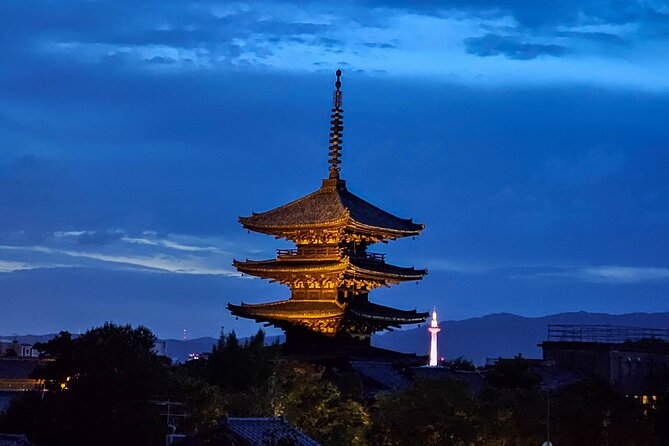
Gion changes character after sunset. Lanterns glow over narrow lanes, restaurants open behind plain wooden doors, and the old geisha quarter feels far removed from modern Kyoto. This three-hour evening walk takes you through Gion, Hanamikoji Street, and Yasaka Shrine, with a guide explaining the customs and history behind the scenery.
I like the small-group promise, with no more than nine people on the usual outing, and the chance to see quieter lanes and lesser-known religious sites. I also like the range of guides, including Naoki, Jasmine, Miyake, Shingo, Raphael, and Vincent, who are often praised for clear English, patience, humor, and detailed answers.
The main drawback is the timing. The walk can run across dinner hours, with limited breaks, and winter evenings can feel cold. You also should not book this expecting a guaranteed geisha sighting. If you see a maiko or geisha, it is a lucky bonus, not the point of the tour.
In This Review
- Key points to know before you book
- Why Gion works best after sunset
- Hanamikoji Street and the rules of respectful sightseeing
- Yasaka Shrine brings the walk into focus
- The guides make the difference
- Group size, private options, and language choices
- Is $18 a fair price?
- Meeting point and practical planning
- Who will get the most from this walk?
- Should you book the Kyoto Gion Night Walk?
- FAQ
- How long does the Kyoto Gion Night Walk last?
- Where does the tour start?
- Where does the tour end?
- Is a geisha or maiko sighting guaranteed?
- What is included in the tour?
- How large is the tour group?
- Can I cancel for a full refund?
Key points to know before you book
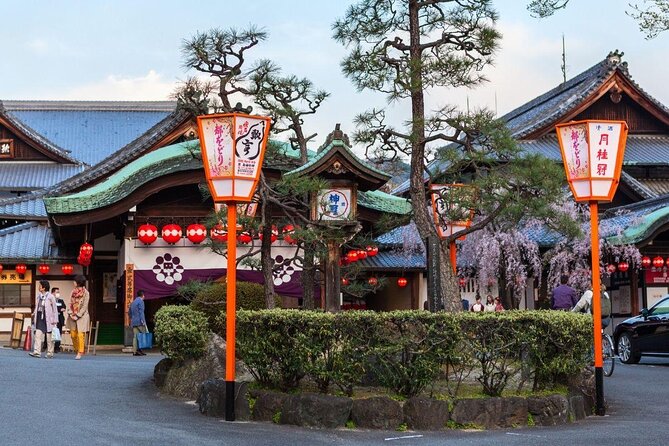
- Lantern-lit Gion after dark: See the district when its teahouses, restaurants, and bars take on their evening glow.
- A compact three-stop route: The walk includes roughly two hours in Gion, 30 minutes on Hanamikoji Street, and 30 minutes at Yasaka Shrine.
- Small groups are the selling point: The usual outing is limited to nine people, though the formal activity information gives a maximum of 25, so check the option you select.
- Strong guide feedback: Naoki, Jasmine, Miyake, Shingo, Raphael, Vincent, Eloise, and others are praised for culture, history, humor, and personal attention.
- A possible maiko sighting: You may see a geisha or apprentice, but no operator can promise it.
- Good value at $18: The price is low for a guided three-hour walk, though snacks apply only to Premium Group and Private Tour options.
Why Gion works best after sunset
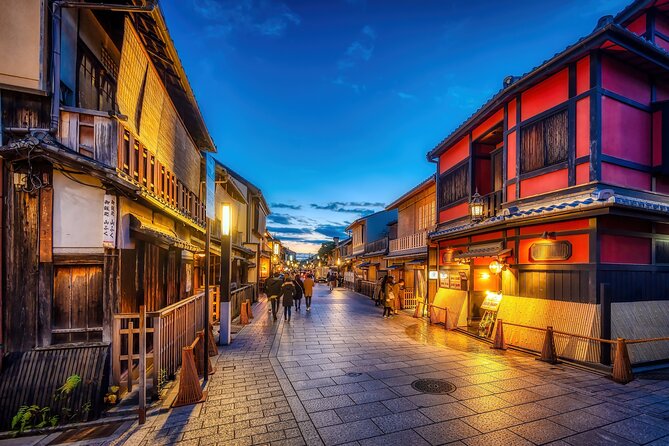
I prefer seeing Gion at night because the setting does much of the work. During the day, you notice the preserved buildings and tourist traffic. After dark, the lanterns bring out the district’s older mood, especially along the side streets where wooden facades and small entrances replace large signs.
The tour begins in the Gion area and spends about two hours walking through its streets and lanes. Your guide can explain the difference between a tea house, a restaurant, and the traditional entertainment establishments that gave the district its reputation. This background matters because Gion is not simply a pretty neighborhood. It is a working cultural quarter with customs that are easy to misunderstand if you only take photographs.
You may pass elegant restaurants, charming bars, and traditional teahouses. Some places are private, so listen carefully to your guide and do not assume that every attractive doorway is open to the public. One disappointing experience involved a guide pointing out a private teahouse, which left the group uncomfortable. That is a useful reminder to respect boundaries in this district.
The best guides make the walk feel like an introduction to Kyoto rather than a string of photo stops. Naoki is praised for explaining Japanese culture and history in a warm way. Miyake is singled out for patient help, including assisting a participant who had trouble reaching the meeting point. Shingo is praised for taking a participant to sites they would not have found alone.
Guide quality can vary, as it does on any guide-led outing. One low-scoring experience described poor communication and an unclear visit to a private place. I would treat the guide as a major part of the value and ask questions early if something is unclear.
More Kimono & Culture Experiences in Kyoto
- Kyoto Geisha Walking Tour: Gion District & Hidden Gems
★ 4.7 · 3,273 reviews - Kyoto: Gion Magical Night Walking Tour with Geisha Trivia
★ 4.9 · 2,393 reviews - Kyoto: Gion Geisha District Walking Tour – Stories of Geisha
★ 4.7 · 2,187 reviews
Hanamikoji Street and the rules of respectful sightseeing
The route then gives about 30 minutes to Hanamikoji Street, one of Kyoto’s best-preserved historic streets. Its traditional buildings and narrow frontage make it one of the most photogenic parts of Gion, but it can also be busy and confusing, especially near the meeting point.
This is where a guide can add real value. You can learn how the street fits into Gion’s entertainment culture, why the architecture looks so restrained, and how to behave around working performers. A good guide will help you understand that maiko and geisha are people going to work, not staged attractions.
A maiko or geisha may appear near Hanamikoji Street. One participant happened to see one geisha and two maiko, while other outings saw none. Your best approach is to enjoy the street itself and regard any sighting as extra luck. Do not chase, block, touch, or photograph performers without permission.
The street also gives you a chance to take photographs during the walk. Still, you should keep your camera ready but your expectations modest. Gion’s appeal comes from small details, such as a lit doorway, a quiet alley, or the sound of footsteps on a traditional street, not from a guaranteed dramatic encounter.
Yasaka Shrine brings the walk into focus
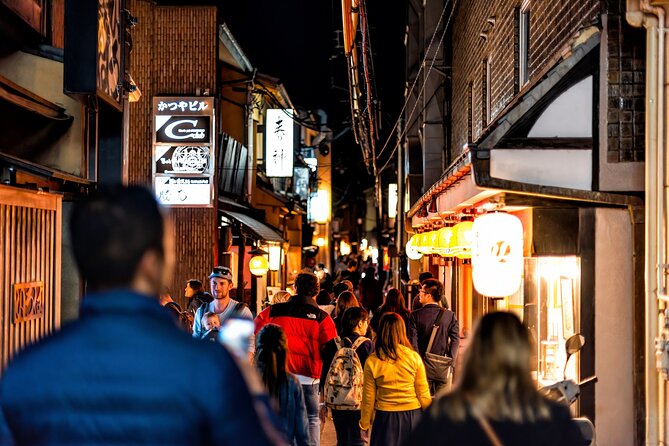
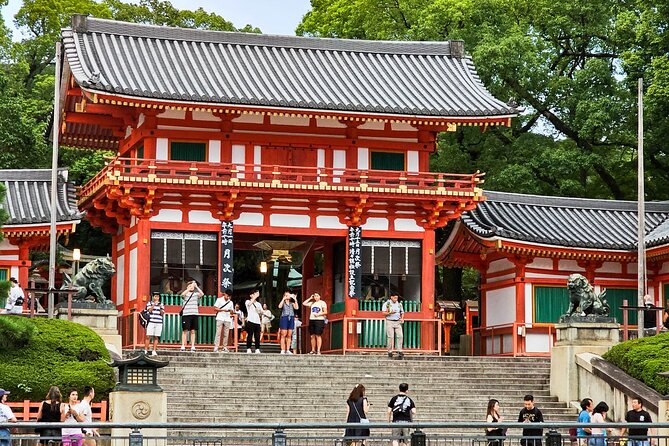
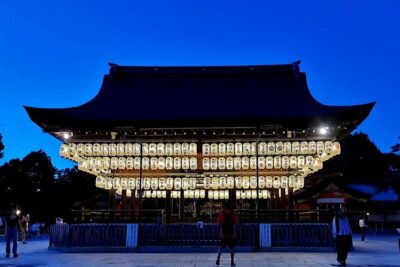
The final listed stop is Yasaka Shrine, also called Gion Shrine, with about 30 minutes set aside for the visit. This is an important stop because it connects the district’s nightlife with Kyoto’s religious traditions.
Your guide can explain the shrine’s architecture, customs, and role in local life. That context helps tie together what you have seen earlier. Gion’s restaurants and teahouses are not separate from Kyoto’s traditions. They exist beside shrines, festivals, old streets, and long-standing social customs.
I especially like having a shrine on an evening neighborhood walk. Without it, the outing could become a lesson in wooden buildings and entertainment districts. Yasaka Shrine adds a religious and civic layer, giving the route a clearer sense of place.
The listed timing totals about three hours, but the pace is still a consideration. You will be walking up and down Gion streets with limited breaks. One person described the route as long but worthwhile, while another said it was educational but left an incomplete picture of the culture. If you prefer slow wandering with frequent café stops, this may feel brisk.
The guides make the difference
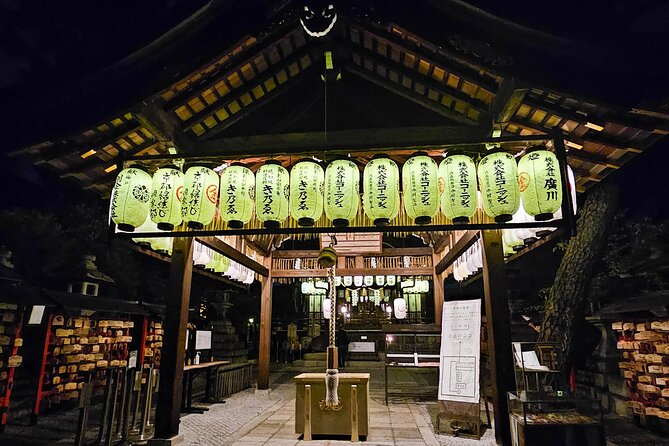
The strongest part of this experience is the human element. Names repeatedly associated with a good outing include Naoki, Jasmine, Miyake, Shingo, Raphael, Vincent, and Eloise.
Naoki is praised for making history and culture easy to absorb, including stories connected with Kyoto’s samurai past and the Shinsengumi. Jasmine receives praise for patience, clear explanations, a comfortable pace, and helpful restaurant suggestions at the end. Miyake is described as both detailed and good-humored, while Raphael and Vincent are praised for their command of Kyoto history and the geisha district.
Eloise is described as engaging and friendly, with one participant saying the tour offered more than expected at a reasonable price. Shingo is praised for his English and for showing sites that would be difficult to find alone.
That range of comments gives you a practical point: the tour is not just transportation between three sights. The guide shapes the experience. You may receive a carefully linked explanation of Gion’s customs, architecture, and history, or you may get a collection of interesting facts that does not form one clear story.
I would ask questions throughout the walk. If you want more detail on geisha culture, shrine customs, Japanese history, or places to eat, say so. The guides who include everyone and invite questions seem to make the evening far more useful.
Same city, a completely different kind of day:
- PERFECT KYOTO 1-Day Bus Tour
★ 5.0 · 13,518 reviews - Kyoto: Fushimi Inari, Kinkakuji, Bamboo Grove 1 Day Bus Tour
★ 4.8 · 4,316 reviews - Kyoto: Tea Ceremony in a Traditional Tea House in Kiyomizu
★ 4.9 · 3,519 reviews - Kyoto: Tea Ceremony Ju-An at Jotokuji Temple
★ 4.9 · 3,207 reviews
Group size, private options, and language choices
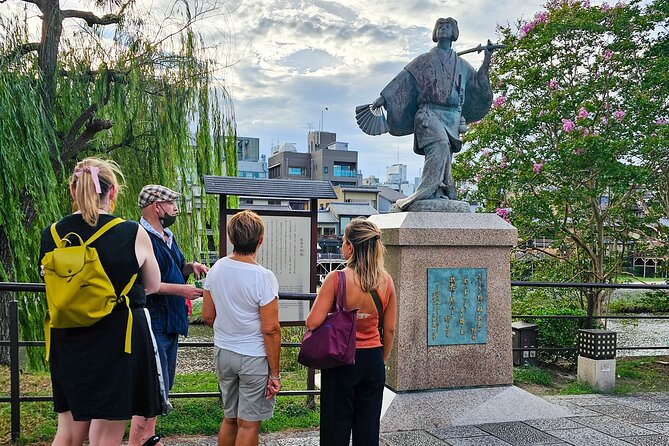
The usual group is advertised as no more than nine people, which is a sensible size for narrow streets. A smaller group makes it easier to hear the guide, ask questions, and pause without blocking a lane.
There is a small inconsistency in the booking information. The tour highlights groups of up to nine, while the additional activity details list a maximum of 25 people. This may refer to different booking categories or operating conditions. If group size matters to you, confirm the exact option before paying.
A private Kyoto walking tour is available as an upgrade, with multiple language choices. I would consider the private option if you are traveling with older family members, have specific interests, or want to stop often for questions and photographs. A private guide can also make the experience more personal, though the basic $18 option is the better bargain for most visitors.
The tour is listed with an English-speaking guide as standard. Individual guide ability can differ, but several guides are praised for very clear English. Confirmation arrives at booking, and the starting point is near public transportation.
Is $18 a fair price?
At $18 per person, this is an inexpensive way to get structure and explanation in one of Kyoto’s most confusing neighborhoods. You are paying for about three hours of guiding, not for meals, transport, or entry to a paid attraction. Since Gion’s streets and Yasaka Shrine are free to enter, the value comes from the stories, route planning, and cultural guidance.
I think the price works best early in your Kyoto stay. The walk can help you understand Gion before you return on your own for dinner or another evening stroll. It also gives you a list of restaurants and areas to explore, particularly if your guide offers suggestions at the end.
The snack needs careful explanation. The general information refers to a snack and water for comfort, but the included section specifies a snack for Premium Group and Private Tour options only. The basic tour includes the English-speaking guide and walking tour, but not meals or other drinks. Check the package details rather than assuming food is included.
The timing can affect value for families. The walk may run through dinner, and one family found themselves hungry by the end. If you are traveling with children or anyone who needs regular meals, eat beforehand or plan dinner after the finish. In winter, add warm clothing. The night lighting is attractive, but cold weather can make three hours on foot feel longer.
Meeting point and practical planning
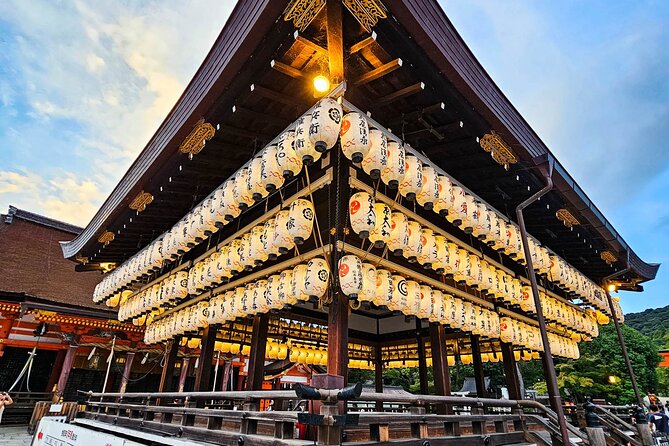
The walk starts at Kyoto Kawaramachi Garden, 68 Shinchō, Shimogyo Ward, and ends at Sanjō Ōhashi Bridge in Ohashicho, Nakagyo Ward. That ending point is useful because it places you near public transportation and central Kyoto, but it is not Kyoto Station.
One person found the meeting point confusing because several guides and groups were gathered on a busy street. Give yourself extra time, keep your booking confirmation available, and look carefully for the correct guide. The operator’s information says the location is near public transportation, but the exact street scene may still feel hectic.
The tour does not include hotel pickup or drop-off. You need to reach the starting point yourself and arrange your own way onward from Sanjō Ōhashi Bridge. The route is a walking tour, so wear comfortable shoes and expect to be outside for most of the three hours.
Most people can take part, but the distance and limited breaks deserve attention. One participant specifically noted that younger children with short legs could find the route hard. The tour is also less suitable for anyone who cannot comfortably walk for several hours.
Free cancellation is available up to 24 hours before the start time for a full refund. Changes or cancellations inside that window are not accepted for a refund. The experience requires good weather, and a weather cancellation offers either another date or a full refund.
Who will get the most from this walk?
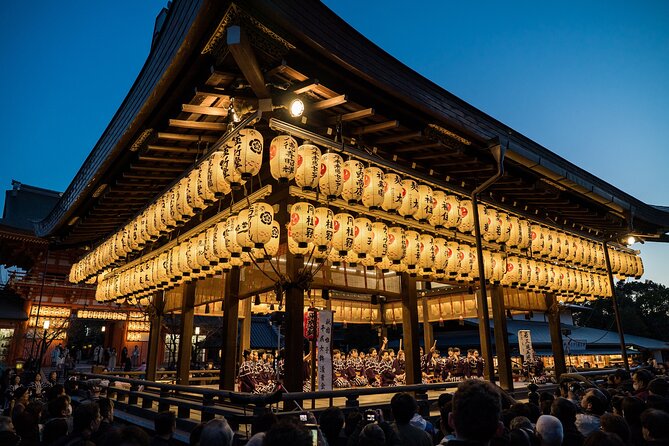
I would recommend it to first-time Kyoto visitors who want a useful introduction to Gion without paying for a formal meal or performance. It also suits people who like history, architecture, traditional customs, and evening photography.
The tour works well for couples, friends, and families with older children. Several outings have included groups of around eight to ten people, and the small-group format makes it easier to stay together. The private option is worth considering for a family group or anyone who wants the guide to adjust the pace.
I would be cautious if your main goal is seeing a geisha. There is no guarantee, and some evenings may be quiet, especially around national holidays when businesses may be closed. I would also skip it if you want a short, relaxed stroll with plenty of food stops.
Should you book the Kyoto Gion Night Walk?
Book this tour if you want an affordable cultural orientation to Gion and are happy to walk for three hours after dark. The best case is a friendly guide such as Naoki, Jasmine, Miyake, or Vincent, a clear explanation of Kyoto customs, glowing streets, and perhaps a lucky maiko sighting.
Think twice if dinner timing, cold weather, limited breaks, or group size will cause trouble. Confirm whether you are booking the small-group or private option, check whether your package includes the snack, and remember that you finish at Sanjō Ōhashi Bridge rather than Kyoto Station.
For $18, I see this as a strong introduction rather than a complete study of Kyoto’s geisha culture. It gives you orientation, local context, and a pleasant night walk. You can then return to Gion on your own, with a better idea of what you are seeing and how to behave respectfully.
FAQ
How long does the Kyoto Gion Night Walk last?
The tour lasts approximately three hours. The listed schedule includes about two hours in Gion, 30 minutes on Hanamikoji Street, and 30 minutes at Yasaka Shrine.
Where does the tour start?
The meeting point is Kyoto Kawaramachi Garden, 68 Shinchō, Shimogyo Ward, Kyoto, 600-8001, Japan.
Where does the tour end?
The walk ends at Sanjō Ōhashi Bridge in Ohashicho, Nakagyo Ward, Kyoto, 604-8004, Japan.
Is a geisha or maiko sighting guaranteed?
No. You may see a maiko or geisha, but sightings depend on chance and cannot be guaranteed.
What is included in the tour?
The standard inclusions are an English-speaking guide and walking tour. A snack is listed for Premium Group and Private Tour options. Hotel transport, meals, other drinks, and personal expenses are not included.
How large is the tour group?
The experience highlights groups of no more than nine people. The additional information lists a maximum of 25 travelers, so you should confirm the group size for your selected booking option.
Can I cancel for a full refund?
Yes, if you cancel at least 24 hours before the local start time. Cancellations or changes made less than 24 hours before the start are not refunded. If poor weather causes the operator to cancel, you will be offered another date or a full refund.
More Evening Experiences in Kyoto
- Night Walk in Gion: Kyoto’s Geisha District
★ 4.5 · 2,003 reviews - Kyoto Night Foodie Tour in Gion (9+ dishes + 6 Sake tastings)
★ 5.0 · 1,762 reviews - Kyoto Ghost Tour: Dark Tales, Urban Legends, Bamboo Forest Night
★ 5.0 · 625 reviews - Kyoto Bar Hopping Night Tour
★ 5.0 · 613 reviews
Just added around Kyoto
- Taste of Nishiki Market Walking Food Tour with Local guide★ 5.0 · 17 reviews
- Kyoto: Sushi Making Class with Sushi Chef★ 4.8 · 64 reviews
- Kyoto: City Secrets eBike Tour★ 4.9 · 196 reviews
- Sacred Pathways: Discover the Philosopher’s Path of Kyoto★ 4.9 · 20 reviews
- Private Tour to Monkey Park and Arashiyama Highlights★ 5.0 · 22 reviews
- Private Nara Tour from Osaka – Meet at Your Hotel★ 5.0 · 22 reviews
- Private Sake Tasting in Central Kyoto with Sake Sommelier★ 5.0 · 13 reviews
- Kyoto : Private Custom Walking Tour With A Local Guide★ 4.6 · 144 reviews
Kimono & Culture Experiences, compared.
Kyoto Geisha Walking Tour: Gion District & Hidden Gems
Read our review →
Gion Magical Night Walking Tour with Geisha Trivia
Read our review →
Gion Geisha District Walking Tour – Stories of Geisha
Read our review →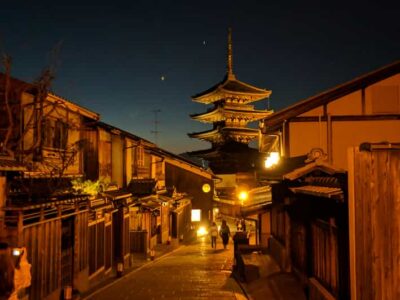
Best of Kyoto: Gion, Geisha, Pagodas & Cobblestones
Read our review →
Kyoto Gion Geisha District Walking Tour – The Stories of Geisha
Read our review →
Browse the lists this tour appears in