
REVIEW · JAPANESE COOKING CLASSES
Tokyo: Roll and Authentic Sushi Making Class in Asakusa
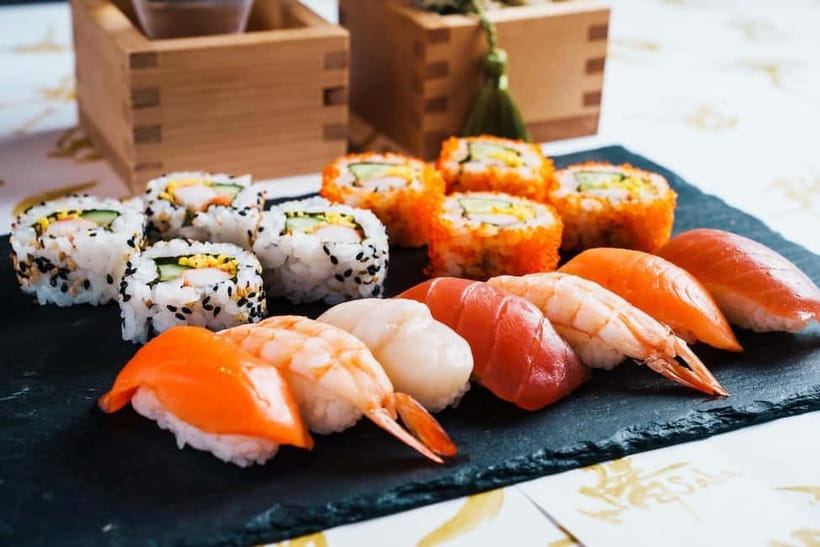
Making sushi in Asakusa is more than a cooking lesson. It is a hands-on way to connect Japanese food customs with one of Tokyo’s oldest neighborhoods. In about 100 minutes, English-speaking instructors guide you through sushi history, then help you prepare maki rolls and nigiri, the two forms most visitors want to learn.
I like the friendly teaching style, especially the mix of humor, demonstrations, and patient help from instructors such as Hitomi, Moe, Jun, Ken, and Kaori. I also like the location, just three minutes from Asakusa Station and close to Sensoji Temple and Tokyo Skytree. The main consideration is pace: one hour and 40 minutes goes quickly, and some sessions may feel a little rushed.
In This Review
- Key points at a glance
- A sushi lesson in the heart of old Tokyo
- Starting with sushi history and a quiz
- Rolling maki sushi without losing the rice
- Shaping nigiri, the harder-looking sushi
- Eating your own sushi at the end
- How the 100 minutes feel
- What the $58 price buys you
- Dietary needs and menu changes
- Who will enjoy this Asakusa activity
- Location, access, and planning tips
- Should you book the sushi class?
- FAQ
- How long does the sushi-making class last?
- How much does the experience cost?
- Where does the class meet?
- Is the class taught in English?
- What types of sushi will I make?
- Do I need previous sushi-making experience?
- Are vegetarian or vegan menu changes available?
- Can the class accommodate allergies or other dietary requirements?
- Is the activity wheelchair accessible?
Key points at a glance
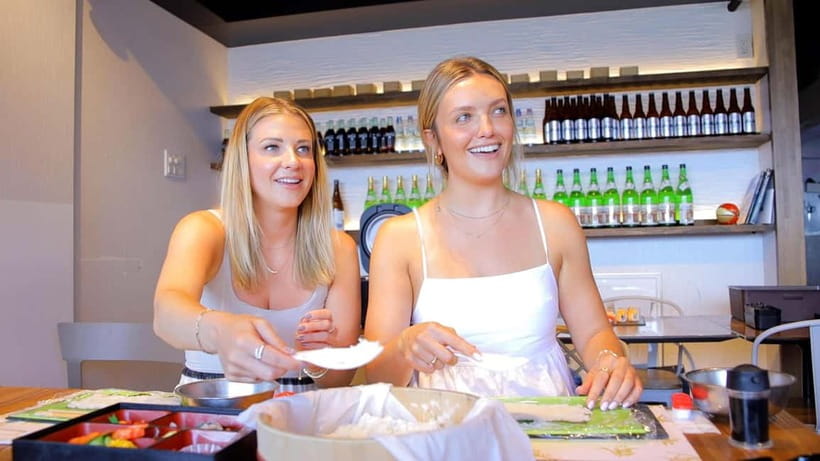
- Two sushi styles: Make rolled maki sushi and hand-shaped nigiri sushi in the same class.
- A playful introduction: Learn basic sushi history through an interactive quiz rather than a long lecture.
- English-speaking instruction: Staff demonstrate each step, then help you correct your technique.
- Fresh ingredients: The fish, rice, and other ingredients are prepared for you and eaten during the class.
- Excellent Asakusa setting: The meeting point is close to Sensoji Temple, Tokyo Skytree, and Asakusa Station.
- Flexible food options: Vegan, vegetarian, gluten-free, halal, and allergy-related changes can be arranged in advance.
A sushi lesson in the heart of old Tokyo
The class takes place in Asakusa, a part of Tokyo known for Sensoji Temple, traditional streets, and a strong connection to older food and entertainment customs. That setting matters. You are not heading across town to an anonymous kitchen. You can pair the class with a visit to Sensoji, a walk along Nakamise-dori, or views toward Tokyo Skytree.
The meeting point is about three minutes from Asakusa Station. It is also described as being close to Sensoji Temple, making it easy to fit the activity into a sightseeing day. I would schedule the class around your Asakusa plans rather than treating it as an isolated appointment.
This is a practical cooking experience, not a formal chef-training course. You do not need previous kitchen experience. The staff show you what to do, give clear instructions, and step in when your rice is too loose, your seaweed is not positioned correctly, or your nigiri does not yet resemble the neat pieces served at a sushi counter.
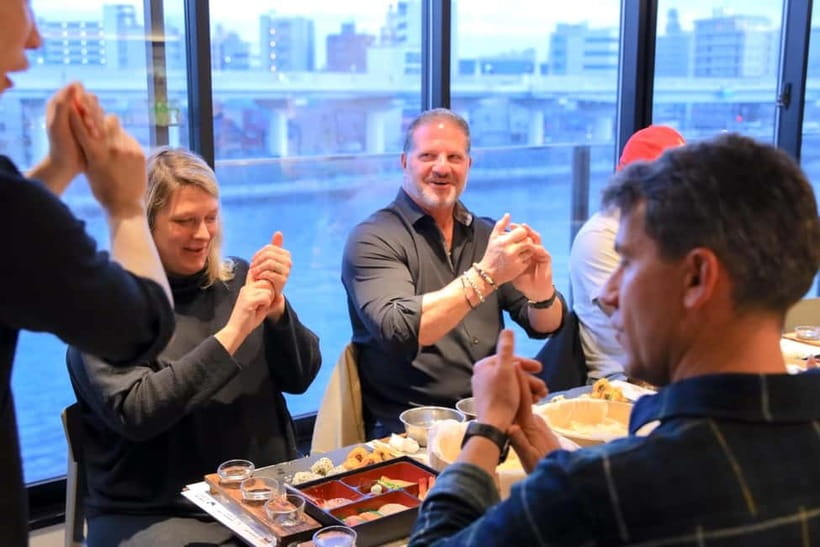
The tone is lively. Instructors use jokes, clapping, demonstrations, and lots of encouragement. That works well for families, couples, solo visitors, and groups of friends. If you prefer a quiet, traditional lesson with little audience participation, the upbeat presentation may feel more tourist-friendly than strictly Japanese.
More Japanese Cooking Classes in Tokyo
- Sushi Making Tokyo Roll and Authentic Japanese Sushi Class
★ 5.0 · 3,971 reviews - Tokyo: Sushi Making Class in a Happi Coat near a Famous Spot
★ 4.9 · 1,377 reviews - Tokyo Sushi Making Class in Tsukiji with Professional Chef
★ 5.0 · 1,177 reviews
Starting with sushi history and a quiz
The class begins with an introduction to sushi and its development. Rather than asking you to sit through a long explanation, the instructors use an interactive quiz to introduce the subject. This gives the class a social start and helps explain why sushi is more than raw fish placed on rice.
You learn about different sushi styles and the difference between maki and nigiri. Maki is rolled sushi, usually wrapped in seaweed and sliced into pieces. Nigiri is the hand-shaped style, with a small mound of seasoned rice topped with fish or another ingredient.
The history section adds useful context to the cooking. You begin to notice that the shape, rice, topping, and presentation all matter. It also makes the hands-on part more interesting, because you understand what you are trying to create instead of simply copying a set of motions.
The quiz is lighthearted and accessible. It is not a test you need to study for. The staff use it to get everyone involved, so solo participants do not have to feel as if they have arrived without a partner. Several instructors may help during the session, with one leading the explanation and others moving around the room to assist.
That team approach is useful. A single instructor cannot watch every person shape sushi at once. Helpers such as Hitomi, Moe, Jun, Ken, Kaori, Ryouko, Hide, and Kenshin have all been praised for being friendly, patient, and encouraging. The specific team on your date will vary, but the format gives you more chances to ask for help.
Rolling maki sushi without losing the rice
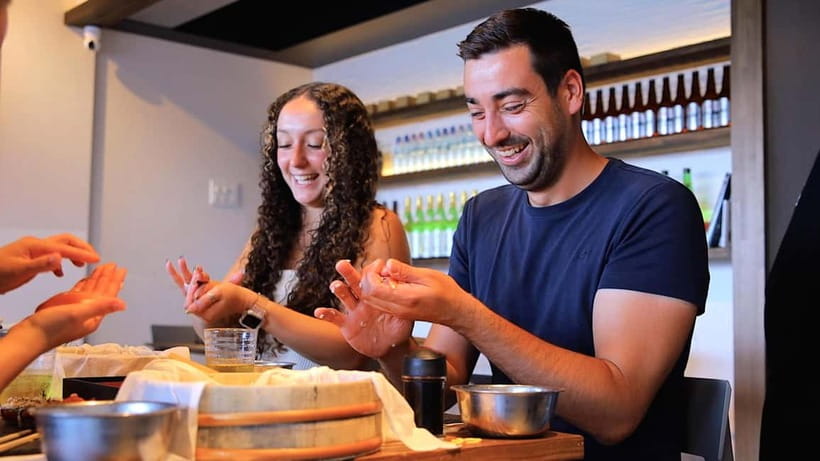
The first major task is maki sushi. This is the rolling process most people picture when they think of a sushi-making class. You work with prepared ingredients and learn how to arrange them before rolling and cutting.
The technique looks simple until you try it. Rice can spread too far, fillings can shift, and the roll can loosen when you cut it. The instructors make the steps manageable by showing physical examples and demonstrating the process clearly before you begin.
You can expect guidance on how much rice to use, where to place the fillings, and how to apply pressure while rolling. These small details are the useful part of the class. You may not leave with restaurant-perfect rolls, but you will understand why sushi chefs work so carefully and why the amount of rice matters.
One useful point from the session is that the rice supply may be portioned. One participant wanted a little more rice and was told that additional rice was not available. This is not a major issue for most people, since the class provides plenty of food overall, but it is worth knowing if you tend to prefer large rice-heavy rolls.
Once the roll is complete, you cut it into pieces. That moment is usually satisfying because the inside pattern finally appears. Even an imperfect roll can look good once sliced and arranged on a plate.
Shaping nigiri, the harder-looking sushi
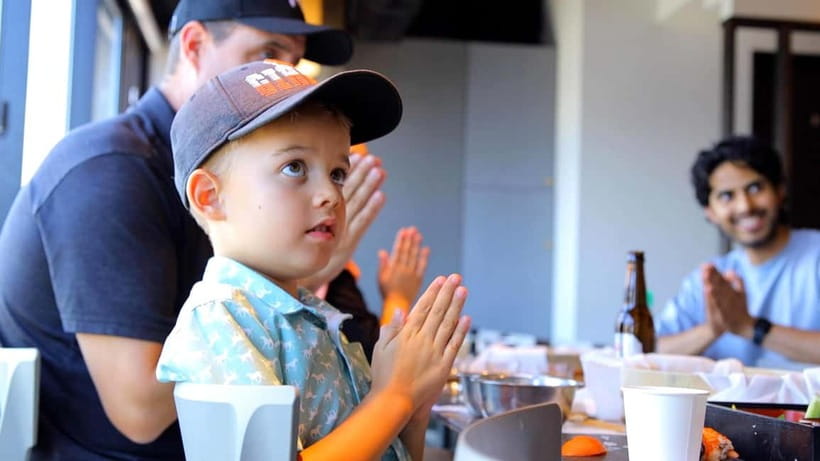
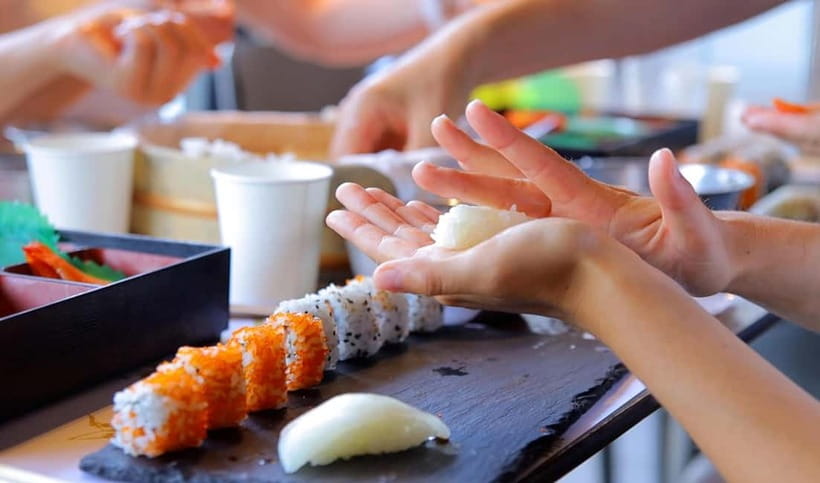
Next comes nigiri, the more traditional hand-shaped form. You take a small amount of rice, shape it with your fingers, and place a topping over it. The movement requires more control than it first appears to need.
The instructors break the method into short steps. You learn how to form the rice without crushing it and how to create a compact shape that can hold its topping. The staff are close by to demonstrate and correct your hand position.
This is where the class gives you a better sense of sushi craft. Maki can hide some unevenness inside the seaweed. Nigiri leaves the rice and topping exposed, so shape and proportion are easier to see. You also learn why fresh ingredients and properly prepared rice make such a difference.
The class is designed for beginners, so you should not expect to master professional knife work or the techniques of a career sushi chef. The appeal is different. You get a first lesson in the basic forms, then eat what you have made while the process is still fresh in your mind.
Same city, a completely different kind of day:
- Mt Fuji and Hakone 1-Day Bus Tour Return by Bullet Train
★ 5.0 · 26,383 reviews - 1-Day Tokyo Bus Tour
★ 5.0 · 14,250 reviews - Tokyo: TOKYO SKYTREE® Admission ticket
★ 4.5 · 11,192 reviews - Tokyo: teamLab Planets TOKYO Digital Art Museum Entry Ticket
★ 4.6 · 9,779 reviews
Eating your own sushi at the end
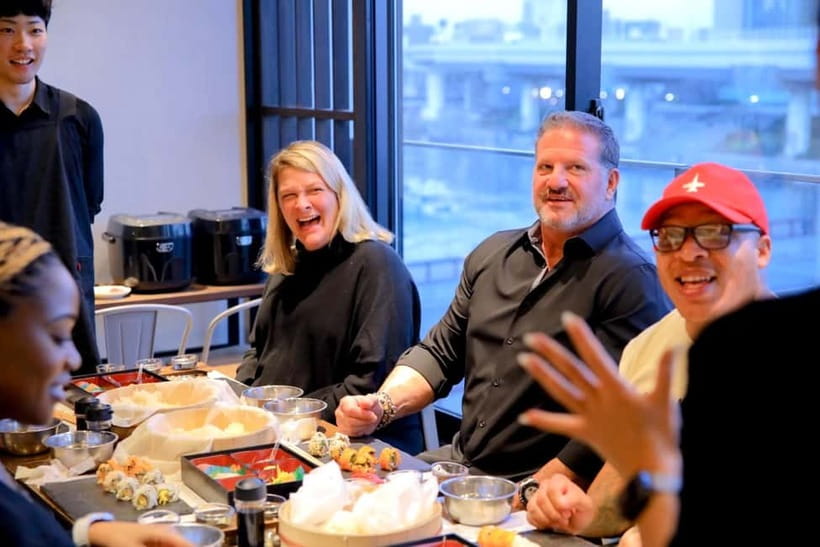
The final reward is the meal. You eat the maki and nigiri you prepared, using the ingredients supplied for the class. The food is not just a sample or a token bite. Several sessions have been described as providing plenty of sushi, with enough to make the experience feel like lunch or a substantial snack.
The quality of the ingredients is a strong point. Fresh fish and good rice matter even more when you are handling them yourself. You can taste the results of your work and compare the two styles directly.
Some sessions also offer sake flights and beer for an additional purchase. These options can make the class feel more like a relaxed meal, but they are not listed as part of the included price. If you are bringing children or do not drink, the main class still works on its own.
Eating at the end also gives the activity a natural finish. You do not simply leave with instructions and a recipe. You sit down with the food you created, take photographs if you wish, and share the result with the people around you.
How the 100 minutes feel
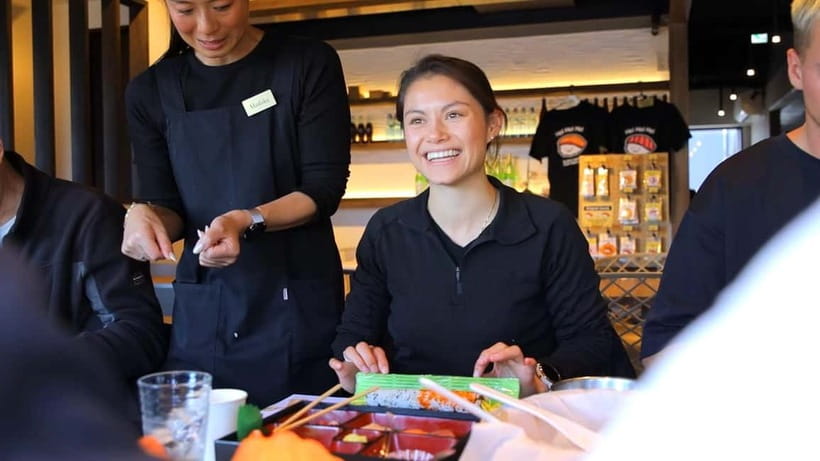
The advertised duration is 100 minutes. That is long enough for an introduction, the quiz, two sushi styles, instructor demonstrations, hands-on preparation, and eating. It is also short enough to fit neatly between sightseeing stops.
The pace is generally well organized, but it can feel tight. One participant felt that an additional 30 minutes would make the class more relaxed. Another described a session lasting about 80 minutes, while a separate account described nearly two hours. These differences may reflect the day’s group size, the pace of instruction, or how long people remain to eat and socialize.
I would plan around the official 100-minute duration and avoid booking a major attraction immediately afterward. Give yourself extra time for walking back to the station, taking photographs, and dealing with the usual delays of a group activity.
Early sessions may suit you if you want more individual attention. One person who chose an earlier time found the group smaller and the instruction almost private. Group size is not specified, so this is not a guarantee, but an early booking may be worth considering if you prefer a quieter class.
The format also works well for solo visitors. The staff actively involve participants, and the shared work tables make it easy to meet people without having to organize your own group.
What the $58 price buys you
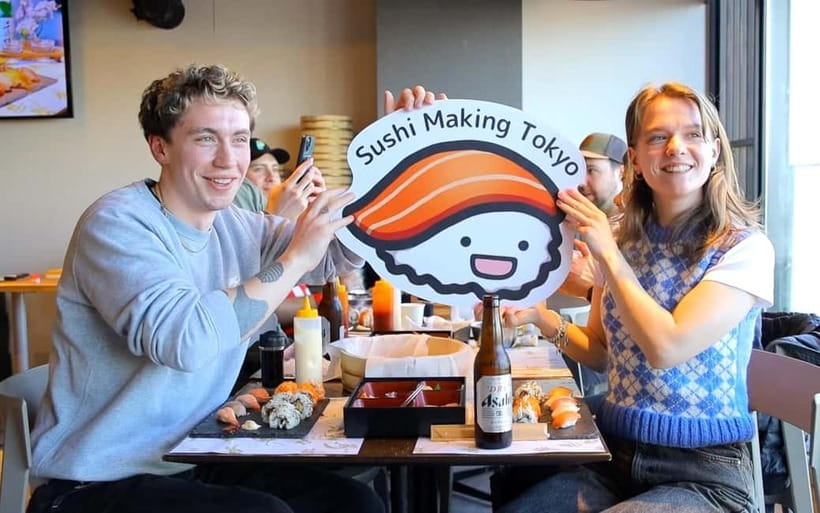
At $58 per person, the price is reasonable if you value three things: instruction in English, a meal made during the activity, and a central Tokyo location. You are paying for more than ingredients. The class provides an instructor, prepared supplies, demonstrations, cultural background, and help while you work.
It is not the cheapest way to eat sushi in Tokyo. You can find a quick restaurant meal for less. The value comes from doing the preparation yourself and gaining enough technique to repeat the experience at home.
The class also saves time. You do not need to buy ingredients, find a suitable kitchen, or work out the method from a translated recipe. The staff prepare the setting and keep the activity moving, which is useful during a short Tokyo stay.
For families, the price can be easier to justify because the activity serves as both entertainment and food. Children and teenagers have been especially well suited to the hands-on format. For a couple, it offers a shared activity that feels more memorable than simply choosing another restaurant.
Solo visitors may also find the cost worthwhile because the staff make a clear effort to create a comfortable group atmosphere. If you are mainly seeking an expert-level sushi course, this may not be advanced enough. If you want a friendly introduction with food included, the price is fair.
Dietary needs and menu changes
The class can accommodate vegan, vegetarian, gluten-free, halal, and allergy-related menu changes. This is an important advantage, but you need to arrange it when booking.
The stated menu-change information says that meat, nuts, fruits, and dairy are not used. You should still contact the provider about your needs in advance. The staff cannot respond to menu changes on the day, and they do not accept specifications for particular ingredients.
This means you should be precise about an allergy or dietary restriction before you arrive. Do not assume that a request made at the meeting point can be handled. The class is flexible in several important ways, but the kitchen needs notice.
Who will enjoy this Asakusa activity
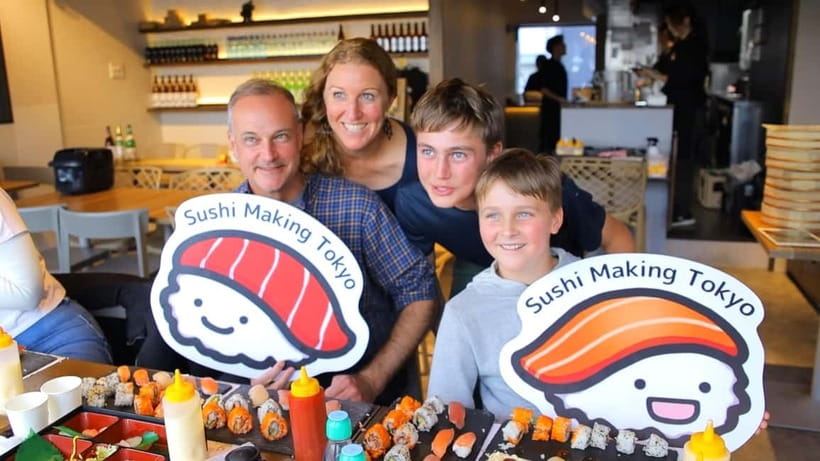
I would recommend this class to first-time visitors who want an easy introduction to Japanese food culture. It gives you enough background to understand the basics without turning the lesson into a lecture.
It is also a good choice for:
- Families with children or teenagers
- Couples looking for a shared activity
- Solo visitors who enjoy social classes
- People who already like sushi and want to learn the basic forms
- Visitors staying near Asakusa or planning to visit Sensoji Temple
- Vegetarian, vegan, halal, gluten-free, or allergy-conscious participants who arrange changes ahead of time
The class may be less suitable for you if you want advanced knife skills, detailed instruction in fish preparation, or a quiet and formal setting. It also may not satisfy a very large appetite on its own, although the amount of sushi is generally described as generous.
The teaching style is energetic and sometimes theatrical. One participant enjoyed the class but felt the clapping made it more tourist-oriented than Japanese. That is a fair warning. The activity is built for fun and participation, not strict culinary formality.
Location, access, and planning tips
The meeting point is about three minutes from Asakusa Station. That makes the class easy to combine with Sensoji Temple, Nakamise shopping street, and the Tokyo Skytree area.
I would arrive with enough time to find the exact entrance. A central location is convenient, but Asakusa can be busy around its major sights. Keeping a small buffer is wiser than arriving at the last minute.
The activity is wheelchair accessible. Hotel pickup and drop-off are not included, so you make your own way to the venue by train, taxi, or on foot.
The class is conducted in English. The teaching relies on demonstrations as well as spoken instructions, which helps if English is not your first language. You do not need previous sushi-making experience.
Cancellation is free up to 24 hours before the activity for a full refund. You can also reserve now and pay later, which helps if your Tokyo schedule is still changing.
Should you book the sushi class?
Book it if you want a friendly, hands-on introduction to sushi in a useful Asakusa location. The strongest reasons are the patient English-speaking team, the chance to make both maki and nigiri, the fresh ingredients, and the fact that you eat the finished food.
Families and solo visitors should feel especially comfortable here. Couples will get a relaxed shared activity, and anyone staying near Sensoji can fit it neatly into a sightseeing day.
Think twice if you want a long, quiet, highly technical culinary course. The 100-minute format moves along, and the upbeat group presentation may feel more playful than traditional. For most visitors, though, the combination of instruction, culture, food, and location makes this a good-value Tokyo experience.
FAQ
How long does the sushi-making class last?
The advertised duration is 100 minutes. You should allow extra time around the class in case the session runs at a different pace.
How much does the experience cost?
The listed price is $58 per person.
Where does the class meet?
The meeting point is about three minutes from Asakusa Station in Tokyo. It is also close to Sensoji Temple and Tokyo Skytree.
Is the class taught in English?
Yes. The instructor language is English, and English-speaking local staff guide you through the class.
What types of sushi will I make?
You will make two types: maki sushi, which is rolled sushi, and nigiri sushi, which is hand-shaped sushi with a topping.
Do I need previous sushi-making experience?
No. The activity is designed for beginners, and the staff demonstrate the steps and provide help as you work.
Are vegetarian or vegan menu changes available?
Yes. Vegan and vegetarian menu changes are available if arranged when you make your reservation.
Can the class accommodate allergies or other dietary requirements?
The activity lists gluten-free, halal, and allergy-related menu changes. You must contact the provider in advance, since changes cannot be handled on the day and specific ingredient requests are not accepted.
Is the activity wheelchair accessible?
Yes, the activity is wheelchair accessible. Hotel pickup and drop-off are not included.
More Workshops in Tokyo
- Tokyo Shinjuku Chopsticks Making Class
★ 5.0 · 1,763 reviews - Chopstick Making Workshop in Ginza
★ 4.8 · 1,366 reviews - Ramen & Gyoza Cooking Class in Tokyo with Local Supermarket Visit
★ 5.0 · 823 reviews - Matcha Making Class in Tokyo with Authentic Japanese Sweets Set
★ 5.0 · 744 reviews
Just added around Tokyo
- Tokyo: Customizable Private Guided Walking Tour★ 4.5 · 129 reviews
- Private Harajuku Omotesando Architecture Tour★ 4.9 · 18 reviews
- Tokyo: Guided Helicopter Ride★ 4.9 · 24 reviews
- Tokyo: Guided Walking Tour of Tsukiji Market with Lunch★ 4.4 · 24 reviews
- Tokyo: Private Personalized Local Food Tour★ 4.5 · 101 reviews
- Tokyo GINZA: KONPARU Japanese Cabaret Show with Drink★ 4.8 · 38 reviews
- Tokyo: Guided Walking Tour of Tsukiji Market with Breakfast★ 4.4 · 134 reviews
- Tokyo: Gotokuji Cat Temple, Shinjuku Cat Cafe & 3D Cat Tour★ 4.9 · 38 reviews
Japanese Cooking Classes, compared.
Sushi Making Tokyo Roll and Authentic Japanese Sushi Class
Read our review →
Ramen Cooking Class at Ramen Factory in Kyoto
Read our review →
Sushi Making Class in a Happi Coat near a Famous Spot
Read our review →
Sushi Making Osaka Roll and Authentic Japanese Sushi Class
Read our review →
Tokyo Sushi Making Class in Tsukiji with Professional Chef
Read our review →
Ramen & Gyoza Cooking Class in Tokyo with Local Supermarket Visit
Read our review →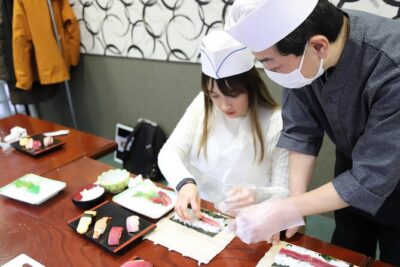
Tsukiji Fish Market Guided Tour and Sushi Making with Pro Chef
Read our review →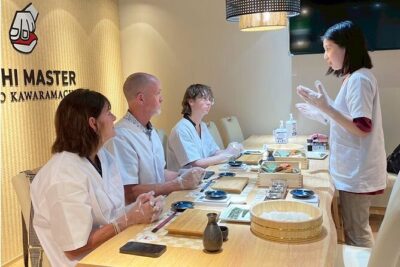
Sushi Making in Kyoto! Same-day bookings welcome!
Read our review →Browse the lists this tour appears in