
REVIEW · JAPANESE COOKING CLASSES
Sushi Making Osaka Roll and Authentic Japanese Sushi Class
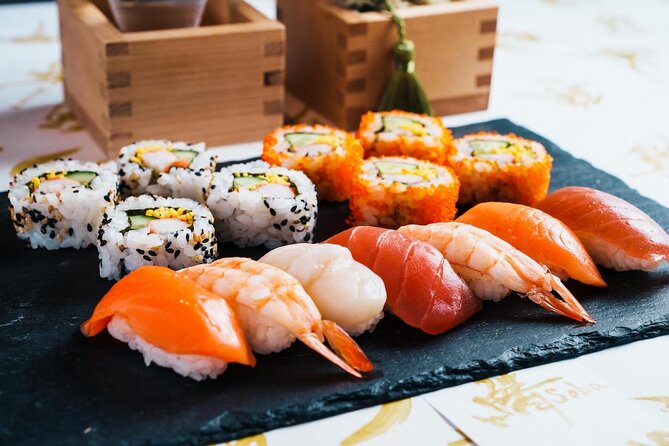
Osaka’s best food experience may be the one you can repeat after you get home. In this hands-on class near Dotonbori, you learn to shape maki rolls and nigiri with ingredients already prepared, then eat your own work. I like the clear, beginner-friendly teaching and the chance to ask sushi questions as you go. I also like the generous serving size, often one maki roll plus roughly four to eight pieces of nigiri.
The main drawback is time. The class is advertised at about 1 hour 40 minutes, but the practical portion can feel tight if you want long photo breaks or a relaxed meal. I would arrive early, note dietary needs when booking, and keep the camera ready rather than waiting until the end.
In This Review
- Key points to know before you book
- Why this Osaka sushi class works so well
- Finding the classroom near Dotonbori
- The opening lesson: sushi, culture, and useful context
- Making maki rolls without the chef’s shortcut
- Shaping nigiri, the small skill that takes practice
- Eating your own sushi at the end
- The instructors make the difference
- Is $31.01 a fair price?
- Who should book this experience?
- Practical details for a smoother class
- Should you book the Osaka sushi class?
- FAQ
- How long does the sushi-making class last?
- Where does the class meet?
- Does the class include food?
- Is the class taught in English?
- Do I need cooking experience?
- What kinds of sushi will I make?
- Is the class suitable for vegetarians?
- What is the cancellation policy?
Key points to know before you book
- Make two classic sushi styles: Learn both rolled maki and hand-shaped nigiri, rather than focusing on only one recipe.
- Eat what you prepare: The class supplies the ingredients and turns the lesson into a full snack or light meal.
- English instruction helps: The teaching team explains techniques and sushi culture for international visitors.
- Walkable from Osaka’s food center: The meeting point is near Dotonbori and Shinsaibashi, handy before or after sightseeing.
- Good for families and first-timers: No cooking experience is needed, and instructors are used to helping children and beginners.
- Allow extra time to find the room: The address is at 1-chōme-16-20 Higashishinsaibashi, with the class located on an upper floor.
Why this Osaka sushi class works so well
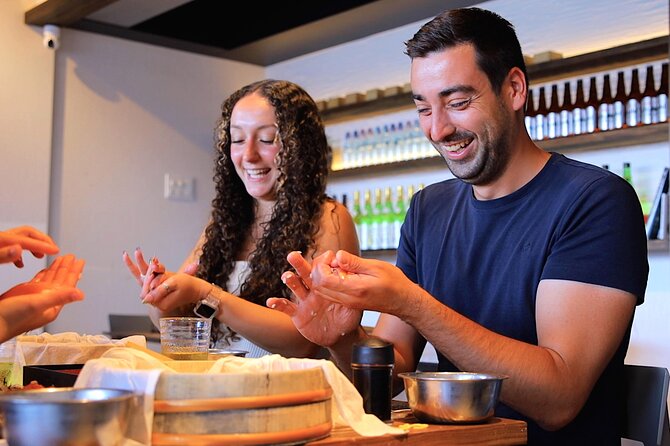
I like cooking classes that give you something to do with your hands, not just something to watch. This one keeps you involved from the first explanation to the final bite. You are not simply shown a sushi platter and sent on your way. You handle the rice, fillings, seaweed, and fish, then see how small changes in pressure and shape affect the result.
The class also gives you a useful window into Japanese food culture. Sushi can look simple on the plate, but neat nigiri takes practice. Rolling maki evenly is not automatic either. An instructor can correct your technique right away, which is far more useful than trying to copy a short video later.
The class has received a perfect five-star rating from more than 1,200 ratings and is recommended by 100 percent of participants on the supplied booking information. It has also received TripAdvisor’s Best of the Best award twice. Those honors do not guarantee that every moment will suit every person, but they do point to a well-established activity with a strong record.
The experience is especially appealing in Osaka because it sits close to the city’s famous food and shopping districts. You can schedule it in the morning, afternoon, or evening, so it is easy to fit around a visit to Dotonbori, Shinsaibashi, or nearby streets.
More Japanese Cooking Classes in Osaka
- Osaka Sushi Making Experience
★ 5.0 · 400 reviews - Osaka: Ramen and Gyoza Cooking Class in Dotonbori
★ 5.0 · 378 reviews - Osaka Sushi Making Class – Hands-On Nigiri & Rolls (Same-Day OK)
★ 5.0 · 352 reviews
Finding the classroom near Dotonbori
The meeting point is Sushi Making Osaka, Cooking Class in Japan, at 1-chōme-16-20 Higashishinsaibashi in Chuo Ward. The class is close to Dotonbori and Shinsaibashi, and public transportation is nearby. Hotel pickup and drop-off are not included, so you make your own way to the address.
Give yourself extra time. The location can be tricky to find, and the classroom is on the third floor of a small building. That is not a serious problem, but it is an avoidable source of stress if you arrive just as the class is due to begin. A mobile ticket makes entry simple once you are at the right place.
The setting is practical rather than grand. You are there to cook, not admire a restaurant interior. The room has been described as clean and modern, though lighting may not be ideal for photographs. If pictures matter to you, take a few during the process instead of counting on a polished final shot.
The group can include up to 20 people. That is small enough for a shared class but large enough that the amount of individual attention may vary. The instructors circulate around the table, and the strongest feedback highlights their patience, energy, and willingness to help.
The opening lesson: sushi, culture, and useful context
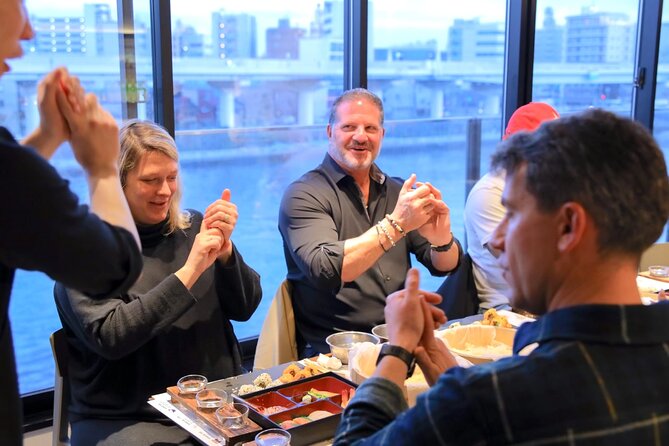
The class begins with instruction from an English-speaking teacher. The teaching team has included instructors named Aina, Reika, Fuko, Yui, Matty, Arisa, Ina, and Fujiko in different sessions, so your instructor may vary. The common thread is an English-led lesson aimed at international visitors.
You receive a short introduction to sushi and its place in Japanese cooking. This background gives the techniques some meaning. You learn why the food is prepared in particular forms and what separates rolled sushi from nigiri.
Most participants seem to appreciate this cultural piece, especially when the instructor adds humor and personal interaction. One practical caution is that the balance can vary. If you want maximum time making and eating, the history section may feel a little long. If you enjoy food culture, it is a worthwhile part of the class.
I would treat the introduction as a primer, not a full culinary lecture. The real value comes when the explanation moves from the table to your hands.
Making maki rolls without the chef’s shortcut
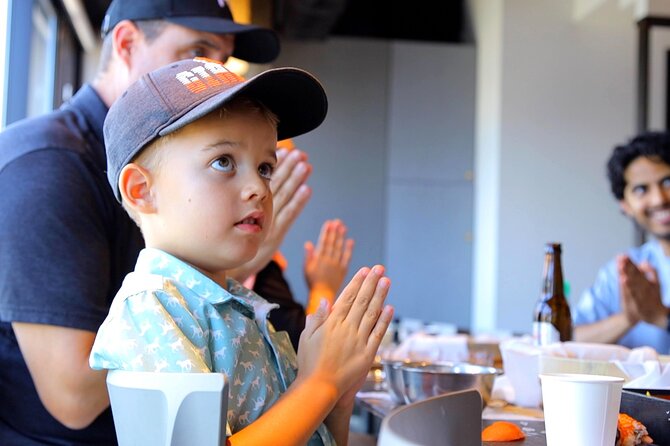
Maki is the most familiar starting point for many beginners. You work with prepared ingredients and learn how to place the fillings, control the amount of rice, and roll the seaweed into a firm shape. Having everything prepped is a major advantage. You spend your time learning technique instead of washing, cutting, or measuring.
The finished roll is sliced into pieces so you can see the result. This is where the class becomes more useful than it first appears. A roll that looks easy when made by a professional becomes a small coordination exercise when you try it yourself. Too much rice can make the roll bulky. Too much filling can make it split. Pressure matters.
You should not expect to produce restaurant-perfect pieces on your first try. That is part of the charm. The instructor demonstrates the correct method, then lets you practice with guidance nearby. The process is simple enough for children and first-time cooks, but still satisfying for adults who already eat plenty of sushi.
The class has been particularly well received as a family activity. Children can take part in a real food lesson, and adults get a meal out of it. Teenagers also have enough hands-on work to stay involved, rather than sitting through a long demonstration.
Same city, a completely different kind of day:
- Osaka Go Karting Tour with Funny Costume
★ 5.0 · 2,658 reviews - Osaka Castle: Museum and Tower Entry Ticket
★ 4.5 · 2,380 reviews - Osaka: Shinsekai Food Tour with 13-15 Dishes at 5 Eateries
★ 4.8 · 2,204 reviews - Osaka Food Tour: 13 Dishes at 5 Local Eateries
★ 5.0 · 2,149 reviews
Shaping nigiri, the small skill that takes practice
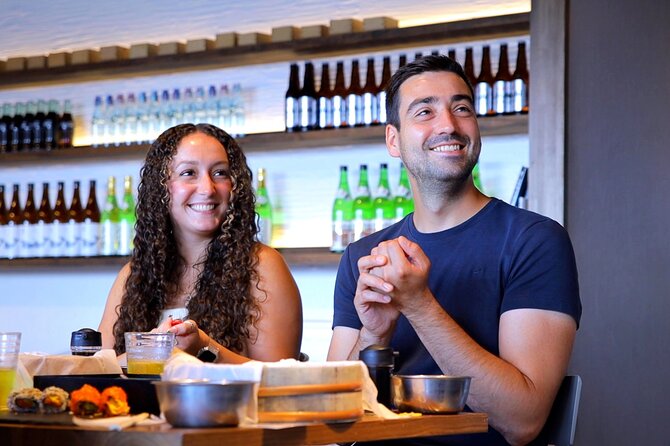
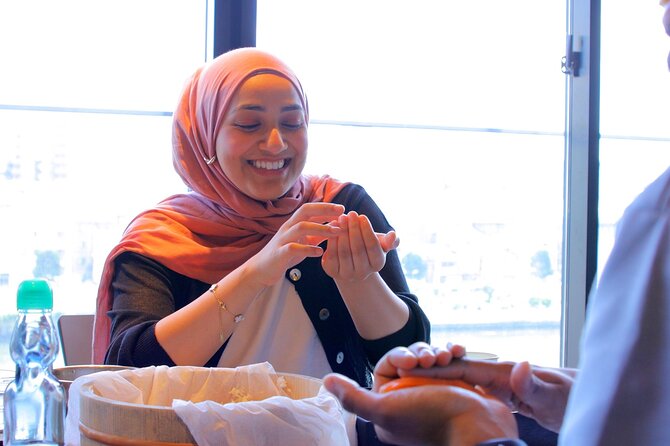
Nigiri is the more revealing part of the class. Here, you shape rice by hand and place a topping over it. The pieces are small, but the technique depends on touch. Press too hard and the rice becomes dense. Press too lightly and the piece falls apart.
The class teaches you how to make authentic nigiri step by step. Depending on your pace, you may prepare roughly four to eight pieces, alongside your maki roll. That amount is enough to make the lesson feel substantial and can serve as lunch for many people.
Ingredients vary by session, but the class offers fish and vegetarian choices. Shrimp may be included, so tell the provider about dietary preferences when you reserve. A change may not be possible on the day if it was not noted in advance.
This is a good place to ask questions. You can ask about shaping, ingredients, sushi etiquette, or how to repeat the process at home. The instructors are there to correct small errors and offer practical tips, which is where much of the learning happens.
Eating your own sushi at the end
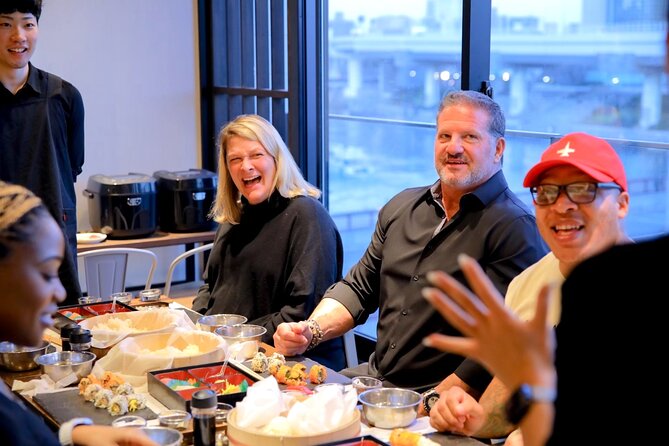
The reward arrives quickly: you eat the sushi you made. It may not have the precise look of a professional chef’s work, but it is yours, and the food is reported to be plentiful enough for a proper light meal. Several sessions have produced one maki roll and around four to eight nigiri pieces per person.
I like this format because it avoids the common cooking-class letdown of preparing food and then receiving only a tiny taste. Here, the ingredients used for the lesson become your meal. Fish and vegetarian options have both been enjoyed, and the food is described as fresh-tasting and generous.
Still, plan your pace. One criticism is that the class can feel rushed near the end, with cleanup beginning while someone is still eating. You may not have much spare time for photographs, videos, or a long conversation over the finished sushi.
For that reason, I would not schedule an important appointment immediately afterward. The official duration is approximately 1 hour 40 minutes, but your own eating speed and the size of the group can affect how relaxed the final minutes feel.
The instructors make the difference
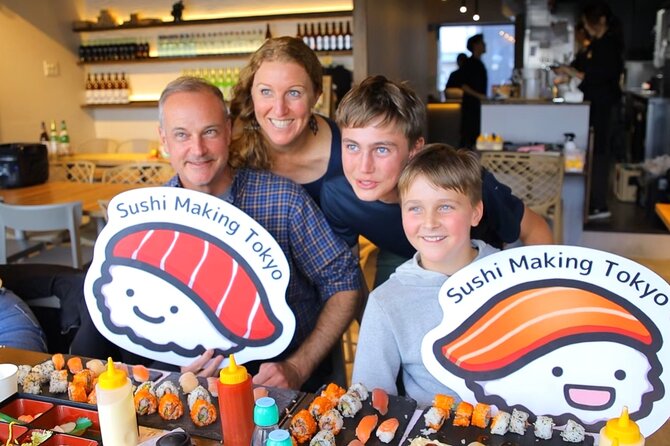
The best part of this activity is not the rice or the rolling mat. It is the teaching style. The instructors are described as friendly, energetic, patient, and encouraging. Several individual teachers receive praise for keeping the room lively while still giving clear instructions.
Fuko has been singled out for a strong mix of sushi history, humor, patience, and practical help. Aina has been praised for being personable and well informed, while Reika has been noted for making the history of sushi easy to follow. Matty and Yui have also been described as entertaining and helpful.
Those names may not tell you who will teach your particular session. Staff assignments can change. They do show the range of the team and the kind of atmosphere you can expect: social, active, and built around participation.
English is the working language, which makes the class much easier for visitors who do not speak Japanese. If an instructor’s accent takes a moment to understand, listen carefully and ask for a repeat. The class is designed for international participants, and questions are part of the process.
There is one serious piece of feedback about uneven interaction among participants. That experience was not typical of the otherwise strong comments, but it is worth acknowledging. A good class should give everyone similar attention, and you should feel comfortable asking the instructor directly for help if you need it.
Is $31.01 a fair price?
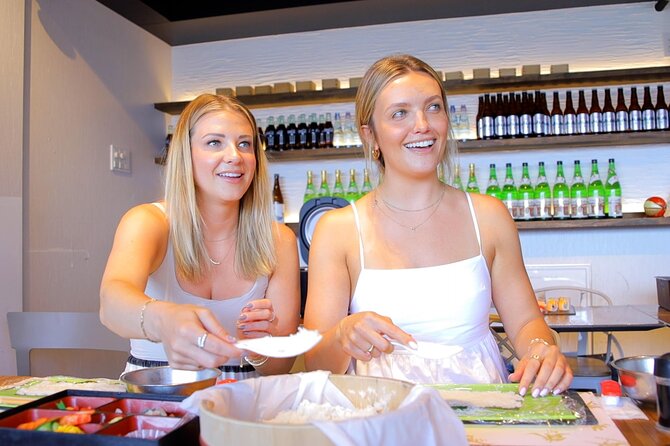
At $31.01 per person, this is a reasonable price for a central Osaka activity that includes instruction, ingredients, and the meal you make. You are paying for a guided cultural experience as well as food. Compared with simply ordering sushi, you also leave with basic techniques you can try at home.
The value is strongest for three types of people. First, beginners get a clear introduction without needing special equipment. Second, families receive a shared activity that can hold a child’s attention. Third, food-minded visitors gain a more personal connection to a dish they may otherwise only order.
The value is weaker if you already make sushi often or want a long, highly detailed culinary course. This is a short group workshop, not professional chef training. You also do not receive hotel transport, drinks, or a sake and beer pairing. Alcohol was requested by at least one participant, but it is not listed as part of the experience.
For most visitors, the combination of location, food, and instruction makes the cost sensible. You are unlikely to leave hungry, and the class gives you a memory that a standard restaurant meal does not.
Who should book this experience?
You should book if you want an easy activity that combines food, culture, and a little playful skill. It suits couples, families, friends, solo visitors who enjoy group activities, and anyone looking for a break from sightseeing.
It is also a strong choice for a first cooking class in Japan. The ingredients are ready, the directions are given in English, and no cooking background is required. Children can take part, though adults should be ready to help with the small movements involved in rolling and shaping.
You may want to skip it if you dislike group activities, need a slow meal, or expect a serious lesson in knife work and fish preparation. The ingredients are prepared ahead of time, so this is about assembling and shaping sushi rather than handling every stage from scratch.
The class is also less suitable for someone with strict dietary requirements unless those needs are clearly noted during booking. Vegetarian and fish options are available, but substitutions may not be possible at the last minute.
Practical details for a smoother class
Book a morning, afternoon, or evening time that matches your appetite. Since the finished sushi can work as a light meal, avoid arriving immediately after a large lunch if you want to enjoy everything you make.
Arrive early enough to find the building and reach the third-floor classroom. The maximum group size is 20, and the class ends back at the meeting point, so you can continue into Dotonbori or Shinsaibashi afterward.
Service animals are allowed, and the location is near public transportation. Confirmation is provided at booking, and the mobile ticket is convenient for a phone-based itinerary.
Free cancellation is available if you cancel at least 24 hours before the local start time. Changes or cancellations made inside that window are not accepted or refunded, so check your Osaka schedule before committing.
Should you book the Osaka sushi class?
Yes, if you want a friendly, affordable food activity rather than a formal culinary course. The combination of maki, nigiri, cultural background, and a meal makes good use of a short slot in Osaka, especially when you are already visiting Dotonbori or Shinsaibashi.
Book with realistic expectations. You may need to move quickly, the room lighting may not flatter your photos, and there is no included drink or hotel transfer. Note dietary needs ahead of time and arrive early.
For first-timers, families, and sushi fans who want more than another restaurant meal, this is an easy choice. You learn enough to repeat the basics at home, eat a generous portion, and leave with a story involving your own slightly lopsided nigiri.
FAQ
How long does the sushi-making class last?
The experience lasts approximately 1 hour and 40 minutes.
Where does the class meet?
It meets at Sushi Making Osaka, Cooking Class in Japan, at 1-chōme-16-20 Higashishinsaibashi, Chuo Ward, Osaka, 542-0083, Japan.
Does the class include food?
Yes. The cooking-class ingredients and the meal you prepare are included in the price.
Is the class taught in English?
Yes. An English-speaking instructor leads the class.
Do I need cooking experience?
No. The class is designed for beginners, and no previous cooking experience is required.
What kinds of sushi will I make?
You will learn to make sushi rolls, including maki, and authentic nigiri.
Is the class suitable for vegetarians?
Vegetarian and fish options are available. You should note dietary preferences when making your reservation, since substitutions may not be possible during the class.
What is the cancellation policy?
You can cancel for a full refund up to 24 hours before the experience start time. Cancellations or changes made less than 24 hours before the start time are not accepted or refunded.
More Workshops in Osaka
- Matcha Making Class in Osaka with Authentic Japanese Sweets Set
★ 5.0 · 509 reviews - Osaka Cooking Class: Okonomiyaki &Japanese cuisines experience
★ 5.0 · 261 reviews - Osaka: Roll and Authentic Sushi Making Class in Dotonbori
★ 4.9 · 239 reviews - Osaka: Sushi Class in Dotonbori
★ 4.9 · 160 reviews
Just added around Osaka
- (Ticket Included) Explore Osaka Castle & Museum of History★ 4.8 · 21 reviews
- Hidden Osaka – Yukaku Red Light Tour & Culinary Adventure★ 4.8 · 96 reviews
- Osaka: Walking Tour and Top Highlights★ 4.8 · 104 reviews
- Osaka: Private Ceramic Painting Workshop★ 5.0 · 13 reviews
- Pickleball in Osaka, Kobe & Kyoto with Locals!★ 4.7 · 80 reviews
- Eat Like a Local in Osaka – Private Custom Street Food Tour★ 4.3 · 33 reviews
- Osaka:SUMO BEATS SHOWCASE: Taiko Drum and Wagyu burger!★ 4.2 · 37 reviews
- Kimono photoshoot-Includes 100 photo data★ 5.0 · 21 reviews
Japanese Cooking Classes, compared.
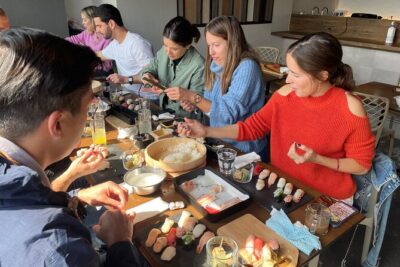
Sushi Making Tokyo Roll and Authentic Japanese Sushi Class
Read our review →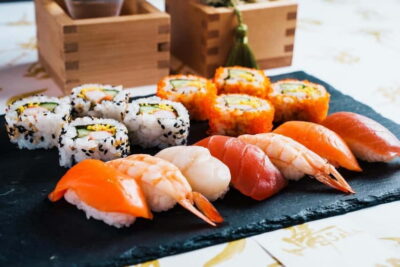
Roll and Authentic Sushi Making Class in Asakusa
Read our review →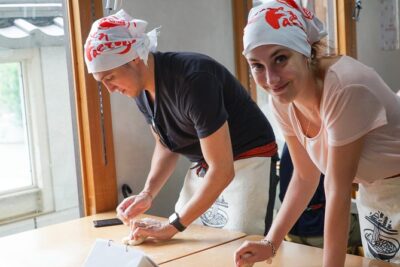
Ramen Cooking Class at Ramen Factory in Kyoto
Read our review →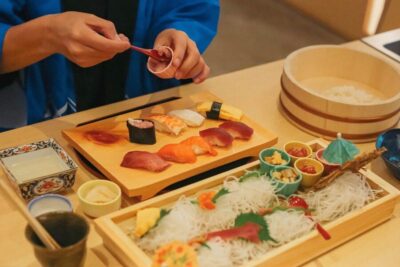
Sushi Making Class in a Happi Coat near a Famous Spot
Read our review →
Tokyo Sushi Making Class in Tsukiji with Professional Chef
Read our review →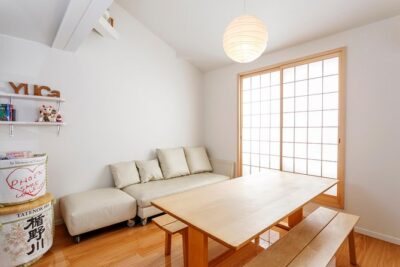
Ramen & Gyoza Cooking Class in Tokyo with Local Supermarket Visit
Read our review →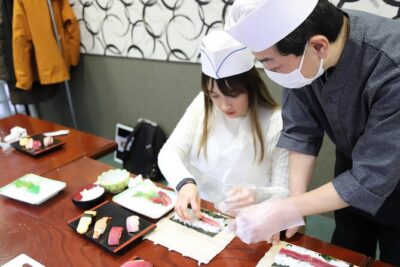
Tsukiji Fish Market Guided Tour and Sushi Making with Pro Chef
Read our review →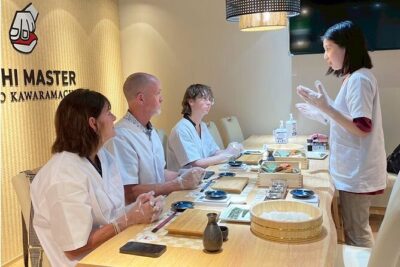
Sushi Making in Kyoto! Same-day bookings welcome!
Read our review →Browse the lists this tour appears in