
REVIEW · JAPANESE COOKING CLASSES
Tokyo: Sushi Making Class in a Happi Coat near a Famous Spot
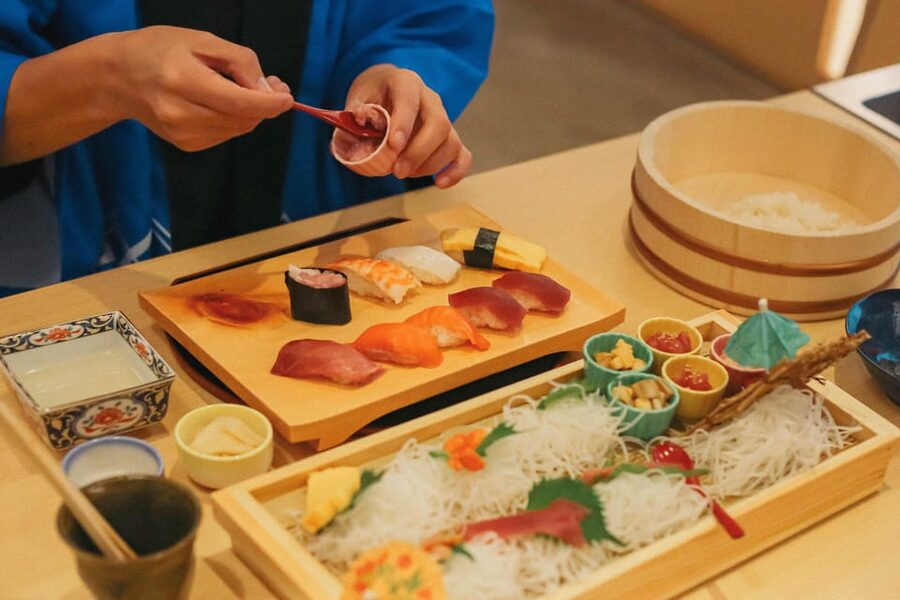
Making sushi in Tokyo is one thing. Making it yourself while dressed in a traditional happi coat is another. At SUSHI GARYU, you learn the basics of nigiri with tuna and salmon, then eat what you prepare. Some sessions also include maki or other rolls.
I like the friendly, small-class feel, where instructors such as Hide, Mikoto, Ami, and Emi guide beginners without making the lesson stiff. I also like the value: at $42 for 90 minutes, you get a cultural activity, a practical cooking lesson, and what can amount to a proper lunch. The main consideration is that the meeting point changes with the option booked, and busy sessions may seat you with other customers.
In This Review
- Key points to know before booking
- What the 90-minute sushi class is really like
- Learning nigiri instead of just taking a sushi photo
- The happi coat and the cultural side of the class
- The instructors make the difference
- Is $42 good value for Tokyo?
- Dietary needs and age rules
- Finding the meeting point and planning the day
- Who will enjoy SUSHI GARYU most?
- What you can take home besides the photos
- Booking details worth checking
- Should you book this sushi class?
- FAQ
- How long does the sushi-making class last?
- How much does the class cost?
- Which kinds of sushi will I learn to make?
- Is the class suitable for beginners?
- Is instruction available in English?
- Can I request vegetarian, vegan, or gluten-free food?
- What should I do if I have a food allergy?
- Can children join the class?
- Will I have a private class?
Key points to know before booking
- You make and eat your own sushi: The class is hands-on, with tuna and salmon nigiri at its core, plus maki or rolls in some sessions.
- The happi coat is part of the fun: Put on this traditional Japanese-style coat for photos and a playful chef-like feel.
- English instruction is available: Classes are offered in English and Japanese, with clear step-by-step help for beginners.
- The portions can be generous: Several people found they made enough sushi for a satisfying meal, not just a small sample.
- Dietary requests need advance notice: Vegetarian, vegan, and gluten-free options are available if arranged before the day of the class.
- Plan around the fixed 90 minutes: This is a compact activity that fits well before or after sightseeing near the meeting area.
What the 90-minute sushi class is really like
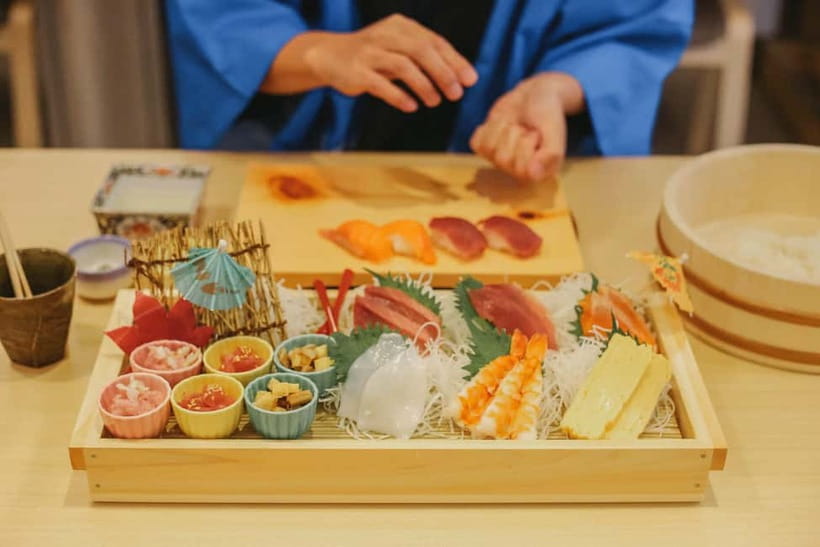
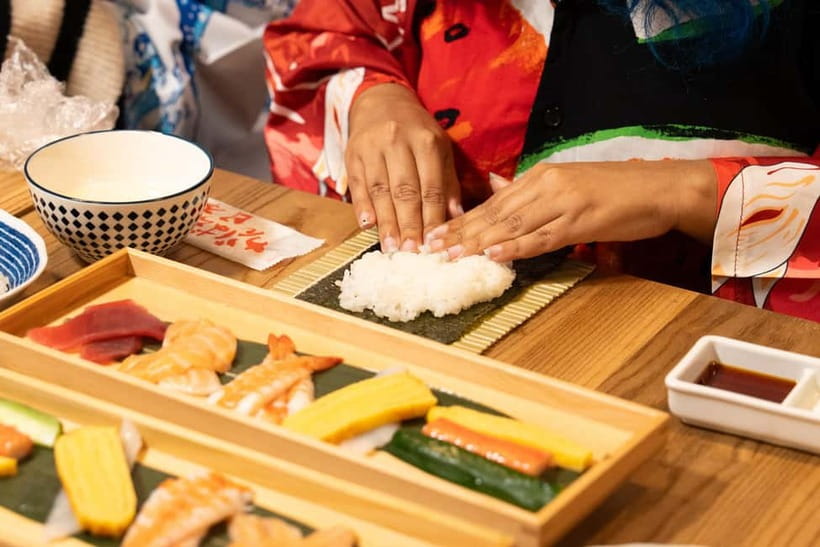
This is not a lecture where you sit and watch a chef work. You are given ingredients, shown the basic techniques, and then asked to try them yourself. That makes the class useful even if your sushi-making skills currently begin and end with opening a supermarket tray.
The main lesson focuses on nigiri sushi, the hand-formed rice topped with fish. Tuna and salmon are the featured ingredients, both familiar choices for first-time sushi makers. Depending on the session, you may also prepare maki or other rolls, giving you more than one technique to take home.
The exact order can vary, but you should expect a short introduction, a demonstration, hands-on preparation, and time to eat your finished sushi. The full class lasts 90 minutes, so it moves at a steady pace without taking half a day from your Tokyo plans.
That timing works especially well for a morning or lunchtime booking. You can make the class part of a sightseeing day rather than treating it as a major standalone event. Some bookings have been intimate enough to feel like a private lesson, while busy periods may involve shared seating with other customers.
More Japanese Cooking Classes in Tokyo
- Sushi Making Tokyo Roll and Authentic Japanese Sushi Class
★ 5.0 · 3,971 reviews - Tokyo: Roll and Authentic Sushi Making Class in Asakusa
★ 4.9 · 1,957 reviews - Tokyo Sushi Making Class in Tsukiji with Professional Chef
★ 5.0 · 1,177 reviews
Learning nigiri instead of just taking a sushi photo
Nigiri looks simple. A small mound of rice, a slice of fish, perhaps a dab of wasabi. In practice, the rice needs the right shape and pressure, and the fish must sit neatly on top without the whole piece falling apart.
The instructor demonstrates the motions slowly, then lets you copy them. This is where the class earns its keep. You are not expected to have knife skills or restaurant experience, and the teaching is aimed at beginners. Instructors are described as patient, clear, and willing to help when your first pieces look more rustic than restaurant-ready.
You will work with tuna and salmon, two ingredients that make the lesson approachable. Their familiar flavors also mean you can concentrate on shaping the rice and handling the fish instead of confronting a long list of unfamiliar toppings.
The food is prepared for you, and the ingredients have been praised for their freshness. Since you eat the sushi you make, every technique has an immediate payoff. A misshapen piece still tastes good, and a successful one feels like a small victory.
Some sessions also teach maki. Rolling sushi adds a different challenge because you must spread the rice, place the filling, and roll everything firmly enough to hold together. If you have always wanted to prepare sushi at home, this is the part most likely to give you a usable starting point.
The happi coat and the cultural side of the class
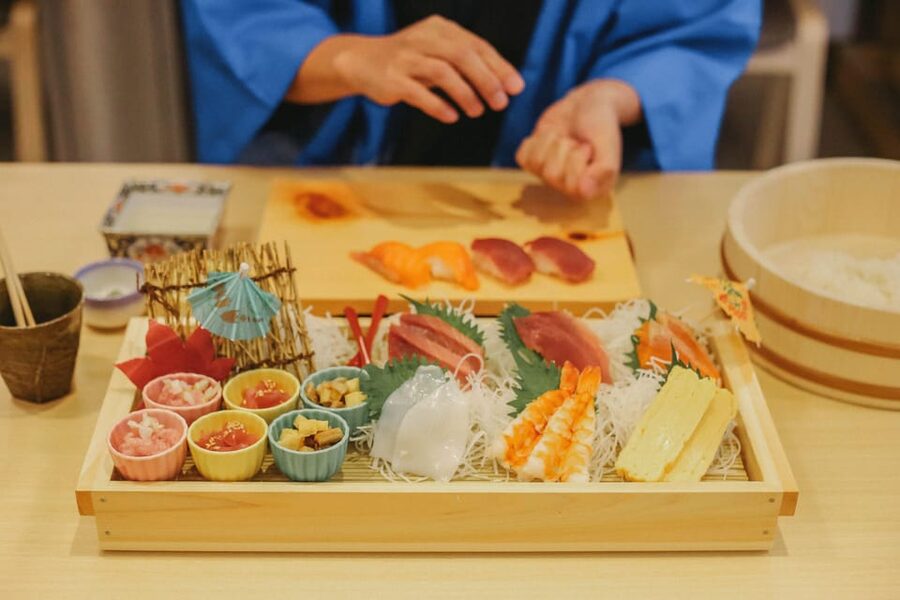
The happi coat is a Japanese traditional garment with wide, tube-like sleeves. Here, it is used as a cheerful part of the class rather than formal kitchen wear. Putting one on changes the mood quickly. You are no longer simply following a recipe at a table, you are playing the role of a sushi chef for the afternoon.
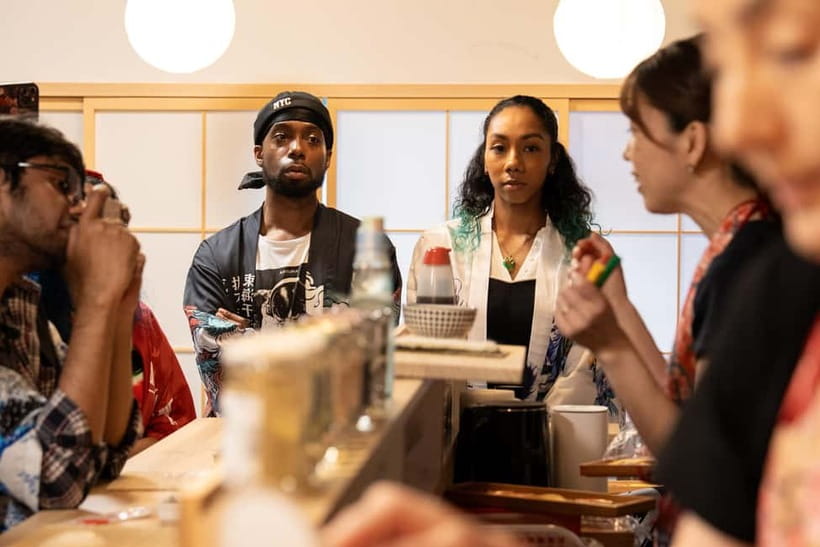
Photos are part of the appeal. Instructors have taken pictures and videos during the process, and the Japanese outfits and props create easy keepsakes. If you are traveling with children, a partner, or friends, the clothing gives everyone something to do between steps and makes the activity less serious.
The cultural material goes beyond the coat. Your instructor explains sushi techniques and offers context about Japanese food customs and traditions. The lesson is not a full study of Japanese cuisine, but it gives meaning to what you are doing. You learn why the shape, handling, and presentation matter, rather than simply piling fish onto rice.
That conversational side can be especially valuable if you enjoy meeting local people. Instructors have also offered suggestions about other places to visit in Tokyo and around Japan. The amount of conversation depends on the group and the teacher, but the setting is designed to be warm and social.
The instructors make the difference
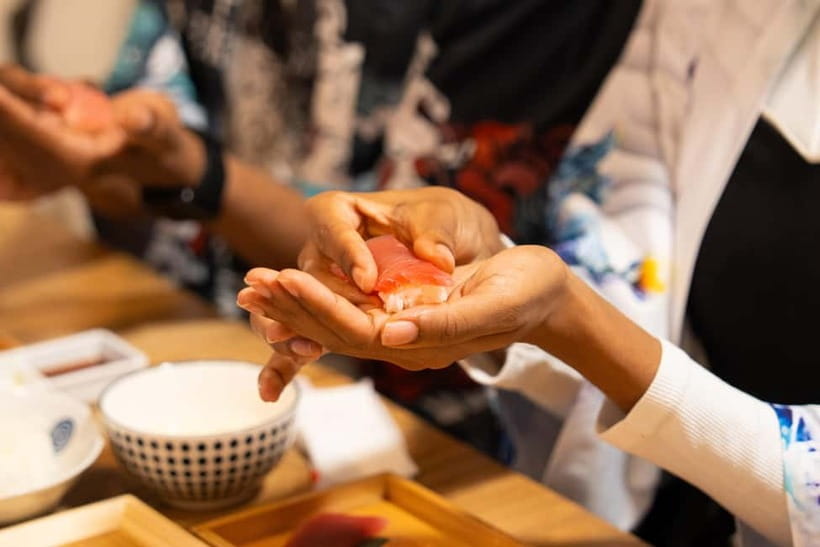
SUSHI GARYU uses different instructors, and the personal style can change from one class to another. Names that have been praised include Chef Hide, Mikoto, Kohji, Ami, Emi, Mitsuko, Mizuki, Mai, Miwa, Masa, and Rikuri.
The common thread is a relaxed teaching style. Hide has been described as funny and skilled, while Mikoto and Kohji are noted for being friendly and helpful. Ami made both maki and nigiri easy to understand, and Mai received praise for walking through every step in clear English.
You should not assume you will have a specific instructor unless your booking confirms it. Still, the repeated strengths are useful to know: clear demonstrations, patient correction, and easy conversation in English. The class is built for people who may know little about sushi technique.
Group size can affect the feel. One person had a one-to-one lesson after booking a quiet time, while another booking had about five people per instructor. A busy session may seat you with other customers. That can be a plus if you enjoy a social class, but couples looking for complete privacy should check the option details before paying.
Same city, a completely different kind of day:
- Mt Fuji and Hakone 1-Day Bus Tour Return by Bullet Train
★ 5.0 · 26,383 reviews - 1-Day Tokyo Bus Tour
★ 5.0 · 14,250 reviews - Tokyo: TOKYO SKYTREE® Admission ticket
★ 4.5 · 11,192 reviews - Tokyo: teamLab Planets TOKYO Digital Art Museum Entry Ticket
★ 4.6 · 9,779 reviews
Is $42 good value for Tokyo?
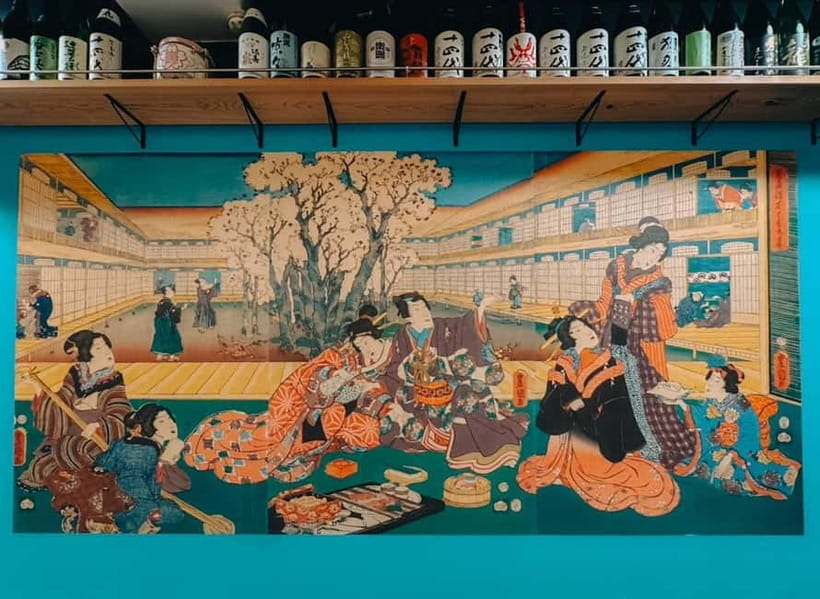
At $42 per person, this is not the cheapest meal you will have in Tokyo. It is also not merely a meal. You are paying for ingredients, instruction, the use of the cooking space, cultural explanation, and the chance to eat what you make.
The value is strongest if you want an activity with a clear result. You leave having learned techniques you can try again at home, and the food can be filling. Several people found the portions generous, with enough sushi to count as a proper lunch rather than a tasting plate.
The price also compares well with many short Tokyo activities because it combines food and entertainment. You do not need to book a separate lunch immediately afterward unless you have a large appetite or your session happens to provide a smaller portion.
I would think of it as a hands-on lunch with a lesson attached. If you only want the finest sushi in Tokyo, spend your money at a respected sushi counter instead. If you want to understand how sushi is made and have a lighthearted cultural activity, $42 is reasonable.
The class includes the cooking lesson, ingredients, and instructor. Extra purchases, such as sake, may be available, but they are not part of the listed price. You should treat those as optional rather than necessary to enjoy the class.
Dietary needs and age rules
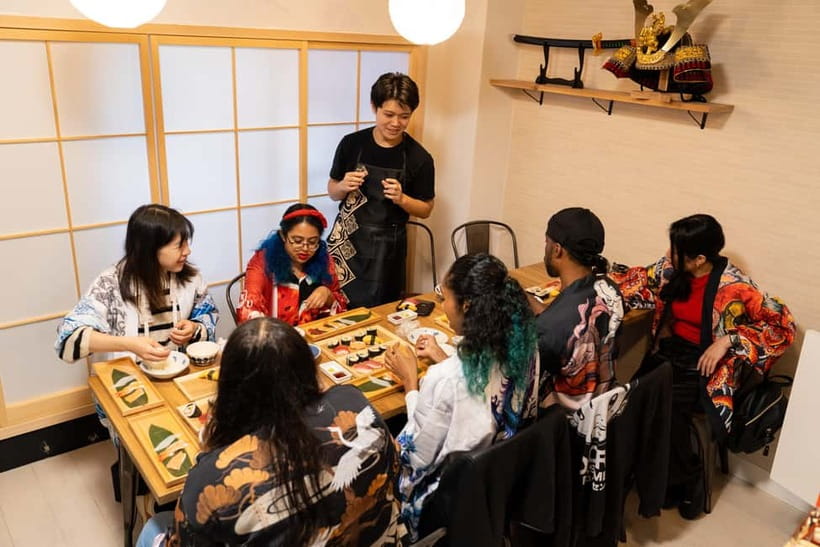
You need to tell the operator about allergies in advance. This matters because fish and other ingredients are central to the class, and same-day requests may not be possible to accommodate.
Vegetarian, vegan, and gluten-free choices are available with advance notice. Do not wait until you arrive. Send the request before the class so the kitchen has time to prepare an appropriate version.
Children older than four are charged according to the stated child policy. Children under four can share a dish, but the booking information says to inform the operator. The class has been enjoyed by families, and the practical tasks can keep children involved, though very young children may not take part in every step.
If you are booking for a mixed group, confirm the dietary arrangements for each person. A request covering one participant does not necessarily explain the needs of everyone in your party.
Finding the meeting point and planning the day
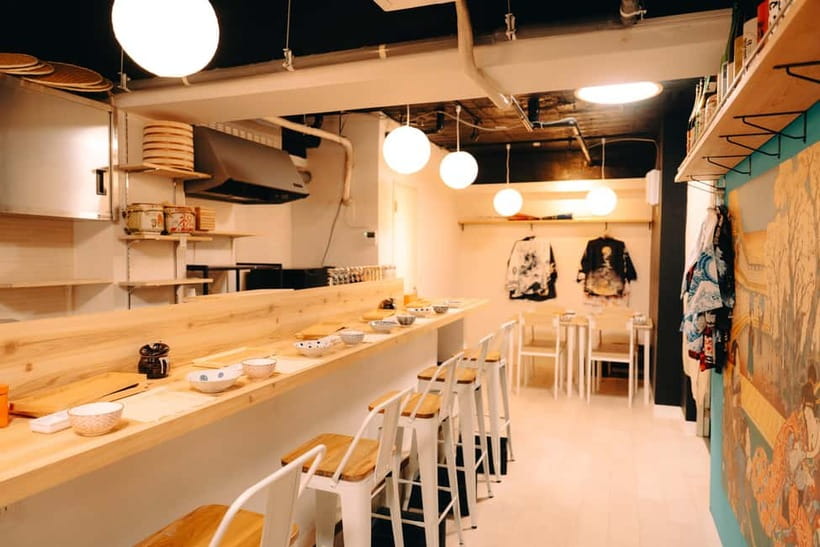
The meeting point may vary depending on the option you select. Read the confirmation carefully and allow time to find the venue. One person had some trouble locating the place, even though it became straightforward once they had their bearings.
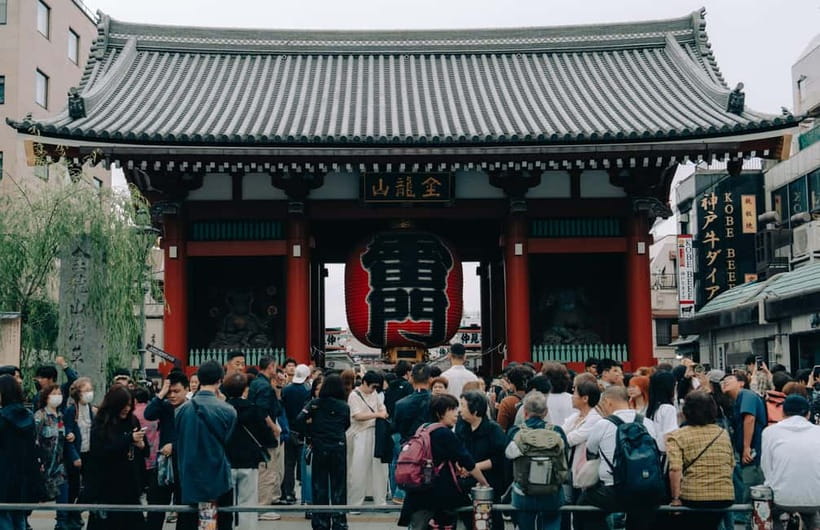
Do not assume that the phrase near a famous spot means you can simply walk up after visiting a nearby attraction. The exact location matters, especially in Tokyo, where a short distance on a map can involve a busy station, a large shopping area, or several similar-looking entrances.
The class lasts 90 minutes, but give yourself extra time before the start. Arriving late may be handled kindly, but it can cut into your cooking time and make it harder to follow the opening demonstration.
A late-morning booking can work well as lunch. An afternoon class leaves room for an earlier meal and gives you a pleasant break from sightseeing. Since starting times vary, check the available slot that best fits your plans.
The activity also pairs naturally with nearby sightseeing. One person followed the class with a visit to a temple and local markets. That is a sensible way to build a half-day around the lesson without rushing from one side of Tokyo to another.
Who will enjoy SUSHI GARYU most?
I would recommend this class to first-time visitors who want a simple, local food activity rather than another observation deck or shopping stop. It gives you something to do with your hands and a story to tell after lunch.
It is also a strong choice for:
- Couples looking for a relaxed date activity
- Families with children old enough to follow basic instructions
- Friends who enjoy food and photos
- Solo visitors who like small-group classes
- Anyone who wants to recreate sushi at home
- People who want an English-language cultural activity
You do not need prior cooking experience. The lesson is structured so the chef can demonstrate, watch your attempt, and offer help. That personal guidance is more useful than a printed recipe alone.
I would be more cautious if you dislike raw fish, need a fully private setting, or want a long and technically advanced culinary course. This is a friendly introduction, not professional sushi training. It also has a playful photo element, so visitors seeking a quiet, formal meal may find the atmosphere too casual.
What you can take home besides the photos
The most practical souvenir is the technique. You learn how to handle sushi rice, shape nigiri, and possibly roll maki. You also get small tips that can make home preparation less frustrating, from keeping your hands workable to forming pieces that hold together.
You may need to search for suitable ingredients at home, and the exact quality of local fish will vary. Still, the class gives you a framework. You can use the methods with ingredients available in your own country rather than trying to copy a Tokyo restaurant menu exactly.
The photos and videos add another benefit. The happi coat and cooking setup make the activity easy to remember, and instructors may capture moments while you work. These pictures are more personal than standard sightseeing snapshots because they show you doing something rather than simply standing beside a landmark.
The cultural exchange can linger, too. Instructors speak English or Japanese, and several have been willing to discuss Japanese customs, food, and broader travel plans. That conversation is not guaranteed to take up the same amount of time in every class, but it is part of what makes the lesson feel more personal than a packaged meal.
Booking details worth checking
The price is $42 per person, and the duration is 90 minutes. English and Japanese instruction is available, and the booking system offers reserve-now, pay-later flexibility.
Free cancellation is available up to 24 hours before the scheduled start for a full refund. Check the precise meeting point for your selected option, since it may change between choices.
Most importantly, send allergy and dietary requests in advance. Ask for vegetarian, vegan, or gluten-free arrangements before the day of the class. If you are booking for a child under four, contact the operator about sharing a dish and confirm the applicable child charge for older children.
Should you book this sushi class?
Yes, if you want a short, good-value Tokyo activity that combines food, culture, and participation. The class is easy to fit into a busy itinerary, and the chance to make and eat your own sushi gives it more substance than a simple restaurant visit.
I especially like it for couples, families, and solo visitors who want a friendly setting. The strong 4.9 rating from 1,377 reviews matches the consistent pattern of praise for the instructors, generous food, clear English, and relaxed atmosphere.
Book with realistic expectations. You are learning the basics in 90 minutes, not becoming a master sushi chef. The meeting point can take some care to find, group seating is possible, and privacy depends on attendance. If those points suit you, SUSHI GARYU is an enjoyable way to spend part of a Tokyo day, with lunch and a new skill included.
FAQ
How long does the sushi-making class last?
The class lasts 90 minutes.
How much does the class cost?
The listed price is $42 per person.
Which kinds of sushi will I learn to make?
The class focuses on nigiri sushi made with ingredients such as tuna and salmon. Some sessions also include maki or other rolls.
Is the class suitable for beginners?
Yes. The workshop is beginner-friendly, and the instructor demonstrates each step before you try it yourself.
Is instruction available in English?
Yes. The class is offered in English and Japanese.
Can I request vegetarian, vegan, or gluten-free food?
Yes, but you must inform the operator in advance. Requests made on the day may not be possible to accommodate.
What should I do if I have a food allergy?
Tell the operator about your allergy in advance by message.
Can children join the class?
Children over four are charged according to the stated child policy. Children under four may share a dish, but you should inform the operator.
Will I have a private class?
Not necessarily. Depending on how busy the venue is, you may share seating with other customers. Some quieter bookings have been conducted as private lessons.
More Workshops in Tokyo
- Tokyo Shinjuku Chopsticks Making Class
★ 5.0 · 1,763 reviews - Chopstick Making Workshop in Ginza
★ 4.8 · 1,366 reviews - Ramen & Gyoza Cooking Class in Tokyo with Local Supermarket Visit
★ 5.0 · 823 reviews - Matcha Making Class in Tokyo with Authentic Japanese Sweets Set
★ 5.0 · 744 reviews
Just added around Tokyo
- Tokyo: Customizable Private Guided Walking Tour★ 4.5 · 129 reviews
- Private Harajuku Omotesando Architecture Tour★ 4.9 · 18 reviews
- Tokyo: Guided Helicopter Ride★ 4.9 · 24 reviews
- Tokyo: Guided Walking Tour of Tsukiji Market with Lunch★ 4.4 · 24 reviews
- Tokyo: Private Personalized Local Food Tour★ 4.5 · 101 reviews
- Tokyo GINZA: KONPARU Japanese Cabaret Show with Drink★ 4.8 · 38 reviews
- Tokyo: Guided Walking Tour of Tsukiji Market with Breakfast★ 4.4 · 134 reviews
- Tokyo: Gotokuji Cat Temple, Shinjuku Cat Cafe & 3D Cat Tour★ 4.9 · 38 reviews
Japanese Cooking Classes, compared.
Sushi Making Tokyo Roll and Authentic Japanese Sushi Class
Read our review →
Roll and Authentic Sushi Making Class in Asakusa
Read our review →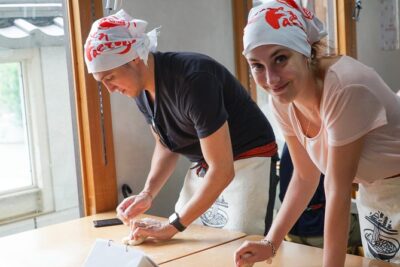
Ramen Cooking Class at Ramen Factory in Kyoto
Read our review →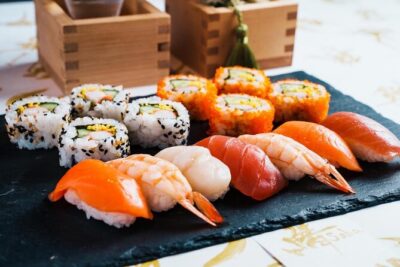
Sushi Making Osaka Roll and Authentic Japanese Sushi Class
Read our review →
Tokyo Sushi Making Class in Tsukiji with Professional Chef
Read our review →
Ramen & Gyoza Cooking Class in Tokyo with Local Supermarket Visit
Read our review →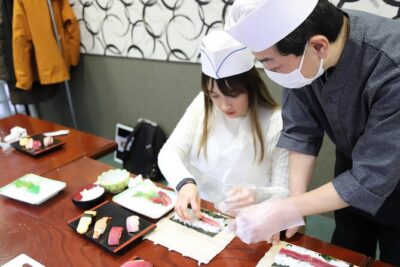
Tsukiji Fish Market Guided Tour and Sushi Making with Pro Chef
Read our review →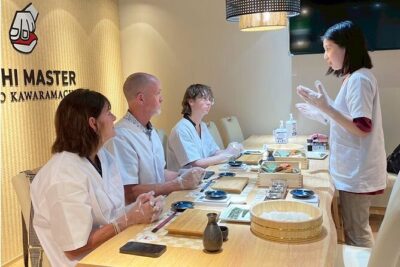
Sushi Making in Kyoto! Same-day bookings welcome!
Read our review →Browse the lists this tour appears in