
REVIEW · WORKSHOPS
Chopstick Making Workshop in Ginza
Making chopsticks by hand sounds simple until you put a plane against a hard piece of wood. This one-hour Ginza workshop gives you that small, satisfying challenge, then sends you home with something useful rather than another decorative souvenir.
I like the choice of 24 wood types and two lengths, and I like that the finished pair is ready to take home the same day. The main thing to know is that this is real hand woodworking. Shaving the wood takes some arm strength, and specialty wood and engraving cost extra.
The workshop is run by Ginza Hashi, a woodworking company that handles the wood selection and processing itself. English-speaking staff explain the tools and help when your technique needs a correction. Staff members named in recent sessions include Tina, Waka, Kotoha, Shion, and Koko, though the team working on your visit may differ.
In This Review
- Key Points at a Glance
- A Hands-On Souvenir in the Heart of Ginza
- Choosing Wood That Matches Your Skill
- Planing the Chopsticks by Hand
- Sanding the Tips and Corners
- Oil, Finish, and Same-Day Pickup
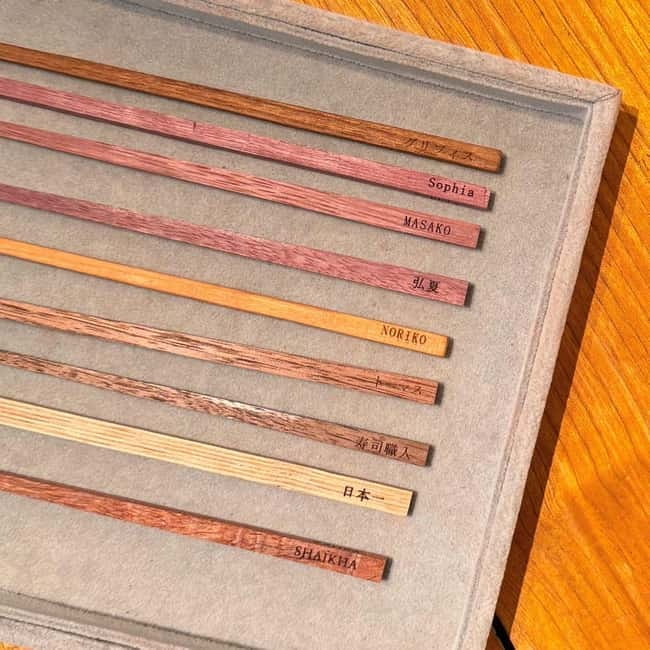
- Engraving in Japanese or Your Own Language
- Who Will Enjoy This Ginza Workshop?
- Is the $25 Base Price Good Value?
- A Few Practical Tips Before You Go
- Should You Book the Chopstick Workshop?
- FAQ
- How long does the chopstick-making workshop take?
- How much does the workshop cost?
- How many types of wood can I choose from?
- Can I have my name engraved?
- Can I take the chopsticks home immediately?
- Is English assistance available?
- Where is the meeting point?
- Is the workshop wheelchair accessible?
Key Points at a Glance
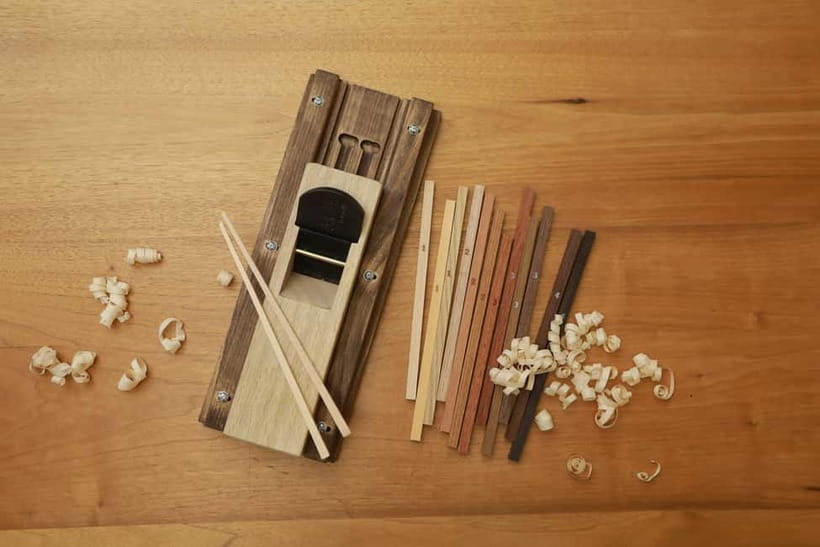
- Choose your own material: Pick from 24 types of wood, including five included options and 19 higher-grade woods that cost extra.
- Use traditional hand tools: Shape the chopsticks with a plane, then smooth the tips and corners with sandpaper.
- Finish the pair yourself: Apply oil to bring out the wood and give the chopsticks a polished finish.
- Add a personal touch: Engrave a name or favorite phrase in Japanese or your own language for ¥1,100 per pair.
- Plan for a little effort: Harder woods can take more strength and patience, especially during the planing stage.
- Good Ginza souvenir: You leave with chopsticks you made yourself, not a mass-produced item picked up at the airport.
A Hands-On Souvenir in the Heart of Ginza
The meeting point is at 2-9-13 Ginza, Chuo-ku, Tokyo. That puts the activity in one of Tokyo’s best-known central districts, so it works well as a short break between shopping, department stores, cafés, and sightseeing.
The setting is more practical than theatrical. This is a working woodworking experience, not a staged cultural show. You handle the material, use the tools, and make decisions about the final shape. That gives the hour a clear purpose.
At the start, you choose a pair of chopstick blanks from the available wood selection. The five included woods are covered by the base price, while the other 19 are higher-grade choices with an added charge. Ask about the price of each option before selecting if you are trying to keep the total close to the advertised $25.
This price structure is the main point that needs explaining. The base rate is reasonable for an activity that includes instruction, tools, materials, and a finished object. But the displayed price does not mean every attractive wood in the shop is included. Some people choose a specialty wood and feel the upgrade is worthwhile, while others are perfectly happy with one of the included choices.
You also choose between two lengths. That is useful if you want a pair suited to your own hand size or if you are making chopsticks for a child or family member. The workshop does not simply hand you a standard pair and ask you to decorate it. You make a basic design choice before the work begins.
A few more Tokyo trips to weigh up
- Sushi Making Tokyo Roll and Authentic Japanese Sushi Class
★ 5.0 · 3,971 reviews - Tokyo: Roll and Authentic Sushi Making Class in Asakusa
★ 4.9 · 1,957 reviews - Tokyo Shinjuku Chopsticks Making Class
★ 5.0 · 1,763 reviews
Choosing Wood That Matches Your Skill
The wood selection is one of the best parts of the activity, but it is also where your final cost and level of effort can change.
Different woods have different textures and hardness. A softer piece should be easier to shape with the plane. A harder or denser piece can produce a more demanding session. One participant found olive wood difficult to work, but was happy with the finished pair. Another person returned wanting to try a tougher wood after enjoying the first experience.
That makes the choice personal. If your priority is a relaxed first attempt, ask the staff to recommend an easier wood. If you already enjoy woodworking or want a stronger challenge, a specialty option may be appealing. The instructors can help explain the choices, and English support is available.
I would not choose the most expensive wood simply because it looks impressive. The point of the activity is the process, and a more difficult material can slow you down. The included woods already let you produce a pair with a personal story behind it.
Before you begin, confirm three things:
- Which woods are included in the base price
- How much the selected upgrade costs
- Whether the price is charged per pair
That short conversation avoids the confusion some people have had about the wood supplements. The optional engraving is also an extra charge, so include that in your budget if personalization matters to you.
Planing the Chopsticks by Hand
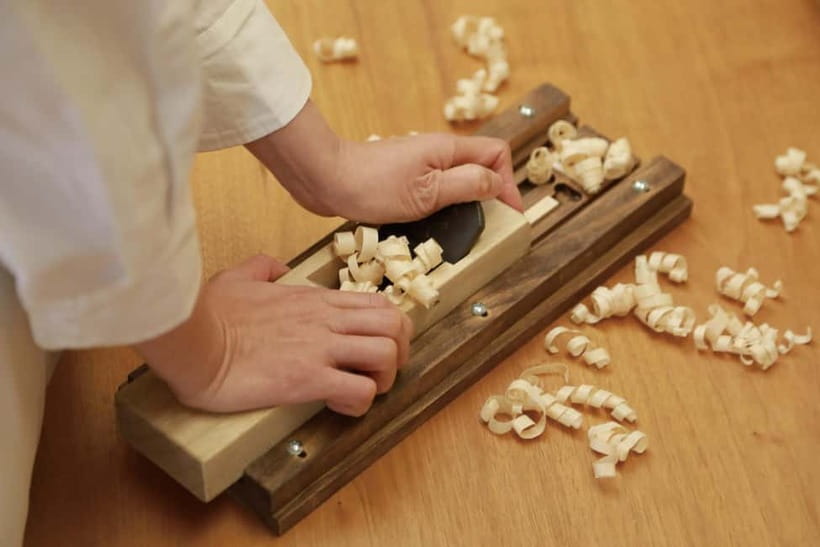
Once you have chosen the wood, you place the blanks on a stand and use a plane to shave them down. This is the most physical part of the workshop.
The technique is simple to understand, but it is not completely effortless. You need to press the tool with enough force to remove wood, then guide it along the blank in a controlled way. Some people find the work easy, while others need time to learn how much pressure to use.
That difference is important for families. A 12-year-old can manage the task once the method becomes clear, and teenagers have enjoyed the hands-on nature of it. Younger children may need close help, and the official age information excludes children under three. The activity is also listed as not suitable for people over 70, so check the current conditions if that applies to someone in your party.
You are not expected to master the plane instantly. English-speaking instructors explain each step and offer help when needed. Named instructors such as Tina and Waka have been praised for patient, encouraging guidance, while Kotoha, Shion, and Koko have also led sessions.
The pace can vary. A pair may take about an hour from start to finish, but careful sanding can take longer. Some sessions have allowed extra time, and one person spent two hours making a second pair without being hurried. You should not count on a longer session every time, especially if the workshop is full, but the staff aim to help you finish the work properly.
The room can feel tight when many people are working at once. At half capacity, the space feels calmer. When it is busy, instructors may be helping several people at different stages, so you may occasionally need to wait briefly for assistance. The upside is that the process is straightforward enough to continue once you understand the basic motion.
Sanding the Tips and Corners
After planing, you use sandpaper to smooth the chopsticks. This is where the rough wooden blanks begin to feel like finished tableware.
You work on the tips and corners, taking away sharp edges and small imperfections. Sanding is less strenuous than planing, but it rewards patience. If you rush, the surface may feel uneven. If you take your time, the chopsticks can develop a more comfortable shape in your hand.
This is also the stage where you can make small corrections. The goal is not necessarily to create two machine-perfect pieces. It is to make a balanced pair with smooth edges and a shape you will actually enjoy using.
One practical tip comes from the physical nature of the work: tie back long hair. The session can become surprisingly active, especially during planing. Wear something comfortable and be ready to use your arms.
The workshop is suitable for a rainy afternoon because the entire activity takes place indoors and lasts only an hour on the standard schedule. It can also fit neatly into a day in Ginza without taking over your sightseeing plans.
Same city, a completely different kind of day:
- Mt Fuji and Hakone 1-Day Bus Tour Return by Bullet Train
★ 5.0 · 26,383 reviews - 1-Day Tokyo Bus Tour
★ 5.0 · 14,250 reviews - Tokyo: TOKYO SKYTREE® Admission ticket
★ 4.5 · 11,192 reviews - Tokyo: teamLab Planets TOKYO Digital Art Museum Entry Ticket
★ 4.6 · 9,779 reviews
Oil, Finish, and Same-Day Pickup
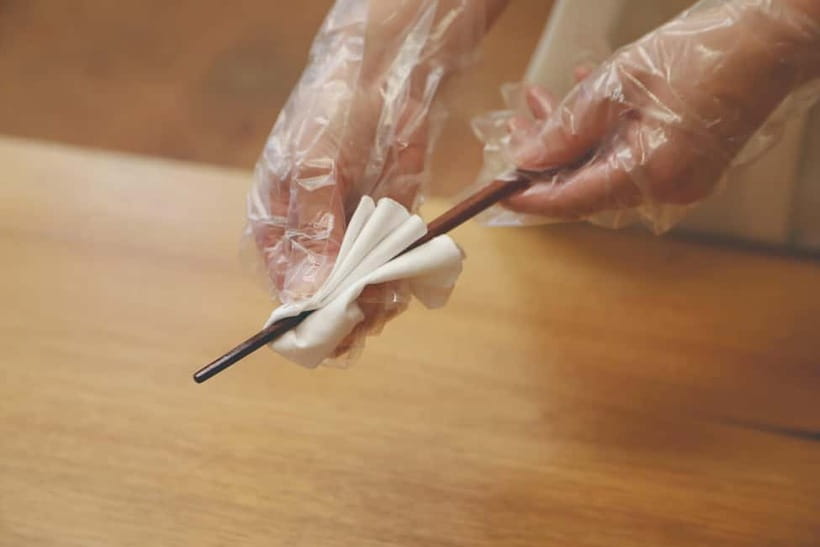
The final step is applying oil. This gives the chopsticks a more finished appearance and helps bring out the character of the wood.
There is a nice sense of progress here. You begin with rough blanks, remove material with a plane, smooth the surfaces with sandpaper, and then see the wood take on a polished look. The result is modest in scale, but the work is your own.
You can take the finished chopsticks home on the day of the workshop. That matters if you are near the end of a Tokyo visit and want a souvenir without arranging shipping or waiting for a later collection.
The finished pair is also practical. You can use it at home for ordinary meals, reserve it for special occasions, or give it to a family member. A handmade object that gets used has more lasting value than a souvenir that sits in a drawer.
Engraving in Japanese or Your Own Language
Engraving is optional and costs ¥1,100. You can add a name or favorite phrase in Japanese or in your native language.
The staff can help translate a name or phrase into Japanese, which is useful if you want a more local touch but do not read Japanese. Laser engraving is done with equipment designed to put gentle stress on the wood, producing a clean personalized mark.
For a couple or family, engraving can turn one workshop into several distinct gifts. You might make a pair for yourself, add a name for a child, or create a set for someone at home. The engraving is not required for a good result, but it adds meaning without changing the basic one-hour format very much.
Remember that the fee is charged per pair. If two people each want engraving, the total added cost is ¥2,200. Ask the staff to confirm the charge before finalizing your choices.
Who Will Enjoy This Ginza Workshop?
I would recommend this activity to anyone who likes making things with their hands, especially if you want a souvenir that connects to everyday Japanese dining.
It works particularly well for:
- Couples who want matching or personalized chopsticks
- Families with school-age children and teenagers
- People looking for a short indoor activity in Ginza
- Anyone who prefers useful souvenirs over ornaments
- Beginner woodworkers who want a guided introduction to hand tools
- Visitors who enjoy choosing materials and shaping an object themselves
It is less suitable if you want a passive cultural demonstration or if you dislike repetitive handwork. Planing requires effort, and sanding requires patience. The activity is easy to understand, but it is not entirely effortless.
The age rules deserve attention. Children under three are not suitable for the workshop, and the activity is listed as unsuitable for people over 70. One family attended with ages ranging from four to 72, but that does not replace the official guidance, so confirm before booking if your group falls outside the stated limits.
The workshop is wheelchair accessible. English and Japanese are available, and the included guide fee is listed as ¥1,000 within the experience price.
Is the $25 Base Price Good Value?
At $25 per person, the workshop offers a fair value if you want both an activity and a souvenir. You receive instruction, use of the tools and materials, a choice of five included wood types, and a finished pair to take home.
The value changes if you select upgraded wood or engraving. The add-ons are not a problem, but they can make the final cost notably higher than the starting price. The sensible approach is to treat $25 as the entry point, not the guaranteed final total.
Compared with buying ordinary chopsticks, the workshop is clearly more expensive. You are paying for the hour of instruction, the access to woodworking tools, the material choice, and the fact that you shaped the pair yourself. That extra value is personal rather than technical. The chopsticks are special because you made them.
The reserve now and pay later option is useful if your Tokyo schedule is still changing. Free cancellation is available up to 24 hours in advance for a full refund. Starting times vary, so check availability when choosing your date.
A Few Practical Tips Before You Go
Arrive at the correct address, 2-9-13 Ginza, Chuo-ku, Tokyo. One person went to the wrong address, so double-check the location before leaving your hotel.
If you want engraving, decide on the name or phrase before the workshop. You can use Japanese or your own language, and the staff can assist with translation. Having the wording ready saves time and avoids last-minute uncertainty.
Wear comfortable clothes and tie back long hair. You will use your arms during planing, and the session can feel more like a small wood shop than a quiet craft table.
If you are sensitive to cost, select one of the five included woods. If you want a particular specialty wood, ask the price first. Olive and other hard woods may take more effort, so tell the instructor how much of a challenge you want.
Finally, allow a little flexibility. The planned duration is one hour, but your pace depends on the wood and how carefully you sand. A full class may feel more crowded, while a lighter session gives you more room to work independently.
Should You Book the Chopstick Workshop?
Book it if you want a short, useful, personal souvenir and you are willing to do some real handwork. The best parts are the wood selection, the clear step-by-step instruction, the chance to use a plane, and the satisfying final oil finish.
I would choose an included wood for a first attempt, then add engraving if the chopsticks are a gift. Experienced crafters can consider a specialty wood, but harder material may turn the hour into a workout.
Skip it if you want a completely effortless activity or if your group has difficulty with the official age limits. For most families, couples, and curious first-time makers, this is a smart Ginza break that leaves you with something you can use every day.
FAQ
How long does the chopstick-making workshop take?
The stated duration is one hour. Your actual working time can vary depending on the wood you choose and how carefully you sand.
How much does the workshop cost?
The listed price is $25 per person. Five wood types are included, while 19 higher-grade options cost extra.
How many types of wood can I choose from?
You can choose from 24 types of wood. You can also select between two chopstick lengths.
Can I have my name engraved?
Yes. You can engrave your name or a favorite phrase in Japanese or your native language. Engraving costs an additional ¥1,100 per pair.
Can I take the chopsticks home immediately?
Yes. The finished chopsticks can be taken home on the day of the workshop.
Is English assistance available?
Yes. English-speaking staff assist during the workshop, and the instructors provide support in English and Japanese.
Where is the meeting point?
The meeting point is 2-9-13 Ginza, Chuo-ku, Tokyo.
Is the workshop wheelchair accessible?
Yes. The activity is listed as wheelchair accessible. It is not suitable for children under three or people over 70.
Just added around Tokyo
- Tokyo: Customizable Private Guided Walking Tour★ 4.5 · 129 reviews
- Private Harajuku Omotesando Architecture Tour★ 4.9 · 18 reviews
- Tokyo: Guided Helicopter Ride★ 4.9 · 24 reviews
- Tokyo: Guided Walking Tour of Tsukiji Market with Lunch★ 4.4 · 24 reviews
- Tokyo: Private Personalized Local Food Tour★ 4.5 · 101 reviews
- Tokyo GINZA: KONPARU Japanese Cabaret Show with Drink★ 4.8 · 38 reviews
- Tokyo: Guided Walking Tour of Tsukiji Market with Breakfast★ 4.4 · 134 reviews
- Tokyo: Gotokuji Cat Temple, Shinjuku Cat Cafe & 3D Cat Tour★ 4.9 · 38 reviews
Workshops, compared.
Sushi Making Tokyo Roll and Authentic Japanese Sushi Class
Read our review →
Roll and Authentic Sushi Making Class in Asakusa
Read our review →
Ramen Cooking Class at Ramen Factory in Kyoto
Read our review →
Sushi Making Class in a Happi Coat near a Famous Spot
Read our review →
Sushi Making Osaka Roll and Authentic Japanese Sushi Class
Read our review →
Tokyo Sushi Making Class in Tsukiji with Professional Chef
Read our review →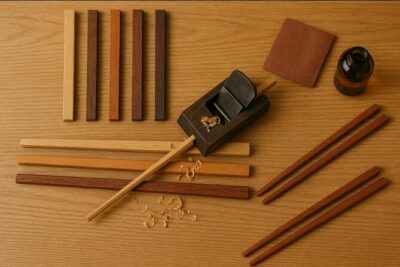
Chopsticks Making Workshop in Gion with Engraving Option
Read our review →Browse the lists this tour appears in