
REVIEW · WALKING TOURS
Walking Tour of Osaka’s 5 Must-See Sights, with Ramen for Lunch
Osaka’s best-known sights are spread across the city, and this seven-hour walking tour links them in one long, useful day. You’ll move from castle grounds and Japan’s oldest Buddhist temple to retro Shinsekai, Kuromon Market, and the neon streets of Dotonbori, with ramen in the middle.
I like the small group of no more than eight and the practical help from guides such as Taka, who is praised for his history knowledge, photo help, and ability to make the metro less stressful. I also like that lunch is built in and that the guide points out food stalls and local favorites at Kuromon Market.
The catch is simple: this is a serious walking day. Depending on the route and pace, you may cover 11,000 to 25,000 steps, and the price does not include metro fares or admission to Osaka Castle and Shitennoji.
In This Review
- Key points to know before booking
- A practical first day in Osaka
- Osaka Castle and the story behind the city
- Shitennoji, an older and quieter change of mood
- Shinsekai and Osaka’s old-school character
- Ramen lunch that breaks up the walking
- Kuromon Market, where the food becomes the attraction
- Dotonbori and the famous Glico photograph
- What the $58.14 price really covers
- The walking demand is the real decision point
- How the small group changes the day
- Who should book this Osaka tour?
- Cancellation and weather notes
- My call: a strong orientation day, if you like to walk
- FAQ
- How long does the Osaka walking tour last?
- What time does the tour begin?
- Where is the meeting point?
- Where does the tour end?
- Is ramen lunch included?
- Are public transportation costs included?
- Are Osaka Castle and Shitennoji admission fees included?
- How many people can join the tour?
- Is the tour suitable for children?
- Can I cancel for a full refund?
Key points to know before booking
- Five major Osaka areas in one day: The route covers Osaka Castle, Shitennoji, Shinsekai, Kuromon Market, and Dotonbori.
- Small group format: With a maximum of eight people, the guide can answer questions, adjust the pace, and help with photos.
- Ramen lunch included: Your midday meal is covered, while extra market snacks are your own expense.
- Metro rides are part of the plan: You’ll need a public transportation pass costing ¥820 per person.
- Expect a long walk: Comfortable shoes and rain gear are essential.
- Best for first-time visitors: You get a quick feel for Osaka’s history, food, neighborhoods, and transport system.
A practical first day in Osaka
I see this tour as an orientation day rather than a slow sightseeing visit. It gives you the broad outline of Osaka, then leaves you with enough local tips to return to the places that interest you most.
The schedule begins at 9:00 am outside the FamilyMart at Tanimachi-sanchome. The meeting point can be a little confusing because it is listed by a building address rather than a major attraction, so arrive early and keep your phone available. Taka has contacted late arrivals and waited at the first destination in some cases, but you should not count on extra time.
From the start, the day mixes walking with metro rides. That matters because the sights are not clustered together. You are not simply strolling from one landmark to the next. You are learning how Osaka fits together, with the guide handling directions, station changes, and the transitions between districts.
The tour ends near Hozen-ji Temple in Namba. That is a useful finish, since Dotonbori and the surrounding Namba streets are easy places to keep exploring after the official tour ends.
More Walking Tours in Osaka
- Osaka Kickstart: Hotspots & Hidden Gems Tour
★ 5.0 · 1,306 reviews - Osaka: Hotspots & Hidden Gems Walking Tour Private or Group
★ 4.9 · 1,300 reviews - Osaka Local Foodie Walking Tour in Dotonbori and Shinsekai
★ 5.0 · 985 reviews
Osaka Castle and the story behind the city
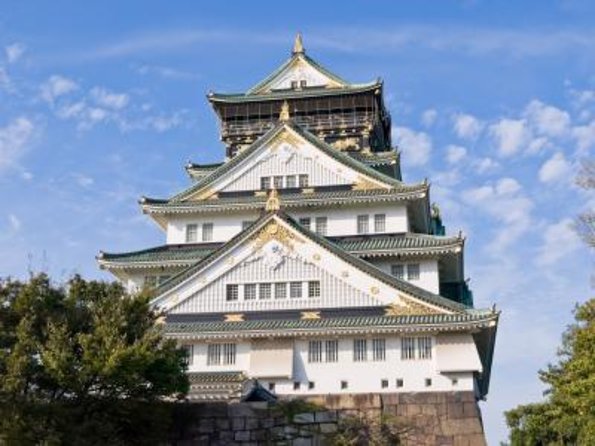
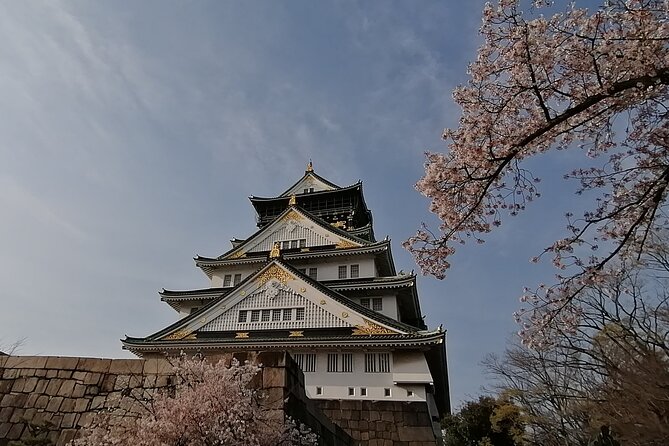
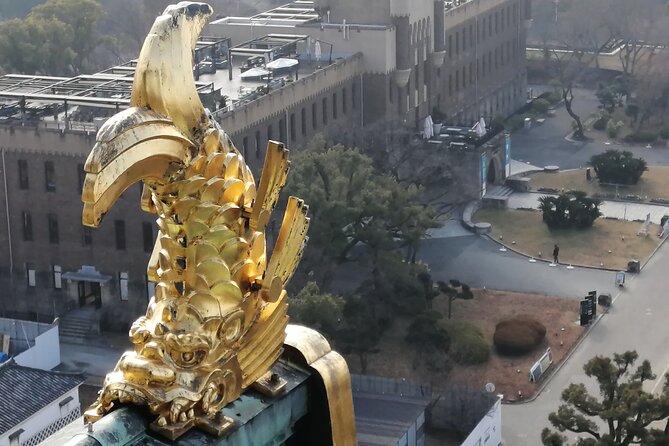
The first stop gets the largest time block, about two hours and 45 minutes. Osaka Castle is the grand opening scene, with broad grounds, city views, and the famous castle building providing the day’s most obvious photo backdrop.
The castle is closely tied to the Sengoku period, the era of conflict and political change that shaped early modern Japan. A guide adds value here because the building alone does not explain the people, battles, and ambitions connected with it. Taka is especially praised for explaining Japanese castle history and the figures linked with Osaka Castle.
Your time here can work in two ways. You can pay to enter the castle and see the exhibitions about the castle and the Sengoku period, or you can enjoy the grounds and exterior views without paying the admission fee. The entrance fee is ¥1,080 per person, and it is not included.
This flexibility is useful. If you have already seen several Japanese castle interiors, you may prefer the gardens, exterior photographs, and guided explanation. If Osaka is your first major Japanese castle visit, the indoor exhibition may be worth the extra charge.
Keep in mind that nearly three hours does not mean three quiet hours inside the building. Some of the time includes walking through the grounds, photo stops, and orientation. The castle section is also where inclines, steps, and the general length of the day begin to matter.
Shitennoji, an older and quieter change of mood
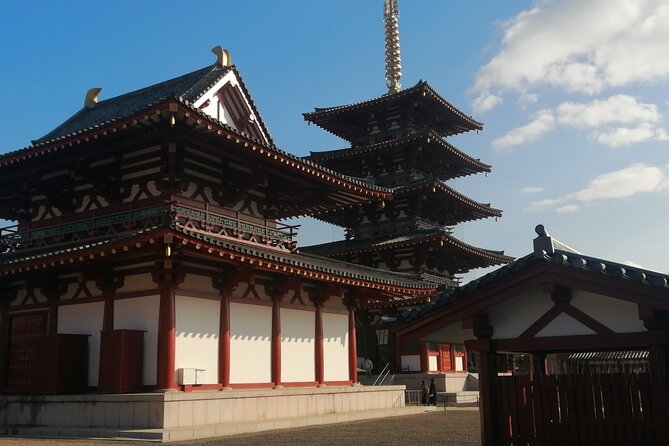
The second stop is Shitennoji, listed at about one hour and ten minutes. This Buddhist temple is described as one of the oldest in Japan, and it gives the tour a very different mood after the scale and political drama of Osaka Castle.
Here, the guide’s explanation helps you notice the religious and cultural setting rather than simply taking a few photographs. The temple visit adds balance to the route, showing that Osaka is not only a food city and shopping center.
Admission is ¥400 per person and is extra. You may decide to pay depending on your interest in the interior grounds and the day’s remaining energy. If you are trying to keep costs down, ask the guide what parts can be seen without the full admission.
The pace is not designed for a long, solitary temple visit. You have a set amount of time before moving on, so this stop suits you if you want context and a first look. It is less suitable if you prefer to sit quietly, study every building, or spend a full morning at one religious site.
Shinsekai and Osaka’s old-school character
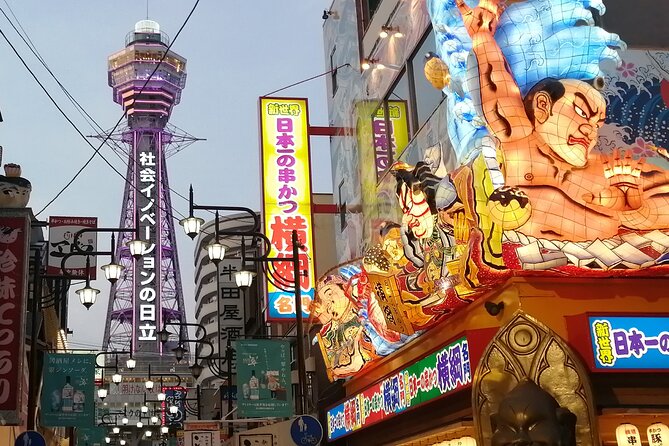
After the historic sights, Shinsekai changes the tone again. The area is known for its retro streets, colorful signs, nostalgic feel, and Tsutenkaku Tower. About one hour and ten minutes is set aside here, including time to look around and take in the district’s food culture.
This is one of the most atmospheric parts of the route. Shinsekai feels more informal and playful than the castle grounds or temple precinct. It gives you a better sense of Osaka as a city with strong neighborhood character, not just a collection of major attractions.
The tour does not list an admission charge for Shinsekai. That keeps this part straightforward, though food and any optional purchases are your responsibility. The guide can point out places to consider, but the included meal comes later.
I would pay attention to the explanations here and note places you may want to revisit. The district is easy to combine with a second visit if you have time in Osaka, especially if you want more food stops than a single guided day allows.
Same city, a completely different kind of day:
- Osaka Go Karting Tour with Funny Costume
★ 5.0 · 2,658 reviews - Osaka Castle: Museum and Tower Entry Ticket
★ 4.5 · 2,380 reviews - Osaka: Shinsekai Food Tour with 13-15 Dishes at 5 Eateries
★ 4.8 · 2,204 reviews - Osaka Food Tour: 13 Dishes at 5 Local Eateries
★ 5.0 · 2,149 reviews
Ramen lunch that breaks up the walking
Ramen lunch is included, and it is more important than it may sound. A seven-hour route needs a real pause, and a local ramen restaurant gives you a chance to sit down, eat, and reset before the market and nightlife districts.
The exact restaurant is not specified, so you should not book this expecting a particular shop or ramen style. The meal has been described as delicious, and one group was accommodated for a gluten-free diet. Still, if you have serious allergies or strict dietary needs, contact the provider before booking rather than relying on day-of changes.
The lunch also keeps the tour value from resting only on sightseeing. At $58.14 per person, an included meal helps offset the extra costs you will pay for transport and optional admissions. It is not an all-inclusive price, but it covers one useful part of the day.
Bring some patience for the meal. The group needs to eat together and keep to the schedule, so this is not the time for an extended restaurant experience. You are getting fuel for the afternoon, plus a local food introduction.
Kuromon Market, where the food becomes the attraction
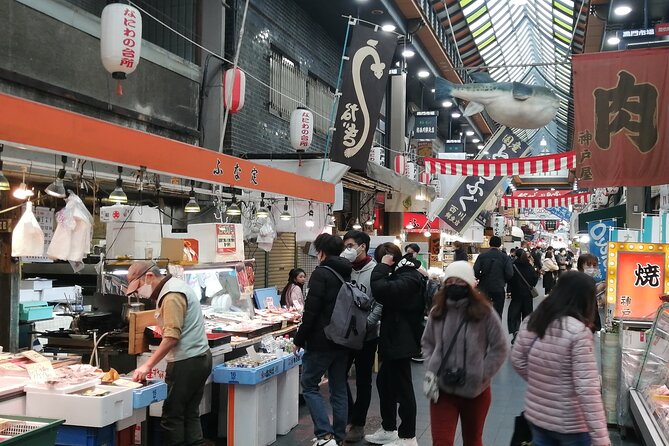
Kuromon Market receives about one hour and ten minutes. This public market has continued since the Edo period and is one of the best places on the route to focus on Osaka’s reputation as a food city.
The guide can help you make sense of the stalls and suggest what to try. Extra snacks are not included, so carry some yen if you want to sample market food. Possible items mentioned during the tour include mochi, sushi, takoyaki, and other classic Japanese dishes.
This stop works best when you treat it as a tasting walk rather than a full meal. You have already had ramen, so you can choose one or two small bites without spoiling dinner. Taka is particularly praised for food suggestions and for knowing good photo spots.
Crowds and lines can affect the plan. The guide may skip a long wait and use the time at another nearby stop instead. That is sensible on a day with five major areas, but it means you should expect a flexible visit rather than a promise to try a specific stall.
Kuromon is also a good place to ask for food advice for the rest of your stay. The guide’s recommendations can save you from spending every meal in the most obvious tourist strip.
Dotonbori and the famous Glico photograph

The final scheduled area is Dotonbori, with about 45 minutes. This is Osaka’s loudest, most colorful downtown zone, filled with large signs, restaurant fronts, and the canal-side setting associated with the city’s food culture.
The Glico sign is the required photo stop, and the guide can assist with family or group pictures. Photo help is one of the small touches that makes this tour practical for solo visitors and couples who want more than hurried phone snapshots.
Forty-five minutes is enough to get oriented, take photographs, and understand where the main action is. It is not enough for a careful shopping trip, a full meal, or a relaxed exploration of every side street. I would use the tour to learn the layout, then return after the tour if Dotonbori is high on your list.
The end near Hozen-ji Temple puts you in a good position to continue through Namba. You are not dropped back at your hotel, so plan your evening from the finishing point.
What the $58.14 price really covers
The listed price is $58.14 per person. Included are the English-speaking guide, commentary, photo assistance, and ramen lunch. The small group is the main value: you are paying for direction, historical explanation, food help, and a more personal day than a large coach tour can provide.
You must budget separately for the ¥820 public transportation pass, the ¥1,080 Osaka Castle entrance, and the ¥400 Shitennoji entrance. You do not have to pay both admission fees if you prefer to see the outside areas, but the metro fare is part of the route.
Extra market food is also on you. The total cost can therefore rise beyond the headline price, though the optional nature of the admissions gives you some control. I consider the tour a fair deal if you are a first-time visitor who values structure and local guidance.
The value is weaker if you already know Osaka’s metro system, have visited these five areas, and are comfortable arranging your own food stops. One person found the day unnecessary after seeing the same sights alone. That is a valid concern: the itinerary is designed for convenience and context, not exclusive access.
The walking demand is the real decision point
Do not treat the word walking as a soft description. The route requires good walkers, and the day may involve roughly 11,000 steps, 15,000 steps, or even 20,000 to 25,000 steps depending on the route and how much you move around each site.
There are metro rides, but they reduce travel time rather than turning this into an easy day. You may encounter inclines and stairs, especially around the castle and temple areas. The guide may find lifts or shortcuts when possible, but that cannot remove every physical demand.
Wear comfortable shoes. Bring rain gear, since the tour requires suitable weather and much of the day is outdoors. Service animals are allowed, and participants must be at least 12 years old.
I would not book this as your first activity after a long overnight flight unless you know you handle full walking days well. It is a better fit once you are rested, or for an early trip day when you want to learn the city’s layout.
How the small group changes the day
The maximum of eight people is a meaningful feature. A guide can answer questions, take photos, notice dietary needs, and make small route choices without trying to manage a crowd.
Taka is the guide most often identified by name, and Takanobu is another name associated with the experience. The strongest praise focuses on clear English, patience, history explanations, friendly service, and local food advice. One returning participant specifically booked the same tour again with Taka, which suggests the guide can be a major part of the experience.
That said, guide quality is never fully guaranteed on a group tour. The listed experience provides an English-speaking local guide, but you should not assume a private tour or hotel pickup. You meet the group at the stated FamilyMart location and travel together from there.
Small groups also make punctuality more important. A late arrival can hold up several people, and a confusing meeting point is easier to handle if you arrive a few minutes early and review the map beforehand.
Who should book this Osaka tour?
I would recommend it to a first-time Osaka visitor who wants the major sights explained in one day. It is especially useful if Japanese rail and metro systems feel intimidating, or if you want a guide to bridge the gap between historical monuments and food neighborhoods.
It also suits solo visitors, couples, and families with older children who want help with photos and restaurant choices. The age minimum is 12, and all participants need to be comfortable walking for most of the day.
You may prefer to explore independently if you want long visits at Osaka Castle or Shitennoji, dislike fixed schedules, or have already seen the five main stops. Independent visitors can also control food spending and spend more time in Dotonbori or Kuromon Market.
The tour is not private, has no pickup service, and does not include every expense. Read the inclusions carefully before booking so the additional metro and entry costs do not surprise you.
Cancellation and weather notes
You can cancel for a full refund up to 24 hours before the local start time. Changes or cancellations made less than 24 hours before the start are not accepted for a refund.
The experience requires good weather. If the provider cancels because of poor conditions, you are offered another date or a full refund. Since the route spends much of the day outside, rain gear remains a smart part of your packing list even when the forecast looks promising.
My call: a strong orientation day, if you like to walk
Book this tour if you want Osaka’s main historical sights, food districts, and city center organized into one day, and if you value a patient English-speaking guide more than a slow, independent pace.
Skip it if 20,000 steps sounds exhausting, if you expect transport and entry fees to be included, or if you have already visited Osaka Castle, Shitennoji, Shinsekai, Kuromon Market, and Dotonbori.
For the right person, the combination is useful: castle history in the morning, temple culture, retro streets, ramen, market snacks, and Dotonbori lights by late afternoon. Just budget for the extras, wear your best walking shoes, and think of the day as a well-guided introduction to Osaka rather than a leisurely visit to five separate attractions.
FAQ
How long does the Osaka walking tour last?
The tour lasts approximately seven hours, though some participants have described the full day as closer to eight hours depending on the route and timing.
What time does the tour begin?
The tour starts at 9:00 am.
Where is the meeting point?
You meet outside the FamilyMart at Tanimachi-sanchome in Osaka’s Chuo Ward, at the listed Tanimachi 3-chome address.
Where does the tour end?
The tour ends near Hozen-ji Temple at 1-chome-2-16 Namba, Chuo Ward, Osaka.
Is ramen lunch included?
Yes. Ramen lunch is included in the tour price.
Are public transportation costs included?
No. A public transportation pass costing ¥820 per person is listed as an additional expense.
Are Osaka Castle and Shitennoji admission fees included?
No. Osaka Castle admission is ¥1,080 per person, and Shitennoji admission is ¥400 per person. Both are paid separately.
How many people can join the tour?
The tour is not private and allows a maximum of eight participants.
Is the tour suitable for children?
Participants must be at least 12 years old. Everyone should also be comfortable with a long day of walking.
Can I cancel for a full refund?
Yes. You can cancel at least 24 hours before the experience start time for a full refund. If poor weather causes the provider to cancel, you are offered another date or a full refund.
More Lunch Experiences in Osaka
- Osaka: Five Must-See Highlights Walking Tour & Ramen Lunch
★ 4.7 · 411 reviews - Osaka/Kyoto: Amanohashidate & Miyama Tour with Boat & Lunch
★ 4.6 · 207 reviews - 5-Hour Osaka Highlights Bike Tour with Lunch
★ 4.8 · 146 reviews - Play with Snow Crab Buffet Lunch and Strawberry Picking Bus Tour
★ 5.0 · 88 reviews
Just added around Osaka
- Samurai dress-up and shows, plus Tea Ceremony & Calligraphy★ 5.0 · 27 reviews
- Kyoto & Nara Private customized tour with English speaking Guide★ 4.5 · 99 reviews
- Well-balanced BENTO (lunch box) Cooking Class★ 5.0 · 35 reviews
- Urban Canvas: Osaka Street Art Bike Tour★ 5.0 · 47 reviews
- OSAKA:Feel the Power! Learn Taiko Drum from Professionals★ 5.0 · 28 reviews
- Volleyball in Osaka & Kyoto with Locals!★ 5.0 · 21 reviews
- 1.5〜2 Hours Traditional Kintsugi Work Shop in Namba Osaka★ 5.0 · 75 reviews
- Umami Town Street Food Tour★ 5.0 · 120 reviews
Walking Tours, compared.

Kyoto Geisha Walking Tour: Gion District & Hidden Gems
Read our review →
Tokyo Tsukiji Fish Market Food and Culture Walking Tour
Read our review →
Gion Magical Night Walking Tour with Geisha Trivia
Read our review →
Imperial Palace and Shogun Historical Walking Tour
Read our review →
Gion Geisha District Walking Tour – Stories of Geisha
Read our review →
Asakusa Walking Tour with Sensoji Temple Visit
Read our review →
Kyoto Gion Geisha District Walking Tour – The Stories of Geisha
Read our review →Browse the lists this tour appears in