
REVIEW · WALKING TOURS
Osaka Local Foodie Walking Tour in Dotonbori and Shinsekai
Osaka’s famous food districts are best understood one bite and one alley at a time. This three-hour walk from Shinsekai to Dotonbori brings you to kushikatsu, okonomiyaki, takoyaki, small shrines, old shopping streets, and the bright Glico sign. I like that it links two very different parts of central Osaka rather than parking you at one restaurant.
I also like the small group limit of seven, which gives guides such as Aika, Yuma, Michiko, and Emi room to answer questions and help with photos. The main caution is value: you receive a solid set of food and drinks, but this is not a long crawl through many tiny food stalls. Some diners found the food stops too few, while others loved the generous portions and local guidance.
In This Review
- The essential facts at a glance
- Why this route works for a first Osaka evening
- Tsutenkaku and Jan-Jan Yokocho: Osaka on a skewer
- A look back through Shinsekai’s older streets
- Dōgu-ya-suji and the tools of Osaka kitchens
- Hozen-ji Temple and Ukiyo Alley
- Dotonbori’s Glico sign and the final food stop
- What you actually eat and drink
- Is $111.42 a fair price?
- Who should book this Osaka food walk?
- Should you book the Dotonbori and Shinsekai tour?
- FAQ
- How long does the Osaka Local Foodie Walking Tour last?
- What neighborhoods does the tour visit?
- How many people can join the tour?
- What food is included?
- Are drinks included?
- Can vegetarians join the tour?
- Can the tour accommodate vegan or gluten-free diets?
- Where does the tour start and finish?
- What happens if I arrive late or need to cancel?
The essential facts at a glance
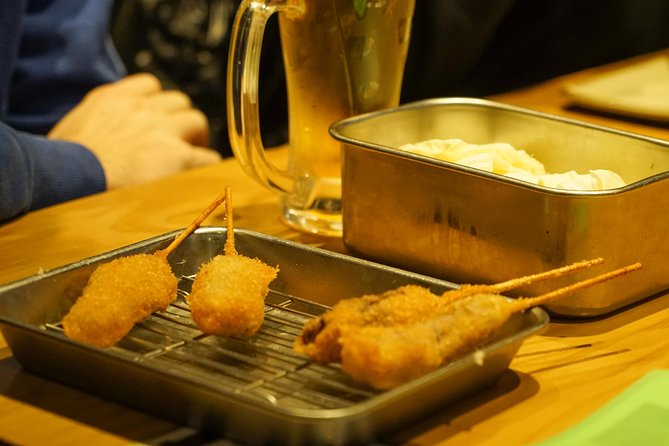
- Six kushikatsu skewers: You get deep-fried meat and vegetable skewers in Osaka’s Shinsekai district.
- Three well-known Osaka foods: The package includes kushikatsu, one serving of okonomiyaki, and one box of takoyaki.
- Three drinks included: Alcoholic and nonalcoholic choices are available.
- Maximum seven people: A family of six may end up with what feels like a private tour.
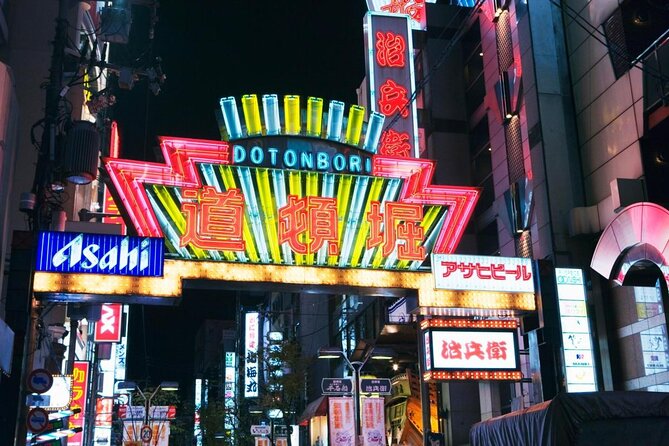
- Shinsekai to Dotonbori route: You see Tsutenkaku, Jan-Jan Yokocho, Hozen-ji Temple, Dōgu-ya-suji, and the Glico sign.
- Strict food limits: Gluten-free and vegan diets cannot be accommodated. Vegetarian requests must be made by the day before.
Why this route works for a first Osaka evening
Shinsekai and Dotonbori show Osaka from two angles. Shinsekai has a more old-fashioned, neighborhood feel, with Tsutenkaku Tower looming above narrow streets and the Jan-Jan Yokocho alley leading toward local eateries. Dotonbori is louder and more polished, packed with signs, shopping, restaurants, and Osaka’s famous canal-side photo stop.
I like the route because it gives you a useful orientation early in your stay. You learn where the major food streets are, see how Osaka presents its past and present, and finish in an area where you can continue eating or shopping on your own.
The experience is led by a MagicalTrip Certified Guide. The strongest guides add far more than directions between restaurants. Aika has been praised for explaining local history, recommending later snacks, taking photos, and helping you understand what you are eating. Yuma is described as warm and clear in English, with good explanations of how dishes are made. Michiko has been especially good at connecting food and business customs with everyday life in Japan.
That quality can vary by guide. Some guides have given lively cultural explanations throughout the walk, while others have been more reactive, answering questions instead of offering much narration. I would book this for a friendly introduction to Osaka, not solely for a serious food study.
More Walking Tours in Osaka
- Osaka Kickstart: Hotspots & Hidden Gems Tour
★ 5.0 · 1,306 reviews - Osaka: Hotspots & Hidden Gems Walking Tour Private or Group
★ 4.9 · 1,300 reviews - Osaka Bar Hopping Night Walking Tour in Namba (3 bars, 6 tastes)
★ 5.0 · 958 reviews
Tsutenkaku and Jan-Jan Yokocho: Osaka on a skewer
The tour begins near a FamilyMart in Nishinari Ward, at 1-chōme17-6 Sannō. This meeting point is close to public transportation, though it can feel less central and harder to find than a meeting point near Namba. Give yourself extra time, and do not cut it close: the group starts on time, and late arrivals cannot join, reschedule, or receive a refund.
From there, you walk through Shinsekai toward Tsutenkaku Tower. The tower is the district’s visual anchor, and its presence helps you read the streets around it. The route includes Jan-Jan Yokocho, a narrow alley with an old Osaka character and small food businesses.
Here you eat six kushikatsu skewers, a signature Shinsekai dish. Meat, seafood, and vegetables are coated and fried, giving you a crisp snack with a hearty feel. Kushikatsu is one reason this neighborhood matters to Osaka’s food culture, and eating it where the district is known for the dish adds useful context.
You also receive drinks as part of the package. Three drinks are included overall, with both alcohol and nonalcoholic options available. That is a plus if you want a relaxed meal rather than a rushed tasting, but it can affect the sense of value if nobody in your group drinks much.
The first portion of the walk is listed at about 30 minutes. The food itself may take longer depending on the group and the restaurant, so I would not arrive having eaten a full meal. At the same time, one later part of the route includes a fair amount of walking before another sit-down stop, so arriving hungry is wise but arriving ravenous may test your patience.
A look back through Shinsekai’s older streets
The Shinsekai section continues through the Shinsekai Market, past Tsutenkaku Tower, and by the Billiken Statue. Jan-Jan Yokocho is described as a museum-like alley, offering a sense of how Osaka’s center looked more than 80 years ago.
This is where the guide’s personality matters most. A strong guide can turn an ordinary street into a story about local customs, food, and daily life. Yuma, Aika, Kent, and Naru have all been praised for making the area easier to understand, while some less successful tours have had quiet walks with little explanation between stops.
The scheduled time here is about 20 minutes. That is enough for an introduction, but not enough for a detailed historical tour. If you want long historical commentary at every site, this will feel light. If you want a short, readable introduction before eating, the pace is more suitable.
The walking pace deserves attention. One person found the guide fast and had trouble keeping up. Another felt the tour moved too slowly. That tells me the experience can depend on the group, the guide, and the number of stops added that day. Tell your guide early if you need a slower pace or more time to eat.
Dōgu-ya-suji and the tools of Osaka kitchens
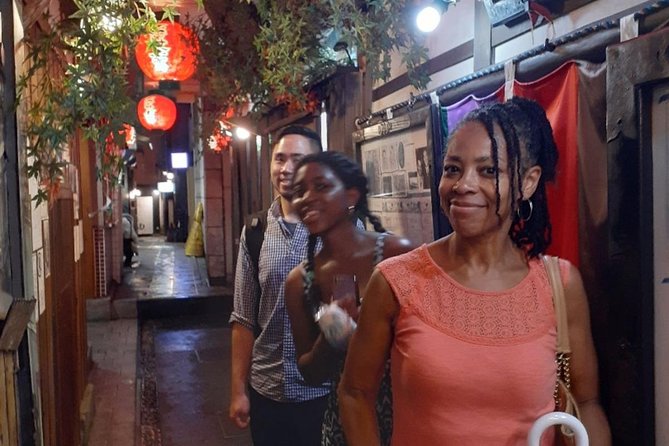
The route then shifts toward Dotonbori and the Sennichimae Dōgu-yasuji shopping area. This street is known for kitchen goods and restaurant supplies, including the Hōchō-ya knife shop. It is a useful stop because Osaka’s food culture is not only about eating. It also involves the knives, pans, signs, plastic food displays, and tools behind the city’s restaurants.
The exact presentation can change by time of day. During the day, the walk may include souvenir shopping on Dōgu-ya-suji, with time near the knife shop. At night, the guide may explain the area near Namba Grand Kagetsu and focus shopping in the surrounding streets instead.
This is a good place to ask questions about Japanese knives or food-related souvenirs, but do not expect a dedicated shopping tour. The scheduled time is only about 15 minutes. I see it as a short cultural pause between food stops, not a major attraction in its own right.
Same city, a completely different kind of day:
- Osaka Go Karting Tour with Funny Costume
★ 5.0 · 2,658 reviews - Osaka Castle: Museum and Tower Entry Ticket
★ 4.5 · 2,380 reviews - Osaka: Shinsekai Food Tour with 13-15 Dishes at 5 Eateries
★ 4.8 · 2,204 reviews - Osaka Food Tour: 13 Dishes at 5 Local Eateries
★ 5.0 · 2,149 reviews
Hozen-ji Temple and Ukiyo Alley
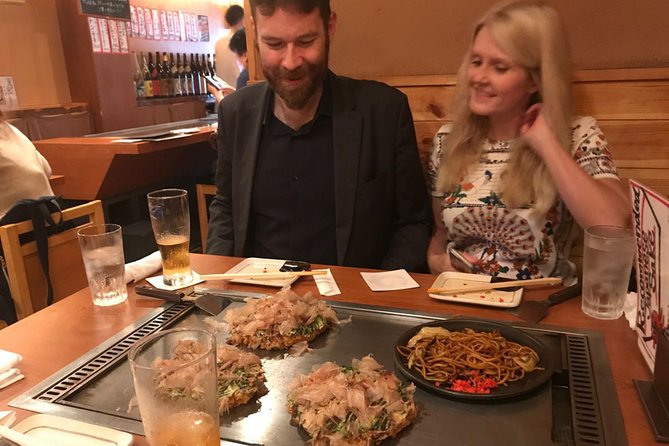
Hozen-ji Temple offers a quieter contrast to the bright streets around Dotonbori. The route passes the temple and continues through Ukiyo-koji, a small alley with an old Osaka atmosphere.
The temple stop is brief, around 25 minutes when combined with the walk and nearby food. It can be a pleasant change of mood, especially when the guide explains local customs and the meaning of the site. Some evening groups found the shrine or temple visit less rewarding because it was dark, so daytime may be better if this part matters to you.
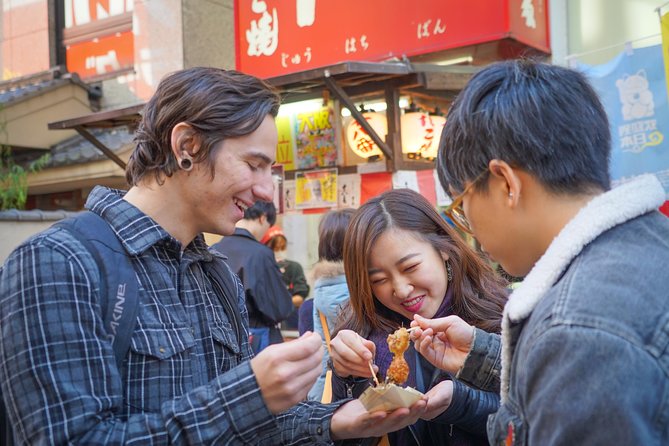
The tour also includes extra snacks in this section, such as takoyaki and sweets, with approximately ¥500 suggested for these purchases. The package separately includes a box of takoyaki, so confirm with your guide how the included portion and any optional purchases fit together on your departure date.
Takoyaki is Osaka’s famous round batter snack, usually made with tender octopus and topped with sauces and other garnishes. It is hot, soft, and easy to underestimate. Let it cool before biting into it. If you do not eat octopus, this is one of the dishes to discuss before booking, since substitutions are not guaranteed.
Dotonbori’s Glico sign and the final food stop
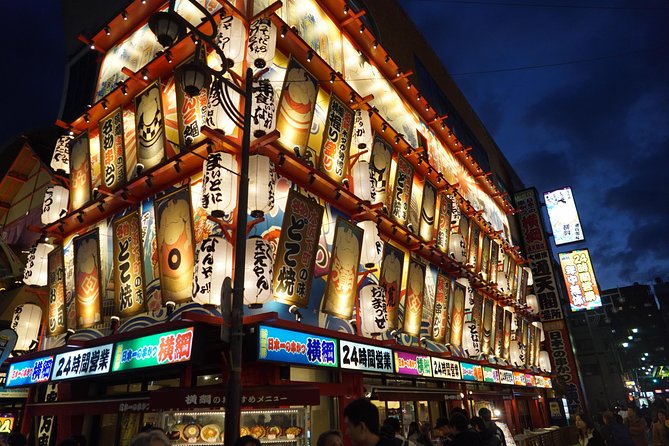
The famous Glico sign is the route’s most obvious photo stop. You will have time to take pictures in front of the running athlete image, and guides may help with group or family photos. Aika and Justin have been especially praised for taking photos and making sure groups do not miss the main picture spots.
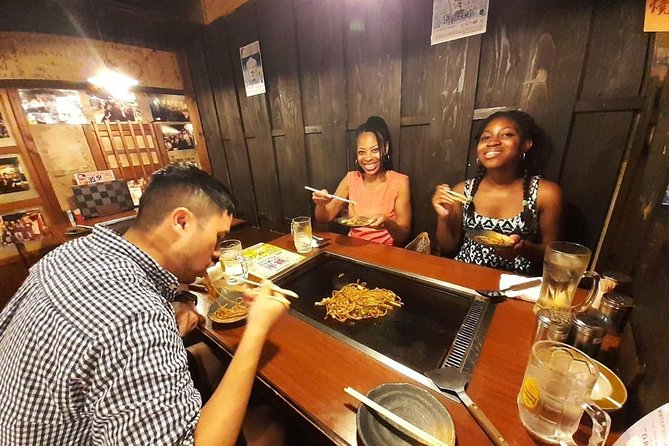
After the sign, the tour heads to okonomiyaki. The name combines okonomi, meaning as you like, with yaki, meaning grilled. The dish is a savory pancake made from batter and ingredients with toppings added to suit the style of the restaurant.
You receive one piece of okonomiyaki, and some groups have had the chance to grill it themselves. That hands-on part can be a highlight, particularly if this is your first time eating the dish. The stop is allotted about 40 minutes, which gives more room to sit, eat, and talk than the brief street stops.
The food portion is included, but the choice of venue may shape your impression. Some diners found the okonomiyaki excellent, while others felt the restaurant was aimed more at tourists than locals. I would judge this stop as a fun introduction to a classic Osaka dish, not as a guarantee of the city’s best okonomiyaki.
The tour ends at the Glico sign in Dotonbori, at 1-chōme-10-3 Dōtonbori. From here, you are positioned in one of Osaka’s easiest areas for continuing dinner, shopping, or nightlife, though your onward transportation is not included.
What you actually eat and drink
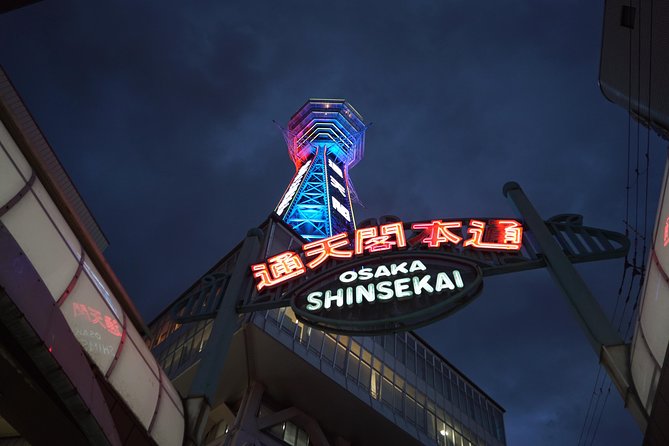
The included menu is substantial enough for a light meal, and possibly a full one for some people:
- Six kushikatsu skewers
- One piece of okonomiyaki
- One box of takoyaki
- Three alcoholic or nonalcoholic drinks
The mix is distinctly Osaka, but it leans toward fried or griddled food. One diner wanted more variety in cooking methods, and another felt the tour offered too few restaurants. That criticism is fair if you have done food tours built around many small samples.
On the other hand, the portions can add up quickly. One person became too full to enjoy much takoyaki because the okonomiyaki came first. If you want to sample every bite, pace yourself and tell the guide early that you prefer smaller portions spread over the route.
Food preparation is handled by restaurants, not by the tour company. Allergy-free meals and substitutions cannot be guaranteed. Gluten-free and vegan options are not available. Vegetarians can request a vegetarian course when booking or no later than the day before, but the kushikatsu restaurant still uses pork broth in its dashi, even for vegetarian skewers.
If you cannot consume dashi, tell the operator in advance so other vegetarian dishes can be prepared. Same-day requests cannot be accommodated. Smoking may also be permitted at some venues, and the route cannot always be changed to avoid those places.
Is $111.42 a fair price?
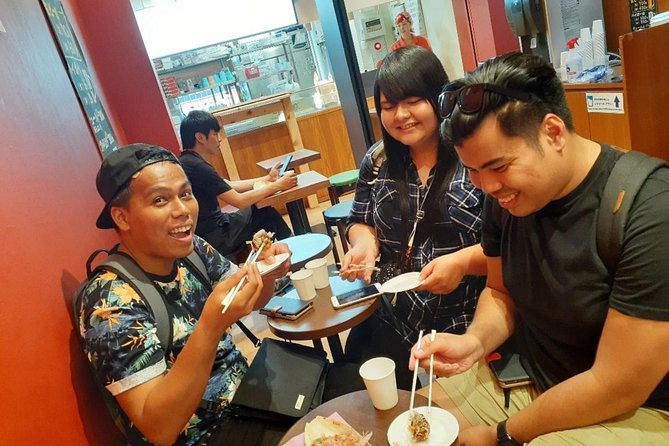
At $111.42 per person, this is not a bargain snack walk. The price makes more sense if you value a guide, three included drinks, a full set of Osaka specialties, and help navigating two busy districts.
You are paying for the organization as much as the food. A good guide can explain what you are eating, point out places you would miss, take photos, and help you understand how Shinsekai and Dotonbori fit together. Justin even helped one group navigate Osaka’s complicated subway system after the tour, though that kind of extra assistance should be viewed as a welcome bonus, not a promised part of the service.
The value is weaker if your main goal is quantity or rare food. You visit two main food venues, with an option for an additional stop in some cases, rather than a long list of restaurants and market stalls. You can also find Osaka’s famous dishes on your own for less money, especially if you are comfortable ordering in busy food districts.
The maximum of seven people improves the equation. A family of six may effectively have a private tour, and a small group makes it easier to ask for explanations. Group discounts may be available, so check the price for your party before deciding.
There is also a small transportation charge of 190 yen that is not included. It is minor compared with the tour price, but budget for it.
Who should book this Osaka food walk?
I would recommend it to a first-time visitor who wants to get oriented without spending an entire day on a formal city tour. The route covers major food districts, classic dishes, a temple, shopping streets, and a famous photo stop in a compact window.
It also suits families and mixed-age groups. All ages are welcome, and the small group size can make the evening easier to manage. Guides have been praised for being friendly with children and for helping families take photos.
Repeat visitors may enjoy it if they want local food explanations or a guide to areas they have not yet explored. It is less suitable for a serious food enthusiast who wants obscure restaurants, a large number of tastings, or careful comparisons between styles of okonomiyaki and kushikatsu.
Allow for Osaka’s weather. Summer temperatures can reach 40°C, while winter lows can drop to -5°C. Wear comfortable shoes, bring weather protection, and remember that a three-hour walk may feel longer in heat, cold, or rain.
Should you book the Dotonbori and Shinsekai tour?
Book it if you want a guided introduction to Osaka’s best-known food neighborhoods, with enough food for a light meal and a small group that can feel personal. The strongest guides turn the walk into more than restaurant transfers, explaining daily customs, food preparation, local history, and the stories behind the streets.
Skip it if you want a pure food crawl with many small portions and unusual venues. At this price, you should also be comfortable with a menu centered on fried and griddled dishes, strict dietary rules, and the possibility that the guide’s commentary may be lighter than expected.
For the best chance of enjoying it, choose the vegetarian option in advance if needed, arrive early at the FamilyMart meeting point, and tell the guide whether you want more food explanation, a slower pace, or help with photos. With those expectations set, this is a practical and enjoyable way to get your bearings in Osaka’s most famous eating districts.
FAQ
How long does the Osaka Local Foodie Walking Tour last?
The tour lasts approximately three hours.
What neighborhoods does the tour visit?
The route covers Shinsekai and Dotonbori, including Tsutenkaku, Jan-Jan Yokocho, Hozen-ji Temple, Dōgu-yasuji, and the Glico sign.
How many people can join the tour?
The tour has a maximum of seven travelers.
What food is included?
The package includes six kushikatsu skewers, one piece of okonomiyaki, and one box of takoyaki.
Are drinks included?
Yes. Three drinks are included, and you can choose alcoholic or nonalcoholic options.
Can vegetarians join the tour?
Vegetarians may join if they select the vegetarian course when booking or request it by the day before. Pork broth is still used in the vegetarian kushikatsu dashi, so tell the operator in advance if you cannot consume dashi.
Can the tour accommodate vegan or gluten-free diets?
No. Gluten-free and vegan diets cannot be accommodated.
Where does the tour start and finish?
The tour starts at FamilyMart Japan in Sannō, Nishinari Ward, and finishes at the Glico sign in Dotonbori.
What happens if I arrive late or need to cancel?
The tour starts on time, and late arrivals cannot join, reschedule, or receive a refund. You can cancel for a full refund if you cancel at least 24 hours before the start time. Changes or cancellations made within 24 hours are not accepted.
More Food in Osaka
- Hungry Osaka Street Food Tour:15 Tastings & 3 Drinks with a Local
★ 5.0 · 1,727 reviews - Hungry Osaka Street Food Tour: 15 Dishes & 3 Drinks
★ 4.9 · 694 reviews - Kuromon Market Food Walking Tour in Osaka (6 stops, 6 tastes)
★ 5.0 · 550 reviews - Osaka: Guided Food Tour with 12 Dishes at 4 Local Eateries
★ 5.0 · 533 reviews
Just added around Osaka
- (Ticket Included) Explore Osaka Castle & Museum of History★ 4.8 · 21 reviews
- Hidden Osaka – Yukaku Red Light Tour & Culinary Adventure★ 4.8 · 96 reviews
- Osaka: Walking Tour and Top Highlights★ 4.8 · 104 reviews
- Osaka: Private Ceramic Painting Workshop★ 5.0 · 13 reviews
- Pickleball in Osaka, Kobe & Kyoto with Locals!★ 4.7 · 80 reviews
- Eat Like a Local in Osaka – Private Custom Street Food Tour★ 4.3 · 33 reviews
- Osaka:SUMO BEATS SHOWCASE: Taiko Drum and Wagyu burger!★ 4.2 · 37 reviews
- Kimono photoshoot-Includes 100 photo data★ 5.0 · 21 reviews
Walking Tours, compared.
Kyoto Geisha Walking Tour: Gion District & Hidden Gems
Read our review →
Tokyo Tsukiji Fish Market Food and Culture Walking Tour
Read our review →
Gion Magical Night Walking Tour with Geisha Trivia
Read our review →
Imperial Palace and Shogun Historical Walking Tour
Read our review →
Gion Geisha District Walking Tour – Stories of Geisha
Read our review →
Asakusa Walking Tour with Sensoji Temple Visit
Read our review →
Kyoto Gion Geisha District Walking Tour – The Stories of Geisha
Read our review →Browse the lists this tour appears in