
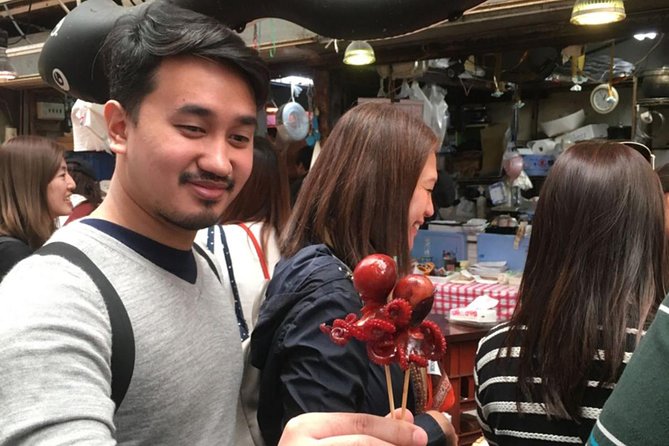
REVIEW · FOOD MARKET TOURS
Kuromon Market Food Walking Tour in Osaka (6 stops, 6 tastes)
Kuromon Market is the star here: a covered food street where you can sample Osaka specialties while a local guide helps you order, explains what you are eating, and steers you toward shops beyond the obvious tourist counters. I like the small maximum of seven people and the chance to continue into Doguyasuji, Osaka’s kitchenware street, rather than stopping after a few bites.
I also like the practical value of the guide’s local help. Hosts such as Nina, Yuto, Rie, Niko, and Aina have been praised for friendly English, family-friendly pacing, food suggestions, and help with photos or train connections. The main consideration is food quantity: most people enjoy the variety, but one participant found the budget too small and finished hungry, so clarify exactly what is included before booking.
In This Review
- Key points to know before you book
- Why Kuromon Market makes a good first food stop in Osaka
- Six tastes, not six full meals
- What your guide adds to the market
- Doguyasuji: the kitchenware street bonus
- Namba, comedy, and Dotonbori context
- Is $50.41 a fair price?
- Weather, clothing, and food restrictions
- How to get the most from the two hours
- Should you book the Kuromon Market food walk?
- FAQ
- Where does the Kuromon Market food tour begin?
- Where does the tour end?
- How long does the experience last?
- How many people can join the tour?
- What food will I taste?
- Can dietary requests be accommodated?
- What is the cancellation policy?
Key points to know before you book
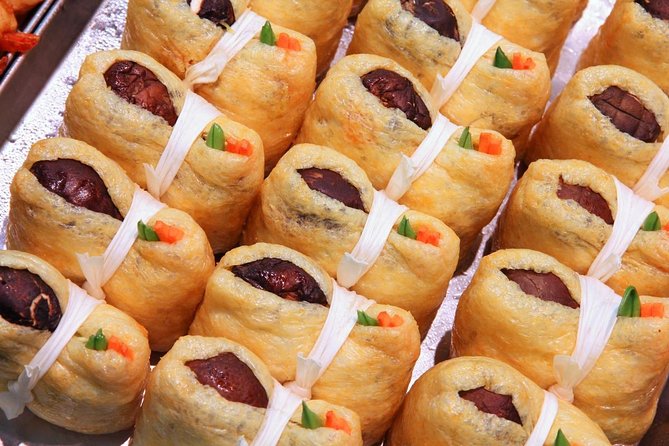
- Six tastes in about two hours: Expect a compact introduction to Osaka food rather than a long sit-down meal.
- Kuromon Market is the main event: You walk, browse, and eat as you go through one of Osaka’s best-known market streets.
- The group is capped at seven: A small party makes it easier to ask questions and get ordering help.
- Doguyasuji adds a useful shopping stop: Look for knives, dishes, restaurant signs, cooking tools, and other kitchen goods.
- Food choices can vary: Past tours have included sushi, takoyaki, yakitori, dumplings, mushrooms, gyoza, oden, and sweets.
- Dietary needs need advance notice: Vegetarian and vegan requests may be possible, but substitutions and allergy-free meals are not guaranteed.
Why Kuromon Market makes a good first food stop in Osaka
Osaka has a well-earned food reputation, but its eating streets can feel confusing at first. Kuromon Market gives you a manageable place to begin. The market sits in Minami, near Nippon-bashi and Namba, and its long shopping arcade brings fresh food, prepared dishes, sweets, seafood, and everyday goods into one walkable stretch.
The tour begins in front of the SMBC ATM at Nippon-bashi 1chome, close to Exit 10 of Kintetsu Nippon-bashi Station. This is a practical meeting point, but do not cut it close. The group starts on time, and late arrivals may not be allowed to join, reschedule, or receive a refund.
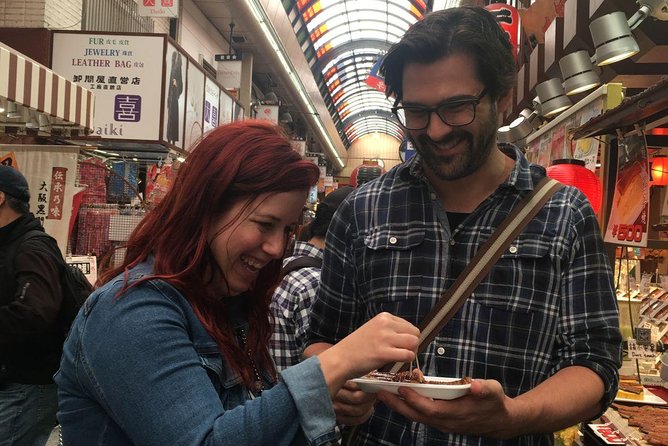
Your guide leads you through the market while arranging six tastes. The exact food is not fixed in the information provided, and that is worth understanding. Past food combinations have included sushi, takoyaki, yakitori, dumplings, gyoza, oden, mushrooms, sweets, and other Osaka favorites.
That variety is the strength of the walk. You can sample several small items instead of spending your entire meal on one dish you may or may not enjoy. It also gives you a useful list of foods to return for later in your Osaka stay.
More Food Market Tours in Osaka
- Osaka: Shinsekai Food Tour with 13-15 Dishes at 5 Eateries
★ 4.8 · 2,204 reviews - Osaka Food Tour: 13 Dishes at 5 Local Eateries
★ 5.0 · 2,149 reviews - Hungry Osaka Street Food Tour:15 Tastings & 3 Drinks with a Local
★ 5.0 · 1,727 reviews
Six tastes, not six full meals
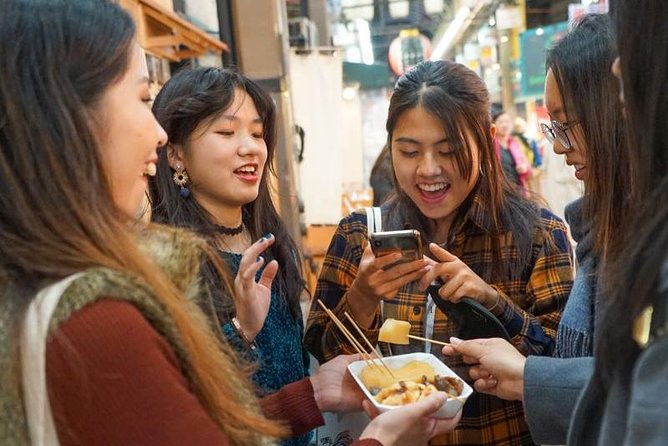
The title promises six stops and six tastes, but you should think of this as a guided sampler. It is designed to introduce you to local food and help you navigate the market, not replace lunch or dinner for everyone.
This distinction matters because portion size appears to vary. Many participants feel they receive a good amount for the price, while one person reported receiving a 1,200-yen food budget that covered only two items for two people. That is a serious concern if you arrive expecting a substantial meal.
Ask before booking how the food allowance works, how many items are included per person, and whether the guide chooses the dishes or adapts them to the group. The tour’s own title suggests six tastes, but the available details do not give a guaranteed dish-by-dish menu.
Takoyaki is the obvious Osaka classic. These hot octopus-filled batter balls are usually served with sauce, mayonnaise, seaweed, and bonito flakes, though the exact presentation depends on the shop. A guide can help you order and explain how locals handle food that arrives hot and soft inside.
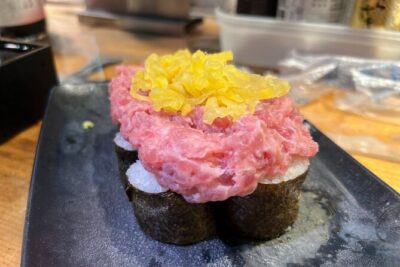
You might also try sushi or seafood from the market, along with yakitori, dumplings, gyoza, or oden. One particularly useful food tip from the tour experience is that mushroom yakitori can be a memorable choice for people who do not want meat at every stop.
The food itself is only half the point. Your guide can explain ordering customs, answer questions about ingredients, and help bridge language gaps. That assistance is valuable in a market where signs and menus may not always be easy to read.
Still, you should bring cash for extra snacks or drinks. The guide’s food and drinks are not your responsibility, but anything beyond the planned tasting is your own purchase.
What your guide adds to the market
Kuromon Market is open to independent exploring, and the main street is not difficult to follow. You can walk through it alone, point at food, and buy whatever looks good. That is why the guide’s role matters so much.
The strongest version of this tour is not simply being shown where the market is. It is having someone make quick decisions easier. A guide can suggest a food that suits your preferences, explain how to ask for it, and help you avoid ordering blindly.
Several hosts have been praised for making the walk feel personal. Nina is described as warm, funny, patient with children, and clear in English. Yuto is noted for handling dietary restrictions with care. Rie has led people through Namba while introducing local foods, while Niko has been praised for energy, flexibility, and help finding the correct train after a rainy tour.
Other named guides include Aina, Aya, Mari, Megumi, Taku, Peco, Anne, and Yuki. The exact host depends on the date, and you should not book expecting a particular person unless the operator confirms it.
For families, this format can work well. One guide adjusted the pace for a family, another answered children’s questions kindly, and a parent traveling with an 18-month-old found the tour manageable with the child in a sling. A stroller may be less convenient in crowded market lanes, so a sling is the safer choice based on that experience.
Solo visitors can also benefit. Taku helped a solo participant communicate with shop staff and took photos during the walk. A small group makes it easier to talk with the guide than on a large bus-style outing.
Doguyasuji: the kitchenware street bonus
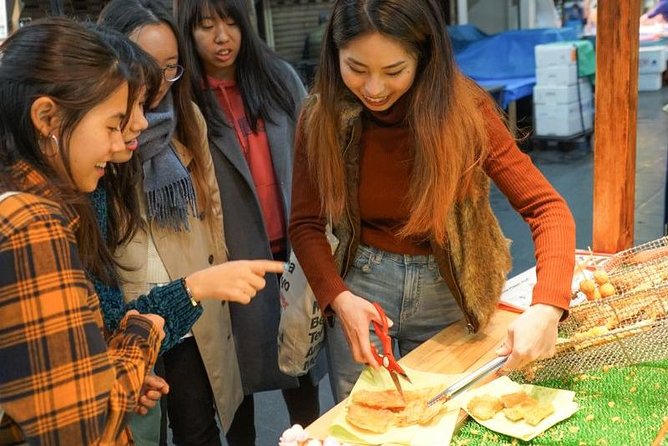
After eating through Kuromon Market, the route includes Doguyasuji. This shopping street is devoted to kitchen and restaurant supplies, including tableware, cooking equipment, knives, dishes, and other tools.
For a food-focused visit, Doguyasuji is a smart addition. It shows the working side of Osaka’s food culture. Instead of only tasting finished dishes, you can browse the equipment used to prepare and serve them.
You might find this stop more interesting than expected, especially if you enjoy Japanese knives, ceramics, restaurant signs, or unusual cooking tools. It also gives you a chance to buy a practical souvenir rather than another generic Osaka trinket.
The drawback is time. The entire experience lasts about two hours, and Kuromon Market deserves plenty of attention on its own. If you stop to examine every shop, the market tastings and cultural explanations may feel rushed. Treat Doguyasuji as a focused look, not a full shopping expedition.
More Walking Tours in Osaka
- Osaka Kickstart: Hotspots & Hidden Gems Tour
★ 5.0 · 1,306 reviews - Osaka: Hotspots & Hidden Gems Walking Tour Private or Group
★ 4.9 · 1,300 reviews - Osaka Local Foodie Walking Tour in Dotonbori and Shinsekai
★ 5.0 · 985 reviews - Osaka Bar Hopping Night Walking Tour in Namba (3 bars, 6 tastes)
★ 5.0 · 958 reviews
Namba, comedy, and Dotonbori context
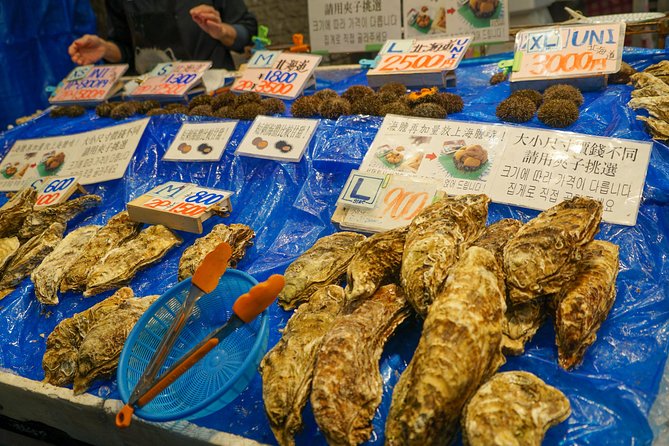
The walking route passes through several recognizable parts of Osaka, including the area around Namba Grand Kagetsu, Namba, and Dotonbori. These are pass-by points rather than separate tours or long visits.
Namba Grand Kagetsu is a comedy theater operated by Yoshimoto Kogyo. Its inclusion gives your guide a chance to point out an important part of Osaka’s entertainment culture, though you should not expect theater admission.
The route also passes through Namba, a major entertainment and transport district with restaurants, shops, and the Namba Parks complex. This helps place Kuromon Market within Osaka’s wider food and shopping center.
Dotonbori is nearby and famous for its giant signs, including the Glico runner and the Kani Douraku crab. The tour does not promise a full Dotonbori food crawl, but passing through the area helps explain the difference between the two districts.
Kuromon tends to feel more like a market street, while Dotonbori is built around large signs, nightlife, and highly visible food businesses. One useful tip is to visit Dotonbori independently first if you have time, then use this tour to see Kuromon as a different side of central Osaka.
Is $50.41 a fair price?
At $50.41 per person, this is not the cheapest way to eat at Kuromon Market. You can certainly buy food yourself for less, especially if you are comfortable pointing at dishes and choosing as you go.
The price pays for more than the food. You are buying a local host, language help, cultural context, route planning, and a small group capped at seven. For a first day in Osaka, those services can save time and reduce the risk of ordering something you cannot identify or do not want.
The value is strongest if you ask questions and use the guide’s recommendations for the rest of your trip. A good host can suggest foods to seek out later, shops for souvenirs, and places to revisit. The tour also gives you a practical orientation to Kuromon, Namba, and Doguyasuji in one short outing.
The value is weaker if you already know Osaka well, enjoy independent market eating, or want a large meal. Two hours and six tastes may feel brief for the cost, particularly if the food allowance is limited.
Because the food budget and included portions are not spelled out clearly, contact the operator before paying if meal size is important to you. That single question may determine if the tour fits your expectations.
Weather, clothing, and food restrictions
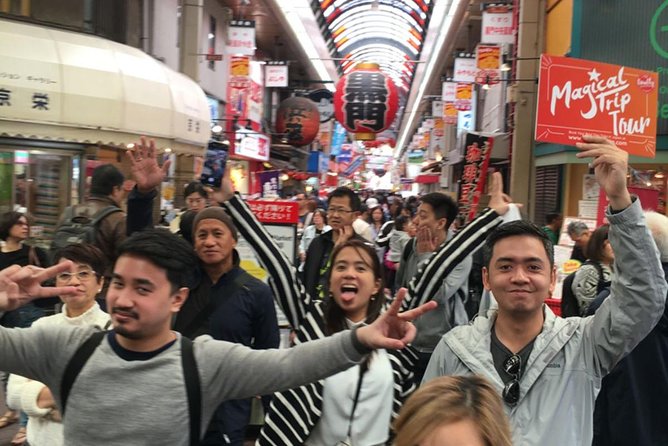
The tour is outdoors and on foot. Osaka summers can reach 40°C, while winter temperatures can fall to -5°C, so dress for the season rather than relying on the market’s covered areas to solve every weather problem.
Rain does not necessarily end the experience. The route includes covered market sections, and one tour continued through heavy rain by using sheltered areas and narrow lanes. Even so, comfortable shoes and weather protection are sensible.
Dietary requests require care. The provided information says vegetarian, vegan, and gluten-free requests may be accommodated, but it also says gluten-free requests cannot be accommodated. That contradiction means you should contact the operator at least one day before the tour and ask for a clear answer.
Most Japanese restaurants may have limited preparation for strict dietary needs. The food is prepared in kitchens the tour operator does not control, so substitutions, complete avoidance of allergens, and allergy-free meals cannot be guaranteed. Do not rely on the guide to solve a serious allergy at the last moment.
The tour welcomes all ages, and most people can participate, but the route is a walking experience through crowded commercial areas. Children who enjoy trying small foods should do well. For very young children, keep a sling in mind rather than assuming a stroller will be easy.
How to get the most from the two hours
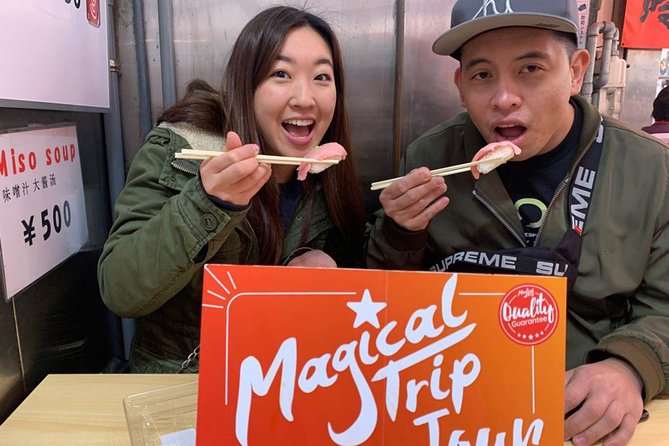
Arrive early at the SMBC ATM meeting point. Exit 10 from Kintetsu Nippon-bashi Station is the stated station exit, and the activity ends back at the meeting point.
Eat lightly beforehand, but do not assume six samples will equal a full meal. Bring cash for any extra food or drinks, and consider carrying hand wipes for messier dishes, although one guide has supplied them.
Tell the guide what you like early. If you prefer seafood, sweets, vegetables, grilled foods, or milder flavors, say so. The tour can be more personal when the guide knows your preferences instead of simply following a fixed path.
If you have a particular market shop or food in mind, mention it at the start. One useful approach is to walk through Kuromon before the tour, note what catches your eye, then ask the guide to include it if possible.
Use the walk as an introduction, not your only Osaka food adventure. Write down the names of dishes and shops you enjoy, then return later for a fuller meal or another purchase.
Should you book the Kuromon Market food walk?
Book it if you are new to Osaka, want help ordering, prefer a small group, or would like food recommendations tied to local customs and everyday shopping. It is especially useful for families, solo visitors, and anyone who feels uncertain about market etiquette or Japanese menus.
Skip it if you are confident exploring markets alone, want generous portions, or dislike paying a premium for guidance in a place you can visit freely. Kuromon Market is accessible without a tour, and the experience depends heavily on how active and informative your assigned guide is.
For most first-time visitors, I would consider it a good orientation walk, with one condition: confirm the food allowance and dietary arrangements before booking. Free cancellation is available up to 24 hours before the start time, but changes or cancellations inside that window are not accepted. That gives you a useful safety net, provided you make your decision in time.
FAQ
Where does the Kuromon Market food tour begin?
It begins in front of the SMBC ATM at Nippon-bashi 1chome, near Exit 10 from Kintetsu Nippon-bashi Station. The listed address is in Nipponbashi, Chuo Ward, Osaka.
Where does the tour end?
The activity ends back at the original meeting point.
How long does the experience last?
The walking food tour lasts about two hours.
How many people can join the tour?
The maximum group size is seven travelers.
What food will I taste?
The experience is promoted as six tastes, but the exact menu can vary. Past food selections have included takoyaki, sushi, yakitori, dumplings, gyoza, oden, mushrooms, and sweets.
Can dietary requests be accommodated?
Vegetarian, vegan, and gluten-free requests may be possible, but options can be limited. You must submit requests or allergy information at least one day before the tour, and allergy-free meals or substitutions cannot be guaranteed.
What is the cancellation policy?
You can cancel at least 24 hours before the local start time for a full refund. Cancellations or changes made less than 24 hours before the experience are not accepted.
More Food in Osaka
- Osaka: Kuromon Market Food Walking Tour (6 stops, 6 tastes)
★ 4.6 · 272 reviews - Osaka After Dark: Small-Group Night Food Tour (Max 6)
★ 4.5 · 245 reviews - Eat, Drink & Cycle: Osaka Foodie Bike Tour
★ 5.0 · 224 reviews - Osaka: 2-Hour Nightlife District Walking & Local Food Culture
★ 5.0 · 199 reviews
More Food & Drink in Osaka
- Hungry Osaka Street Food Tour: 15 Dishes & 3 Drinks
★ 4.9 · 694 reviews - Osaka: Guided Food Tour with 12 Dishes at 4 Local Eateries
★ 5.0 · 533 reviews - Absolute Osaka Food Tour
★ 5.0 · 309 reviews - Osaka: Traditional Mochi Pounding Experience with Tasting
★ 4.9 · 306 reviews
Just added around Osaka
- (Ticket Included) Explore Osaka Castle & Museum of History★ 4.8 · 21 reviews
- Hidden Osaka – Yukaku Red Light Tour & Culinary Adventure★ 4.8 · 96 reviews
- Osaka: Walking Tour and Top Highlights★ 4.8 · 104 reviews
- Osaka: Private Ceramic Painting Workshop★ 5.0 · 13 reviews
- Pickleball in Osaka, Kobe & Kyoto with Locals!★ 4.7 · 80 reviews
- Eat Like a Local in Osaka – Private Custom Street Food Tour★ 4.3 · 33 reviews
- Osaka:SUMO BEATS SHOWCASE: Taiko Drum and Wagyu burger!★ 4.2 · 37 reviews
- Kimono photoshoot-Includes 100 photo data★ 5.0 · 21 reviews
Food Market Tours, compared.
Shinjuku Food Tour (13 Dishes at 4 Local Eateries)
Read our review →
Tokyo Tsukiji Fish Market Food and Culture Walking Tour
Read our review →
Shinsekai Food Tour with 13-15 Dishes at 5 Eateries
Read our review →
Osaka Food Tour: 13 Dishes at 5 Local Eateries
Read our review →
Shinjuku Food Tour (15 Dishes and 4 Eateries)
Read our review →
Best of Shinjuku: Izakaya Food Tour (4 Stops, 14+ Tastings)
Read our review →
Hungry Osaka Street Food Tour:15 Tastings & 3 Drinks with a Local
Read our review →
Browse the lists this tour appears in