
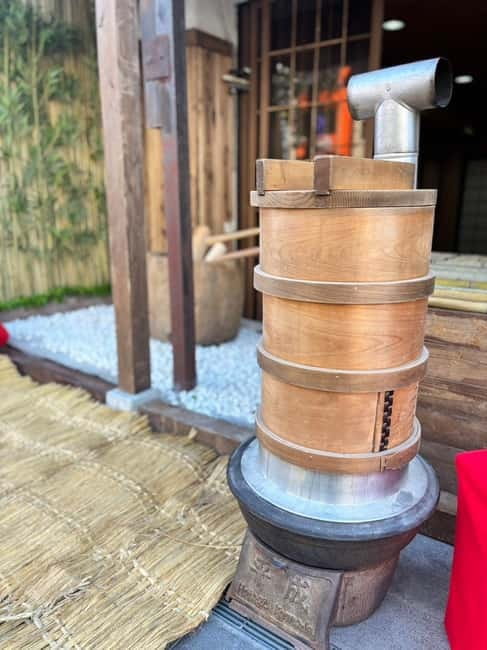
REVIEW · FOOD & DRINK
Osaka: Traditional Mochi Pounding Experience with Tasting
Mochi pounding is not a tidy cooking demonstration where you watch from the sidelines. You help turn steamed glutinous rice into a soft, sticky sweet using a traditional mortar and pestle. The work is lively, a little physical, and much more memorable than simply buying a packet of mochi at a shop.
I like the small group limit of four, which gives you real time with the instructors rather than a quick turn at the tools. I also like the tasting table, where kinako, sweet red bean paste, nori, and sweet soy sauce let you compare several classic combinations with tea.
The main consideration is the workout. Pounding mochi takes more effort than it looks, and the finished rice is filling. Wear comfortable clothes, arrive ready to participate, and do not schedule this right before a large dinner.
In This Review
- Key Points
- Turning Rice Into Mochi in One Hour
- Why the Ten-Minute History Talk Matters
- The Canal-Side Entrance Near Dotonbori
- What You Will Eat After the Pounding
- A Good Choice for Families, Couples, and Solo Visitors
- How Much Value You Get for $31
- Timing, Clothing, and Booking Choices
- What Makes the Small Group Format Work
- Is Mochi Pounding Right for Your Osaka Schedule?
- FAQ
- How long does the Osaka mochi pounding activity last?
- How much does the experience cost?
- What happens during the mochi pounding session?
- What toppings are included?
- Is the activity suitable for children?
- What languages do the instructors speak?
- Where is the meeting point?
Key Points
- Traditional pounding method: Mash and pound steamed glutinous rice with a mortar and pestle.
- Central Osaka setting: The entrance is on the canal side near Dotonbori, not directly from the main Dotonbori street.
- Smallest kind of class: Groups are limited to four participants, making it easy to take a turn and ask questions.
- Short cultural introduction: The opening talk lasts about 10 minutes and explains mochi’s history and significance.
- Several ways to eat it: Try freshly made mochi with kinako, red bean paste, nori, sweet soy sauce, and tea.
- Two booking choices: Pick the adult plan for ages 13 and up, or the family plan for children and adults of all ages.
Turning Rice Into Mochi in One Hour
This Osaka activity packs a lot into its one-hour format. You are not signing up for a long cooking course, and that is part of its appeal. The session gives you enough background to understand the food, enough hands-on time to feel involved, and enough tasting at the end to make the $31 price reasonable for many visitors.
The process begins with steamed glutinous rice. The rice is not the ordinary sort you might cook for breakfast. Its high starch content gives mochi its familiar stretch and chew once it has been worked properly.
You first help mash the rice, then use the traditional pounding tools to work it into a smooth mass. The instructors guide the pace and show you how the rice changes texture. Since the group is so small, you should have a genuine chance to take part instead of simply watching one person do the whole job.
The activity is supervised by experienced instructors who speak English and Chinese. Names that appear among the teaching team include Seina, Taka, Misaki, Moe, Grace, Aiko, and Pari. Staff may vary by session, but the useful point is clear: this is designed for international visitors, and the teaching style is friendly, active, and easy to follow.
Once the mochi is ready, you shape it into pieces for eating. This part is less about making perfect sweets and more about handling the warm, elastic dough. Expect sticky fingers and uneven shapes. That is normal, and it is part of the fun.
A few more Osaka trips to weigh up
- Osaka: Shinsekai Food Tour with 13-15 Dishes at 5 Eateries
★ 4.8 · 2,204 reviews - Osaka Food Tour: 13 Dishes at 5 Local Eateries
★ 5.0 · 2,149 reviews - Hungry Osaka Street Food Tour:15 Tastings & 3 Drinks with a Local
★ 5.0 · 1,727 reviews
Why the Ten-Minute History Talk Matters
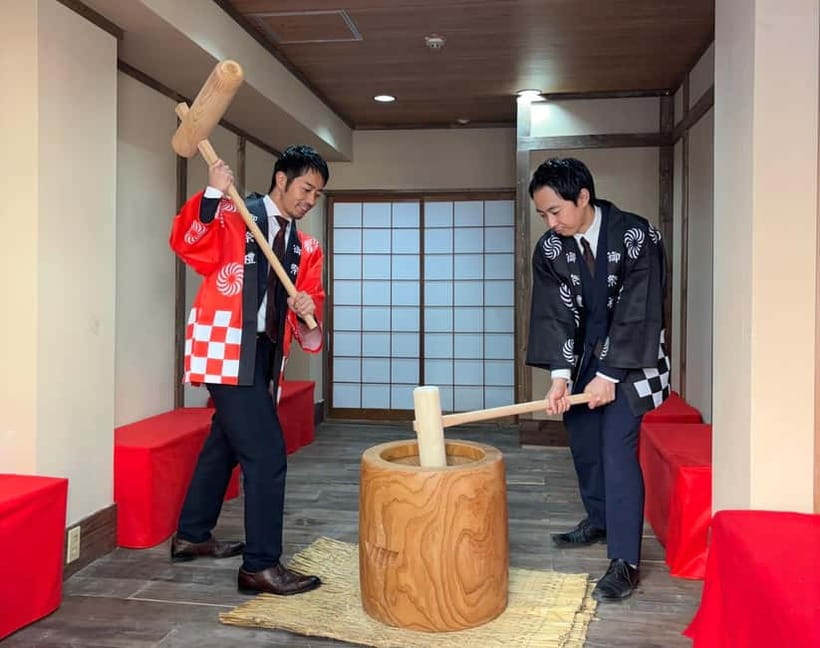
The introductory talk lasts around 10 minutes. That may not sound like much, but it is the right amount for a food activity. You get context without losing most of your booking to a lecture.
The instructors explain the origins and cultural importance of mochi before you begin. This helps you see the pounding as more than a novelty photo opportunity. Mochi has long been connected with Japanese celebrations, seasonal customs, and community gatherings, so the traditional tools and group rhythm have meaning beyond the finished dessert.
I appreciate that the background section is brief. You can understand why the food matters, then move on to the part you came to do. The strongest sessions appear to keep the history clear and compact, leaving plenty of time for making and eating.
This is also useful if you are visiting Japan with children or teenagers. They get a simple cultural lesson tied to something they can touch, shape, and taste. Adults who already know mochi will still learn something from seeing the traditional preparation up close.
The Canal-Side Entrance Near Dotonbori
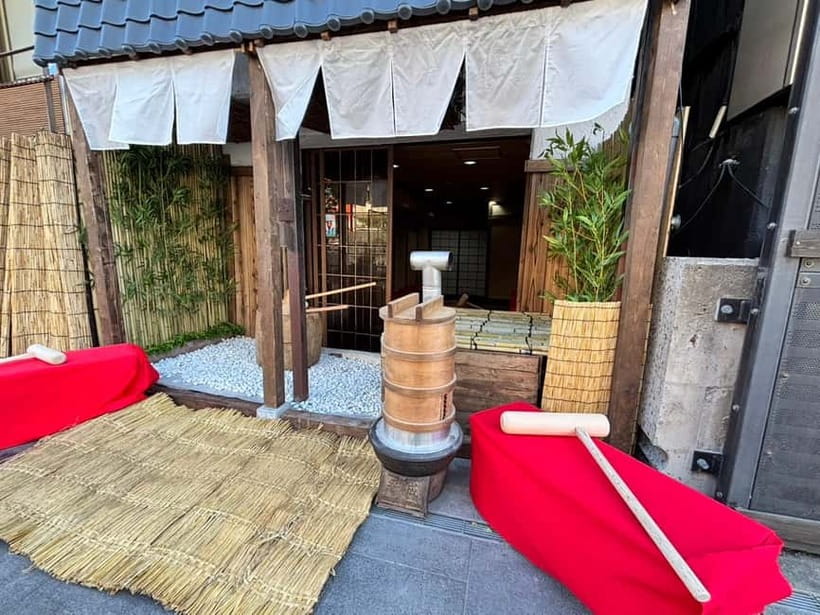
The activity is in central Osaka, around the Dotonbori canal area. That makes it easy to pair with a day or evening in one of the city’s most popular entertainment districts.
There is one practical wrinkle: the entrance can be hard to spot. The access point is on the river or canal side, not from Dotonbori Street itself. One sign may be handwritten at the entrance of a hotel on the parallel street, so do not rely only on the loudest or busiest frontage when you arrive.
Check the exact meeting instructions for the plan you book. The meeting point can vary by option. Give yourself a little time to find the entrance, especially if you are meeting a family group or traveling with children.
The central setting is a real advantage. You do not need to spend half a day reaching a remote workshop. But the location also means the room may feel compact. One person described the space as small but comfortable, with good cleanliness and sanitation. A group of four is a good fit here. A larger group should understand that this is not a spacious cooking studio.
What You Will Eat After the Pounding
Fresh mochi has a texture that is different from packaged mochi. It is soft, warm, and notably sticky. The tasting is generous enough that several people have found the activity surprisingly filling, so plan it as a snack or light meal rather than a quick bite before dinner.
The classic toppings give you a useful range of flavors:
- Kinako: Roasted soybean flour with a dry, nutty taste.
- Sweet red bean paste: Smooth, sweet, and familiar in many Japanese desserts.
- Nori: A savory seaweed option that cuts through the sweetness.
- Sweet soy sauce: Salty-sweet and especially good if you prefer less sugary flavors.
- Tea: A simple pairing that helps balance the rich, sticky texture.
You can try the same fresh mochi with different seasonings and decide which combination works best for you. The activity is especially worthwhile if you have only tasted convenience-store or packaged mochi before.
Do not expect every topping to suit every palate. Red bean paste is a strong favorite for some people and an acquired taste for others. Kinako can also be unfamiliar if you have not tried roasted soybean flour. The variety is valuable because you are not limited to a single sweet flavor.
The instructors also help with shaping and tasting, and several sessions include time for photographs. If you are visiting alone, this is useful. Staff such as Seina, Taka, Misaki, Moe, and Grace have been noted for helping participants take pictures, so you can get a record of the activity without awkwardly balancing a phone near the pounding tools.
Same city, a completely different kind of day:
- Osaka Go Karting Tour with Funny Costume
★ 5.0 · 2,658 reviews - Osaka Castle: Museum and Tower Entry Ticket
★ 4.5 · 2,380 reviews - Osaka: Tea Ceremony Experience
★ 4.9 · 1,426 reviews - Osaka Kickstart: Hotspots & Hidden Gems Tour
★ 5.0 · 1,306 reviews
A Good Choice for Families, Couples, and Solo Visitors
There are two plans, and choosing the right one matters. The adult experience is for ages 13 and up and is aimed at participants who want a more focused cultural activity. The family experience welcomes all ages and is arranged to include children and adults.
For families, this works because everyone can get a job. Children can take part in shaping and tasting, while adults can help with the heavier pounding. The instructors adjust the session so young children are included rather than left waiting on the side.
The tools and sticky rice do require attention. Parents should expect to stay involved, especially with younger children. The family plan is not a passive kids’ show. It is a shared activity where adults and children work together.
Teenagers also have plenty to do. The pounding is physical, the food is immediate, and the photo opportunities help keep the activity from feeling like a formal lesson. One family group spanning teenagers, parents, and grandparents found the format suitable for all three generations.
Couples get a hands-on date activity with a clear beginning and end. It is less polished than a restaurant dessert course, but that is exactly why it feels more personal. You make something together, then eat the results.
Solo participants should not feel out of place. The group is small, but it is not limited to private bookings. The instructors work to include people who arrive alone and can take pictures for them. You may share the room with couples or families, but the staff make room for individual participation.
How Much Value You Get for $31
At $31 per person, this is not the cheapest snack in Osaka. You could buy ready-made mochi for much less. The value comes from the combination of instruction, ingredients, tools, cultural context, and tasting.
For one hour, the price compares well with other short, guided food activities. You are paying for a hosted event, not just the dessert. All required ingredients and materials are included, as is the tasting with seasonings and tea. You also get instruction from staff who can communicate in English or Chinese.
The small group size strengthens the value. With no more than four participants, you should not be reduced to a spectator. You get direct access to the tools and more opportunity to ask questions. That matters in a one-hour class, where a large group could easily turn each person’s hands-on time into a token gesture.
I would book this if you want a cultural activity that feels active and social. I would skip it if your only goal is to eat mochi, since Osaka offers cheaper ways to do that. The price is easiest to justify when you treat the tasting as the final part of a short workshop.
Timing, Clothing, and Booking Choices
The activity lasts one hour and runs year-round. Starting times depend on availability, so check the schedule before building your Osaka day around it.
Wear comfortable clothing. You will be handling sticky rice, shaping mochi, and using traditional tools, so this is not the place for delicate clothes or anything that restricts movement. The pounding is manageable, but it takes stamina. You may want to leave a little space afterward rather than racing to another appointment.
Transportation is not included. You make your own way to the meeting point, and the point may vary with the plan you select. Since the activity is near central Dotonbori, you can combine it with nearby sightseeing, but confirm the canal-side entrance carefully.
The booking terms are flexible. You can reserve now and pay later, and cancellation is free up to 24 hours in advance for a full refund. Those terms help if your Osaka schedule is still changing.
What Makes the Small Group Format Work
The four-person maximum is one of the most important details here. Mochi pounding is a shared action, but everyone still wants a turn. A limited group keeps the pace moving and gives the instructors time to correct technique, explain the texture, and help with shaping.
A small room can be a drawback if you expect a grand traditional workshop. It is better to think of this as an intimate class in a compact space. The tradeoff is worthwhile because you get more personal attention and less waiting.
The format also suits mixed groups. Instructors have adapted the session for families with young children alongside adults, giving each person a role. That flexibility is useful if your party includes different ages and energy levels.
Cleanliness matters when food is being prepared by hand. The space has been described as comfortable and sanitary, with the process kept orderly. That does not remove the sticky nature of mochi, but it does make the activity feel well managed.
Is Mochi Pounding Right for Your Osaka Schedule?
I would choose this for a first-time visitor who wants something beyond temples, shopping, and restaurant meals. It gives you a short lesson in Japanese food culture, a physical activity, and a dessert tasting in one booking.
It is particularly good for families, solo visitors, and anyone who enjoys learning by doing. The English and Chinese instruction, cheerful teaching style, and small group limit make the class approachable. The central Dotonbori location also makes it easy to fit into a day in Osaka.
The drawbacks are modest but real. The space is compact, the entrance can take some searching, and the rice pounding requires more effort than you may expect. You also need to choose the correct plan, especially if children are attending.
Book it if you want to understand how mochi is made and are willing to get your hands sticky. Skip it if you dislike chewy textures, have very little time between appointments, or only want a quick dessert. For $31, the strongest value is in the participation, the cultural setting, and the chance to eat mochi while it is still fresh.
FAQ
How long does the Osaka mochi pounding activity last?
The activity lasts one hour. It includes a short introduction, the rice preparation and pounding, shaping, and the final tasting.
How much does the experience cost?
The price is $31 per person.
What happens during the mochi pounding session?
You learn about mochi, help work steamed glutinous rice with traditional tools, pound it into mochi, shape the finished pieces, and eat them with several toppings.
What toppings are included?
The tasting includes kinako, sweet red bean paste, nori, and sweet soy sauce, along with tea.
Is the activity suitable for children?
Yes. Choose the family experience, which welcomes all ages. The adult experience is for participants ages 13 and up.
What languages do the instructors speak?
Instruction is available in English and Chinese.
Where is the meeting point?
The meeting point may vary by booking option. The entrance is near the Dotonbori canal and may be accessed from the river side rather than directly from Dotonbori Street. Check the exact directions for your selected plan.
Just added around Osaka
- (Ticket Included) Explore Osaka Castle & Museum of History★ 4.8 · 21 reviews
- Hidden Osaka – Yukaku Red Light Tour & Culinary Adventure★ 4.8 · 96 reviews
- Osaka: Walking Tour and Top Highlights★ 4.8 · 104 reviews
- Osaka: Private Ceramic Painting Workshop★ 5.0 · 13 reviews
- Pickleball in Osaka, Kobe & Kyoto with Locals!★ 4.7 · 80 reviews
- Eat Like a Local in Osaka – Private Custom Street Food Tour★ 4.3 · 33 reviews
- Osaka:SUMO BEATS SHOWCASE: Taiko Drum and Wagyu burger!★ 4.2 · 37 reviews
- Kimono photoshoot-Includes 100 photo data★ 5.0 · 21 reviews
Food & Drink, compared.
Shinjuku Food Tour (13 Dishes at 4 Local Eateries)
Read our review →
Tokyo Tsukiji Fish Market Food and Culture Walking Tour
Read our review →
Shinsekai Food Tour with 13-15 Dishes at 5 Eateries
Read our review →
Osaka Food Tour: 13 Dishes at 5 Local Eateries
Read our review →
Shinjuku Food Tour (15 Dishes and 4 Eateries)
Read our review →
Best of Shinjuku: Izakaya Food Tour (4 Stops, 14+ Tastings)
Read our review →
Kyoto Night Foodie Tour in Gion (9+ dishes + 6 Sake tastings)
Read our review →
Hungry Osaka Street Food Tour:15 Tastings & 3 Drinks with a Local
Read our review →Browse the lists this tour appears in