
REVIEW · CYCLING TOURS
Eat, Drink & Cycle: Osaka Foodie Bike Tour
Osaka is easier to understand with a snack in one hand and bicycle handlebars in the other. This small-group food ride links South Osaka sights with several tastings, moving from Shin Sekai to Shitennoji, Tsuruhashi Market, a wagyu stop, Tower Knives, and a local sushi shop.
I like the efficient route and the personal guiding. You cover more ground than on foot, and guides such as Mako, Matt, Peter, Erik, and Mayco are praised for explaining food, Osaka culture, and places to eat later. I also like that the group is capped at seven, which makes questions and food choices easier.
The main question is value. At $99.49, this costs more than simply eating your way through Osaka on your own, and one account found only two main food locations rather than the expected string of market tastings. Food portions and stops can vary, so book it for the riding, guidance, and access to local places, not just for the amount of food.
In This Review
- Key Points at a Glance
- Why a Food Bike Tour Works Well in Osaka
- Shin Sekai: Starting Under Tsutenkaku
- Shitennoji: A Short History Break
- Tsuruhashi Market: The Best Place to Slow Down
- Wagyu in a Seated Setting
- Tower Knives: A Hands-On Detour
- Sushi and Kushikatsu at the Finish
- The Guides Make or Break the Morning
- Price, Group Size, and What You Are Really Buying
- Fitness, Weather, and Family Suitability
- Who Should Book the Osaka Foodie Bike Tour?
- FAQ
- How long does the Osaka Foodie Bike Tour last?
- Where does the tour start and finish?
- What food is included?
- Are bicycles and helmets provided?
- How many people can join the tour?
- Is the tour suitable for children?
- What happens if the weather is poor?
- Should You Book It?
Key Points at a Glance
- Shin Sekai starts the feast: Your first taste may be oden, tofu, or doteyaki, depending on the group.
- Shitennoji adds a cultural pause: You stop at one of Japan’s oldest temples for photos and a short explanation.
- Tsuruhashi Market brings variety: Plan on 40 to 60 minutes meeting stall holders and trying market snacks.
- Wagyu, sushi, and kushikatsu finish the route: The food moves from casual bites to a seated wagyu tasting and a final Japanese meal.
- A seven-person limit keeps it personal: You can ask for restaurant tips and adjust questions to your interests.
- The ride is generally manageable: Osaka is mostly flat, though you still need moderate fitness and confidence on a bicycle.
Why a Food Bike Tour Works Well in Osaka
Osaka has sights spread across several districts, and walking between food neighborhoods can eat up much of your day. A bicycle gives you a quicker connection between them without the fixed feel of a coach or the underground view of a train.
The cycling is not the main athletic challenge. The route is described as mostly flat, and several riders found the bikes easy to use and the pace relaxed. You will still pedal through city streets, stop at intersections, and remain alert around traffic, so this is best for anyone with moderate fitness and basic cycling confidence.
The food makes the ride feel purposeful. Instead of stopping at one famous restaurant and calling it a food tour, you get a sequence of tastes linked to different parts of Osaka. Some stops may be tiny, family-run places or stalls where ordering alone would be harder because of language or unfamiliar menus.
That variety is also the reason to keep expectations flexible. The opening stop can be oden, tofu, or doteyaki. Other accounts describe pastries, Korean dishes, Japanese pancakes, noodles, rice dishes, sweets, and onigiri. The precise selection appears to change with the guide, group tastes, and local conditions.
A few more Osaka trips to weigh up
- 5-Hour Osaka Bike Tour to the Neighborhood of Osaka Castle
★ 5.0 · 319 reviews - One-Day Osaka Bike Adventure: 5–6 Hours
★ 5.0 · 246 reviews - Osaka E-Bike Tour with a Local Guide
★ 5.0 · 219 reviews
Shin Sekai: Starting Under Tsutenkaku
The route begins in the Shin Sekai area, one of the most recognizable parts of South Osaka. The published meeting information needs careful checking: the main description says to meet beneath Tsutenkaku Tower at 9:30 a.m., while the booking details give 1-chome-10-7 Tenma in Kita Ward and a 10:30 a.m. start.
That is a meaningful difference, not a minor typo. Confirm the exact meeting point and time with In Kansai Experiences before setting out. The activity ends back at the starting point, and transport to the meeting point is not included.
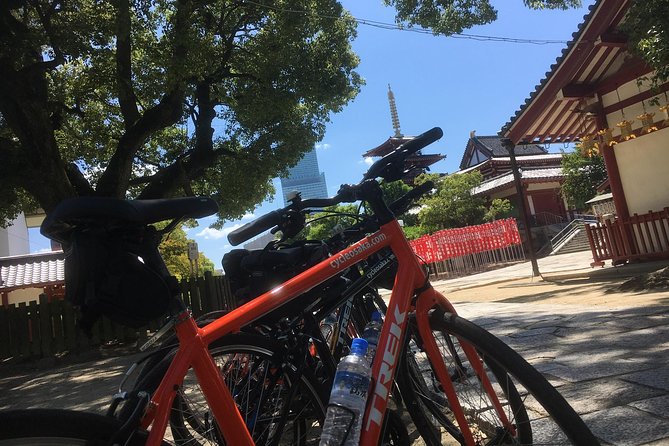
After meeting your guide, you go to the bicycle storage facility for a quick fitting. Bikes and helmets are included, and the equipment has been described as solid and well maintained, with multiple sizes available. Some riders arranged e-bikes because they were unsure about hills or stamina. If you want one, ask ahead rather than assuming it is part of the standard booking.
Your first food stop is in Shin Sekai. Depending on the group, you might begin with oden, tofu, or doteyaki. Oden is a comforting selection of simmered items, while doteyaki is a local-style beef tendon dish. Tofu gives you a lighter start, useful if you plan to take full advantage of the later stops.
This first bite is valuable because your guide can explain how ordinary Osaka food fits into daily life. It is also a practical test of the tour’s rhythm: taste, ask questions, get back on the bike, and keep moving.
Shitennoji: A Short History Break
From Shin Sekai, you ride toward Shitennoji, described as one of Japan’s oldest temples. The stop is brief, with time for photos and an explanation of the area rather than a long temple visit.
That short pause gives the morning some balance. Without it, this would be a food crawl with wheels. Instead, you see a significant religious site, hear some background, and then continue down the slope toward the next district.
Do not book this tour expecting a detailed temple tour. The temple stop is a sightseeing interlude, not the central attraction. If Shitennoji is high on your Osaka list, you may want to return later for a slower visit.
The route also gives you a sense of how quickly Osaka changes from major landmarks to ordinary streets. That is one of the bicycle’s strengths. You are not simply dropped at a famous site, then taken away. You pass through the spaces between attractions, which helps the city feel like a connected place.
Tsuruhashi Market: The Best Place to Slow Down
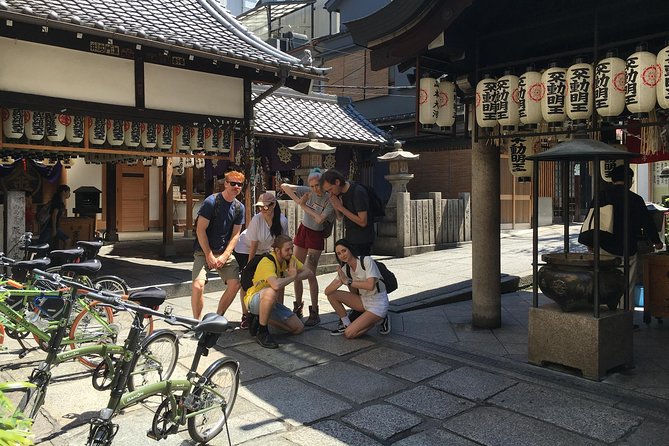
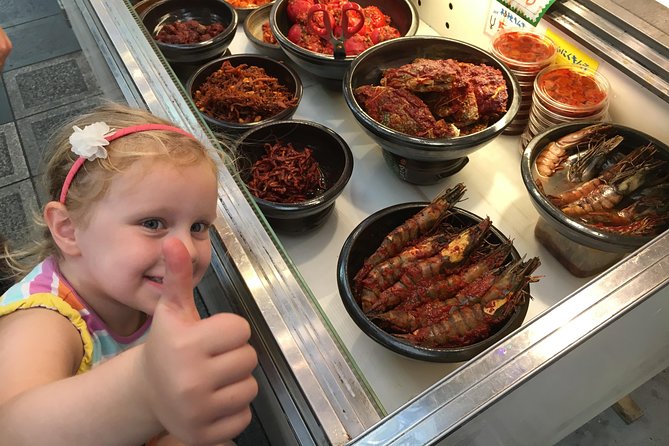
The longest scheduled pause is at Tsuruhashi Market, where you spend about 40 to 60 minutes. You meet local stall holders and sample a range of market snacks, with the area also tied to Osaka’s Korean community and food culture.
This is likely the strongest part of the tour for anyone who wants food with a sense of place. A market can be confusing on a first visit. There may be no obvious ordering system, little English, and many unfamiliar items. Having a guide point out what to try saves time and takes away some of the guesswork.
The market stop is not a formal sit-down meal. You should expect small samples and a chance to look around rather than a single large plate. Some food accounts describe Japanese sweets, sticky rice candy balls, Korean dishes, and other snacks. The exact mix depends on the day and the group.
I would keep your schedule open here. A rushed market visit can feel like a checklist, while a few extra minutes to look at stalls and speak with vendors makes the stop more rewarding. One account specifically appreciated having time to wander through a shopping area, though another found the food stops fewer than expected. That difference suggests you should ask your guide how much tasting time is planned on your date.
Same city, a completely different kind of day:
- Osaka Go Karting Tour with Funny Costume
★ 5.0 · 2,658 reviews - Osaka Castle: Museum and Tower Entry Ticket
★ 4.5 · 2,380 reviews - Osaka: Shinsekai Food Tour with 13-15 Dishes at 5 Eateries
★ 4.8 · 2,204 reviews - Osaka Food Tour: 13 Dishes at 5 Local Eateries
★ 5.0 · 2,149 reviews
Wagyu in a Seated Setting
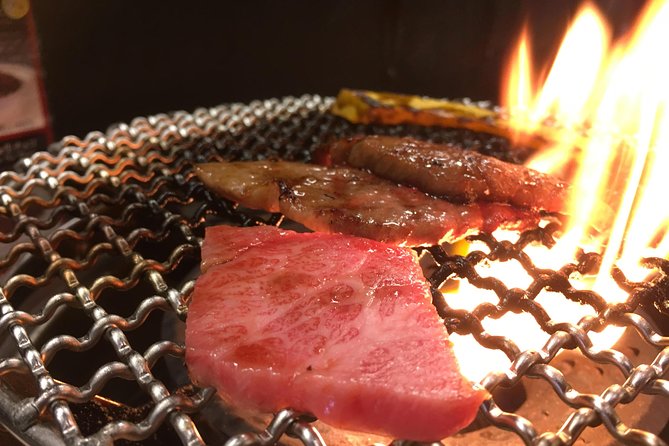
After Tsuruhashi, the tour moves to a seated wagyu beef tasting. This shift from market bites to a proper table gives you a chance to eat more slowly and compare the two styles of food stop.
Wagyu is a notable inclusion at this price, but the phrase wagyu tasting does not necessarily mean a full restaurant lunch. The included package is described as lunch and snacks at three or four eateries, so portions may be spread across the morning. If you arrive very hungry, you should still consider eating a light breakfast first.
The food is not limited to sushi. Osaka’s food identity is broader, and the stops may include grilled meat, noodles, rice dishes, savory pancakes, pastries, or regional snacks. That range is one of the tour’s better features. You are sampling a food culture rather than chasing one famous dish.
Guides also use these pauses to offer advice for the rest of your stay. Matt, for example, has been praised for pointing people toward a carefully chosen yakiniku restaurant and a strong onigiri shop. Mako is noted for restaurant suggestions, while Mayco and Maiko are praised for explaining Osaka and Japan through the food. Those recommendations can add value well beyond the morning itself.
Tower Knives: A Hands-On Detour
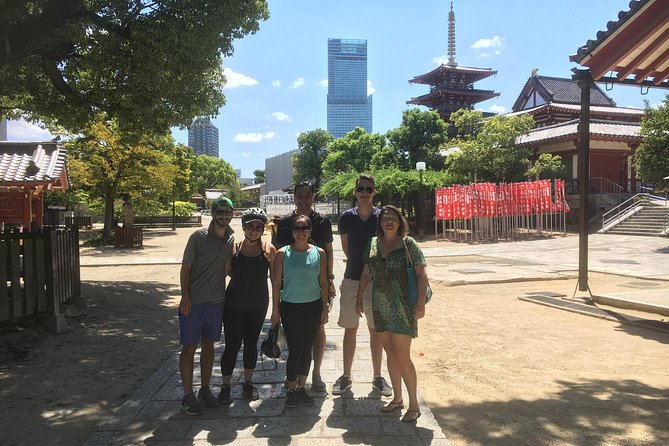
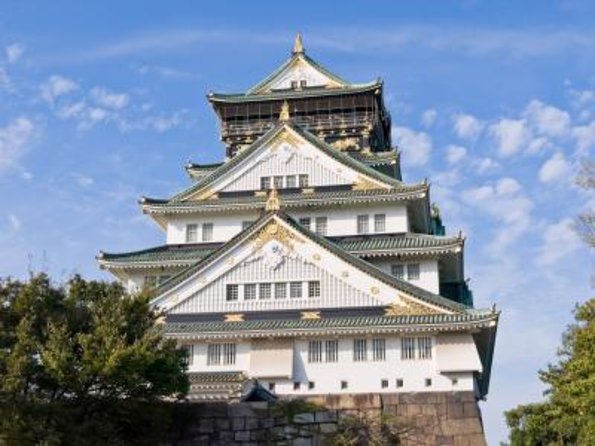
After the wagyu stop, you ride back through the streets and pause at Tower Knives. Here, you get to try your hand with Japanese knives, one of Osaka’s well-known exports.
This is a welcome change of pace. Food tours can become a steady series of bites, and the knife stop gives you something to do rather than simply taste. It also connects the meal to the tools behind Japanese cooking.
The description does not specify exactly how long the stop lasts or what cutting activity is offered, so keep your expectations modest. Think of it as a brief hands-on visit, not a full knife-making workshop. If you are interested in Japanese kitchen knives, you can ask the guide about the store and local buying advice.
Sushi and Kushikatsu at the Finish
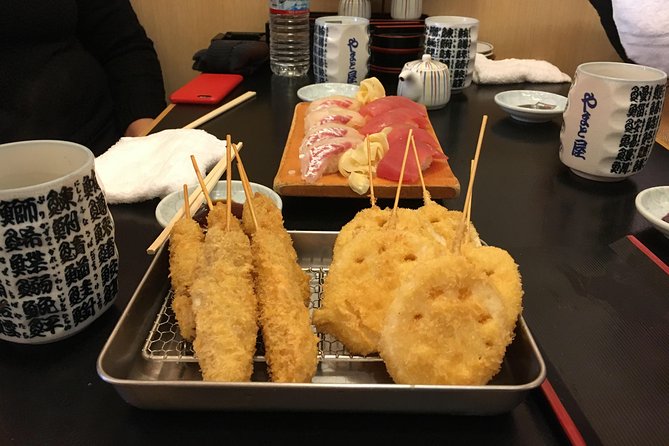
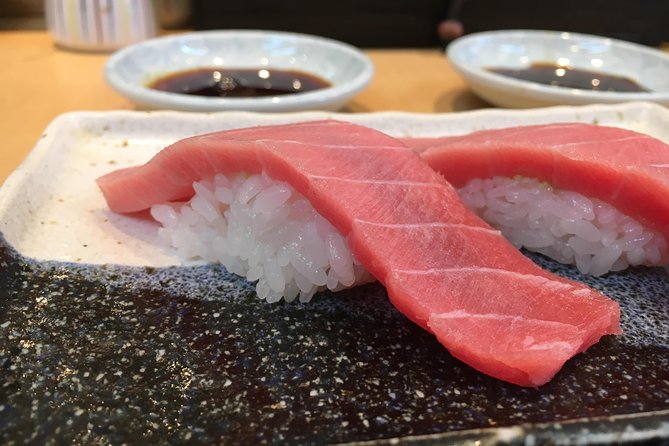
The final food stop is a local sushi shop. Your guide recommends a set of nigiri rolls, and assorted kushikatsu skewers are brought in from next door.
That pairing is very Osaka: delicate sushi alongside fried skewers. Kushikatsu is especially associated with the city’s casual dining culture, and it provides a hearty finish after the lighter market samples and the wagyu stop.
The last stop is also where the tour’s social side works best. You sit down, compare the morning’s tastes, and ask for more restaurant ideas. From there, it is only a two-minute ride back to base to return the bicycles.
The included food is meant to cover lunch and snacks, but the amount can vary. Some people finish stuffed, while one less enthusiastic account felt that the experience included fewer food locations than expected. If you want a large, leisurely lunch at every stop, this may not suit you. If you prefer many small tastes with cycling between them, the format makes more sense.
The Guides Make or Break the Morning
The guide is a major part of the value. The strongest accounts praise guides for being funny, friendly, clear in English, and generous with local suggestions. Erik is described as especially good at finding less obvious places and taking photos. Peter is praised for mixing sightseeing with food, while Mako is remembered for humor and practical restaurant advice.
Matt receives particular credit for his Osaka and Japanese history, careful food choices, and even a pastry treat made by his Japanese wife. Maiko and Mayco are praised for excellent English and for explaining local Korea Town and dishes that many visitors would not discover alone.
You should ask questions. This is not only a ride from one restaurant to the next. Ask where to eat that evening, which dishes are worth ordering, and how Osaka differs from other parts of Japan. With a maximum of seven people, you have a good chance to get useful answers rather than listening from the back of a large group.
The quality may vary slightly by guide because each person can shape the food choices and storytelling. That is not necessarily bad. It means the same route may feel different on different dates, but you should not expect every guide to offer the same stops or the same pace.
Price, Group Size, and What You Are Really Buying
The listed price is $99.49 per person for about three and a half hours. That is not cheap by Osaka standards, especially if you judge the tour only by the cost of the food.
You are paying for several things at once: bicycle use, helmet, an English-speaking guide, local navigation, included tastings, and the time saved by linking districts efficiently. A bicycle also lets you see more than a walking food crawl in the same period.
The price works best for a first Osaka morning. You get an orientation to South Osaka, a look at Shitennoji, time in Tsuruhashi, and a list of places to try afterward. It works less well if you already know Osaka’s food neighborhoods and are comfortable ordering on your own.
The group limit of seven is important. A small group makes street riding easier and keeps the food stops from feeling like a large organized march. It also supports the personal guidance that several people valued.
Alcohol is not included. Bottled water is included, as are the food tastings, bike, and helmet. Transportation to the start is your responsibility.
Fitness, Weather, and Family Suitability
You need moderate physical fitness. The route is generally described as easy and mostly flat, but you will be cycling for several hours with stops rather than taking a short recreational spin.
The tour is not recommended for children aged 12 and under, and riders must be at least 140 centimeters tall. Those rules matter because the group is using standard bicycles on city streets, not a closed course.
Weather can change the plan. The activity requires good weather, and poor conditions can lead to a new date or a full refund. If the tour runs in rain, bring a poncho and expect a less comfortable ride. One rainy-day account still found the history, views, stories, and food worthwhile, but dry weather is clearly the better choice.
Wear comfortable clothes and shoes suitable for pedaling. You may want a lighter breakfast, but do not skip food entirely. The morning includes several tastings, not necessarily one large meal at the start.
Cancellation is free up to 24 hours before the start time for a full refund. A cancellation or change inside that window is not accepted for a refund. The operator can also cancel if minimum numbers are not reached, in which case you are offered another date or experience, or a full refund.
Who Should Book the Osaka Foodie Bike Tour?
I would choose this tour if you want a quick introduction to Osaka’s food culture and prefer seeing neighborhoods from a bicycle. It is a good match for couples, friends, and active adults who enjoy casual eating, local stories, and a little movement between meals.
It is especially useful early in your stay. Your guide can point you toward restaurants for later, and you will have a better sense of where Shin Sekai, Tsuruhashi, and Shitennoji fit into the city.
I would hesitate if your priority is a long market crawl with a large number of full portions. The food selection can change, and the $99.49 price may feel high if you count each bite rather than the full service.
I would also choose another activity if you dislike cycling in city streets, need a fully accessible route, or are traveling with young children. For everyone else, the combination of food, sights, and local advice gives you a useful half-day introduction without consuming an entire day.
FAQ
How long does the Osaka Foodie Bike Tour last?
The activity lasts approximately 3 hours and 30 minutes.
Where does the tour start and finish?
The tour finishes back at the meeting point. The supplied details give different starting instructions, with Tsutenkaku Tower at 9:30 a.m. in the main description and 1-chome-10-7 Tenma, Kita Ward, at 10:30 a.m. in the additional information. Confirm the exact location and time before departure.
What food is included?
Food tastings may include oden, tofu, doteyaki, market snacks, wagyu, nigiri sushi, and kushikatsu. The package includes lunch and snacks at three or four eateries, though the exact dishes can vary.
Are bicycles and helmets provided?
Yes. Bicycle use and a safety helmet are included. Riders must be at least 140 centimeters tall.
How many people can join the tour?
The maximum group size is seven people.
Is the tour suitable for children?
It is not recommended for children aged 12 and under. Riders also need a moderate level of physical fitness.
What happens if the weather is poor?
The activity requires good weather. If it is canceled because of poor conditions, you are offered a different date or a full refund.
Should You Book It?
Book it if you want a guided food introduction with wheels, not simply the cheapest way to eat lunch. The best value comes from the combination of included tastings, neighborhood access, local explanations, and restaurant advice from guides such as Mako, Matt, Peter, Erik, and Mayco.
Before paying, confirm the meeting time, ask about the day’s food plan, and check if an e-bike is available if you need one. With those details settled, this is a lively, practical way to get your first taste of Osaka.
Just added around Osaka
- (Ticket Included) Explore Osaka Castle & Museum of History★ 4.8 · 21 reviews
- Hidden Osaka – Yukaku Red Light Tour & Culinary Adventure★ 4.8 · 96 reviews
- Osaka: Walking Tour and Top Highlights★ 4.8 · 104 reviews
- Osaka: Private Ceramic Painting Workshop★ 5.0 · 13 reviews
- Pickleball in Osaka, Kobe & Kyoto with Locals!★ 4.7 · 80 reviews
- Eat Like a Local in Osaka – Private Custom Street Food Tour★ 4.3 · 33 reviews
- Osaka:SUMO BEATS SHOWCASE: Taiko Drum and Wagyu burger!★ 4.2 · 37 reviews
- Kimono photoshoot-Includes 100 photo data★ 5.0 · 21 reviews
Cycling Tours, compared.
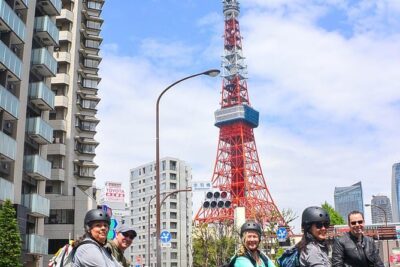
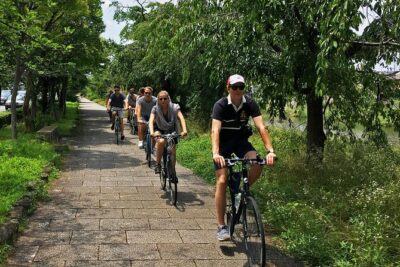
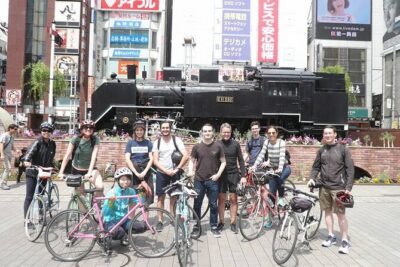
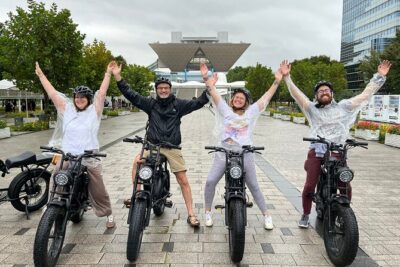
3h Tokyo E-Bike Tour: Hidden Gems, and Local Life with guide
Read our review →
Arashiyama Bamboo Forest & Hidden Gems Bike Tour (Early Bird)
Read our review →
Hiroshima in a Nutshell: Morning Bike Adventure
Read our review →
5 Top Highlights of Kyoto Full Day Bike Tour (E-bike option)
Read our review →Browse the lists this tour appears in