
REVIEW · WORKSHOPS
Osaka: Sushi Class in Dotonbori
Osaka’s sushi story is not just about raw fish. In this three-hour class near Dotonbori, you make three distinct styles, including oshizushi, the square pressed sushi closely tied to Kansai cooking. It is a useful way to taste Osaka beyond the neon streets and restaurant menus.
I like the small groups, capped at eight, and the patient English instruction. I also like the amount of food: you do not simply shape one piece, pose for a photo, and leave hungry. The main consideration is that this is a sushi-making class, not a full fish-filleting lesson. If slicing fish is your main goal, you may want a different workshop.
In This Review
- Key points to know before booking
- Three sushi styles, three different lessons
- What the three-hour schedule feels like
- Why oshizushi matters in Osaka
- Fresh ingredients and a meal worth the price
- The instructors make the difference
- A small group keeps your hands busy
- Finding Cooking Sun Osaka near Dotonbori
- Who should take this class
- Booking flexibility and timing
- My practical verdict
- FAQ
- Where does the sushi class take place?
- How long is the activity?
- How much does the class cost?
- What types of sushi will I make?
- Is the class taught in English?
- How large is the group?
- Are the sushi ingredients included?
- Can I request a vegetarian or gluten-free option?
- Can I cancel the booking?
Key points to know before booking
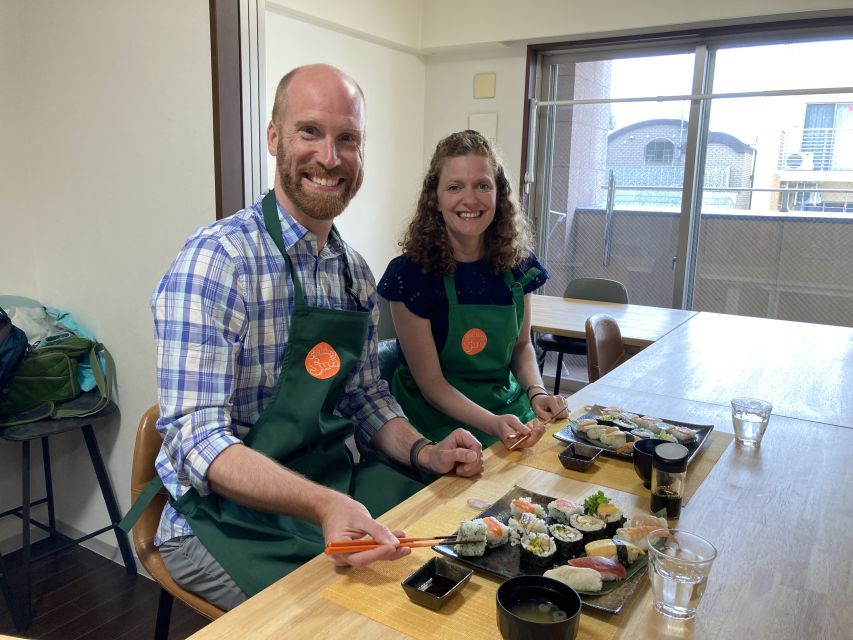
- Three sushi techniques in one class: Make a vegetable and tuna salad roll, hand-shaped nigiri, and Osaka-style pressed sushi.
- A real Kansai specialty: Oshizushi gives you a local food lesson that you might not get from a standard sushi dinner.
- English-speaking instruction: Guides such as Yoshi, Yoko, Ami, Naomi, and Eriko have led friendly, clear classes.
- Small and hands-on: Groups are limited to eight, with close guidance at each stage.
- Generous food value: All sushi ingredients are included, and the finished meal is substantial.
- Allow time to find the entrance: Go to Cooking Sun Osaka, room 202, then press 202 and the 呼出 call button.
Three sushi styles, three different lessons
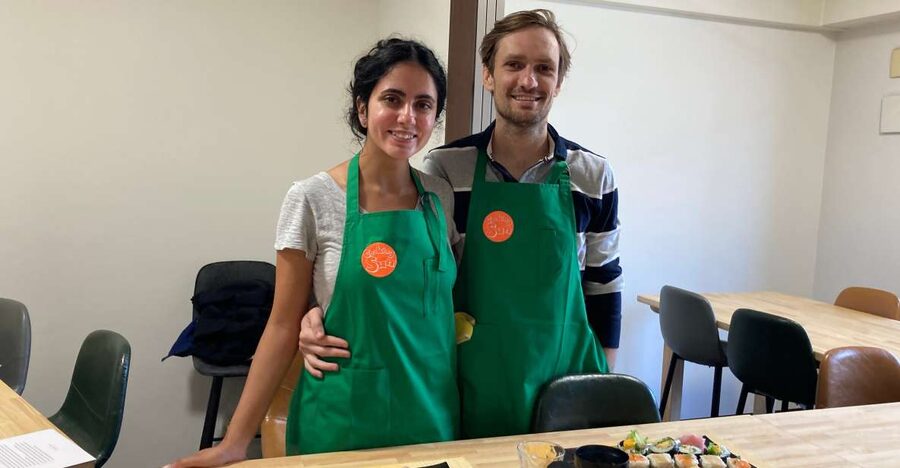
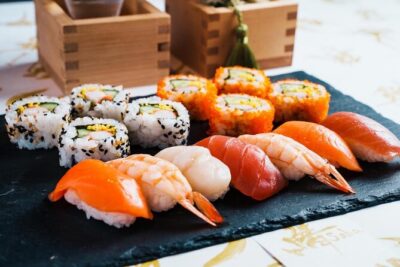
The class is built around contrast. You are not repeating one roll until you get it right. Instead, you move through three techniques that show how Japanese sushi can vary in shape, texture, and presentation.
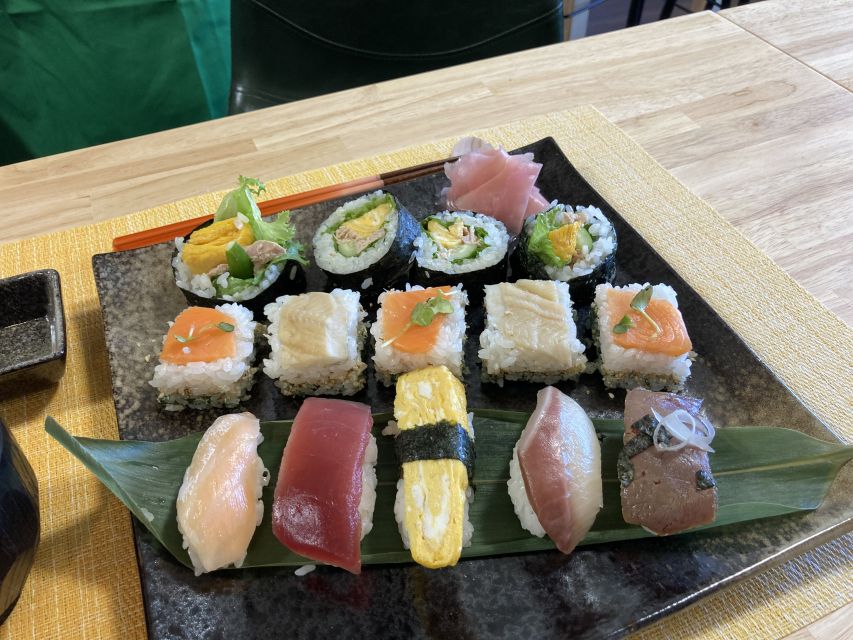
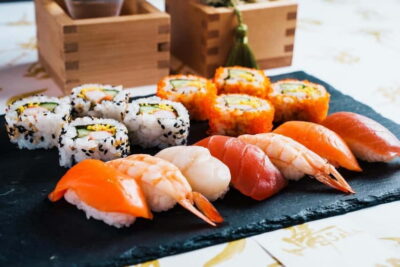
The first is the salad roll, a maki-style sushi with nori seaweed wrapped around the filling. The ingredients include crab-flavored kamaboko, lettuce, cucumber, tuna mixed with mayonnaise, and a center of tamagoyaki, or Japanese rolled omelet.
This is likely the easiest style for a beginner to understand. You spread and arrange the fillings, roll them in nori, and cut the finished cylinder into portions. The combination is mild and familiar, making it a sensible starting point if you are new to Japanese food or unsure about raw fish.
The salad roll also shows how Japanese home cooking often balances color and texture. You get crisp cucumber, soft egg, creamy tuna, leafy lettuce, and the savory chew of seaweed. It is not the most traditional-looking item of the three, but it gives you an approachable first success.
Next comes nigiri-zushi, the sushi most people picture first. A small mound of vinegared rice is shaped by hand, then topped with an ingredient such as fish, shellfish, or omelet.
The hard part is not simply placing a topping on rice. You need enough pressure to hold the rice together without crushing it. The rice should remain light rather than becoming a dense lump. An instructor demonstrates the motion, then watches as you try it yourself.
Nigiri is valuable because it teaches proportion. Too much rice overwhelms the topping. Too little falls apart. Even if your first pieces look uneven, you will understand why sushi chefs train their hands for years.
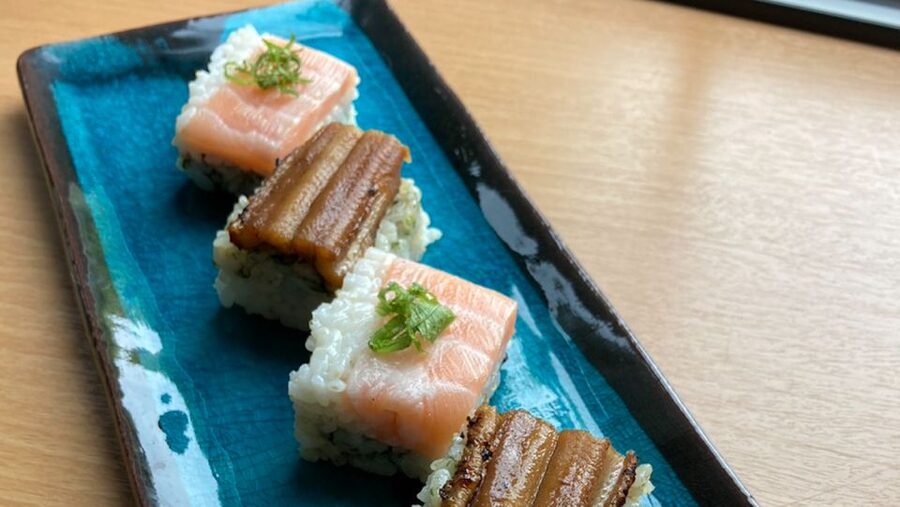
The final style is oshizushi, or pressed sushi. This is the Osaka specialty, also called box sushi. Sushi rice and toppings are packed into a square wooden frame, then pressed so the rice bonds to the ingredients.
When the block is released, it has clean sides and a firm square shape. You cut it into pieces just before eating. That detail matters: oshizushi is designed to be portioned from the box, not picked up as one large slab.
This section gives the class its strongest local character. Nigiri is famous across Japan, but oshizushi connects your meal to the Kansai region and Osaka’s own food traditions. You leave with a better sense that sushi is not one single dish. It is a family of methods shaped by local habits.
A few more Osaka trips to weigh up
- Sushi Making Osaka Roll and Authentic Japanese Sushi Class
★ 5.0 · 1,220 reviews - Matcha Making Class in Osaka with Authentic Japanese Sweets Set
★ 5.0 · 509 reviews - Osaka: Ramen and Gyoza Cooking Class in Dotonbori
★ 5.0 · 378 reviews
What the three-hour schedule feels like
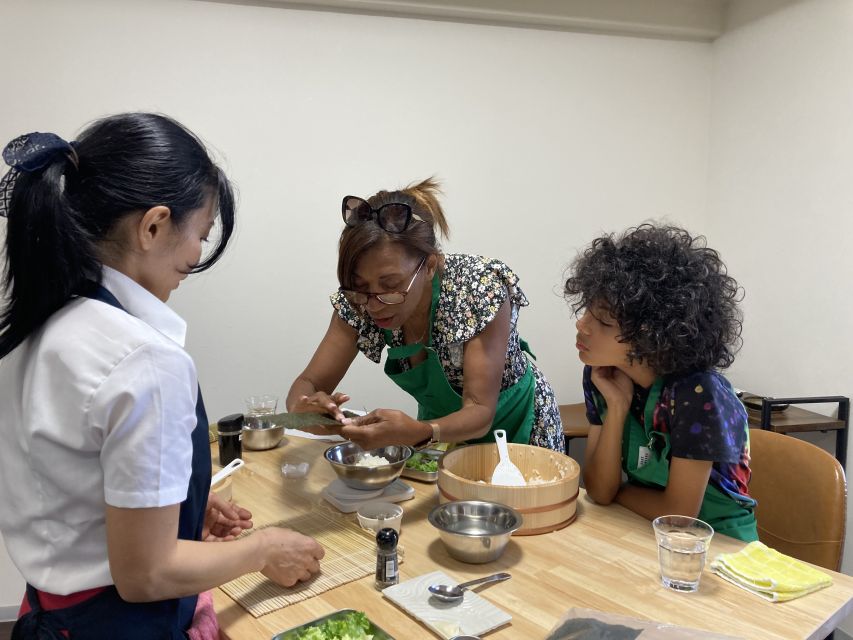
Expect a steady, practical class rather than a rushed demonstration. The instructor explains each stage in English, shows the technique, and gives you time to copy it.
The class works well for beginners because you do not need professional kitchen skills. Instructions are broken into small steps, and the teachers are available to correct your technique. Several instructors have been praised for being attentive and willing to answer questions, so you should feel comfortable speaking up if your roll is loose or your rice is sticking to your hands.
The hands-on portion is the main event. You handle the ingredients, form the rolls, shape the nigiri, and press the oshizushi. This makes the experience more useful than a demonstration where you only watch someone else cook.
The food is then yours to eat. The quantity is one of the better parts of the experience. You are making several types of sushi, not sampling a single bite, and the meal can be substantial enough to serve people with large appetites.
Do not treat the class as a quick lunch stop. Three hours is a sizeable block of your Osaka day, but it gives the instruction room to breathe. You can learn the method, ask about Japanese food culture, and sit down to enjoy what you made rather than swallowing it between sightseeing stops.
Why oshizushi matters in Osaka
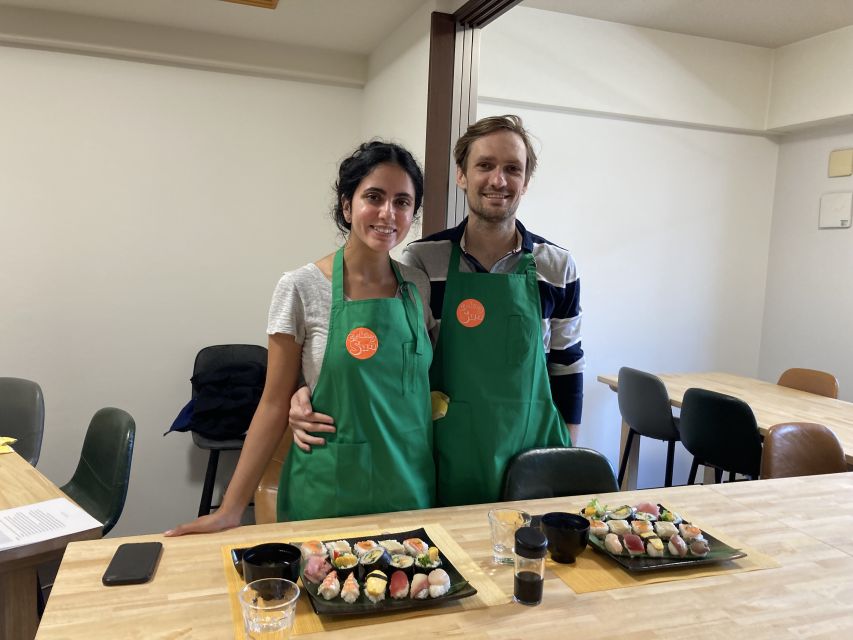
Osaka is often associated with takoyaki and okonomiyaki, but its sushi tradition deserves attention. Oshizushi reflects an older Kansai style in which sushi rice and toppings are pressed together in a wooden mold.
The method creates a compact, square piece that travels and keeps its shape well. It is a different idea from the hand-formed nigiri associated with Tokyo-style sushi. In the class, that contrast becomes something you can feel in your hands and taste at the table.
I especially like this local angle because it keeps the activity connected to Osaka. A generic sushi lesson could take place in almost any Japanese city. Teaching pressed sushi gives this one a stronger sense of place.
The class does not turn you into an Osaka sushi chef in three hours. It does, however, give you a practical explanation of a local specialty. Afterward, you will recognize box sushi on menus and understand how it differs from nigiri and rolled sushi.
Fresh ingredients and a meal worth the price
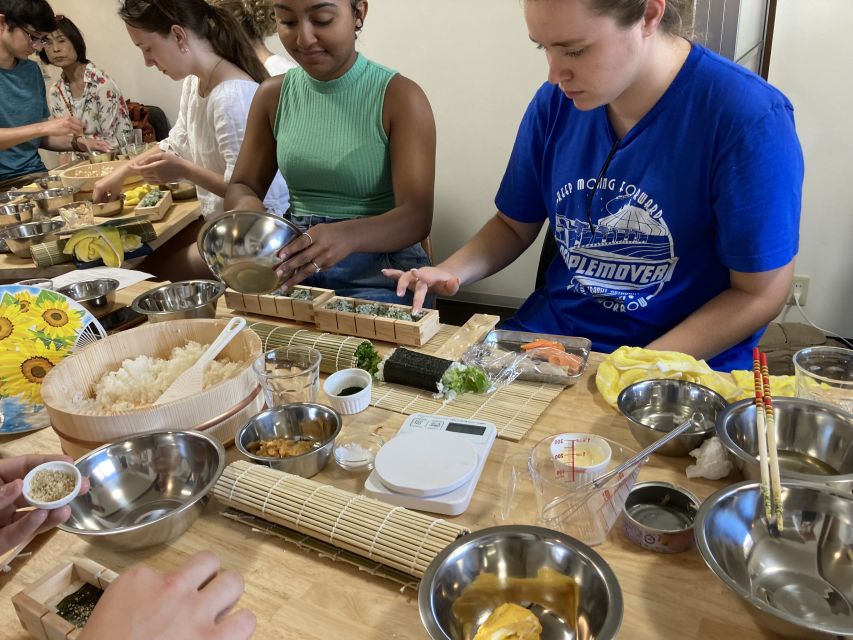
At $67 per person, the class is not the cheapest food activity in Osaka. It is fair value if you care about both instruction and lunch.
All ingredients for the sushi are included. You are paying for three hours of teaching, a small group, the food you prepare, and the chance to eat a generous final meal. Several participants found the quantity surprisingly large, which makes the price easier to justify for anyone who would otherwise pay separately for a meal nearby.
The ingredients listed for the salad roll give you a good sense of the class’s range: seafood, egg, vegetables, seaweed, and vinegared rice. The food is meant to be eaten fresh after preparation, so the meal is also the payoff for your work.
Still, value depends on your priorities. If you only want to eat excellent sushi, a restaurant may be more efficient. If you want premium fish tasting, this class may not be the right choice. You are buying instruction and participation, not a formal omakase meal.
The strongest value comes for couples, families, and first-time sushi makers who want an activity with a meal built in. It also works well for people who enjoy cooking but do not want a class that demands advanced knife skills.
Same city, a completely different kind of day:
- Osaka Go Karting Tour with Funny Costume
★ 5.0 · 2,658 reviews - Osaka Castle: Museum and Tower Entry Ticket
★ 4.5 · 2,380 reviews - Osaka: Shinsekai Food Tour with 13-15 Dishes at 5 Eateries
★ 4.8 · 2,204 reviews - Osaka Food Tour: 13 Dishes at 5 Local Eateries
★ 5.0 · 2,149 reviews
The instructors make the difference
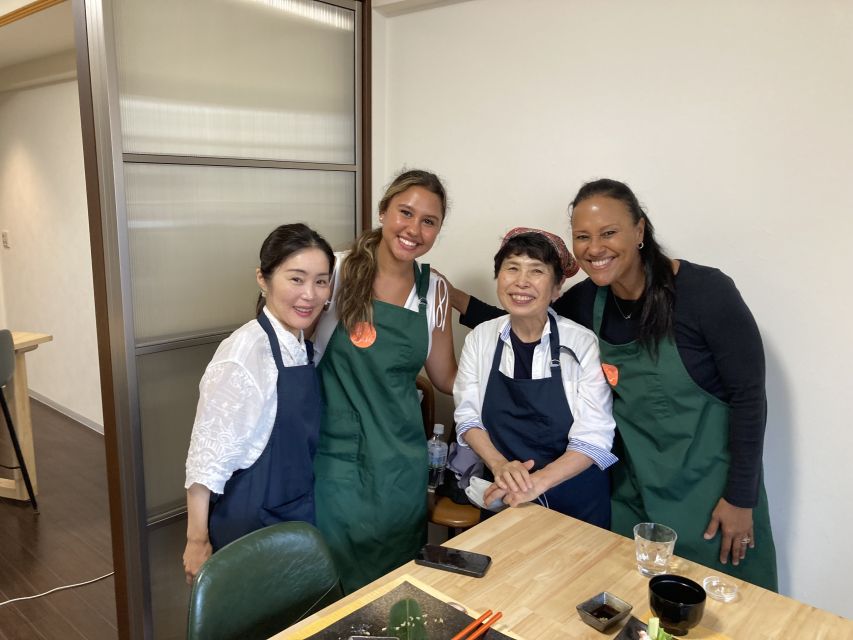
The teaching is in English, and the instructors named in past sessions include Yoshi, Yoko, Ami, Naomi, and Eriko. Your specific teacher may vary, but the format is designed for English-speaking participants.
Yoshi has been described as especially warm and thorough, with a habit of asking about your Osaka plans and offering ideas for food and sightseeing. Other teachers, including Yoko, Ami, Naomi, and Eriko, have been praised for clear explanations, friendly interaction, and careful attention during the cooking.
That personal contact adds value. You can ask why a method is used, how an ingredient fits into Japanese cooking, or how to repeat the recipe at home. The cultural side is not treated as a long lecture. It comes through while you are working.
You may also hear about Japanese cooking methods, food preservation, pickling, and the meaning of different dishes. The exact conversation will depend on the instructor and group, but the class has more going on than simply assembling ingredients.
A small group keeps your hands busy
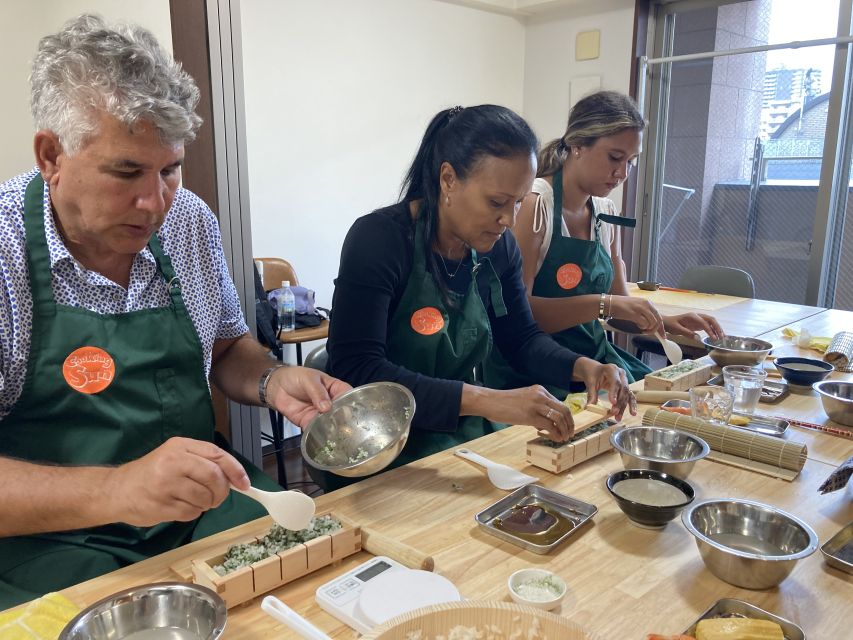
The group limit is eight people. Sessions may be smaller, and a group of four gives each person plenty of room for direct help.
That size matters in a practical class. You can see the demonstration without craning over a crowd, and the instructor has a better chance of noticing when your rice is too loose or your roll needs more pressure.
Small groups also make conversation easier. You can discuss your Japan plans with the instructor and ask questions without interrupting a large lecture. For solo visitors, this can be a pleasant social activity. For couples, it gives you something to do together instead of simply sitting across from another restaurant plate.
The tradeoff is that the experience may feel less private if you want a one-on-one cooking lesson. You are sharing the kitchen and the teaching time with other participants. For most people, the limit of eight is a good middle ground between personal help and a reasonable price.
Finding Cooking Sun Osaka near Dotonbori
The meeting point is Cooking Sun Osaka, room 202. At the entrance, press the button marked 202 and then press 呼出, which means call.
Give yourself extra time to locate the building. One participant had difficulty finding the entrance, and even a taxi driver struggled to identify it. The tree outside is a useful visual clue once you know what you are looking for, but the entrance may not be obvious when you are walking around Dotonbori.
Dotonbori is a busy area, so do not assume a short map distance means an effortless arrival. Read the meeting instructions before leaving your hotel and keep the room number visible on your phone.
The class is listed as wheelchair accessible. If accessibility is important for your booking, confirm the exact route and entrance details in advance, since the supplied information does not describe the building layout.
Who should take this class
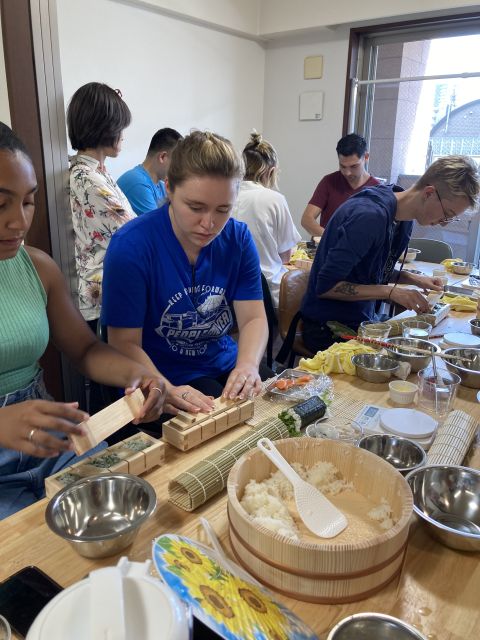
I would recommend it most strongly to:
- First-time visitors who want a guided introduction to sushi
- Sushi fans who want to learn three different techniques
- Couples looking for a shared food activity
- Families with older children who can follow kitchen instructions
- Visitors who value a meal and an activity in one booking
- Anyone curious about Osaka’s pressed sushi tradition
You do not need to be a confident cook. The teaching is built for novices, and the steps are demonstrated clearly.
The class may be less suitable if you want to fillet fish, practice advanced knife work, or focus only on raw seafood. One participant specifically wished for a chance to slice the fish, so keep that limitation in mind.
Vegetarians and people avoiding gluten should leave a note when booking. The activity offers vegetarian and gluten-free options, but the request needs to be made ahead of time.
Booking flexibility and timing
The class lasts three hours, and starting times depend on availability. Fit it into your day carefully. A late-morning session can work as lunch, while another start time may be better before an evening in Dotonbori.
You can cancel up to 24 hours in advance for a full refund. The reserve-now, pay-later option also helps if you are still arranging your Osaka schedule. These policies are useful, but they do not remove the need to arrive on time, especially when the entrance can take a little effort to find.
My practical verdict
This is a strong pick if you want to do more than eat sushi. The class gives you three techniques, a local Osaka specialty, clear English instruction, and enough food to make the $67 feel reasonable.
The best part is the combination of learning and eating. You see how salad rolls are built, how nigiri depends on rice shape and pressure, and how oshizushi turns a wooden mold into a square meal. You also get a chance to talk with instructors who can add food and sightseeing advice along the way.
Book it if you enjoy hands-on activities and want a relaxed introduction to Japanese cuisine. Skip it if your ideal sushi experience is a chef slicing rare fish in front of you. For most beginners, couples, and food-focused visitors, this is one of the more useful ways to spend three hours around Dotonbori.
FAQ
Where does the sushi class take place?
It takes place at Cooking Sun Osaka, room 202. At the entrance, press 202 and then press the 呼出 call button.
How long is the activity?
The class lasts three hours.
How much does the class cost?
The listed price is $67 per person.
What types of sushi will I make?
You will make a salad roll, nigiri, and oshizushi, which is Osaka-style pressed sushi.
Is the class taught in English?
Yes. The instructor language is English.
How large is the group?
The class is limited to eight participants.
Are the sushi ingredients included?
Yes. All ingredients for making the sushi are included.
Can I request a vegetarian or gluten-free option?
Yes. Leave a note upon booking if you need a vegetarian or gluten-free option.
Can I cancel the booking?
You can cancel up to 24 hours in advance for a full refund. You can also reserve now and pay later.
Just added around Osaka
- (Ticket Included) Explore Osaka Castle & Museum of History★ 4.8 · 21 reviews
- Hidden Osaka – Yukaku Red Light Tour & Culinary Adventure★ 4.8 · 96 reviews
- Osaka: Walking Tour and Top Highlights★ 4.8 · 104 reviews
- Osaka: Private Ceramic Painting Workshop★ 5.0 · 13 reviews
- Pickleball in Osaka, Kobe & Kyoto with Locals!★ 4.7 · 80 reviews
- Eat Like a Local in Osaka – Private Custom Street Food Tour★ 4.3 · 33 reviews
- Osaka:SUMO BEATS SHOWCASE: Taiko Drum and Wagyu burger!★ 4.2 · 37 reviews
- Kimono photoshoot-Includes 100 photo data★ 5.0 · 21 reviews
Workshops, compared.
Sushi Making Tokyo Roll and Authentic Japanese Sushi Class
Read our review →
Roll and Authentic Sushi Making Class in Asakusa
Read our review →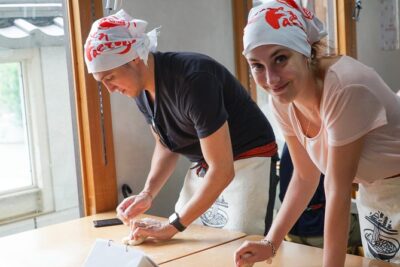
Ramen Cooking Class at Ramen Factory in Kyoto
Read our review →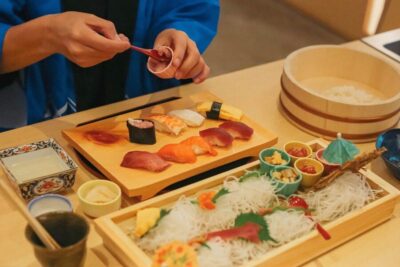
Sushi Making Class in a Happi Coat near a Famous Spot
Read our review →
Sushi Making Osaka Roll and Authentic Japanese Sushi Class
Read our review →
Tokyo Sushi Making Class in Tsukiji with Professional Chef
Read our review →Browse the lists this tour appears in