
REVIEW · ARASHIYAMA BAMBOO TOURS
Kyoto Arashiyama Walking Tour: Bamboo, Monkeys, Gardens & Secrets
Arashiyama is famous for its towering bamboo, but the best part of this tour is the way it links the bamboo path with quiet gardens, old shrines, and mountain views. Guides such as Teri, Mari, Marie, and Osin add useful history and keep the route moving through one of Kyoto’s busiest sightseeing areas.
I like the broad mix of sights, especially Okochi Sanso Garden and Tenryuji Temple, and I like having a guide who can use back routes when the main paths fill up. The main consideration is physical: this is a long walking day, with a steep 20 to 25 minute climb to Monkey Park.
In This Review
- Key points at a glance
- Why this Arashiyama walk works well
- Starting near Saga-Arashiyama
- Nonomiya Shrine and the meaning of purification
- Walking the Bamboo Forest beyond the standard photo stop
- Okochi Sanso Garden, the quiet high point
- Tenryuji Temple and Sogenchi Garden
- Togetsukyo Bridge and the Hozu River view
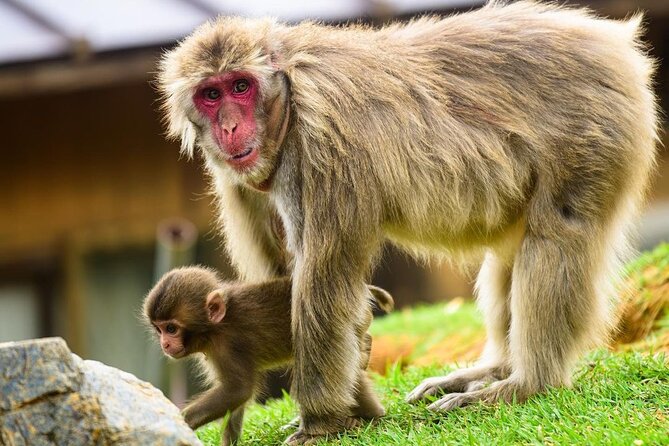
- The climb to Monkey Park Iwatayama
- A planned lunch pause, without included food
- The guides make the difference
- Who should book this experience
- Is $65.57 a fair price?
- Final call: book it for a structured Arashiyama day
- FAQ
- How long does the Arashiyama walking tour last?
- What sights are included?
- Is Monkey Park admission included?
- How difficult is the walk to Monkey Park?
- Is lunch included?
- What language is the tour conducted in?
- How large is the group?
- Where does the tour start and finish?
Key points at a glance
- A full Arashiyama circuit: Bamboo, Nonomiya Shrine, Okochi Sanso, Tenryuji, Togetsukyo Bridge, and Monkey Park all fit into one outing.
- Small-group or private options: The maximum group size is 12, with a private choice available for a more personal pace.
- Strong guide-led context: Teri, Mari, Marie, Maricel, Osin, Aron, and other guides are praised for clear explanations, good pacing, photos, and practical help.
- The monkey visit requires effort: You walk uphill for 20 to 25 minutes, and the path is described as somewhat steep.
- Lunch is on your own: The tour allows about 35 minutes for a quick lunch break, but food is not included.
- Check the meeting point carefully: The schedule refers to Saga-Arashiyama Station, while the meeting-point information also names Monkey Park. Confirm the exact start location before setting out.
Why this Arashiyama walk works well
Arashiyama can feel simple on a map and confusing on the ground. The famous bamboo path, Tenryuji Temple, Togetsukyo Bridge, and Monkey Park sit within walking distance, but the order matters. Crowds build quickly, and three nearby stations use Arashiyama in their names. A guide takes care of that puzzle while adding meaning to places that can otherwise blur into a string of photo stops.
At $65.57 per person, the tour is not the cheapest way to see bamboo. You are paying for roughly five to six hours of guiding, site admissions listed for the route, local navigation, and the chance to cover several major sights without planning the sequence yourself. For a first visit to Kyoto, that is a fair trade if you value background and structure.
The value improves for a small group, particularly if you are traveling with family or friends. A private tour should give you more control over questions and pace, while the shared option keeps the price lower. With a maximum of 12 people, this is not a huge coach outing, but it is still worth asking how large your selected departure will be.
More Walking Tours in Kyoto
- Kyoto Geisha Walking Tour: Gion District & Hidden Gems
★ 4.7 · 3,273 reviews - Kyoto: Gion Magical Night Walking Tour with Geisha Trivia
★ 4.9 · 2,393 reviews - Kyoto: Gion Geisha District Walking Tour – Stories of Geisha
★ 4.7 · 2,187 reviews
Starting near Saga-Arashiyama
The planned route begins at Saga-Arashiyama Station, where you have a short 20-minute orientation period. This is useful because the station area gives you a moment to find your guide, settle in, and sort out the day before entering the thickest sightseeing crowds.
Pay close attention to the station name. A useful detail from the tour information is that three stations in the area carry Arashiyama in their names, and they are not close together. Saga-Arashiyama is described as the quickest connection from Kyoto Station, at about 25 minutes by train. Confusing it with one of the other Arashiyama stops can add a great deal of time and walking.
There is an important inconsistency in the supplied meeting information. One part names Saga-Arashiyama Station, while another lists Arashiyama Monkey Park Iwatayama as the start and end point. Confirm the exact meeting place with Japanify Tours before you leave your hotel. Do not rely on a map pin that simply says Arashiyama.
Nonomiya Shrine and the meaning of purification
Nonomiya Shrine is a small stop, usually around 10 minutes, but it gives the walk an early cultural anchor. The shrine was traditionally connected with purification rituals for unmarried imperial princesses before they served as priestesses at Ise Shrine.
You will not spend a long time here, and that is part of its appeal. It is a compact, atmospheric place before the larger temple grounds and crowded bamboo path. A good guide can explain the shrine’s role without turning the stop into a lecture.
This is also a reminder that Arashiyama is not simply a scenic district. Its paths connect religious sites, former estates, imperial traditions, and ordinary Kyoto streets. I find that context makes the later gardens more rewarding.
Walking the Bamboo Forest beyond the standard photo stop
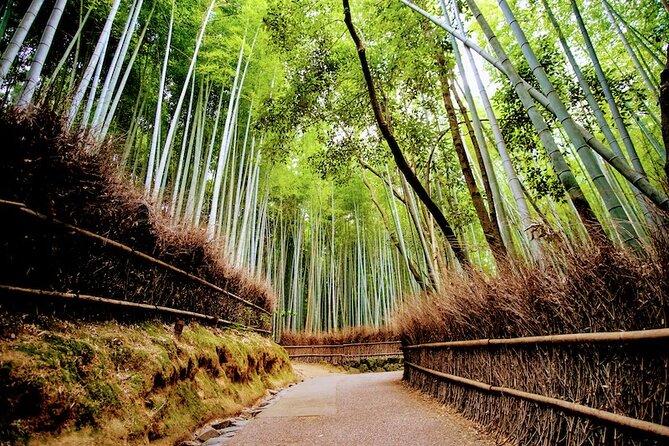
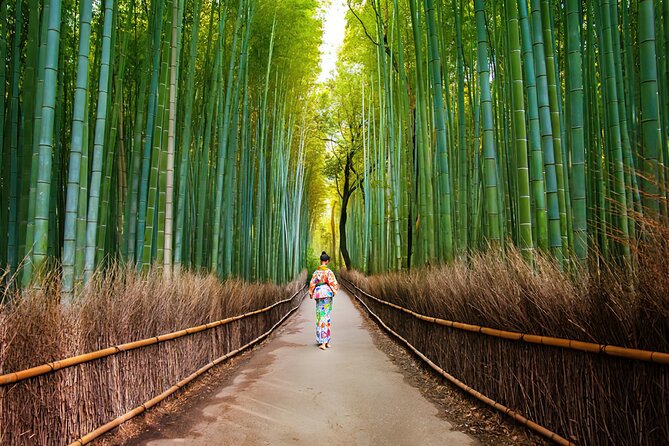
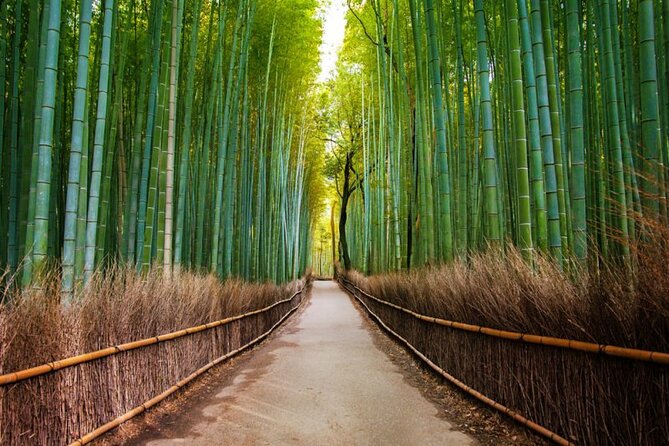
The Bamboo Forest gets about 30 minutes on this schedule. That is enough to walk beneath the tall stalks, pause for photographs, and hear how the grove fits into Arashiyama’s cultural identity, but it is not a long private wander.
Expect other people. The bamboo path is one of Kyoto’s best-known sights, and even an early visit cannot guarantee solitude. The advantage of coming with a guide is route management. Several guides, including Teri and Aron, are praised for using quieter side streets and alternative paths when possible. That will not remove the crowds from the central grove, but it can make the walk between major stops calmer.
Bring a camera, but do not judge the stop only by the perfect photograph. The grove is most enjoyable when you look up and notice the changing height, light, and sound of the bamboo. Your guide can also help place the scene within the wider Arashiyama visit instead of treating it as the whole reason to come.
Same city, a completely different kind of day:
- PERFECT KYOTO 1-Day Bus Tour
★ 5.0 · 13,518 reviews - Kyoto: Fushimi Inari, Kinkakuji, Bamboo Grove 1 Day Bus Tour
★ 4.8 · 4,316 reviews - Kyoto: Tea Ceremony in a Traditional Tea House in Kiyomizu
★ 4.9 · 3,519 reviews - Kyoto: Tea Ceremony Ju-An at Jotokuji Temple
★ 4.9 · 3,207 reviews
Okochi Sanso Garden, the quiet high point
Okochi Sanso Garden receives about 30 minutes and may be the most peaceful part of the route. It sits at the end of the Bamboo Forest and was once the private villa of a famous Japanese actor. The garden is valued for its composed views and quiet paths, offering a strong contrast to the public bamboo corridor.
This stop costs time and energy because it is reached through the forest and garden paths, but that effort pays off. I like it because it feels less like a quick attraction and more like a carefully shaped retreat. You get a better sense of how Japanese gardens use borrowed views, carefully placed plants, paths, and changing viewpoints.
Do not expect a long independent garden visit. Thirty minutes passes quickly, especially if the group pauses for explanations and photographs. Still, admission is listed as included, and a guide helps you notice details you might otherwise pass without understanding.
Tenryuji Temple and Sogenchi Garden
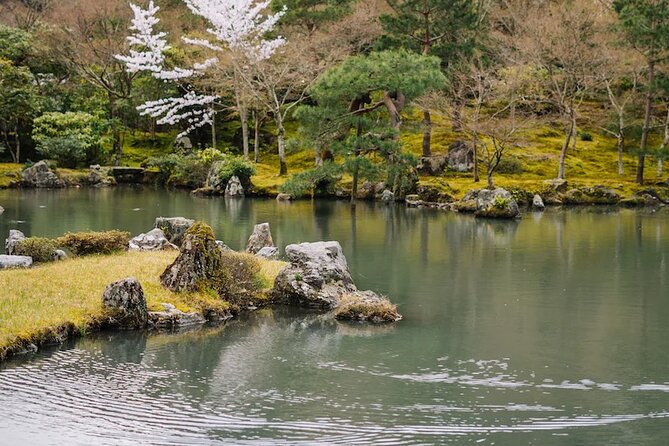
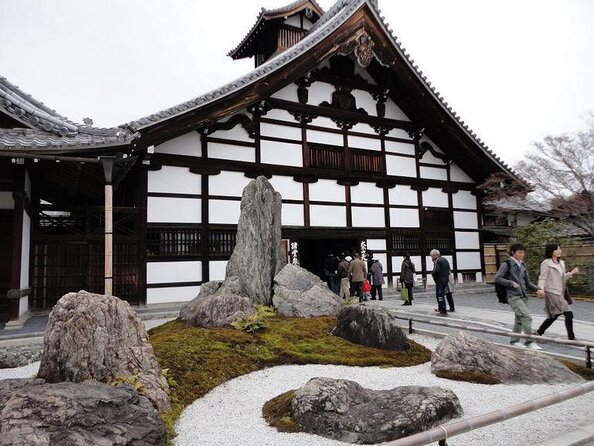
Tenryuji receives around 35 minutes. The temple is a UNESCO World Heritage Site, and its Sogenchi Garden is considered one of Japan’s finest. Here the tour shifts from private villa garden to major Zen temple, giving you two distinct approaches to Japanese garden design in the same morning.
The garden is the reason to pay attention. Rather than rushing through the buildings, look across the pond, at the arrangement of rocks and trees, and toward the surrounding hills. The garden’s broad composition works well after the narrow bamboo paths.
Thirty-five minutes is enough for a focused visit, not a full study of every temple building. If gardens are your main interest, you may wish you had more time. The benefit is that the tour continues on to several other signature sights, so you are not sacrificing the rest of Arashiyama for one temple.
Togetsukyo Bridge and the Hozu River view
Togetsukyo Bridge gets about 15 minutes. This is a short stop, but the bridge is one of Arashiyama’s defining views, with the Hozu River and surrounding mountains opening up after the enclosed garden paths.
The stop works as a visual reset. You have moved from bamboo, shrine courtyards, and temple gardens into a broad riverside setting. Your guide may point out the best angle for photographs or help you understand how the bridge fits into the district’s appeal.
Do not expect a long riverside break. Fifteen minutes allows for the view and a few photographs, but not a leisurely walk along the river. If you want extra time here, ask your guide how the schedule can accommodate it, particularly on a private departure.
The climb to Monkey Park Iwatayama
Monkey Park is the most physically demanding section. From the bridge, you hike uphill for about 20 to 25 minutes to reach the hilltop. The path is a bit steep, and the schedule allows about an hour for the park visit, including the climb and time with the Japanese macaques.
This is not a bus ride to an animal enclosure. You need to walk under your own power, and the climb may feel strenuous after several hours on foot. Wear supportive shoes, carry water, and treat the hill as a real part of the tour rather than a minor add-on.
At the top, you can see Japanese monkeys moving freely and look back over Arashiyama. The setting gives the visit its appeal: the animals are part of a mountain park, not simply a staged photo backdrop. Follow the guide’s instructions around the monkeys and do not assume that close interaction means touching or feeding them.
The park is a highlight for many families, and one review specifically describes it as a favorite stop for a 13-year-old. It can also be the least comfortable stop for anyone uneasy around monkeys or worried about steep paths. If you are unsure about the climb, this is the one part to consider carefully before booking.
A planned lunch pause, without included food
The day ends with about 35 minutes for a quick lunch break. Food is not included, so budget separately and understand that this is a short pause rather than a long restaurant meal.
That timing is practical after the Monkey Park hike. You can eat, recover, and ask your guide for nearby suggestions, but the tour does not promise a specific restaurant or meal. Bring a small snack if you tend to get hungry during long walks.
The route can run around 4.5 hours in practice, while the advertised duration is approximately five to six hours. That difference likely depends on group size, crowd levels, questions, and the exact time spent at each stop. If you have a fixed afternoon plan, allow a buffer.
The guides make the difference
The strongest part of this experience is the guiding. Teri is repeatedly described as clear, warm, funny, and good at controlling the schedule. Mari and Marie are praised for keeping the day lively, helping with photographs, and adding useful cultural details. Maricel, Osin, Aron, and Francis are also named as engaging guides.
That range matters because a walking tour depends heavily on the person leading it. The best guides do more than point toward a temple. They explain why a shrine matters, answer questions, find a quieter route, keep the group together, and notice when someone needs a pause.
Several guide accounts also highlight photography help, including good viewpoints and even a Polaroid-style souvenir on one outing. Treat that as a possible guide-by-guide extra, not a guaranteed inclusion. The reliable promise is an English-speaking bilingual guide, with other languages available only if arranged before booking.
Recording and live streaming are not allowed during the tour. Smart glasses with recording features, including Ray-Ban Meta glasses, are also prohibited. That rule is worth knowing if you planned to document the whole walk hands-free.
Who should book this experience
I would choose this tour if you want to see Arashiyama’s major sights in one organized day and prefer explanations over simply following a map. It suits first-time Kyoto visitors, families with older children, couples who want help with photos, and solo visitors who do not mind the possibility that the minimum booking requirement may affect departure.
It is also a good fit if crowded places frustrate you. A guide cannot control the number of people in the Bamboo Forest, but the ability to use back streets and better timing can make the overall route feel less hectic.
I would hesitate if you want long, quiet periods at each garden or temple. The itinerary covers a lot, so every stop has a time limit. I would also think twice if steep hills, five hours of walking, or close proximity to monkeys would make the day stressful.
Solo visitors can book, but the tour requires at least two people for the departure to proceed. If only one person books, the activity may be canceled, with rescheduling or a full refund offered. Free cancellation is available up to 24 hours before the start time, but changes or cancellations inside that window are not accepted.
Is $65.57 a fair price?
For $65.57, you receive a guided route through several paid attractions, including Okochi Sanso and Tenryuji, along with the Bamboo Forest, bridge, shrine, and Monkey Park. Lunch and tips are extra, and the tour does not provide hotel pickup.
The price makes the most sense when you count the planning time saved. Arashiyama is easy to reach but less easy to organize efficiently, especially when you factor in station confusion, crowds, admission lines, and the uphill monkey visit. A good guide turns a scattered half-day into a clear route.
You may save money by visiting independently, particularly if you are comfortable reading maps and researching temple history. But you will need to decide the order, find the less crowded connections, arrange admissions, and manage the clock yourself. For many first-time visitors, the time saved is worth the premium.
Final call: book it for a structured Arashiyama day
Book this tour if you want breadth, history, and practical navigation in one outing. The route gives you the famous bamboo, but it also adds Nonomiya Shrine, Okochi Sanso, Tenryuji, the bridge, and a mountain-top monkey park. The guides are the real asset, with Teri, Mari, Marie, and others praised for strong explanations, good humor, photographs, and reliable pacing.
Skip it if you want to linger alone in gardens or dislike long walks and steep climbs. Before paying, confirm the meeting point, check the minimum two-person departure rule, and plan for lunch, water, and sturdy shoes. For an active first look at Arashiyama, this is a well-filled and sensible choice.
FAQ
How long does the Arashiyama walking tour last?
The advertised duration is approximately five to six hours. Some outings may finish closer to four and a half hours, depending on pace, questions, crowds, and time spent at each stop.
What sights are included?
The route includes Arashiyama, Nonomiya Shrine, Okochi Sanso Garden, the Bamboo Forest, Tenryuji Temple and Sogenchi Garden, Togetsukyo Bridge, Monkey Park Iwatayama, and a lunch break.
Is Monkey Park admission included?
The tour information lists Monkey Park admission as paid and also describes admissions for the itinerary as included. Because the details conflict, confirm Monkey Park admission with Japanify Tours before booking.
How difficult is the walk to Monkey Park?
The hike to the hilltop takes about 20 to 25 minutes. The path is somewhat steep, so you should be ready for a sustained uphill walk.
Is lunch included?
No. The tour provides about 35 minutes for a quick lunch break, but food and drinks are not included.
What language is the tour conducted in?
Tours are conducted in English. German or Italian may be possible if you ask before booking.
How large is the group?
The maximum group size is 12 people. You can choose a private or small-group format, depending on the option you book.
Where does the tour start and finish?
The schedule refers to Saga-Arashiyama Station, while the meeting-point information also lists Arashiyama Monkey Park Iwatayama. Confirm the precise start and finish locations before the tour because the area has several stations and meeting points with similar names.
More Arashiyama Bamboo Tours in Kyoto
- Osaka/Kyoto:Kinkakuji,Arashiyama,FushimiInariShrine,NaraPark
★ 4.1 · 1,596 reviews - Kyoto/Osaka: Nara, Fushimi Inari Taisha, Arashiyama Bus Tour
★ 4.7 · 1,275 reviews - Arashiyama Bamboo, Temple, Monkeys, or Secret Sake Brewery
★ 4.8 · 886 reviews - Kyoto: Arashiyama Bamboo Forest, Monkeys, Matcha & Temple Tour
★ 5.0 · 759 reviews
Just added around Kyoto
- Taste of Nishiki Market Walking Food Tour with Local guide★ 5.0 · 17 reviews
- Kyoto: Sushi Making Class with Sushi Chef★ 4.8 · 64 reviews
- Kyoto: City Secrets eBike Tour★ 4.9 · 196 reviews
- Sacred Pathways: Discover the Philosopher’s Path of Kyoto★ 4.9 · 20 reviews
- Private Tour to Monkey Park and Arashiyama Highlights★ 5.0 · 22 reviews
- Private Nara Tour from Osaka – Meet at Your Hotel★ 5.0 · 22 reviews
- Private Sake Tasting in Central Kyoto with Sake Sommelier★ 5.0 · 13 reviews
- Kyoto : Private Custom Walking Tour With A Local Guide★ 4.6 · 144 reviews
Arashiyama Bamboo Tours, compared.
Osaka/Kyoto:Kinkakuji,Arashiyama,FushimiInariShrine,NaraPark
Read our review →
Kyoto/Osaka: Nara, Fushimi Inari Taisha, Arashiyama Bus Tour
Read our review →
Arashiyama Bamboo, Temple, Monkeys, or Secret Sake Brewery
Read our review →
Arashiyama Bamboo Forest, Monkeys, Matcha & Temple Tour
Read our review →
Osaka/Kyoto: Arashiyama, Nara & Fushimi Inari Shrine w/Lunch
Read our review →
Nijo, Kinkaku-ji, Arashiyama, Kiyomizu & Fushimi Inari
Read our review →
Arashiyama Bamboo Forest & Hidden Gems Bike Tour (Early Bird)
Read our review →
Arashiyama Customized Rickshaw Tour & Bamboo Forest
Read our review →Browse the lists this tour appears in