
REVIEW · KIMONO & CULTURE EXPERIENCES
Best Samurai Experience in Tokyo
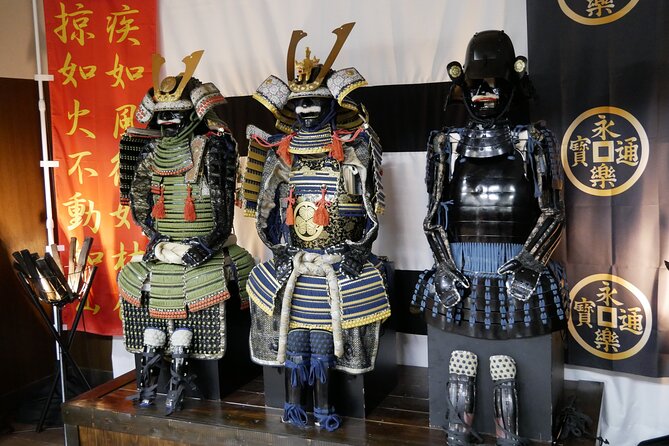
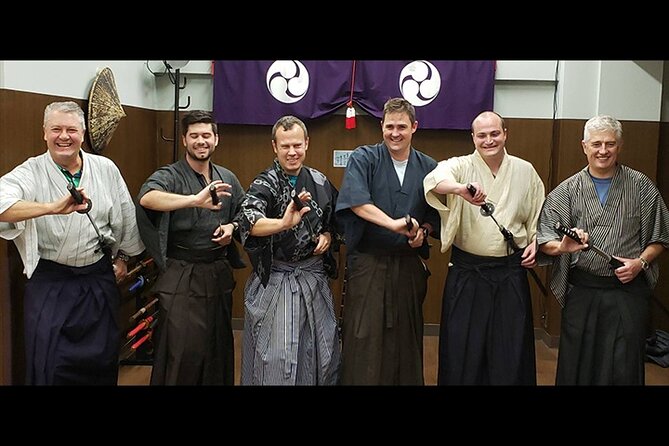
The best part of this Tokyo samurai experience is that you do not simply pose beside a sword. You put on a kimono and hakama, learn how to draw, hold, swing, and return a katana, then use those movements in a short choreographed fight. The Edo-period dojo setting and its displays of armor, swords, and spears give the hour a strong sense of place.
I like two things right away: the hands-on sword lesson makes the activity feel like more than a costume photo stop, and the instructors build in time for photos and video, including for solo visitors. The teachers are professional performers who have appeared in major Japanese dramas and films, so the final sword sequence has some real theatrical polish.
The main consideration is time. At about one hour, this is a lively introduction rather than a full study of samurai history or martial arts. The venue can also be slightly tricky to spot among side roads, so allow a few extra minutes to find the flag near Samurai Theater Tokyo at 40 Yokoteramachi in Shinjuku.
In This Review
- Key points at a glance
- Entering an Edo-style dojo in Shinjuku
- Choosing a kimono and hakama
- Learning the katana basics
- From practice to a short chambara performance
- Photos, video, and the solo visitor advantage
- Why the one-hour format works, and where it falls short
- Is $65 a fair price?
- Who will enjoy this most?
- Booking, timing, and cancellation advice
- The practical verdict
- FAQ
- Where does the samurai experience take place?
- How long does the activity last?
- What does the price include?
- Is transportation included?
- Can I book if I am traveling alone?
- Can I take photographs and videos?
- How many people can join?
- Is the experience suitable for most people?
- What is the cancellation policy?
Key points at a glance
- Choose your own kimono and hakama: You select the traditional outfit before learning the basic sword movements.
- Learn four practical sword actions: The lesson covers drawing, holding, swinging, and retracting a Japanese sword.
- Perform a staged chambara fight: You practice a simple sequence and then act it out to music and sound effects.
- Explore a dojo-style display space: Armor, swords, spears, and other weapons create a museum-like backdrop.
- Photos and video are allowed: You can use your phone, and the staff can help record your performance.
- Small groups keep the lesson manageable: The maximum group size is 10 people, and solo bookings are accepted.
Entering an Edo-style dojo in Shinjuku
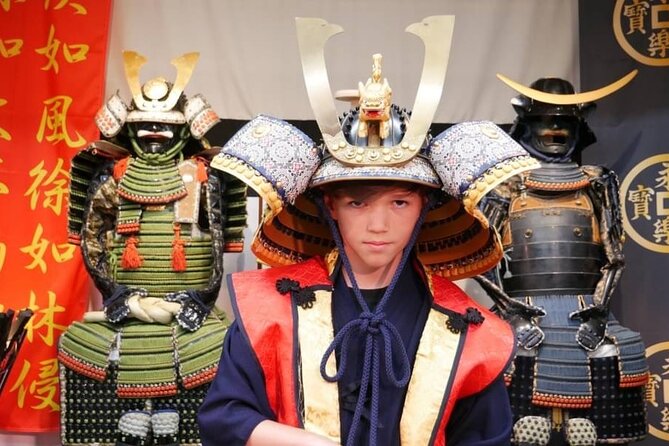
The setting does much of the work here. Samurai Theater Tokyo is designed to resemble a dojo from the Edo period, roughly 400 years ago, rather than a bright modern activity studio. Armor and weapons are displayed around the room, giving you something to look at before and during the lesson.
That setting matters because costume activities can feel thin when they take place in an ordinary commercial room. Here, the swords, spears, and armor help create a stage for the story. You are still in central Tokyo, but the room is arranged to make the modern city feel far away for an hour.
The meeting point is 40 Yokoteramachi, Shinjuku City. It is near public transportation, but the entrance may not be obvious at first. The venue is reached by side roads, and one useful tip is to watch for the flag that marks the way. I would not arrive at the last second, especially if your group includes children or anyone who needs time to change.
The activity ends at the same place where it begins. There is no private transportation included, so you make your own way to and from the theater.
More Kimono & Culture Experiences in Tokyo
- Tokyo: Samurai Ninja Museum Guided tour and Experience
★ 4.6 · 1,010 reviews - Tokyo: Samurai Sword & Archery Class from Samurai Descendant
★ 5.0 · 603 reviews - Ninja Experience (Family Friendly) at Samurai Ninja Museum TOKYO
★ 5.0 · 441 reviews
Choosing a kimono and hakama
Once inside, you choose your preferred kimono and hakama before changing into the costume. This is a small but important part of the activity. You are not handed one standard outfit and rushed through the process. Picking the color and style gives you a little ownership of the character you are about to play.
The formal clothing is also more comfortable than some people expect. It is not just a decorative outer layer for a quick photograph. You wear it while moving, practicing sword actions, and taking part in the staged battle.
You should think of the costume as part of the lesson, not a separate photo package. It changes your posture and movement, and it makes the final performance look much better on camera. Families often appreciate this stage because children can take part in the transformation before they need to focus on instructions.
The provider supplies the samurai costumes, and all fees and taxes are included in the listed price. You do not need to rent clothing separately.
Learning the katana basics
After changing, an instructor demonstrates the essential sword actions. The lesson covers how to draw the sword, how to hold it, how to swing it, and how to return it to its sheath. The focus is on basic technique and safe handling, not on sending you home as a trained swordsman.
That distinction is useful. You get a clear introduction to the movements without signing up for a long martial arts class. The session is built for first-timers, and the instructors guide the group through the sequence at a manageable pace.
The teachers are described as professional instructors who have appeared in major Japanese dramas and movies. That background helps explain the theatrical quality of the session. They are teaching movement, but they are also teaching timing, posture, and presentation.
The lesson can require concentration. You need to remember the order of several actions while holding a sword and listening to directions. One person described it as a pleasant mind exercise, and that is a fair way to think about it. It is active without being an exhausting workout.
The swords are used as part of a controlled performance. You should follow the instructor closely and treat the safety guidance seriously. The appeal is learning a short sequence well enough to perform it, not improvising your own combat moves.
From practice to a short chambara performance
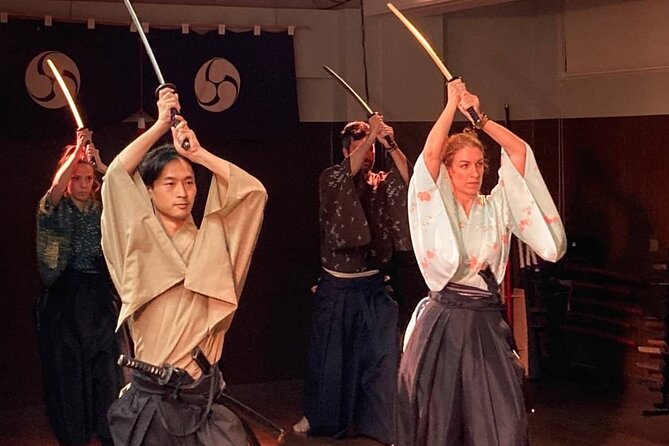
Once the basic actions are in place, the group practices a simple chambara sequence. Chambara refers to Japanese sword-fighting cinema and stage-style action. This is not presented as a real fight. It is a choreographed scene in which everyone knows the planned movements.
The performance is the payoff for the earlier instruction. Drawing the sword, turning, swinging, and returning it now have a reason and a rhythm. Music and sound effects add to the drama, and the final sequence gives you something concrete to remember beyond the costume.
The instructors keep the mood light and energetic. That matters for families and mixed-age groups, since not everyone arrives eager to perform in front of strangers. The staff’s patience is especially useful when children need extra help with the costume or the sword sequence.
You may find that the theatrical side appeals more than the historical side. The activity gives you a taste of samurai culture through clothing, weapons, movement, and performance, but it does not appear to offer a long lecture on political history, daily life, or the development of the warrior class. If your priority is academic detail, this is probably too brief. If you want to take part in a samurai scene, the format works well.
Same city, a completely different kind of day:
- Mt Fuji and Hakone 1-Day Bus Tour Return by Bullet Train
★ 5.0 · 26,383 reviews - 1-Day Tokyo Bus Tour
★ 5.0 · 14,250 reviews - Tokyo: TOKYO SKYTREE® Admission ticket
★ 4.5 · 11,192 reviews - Tokyo: teamLab Planets TOKYO Digital Art Museum Entry Ticket
★ 4.6 · 9,779 reviews
Photos, video, and the solo visitor advantage
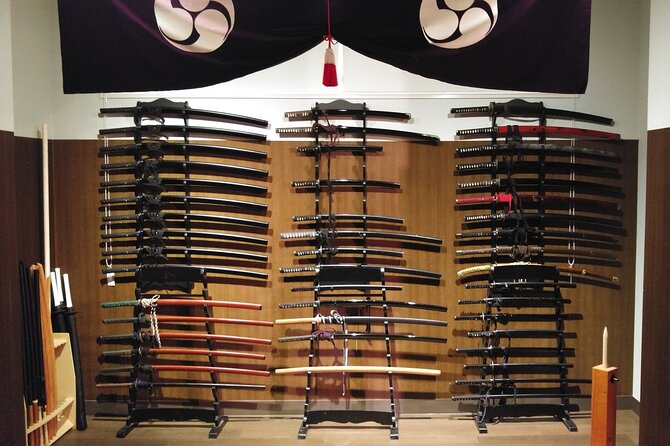
Photography and video recording are allowed inside the museum-like space. You can use your own smartphone, and the staff can take pictures or film parts of the activity for you.
This is one of the strongest practical features. A solo visitor does not have to choose between participating and documenting the moment. The staff make an effort to photograph and film people who arrive alone, which makes the booking feel worthwhile even without a companion behind the phone.
For families, the photo element helps preserve the whole sequence: choosing the outfit, learning the movements, and performing the final scene. The setting also gives you more interesting images than a standard studio backdrop, thanks to the armor and weapon displays.
I would still keep your expectations sensible. The included photo and video help is a thoughtful service, but it is not described as a professional photography session or a package of edited images. Bring a charged phone with enough storage and make sure you understand which parts you want recorded before the action begins.
Why the one-hour format works, and where it falls short
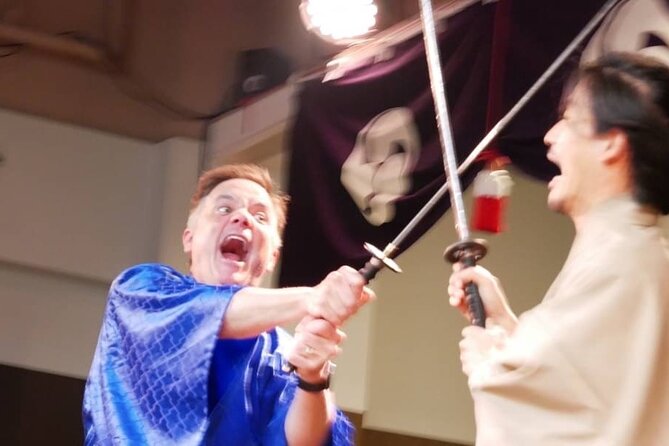
One hour is enough to create a complete activity without taking over your day. You can fit this between sightseeing stops in Shinjuku or combine it with other Tokyo plans. The compact schedule also suits children who may lose interest during a longer cultural demonstration.
The tradeoff is depth. You will learn the basic sword actions and perform a short scene, but you will not receive extended training. The itinerary does not suggest a long tour of the displays or a detailed historical talk.
I see this as a practical introduction. You get the costume, the setting, the instruction, and the performance in a single visit. That makes the experience easy to recommend to someone who wants a memorable Japan activity but does not want to commit half a day to a formal class.
The small maximum group size of 10 should help keep the lesson personal. It gives the instructor a reasonable chance to correct posture and explain the sequence. A smaller group can also make the final performance less intimidating than a large production with dozens of people.
Is $65 a fair price?
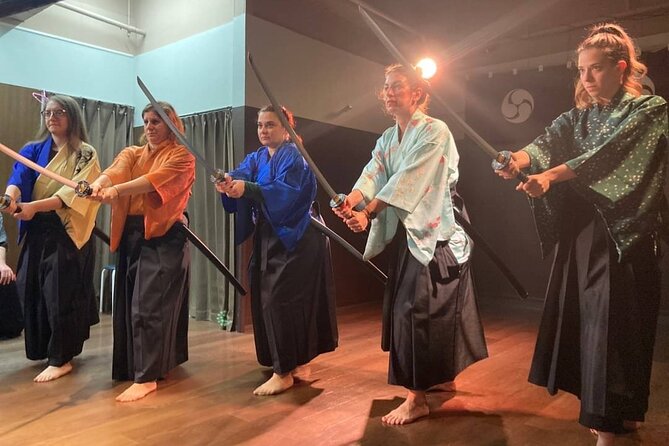
At $65 per person, the cost is higher than simply renting a costume for a photograph, but you are paying for several parts at once: the outfit, a professional instructor, sword instruction, access to the themed space, and help with photos and video.
I think the price is fair if you value participation. The experience asks you to learn something, practice it, and perform it. That gives the hour more substance than a quick dress-up session.
The value is particularly good for families who want one shared activity. The format works across age groups, and the staff are described as friendly, patient, and accommodating. Several family bookings included children and teenagers, with the instructors making the process enjoyable rather than overly strict.
For a solo visitor, the cost also makes sense because the staff help capture photos and video. You are not paying for an activity that only works when someone else comes along.
The price may feel less attractive if you mainly want detailed samurai history or serious martial arts instruction. In that case, you are paying for a theatrical cultural activity rather than a long-form lesson. Know what you are booking, and the value is easier to judge.
Who will enjoy this most?
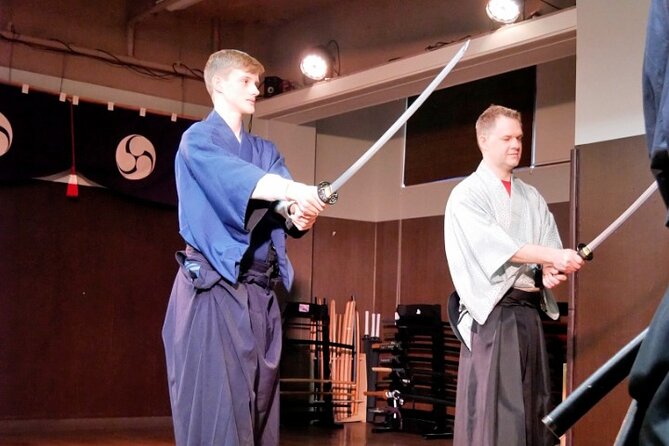
I would put this near the top of the list for families, couples, and solo visitors who want a playful cultural activity with a clear beginning and end. The costume change gives children an immediate hook, while the sword lesson gives adults something to concentrate on.
It also suits people who enjoy films and stage performance. The instructors’ screen experience, music, sound effects, and choreographed battle all point toward samurai cinema rather than a quiet museum visit.
You do not need prior knowledge of Japanese history or swordsmanship. The program begins with basic actions and builds toward a simple performance. Most people can participate, according to the activity details, though the listing does not provide a specific minimum age or detailed mobility information.
I would be more cautious about booking it for someone who dislikes costumes, group activities, or being filmed. The session depends on taking part. You may be able to watch some demonstrations, but the main appeal comes from putting on the clothing and performing the sequence yourself.
Booking, timing, and cancellation advice
The activity accepts mobile tickets, and confirmation is provided when you book. Same-day reservations may be possible, and one person can join without needing to form a larger party.
I would still reserve ahead if this is important to your Tokyo schedule. The experience has a maximum of 10 participants, so last-minute availability can change. Since the start point is not in an instantly obvious storefront, leave a little buffer for finding the flag and walking through the side roads.
Free cancellation is available when you cancel at least 24 hours before the start time. A cancellation made less than 24 hours ahead is not refunded, and changes inside that window are not accepted. The cut-off follows Tokyo local time, so check the clock carefully if you are booking from another time zone.
The practical verdict
I would book this if you want to do something active, funny, and distinctly tied to Japan. The strongest combination is the Edo-style dojo, the traditional clothing, the clear beginner lesson, and the final sword scene that you can record on your phone.
I would skip it only if your main goal is a lengthy history lesson or serious sword training. For everyone else, $65 buys a well-shaped hour with plenty of memorable moments, and the small group limit and helpful staff make it especially easy to recommend to families and solo visitors.
FAQ
Where does the samurai experience take place?
It takes place at Samurai Theater Tokyo, 40 Yokoteramachi, Shinjuku City, Tokyo 162-0831, Japan.
How long does the activity last?
The experience lasts approximately one hour.
What does the price include?
The price includes all fees and taxes, a professional guide or instructor, and samurai costumes.
Is transportation included?
No. Private transportation is not included. You travel to the meeting point independently, and the activity ends there.
Can I book if I am traveling alone?
Yes. One person can join the tour, and solo bookings are accepted.
Can I take photographs and videos?
Yes. Photography and video recording are allowed inside the museum-like venue. You can use your smartphone, and staff can help take photos and videos.
How many people can join?
The activity has a maximum of 10 participants.
Is the experience suitable for most people?
The activity information says most people can participate. It does not provide a specific minimum age or detailed accessibility information, so contact the provider if you need information about a particular requirement.
What is the cancellation policy?
You can cancel for a full refund up to 24 hours before the experience starts. Cancellations or changes made less than 24 hours before the start time are not accepted for a refund.
Just added around Tokyo
- Tokyo: Customizable Private Guided Walking Tour★ 4.5 · 129 reviews
- Private Harajuku Omotesando Architecture Tour★ 4.9 · 18 reviews
- Tokyo: Private Personalized Local Food Tour★ 4.5 · 101 reviews
- Tokyo: Guided Helicopter Ride★ 4.9 · 24 reviews
- Tokyo: Guided Walking Tour of Tsukiji Market with Lunch★ 4.4 · 24 reviews
- Tokyo GINZA: KONPARU Japanese Cabaret Show with Drink★ 4.8 · 38 reviews
- Tokyo: Guided Walking Tour of Tsukiji Market with Breakfast★ 4.4 · 134 reviews
- Tokyo: Gotokuji Cat Temple, Shinjuku Cat Cafe & 3D Cat Tour★ 4.9 · 38 reviews
Kimono & Culture Experiences, compared.
Kyoto Geisha Walking Tour: Gion District & Hidden Gems
Read our review →
Gion Magical Night Walking Tour with Geisha Trivia
Read our review →
Gion Geisha District Walking Tour – Stories of Geisha
Read our review →
Best of Kyoto: Gion, Geisha, Pagodas & Cobblestones
Read our review →
Kyoto Gion Geisha District Walking Tour – The Stories of Geisha
Read our review →
Browse the lists this tour appears in