REVIEW · MUSEUMS
Tokyo: Art Aquarium Museum GINZA Entry Ticket
Tokyo’s Art Aquarium Museum GINZA turns goldfish into the stars of a theatrical art show. In darkened rooms, the fish move through glowing bowls and sculptural tanks while music, colored light, and changing scents alter the mood. I like the clever link to Edo-period goldfish appreciation, and I like that the displays change with the seasons. The main drawback is size: you may finish in 30 minutes, although a slower visit can take close to an hour.
I also like how easy this stop is to fit into a Ginza day. It sits inside Ginza Mitsukoshi, close to several subway stations, and the displays make a good rainy-day or evening plan. Photography is allowed, but you need to leave tripods, monopods, strobes, and lighting equipment at home. One further consideration is the animal presentation itself. Most of the experience is visually polished, yet one visitor felt some fish looked poorly treated, so anyone with strong concerns about animal displays may want to think twice.
In This Review
- Key points to know before you go
- What the Art Aquarium Museum GINZA actually is
- Entering through Ginza Mitsukoshi
- The first rooms: goldfish in a theatrical setting
- Goldfish displays worth lingering over
- Music and scent change the mood
- How long you should allow
- Photography rules and practical tips
- Seasonal changes at a permanent museum
- Is it suitable for children?
- The animal welfare question
- Who will enjoy this Ginza stop?
- Final decision: book it for art, not for aquarium science
- FAQ
- Where is Art Aquarium Museum GINZA located?
- How do I reach the museum by train?
- How long does the visit take?
- How much does admission cost?
- Can I take photographs inside?
- Does the museum change during the year?
- Is the ticket refundable?
- Does the museum have fixed business hours and closing days?
Key points to know before you go
- Goldfish become the artwork: The fish swim through carefully designed tanks rather than serving as a simple aquarium display.
- Light, music, and scent shape the visit: Each room aims for a different mood, so this is as much a sensory art show as a fish exhibition.
- Plan on 30 to 60 minutes: The museum is compact, making it easy to add to a Ginza shopping or sightseeing day.
- Arrive at Ginza Mitsukoshi’s ninth floor: Admission reception and same-day tickets are in the new building.
- Photography is welcome with limits: Handheld cameras and phones are fine, but tripods, monopods, strobes, and lighting gear are not permitted.
- Children can enter free in some cases: Up to two children under elementary school age may enter free with one paying adult.
What the Art Aquarium Museum GINZA actually is
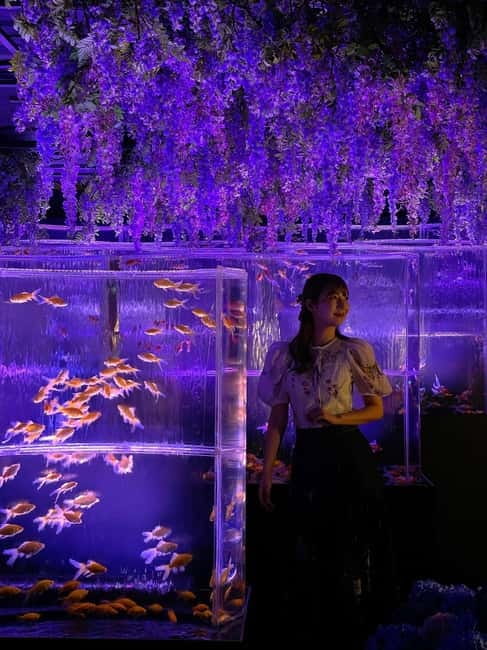
This is not a traditional aquarium with long galleries of sea life, educational tanks, and a large collection of species. It is a compact art installation built around goldfish, with the fish placed in highly designed settings.
The idea draws on Edo-period goldfish appreciation, when ornamental goldfish were admired for their unusual colors, shapes, and swimming patterns. The museum gives that old interest a modern setting. Instead of viewing a fish in a plain glass tank, you see it framed by color, reflection, sound, fragrance, and carefully arranged space.
That distinction matters when you decide how to use your time. If you want marine biology or a full afternoon aquarium visit, this is not the right choice. If you enjoy photography, design, Japanese aesthetics, or unusual city attractions, the $17 admission buys a focused and visually striking stop.
The venue opened at Ginza Mitsukoshi in May 2022 and operates as a permanent museum. Seasonal changes give you a reason to return. The central concept remains the same, but the displays and visual treatment can change enough to make a second visit feel different. One repeat visitor found that more than half of the art had changed over two years.
A few more Tokyo trips to weigh up
- Tokyo: teamLab Planets TOKYO Digital Art Museum Entry Ticket
★ 4.6 · 9,779 reviews - Tokyo: Samurai Ninja Museum Guided tour and Experience
★ 4.6 · 1,010 reviews - Ninja Experience (Family Friendly) at Samurai Ninja Museum TOKYO
★ 5.0 · 441 reviews
Entering through Ginza Mitsukoshi
The museum is inside Ginza Mitsukoshi, a major department store at 4-6-16 Ginza, Chuo-ku. You will find admission reception and same-day ticket sales on the ninth floor of the new building.
The location is practical, but you need to pay attention to which building and floor you are using. The simplest train access is Ginza Station on the Tokyo Metro Ginza, Marunouchi, or Hibiya lines. Use Exit A7.
You can also reach the museum from Ginza 1-chome Station on the Tokyo Metro Yurakucho Line. From Exit 9, it is about a five-minute walk. Higashi-Ginza Station is another easy option, with a two-minute walk through the underground passage toward Ginza Station. The listed coordinates are 35.6712864, 139.7657382.
This central setting lets you combine the museum with shopping and other Ginza plans. At the same time, the department-store location may feel less like a standalone cultural institution and more like a polished attraction tucked into a retail complex. One visitor found the area less useful for extra sightseeing than expected, so check your wider Ginza plan before setting aside a large block of time.
The first rooms: goldfish in a theatrical setting
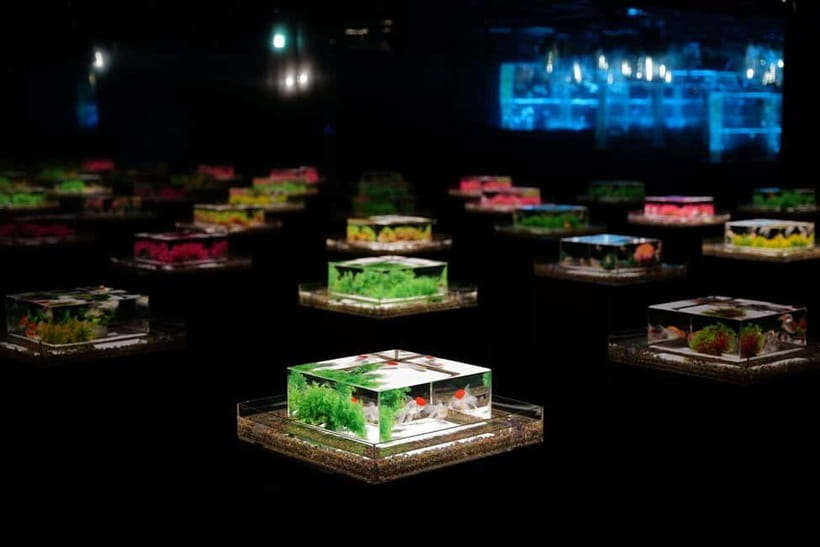
Once inside, expect a visual presentation rather than a guided tour. There is no guide name to look for and no scheduled walking group described for this ticket. You move through the rooms at your own pace.
The first impression comes from the contrast between the fish and their surroundings. Goldfish are familiar, even ordinary, in many parts of the world. Here, their slow movement, flowing fins, and bright colors become the moving part of a larger composition.
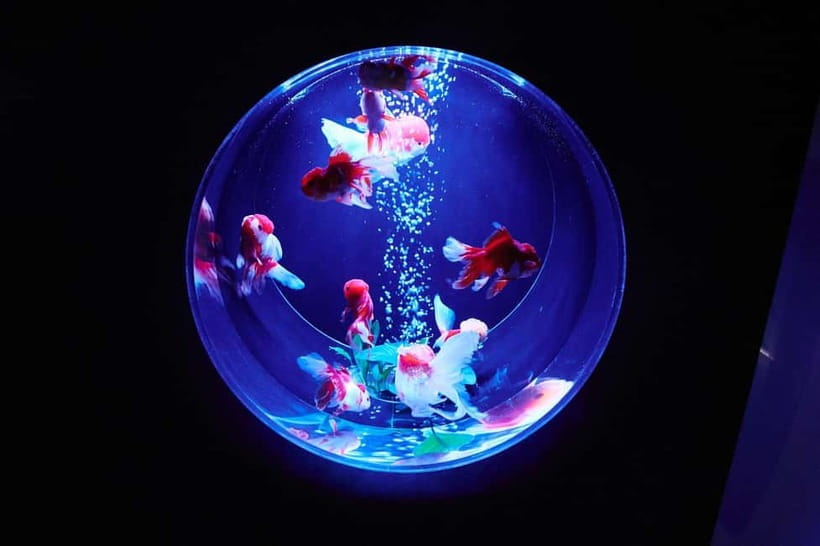
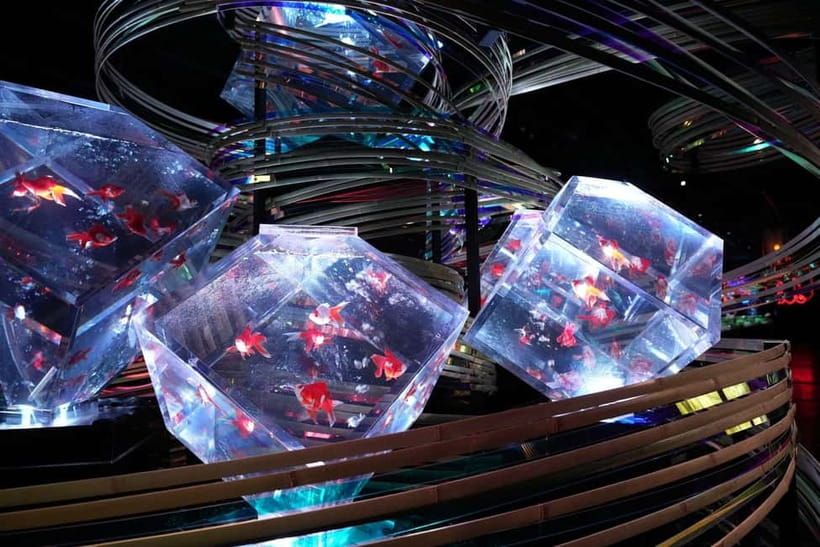
The tanks and containers are designed to direct your eye. Light catches the water and glass. Reflections add extra shapes. Music sets a calm, dreamlike tone, while scent helps define the room. You might notice the fragrance before you understand why the space feels different.
The effect works best when you slow down. A quick walk gives you a series of pretty photographs, but standing quietly for a moment lets you notice how the fish change the design as they swim. Each fish is moving on its own, so the scene never repeats exactly.
This is also where expectations matter. The museum’s appeal is sensory and decorative. The art depends on atmosphere, so visitors who prefer bright, plain galleries or detailed scientific displays may find it more style than substance.
Goldfish displays worth lingering over
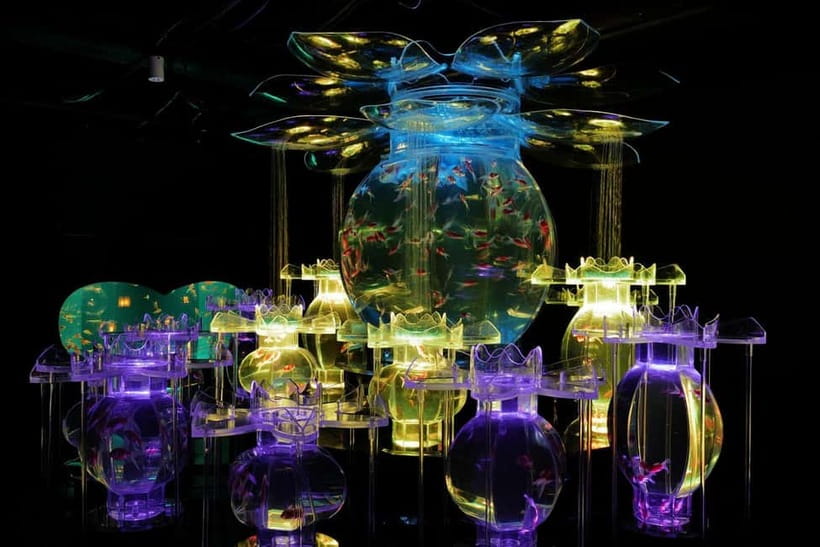
The museum’s main appeal is the variety of aquarium presentations. The supplied information does not name every installation, so you should not expect a fixed checklist of specific pieces. Instead, look for the way each display frames the fish differently.
Some arrangements emphasize the goldfish’s body shape and flowing fins. Others use scale, repetition, reflections, or strong color to make a small group of fish feel like part of a larger image. The distinct tank designs help you see the fish as ornamental creatures with individual visual character, not just as a school moving through water.
The fish themselves are central to the experience. You will find different types of goldfish, and English information about the fish is available. That small educational element adds useful context without turning the museum into a lecture.
I recommend taking one pass without stopping for photographs. Then return to the displays that caught your attention. This gives you a better sense of the presentation before you start looking for the perfect frame.
The museum is popular with photographers, and it is easy to understand why. Glowing water, dark backgrounds, colored light, and moving subjects provide plenty of material. Yet photography can also change the mood if everyone is holding a phone in front of the tanks. The no-tripod rule helps keep the rooms open, but you still need to be considerate and avoid blocking a display while you wait for a shot.
Same city, a completely different kind of day:
- Mt Fuji and Hakone 1-Day Bus Tour Return by Bullet Train
★ 5.0 · 26,383 reviews - 1-Day Tokyo Bus Tour
★ 5.0 · 14,250 reviews - Tokyo: TOKYO SKYTREE® Admission ticket
★ 4.5 · 11,192 reviews - Mt Fuji & Hakone Cruise, Drum Show Bullet Train 1 Day from Tokyo
★ 4.0 · 7,413 reviews
Music and scent change the mood
The art here is not only something you look at. Music and scent are built into the visit, and they make the museum feel closer to a small performance than a standard exhibit.
The background music is generally tranquil. It gives the rooms a slower rhythm and encourages you to watch the fish rather than rush from one tank to the next. The scent adds another layer, particularly for visitors who enjoy aromatherapy or sensory design.
This combination is one of the museum’s strongest ideas, but it will not suit everyone equally. If you are sensitive to fragrance or prefer exhibits without sound, the added atmosphere may become distracting. The available information does not specify particular scents, volume levels, or accessibility arrangements, so you should keep that in mind if you have strong sensory needs.
For most visitors, the music and fragrance help explain why the experience feels different from simply looking at ornamental fish. The goldfish are the subject, but the room around them controls how you notice them.
How long you should allow
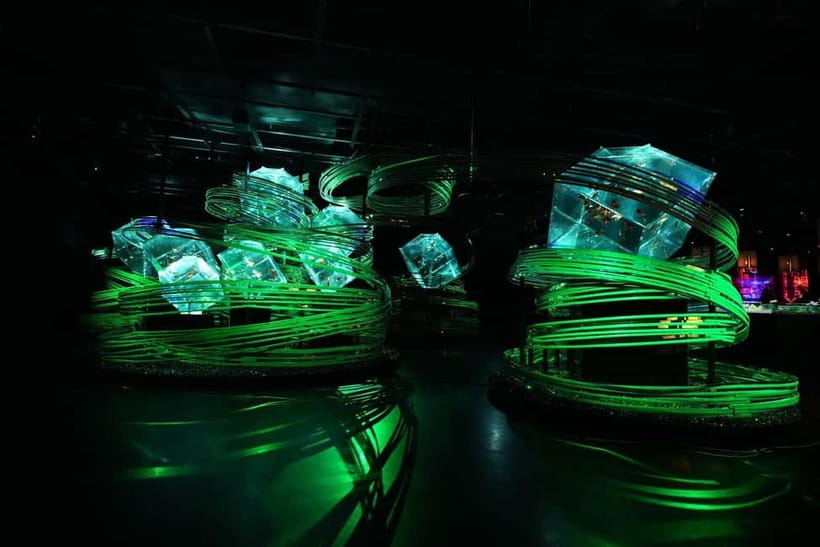
The official estimated viewing time is about one hour. In practice, the museum can be shorter if you walk steadily. One visitor finished in roughly 30 minutes, while another felt 45 minutes to an hour was appropriate.
I would allow one hour, especially if you want photographs, time to read the English information, and a second look at the displays. The museum is compact enough that it will not consume half your day.
That short duration is a benefit in Tokyo. You can place it between shopping, a meal, or another Ginza stop without worrying about a complicated schedule. It also works well on a day when you have a late departure or want one last indoor activity.
The short visit affects the value calculation. At $17 per person, the ticket is reasonable if you enjoy visual art and spend close to an hour inside. It is less attractive if you expect a large aquarium, many species, or several hours of entertainment. Think of it as a concentrated art attraction, not a full-day museum.
Photography rules and practical tips
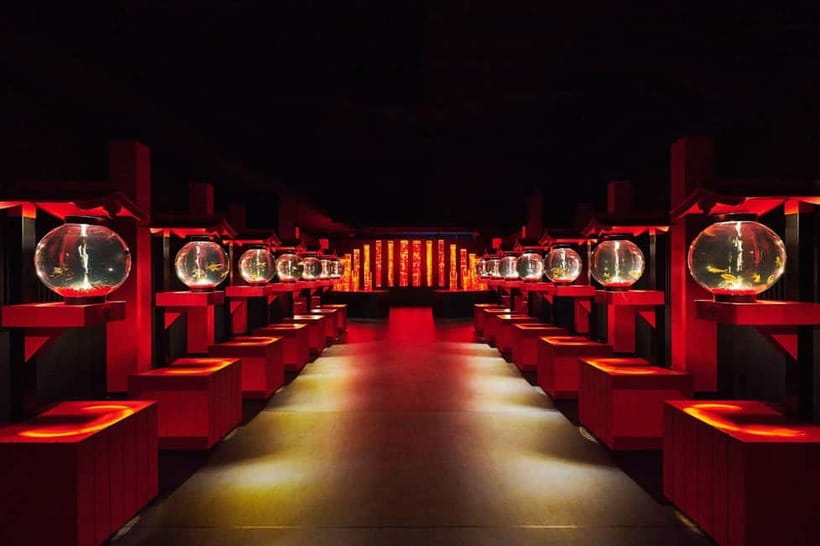
Photography is permitted, which is a major reason many people add this museum to a Ginza itinerary. You can use a phone or handheld camera to capture the light, water, and goldfish.
The rules are clear:
- Tripods are not allowed.
- Monopods and similar support equipment are not allowed.
- Strobes are not allowed.
- Separate lighting equipment is not allowed.
The restrictions make sense in rooms where reflections and bright flashes would disturb both the presentation and other people. A phone or small handheld camera is the practical choice.
For the best chance at clean photographs, a midweek morning can help. One visitor with a 10:30 a.m. ticket found the museum lightly attended and had room to take photographs without interrupting others. That is not a guarantee of quiet conditions, but early weekday timing is a sensible choice if pictures matter to you.
Do not plan on using a large camera setup. The museum’s atmosphere works better when you travel light, and the rules leave little room for a formal photography kit.
Seasonal changes at a permanent museum
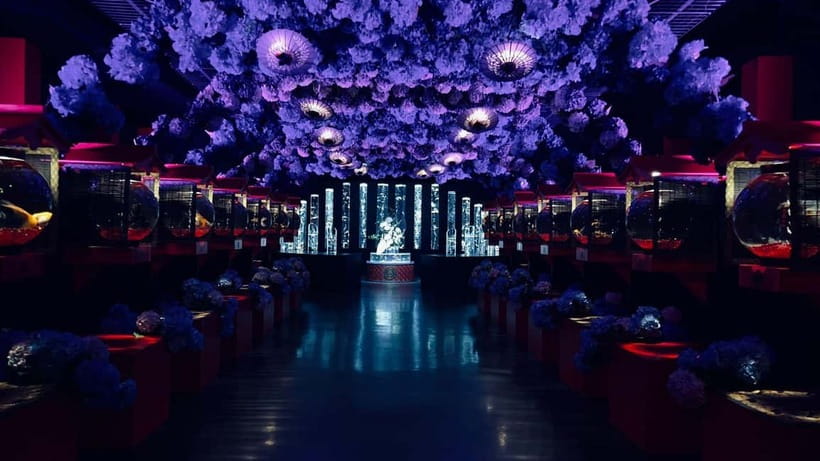
Many temporary art attractions are exciting once and finished after that. Art Aquarium Museum GINZA is a permanent venue, and seasonal changes are part of its appeal.
The exact seasonal program is not specified, so you should not book expecting a particular named event unless it is confirmed for your date. You can expect the museum to use the time of year as part of its presentation, with changes to the art and atmosphere.
This gives the museum more repeat value than a completely fixed display. A return visit after a year or two may show a substantial amount of new material. The experience still remains compact, though, so repeat visitors should return because they enjoy the concept, not because they expect a completely different museum each time.
The seasonal element also makes the museum a useful choice when the weather is poor. You get an indoor activity with a clear Japanese design theme, rather than a generic shopping stop.
Is it suitable for children?
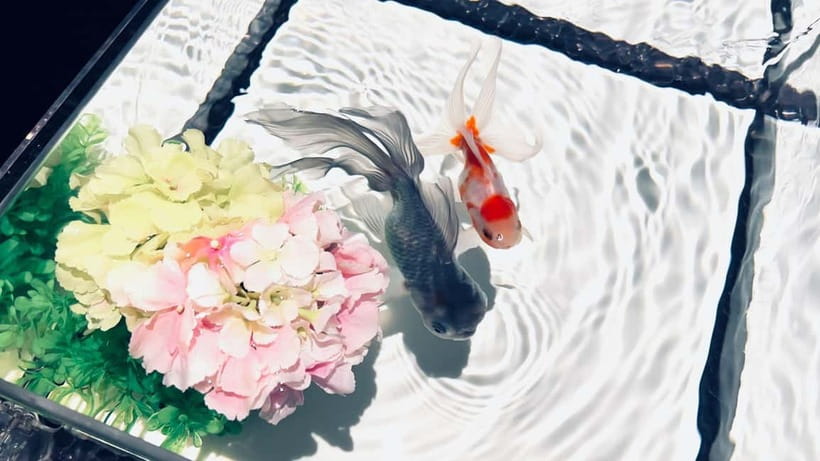
Children under elementary school age may enter free of charge, with up to two children allowed per paying adult. That makes the ticket more manageable for families with young children.
The museum’s strong colors, moving fish, music, and scent can hold a child’s attention. Still, it is a short visual visit rather than a hands-on attraction. Children who want to touch exhibits or see a large range of animals may lose interest quickly.
Because the displays are built for viewing and photography, you will need to keep young children close and help them avoid touching tanks or interrupting photographs. The compact layout makes supervision easier than it would be in a large aquarium.
For older children and teenagers who enjoy pictures, fashion, design, or unusual Tokyo sights, the museum may be a good change of pace. For a family seeking a full day of activities, combine it with something else.
The animal welfare question
The presentation is beautiful, but it is fair to consider the welfare question before booking. One visitor felt that some of the fish looked maltreated. The available information does not provide detailed care standards, tank measurements, water-quality practices, or animal-care policies, so I cannot resolve that concern from the facts supplied.
You may see the museum as an artistic celebration of goldfish, in keeping with a long Japanese tradition of ornamental fish appreciation. You may instead feel uncomfortable with animals being placed in highly theatrical displays. Both reactions are reasonable.
If animal welfare is a deciding issue for you, research the venue’s current policies before purchasing. The ticket is non-refundable, so this is not an attraction to book casually if you already have serious reservations about live-animal exhibitions.
Who will enjoy this Ginza stop?
I would recommend the museum most strongly to:
- Photography enthusiasts who want colorful, unusual subjects without needing special lighting equipment.
- Design and art fans who enjoy installations built around space, color, sound, and movement.
- First-time Tokyo visitors looking for a short attraction in a central shopping district.
- Repeat visitors who appreciate seasonal changes and redesigned displays.
- Families with young children who can benefit from the free child admission policy.
- Rainy-day planners who want an indoor stop with a distinctly Japanese theme.
I would be more cautious if you want a traditional aquarium, a large collection of aquatic life, or a long educational visit. The museum is deliberately narrow in focus. Its success depends on how much you enjoy atmosphere and presentation.
Final decision: book it for art, not for aquarium science
Book Art Aquarium Museum GINZA if you want a polished, compact experience where goldfish, lighting, music, scent, and Japanese design work together. At $17, it offers fair value for a 30-minute to one-hour visit, especially when you are already in Ginza.
Choose a weekday morning around 10:30 if photography is important, and allow a full hour so you do not have to rush. Check the operating days and hours before you go, since they can vary.
Skip it if you expect a large aquarium, detailed natural-history displays, or a full-day attraction. Also pause before purchasing if the treatment of live fish in art installations is likely to bother you. For the right audience, though, this is a memorable little stop that gives a familiar animal an entirely new setting.
FAQ
Where is Art Aquarium Museum GINZA located?
It is inside Ginza Mitsukoshi at 4-6-16 Ginza, Chuo-ku, Tokyo. Admission reception and same-day ticket sales are on the ninth floor of the new building.
How do I reach the museum by train?
From Ginza Station, use Exit A7 on the Tokyo Metro Ginza, Marunouchi, or Hibiya lines. It is also a five-minute walk from Ginza 1-chome Station Exit 9, or a two-minute underground walk from Higashi-Ginza Station toward Ginza Station.
How long does the visit take?
The estimated viewing time is one hour. A quicker visit may take about 30 minutes, while allowing 45 minutes to an hour gives you time to take photographs and read the English information.
How much does admission cost?
The listed price is $17 per person. Up to two children under elementary school age may enter free with one paying adult.
Can I take photographs inside?
Yes, photography is permitted. Tripods, monopods, similar equipment, strobes, and lighting equipment are not allowed.
Does the museum change during the year?
Yes. The permanent venue features seasonal changes throughout the year. The exact displays and seasonal presentation may vary.
Is the ticket refundable?
No. This activity is non-refundable, so check the date, business hours, and closing days before booking.
Does the museum have fixed business hours and closing days?
Closing days and business hours may vary. Check availability and the current operating information for your planned date.
Just added around Tokyo
- Tokyo: Customizable Private Guided Walking Tour★ 4.5 · 129 reviews
- Private Harajuku Omotesando Architecture Tour★ 4.9 · 18 reviews
- Tokyo: Guided Helicopter Ride★ 4.9 · 24 reviews
- Tokyo: Guided Walking Tour of Tsukiji Market with Lunch★ 4.4 · 24 reviews
- Tokyo: Private Personalized Local Food Tour★ 4.5 · 101 reviews
- Tokyo GINZA: KONPARU Japanese Cabaret Show with Drink★ 4.8 · 38 reviews
- Tokyo: Guided Walking Tour of Tsukiji Market with Breakfast★ 4.4 · 134 reviews
- Tokyo: Gotokuji Cat Temple, Shinjuku Cat Cafe & 3D Cat Tour★ 4.9 · 38 reviews
Museums, compared.
teamLab Planets TOKYO Digital Art Museum Entry Ticket
Read our review →
Samurai Ninja Museum Guided tour and Experience
Read our review →
Tea Museum Tickets and Matcha Grinding Experience
Read our review →
Skip the lines Basic Ticket at SAMURAI NINJA MUSEUM KYOTO
Read our review →
Ninja Experience (Family Friendly) at Samurai Ninja Museum TOKYO
Read our review →
Tokyo Studio Ghibli Museum and Ghibli Film Appreciation Tour
Read our review →
Geiko Maiko Dance of Kyoto & Visits of Gion Museum
Read our review →