
REVIEW · MUSEUMS
Kyoto : Geiko Maiko Dance of Kyoto & Visits of Gion Museum
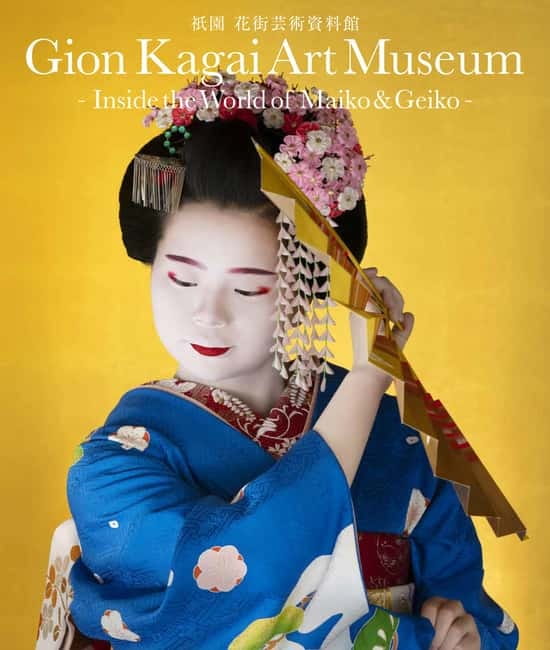
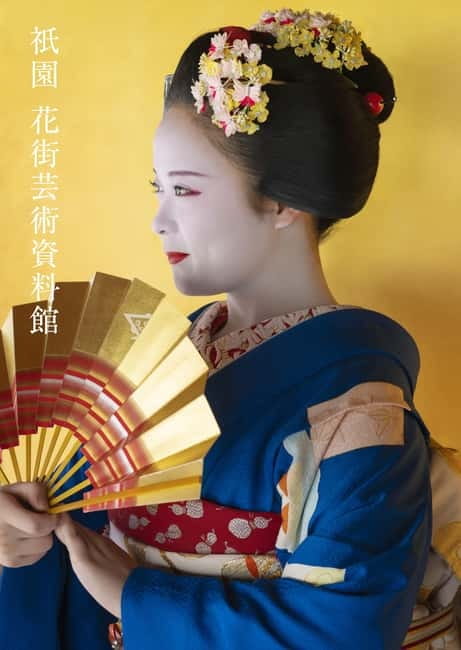
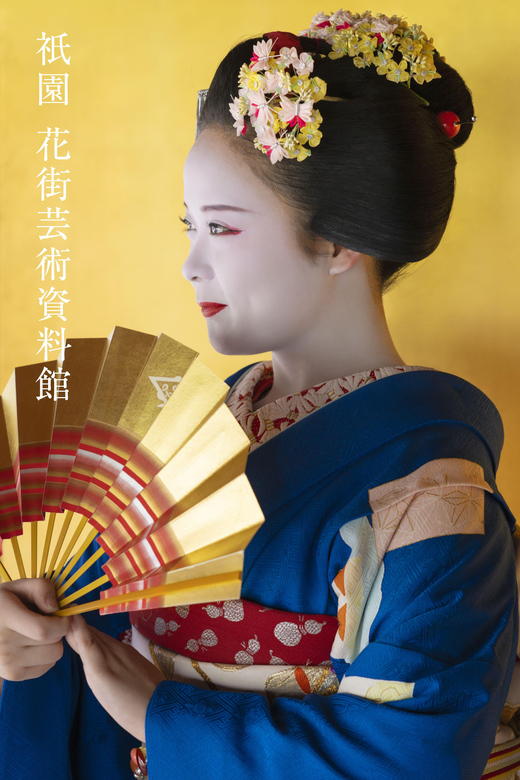
Kyoto’s geiko and maiko dance is the star here: two carefully performed Kyomai songs, lasting about 15 minutes, in a small museum setting. You see the controlled gestures, formal kimono, seasonal hair ornaments, and precise footwork close enough to appreciate the work behind the beauty. The performers are properly called geiko or maiko, not geisha, in Kyoto’s Kagai districts.
I like the way the dance fits into a busy Kyoto day, and I like that your $25 admission also covers a permanent exhibition, a Japanese garden, an art cafe, and a small museum shop. The main consideration is the short performance. It is lovely, but it is not a full evening of music and dance, and no photography is allowed during the show.
In This Review
- Key points to know before you go
- A short Kyomai performance with real Kyoto character
- Choosing among the five performance times
- What the permanent exhibition adds
- The Chisen garden, Art Cafe, and museum shop
- The value of $25
- Photography, photo sessions, and the rules
- What the performance may leave you wanting
- Who will enjoy this most
- Practical planning advice for your Kyoto day
- Should you book the Gion Kagai Art Museum dance?
- FAQ
- How long does the Kyomai performance last?
- How many performances are scheduled each day?
- Should I arrive before the scheduled performance?
- Is museum admission included?
- Is the performer a geisha?
- Can I take photographs during the dance?
- Are photo sessions available?
- Is the museum information available in English?
- Can I stay at the museum after the performance?
- What else can I see at the museum?
Key points to know before you go
- Two Kyomai songs in about 15 minutes: A compact performance that works well between other Kyoto sights.
- Usually one geiko or maiko performs: The third and fourth sessions may feature two performers on some days.
- Five daily starting times: Performances are scheduled at 1:30, 2:20, 3:00, 4:00, and 4:30 p.m.
- English museum information uses QR codes: Scan the codes beside exhibits for extra explanations.
- Photography is restricted during the dance: Photo sessions with a geiko or maiko are booked separately at the museum.
- Admission includes more than the show: You can also see the permanent exhibit, Chisen garden, Art Cafe, and museum shop.
A short Kyomai performance with real Kyoto character
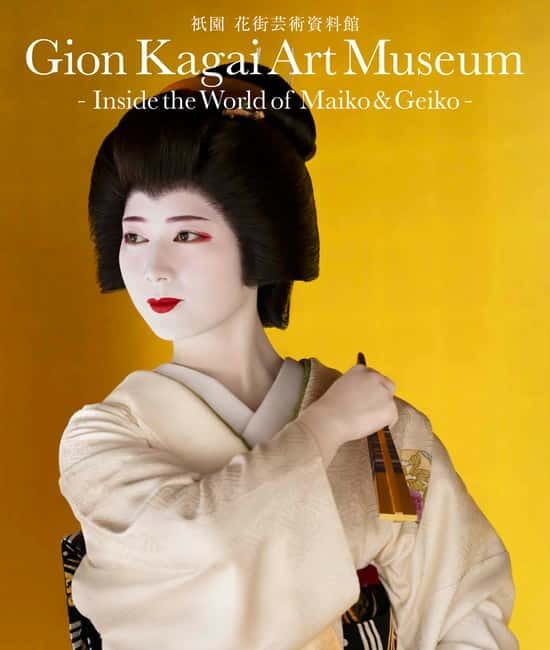
This experience gives you a direct look at Kyomai, the traditional Kyoto Mai dance performed in the Inoue style. The format is simple: one geiko or maiko usually performs two songs, for a total of roughly 15 minutes. On some days, the third and fourth sessions include two performers, which lets you see a greater contrast in movement and staging.
The dance is not a loud stage spectacle. Its appeal comes from restraint. A turn of the head, a measured hand movement, the opening of a fan, or a change in facial expression can carry the performance. If you expect fast choreography or a long theatrical production, you may find the pace quiet. If you give the dancer your full attention, the small details become the point.
The performance offers something that photographs and street sightings cannot. You see how the sleeves, fan, posture, and deliberate steps work together. You also get a clearer idea of why training to become a geiko or maiko demands such discipline.
In Kyoto’s Kagai districts, women who perform traditional dance and music in banquet rooms and on stage are called geiko. Women still training to become geiko are called maiko. The distinction matters, and the museum explains this world with more care than the casual use of the word geisha often allows.
A few more Kyoto trips to weigh up
- Kyoto: Tea Museum Tickets and Matcha Grinding Experience
★ 4.9 · 739 reviews - Skip the lines Basic Ticket at SAMURAI NINJA MUSEUM KYOTO
★ 4.5 · 632 reviews - Kyoto: Samurai Ninja Museum guided tour
★ 4.8 · 145 reviews
Choosing among the five performance times
The schedule gives you five chances to fit the dance into your day:
- 1:30 p.m.
- 2:20 p.m.
- 3:00 p.m.
- 4:00 p.m.
- 4:30 p.m.
You should arrive at the museum at least 10 minutes before your chosen time. That means a 2:20 p.m. performance calls for arrival by 2:10, not 2:19. Find the museum entrance first, then allow time for staff to direct you inside and for the seating process.
The early afternoon sessions suit a day built around Gion sightseeing. The later times can work after temples, shopping, or a walk through the district, though the 4:30 performance leaves less room afterward for other attractions. Since the dance itself takes only 15 minutes, you do not need to surrender half a day.
The exact performance arrangement can vary. One geiko or maiko is usual, while the third and fourth sessions may sometimes feature two. I would not choose a time solely in the hope of seeing two performers, since that is not guaranteed.
What the permanent exhibition adds
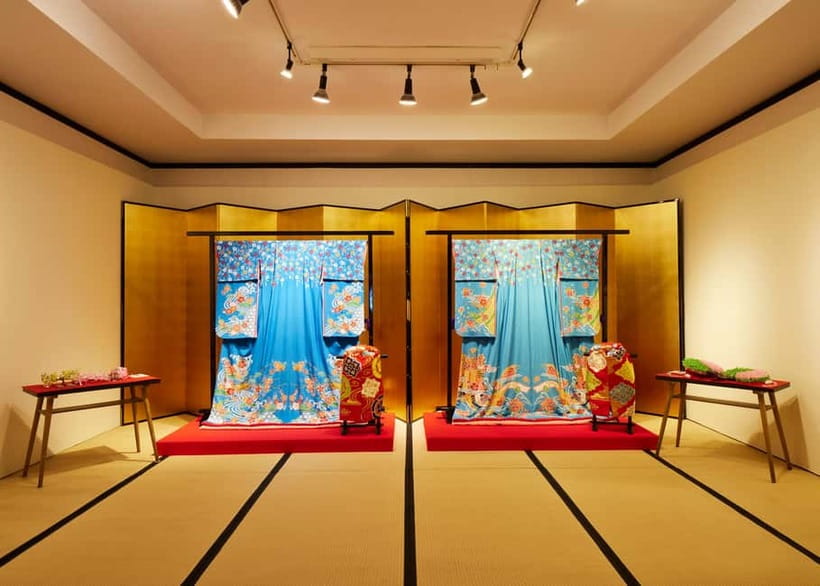
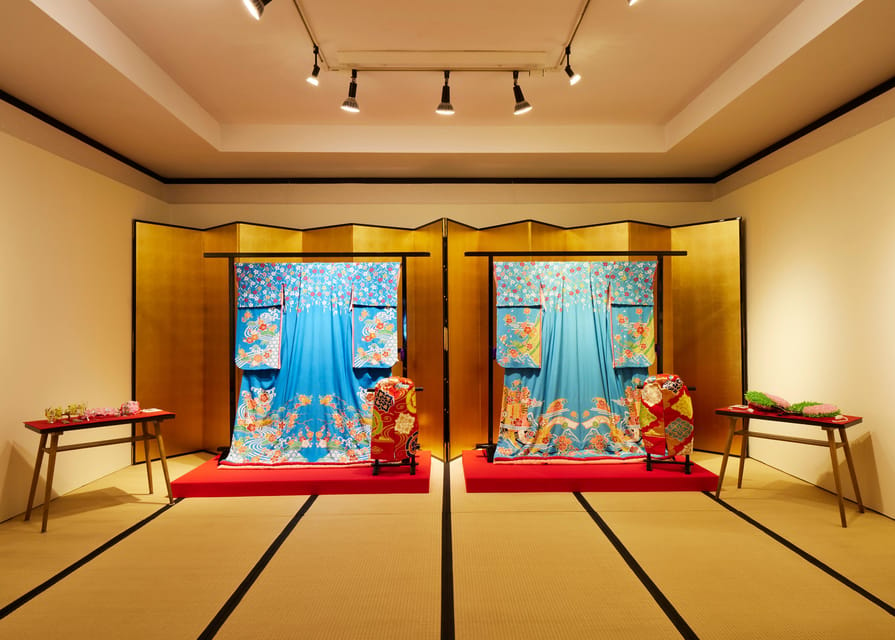
The museum visit is much better than a quick dance-only stop because the permanent exhibition gives you visual context. You can study hand-painted Yuzen kimono, Nishijin brocade obi sashes, seasonal kanzashi hair ornaments, black crested formal kimono, personal belongings, and makeup used by maiko.
These objects help you read the performance. A formal kimono is not just colorful clothing, and a hair ornament is not simply decoration. The displays show how clothing, grooming, and accessories signal season, status, and the traditions of the Kagai districts.
Photographs convey the atmosphere of the entertainment quarters, while videos explain the dance and the life surrounding it. One film on the lower level is particularly useful for understanding Kyomai, especially if the movements initially seem symbolic or difficult to interpret.
English information is available by scanning QR codes. I like this approach because it keeps the display area from becoming cluttered with long blocks of translated text. You will need a phone that can scan the codes, and you should allow extra time if you want to read everything. The museum is small, but it can take longer than expected if you stop at each display.
A handout with information about maiko and geiko is also provided. That gives you a basic explanation before or after the performance, although the dance itself does not appear to include a detailed English introduction or translation of the songs.
The Chisen garden, Art Cafe, and museum shop
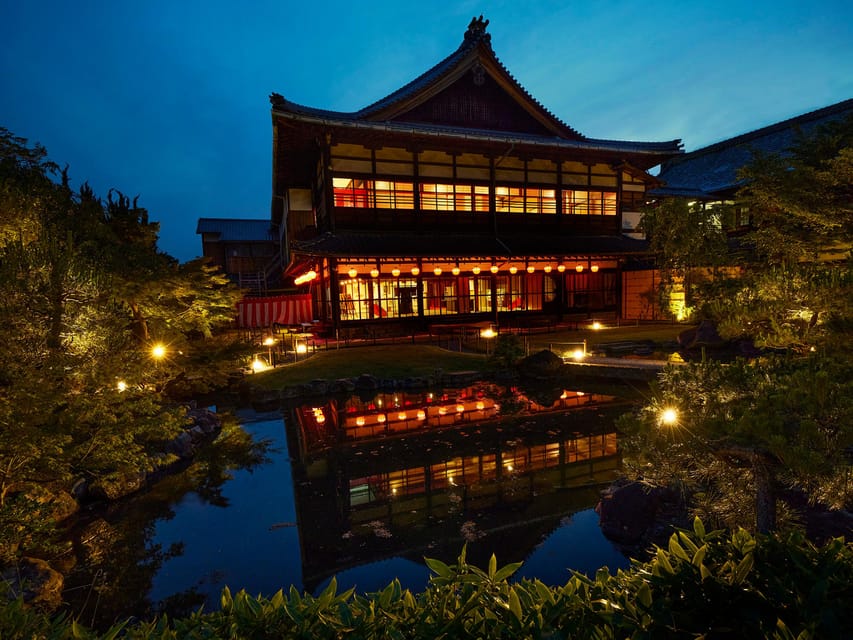
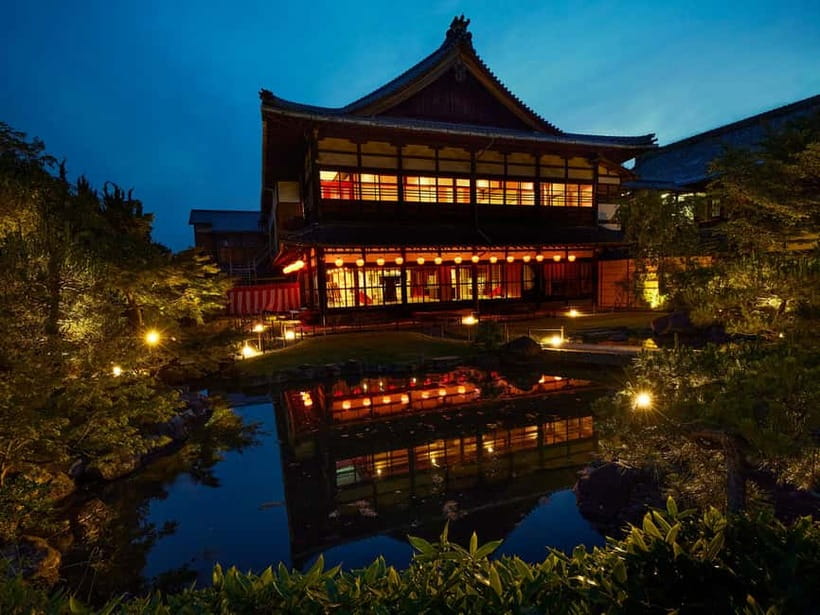
The Chisen Water Japanese Garden adds a calm pause to the museum visit. It is not the main reason to book, but it helps the experience feel like more than a quick indoor display. After the formal movement and elaborate costumes, a short walk around the garden gives you a change of pace.
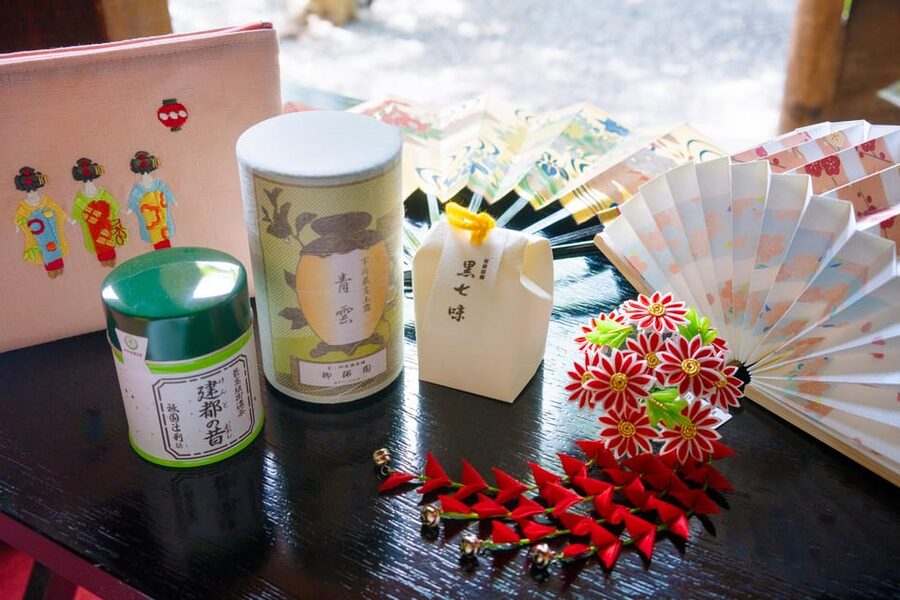
The Art Cafe and museum shop extend the visit without requiring another ticket. The cafe is useful if you want to sit for a while, and the shop gives you a chance to browse souvenirs connected with the museum’s subject. The shop is described as small, so think of it as a brief stop rather than a major shopping destination.
The garden is also one reason to avoid rushing out immediately after the dance. Admission lets you remain in the museum afterward, so you can see anything you missed, scan more English QR information, visit the garden, or look around the shop.
Same city, a completely different kind of day:
- PERFECT KYOTO 1-Day Bus Tour
★ 5.0 · 13,518 reviews - Kyoto: Fushimi Inari, Kinkakuji, Bamboo Grove 1 Day Bus Tour
★ 4.8 · 4,316 reviews - Kyoto: Tea Ceremony in a Traditional Tea House in Kiyomizu
★ 4.9 · 3,519 reviews - Kyoto Geisha Walking Tour: Gion District & Hidden Gems
★ 4.7 · 3,273 reviews
The value of $25
At $25 per person, this is not the cheapest cultural stop in Kyoto. The performance lasts only 15 minutes, and that short length will matter to anyone comparing it with a longer theater show or a full evening entertainment program.
Still, the price includes both the dance and admission to the Gion Kagai Art Museum. You are paying for a compact performance plus exhibits, videos, a garden, the cafe setting, and the shop. For many visitors, that makes the cost reasonable, particularly if you have limited time and want a focused introduction rather than a long formal program.
The strongest value comes from the combination. Seeing the dance without learning what the clothing and gestures represent would leave you with a beautiful but incomplete impression. Seeing the museum without a live performance would give you objects and photographs, but not the movement that brings the subject to life.
I would call it good value for a first introduction, but less compelling for someone who wants a long, highly interactive cultural event. The museum’s displays are small, and the show does not include a question-and-answer session. You should book it for quality and convenience, not for quantity.
Photography, photo sessions, and the rules
No photographs are allowed during the dance performance. This is worth knowing before you arrive, since the visual appeal of the costumes makes it tempting to reach for your phone. Put it away and watch the hands, sleeves, fan, and expression instead.
Separate photo sessions with a geiko or maiko are available only at the museum. They are not automatically included with the $25 admission. Information from the museum indicates that you can prepare about 2,000 yen for an extra photograph session, which may include a Polaroid and phone pictures, but you should arrange it at the museum rather than assume it is part of your ticket.
This separate option is useful if a personal photograph is important to you. Book or ask about it early, since discovering the option after the dance may be too late. The dance itself remains a no-photo period.
Pets, oversize luggage, drones, alcohol, drugs, and audio recording are not allowed. These rules are practical for a small cultural venue and help protect the quiet atmosphere of the performance.
What the performance may leave you wanting
The dance is graceful and focused, but its meaning may not always be obvious to an international audience. The museum material and videos help, yet the two songs are not presented as a long narrated program. An English explanation of each dance or a short introduction before the performance would make the experience easier to follow.
You can still appreciate the physical skill without understanding every reference. Watch how the dancer controls time and space. The most striking moments may be quiet ones, when a slight turn or pause replaces a large gesture.
The lack of audience interaction is another trade-off. There is no stated question-and-answer period with the performer. If you want conversation, the separate photo session may offer more personal contact, but the standard ticket is mainly a performance and museum visit.
One isolated response found the kimono less elegant than expected. That points to a sensible expectation: you are seeing a working cultural presentation, not a fashion contest designed to match every visitor’s personal taste. Costume details can vary, and the dance should be judged as a complete art form rather than by one garment alone.
Who will enjoy this most
I would recommend this to you if you want a short, organized introduction to Kyoto’s geiko and maiko culture. It is especially useful when your schedule is packed with temples and neighborhoods, since you can add it without losing several hours.
It also suits first-time visitors who feel unsure about encountering geiko culture in a more formal setting. The museum gives you a defined place to learn, and the dance shows the traditions in action.
Families with older children may appreciate the short running time, the costumes, the videos, and the garden. Younger children who need constant movement may find the slow dance difficult to follow, though the 15-minute format limits the challenge.
It is less suitable if you want a large theater, extensive narration, or a long sequence of performances. You should also think twice if you need to take photographs during the show. The no-photo rule is firm.
Practical planning advice for your Kyoto day
Treat the performance as the fixed point and build around it. Choose the session that gives you a comfortable buffer, arrive 10 minutes early, and use the time before or after to explore the museum rather than trying to squeeze every exhibit in before the dance.
Wear or carry nothing that makes a small venue awkward. Oversize luggage is not allowed, and you should not bring a drone, recording device for audio, or prohibited substances. Your phone is useful for scanning English QR codes, but it should remain silent and unused during the performance.
Finding the venue means locating the museum entrance. Staff members may help direct you, and the entrance process is intended to be straightforward, but do not arrive at the last second. A little planning is especially helpful if you are coming from another Gion sight.
The activity is non-refundable, so choose your time carefully. Check availability for the actual starting times before you commit, since the performance schedule is the key part of the booking.
Should you book the Gion Kagai Art Museum dance?
Book it if you want an elegant, compact look at Kyoto’s geiko and maiko traditions, with a museum and garden to fill out the visit. The live Kyomai performance is the reason to go, while the exhibits explain what you are seeing and make the $25 price easier to justify.
Skip it if you expect a full-length stage show, extensive English narration, or photography during the dance. You may also prefer a longer cultural program if the 15-minute format feels too brief.
For most visitors with a free hour in the Gion area, I think it is a sensible choice. Arrive early, scan the English information, stay for the garden and exhibits, and watch the dance without trying to photograph it. That approach gives you the most from a short but carefully focused Kyoto experience.
FAQ
How long does the Kyomai performance last?
The performance lasts about 15 minutes and includes two Kyomai songs.
How many performances are scheduled each day?
The listed performance times are 1:30 p.m., 2:20 p.m., 3:00 p.m., 4:00 p.m., and 4:30 p.m.
Should I arrive before the scheduled performance?
Yes. You should arrive at the museum 10 minutes before your performance begins.
Is museum admission included?
Yes. Admission to the Gion Kagai Art Museum and the performance fee are included.
Is the performer a geisha?
In Kyoto’s Kagai districts, the traditional term is geiko for women who perform dance and music. Women training to become geiko are called maiko.
Can I take photographs during the dance?
No. Photography is not allowed during the performance.
Are photo sessions available?
Yes. Tickets for photo sessions with a geiko or maiko are available at the museum. They are separate from the standard admission.
Is the museum information available in English?
Yes. English information can be accessed by scanning QR codes at the exhibits.
Can I stay at the museum after the performance?
Yes. You can remain at the museum after the approximately 15-minute dance and continue viewing the exhibits.
What else can I see at the museum?
The visit includes the permanent Kagai Art Culture exhibition, the Chisen Water Japanese Garden, the Art Cafe, and the museum shop.
Just added around Kyoto
- Taste of Nishiki Market Walking Food Tour with Local guide★ 5.0 · 17 reviews
- Kyoto: Sushi Making Class with Sushi Chef★ 4.8 · 64 reviews
- Kyoto: City Secrets eBike Tour★ 4.9 · 196 reviews
- Sacred Pathways: Discover the Philosopher’s Path of Kyoto★ 4.9 · 20 reviews
- Private Tour to Monkey Park and Arashiyama Highlights★ 5.0 · 22 reviews
- Private Nara Tour from Osaka – Meet at Your Hotel★ 5.0 · 22 reviews
- Private Sake Tasting in Central Kyoto with Sake Sommelier★ 5.0 · 13 reviews
- Kyoto : Private Custom Walking Tour With A Local Guide★ 4.6 · 144 reviews
Museums, compared.

teamLab Planets TOKYO Digital Art Museum Entry Ticket
Read our review →
Samurai Ninja Museum Guided tour and Experience
Read our review →
Tea Museum Tickets and Matcha Grinding Experience
Read our review →
Skip the lines Basic Ticket at SAMURAI NINJA MUSEUM KYOTO
Read our review →
Ninja Experience (Family Friendly) at Samurai Ninja Museum TOKYO
Read our review →
Tokyo Studio Ghibli Museum and Ghibli Film Appreciation Tour
Read our review →
Tokyo Sword Experience – includes Museum Ticket/Ninja Experience
Read our review →
Samurai Ninja Museum Asakusa: Samurai Sword Lesson & Tour
Read our review →Browse the lists this tour appears in