
REVIEW · KIMONO & CULTURE EXPERIENCES
Kyoto Sword Experience – includes Museum Ticket/Ninja Experience
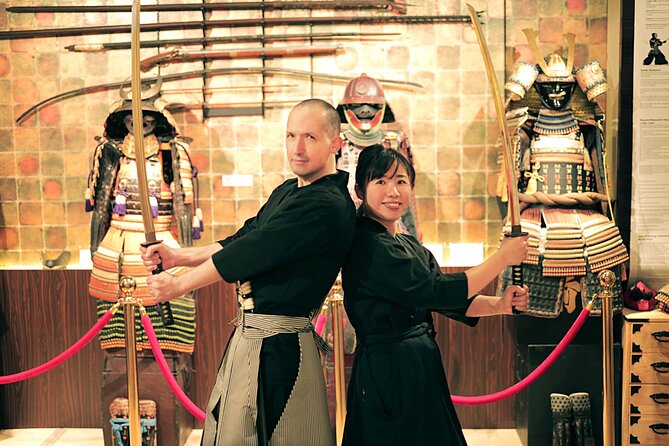
The best part of this Kyoto activity is that it turns samurai history into something you can try with your own hands. You dress in samurai hakama, learn basic sword movements, and take part in a controlled exercise with a blunt replica sword. The visit also includes a museum tour and a ninja-star activity.
I like the mix of costume, movement, and history, since you do more than walk past display cases. I also like the flexible start times and central Kyoto location, which make this an easy two-hour addition to a sightseeing day. The main caution is that this is a staged cultural activity, not serious martial-arts training, and past sessions have sometimes felt crowded or rushed.
In This Review
- Key points to know before booking
- What the Kyoto sword experience really is
- Dressing in hakama before the lesson
- Learning basic Iaido with a safe replica sword
- The sword fight and what not to expect
- The museum tour adds useful context
- Ninja stars, armor, and the photo session
- Timing, group size, and the busy-season warning
- Who gets the best value from $83.91
- How to make the most of the visit
- Should you book the Kyoto Sword Experience?
- FAQ
- Is the sword real?
- What activities are included?
- How long does the experience last?
- Can children participate?
- Where does the activity start and end?
- Is transportation included?
- Can I cancel for a refund?
Key points to know before booking
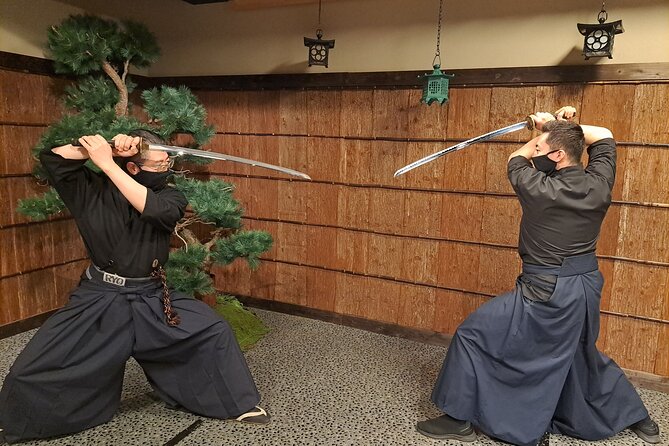
- You use a blunt replica sword: Current Japanese law means this activity does not involve a real sword or sharp blade.
- Hakama dress comes first: You put on traditional clothing before learning basic Iaido positions and movements.
- The museum ticket is included: Plan on a guided look at samurai and ninja artifacts after the practical session.
- Ninja stars add variety: You also get a chance to try a ninja-star throwing activity.
- Group size needs checking: The supplied details list both a maximum of 22 and a maximum of 4, while past sessions have sometimes been larger.
- Children under seven cannot enter the dojo: Children must also be accompanied by an adult.
What the Kyoto sword experience really is
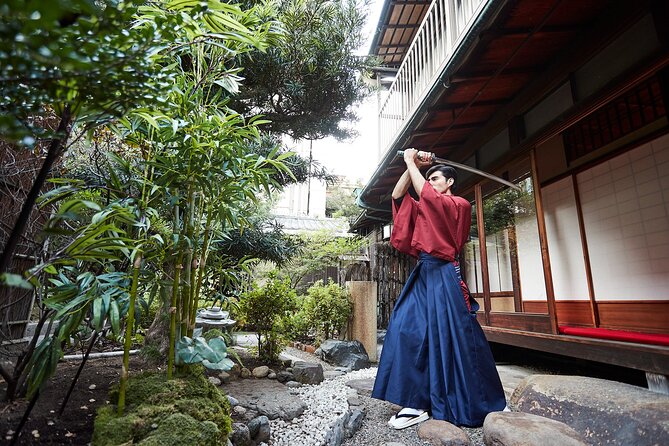
This is a short, theatrical introduction to samurai culture, built for curious visitors rather than martial-arts specialists. For about two hours, you move between dressing up, basic sword instruction, a simple sword exercise, museum displays, photographs, and ninja-star throwing.
The setting is a traditional dojo connected with the Samurai Ninja Museum. That gives the activity a more focused feel than a standard museum stop, although the experience can involve more than one nearby space. One past schedule moved the sword portion to a separate building a few minutes from the main museum, so pay attention to staff directions when you arrive.
At $83.91 per person, this is not a cheap museum ticket. You are paying for instruction, costumes, guided interpretation, museum admission, and the chance to handle a replica sword under supervision. I think the price makes the most sense if you value a hands-on activity and good family photographs. It is harder to justify if you want extended sword practice or a serious lesson in Iaido.
The experience has a 4.6 rating from 149 ratings and a 90 percent recommendation rate. That points to a generally successful activity, but the lower ratings reveal a practical issue: the quality depends heavily on crowd control, timing, and the instructor leading your session.
More Kimono & Culture Experiences in Kyoto
- Kyoto Geisha Walking Tour: Gion District & Hidden Gems
★ 4.7 · 3,273 reviews - Kyoto: Gion Magical Night Walking Tour with Geisha Trivia
★ 4.9 · 2,393 reviews - Kyoto: Gion Geisha District Walking Tour – Stories of Geisha
★ 4.7 · 2,187 reviews
Dressing in hakama before the lesson
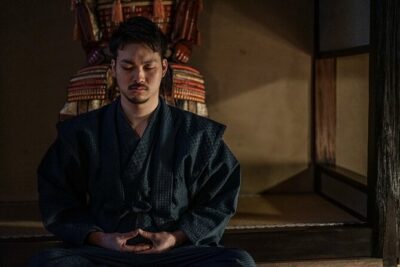
Your session begins with traditional samurai clothing. The hakama is the wide-legged garment associated with Japanese martial arts and formal dress, and putting it on changes the mood quickly. It also gives you the photographs most people hope to take from this kind of activity.
Expect this part to take time, especially if several people are being dressed at once. The clothing is part of the fun, but it is not simply a quick costume rack. In crowded periods, changing and waiting for assistance has taken up a large part of the scheduled time.
I would arrive at the meeting point early, but not so early that you expect a private lesson before your booked start. One past session became confusing because the participant arrived before the regular group and was rushed through a shorter version. The safest approach is to check in at the stated meeting point and wait for clear instructions about where your session begins.
Costume quality and freshness may vary. One past account found the clothing worn and unpleasant, while other experiences treated the dress-up portion as a fun, well-supported part of the visit. If photographs matter to you, this activity gives you more than a simple museum snapshot, with samurai clothing, helmets, armor, and related props available for pictures.
Learning basic Iaido with a safe replica sword
Once dressed, you receive an introduction to basic Iaido movements. The instructor explains how to hold the replica sword, how to stand, and how to make simple controlled movements. This is a beginner lesson, so you do not need prior training.
The point is precision and posture, not speed. You will get a taste of the discipline connected with samurai sword practice, but you should not expect a full martial-arts class. The sword is blunt and safe, in line with current Japanese law. The activity does not include a real sword or a sharp blade.
Several instructors have received warm praise. Riku was singled out for making one session feel like actual training, while Ken was praised for explaining samurai actions in a lively way. Takto was also described as helpful during an older sword activity. Since staff assignments can change, I would treat those names as examples rather than a promise of who will teach your class.
The lesson is one of the strongest parts of the experience when the instructor takes time to explain and demonstrate. It becomes less satisfying when a large group is waiting behind you. You may spend more time watching other people take turns than practicing yourself, particularly during busy periods.
The sword fight and what not to expect
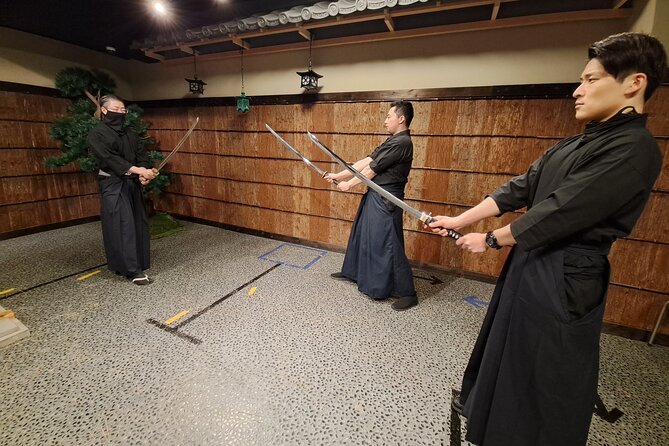
The session includes a simple sword-fighting exercise using safe replica swords. This is designed as a controlled, entertaining activity, not a combat drill. The instructor guides the movement, and safety should take priority over speed or dramatic swings.
Older promotional photographs and past descriptions may suggest real-sword handling or cutting a tatami mat. That is not the current experience described here. The important update is clear: you use a blunt replica sword, and no sharp blade is involved.
This distinction matters when you compare the activity with other Kyoto sword programs. If you want to cut bamboo or a rolled tatami target with a real katana, this is not the right choice. If you want a law-compliant introduction that feels comfortable for beginners, the replica sword is a sensible tradeoff.
The sword portion may feel short. Some people enjoyed the basic stance and the chance to pose with a sword, while others wanted more training time. I would book this expecting a memorable introduction, not an hour of repeated practice.
Same city, a completely different kind of day:
- PERFECT KYOTO 1-Day Bus Tour
★ 5.0 · 13,518 reviews - Kyoto: Fushimi Inari, Kinkakuji, Bamboo Grove 1 Day Bus Tour
★ 4.8 · 4,316 reviews - Kyoto: Tea Ceremony in a Traditional Tea House in Kiyomizu
★ 4.9 · 3,519 reviews - Kyoto: Tea Ceremony Ju-An at Jotokuji Temple
★ 4.9 · 3,207 reviews
The museum tour adds useful context
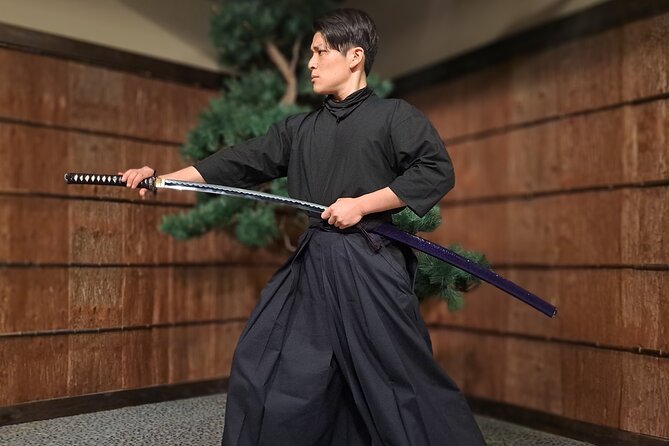
The included museum visit gives the activity a needed historical backbone. Instead of treating the samurai as a costume theme alone, the guide explains the role of samurai and ninja culture through artifacts, displays, models, and historical material.
The tour is guided rather than simply a walk through a silent collection. Riu and Nobu have been praised for keeping the museum portion lively and helping people interact with the displays. The quality of the explanation can depend on the guide’s speaking pace, though. One poor experience involved a guide speaking too quickly to follow comfortably.
The museum may not satisfy anyone expecting a large national collection. Some past accounts describe a small room with a limited number of posters and samurai models, while others found the displays informative and worthwhile. I would treat it as a compact introduction that supports the hands-on lesson, not as Kyoto’s main museum visit.
That balance is important. The museum makes the price easier to understand, but you should not book this solely for the collection. The practical activities and photographs are the main draw.
Ninja stars, armor, and the photo session
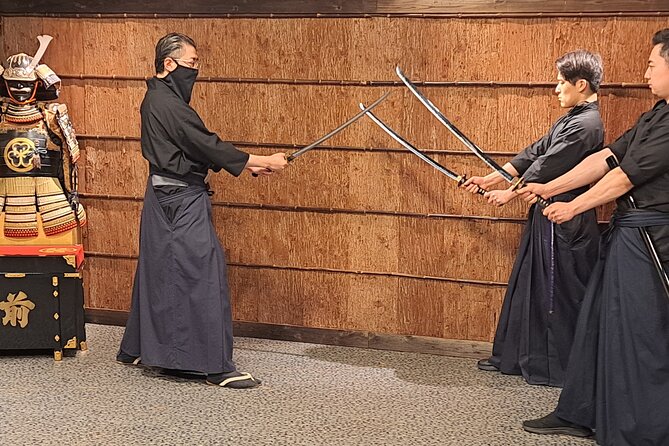
The ninja-star activity gives the session a lighter finish. You get a chance to throw ninja stars in a controlled setting, adding a different skill to the sword lesson. It is simple and playful, and it works well for families with older children who may enjoy the ninja side more than the historical talk.
The order can vary. One schedule placed the ninja-star activity upstairs after the museum tour, with the group moving between different areas. This can feel disjointed if staff do not clearly explain where to go next. I would keep asking politely if you are unsure which activity comes next.
The armor and helmet photographs are another popular feature. You can pose in samurai gear and take home pictures that feel more special than standard sightseeing snapshots. Family groups often get good value from this part because even someone too young for the dojo may be able to watch from the side or take part in the photo portion, subject to venue rules.
Children under seven are not allowed to enter the samurai dojo. That rule is firm in the supplied information, so families should plan around it. Children must be accompanied by an adult, and the experience is not suitable as an independent drop-off activity.
Timing, group size, and the busy-season warning
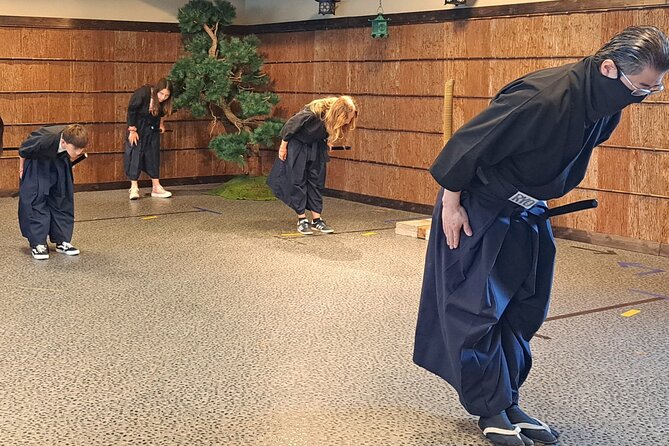
The advertised duration is about two hours. A typical session can include roughly 10 minutes for dressing, 20 to 30 minutes of instruction, about 15 minutes for the sword activity, a 30-minute historical tour, around 15 minutes of ninja-star throwing, and about 15 minutes for photographs.
That schedule explains why the activity can feel full without giving you long practice time. Much of the visit involves moving between activities and waiting for turns. In a small group, this is manageable. In a large group, it can become the central feature of the day.
The supplied information gives conflicting group limits. One section says a maximum of 22, another says a maximum of 4, and past descriptions referred to groups of 10. Some older sessions reportedly reached more than 20 people because of a scheduling and computer problem during an exceptionally busy cherry-blossom period. The provider says that issue has been corrected and that evening sessions now often run with about five or six people.
I would still confirm the expected group size before paying, especially if personal attention is important to you. A small class should give you more time with the instructor and fewer delays. If the session is full, think of it as a group show-and-try activity rather than a private lesson.
The venue is near public transportation, and the meeting point is the Samurai Ninja Museum at 109 Horinouechō, Nakagyo Ward, Kyoto. Transportation to and from the attraction is not included. The activity ends back at the meeting point.
There is also an elevator outage scheduled from January 24 through February 19, 2026. If you are booking during that period, check how the venue’s stairs affect your party before confirming.
Who gets the best value from $83.91
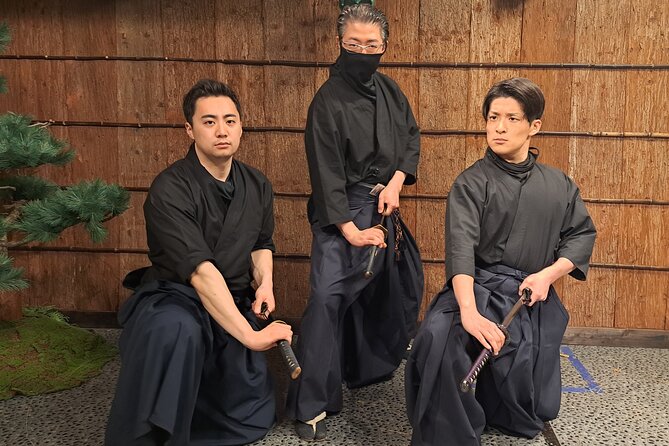
I see the best value here for first-time visitors to Kyoto who want a compact cultural activity with photographs. You get several different elements in one booking, and the central location makes it easy to place between shopping, food, and sightseeing in the Nakagyo area.
Families with children over seven may also enjoy the variety. One child can focus on the sword lesson, another on ninja stars, and everyone can take part in costume photographs and the museum tour. The adult must stay with the child, and younger children cannot enter the dojo.
This also suits pop-culture fans who want something more physical than a museum. You are not simply looking at samurai objects. You are learning a stance, holding a replica sword, taking part in a choreographed exercise, and trying a ninja activity.
I would hesitate if you have practiced Iaido before or want technical instruction. The basic lesson will probably feel too short. I would also hesitate if your schedule is tight and you dislike waiting, because past sessions have suffered when too many bookings were placed together.
The free cancellation policy helps reduce the risk. You can cancel for a full refund at least 24 hours before the start time. Changes or cancellations inside that window are not accepted for a refund.
How to make the most of the visit
Book a start time that leaves room around the activity. The published length is about two hours, but you should avoid placing an important reservation immediately afterward in case dressing, group movement, or the museum portion runs long.
Arrive at the correct meeting point and listen for instructions about the dojo. Some past schedules used a separate building a short walk from the main museum, which caused confusion for people who assumed everything happened in one room.
Wear comfortable clothing under the hakama. You will be changing and moving through basic sword positions, so restrictive clothing may make the session less pleasant. The supplied information does not list a special dress code beyond the provided samurai attire.
Keep your expectations honest. The strongest version of this activity is a fun cultural introduction led by an engaging instructor. The weakest version is a crowded rotation through costumes, sword movements, museum displays, and ninja stars. Confirming the group size is your best way to improve the odds of getting the first version.
Should you book the Kyoto Sword Experience?
I would book it if you want a lively, photo-friendly introduction to samurai and ninja culture, especially if this is your first visit to Japan. The combination of hakama dress, replica-sword instruction, a museum tour, ninja stars, and armor photographs gives you plenty to do in two hours.
I would skip it if you expect authentic sword cutting, a real katana, or serious Iaido instruction. The activity is safe and accessible, but it is also staged and fairly basic. At $83.91, the value depends on enjoying the full package rather than measuring the cost against sword practice alone.
Before booking, confirm the current group size, check the age rule for children, and remember that the sword is a blunt replica. With those limits understood, this can be a memorable Kyoto break and a good way to make samurai history feel less distant.
FAQ
Is the sword real?
No. The current activity uses a blunt, safe replica sword. It does not involve a real sword or a sharp blade.
What activities are included?
You dress in samurai hakama, learn basic Iaido techniques, take part in a simple sword-fighting exercise, throw ninja stars, and receive admission to the Samurai and Ninja Museum with a history tour.
How long does the experience last?
The duration is approximately two hours. The schedule can include dressing, sword instruction, the sword activity, a museum tour, ninja-star throwing, and photographs.
Can children participate?
Children under seven are not allowed to enter the samurai dojo. Children who meet the age requirement must be accompanied by an adult.
Where does the activity start and end?
It starts at the SAMURAI NINJA MUSEUM at 109 Horinouechō, Nakagyo Ward, Kyoto, 604-8117, Japan. It ends back at the meeting point.
Is transportation included?
No. Transportation to and from the attraction is not included, though the venue is near public transportation.
Can I cancel for a refund?
Yes. You can cancel at least 24 hours before the start time for a full refund. Cancellations or changes made less than 24 hours before the start time are not accepted for a refund.
More Museums in Kyoto
- Kyoto: Tea Museum Tickets and Matcha Grinding Experience
★ 4.9 · 739 reviews - Skip the lines Basic Ticket at SAMURAI NINJA MUSEUM KYOTO
★ 4.5 · 632 reviews - Kyoto : Geiko Maiko Dance of Kyoto & Visits of Gion Museum
★ 4.6 · 415 reviews - Kyoto: Samurai Ninja Museum guided tour
★ 4.8 · 145 reviews
Just added around Kyoto
- Private Guided Traditional Buddhist Cooking in Japan★ 5.0 · 16 reviews
- Kyoto: Gion Geisha District & Sake-in-Hand Walking Tour★ 5.0 · 37 reviews
- Your Private Vacation Photography Session In Kyoto★ 5.0 · 110 reviews
- Kyoto: Zen Meditation at a Private Temple with a Monk★ 5.0 · 25 reviews
- Traditional Japanese Washi Papermaking- Kyoto morning★ 5.0 · 77 reviews
- Kyoto Wagashi(Japanese sweets) Cooking Class near Fushimiinari★ 5.0 · 60 reviews
- Private Pewter Sake Cup Experience with a Kyoto Artisan★ 5.0 · 31 reviews
- Kyoto Private 6 hour Tour: English Speaking Driver Only, No Guide★ 5.0 · 88 reviews
Kimono & Culture Experiences, compared.

Kyoto Geisha Walking Tour: Gion District & Hidden Gems
Read our review →
Gion Magical Night Walking Tour with Geisha Trivia
Read our review →
Gion Geisha District Walking Tour – Stories of Geisha
Read our review →
Best of Kyoto: Gion, Geisha, Pagodas & Cobblestones
Read our review →
Kyoto Gion Geisha District Walking Tour – The Stories of Geisha
Read our review →
Browse the lists this tour appears in